What’s Inside
- Prioritize a Firm, Safe Crib Mattress
- Invest in a Certified Nursery Glider
- Use Zero-VOC Paint With Ample Curing Time
- Maximize Space With Vertical Storage Shelves
- Layered, Dimmable Lighting for School Nursery Room Ideas
- Anchor All Heavy Furniture to the Wall
- Embrace Earthy Palettes and Biophilic Details
- Install a Cool-Mist Humidifier for Optimal Air
- Incorporate a True HEPA Air Purifier
- Choose Non-Toxic, Washable Natural Fiber Rugs
- Utilize a Dedicated Fan-Based White Noise Machine
- Avoid Over-Theming for Better Room Longevity
- Keep the Crib Area Clear of All Loose Items
- Plan for Cord Management From Day One
- Don’t Neglect the Ceiling In Your Design
- Install Cordless Blackout Shades for Daytime Naps
- Organize Tiny Items With Clear Acrylic Bins
- Build a Forward-Facing Reading Nook for School Nursery Room Ideas
Most parents start planning their nursery by shoving a bulky crib against the wall and slapping up some generic decals. They usually realize the room functions terribly around 3 AM on the first night home. A functional space requires more strategy than just picking cute wallpaper. When mapping out your nursery, the layout and safety protocols matter far more than the theme. It’s about building an efficient workspace for sleep-deprived adults that also happens to be safe for an infant. If you only try one idea from this list, make it #6. Here’s why: anchoring furniture is the single most critical safety step that tired parents forget, and skipping it isn’t worth the risk. It took me years to figure out that safety is the real design MVP.
Skip this list if you’re looking for a hyper-minimalist, stark white clinical aesthetic. These concepts focus on warm, layered textures, functional clutter management, and sensory-friendly environments that actually look lived-in. If you want a magazine-perfect room where nothing is ever out of place, this approach won’t work for you. Trust me on this.
1. Prioritize a Firm, Safe Crib Mattress

The aesthetic of a crib doesn’t matter if the mattress inside isn’t safe. A common mistake is buying a plush, soft mattress because it feels comfortable to an adult hand. Infants need an incredibly firm surface to reduce SIDS risk and support healthy spinal development. The fit must be exact. When pressing the mattress against one side of the crib frame, there should be no more than two fingers of space on the opposite side. Anything larger creates a dangerous entrapment gap. New mattresses often arrive with a strong chemical smell. They require airing out in a well-ventilated garage for at least a week before use. Brands like Newton Baby or Moonlight Slumber offer excellent breathability, typically ranging from mid-tier to premium prices. You can find standard firm options at Target or Walmart for tighter budgets.
The catch: Ultra-breathable, washable mattresses are notoriously heavy and cumbersome to lift during middle-of-the-night sheet changes.
2. Invest in a Certified Nursery Glider

People often buy cheap rocking chairs based entirely on how they look in a corner. You’re going to spend hundreds of hours in this chair, often trapped under a sleeping infant. A proper nursery glider needs lumbar support, a high back to rest a tired head, and stain-resistant fabric. Look for Greenguard Gold certification to ensure the materials aren’t off-gassing volatile organic compounds into your small room. Models like the Babyletto Kiwi Electronic Recliner or the DaVinci Hayden typically run in the $400 to $800 range at stores like Pottery Barn Kids or Crate & Kids. Some modern gliders, like the Nurture& The Glider Plus, even feature built-in USB charging ports for phones or portable breast pumps.
Best for: Parents who plan to exclusively feed in the nursery rather than the living room.
The catch: Electronic recliners require a power outlet nearby, which limits where you can place the chair in the room.
3. Use Zero-VOC Paint With Ample Curing Time

Slapping a fresh coat of paint on the walls the weekend before the due date is a terrible idea. Conventional paints release volatile organic compounds (VOCs) that degrade indoor air quality and irritate developing lungs. Selecting zero-VOC paints is a non-negotiable step for a healthy environment. Brands like KILZ KOLOR IT, Benjamin Moore Eco Spec, ECOS Paints, and AFM Safecoat provide excellent coverage without the toxic fumes. You can usually source these at local hardware stores like Home Depot for a mid-range price per gallon. Proper scheduling matters just as much as the paint formula. The room needs painting at least 4 to 6 weeks before the baby occupies the space. This allows ample time for the paint to fully cure. I learned that the hard way with my first.
The catch: Zero-VOC paints often require an extra coat or a specialized primer to achieve the same opaque coverage as traditional paints.

Beautiful Wooden Baby Closet Dividers Set of 7
If you want something that just works, Beautiful Wooden Baby Closet Dividers Set of 7 – Double-Sided Organize is a safe bet (11 reviews, 4.5 stars).
4. Maximize Space With Vertical Storage Shelves

Floor space vanishes quickly once you add a crib, a dresser, and a glider. Leaving diapers, wipes, and burp cloths in their original packaging on the floor makes a room feel chaotic. Maximizing vertical space with floating shelves keeps essential supplies within arm’s reach but out of the way. Installing sturdy shelves above the changing station holds decorative baskets for items like a 4 oz tube of diaper cream, a stack of clean washcloths, and fresh pacifiers. A wide, deep-drawered dresser doubles perfectly as a changing table, saving you the cost and footprint of a standalone changing unit. You can find solid wood dressers at IKEA or HomeGoods that fit standard changing pads flawlessly.
Best for: Small or awkwardly shaped rooms where square footage is extremely limited.
The catch: Floating shelves require drilling into studs or using heavy-duty drywall anchors, which means patching and painting when you eventually take them down.
5. Layered, Dimmable Lighting for School Nursery Room Ideas

Relying solely on a harsh, bright overhead light guarantees a fully awake, crying baby during a 3 AM diaper change. Layered lighting is the smartest functional upgrade for a nursery. Install dimmable LED ceiling lights for daytime play, and add adjustable dimmer switches at the wall plate. For the middle of the night, use red-tinted night lights. Red light provides enough visibility to navigate the room but won’t disrupt the natural circadian rhythm or destroy your night vision. You can easily find plug-in red LED night lights at Target or Walmart for under $15. During the day, maximize natural daylight with sheer curtain panels to help establish the infant’s day-night confusion.
The catch: Rewiring a standard ceiling fixture for a wall dimmer switch often requires hiring an electrician if you aren’t comfortable working with your home’s breaker box.
6. Anchor All Heavy Furniture to the Wall

This step gets skipped constantly because parents assume a heavy dresser won’t tip over. The reality is that unanchored furniture injures over 38,000 children annually in the US. Once a toddler learns to pull up or open drawers to use as a ladder, the center of gravity shifts dramatically. Every single heavy item, including dressers, bookshelves, and changing tables, must be secured directly to the wall studs. Use heavy-duty L-brackets or nylon furniture straps. Most new furniture from stores like IKEA or Crate & Kids includes basic anti-tip kits in the box. If you buy vintage pieces, you’ll need to purchase aftermarket anchoring kits, which are typically under $20 at hardware stores.
Best for: Every single household with a child, without exception. You might also like: 17 Twin Nursery Boy And Girl That Actually Work
The catch: Locating wall studs in older homes with plaster walls can be incredibly frustrating and might require specialized toggle bolts if studs aren’t aligned. You might also like: 16 Toddler Room Ideas You Need to See

Criusia Drawer Organizer Clothes
Criusia Drawer Organizer Clothes is sturdier in person than the photos suggest — over 11 buyers gave it 4.5 stars.
7. Embrace Earthy Palettes and Biophilic Details

The era of bright, primary-colored, heavily themed rooms is fading. The 2026 design shift leans heavily into nature-inspired elements to create a calming, grounded environment. Instead of neon colors, opt for earthy tones like muted sage green, warm terracotta, rich cocoa brown, and creamy alabaster. Pair these paint colors with natural textures. Think rattan light fixtures, bamboo window shades, and raw wood shelving. You can source beautiful natural fiber baskets from World Market or Target to hold toys and blankets. This aesthetic feels far more serene than a chaotic cartoon theme and blends better with the rest of a modern home. You might also like: 19 Butterfly Nursery Baby Girl You Need to See
The catch: Natural materials like raw wood and untreated rattan are porous and significantly harder to wipe down and sanitize when inevitable spills or messes happen.
8. Install a Cool-Mist Humidifier for Optimal Air

Dry indoor air, especially during winter months when the heater runs constantly, causes nasal congestion and exacerbates infant eczema. A cool-mist humidifier is a functional necessity, not just a registry extra. Models like the Crane 4-in-1 Humidifier with Sound Machine add necessary moisture to ease breathing and moisturize sensitive skin. Maintaining the room’s humidity levels between 40 and 60 percent is the sweet spot for comfort while preventing mold growth on the walls. Use a cheap digital hygrometer to monitor the moisture level. To prevent dangerous bacteria buildup, the tank requires cleaning every 1 to 2 days using a mixture of 1/2 cup of white vinegar and water.
The catch: You must use distilled or filtered water in ultrasonic humidifiers; using standard tap water disperses a fine white mineral dust all over the dark furniture in the room.
9. Incorporate a True HEPA Air Purifier

An infant’s developing respiratory system is highly sensitive to dust, pet dander, and airborne particles. Adding a dedicated air purifier improves the baseline air quality of the room significantly. Look strictly for models utilizing a True HEPA filter (specifically an H13 HEPA), which captures 99.9 percent of airborne particles and lingering VOCs. The Levoit Sprout Air Purifier, Levoit Core 300S, or Coway Airmega 100 are solid, reliable options. They usually sit in the budget to mid-range price bracket and offer whisper-quiet operation. Many also include a gentle night light function. Place the unit on a hard surface rather than thick carpet for optimal airflow.
The catch: Replacement HEPA filters are an ongoing, recurring expense that can cost anywhere from $30 to $60 every six months depending on the specific brand.

Criusia Over the Door Organizer
Criusia Over the Door Organizer has been one of the most consistently praised picks in this category. 247 reviewers averaged 4.5/5.
10. Choose Non-Toxic, Washable Natural Fiber Rugs

Nurseries see a lot of bodily fluids. A pristine, dry-clean-only vintage rug will get ruined in the first month. Choose rugs made from natural fibers like organic cotton or wool, which are inherently soft and durable. More importantly, they avoid the harsh chemical flame retardants and synthetic dyes often found in cheap polyester rugs. Look for strict manufacturing certifications like GOTS (Global Organic Textile Standard) or OEKO-TEX Standard 100. Machine-washable options from brands like Ruggable or West Elm are invaluable. When a 4 oz bottle of formula spills, you simply peel off the top layer and throw it in the washing machine.
Best for: Homes with pets or parents who want easy cleanup without calling professional carpet cleaners.
The catch: Washable rugs are notoriously thin and lack the plush, cushioned feel of traditional tufted carpets, requiring a separate, thick rug pad underneath.
11. Utilize a Dedicated Fan-Based White Noise Machine

Using a white noise app on an old iPad or phone is a common shortcut that usually backfires. Phones tie up your device, risk unexpected notification sounds, and raise concerns about unnecessary EMF exposure right next to a sleeping baby. A true white noise machine creates a consistent, non-looping mechanical sound that mimics the loud environment of the womb. Fan-based machines, like the classic Marpac DOHM-DS or the LectroFan Classic, physically generate the sound rather than playing a digital track. This effectively masks household noises like dogs barking or doors shutting, helping the baby link sleep cycles.
The catch: Mechanical fan-based sound machines have moving parts inside that can eventually wear out or start rattling after a few years of continuous nightly use.
12. Avoid Over-Theming for Better Room Longevity

Painting a massive, permanent jungle mural across three walls seems like a great idea until your child turns three and becomes terrified of tigers. Committing too hard to a highly specific, age-restricted theme is an expensive mistake. Instead of permanent fixtures, build a neutral base with your expensive items like furniture, rugs, and paint. Add subtle nods to your chosen theme through easily swappable elements. Swap out the crib fitted sheet, hang inexpensive framed prints from Etsy, or display a few thematic soft toys on a shelf. This allows the room’s design to easily evolve alongside your child’s rapidly changing interests without requiring a total renovation.
The catch: A neutral base room can sometimes feel slightly generic or unfinished until you add enough layered textures and personalized art to give it character.

SNSLXH 5 Pack Stackable Closet Storage Basket
A dependable everyday pick — SNSLXH 5 Pack Stackable Closet Storage Basket pulls in 41 ratings at 4.5 stars. Not flashy, just solid.
13. Keep the Crib Area Clear of All Loose Items

Social media is filled with photos of cribs styled with massive braided bumpers, heavy quilts, and a dozen stuffed animals. These images normalize incredibly dangerous sleep environments. Beyond a tight-fitting mattress and a single fitted sheet, the crib must remain completely bare. Blankets, pillows, padded bumpers, and soft toys pose severe suffocation and strangulation hazards to infants. This is a strict safety guideline that can’t be compromised for the sake of aesthetics. If you want the crib to look styled during the day, use a patterned, tightly fitted sheet from a brand like Burt’s Bees Baby or Little Sleepies.
The catch: A completely bare crib looks undeniably stark and institutional compared to the cozy, pillow-filled beds we are used to seeing in adult bedrooms.
14. Plan for Cord Management From Day One

Electrical cords from the monitor camera, the sound machine, and the humidifier seem harmless when your baby is a newborn. Six months later, when they start crawling and pulling up, those dangling cords become immediate strangulation and electrocution risks. Plan the room’s layout to hide cords behind large, anchored furniture. Use hard plastic cord concealers that adhere directly to the wall to cover the wire running down from the baby monitor. Install sliding outlet covers rather than the small plastic plugs, which easily become choking hazards if left out.
Best for: Renters who need to route cables across a room without drilling into the walls to hide wiring.
The catch: Adhesive cord concealers use incredibly strong double-sided tape that will almost certainly rip the paint and drywall paper off when you remove them.
15. Don’t Neglect the Ceiling In Your Design

Most people paint the walls, lay a rug, and completely ignore the ceiling. Your baby will spend the majority of their first year flat on their back, staring straight up. The ceiling is essentially their fifth wall. Instead of leaving it flat, builder-grade white, use it to provide gentle visual stimulation. You can paint it a soft, contrasting color like pale blue or warm peach. Wallpapering the ceiling with a subtle, non-overwhelming pattern adds incredible depth to the room. Even applying high-quality, subtle glow-in-the-dark star decals provides a focal point during late-night rocking sessions.
The catch: Painting or wallpapering a ceiling is physically exhausting, messy work that almost always requires two people and a sturdy ladder.

Baby Closet Divider, Baby Wardrobe Organizer
Baby Closet Divider punches above its price — 371 buyers rated it 4.5 stars. The kind of pick people reorder.
16. Install Cordless Blackout Shades for Daytime Naps

Trying to force a baby to nap at 1 PM in a sun-drenched room is an exercise in futility. True blackout window treatments are mandatory for establishing solid daytime sleep habits. Skip the cheap, thin curtains and invest in heavy-duty, cordless blackout cellular shades. The cordless mechanism is vital; traditional pull strings are a known strangulation hazard for toddlers. Stores like Lowe’s or Home Depot will cut cellular shades to your exact window measurements in-store. Layer them behind decorative sheer curtains to soften the harsh, utilitarian look of the blackout shade.
The catch: Inside-mount blackout shades always leave a tiny halo gap of light around the edges of the window frame, which bothers some highly sensitive sleepers.
17. Organize Tiny Items With Clear Acrylic Bins

Baby gear involves thousands of tiny, easily lost components. Pacifiers, nail clippers, thermometer covers, and gas drops turn a dresser drawer into a junk drawer in days. Toss the opaque fabric bins that require you to dig blindly. Instead, use modular, clear acrylic storage bins inside the dresser drawers. You can see exactly how many clean pacifiers or 2 oz bottles of lotion you have left at a glance. Costco and The Container Store sell excellent multi-piece acrylic sets that fit perfectly into standard nursery dressers.
Best for: Highly organized parents who want to maintain a strict inventory of medical supplies and small grooming tools.
The catch: Acrylic bins show dust, spilled lotion, and fingerprints instantly, requiring frequent wiping with a damp microfiber cloth to keep them looking clean.
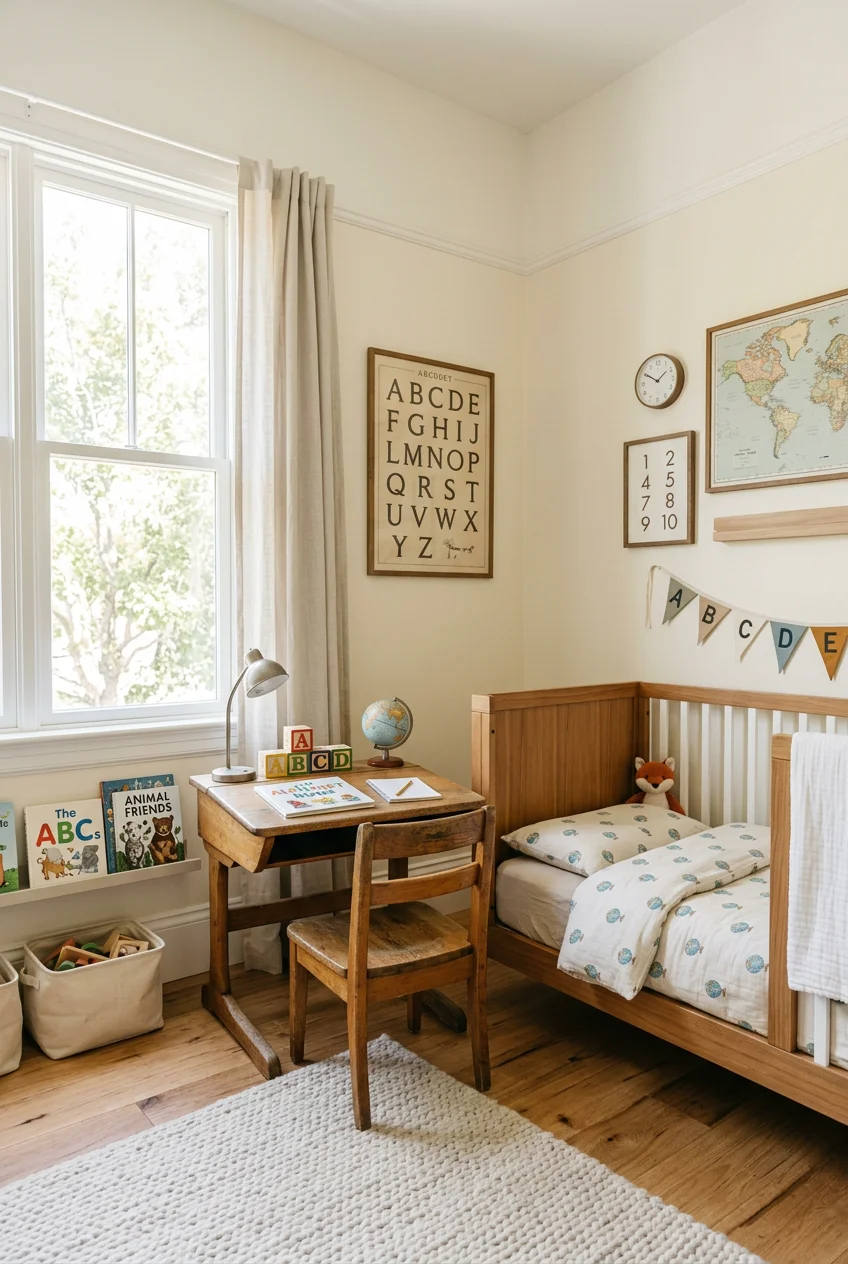
18. Build a Forward-Facing Reading Nook for School Nursery Room Ideas

Traditional bookshelves only show the spines of books, which does absolutely nothing to engage a toddler who can’t read yet. A forward-facing book display encourages early reading habits by showing off the colorful cover art. You can achieve this by installing a few shallow acrylic ledges or wooden picture ledges low on the wall, accessible to a crawling or walking child. IKEA’s FLISAT wooden wall storage or basic picture ledges from Target work perfectly for this. It turns your book collection into functional, rotating wall art that adds immediate color to the room.
The catch: Forward-facing ledges hold significantly fewer books than a traditional deep bookshelf, meaning you’ll need alternative storage for the bulk of your library.
How we chose these ideas: We evaluated these nursery concepts based on practical renter-friendliness, everyday functional effort, and genuine safety impact. Priority was given to accessible solutions that balance upfront cost with long-term visual appeal, rather than focusing purely on fleeting design trends.
Designing a nursery is less about creating a perfect catalog cover and more about building a highly functional, safe workspace for your hardest nights. Focus on the lighting, the airflow, and the layout before you worry about the wall art. I’d highly suggest pinning this list to your nursery planning board so you can reference the safety specs and paint timelines when you’re actually ready to start buying. No exaggeration, it’ll save your sanity.
Frequently Asked Questions
When should I start painting the nursery?
You should paint the nursery at least 4 to 6 weeks before the baby arrives. This allows ample time for zero-VOC paints to fully cure and for any residual odors to off-gas safely.
What is the two-finger rule for crib mattresses?
The two-finger rule ensures a safe mattress fit. If you push the mattress to one side of the crib, there should be no more than two fingers of space on the opposite side to prevent dangerous entrapment gaps.
Why do I need a cool-mist humidifier in a nursery?
A cool-mist humidifier maintains room humidity between 40 and 60 percent. This eases nasal congestion, moisturizes sensitive infant skin, and prevents the dry air that often exacerbates eczema during winter months.
Are blackout shades really necessary for daytime naps?
Yes. True cordless blackout cellular shades block harsh daylight, which is crucial for establishing solid daytime sleep habits and preventing day-night confusion in infants.
