What’s Inside
- The 8-Drawer Dresser as a Changing Station
- Invest in Wipeable Changing Pads
- The Non-Negotiable Wall Anchoring
- Micro-Sorting with SKUBB Organizers
- File Folding Tiny Clothes
- The Diaper Command Center Top Drawer
- Sizing Out the Lower Drawers
- Ditching the Open Shelving Trap
- Functional Zonation Strategies
- LACK Shelves for Vertical Storage
- SAMLA Bins for Toy Rotation
- Moving Feeding Supplies to the Kitchen
- Blanket Ladders for Soft Goods
- Soft Minimalism Color Palettes
- Planning for Toddler Growth
- Custom Hardware for Hemnes Baby Room Organization
- Clear Acrylic Dividers for Lotions
- Closet Tension Rods for Hanging Backstock
Picture a 2 AM diaper blowout. You’re holding a screaming baby in one hand, frantically digging through a pile of mismatched onesies in the dark. That’s why getting your Hemnes baby room organization right before the due date matters. The IKEA Hemnes dresser is a massive piece of furniture. If you don’t give those deep drawers a strict system, they quickly become a black hole for tiny socks and half-empty tubes of diaper cream. Most people just toss clothes in piles and wonder why the nursery feels chaotic within a week. We aren’t doing that. Organizing a nursery requires specific, rigid zones so your muscle memory can take over when you’re functioning on two hours of sleep. If you only try one idea from this list, make it #6. Here’s why: isolating your diapering supplies into one strictly managed top drawer prevents middle-of-the-night panic and keeps the mess contained to a manageable 33-inch zone. Learned that the hard way.
Skip this if: Your nursery is a converted closet under 60 square feet or if you strictly buy solid hardwood heirloom pieces. The Hemnes requires significant floor space, and these systems rely heavily on modular, budget-friendly inserts rather than custom carpentry. Renters with strict no-drilling rules should also skip the wall-mounting tips.
1. The 8-Drawer Dresser as a Changing Station

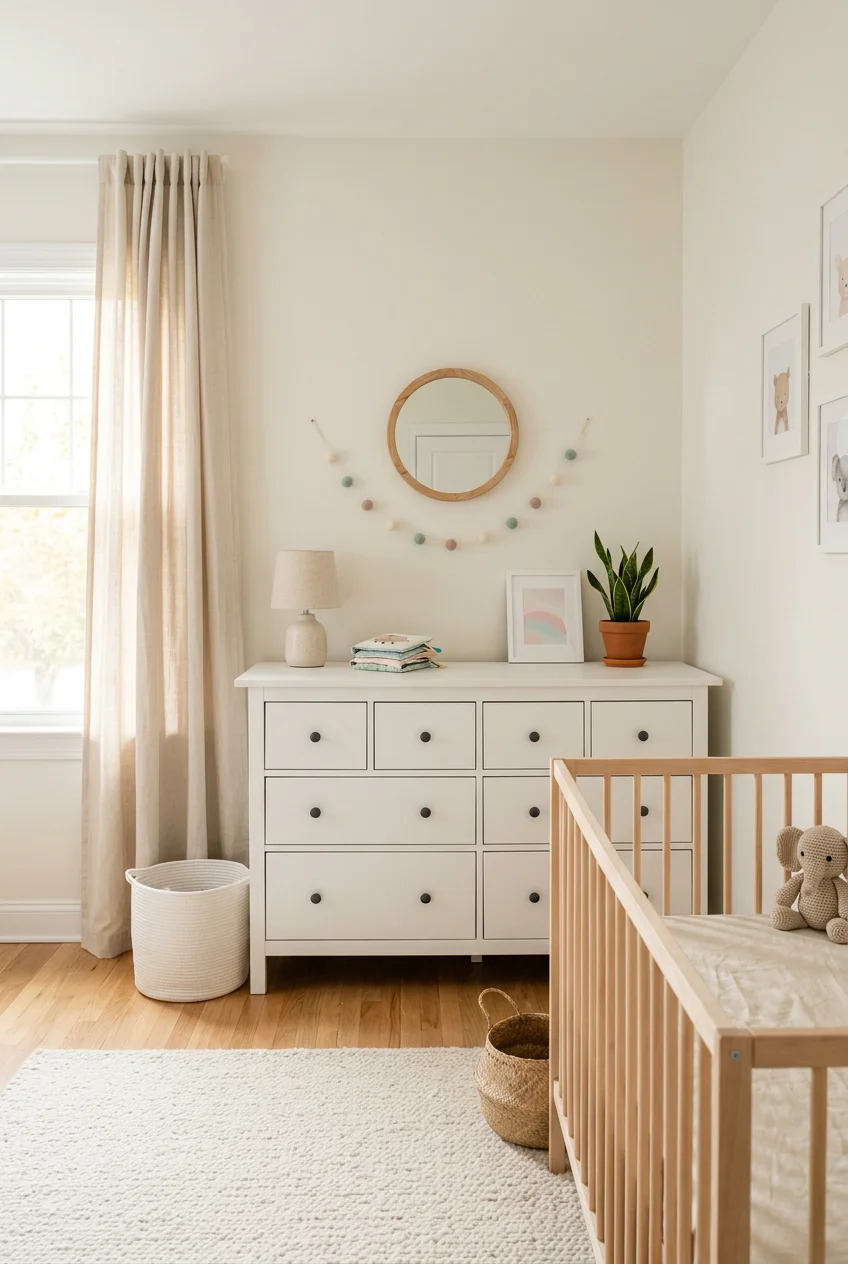
Most people buy a dedicated changing table and regret it six months later when the baby outgrows it. Using the 8-drawer IKEA Hemnes as a changing station is a much smarter play. At 63 inches wide and just under 20 inches deep, it provides massive surface area. You get room for a changing pad, a wipe dispenser, a table lamp for late-night feeds, and a stack of fresh burp cloths right on top. A dedicated changing table from Pottery Barn Kids often runs well over $500 and becomes useless once your kid is potty trained. The Hemnes transitions right into a big kid room. Just add a wooden changing topper tray (you can find universal ones at Target or Amazon for typically under $50) to keep the pad from sliding around. A common mistake is skipping the non-slip drawer liner mat under the tray, which leads to scratched white paint. The catch: at 37.75 inches high, this dresser is relatively tall. Shorter parents under 5’3″ often find the height strains their shoulders during repetitive diaper changes.
2. Invest in Wipeable Changing Pads

Fabric changing pad covers look cute on Pinterest, but they just create endless mountains of laundry. Opt for a durable, easy-to-clean changing pad that fits securely on your Hemnes dresser surface. Popular choices include the Keekaroo Peanut Changer (usually in the $130-$150 range) or the Skip Hop changing pad (budget to mid-range around $70-$90). Both are completely waterproof polyurethane and can be wiped down with a standard baby wipe in seconds, protecting the dresser’s painted surface from acidic spills. These pads typically measure around 16 by 32 inches, leaving plenty of room on the 63-inch Hemnes for your other supplies. Best for: homes with frequent laundry bottlenecks. The catch: the solid rubbery surface feels ice cold against a baby’s bare back during winter months, often causing them to startle or cry during middle-of-the-night changes.
3. The Non-Negotiable Wall Anchoring

This isn’t an aesthetic choice; it’s a strict safety requirement. Always anchor your Hemnes dresser to the wall using the anti-tip kit provided. IKEA Hemnes dressers are heavy, and they’re notoriously prone to tipping if multiple drawers are opened simultaneously. A curious toddler pulling on the bottom drawer handles can easily bring the entire 100-pound unit down. If your walls are plaster or you’ve lost the original IKEA hardware, go to Home Depot and buy heavy-duty drywall anchors or toggle bolts (usually under $10 for a pack). Find the wall studs using a magnetic stud finder before drilling. A common mistake is using standard plastic wall plugs, which simply pull right out of drywall under heavy load. The catch: anchoring requires drilling significant holes into your nursery walls, which means you’re committing to patching and repainting drywall whenever you eventually decide to rearrange the room layout.

Modanais Baby Diaper Caddy Organizer Cart
If you want something that just works, Modanais Baby Diaper Caddy Organizer Cart – 3 Tier Rolling Storage Car is a safe bet (347 reviews, 4.5 stars).
4. Micro-Sorting with SKUBB Organizers

The wide drawers of a Hemnes dresser are practically useless for newborn clothing without internal structure. The IKEA SKUBB box organizers are specifically designed to fit IKEA drawer dimensions perfectly, turning large open voids into tight, organized compartments. A 3-pack with various sizes (small 5×5 inch squares, medium 5×10 inch rectangles) typically costs around $10-$15. These are ideal for sorting tiny newborn socks, scratch mittens, rolled burp cloths, and pacifiers. Without them, these tiny items drift to the back of the 17-inch deep drawers every time you open them. Best for: highly detailed organizers who want a specific spot for every single item. The catch: the fabric sides of the SKUBB boxes are relatively flimsy. If you overstuff them with thick winter sweaters or heavy denim pants, the sides bow outward and the boxes lose their crisp, square shape.
5. File Folding Tiny Clothes

Instead of stacking baby clothes in vertical towers that immediately topple over, file fold items like onesies, sleepers, and tiny pants. This KonMari-inspired method involves folding a onesie into a tight 3-inch by 4-inch rectangle and standing it upright within the SKUBB organizers. This allows you to see every single item at a glance, maximizes the vertical drawer space, and makes it easier to pull out a specific outfit without disorganizing the entire drawer. It’s incredibly satisfying to look down and see a neat row of color-coordinated sleepers. A common mistake is trying to file fold slippery fabrics like bamboo viscose; they lack the structure to stand up and just slump into a messy puddle. The catch: file folding takes significantly more time and precision on laundry day. When you’re exhausted, the temptation to just shove unfolded clothes into the drawer is incredibly high.
6. The Diaper Command Center Top Drawer

Dedicate the top drawers of your Hemnes dresser strictly to diapering essentials. The top two drawers of a Hemnes 3-drawer dresser offer approximately 33.25 inches of width and over 7 inches of height. Use rigid plastic drawer dividers from The Container Store (usually $15-$25 each) to separate a day’s supply of diapers, a weighted wipe dispenser, 4 oz tubes of zinc diaper cream, and a stack of small terry washcloths. A weighted wipe dispenser is crucial here; it stops you from pulling out five wipes at once when you only have one free hand. Keeping this all in the top drawer hides the visual clutter while keeping everything at waist height. Trust me on this. The catch: you’re forced to step back slightly and lean over the open drawer while keeping one hand securely on the baby, which can feel awkward until you get used to the motion. You might also like: 15 Charming Safari Nursery Lighting Ideas for Every Budget

Night Light for Kids, Baby Night Light with Sound Machine
Night Light for Kids is sturdier in person than the photos suggest — over 57 buyers gave it 4.5 stars.
7. Sizing Out the Lower Drawers

Utilize the massive lower drawers of the Hemnes dresser for current-sized clothing, while keeping future sizes strictly separated. The bottom drawer of a Hemnes 3-drawer is about 10 inches high and 17 inches deep, offering ample storage for bulky items like sleep sacks and winter coats. Keep the 0-3 month clothing accessible, and store the 3-6 month items in clearly labeled clear plastic bins (like the sterilite bins from Walmart, usually under $15) at the very back of the bottom drawer or in the closet. Mixing sizes is a common mistake that leads to accidentally dressing your baby in clothes that are painfully tight. Best for: parents who receive a lot of hand-me-downs in various sizes. The catch: accessing the bottom drawer requires squatting or bending down low, which isn’t ideal for parents recovering from a C-section during those first few weeks. You might also like: 15 Clever Neutral Small Nursery Ideas for Every Budget
8. Ditching the Open Shelving Trap

While aesthetically pleasing on Instagram, open shelves quickly become clutter magnets and dust collectors in a busy nursery. Prioritize closed storage solutions like the Hemnes drawers for 90 percent of your items. Limit open shelving to a few decorative pieces or a small stack of frequently rotated board books. When you use open shelves for practical storage like lotion bottles, nasal aspirators, and thermometer cases, the room instantly looks messy and chaotic. If you must use shelves, corral the ugly plastic items into woven water hyacinth baskets from Target (budget around $20-$30) to hide the visual noise. The catch: closed storage requires the discipline to actually open drawers and put things away properly. It’s much easier to just toss a half-empty bottle of baby oil onto an open shelf when you’re in a hurry. You might also like: 17 Nursery Ideas Girl for Every Budget
9. Functional Zonation Strategies

A key approach for 2026 is organizing your nursery into distinct functional zones: a sleep zone, a hygiene zone, and a feeding zone. The Hemnes dresser anchors the hygiene zone. Keep everything related to diapering, lotion, and grooming within a 3-foot radius of the dresser. The sleep zone (the crib) should only contain the mattress and a fitted sheet. The feeding zone (your glider) should have a small side table for a water bottle, a 5-foot phone charging cable, and burp cloths. This ensures that all necessary items for a specific activity are within arm’s reach, reducing frantic pacing back and forth across the room. The catch: creating distinct physical zones requires a larger room footprint. In very tight spaces, your glider, crib, and dresser might all be crammed against the same wall, making zonation impossible.

YACHANCE Kids Sound Machine with Night Light Projector
YACHANCE Kids Sound Machine with Night Light Projector has been one of the most consistently praised picks in this category. 71 reviewers averaged 4.5/5.
10. LACK Shelves for Vertical Storage

Maximize storage by installing floating shelves above the Hemnes dresser for items you need to grab quickly but want out of a toddler’s eventual reach. The IKEA LACK shelves (around $15-$25) are 11 3/4 inches deep and provide a clean, minimalist look. Mount them directly above the changing station to hold your 8 oz bottles of baby lotion, a white noise machine, and a small dimmable nightlight. Ensure these shelves are mounted high enough that a baby standing on the changing pad can’t grab them. Best for: small rooms lacking closet space. The catch: floating shelves have strict weight limits. If you overload a LACK shelf with heavy hardback books or glass jars without hitting wall studs perfectly, the shelf will eventually sag or pull away from the drywall.
11. SAMLA Bins for Toy Rotation

Instead of dumping all forty baby toys into one massive, overflowing toy box, keep a small selection of 3-5 toys accessible and rotate them bi-weekly. Store the rest in clear, labeled IKEA SAMLA boxes (budget around $4-$10 per bin depending on size) inside the closet or under the crib. This prevents visual overstimulation, reduces room clutter, and keeps toys feeling brand new and engaging when you bring them back into rotation. A common mistake is buying opaque bins; if you can’t see what’s inside, you’ll forget you own it and end up buying duplicates. The catch: a toy rotation system requires dedicated backstock storage space in a closet or basement for the bins that are currently out of rotation.
12. Moving Feeding Supplies to the Kitchen

A highly practical Hemnes baby room organization tip is to actually remove items from the nursery entirely. Keep frequently used feeding items like 4 oz and 8 oz bottles, formula dispensers, and bottle brushes in a designated kitchen drawer or cabinet. Since milk preparation and bottle washing happen in the kitchen at the sink, storing these items in the nursery dresser just creates unnecessary trips down the hall. Dedicate one deep kitchen drawer with bamboo dividers for all feeding gear. The catch: this splits your baby’s belongings across two different rooms. If you do middle-of-the-night feeds in the nursery glider, you’ll have to walk to the kitchen to fetch the bottle first, which can feel like a trek at 3 AM.

Modanais Baby Diaper Caddy Organizer Cart
Modanais Baby Diaper Caddy Organizer Cart – 3 Tier Rolling Cart with D has been one of the most consistently praised picks in this category. 688 reviewers averaged 4.5/5.
13. Blanket Ladders for Soft Goods

A decorative wooden blanket ladder provides a stylish and space-saving way to store baby blankets, muslin swaddles, and heavy winter quilts. You can find beautiful 5-foot tall wooden ladders on Etsy or at Walmart (typically ranging from $40-$100). Leaning a ladder against the wall near the glider keeps these soft goods neatly organized, completely off the floor, and instantly accessible when the room gets chilly. It frees up an entire Hemnes drawer that would otherwise be stuffed with bulky fabrics. Best for: rooms with awkward, narrow wall spaces that can’t fit traditional furniture. The catch: as soon as your baby becomes a mobile toddler, a leaning blanket ladder becomes a highly dangerous climbing hazard and must be removed from the room immediately.
14. Soft Minimalism Color Palettes

Design your nursery with a soft minimalist approach, focusing on hidden storage within your Hemnes and a limited color palette of creams, taupes, soft grays, and earthy browns. Paint the walls a warm, flat tone like Sherwin Williams ‘Accessible Beige’. This aesthetic creates a calming, uncluttered environment that visually lowers your heart rate when you walk in. Avoid loud, high-contrast primary colors on the walls or large furniture pieces. Keep the visual noise contained inside the drawers. The catch: an ultra-light, earthy color palette shows stains, spit-up, and dirty fingerprints incredibly easily. You’ll find yourself spot-cleaning a beige glider or a cream-colored rug far more often than you would a darker fabric.
15. Planning for Toddler Growth

Avoid purchasing matching nursery furniture sets that are overly babyish. The IKEA Hemnes dresser is a smart piece because its classic shaker-style lines easily transition from a changing table to a regular dresser for a teenager’s room. Always plan for future growth by leaving at least one drawer entirely empty before the baby arrives. You will accumulate an astonishing amount of gear in the first six months. If every drawer is packed to the brim on day one, your system will fail by month three. Took me years to figure out. The catch: the Hemnes is made of solid pine and fiberboard, making it incredibly heavy and rigid. It’s notoriously difficult to move to a different house or up a tight staircase once it’s fully assembled.

Staryou Sensory Lights Baby Sound Machine Night Light
Staryou Sensory Lights Baby Sound Machine Night Light Projector Sensor has been one of the most consistently praised picks in this category. 845 reviewers averaged 4.5/5.
16. Custom Hardware for Hemnes Baby Room Organization

The standard black or silver metal knobs that come with the IKEA Hemnes are functional but visually boring. Swap them out for custom hardware to completely change the look of the piece. Look for 1.5-inch diameter brushed brass pulls, leather loops, or ceramic painted knobs from Anthropologie or Etsy (usually $8-$15 per knob). This simple 10-minute swap makes a mass-produced dresser look like a high-end custom piece of furniture and ties the dresser into your specific nursery theme. Best for: budget-conscious decorators who want a high-end look without the high-end price tag. The catch: replacing the hardware on an 8-drawer dresser means buying 16 individual knobs. At $12 a pop, that “cheap” upgrade suddenly adds nearly $200 to the cost of your budget IKEA dresser.
17. Clear Acrylic Dividers for Lotions

If you absolutely must keep lotions, nail clippers, and diaper creams on top of the dresser instead of inside a drawer, use clear acrylic dividers. Small 2-inch high acrylic trays from The Container Store (budget around $20-$30 for a set) keep these tiny bottles corralled without adding visual weight to the dresser top. The clear plastic practically disappears, making the surface look cleaner and more intentional than a random cluster of bottles. The catch: clear acrylic shows every single speck of dust, spilled baby oil, and fingerprint. You’ll need to wipe these trays down with glass cleaner weekly to keep them looking pristine.
18. Closet Tension Rods for Hanging Backstock

Don’t waste the vertical space in your nursery closet. Install a second, lower tension rod (like the heavy-duty adjustable ones from Target, usually $10-$20) about 36 inches off the floor. Use the top rod for current-size hanging clothes and the bottom rod for hanging sleep sacks, winter coats, or the next size up. This effectively doubles your hanging space without requiring tools or permanent closet system installations. You can easily adjust the height of the tension rod as the baby’s clothes get longer. The catch: spring-loaded tension rods have a strict weight limit. If you hang too many heavy winter coats or accidentally pull downward while grabbing a hanger, the entire rod will crash to the floor.
How we chose these ideas: We selected these methods based on strict criteria: everyday practicality, cost-effectiveness, and renter-friendliness. We prioritized modular, easily accessible items over expensive custom builds, ensuring these systems can adapt as your child grows without requiring a massive renovation budget.
Getting your nursery dialed in before the chaos of newborn life hits is the best gift you can give your future self. The Hemnes is a beast of a dresser, but with rigid drawer dividers and a strict zonation strategy, it becomes the ultimate command center. Don’t let those deep drawers intimidate you. Pin this guide to your nursery planning board so you have these exact dimensions and strategies handy when you’re standing in the middle of IKEA this weekend.
Frequently Asked Questions
Can I use the 3-drawer Hemnes as a changing table?
Yes, the 3-drawer Hemnes is 42.5 inches wide, which provides enough room for a standard 32-inch changing pad and a wipe dispenser. However, it offers less surface area for extra supplies compared to the 8-drawer version.
What size drawer organizers fit best in a Hemnes dresser?
IKEA SKUBB boxes are designed specifically for these dimensions. The 5×5 inch and 5×10 inch rectangular boxes fit perfectly inside both the top and lower drawers, preventing small baby clothes from sliding around.
Do I really need to anchor my Hemnes dresser?
Absolutely. It is a strict safety requirement. Hemnes dressers are heavy and pose a severe tipping hazard to children if multiple drawers are opened. Always use the included anti-tip wall anchoring kit.
How do I protect the top of the dresser from scratches?
Place a non-slip rubber drawer liner mat underneath your wooden changing tray or changing pad. This prevents the tray from sliding and protects the painted surface from friction and accidental spills.
