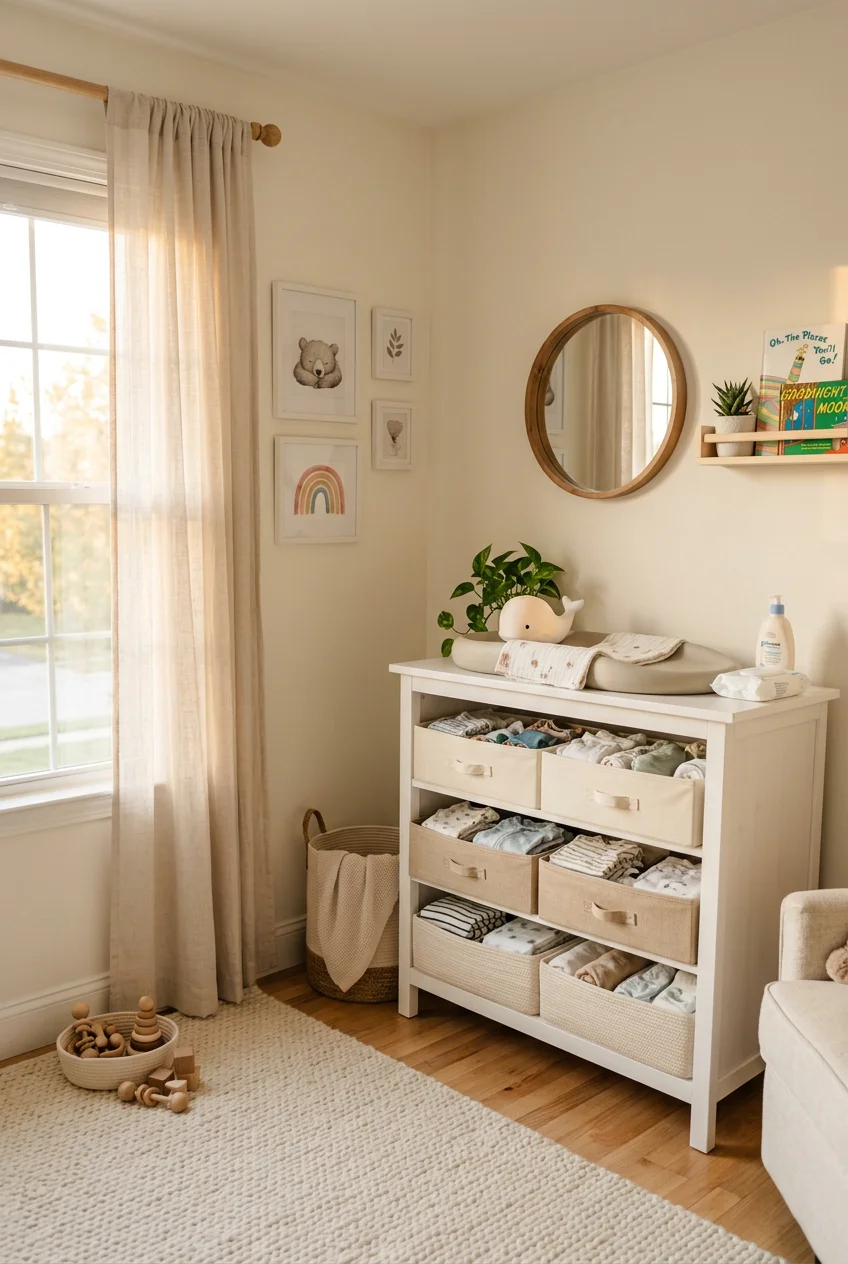
What’s Inside
- Embrace the 2026 Capsule Wardrobe Concept
- Sort by Size and Season Immediately
- Install Expandable Drawer Dividers for Tiny Items
- Master the File-Folding Method for Bodysuits
- Upgrade to Non-Slip Velvet Baby Hangers
- Maximize Vertical Space with a Double Hanging Rod
- Dedicate a Specific “Outgrown Bin” Inside the Closet
- Use Labeled Closet Dividers by Size
- Hack an IKEA PAX System for Custom Storage
- Reserve the Top Dresser Drawer for Diapering
- Hang Onesies Upside Down to Save Space
- Create an Overflow Drawer for Bulk Items
- Repurpose the Back of the Closet Door
- Protect Delicate Knits with Drawer Liners
- Prioritize Sustainable Fabrics in Your Clothes Baby Room Organization
- Utilize Under-Crib Storage for Off-Season Wear
- Maintain a Staging Hook for Tomorrow’s Outfit
Most people shove tiny socks and microscopic pants into a single drawer, thinking baby clothes organization is just about folding things small. It’s not. Real organization means treating a nursery closet like a high-functioning machine. When you’re running on two hours of sleep, the last thing you need is to dig through a tangled pile of mismatched pajamas just to find a clean 4 oz cotton sleeper. Visual chaos in a closet leads to morning stress. You need systems that dictate exactly where every single item belongs, from thick winter coats to the thinnest muslin burp cloths. If you only try one idea here, make it #7 (the dedicated outgrown bin). Here’s why: babies outgrow outfits mid-week, and mixing tight clothes with ones that fit ruins the whole process. Getting the too-small items out of sight instantly clears up your daily routine. It took me years to figure out that the less you see, the calmer you feel.
Skip this list if: You have a massive walk-in closet, custom cabinetry, and a full-time housekeeper handling the laundry. These strategies are for standard reach-in closets, tight dresser drawers, and parents who need to find a clean 3-6 month onesie at 2 AM without turning on the overhead light.
1. Embrace the 2026 Capsule Wardrobe Concept

Instead of overflowing drawers packed with novelty outfits, curate a minimalist collection of high-quality pieces. For a 3-6 month old, aim for exactly 7-8 bodysuits, 5-6 rompers, 4-5 footed sleepers, 3-4 pairs of pants, 2-3 lightweight jackets, 5-6 bibs, and 4-5 pairs of socks. This analytical approach saves time and money. Brands like Target’s Cloud Island offer cohesive color palettes that make mixing and matching easy. Sticking to a strict number keeps drawers from jamming and keeps the focus on what actually fits. You won’t waste time digging through stiff denim baby jeans to find that one soft bamboo sleeper you need. A tight capsule wardrobe forces you to do laundry regularly, which prevents stains from setting. The catch: it’s hard to keep this inventory when relatives gift you impractical, complicated outfits. You have to be ruthless about returning or donating items that don’t fit the capsule. Trust me.
2. Sort by Size and Season Immediately

A common mistake is mixing sizes, leading to frustration when searching for clothes that fit a squirming infant. As soon as you get new clothes, sort them into rigid piles like “Newborn,” “0-3 months,” and “3-6 months.” Factor in the season, too. A 6-9 month summer onesie won’t help if your baby hits that size in the dead of winter. Use clear plastic storage bins from The Container Store to hold off-season or future-size items on the top closet shelf. Label the outside with a thick black marker so you can see the contents from the floor. This method ensures your active drawers only hold what the baby can wear today. Best for: analytical parents who hate clutter. The drawback: this takes significant time and discipline after every baby shower or birthday to process the new inventory.
3. Install Expandable Drawer Dividers for Tiny Items

Baby clothes are small and become a jumbled mess the second you open a drawer. Products like OXO Tot Expandable Drawer Dividers are great for creating rigid compartments for socks, mittens, hats, and burp cloths. These typically expand from 11″L to 17″L and sit about 4.4″H, fitting most standard nursery dressers perfectly. A 2-pack usually costs $15 to $30, offering a cost-effective way to keep order. By creating physical barriers, you stop tiny 2 oz cotton socks from drifting into the pants section. The tension mechanism keeps dividers in place even when you yank the drawer open in a hurry. Best for: shallow dresser drawers that lack built-in compartments. The catch: internal springs in cheaper tension dividers can wear out, causing them to slip when the drawer is opened quickly.

Modanais Baby Diaper Caddy Organizer Cart
A dependable everyday pick — Modanais Baby Diaper Caddy Organizer Cart – 3 Tier Rolling Storage Car pulls in 347 ratings at 4.5 stars. Not flashy, just solid.
4. Master the File-Folding Method for Bodysuits

Instead of stacking clothes in wobbly towers, fold them vertically in drawers like files. This lets you see the top edge of every item at a glance, so nothing gets forgotten at the bottom of a pile. This works well for bodysuits, pajamas, and soft cotton pants. When you file-fold, you create a geometric uniformity that saves drawer depth. You can fit roughly 30% more in a standard dresser drawer this way compared to stacking. The visual clarity means you can spot the exact grey striped onesie you need without disturbing the rest of the laundry. It keeps fabric crisp and prevents heavy wrinkles from stacking. The drawback: it requires maintenance. If you get lazy on laundry day and just toss items in, the system collapses into a mess.
5. Upgrade to Non-Slip Velvet Baby Hangers

Tiny clothes slip off smooth plastic adult hangers instantly, ending up in a dusty pile. Opt for baby-sized velvet hangers, like 3 Sprouts Velvet Hangers, which measure 11.4”L x 0.25” thick x 8.07”H. Alternatively, brands like Member’s Mark offer 30-packs for around $9 to $10 at Sam’s Club, providing a non-slip surface that grips delicate garments. The ultra-slim profile of a velvet hanger means you can fit twice as many jackets and dresses on a single rod compared to thick wooden or plastic hangers. A uniform look also reduces visual noise, making the space feel intentional. The catch: wet or damp clothes can’t go on velvet hangers, as the moisture can cause the flocking dye to transfer onto light fabrics. You might also like: 15 Girl Toddler Room That Actually Work
6. Maximize Vertical Space with a Double Hanging Rod

A great way to use vertical space in a standard closet is to add a second, lower hanging rod. Because baby clothes are short, a single high rod leaves three feet of dead air underneath. Adding a lower rod doubles your capacity for onesies, dresses, and jackets. You can find simple, adjustable closet rods that hook onto the existing top rod for under $20 at Home Depot or Lowe’s. This is a mechanical fix that requires zero tools or drilling. Hang the everyday items on the lower rod and put special occasion or next-size-up items on the top. Best for: single-rod closets in older homes. The drawback: installing a second rod blocks floor space, eliminating room for tall hampers or large diaper boxes. You might also like: 18 Baby Girl Room Decorating Ideas for Every Budget

Modanais Baby Diaper Caddy Organizer Cart
A dependable everyday pick — Modanais Baby Diaper Caddy Organizer Cart – 3 Tier Rolling Cart with D pulls in 688 ratings at 4.5 stars. Not flashy, just solid.
7. Dedicate a Specific “Outgrown Bin” Inside the Closet

A frequent failure is letting too-small clothes clutter active drawers. Keep a designated bin, like a sturdy rope storage cube (usually $15 to $30 at Target), on the floor of the closet. As soon as you realize an outfit’s snaps won’t close, toss it into this bin. This keeps dead inventory from mixing with clothes that fit. Once the bin is full, tape it up, label it with the size, and move it to storage. This creates a frictionless exit strategy for outgrown clothes. Best for: homes with multiple children where hand-me-downs need to be saved. The catch: a floor bin takes up valuable real estate, so you might have to sacrifice space for shoes. You might also like: 17 Pink Toddler Room That Actually Work
8. Use Labeled Closet Dividers by Size

To navigate hanging clothes, use rigid dividers labeled by size (e.g., Newborn, 0-3M, 3-6M). Brands like Lucy Darling offer sets that cover sizes from Newborn up to 2T. These act like the sizing rings on retail clothing racks. When putting away laundry, these markers eliminate the guesswork of figuring out where the 6-month cardigans end and the 9-month jackets begin. It keeps the hanging rod segmented and logical. You won’t accidentally grab a 12-month sweater for a newborn because the physical divider marks the boundary. They are inexpensive and slip over standard rods in seconds. The drawback: if you use a thick wooden custom closet rod, standard plastic ring dividers often won’t fit, requiring specialized oversized dividers.
9. Hack an IKEA PAX System for Custom Storage

For a customized closet, the IKEA PAX wardrobe system is a functional choice. This modular system, costing around $455 for a basic nursery setup, allows for adjustable shelves, KOMPLEMENT drawers, and multiple rods. Because fittings can be moved in one-inch increments, the closet adapts as the baby’s clothing grows from tiny 6-inch onesies to bulky winter coats. It looks built-in but costs a fraction of custom carpentry. You can design the exact ratio of drawer to hanging space you need. Best for: long-term nursery-to-teen room conversions where you want furniture that lasts a decade. The catch: ensure your ceiling height is over 95 2/3 inches if you build the frames on the ground. Otherwise, they will wedge against the ceiling and get stuck.

Night Light for Kids, Baby Night Light with Sound Machine
Night Light for Kids punches above its price — 57 buyers rated it 4.5 stars. The kind of pick people reorder.
10. Reserve the Top Dresser Drawer for Diapering

Efficiency means keeping frequently used items at waist height. Reserve the top drawer of the dresser strictly for diapering. This includes diapers, wipes, rash creams, and three emergency onesies for blowouts. Use small, rigid bins or fabric organizers, like mDesign Fabric Drawer Organizers, to keep things separated. When you have one hand on a rolling infant, you need to open the drawer and grab a wipe without looking. Storing diapers in the top drawer removes the visual clutter of having a plastic caddy on the changing table. It keeps the nursery sleek. The drawback: dedicating the prime top drawer to diapers forces you to store daily clothing in lower, harder-to-reach drawers, which means more bending over on laundry day.
11. Hang Onesies Upside Down to Save Space

An unconventional way to hang onesies is to snap the crotch around the bottom bar of the hanger instead of stretching the neck over the top. This lets you fit 2 to 3 onesies per hanger, maximizing horizontal space. It also makes it easier to see the graphics on the front of the shirts. This works on standard velvet or wire hangers. It’s a simple trick that costs nothing but triples your hanging capacity for short items. You can group them by color or sleeve length for fast outfit selection. The catch: constantly snapping and unsnapping buttons around a hard plastic hanger bar can stretch the fabric around the metal snaps if pulled too aggressively. I learned that the hard way.
12. Create an Overflow Drawer for Bulk Items

Dedicate the deepest, lowest dresser drawer or a large bin in the closet as an “overflow” space. This zone is ideal for storing the next size up in clothing, extra thick winter blankets, or bulkier items like 40×40 inch muslin swaddles and hooded bath towels. Labeling these bins clearly (e.g., “3-6 Months – Next Up”) is crucial. When the baby hits a growth spurt, you don’t want to dig through the attic; you want the next size in the room. Keeping bulky towels out of the main clothing drawers prevents the space from looking jammed. Best for: parents who buy in bulk during seasonal sales. The drawback: because it’s out of sight at the bottom, it’s easy to forget what inventory you have stored down there.

YACHANCE Kids Sound Machine with Night Light Projector
If you want something that just works, YACHANCE Kids Sound Machine with Night Light Projector is a safe bet (71 reviews, 4.5 stars).
13. Repurpose the Back of the Closet Door

The back of the nursery closet door is prime real estate that usually goes ignored. Installing a basic over-the-door shoe organizer with clear pockets creates 24 compartments for tiny items. These cost between $10 and $25 at Walmart or Target. You can roll up swaddles, stuff tiny 3 oz soft-soled shoes, or organize bibs and rolled socks into the clear pouches. Because the pockets are transparent, you can see your accessories in two seconds. It eliminates the need for a dedicated sock drawer, freeing up dresser space for larger items like sweaters and jeans. Best for: tiny nurseries with zero floor space for furniture. The catch: the metal hooks that drape over the top can scrape paint off the door frame if the clearance is too tight.
14. Protect Delicate Knits with Drawer Liners

Rough wood inside older dressers will snag delicate knits and expensive bamboo fabrics. Line the bottom of every drawer with heavy-duty contact paper or non-adhesive grip liners. You can pick up rolls from local hardware stores for a few dollars. This creates a frictionless surface that protects the 1/2 mm threads of baby sweaters from splinters. It also prevents any residual wood oils or old varnishes from staining light fabrics yellow. Non-adhesive liners are better because they can be removed and wiped down if a bottle of baby oil leaks. It adds a finished look to the furniture interior. The drawback: if you use sticky contact paper, removing it years later can pull up the veneer of cheaper particle-board dressers, permanently damaging them.
15. Prioritize Sustainable Fabrics in Your Clothes Baby Room Organization

When planning your organization, materials matter as much as folding. Prioritize items made from 100% organic cotton or bamboo viscose. These fabrics are durable and can withstand the hot-water washing needed to remove blowout stains. A high-quality bamboo sleeper might cost more upfront, but its fibers stretch, meaning the baby can wear it for four months instead of two. This reduces the volume of clothing you need to store. Sustainable fabrics also fold flatter than cheap, stiff synthetic blends, taking up less cubic volume in your drawer dividers. A lean wardrobe of durable fabrics beats a massive wardrobe of cheap, pill-prone polyester. The catch: building a capsule wardrobe entirely out of premium sustainable fabrics carries a higher upfront cost, often pushing basic sleepers into the mid-range tier.

Baby Sound Machine, Momcozy White Noise Machine for Baby
Baby Sound Machine has been one of the most consistently praised picks in this category. 73 reviewers averaged 4.5/5.
16. Utilize Under-Crib Storage for Off-Season Wear

The footprint of a standard crib is 10 square feet of wasted floor space. Slide low-profile rolling storage bins underneath the crib to hold heavy winter coats, snowsuits, or summer swimwear. Look for bins under 6 inches high, such as long plastic latching boxes from The Container Store, to ensure they clear the bottom rail. This keeps bulky, rarely-used items out of the closet, freeing up the rod for daily wear. Because the bins have wheels, you can easily pull them out to vacuum underneath. Best for: small apartments where every square inch matters. The drawback: the area under a crib is a magnet for dust bunnies, meaning the lids of these storage bins will require frequent, heavy wiping to keep the nursery sanitary.
17. Maintain a Staging Hook for Tomorrow’s Outfit

Decision fatigue is real at 6 AM. Install a simple Command hook on the wall next to the changing table to act as an outfit staging area. Every night, pull one bodysuit, one pair of pants, and the necessary socks, and hang them on this hook. You can buy a pack of metal-finish Command hooks at Kroger for under $10. This creates a routine that forces you to check the weather and prepare the inventory the night before. When the baby wakes up screaming, you aren’t fumbling in the dark trying to match a green shirt with blue pants; the 4 oz outfit is already isolated and ready to go. It’s a tiny operational shift that improves morning efficiency. The catch: if you get lazy and start hanging three or four discarded outfits on the hook, it becomes an ugly, cluttered focal point on the nursery wall.
How we chose these ideas: These organizational strategies were selected based on criteria of renter-friendliness, cost, and immediate visual impact. We prioritized mechanical solutions that maximize cubic storage space without requiring power tools or permanent alterations to the room.
Organizing a nursery isn’t about buying cute baskets; it’s about engineering a space that functions under pressure. Implement the outgrown bin and the file-folding method first, and you’ll immediately notice the friction disappear from your daily routine. Pin this list to your nursery planning board so you have these measurements handy when you hit the hardware store. No exaggeration.
Frequently Asked Questions
What is the best way to organize baby clothes in a small room?
Maximize vertical space by installing a second hanging rod in the closet and using an over-the-door shoe organizer for small accessories like socks and bibs. File-fold bodysuits in drawers to increase capacity by 30%.
How do you store clothes the baby has outgrown?
Keep a dedicated rope storage bin on the floor of the nursery closet. Toss tight clothes into the bin immediately after trying them on. Once full, label the bin by size and transfer it to long-term storage.
Are velvet baby hangers worth the cost?
Yes. Velvet hangers have an ultra-slim 0.25-inch profile that doubles hanging capacity compared to thick plastic hangers. The flocking also prevents wide-neck garments from slipping off onto the closet floor.
How should I organize the nursery dresser drawers?
Reserve the top drawer strictly for diapering essentials and emergency blow-out outfits. Use expandable tension dividers in the middle drawers to separate file-folded bodysuits by sleeve length, and use the bottom drawer for bulky blankets.
