What’s Inside
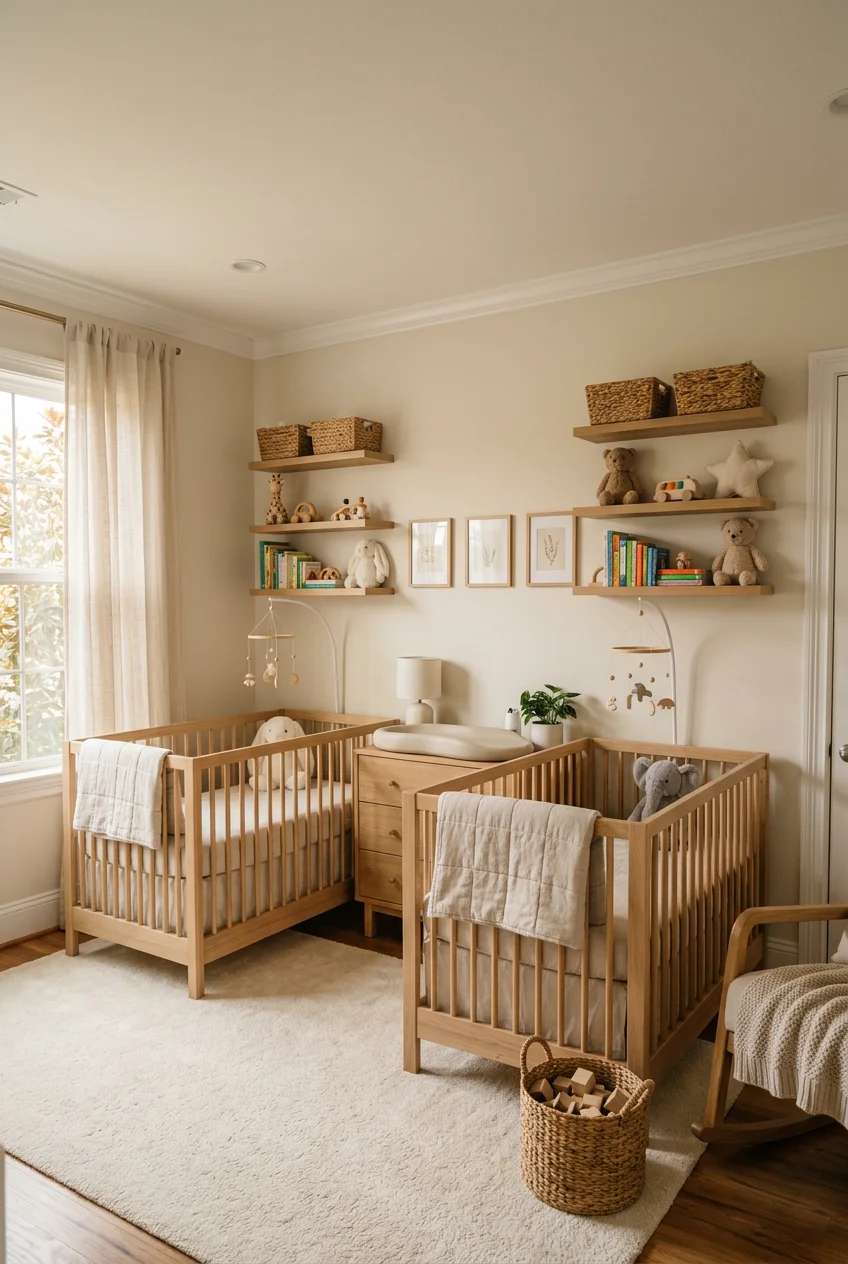
- Maximize Vertical Space with Floating Shelves
- Invest in Multi-Functional Furniture: Dresser as Changing Table
- Optimize Closet Space with Double Hanging Rods
- Utilize Drawer Organizers and File Folding
- Implement a Mobile Diaper Changing Station
- Strategic Use of Bins and Baskets
- Maximize Under-Crib Storage
- Color-Code the Chaos
- Install Wall-Mounted Sconces for Lighting
- Repurpose Over-the-Door Organizers
- Zone the Room by Function
- Use Pegboards for Modular Wall Storage
- Label Everything Clearly
- Opt for a Bookshelf Instead of a Toy Box
- Hide Bulky Gear Behind Curtains
- Keep a Donation Bin Handy
Most parents shove two cribs against opposite walls, split the closet down the middle, and call it a day. That approach to shared baby room organization usually ends with sleep-deprived adults tripping over stray sleep sacks at 3 AM. The smell of stale milk and the clatter of plastic toys underfoot isn’t exactly the peaceful nursery vibe you want. You’re dealing with double the stuff in half the footprint. It requires actual strategy, not just buying matching crib sheets. If you only try one idea from this list, make it #5. Here’s why: a rolling cart bypasses the need for two separate changing stations and keeps the messy stuff contained but mobile. Took me years to figure out that lesson.
Skip this list if you’re dealing with a massive 400-square-foot nursery suite with walk-in closets. These strategies are specifically engineered for tight quarters, awkward rental layouts, and standard 10×12 bedrooms where every single inch of floor space matters. If you have the luxury of empty corners, you don’t need this level of micro-organization.
1. Maximize Vertical Space with Floating Shelves

Most people hang these way too high and wonder why the room feels off. You want natural wood floating shelves, like the 24-inch ones from Pottery Barn Kids (budget to mid-range, typically $50-$150 per shelf), mounted exactly 18 inches above the dresser. This keeps the visual weight balanced. You’re storing frequently used items here. Think a 4 oz tub of zinc oxide cream, a stack of six rolled muslin washcloths, and the digital thermometer. Having these within arm’s reach for adults but safely out of a curious toddler’s grasp prevents daily disasters. The rough texture of the natural pine adds warmth to sterile painted walls, too. It brings the eye up, making a cramped room feel taller. The catch: heavy items will rip standard drywall anchors right out of the wall, so you absolutely must locate the studs before drilling. Trust me on this. If you miss the stud, that shelf is coming down the second a toddler yanks on it.
2. Invest in Multi-Functional Furniture: Dresser as Changing Table

Skip the bulky, single-purpose changing tables. They eat up floor space and become useless the second your kid is potty trained. Instead, use a dresser that pulls double duty for storage and diaper duty. A solid piece with at least 3-6 spacious drawers, like the Delta Children 3 Drawer Dresser (around $150-$250) or the Pottery Barn Kids Kendall Nursery Dresser (typically $700-$1000), holds everything you need. You just place a contoured, wipeable changing pad, like the Keekaroo Peanut Changer (budget around $130), right on top. The cold, squishy texture of the wipeable pad means you aren’t doing laundry every time there’s a blowout. You just wipe and go. Best for: small dark rooms where large furniture blocks the only window. The catch: the dresser height might wreck your back if you’re over six feet tall, as standard dressers sit a few inches lower than dedicated changing tables. You’ll be hunching over for every single diaper change.
3. Optimize Closet Space with Double Hanging Rods

Baby clothes are tiny, making standard closet rods incredibly inefficient. A common mistake is leaving three feet of empty air below a row of newborn onesies. You’re wasting prime real estate. Install a second tension rod (you can find heavy-duty ones on Amazon for $15-$30) exactly 30 inches below the existing one. This instantly doubles your hanging capacity without requiring power tools. Use baby-sized velvet hangers to prevent slippage, and add plastic closet dividers, like the 3 Sprouts Closet Dividers (typically under $15), to sort clothes by size. Group the 0-3 months items together, then the 3-6 months. The visual organization stops you from digging blindly in the dark while holding a crying infant. The catch: spring-loaded tension rods will slip and crash down under too much weight, so keep them strictly for lightweight cotton shirts and not heavy wool winter coats.

YACHANCE Kids Sound Machine with Night Light Projector
YACHANCE Kids Sound Machine with Night Light Projector has been one of the most consistently praised picks in this category. 71 reviewers averaged 4.5/5.
4. Utilize Drawer Organizers and File Folding

Tossing tiny socks and burp cloths loosely into a drawer creates a jumbled mess within two days. You can’t find anything when you actually need it. Adjustable wooden drawer organizers from The Container Store (usually $10-$40 per set) or cheap, stiff fabric bins from Dollar Tree ($1-$5 each) create rigid custom compartments. You need these boundaries. Once the compartments are set, file-fold the clothes vertically. This means folding a onesie so it stands up on its edge, allowing you to see every single item at a glance without rummaging. You’ll spot the exact 3-month striped sleeper instantly. Best for: tight budgets where custom closet built-ins aren’t an option. The catch: maintaining the vertical file-fold system requires actual discipline during laundry day. A sleep-deprived parent will eventually just shove unfolded clothes into the bins, defeating the entire purpose of the system.
5. Implement a Mobile Diaper Changing Station

For ultimate flexibility in shared baby room organization, a fixed changing pad isn’t always enough. You need a mobile station. The IKEA RASKOG utility cart (budget $30-$50) rolls smoothly across carpets and hardwood. Stock the top tier with a sleeve of diapers, an 8 oz pack of water wipes, and a 2 oz tube of barrier cream. The lower tiers hold rolled burp cloths and a spare swaddle. The metal clinking of the cart might be slightly noisy, but the convenience of wheeling the supplies right to the crib or the floor rug is unmatched. It prevents you from walking across a dark room and waking the other sleeping child. The catch: toddlers love using metal rolling carts as push toys. They will empty the diapers onto the floor and race the cart down the hallway, meaning you’ll need to park it behind a closed door eventually. You might also like: 16 Baby Boy Room Ideas Worth Trying
6. Strategic Use of Bins and Baskets

Open shelving looks cluttered the second you add actual baby gear. Baskets contain the visual noise. Natural textures like woven cotton and seagrass add warmth to the room while hiding the ugly plastic packaging of baby wipes. Pehr Canvas Storage Containers (typically $20-$60) fit perfectly into standard square cube organizers. For larger, bulky items like thick winter blankets or stuffed animals, the IKEA FLÅDIS Seagrass Baskets ($15-$30) hold their shape well. The rough, earthy smell of real seagrass adds a nice sensory element to a stuffy bedroom. Grouping items by category inside these bins stops the room from looking like a daycare explosion. The catch: natural seagrass sheds tiny, sharp fibers over time. You’ll be vacuuming up little brown dust particles from around the base of the basket on a weekly basis. You might also like: 15 Cozy Baby Nursery Decor Ideas for Any Style

Modanais Baby Diaper Caddy Organizer Cart
If you want something that just works, Modanais Baby Diaper Caddy Organizer Cart – 3 Tier Rolling Storage Car is a safe bet (347 reviews, 4.5 stars).
7. Maximize Under-Crib Storage

Most people completely ignore the massive footprint beneath the crib. It’s a dark, dusty void that collects stray pacifiers. You need to utilize this space with shallow, rolling storage bins from Target (usually under $40). Slide them right under the metal crib springs. This is the exact spot to store out-of-season clothes, extra 16 oz bottles of baby lotion, and bulk boxes of wipes. The clear plastic lets you see the inventory without pulling the whole bin out. It keeps the bulky backstock out of the main closet. Best for: renters who can’t drill into the walls for extra shelving. The catch: once your baby starts pulling up to stand, you have to drop the crib mattress to its lowest safety setting. When that happens, most hard plastic rolling bins simply won’t fit underneath the frame anymore. You might also like: 18 Toddler Princess Room That Actually Work
8. Color-Code the Chaos

When you’re running on two hours of sleep, reading tiny clothing tags is impossible. Shared baby room organization requires idiot-proof visual cues. Assign a specific color to each child. Buy a pack of plastic tubular hangers from Walmart (usually under $10). Use blue hangers for the toddler’s clothes and green hangers for the baby’s newborn gear. Apply this same color logic to the storage bins and the pacifier clips. Your brain processes color much faster than text, so you’ll never accidentally try to squeeze a two-year-old into a six-month onesie at dawn. The visual separation keeps the shared closet from blurring into one massive laundry pile. The catch: finding perfectly matching bins, hangers, and labels in your chosen specific colors becomes a massive headache the minute a store abruptly discontinues your selected shade.
9. Install Wall-Mounted Sconces for Lighting

Table lamps take up valuable surface area on dressers and nightstands. You need that space for sound machines and humidifiers. Swap the bulky lamps for plug-in wall sconces from Target or Amazon (budget to mid-range). Mount them securely to the wall flanking the crib or the rocking chair. A warm, dim amber bulb provides enough light to see a dirty diaper without signaling to the baby’s brain that it’s daytime. The soft click of the switch is much quieter than fumbling with a rotary lamp knob. It keeps the floor and tables completely clear of fragile ceramic lamp bases. The catch: plug-in cords hanging down the wall present a severe strangulation hazard for crawling babies. You must secure the cords completely flat against the drywall using hard plastic adhesive cord covers.

Modanais Baby Diaper Caddy Organizer Cart
If you want something that just works, Modanais Baby Diaper Caddy Organizer Cart – 3 Tier Rolling Cart with D is a safe bet (688 reviews, 4.5 stars).
10. Repurpose Over-the-Door Organizers

The back of the bedroom door is completely wasted space in most homes. A clear plastic pocket shoe organizer from The Container Store (typically $15-$30) fixes this instantly. Skip the shoes. Use the pockets to hold 2 oz tubes of diaper cream, nasal aspirators, digital thermometers, and tiny infant socks. The clear plastic lets you spot exactly what you need without digging through a dark drawer. It keeps all the tiny, easily lost medical supplies at eye level for adults but completely out of reach for a toddler. Best for: homes with kids or pets where small items need to be secured up high. The catch: hollow-core interior doors often warp, and sometimes the door won’t close properly if the metal over-door hooks are too thick for the doorframe clearance.
11. Zone the Room by Function

A shared room feels chaotic when toys mix with the sleeping areas. You have to create strict physical boundaries. Define a sleep zone, a play zone, and a changing zone. Use different textures on the floor to signal these shifts. A soft, plush 5×8 area rug from Costco (usually $50-$150) anchors the play space, while the cribs sit on the bare hardwood. Visually separating the functions helps both children understand the expectations for each area. The play rug is for loud blocks. The crib area is for quiet time. It stops the room from feeling like one big, overwhelming playroom. The catch: strict zones look great on a floor plan, but babies and toddlers will inevitably drag their noisy plastic toys right into the sleep zone anyway.
12. Use Pegboards for Modular Wall Storage

Standard shelves are rigid. A pegboard adapts to exactly what you need this week. The IKEA SKÅDIS pegboard (around $20-$40 for the base) mounts flush against the wall. You attach small plastic cups, hooks, and clips to hold oddly shaped items that clutter up drawers. Hang pacifier clips, small 4 oz bottles of daily lotion, and soft bristle hairbrushes. The modular nature means you can move the hooks higher as the baby grows into a toddler who reaches for things. The smooth white finish blends into most modern nursery designs without looking like a garage tool bench. Best for: beginners who aren’t sure exactly how much storage they’ll need yet. The catch: the custom hooks, bins, and elastic cords add up quickly at checkout, making the final setup much pricier than the bare board suggests.

Night Light for Kids, Baby Night Light with Sound Machine
If you want something that just works, Night Light for Kids is a safe bet (57 reviews, 4.5 stars).
13. Label Everything Clearly

You might know exactly where the size 4 diapers are, but your mother-in-law or the babysitter won’t. Unlabeled bins guarantee that clean laundry gets shoved into the wrong places. Grab a Brother P-Touch label maker from Amazon (typically $30-$50) and print clear, bold labels for every single drawer and opaque bin. Labeling the inside lip of the dresser drawers ensures things go back exactly where they belong. The satisfying click of the label maker and the crisp black text on white tape brings instant order to a messy closet. It removes all the guesswork for anyone helping out. The catch: standard adhesive labels peel off woven or textured fabric bins within a week. You’ll need to buy specific metal clip-on label holders to attach them securely to fabric.
14. Opt for a Bookshelf Instead of a Toy Box

Large, deep toy boxes are black holes. Toys go in, get crushed, and are never seen again until you empty the entire box onto the floor. Skip the chest and use a low-profile bookshelf, like the Room Essentials line from Target (usually under $40). Line up the board books and display the wooden toys openly on the shelves. Seeing the toys neatly arranged encourages toddlers to actually play with them rather than just dumping a box out. The flat top surface also provides a safe spot to set down a 6 oz bottle of water or a baby monitor. The catch: open shelving requires constant, daily tidying to look organized. If you don’t line the toys up every single night, the room immediately looks like a disaster zone.
15. Hide Bulky Gear Behind Curtains

Not everything in a baby room is aesthetically pleasing. Humidifier boxes, bulk diaper cartons, and awkward breast pump bags ruin the visual calm of a nursery. If you have an open closet or an awkward room alcove, hide the ugly gear. Install a heavy-duty tension rod with thick blackout curtains from Walmart (budget around $15-$30). Pulling the heavy fabric shut instantly erases the visual clutter. The soft drape of the curtain adds a nice textural element to the room, softening the hard edges of the furniture. It’s a quick fix for spaces lacking actual closet doors. The catch: crawling babies and toddlers love playing hide-and-seek behind curtains. They will pull on the fabric, which can easily yank a weak tension rod right down onto their heads. Learned that the hard way.

Parker Baby Diaper Caddy
If you want something that just works, Parker Baby Diaper Caddy – Nursery Storage Bin and Car Organizer for D is a safe bet (172 reviews, 4.5 stars).
16. Keep a Donation Bin Handy

Babies outgrow clothes at an alarming rate. If you put a too-small onesie back into the clean drawer, you’re just creating future frustration. You need a dedicated exit strategy for outgrown gear. Hang a simple canvas tote bag, like the classic ones from Trader Joe’s (under $5), on a sturdy hook inside the closet. The second you try to snap a 0-3 month sleeper and realize it’s too tight, toss it directly into the tote. Do not put it back in the drawer. This keeps the active wardrobe strictly filled with clothes that actually fit. Best for: minimalists who hate holding onto unnecessary clutter. The catch: if you don’t physically take the bag to a donation center or storage bin monthly, it just becomes another bulky sack of fabric stealing valuable closet space.
How we chose these ideas: We evaluated these organization methods based on strict renter-friendliness, upfront cost, and the actual daily effort required to maintain them. The focus remained entirely on strategies that maximize vertical space and provide high visual impact without requiring major drywall repairs or power tools.
Creating a functional shared space doesn’t require a massive budget or a custom closet build-out. It just requires being ruthless about what stays and being smart about where it lives. Stop folding tiny socks and start utilizing your vertical wall space. Pin this list for your next weekend organizing sprint, and tackle just one drawer or closet rod at a time. It’s the only way to keep your sanity intact when two kids are sharing four walls.
Frequently Asked Questions
How do you split a small closet for two babies?
Install a second tension rod thirty inches below the main one to double your hanging space. Use color-coded velvet hangers for each child and insert plastic sizing dividers to keep the newborn onesies completely separate from the toddler gear.
What is the best way to store diapers in a shared room?
A mobile metal rolling cart is the most efficient solution. Stock the top tier with diapers and wipes, allowing you to wheel the station directly to the floor or crib without waking the other sleeping child.
How can I hide baby gear without closet doors?
Mount a heavy-duty tension rod across the open alcove and hang thick blackout curtains. Pulling the fabric shut instantly hides bulky humidifier boxes and diaper cartons while adding a soft, textural element to the bedroom walls.
Do I really need a changing table for two kids?
No, dedicated changing tables waste valuable floor space. Use a standard three-drawer dresser topped with a wipeable, contoured changing pad instead. This provides ample clothing storage underneath and transitions easily into regular furniture once they outgrow diapers.
