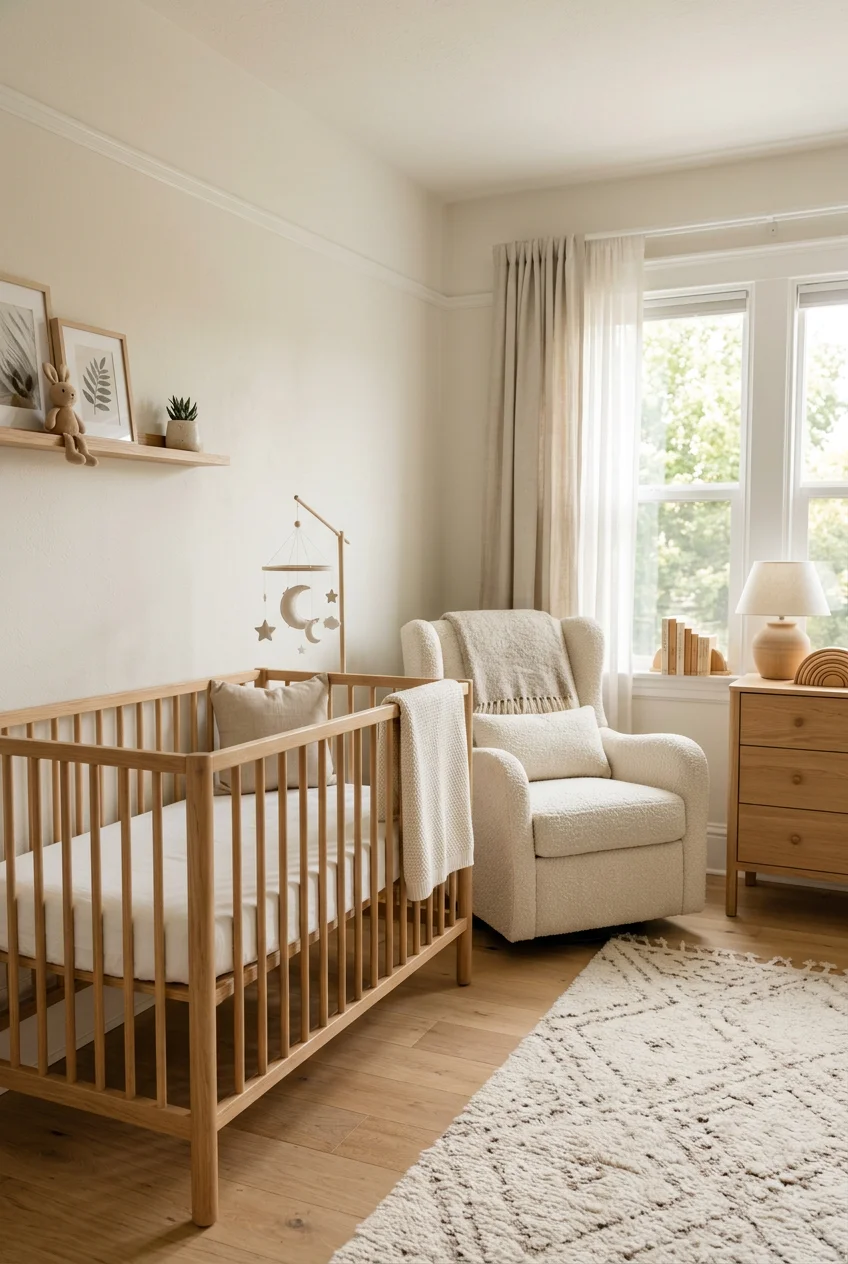
What’s Inside
- Prioritize a Firm, Bare Sleep Surface
- Maintain Optimal Room Temperature
- Strategic Crib Placement in a Living Newborn Room Setup
- Install True 99.9 Percent Blackout Curtains
- Swap Traditional Gliders for Structured Armchairs
- Layer Washable Vintage-Inspired Rugs
- Use Closed Storage for the Visual Chaos
- Install Dimmer Switches Everywhere
- Choose Breathable, Neutral Crib Sheets
- Hide the Diaper Pail in Plain Sight
- Scale Down the Changing Station in Your Living Newborn Room Setup
- Bring in Real Plants for Air Quality
- Hang Art at Adult Eye Level
- Layer Ambient Lighting Instead of Overhead Glare
- Skip the Dedicated Changing Table
- Sound Machine Placement Matters
- Add Adult-Friendly Side Tables
Most people treat a nursery like a separate, cartoon-themed universe. That’s why it feels jarring when you walk in. Creating a cohesive newborn space means blending adult aesthetics with infant safety. It shouldn’t feel like a preschool explosion. It needs to flow with the rest of your home. Designing a space that works for a sleep-deprived adult and a fragile infant requires ruthless editing. Focus on function over fluff. You aren’t just decorating a room. You’re engineering an environment for survival. If you only try one idea here, make it #4. True blackout curtains solve more sleep issues than any expensive gadget. Trust me.
Skip this list if: You want a hyper-themed, primary-colored room covered in licensed characters. This approach is for parents who want the nursery to feel like an extension of their home. We’re focusing on muted tones, structured furniture, and long-term utility. If you prefer neon plastics and wall-to-wall murals, these guidelines won’t align with your vision.
1. Prioritize a Firm, Bare Sleep Surface

The American Academy of Pediatrics says to place infants on their backs on a firm, flat surface to reduce SIDS risk. Most people mess this up by prioritizing looks over safety, filling the crib with plush blankets and decorative pillows. Your crib mattress should be extra-firm, ideally an 8 to 10 on a firmness scale. It shouldn’t conform to the baby’s head at all. Ensure there are no gaps between the mattress and the frame. If you can fit more than two fingers in the space, it’s a suffocation hazard. Look for brands like Naturepedic; they meet strict standards and avoid toxic off-gassing. Their models usually fall in the mid-range to premium price bracket. A bare crib looks stark, but it’s non-negotiable for the first year. The catch: these high-density organic mattresses weigh a ton. It’s a sweaty, frustrating wrestling match every time you change the sheets.
2. Maintain Optimal Room Temperature

Temperature control is underrated. You need to keep the nursery between 68 and 72 degrees Fahrenheit. This range is backed by the AAP to prevent overheating, which is a major SIDS risk factor. Babies are bad at regulating their own body heat. A common mistake is overdressing the infant in fleece while blasting the heat. Use a reliable standalone room thermometer, like the basic digital models from The Lullaby Trust, to monitor things accurately. Don’t rely on your home’s central thermostat. It often reads the hallway instead of the actual nursery. A simple sleep sack over a cotton onesie is usually plenty in a 70-degree room. The catch: keeping one room at exactly 68 degrees often means the rest of the house feels chilly in the winter.
3. Strategic Crib Placement in a Living Newborn Room Setup

Where you put the crib matters more than how it looks. Position it on an interior wall, at least 3 feet away from windows, blinds, curtains, cords, and vents. Most people shove the crib under a window because it’s cute. Then they wonder why the baby wakes up freezing in December or sweating in July. Interior walls offer better temperature stability and buffer outside noise. Furthermore, the AAP suggests room-sharing for the first six months, ideally up to a year, as it can reduce SIDS risk by 50 percent. This means your newborn setup might temporarily live in your bedroom. Best for: renters who can’t upgrade drafty windows. The catch: the 3-foot rule often dictates the entire layout. It sometimes forces awkward, asymmetrical arrangements that drive design purists crazy.

Beautiful Wooden Baby Closet Dividers Set of 7
A dependable everyday pick — Beautiful Wooden Baby Closet Dividers Set of 7 – Double-Sided Organize pulls in 11 ratings at 4.5 stars. Not flashy, just solid.
4. Install True 99.9 Percent Blackout Curtains

Light management dictates sleep. Blackout curtains are crucial for blocking up to 99.9 percent of external light, which signals the brain to produce melatonin. Skip the sheer, breezy linen panels sold in baby boutiques. They look nice but are useless at 5:00 AM in June. You need heavy, dense fabric with a dedicated blackout lining. Target’s Threshold line makes excellent, budget-friendly panels that work. Mount the rod at least 4 inches above the window frame and extend it 3 inches past the sides to stop light halos. The room should be dark enough that you can’t see your hand in front of your face. The catch: these curtains are heavy. They require sturdy drywall anchors that leave substantial holes in your walls.
5. Swap Traditional Gliders for Structured Armchairs

The traditional nursery glider, with its wooden parts and plush cushions, screams ‘baby room’ and rarely works elsewhere. Instead, opt for a structured, adult-style armchair or a modern swivel chair. Look at Crate & Barrel for options with performance fabrics. A tall back is essential for head support during 3:00 AM feedings. You want a seat depth of around 21 inches so your feet touch the floor. Slipcovered options are smart because they’re machine-washable after inevitable spit-up. Best for: homes with pets, since performance velvet repels hair. The catch: structured armchairs rarely have that deep, classic rocking motion that colicky babies demand. I learned that the hard way. You might also like: 20 Cozy Whimsical Nursery Lighting Ideas You Haven’t Thought Of
6. Layer Washable Vintage-Inspired Rugs

Nurseries need rugs that handle disasters. Thick, high-pile wool rugs look luxurious but are impossible to clean after a blowout. A smarter approach is a washable, low-pile rug with a distressed pattern. The pattern hides stains, and the washability saves your sanity. Ruggable offers 8×10 options in muted designs that anchor the room without looking infantile. These run in the mid-range price tier. Place the front legs of the crib and armchair on the rug to tie the space together. A low-pile rug also makes it easier to roll a bassinet across the floor. The catch: the edges of these two-piece systems tend to curl after a dozen washes, creating a minor tripping hazard. You might also like: 15 Lovely Nursery Lighting Ideas to Transform Your Space

Rattan Divided Scalloped Basket
Rattan Divided Scalloped Basket punches above its price — 17 buyers rated it 4.5 stars. The kind of pick people reorder.
7. Use Closed Storage for the Visual Chaos

Open shelving is a trap. It looks great on Pinterest styled with wooden blocks. In reality, it becomes a dumping ground for half-empty lotion bottles and mismatched socks. Visual clutter increases stress. Hide the chaos behind closed doors or in deep drawers. The IKEA Hemnes 8-drawer dresser is a staple for a reason. It provides massive storage and a wide top for a changing pad, usually for under $350. Use spring-loaded drawer dividers to keep onesies organized. Keeping the daily detritus out of sight makes the room feel like a calm, adult space. Best for: tight budgets. The catch: assembling an 8-drawer flat-pack dresser takes half a weekend and will test your marriage. You might also like: 17 Twin Nursery Boy And Girl That Actually Work
8. Install Dimmer Switches Everywhere

Harsh overhead lighting is the enemy of a sleepy baby. Flipping on a standard 60-watt bulb at 3:00 AM will wake both you and the infant. Installing dimmer switches is a cheap, high-impact upgrade. Lutron makes reliable switches that cost under $30 and take 15 minutes to install. Keeping the lights at a 10 percent glow lets you handle diaper changes without halting melatonin production. It shifts the room from a clinical space to a cozy environment. Best for: homeowners who can modify fixtures. The catch: working with wiring requires turning off the breakers and basic maintenance skills, which intimidates many people.
9. Choose Breathable, Neutral Crib Sheets

You don’t need sheets covered in cartoon elephants. Solid, neutral colors or subtle stripes in breathable fabrics look sophisticated and blend with your home. Stick to 100 percent organic cotton or percale. These are breathable, helping regulate baby’s temperature. Burt’s Bees Baby makes excellent, tightly fitted organic cotton sheets around $20. Buy at least three identical ones. When a 2:00 AM leak happens, you don’t want to search for a matching set. Just grab the backup. The catch: organic cotton sheets shrink in the dryer, making them a very tight, frustrating fit over an extra-firm mattress.

Modanais Baby Diaper Caddy Organizer Cart
Modanais Baby Diaper Caddy Organizer Cart – 3 Tier Rolling Storage Car punches above its price — 347 buyers rated it 4.5 stars. The kind of pick people reorder.
10. Hide the Diaper Pail in Plain Sight

Plastic diaper pails absorb odors over time. They also look distinctly like baby gear. A better option is a steel pail; it doesn’t hold smells and looks like a sleek trash can. The Ubbi steel diaper pail is a popular choice because it uses standard kitchen trash bags, saving you from proprietary refill rings. It sits quietly and locks odors in with rubber seals. Choose a matte white or neutral color so it blends into the wall. It’s a functional necessity that doesn’t have to ruin the aesthetic. The catch: the steel body shows fingerprints and dust, requiring constant wiping.
11. Scale Down the Changing Station in Your Living Newborn Room Setup

You don’t need a massive changing table that’ll be useless in 18 months. Use the top of a standard dresser. Skip fabric pads that need constant washing. A wipeable, contoured changing pad is more practical. The Keekaroo Peanut changer is made of a solid, impermeable material that you can wipe down instantly. It grips the dresser securely without needing to be drilled into the wood. It costs more, usually around $150, but saves hours of laundry. Best for: small rooms where every piece of furniture must multitask. The catch: the solid material feels cold against the baby’s back at night, often causing them to cry.
12. Bring in Real Plants for Air Quality

Adding greenery is the fastest way to make a room feel grounded. Plants add texture and improve air quality. Avoid toxic plants and stick to hardy varieties. A large snake plant from Home Depot requires almost zero maintenance, thrives in low light, and acts as a natural purifier. Place it in a heavy ceramic pot on the floor, or put a trailing plant like a pothos on a high shelf. Real plants prevent the room from feeling sterile. They bring a necessary organic element to the space. The catch: you have to remember to water them, which is surprisingly hard when you’re operating on two hours of sleep.

PeraBella Baby Diaper Caddy Organizer with Handle
PeraBella Baby Diaper Caddy Organizer with Handle is sturdier in person than the photos suggest — over 23 buyers gave it 4.5 stars.
13. Hang Art at Adult Eye Level

One of the biggest mistakes is hanging art too low, catering to a baby who can barely see past twelve inches. Hang your art at standard adult eye level, roughly 57 to 60 inches from the floor. Choose sophisticated pieces—abstract prints, moody landscapes, or black-and-white photography. Minted offers fantastic oversized framed canvases that look grown-up. Avoid spelling the baby’s name in giant wooden letters; it dates the room instantly. A large, singular piece of art makes a small room feel grander. Best for: high ceilings. The catch: custom framing for oversized art gets expensive quickly.
14. Layer Ambient Lighting Instead of Overhead Glare

Beyond dimmer switches, you need multiple sources of soft light. A single overhead light casts harsh shadows. Bring in a floor lamp next to the nursing chair and a small table lamp on the dresser. Use warm-toned LED bulbs—look for 2700K on the box—to create a cozy, amber glow. Target’s Threshold line has brass and ceramic table lamps for under $60. Smart bulbs are also useful; program them to turn on at 10 percent brightness from your phone before you walk in. Layered lighting makes the space feel like a high-end hotel room. The catch: multiple lamps mean multiple electrical cords, which you’ll eventually have to hide or secure behind furniture once the baby starts crawling.
15. Skip the Dedicated Changing Table

I mentioned using a dresser earlier, but it’s worth repeating: don’t buy furniture labeled ‘changing table.’ They are flimsy, have useless open shelving, and have zero utility once the child is potty trained. A sturdy, adult-sized dresser from West Elm or a vintage shop will serve your child until they leave for college. Ensure the dresser is deep enough—at least 18 inches—to hold a pad safely. Secure it to the wall with anti-tip brackets immediately. This is non-negotiable, as toddlers will try to climb the drawers. You get better design by shopping outside the baby department. The catch: standard adult dressers are usually 34 to 36 inches high, which might strain the lower backs of taller parents.

Modanais Baby Diaper Caddy Organizer Cart
If you want something that just works, Modanais Baby Diaper Caddy Organizer Cart – 3 Tier Rolling Cart with D is a safe bet (688 reviews, 4.5 stars).
16. Sound Machine Placement Matters

A sound machine is a critical tool for masking household noise, but where you put it affects how well it works. Don’t put it inside or on the crib. Place it about 6 feet away from the baby’s head, ideally between the crib and the door. The Hatch Rest is a standard choice because it combines a sound machine with a customizable nightlight, controlled via an app. Keep the volume around 50 decibels, like a gentle shower. It creates a consistent audio environment that cues the baby for sleep. Best for: thin walls in older apartments. The catch: the app connectivity relies on your Wi-Fi, and it occasionally drops out, requiring a manual reset.
17. Add Adult-Friendly Side Tables

When you’re trapped under a sleeping infant, you need a place for your water bottle, phone, and a burp cloth. A tiny, wobbly nursery stool won’t cut it. Bring in a substantial, adult-friendly side table. Look for something heavy with a drawer or a lower shelf. Pottery Barn offers solid wood end tables around 18 to 20 inches high, which is perfect for reaching without leaning over and disturbing the baby. A sturdy table won’t tip over if you bump it in the dark. It grounds the seating area and makes the space functional. The catch: the sharp, 90-degree corners on solid wood tables become a safety hazard once the baby starts pulling up. It took me years to figure out that rounded edges are a lifesaver.
How we chose these ideas: We evaluated these setups based on renter-friendliness, cost, and long-term impact. The focus was on identifying solutions that require minimal structural changes while maximizing daily functionality for both parent and child.
Creating a beautiful, functional space doesn’t mean sacrificing your home’s aesthetic. Stick to these practical choices, and you’ll build a room that serves you just as well as it serves your baby. Save this list and pin your favorite ideas for when you’re ready to start arranging furniture.
Frequently Asked Questions
What is a living newborn room setup?
A living newborn room setup integrates the nursery into the home’s overall aesthetic. It uses adult-friendly furniture, neutral palettes, and practical storage, avoiding hyper-themed cartoon decor while strictly adhering to infant safety guidelines.
Where is the safest place to put a crib?
Place the crib on an interior wall, at least 3 feet away from windows, blinds, cords, and vents. This prevents drafts, ensures temperature stability, and keeps the baby away from strangulation hazards.
Why should I use a dresser instead of a changing table?
A sturdy adult dresser offers more storage space, hides visual clutter behind closed drawers, and remains useful long after the child is potty trained. Dedicated changing tables usually become obsolete within two years.
What temperature should a newborn room be?
The nursery should be kept between 68 and 72 degrees Fahrenheit. This specific range helps prevent infant overheating, which is a significant risk factor for Sudden Infant Death Syndrome.
