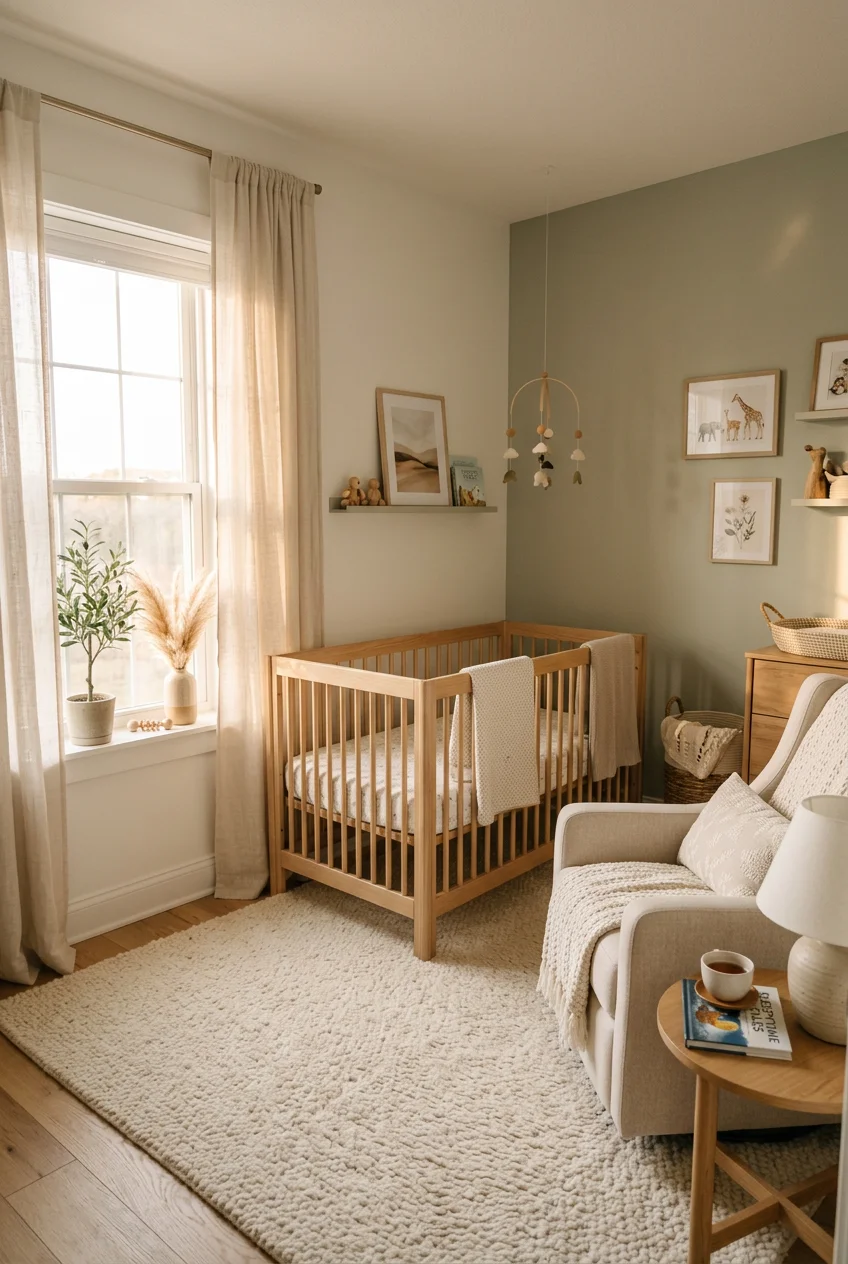
What’s Inside
- The Foundation: CPSC-Compliant Cribs
- The 8-to-10 Firmness Rule for Mattresses
- Climate Control: Dialing in Temp and Humidity
- Dimmable Red Lighting for 3 AM Feeds
- Advanced Wellness Tracking Monitors
- The Wipe-Clean Changing Pad Revolution
- Odor-Locking Diaper Pails That Actually Work
- Ergonomic Gliders for the Feeding Nook
- The 20-Inch Side Table Rule
- Vertical Storage and Anti-Tip Anchors
- Modular Closet Systems for Tiny Clothes
- HEPA Air Purifiers for Tiny Lungs
- Tamper-Resistant Outlet Covers
- Cordless Window Treatments
- True 100% Blackout Curtains
- High-Contrast Art for Visual Development
- The Bare Crib Aesthetic
- Bassinets for the First Six Months
- Layered Rugs for Sound Dampening
- Washable Wallpaper for a Newborn Room Setup
Picture this. You walk into a nursery featuring a towering plush giraffe, layers of ruffled crib skirts, and a mountain of decorative pillows. It looks great in a photo. Most people design a room for a magazine spread, not for a sleep-deprived Tuesday at 3 AM. When you’re running on two hours of sleep and wrestling a blowout diaper in the dark, those pillows are just obstacles. Creating a safe, functional space means choosing strict safety standards and smart layouts over looks. We aren’t building a showroom. We’re building a practical care station for a tiny human. If you only try one idea here, make it #15. Why? True blackout curtains are the single most effective way to help a newborn nap during the day.
Skip this if: You want a heavily styled, maximalist nursery with plush crib bumpers, vintage heirloom cribs, and layered bedding. This guide focuses entirely on functional, CPSC-compliant, minimalist safety. If you care more about aesthetics than current sleep guidelines, these tips won’t work for you.
1. The Foundation: CPSC-Compliant Cribs

The cornerstone of a safe room is a crib that follows current Consumer Product Safety Commission (CPSC) standards. People often get this wrong by using vintage family heirlooms. Drop-side rails are illegal in the U.S. now. You need slats spaced no more than 2 3/8 inches apart. That’s about the width of a soda can. If a can fits through, a baby’s head can get trapped. A new, CPSC-certified crib from places like Target, Pottery Barn Kids, or IKEA usually runs $150 to $800. Stick to simple, stationary designs with solid hardware. The catch: solid wood cribs at the high end are heavy. You’ll need two people to assemble them, and moving them later is a total headache.
2. The 8-to-10 Firmness Rule for Mattresses

A safe crib needs a proper mattress. It should be firm and flat, with no sags. The American Academy of Pediatrics (AAP) recommends this to cut down SIDS risk. A mattress should sit between an 8 and 10 on a firmness scale. It must fit snugly. You shouldn’t be able to fit more than two fingers between the mattress and the crib frame. Standard full-size crib mattresses are 27 1/4 inches wide and 51 5/8 inches long, with a max thickness of 6 inches. Budget $100 to $300 at stores like Walmart or Crate & Kids. The catch: ultra-firm mattresses feel like a brick, which makes parents doubt their comfort and mistakenly add unsafe padding. Best for: anxious first-time parents prioritizing safe sleep.
3. Climate Control: Dialing in Temp and Humidity

Keep the room between 68 and 72 degrees Fahrenheit (20 to 22 degrees Celsius) to prevent overheating. Aim for 45% to 55% humidity to help with breathing and dry skin. If the air gets too dry, a cool-mist humidifier like the Levoit Classic 300S ($60 to $90) adds moisture back. Place it on a dresser, pointing away from the crib. The catch: ultrasonic humidifiers need distilled water to stop white mineral dust from coating your furniture. That adds a constant grocery run to your chores. Don’t use tap water unless you want to dust every day. Learned that the hard way.

Beautiful Wooden Baby Closet Dividers Set of 7
Beautiful Wooden Baby Closet Dividers Set of 7 – Double-Sided Organize is sturdier in person than the photos suggest — over 11 buyers gave it 4.5 stars.
4. Dimmable Red Lighting for 3 AM Feeds

Overhead lights are too harsh for late-night wakeups. Install dimmable overhead lights and a soft, warm night light. Red or amber light is best because it won’t kill melatonin production for you or the baby. The Hatch Rest+ ($60 to $90) combines a light and sound machine you can control from your phone. For a cheaper, portable option, the G Keni Nursery Night Light runs about $20 to $30. The catch: red light ruins color accuracy, making it nearly impossible to spot a diaper rash or tell if a diaper is wet or dirty without turning on a brighter lamp.
5. Advanced Wellness Tracking Monitors

Basic audio monitors are outdated. Smart monitors with wellness tracking are standard now. The Owlet Dream Sock ($300 to $400) provides real-time pulse and oxygen data. Others like the Nanit Smart Baby Monitor and CuboAi Smart Baby Monitor offer HD video and environmental tracking for $200 to $350. These give you hard data on room temp and sleep patterns. The catch: these need a solid, constant Wi-Fi connection. If your internet drops, the app notifications will wake you up in a panic. They also provide so much data they can actually increase parent anxiety.
6. The Wipe-Clean Changing Pad Revolution

Fabric covers are a trap. You’ll wash them every day. Get a sturdy changing table with a wipeable pad that has a concave design and a 2-inch guardrail. The Keekaroo Peanut Changer ($130 to $150) or the Skip Hop Wipe-Clean Changing Pad ($70 to $90) makes cleanup easy. Just wipe it with a sanitizing cloth and move on. Always keep one hand on your baby and use the safety strap. The catch: the rubbery surface feels cold, so your baby might flinch when you lay them down. Best for: parents avoiding extra laundry.

Modanais Baby Diaper Caddy Organizer Cart
A dependable everyday pick — Modanais Baby Diaper Caddy Organizer Cart – 3 Tier Rolling Cart with D pulls in 688 ratings at 4.5 stars. Not flashy, just solid.
7. Odor-Locking Diaper Pails That Actually Work

Plastic pails absorb odors over time. No amount of scrubbing fixes it. Upgrade to a steel option. The Ubbi Steel Diaper Pail ($70 to $80) works well because steel is non-porous. It uses standard kitchen trash bags, saving you money on proprietary refills. Keep it next to the changing station for easy one-handed disposal. The catch: the sliding lid can pinch your fingers if you’re rushing. Also, the moment you slide it open, the trapped smell hits you right in the face. No exaggeration.
8. Ergonomic Gliders for the Feeding Nook

A good glider is a must for nighttime feedings. Look for a smooth, quiet glide and tall, supportive armrests to prop up your elbows. Brands like Babyletto ($500 to $800) or Monte Design ($1,000 to $1,500) offer great lumbar support. You’ll spend hundreds of hours in this chair, so don’t skimp on your back. The catch: motorized recliners need to be plugged in, which limits where you can put them without creating a tripping hazard with the power cord. You might also like: 15 Colorful Nursery Ideas for Every Budget
9. The 20-Inch Side Table Rule

You need a surface next to the glider. A small table needs to be 20 to 24 inches tall to match the armrest height. This holds your water, snacks, burp cloths, and a lamp. Target and IKEA sell simple tables under $50. Having items within reach means you won’t have to disturb a sleeping baby to grab a drink. The catch: a table with sharp corners becomes a major hazard once the baby starts pulling up to stand. You’ll eventually have to add ugly foam bumpers to it. You might also like: 20 Lovely Space Saving Small Nursery Ideas for Every Budget

PeraBella Baby Diaper Caddy Organizer with Handle
PeraBella Baby Diaper Caddy Organizer with Handle punches above its price — 23 buyers rated it 4.5 stars. The kind of pick people reorder.
10. Vertical Storage and Anti-Tip Anchors

Dressers keep the room functional. You must anchor all dressers and tall furniture to the wall with anti-tip kits. You can buy these for $10 to $20 at Home Depot or Lowe’s. Inside the drawers, use dividers to organize tiny clothes by size. A room isn’t finished until every heavy piece is bolted to the studs. The catch: drilling into drywall requires finding studs, which is a pain in older homes with plaster walls. Heavy-duty anchors work, but they leave holes you’ll have to patch later. You might also like: 15 Toddler Boy Room Ideas You Need to See
11. Modular Closet Systems for Tiny Clothes

Standard closets waste space. A single hanging rod at adult height leaves three feet of empty space below baby clothes. Consider modular systems like the IKEA PAX to use that vertical space. Install double rods and use small canvas bins for socks and accessories. Group clothing by age so you aren’t digging through piles. The catch: assembling a full system takes a whole weekend and requires a ton of floor space to build the frames before lifting them up. Best for: small, dark rooms without dresser space.
12. HEPA Air Purifiers for Tiny Lungs

Newborns have developing respiratory systems. Air quality matters. A true HEPA air purifier removes dust, pollen, and pet dander. Place it away from the crib and out of reach. The Coway Airmega 200M ($150 to $250) or the Levoit Core 300S ($90 to $120) are quiet while filtering the air. The white noise they make also helps babies sleep. The catch: replacement filters cost $30 to $50 every six months, a hidden recurring cost you’ll need to budget for.

Criusia Drawer Organizer Clothes
Criusia Drawer Organizer Clothes punches above its price — 12 buyers rated it 4.5 stars. The kind of pick people reorder.
13. Tamper-Resistant Outlet Covers

Childproofing starts before the baby can crawl. Once furniture is anchored, install tamper-resistant outlet covers on all unused outlets. A pack of sliding covers costs $10 to $20. Replace the standard wall plates with these sliding versions instead of using small plastic plugs, which are a choking hazard. The catch: the sliding plate style requires real finger strength to use. You’ll find yourself fighting the outlet every time you need to plug in the vacuum.
14. Cordless Window Treatments

Traditional corded blinds are a strangulation hazard. Replace them immediately with cordless versions. You just push up or pull down on the bottom rail. This is a non-negotiable safety upgrade. You can find basic cordless cellular shades at hardware stores, or order custom sizes online. The catch: custom cordless shades from places like Blinds.com easily exceed $150 per window, making this one of the most expensive hidden costs.
15. True 100% Blackout Curtains

To promote good sleep, install curtains that block 100% of external light. This helps set the baby’s internal clock by signaling it’s time to sleep, even at noon. Brands like Nicetown or Eclipse offer effective panels for $30 to $70 each. Mount the rod high and wide to prevent light from bleeding through the edges. The catch: heavy panels need sturdy rods and wall anchors to keep them from ripping out of the drywall. Best for: rooms facing bright streetlights or direct afternoon sun.

Rattan Divided Scalloped Basket
A dependable everyday pick — Rattan Divided Scalloped Basket pulls in 17 ratings at 4.5 stars. Not flashy, just solid.
16. High-Contrast Art for Visual Development

Newborns have bad vision. Soft pastel art just looks like a blurry blob to them. High-contrast black and white patterns help them see better. Use a few art cards or a mobile placed safely out of reach, at least 12 inches above the crib mattress. This grabs their attention during awake time. You must remove mobiles once your baby is 5 months old or can push up on their hands and knees. The catch: high-contrast geometric art often clashes with soft, muted nursery themes, forcing a compromise on your design vision. Trust me on this.
17. The Bare Crib Aesthetic

A common mistake is over-decorating the crib. The AAP strongly advises against bumpers, pillows, loose blankets, quilts, or soft toys due to suffocation risks. Bare is best. A fitted sheet over a firm mattress is all you need. This minimalist approach is the only safe option. Save the cute blankets for tummy time on the floor. The catch: a bare crib looks stark to adults used to cozy, layered bedding. You’ll have to retrain your brain to see bare as beautiful and safe.
18. Bassinets for the First Six Months

A bassinet is a practical choice for the first few months. It lets you keep your newborn safely in your bedroom, which is the recommended practice for at least the first six months. Bassinets take up way less floor space than a full crib. Models with mesh sides ensure breathability. The catch: bassinets have lower weight limits. Once the baby starts rolling over or hits 15 pounds, you’ll need to move them to a full crib anyway, making the bassinet a short-term investment.
19. Layered Rugs for Sound Dampening

Hardwood floors echo. Dropping a bottle at 2 AM sounds like a gunshot on bare wood. An 8×10 wool rug ($200 to $400) absorbs sound and provides a soft surface for future crawling. Wool is naturally stain-resistant and durable. The catch: thick shag rugs trap dust and hair, and they make rolling a stroller or a wheeled bassinet across the floor nearly impossible. Stick to a low-pile option if you plan to use wheeled furniture.
20. Washable Wallpaper for a Newborn Room Setup

Peel-and-stick washable wallpaper adds a great focal point behind the crib without the mess of paint. You can wipe off rogue diaper cream or spit-up with a damp cloth. It takes about an afternoon to install. The catch: peel-and-stick wallpaper will peel the paint right off the wall if the room gets too hot and humid from a vaporizer, or if the underlying paint hasn’t cured properly. Best for: renters who can’t paint but want to add a specific theme.
How we chose these ideas: We focused strictly on current safety regulations, daily functionality, and durability over design trends. The criteria prioritized CPSC compliance, ease of cleaning at 3 AM, and realistic budgets. Aesthetics were considered only after safety standards were met.
Setting up a nursery is exhausting, but focusing on these practical details makes daily life much easier. Pin this guide to your nursery board so you have the exact measurements and rules handy when you’re standing in the store aisle trying to make a decision.
Frequently Asked Questions
What is the most important part of a newborn room setup?
A CPSC-compliant crib with a firm mattress is the absolute priority. The mattress should rate between 8 and 10 on a firmness scale, and the crib must be free of drop-sides, bumpers, pillows, and loose blankets to ensure safe sleep.
What temperature should a newborn nursery be?
Maintain the nursery temperature between 68 and 72 degrees Fahrenheit. This range prevents the baby from overheating, which is a known risk factor for SIDS. Using a smart monitor with climate tracking helps maintain this consistency.
Are blackout curtains necessary for a newborn room setup?
Yes, 100% blackout curtains are highly recommended. They block external light, which helps regulate the baby’s developing circadian rhythm and significantly improves the duration of daytime naps.
Why use a wipe-clean changing pad instead of fabric covers?
Wipe-clean changing pads eliminate the need to constantly wash soiled fabric covers. A quick wipe with a sanitizing cloth cleans the surface immediately, saving you from doing multiple loads of laundry a week.
