What’s Inside
- The Best of Very Small Nursery Ideas: Embrace Mini Cribs
- Invest in Multifunctional Convertible Cribs
- Maximize Under-Crib Storage Bins
- Swap the Changing Table for a Dresser Combo
- Install Heavy-Duty Wall-Mounted Shelves
- Hang Over-the-Door Clear Organizers
- Choose a Slim-Profile Swivel Glider
- Mount a Commercial-Style Folding Changing Station
- Layer Dimmable Warm Lighting
- Paint with Grounded Neutral Palettes
- Anchor Every Single Piece of Furniture
- Repurpose Narrow Vintage Hutches
- Very Small Nursery Ideas for Closet Conversions
- Position Large Mirrors Opposite Windows
- Adopt the Minimalist Japandi Aesthetic
- Mount Pegboards for Vertical Diaper Stations
- Roll in a 3-Tier Utility Cart
- Hang Blackout Curtains Near the Ceiling
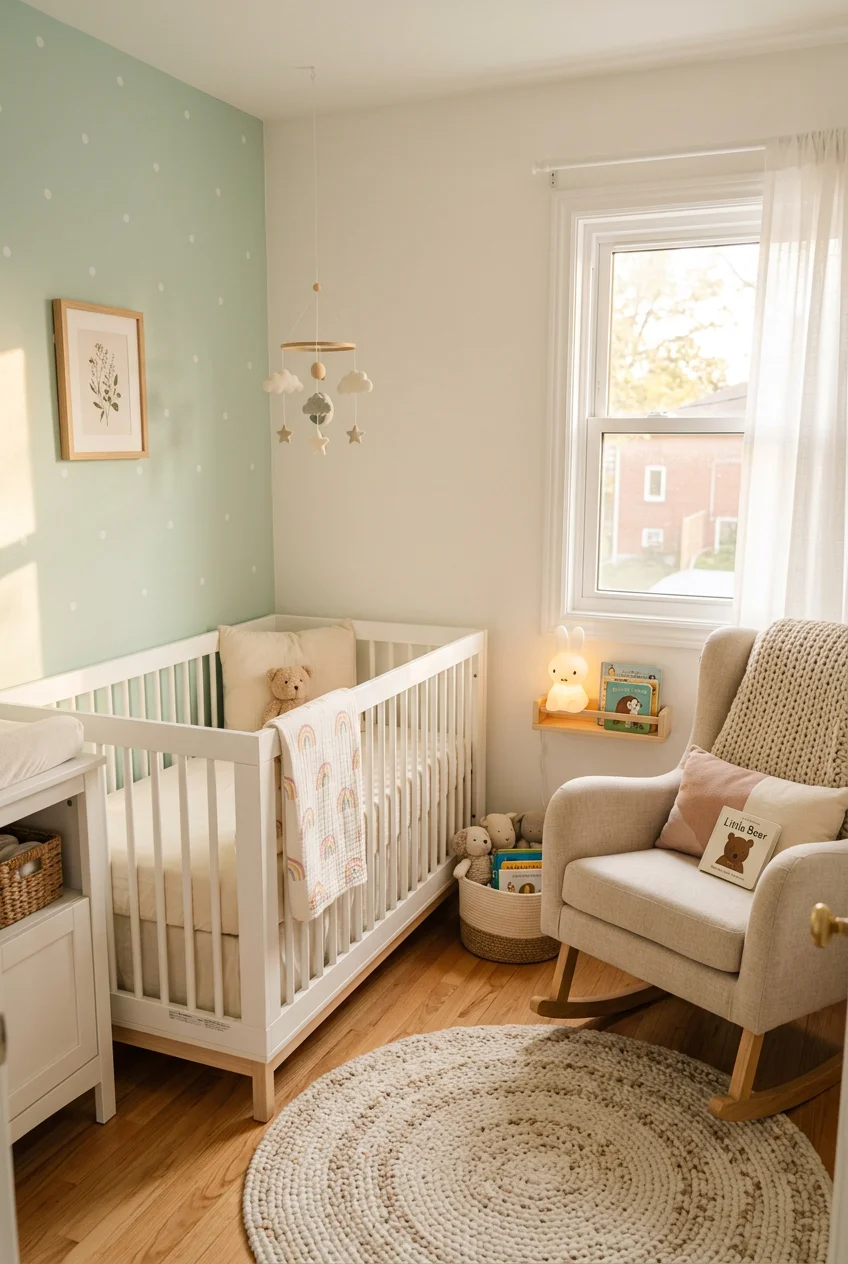
Most folks shove a massive traditional crib into a ten-by-ten box, realize the door won’t open all the way, and panic. Dark, heavy furniture makes a tight floor plan feel even smaller. When you’re hunting for small nursery ideas, the trick isn’t cramming standard pieces into a tiny footprint. It’s rethinking the scale. Fresh paint and a new rug won’t help if you’re constantly tripping over a bulky rocker. I tell clients that a functional space requires ruthless editing and smart vertical planning. A common mistake? Buying furniture before checking the actual clearance for doors and drawers. You need room to move. If you only try one thing from this list, make it #1. Why? Swapping to a mini crib reclaims enough floor space to walk around without stubbing your toe at 3 AM. Trust me.
Skip this list if you have a massive suburban bonus room with vaulted ceilings and infinite square footage. These strategies are for tight urban apartments, narrow spare rooms, and closet conversions where every inch matters.
1. The Best of Very Small Nursery Ideas: Embrace Mini Cribs

Standard cribs take up a massive chunk of your floor. A regular mattress is about 28 by 52 inches, which easily dominates a tiny room. A mini crib mattress is usually around 24 by 38 inches. That difference sounds small, but in a tight room, it creates a vital walkway. Brands like Delta Children have classic mini cribs (usually budget to mid-range) that look just as solid as the full-sized versions. For a modern vibe, the Nestig Wave starts as a compact mini crib and includes conversion pieces. You get a high-end look without losing the whole room to one piece. That bit of empty space lets the room breathe. The catch: your baby will outgrow the mini mattress faster, usually by 18 to 24 months.
2. Invest in Multifunctional Convertible Cribs

When you’re short on space, every piece needs to pull double duty. Buying a bassinet, then a crib, and then a toddler bed means you have to store the extras. In a small home, that storage doesn’t exist. Multifunctional cribs fix this. The Babyletto Gelato 4-in-1 Mini Crib transitions to a toddler bed and then a twin. The Babyletto Yuzu 8-in-1 is another great pick, engineered for tiny spots. It starts as a compact bassinet, grows to a midi size, and eventually becomes a junior bed. You buy one thing and use it for years. The wood finishes add warmth without feeling heavy. The catch: conversion kits are almost always sold separately, adding a hidden cost you’ll need to budget for.
3. Maximize Under-Crib Storage Bins

Leaving the space under the crib empty is a wasted opportunity. That footprint is already gone, so use the vertical clearance. Shallow bins or rolling trundles slide out of sight easily. Stash extra diapers, bulk wipes, or out-of-season clothes down there. Target’s Brightroom line has great low-profile containers. Their 41-quart clear box (usually under $15) fits under most cribs. Some models, like the Carter’s by daVinci Colby 4-in-1, come with a built-in bottom drawer. It looks cleaner than dragging plastic bins across a rug. Best for: homes with zero closet space. The catch: if your crib has an open-slat bottom, clear bins look messy from across the room.

Beautiful Wooden Baby Closet Dividers Set of 7
Beautiful Wooden Baby Closet Dividers Set of 7 – Double-Sided Organize has been one of the most consistently praised picks in this category. 11 reviewers averaged 4.5/5.
4. Swap the Changing Table for a Dresser Combo

Standalone changing tables are a waste. They serve one purpose for a short time, then you’re stuck with an awkward piece that doesn’t hold clothes well. Use a sturdy dresser with a flat top instead. A wide dresser gives you enough room for a changing pad, a wipe dispenser, and a basket of diapers. The IKEA Hemnes 8-drawer dresser is a classic. At 63 inches wide, it offers massive storage and a broad surface. You get years of clothing storage long after the diaper days end. The catch: you’ll have to bend a bit more than you would with a taller changing table, which can be tough on a sore back.
5. Install Heavy-Duty Wall-Mounted Shelves

Floor space is a premium, so go up. Drawing the eye to the ceiling makes a cramped room feel taller. Floating shelves reclaim floor space while holding books, monitors, and sound machines. Use solid brackets drilled into the wall studs. Flimsy drywall anchors won’t hold the weight of hardback books. You can grab metal brackets and 12-inch pine boards from Home Depot for a cheap custom unit. Paint the boards to match the wall color and they disappear, leaving only your items visible. It’s a clean, airy look. The catch: open shelving needs constant tidying. If you just toss stuff up there, the room feels chaotic.
6. Hang Over-the-Door Clear Organizers

The back of the nursery door is wasted real estate. An over-the-door organizer adds dozens of compartments without eating an inch of floor space. An Amazon Basics clear shoe holder (usually under $15) works perfectly. With 24 clear pockets, you can see exactly where the diaper cream, clippers, and burp cloths are. No more digging through dark drawers at 2 AM. The plastic is easy to wipe down if a lotion bottle leaks. Best for: tight budgets and renters. The catch: a heavy organizer can swing and bang against the door, and the metal hooks might scratch the paint.

Baby Closet Divider, Baby Wardrobe Organizer
A dependable everyday pick — Baby Closet Divider pulls in 371 ratings at 4.5 stars. Not flashy, just solid.
7. Choose a Slim-Profile Swivel Glider

A comfy chair is mandatory, but traditional plush recliners swallow small rooms. They block paths and make the space feel cramped. You need a chair with a tight footprint. A slim rocker or compact swivel glider gives you comfort without the bulk. Babyletto makes several space-saving gliders (mid-to-high price range). Look for track arms instead of rolled ones to save a few inches. A chair that swivels 360 degrees is key in a small room because you can grab a cloth off a shelf without standing up. The catch: slim gliders often lack the oversized headrests that make napping in the chair comfortable. You might also like: 17 Crib And Toddler Bed Shared Room Worth Trying
8. Mount a Commercial-Style Folding Changing Station

If you’re dealing with a closet-sized room, even a dresser might be too big. In these cases, look at commercial bathroom designs. A wall-mounted changing table folds flat when not in use. It takes up zero floor space. The Koala Kare KB200 is a heavy-duty option. It supports 200 pounds and has built-in bag hooks. Alpine Industries also makes reliable fold-down stations. They have a sterile, clean look that fits minimalist spaces. The loud click of the lock gives you peace of mind. Best for: literal closet nurseries. The catch: they look industrial and require serious wall anchors in wooden studs, which isn’t always possible in old apartments. You might also like: 19 Baby Boy Nursery Room Ideas Worth Trying
9. Layer Dimmable Warm Lighting

Lighting changes how big a room feels. A single, harsh bulb casts shadows that make a small room feel like a prison. You need layered, dimmable lights to soften the edges. Start with a dimmable ceiling fixture. A flush mount from West Elm keeps things close to the ceiling, drawing the eye up. Use bulbs with a warm temp, like 2700K to 3000K. This mimics natural late-afternoon sun. Add a small wall sconce near the crib for night checks. This keeps you from blasting the room with blue light during a 3 AM feed. The catch: retrofitting fixtures with dimmers might need an electrician if you aren’t comfortable with wiring. You might also like: 16 Nursery Bookshelf Ideas You Need to See

Criusia Over the Door Organizer
Criusia Over the Door Organizer has been one of the most consistently praised picks in this category. 247 reviewers averaged 4.5/5.
10. Paint with Grounded Neutral Palettes

Bright, saturated colors advance visually, making walls feel closer. It’s a common mistake. People paint nurseries bold teal, and the room feels ten times smaller. Trending for 2026 are earthy, grounded palettes. Think mushroom, cocoa, dusty olive, and muted greige. These soft neutrals recede, making the walls feel further away. Grab a few 1-pint samples from Sherwin Williams and test them on different walls. A monochromatic room, where the trim and walls are the same soft color, blurs the edges of the room entirely. The catch: dark earthy tones can feel cave-like if the room lacks a good window.
11. Anchor Every Single Piece of Furniture

Safety matters, and it affects how you arrange a small room. In tight quarters, a toddler will use drawers to pull themselves up because everything is close. You must anchor tall furniture to the wall. Do not skip this. Ensure your dressers meet modern safety standards, like those from the JPMA. Basic nylon safety straps are available at Walmart (usually under $20). Securing the furniture against the baseboards helps the room look sharper, too, by closing that sloppy gap behind the dresser. The catch: anchoring requires drilling into drywall and finding studs, meaning you’re committing to patching holes later.
12. Repurpose Narrow Vintage Hutches

New baby furniture is often bulky and expensive. Older pieces were frequently built for smaller homes and narrow hallways. Thrifted finds save money and fit better in tight plans. A tall, narrow vintage hutch provides great vertical storage for books and toys. You can often find solid wood pieces that are only 24 inches wide, perfect for awkward corners. Sanding down an old hutch and painting it a soft sage green adds character. The smell of wood polish on a vintage piece beats the off-gassing of cheap particleboard. The catch: older painted furniture from thrift stores might have lead paint, so test it first.

Criusia Drawer Organizer Clothes
Criusia Drawer Organizer Clothes has been one of the most consistently praised picks in this category. 11 reviewers averaged 4.5/5.
13. Very Small Nursery Ideas for Closet Conversions

If you don’t have a spare room, a closet conversion is a brilliant move. Standard closets are about 24 inches deep. If you remove the doors, a mini crib often fits perfectly inside. You’re creating a room within a room. Paint the inside a contrasting color or add wallpaper to define the zone. You can mount small shelves on the sides for monitors. This keeps the baby close without sacrificing your main floor space. Best for: parents sharing their bedroom with the baby for the first year. The catch: closets lack ventilation, so ensure you have good airflow and never close the baby off.
14. Position Large Mirrors Opposite Windows

Mirrors are the oldest trick in the book for a reason. They bounce light around and trick the eye into seeing more depth. In a tiny nursery, a mirror is essential. Place a large, mounted mirror on the wall opposite the window. It catches natural light and reflects it into the dark corners. A 36-inch round mirror from Target’s Threshold line (mid-range) breaks up the hard right angles of cribs and dressers. The smooth glass contrasts nicely with soft fabrics. Use heavy-duty D-ring hardware to hang it. The catch: mirrors reflect what’s opposite them, so if it faces a messy shelf, you’ve doubled your clutter.
15. Adopt the Minimalist Japandi Aesthetic

Themed nurseries with heavy patterns and characters look cluttered fast. The Japandi style, a big trend for 2026, fuses Japanese minimalism with Scandinavian function. It relies on neutral palettes, clean lines, and natural textures. Think chunky jute rugs, rattan baskets, and pale birch. Crate & Kids offers simple wooden furniture that fits this vibe. By focusing on function over decor, the room stays visually quiet. You aren’t bombarding the baby with bright primary colors. Let’s be honest, minimal rooms are easier to clean. The catch: true minimalist looks are hard to maintain once the reality of colorful plastic toys sets in.

SNSLXH 5 Pack Stackable Closet Storage Basket
SNSLXH 5 Pack Stackable Closet Storage Basket is sturdier in person than the photos suggest — over 41 buyers gave it 4.5 stars.
16. Mount Pegboards for Vertical Diaper Stations

When you don’t have drawer space for diapers, a pegboard is the smartest alternative. It keeps everything visible, off the dresser, and customizable. The IKEA Skadis system is unbeatable. A 30 by 22-inch board gives you room to hang metal baskets for cream, hooks for onesies, and clips for pacifiers. You can rearrange it as needs change. It looks intentional and industrial, breaking up the softness of the room. Plus, keeping diaper cream out of reach of a flailing toddler makes changes less messy. Best for: highly organized parents. The catch: the board is cheap, but all the specialized hooks and bins add up.
17. Roll in a 3-Tier Utility Cart

Flexibility is key in a tight space. A rolling cart acts as a mobile command center. Load it with diapers, wipes, and a breast pump, and roll it next to your chair. When you’re done, tuck it away. Michaels and Target sell 3-tier metal carts (usually under $40) that are sized perfectly for small spaces. The metal mesh bottoms allow dust to fall through rather than collecting. It’s a functional piece you can repurpose for art supplies later. The catch: once the baby starts crawling and pulling up on furniture, a rolling cart becomes a tipping hazard.
18. Hang Blackout Curtains Near the Ceiling

Window treatments change the perceived height of a room. Most people hang the rod right above the window, which chops the wall in half and makes the ceiling feel low. Instead, mount the rod as close to the ceiling as possible and let the fabric drop to the floor. This draws the eye up, faking the look of tall ceilings. Grab a set of 96-inch velvet blackout panels from Amazon. The heavy texture absorbs sound, which helps muffle street noise for a sleeping baby. It also blocks harsh summer sun. I’d suggest steaming them once they’re hung to get the wrinkles out. I learned that the hard way. The catch: floor-puddling curtains collect dust fast, requiring frequent cleaning.
How we chose these ideas: we focused on renter-friendliness, overall cost, and actual visual impact in rooms under 100 square feet. The selection prioritizes functional storage and safe floor plans over purely decorative trends.
Designing a tiny nursery forces you to be intentional. You can’t hide behind excess furniture. Stick to the essentials, build upward, and keep your color palette calm. Pin this list for later when you’re standing in an empty room trying to figure out where the crib goes.
Frequently Asked Questions
What size crib is best for a small nursery?
A mini crib is the best option. They typically measure 24 by 38 inches, saving significant floor space compared to a standard 28 by 52-inch crib, allowing room for other essential furniture.
How do you store baby clothes without a closet?
Use a wide 8-drawer dresser that doubles as a changing table. You can also utilize rolling 3-tier utility carts and install heavy-duty floating shelves to keep daily essentials organized and off the floor.
What colors make a tiny nursery look bigger?
Soft, grounded neutral palettes like warm mushroom, sage green, and muted greige make walls recede visually. Painting the walls and trim the same color blurs the room’s edges, creating a spacious feel.
Can I put a nursery in a primary bedroom closet?
Yes, removing the doors of a standard 24-inch deep closet creates a perfect nook for a mini crib. Just ensure there is excellent airflow from the main bedroom since closets lack ventilation.
