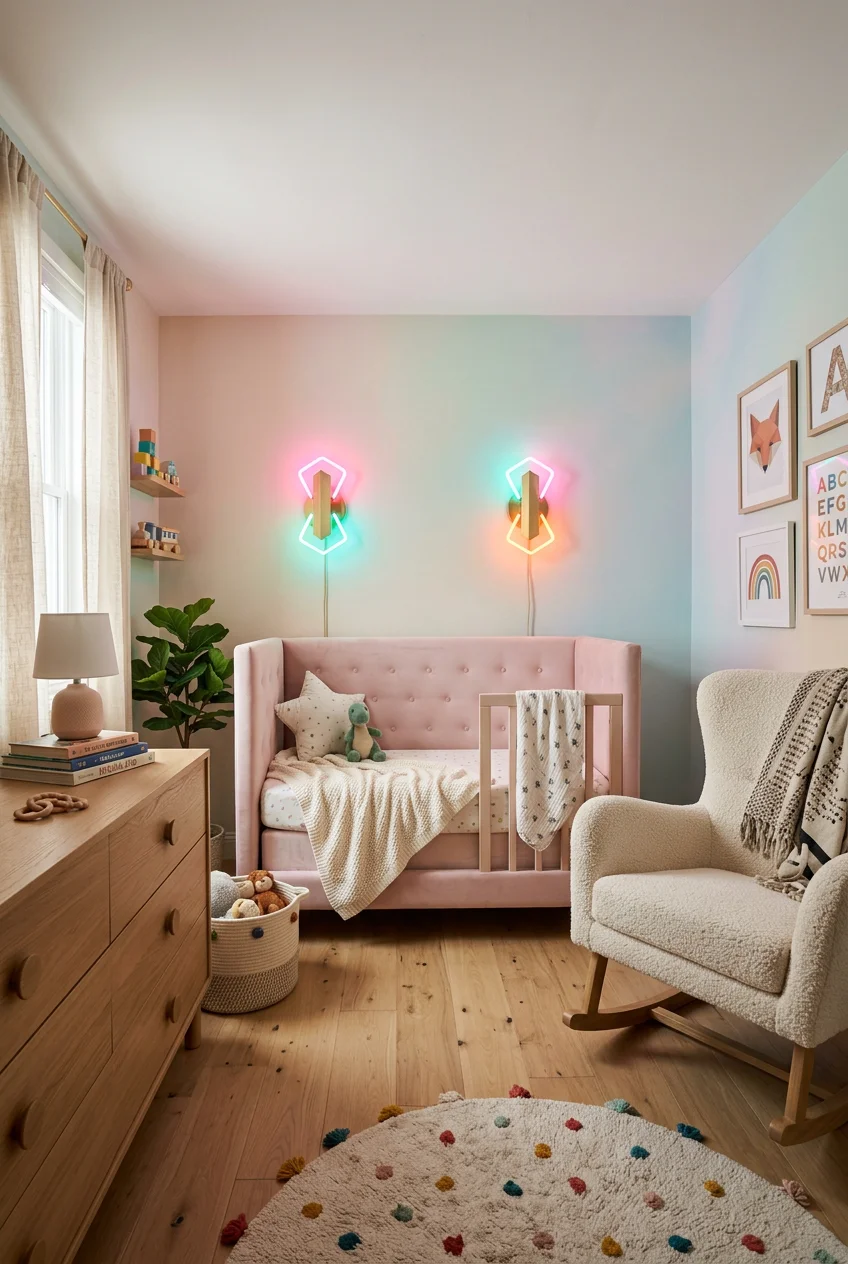
What’s Inside
- Build a Foundation for Colorful Nursery Lighting Ideas
- Prioritize Warm Color Temperatures (2700K-3000K)
- Install Dimmable Lights for Flexible Control
- Choose Child-Safe LED Bulbs (Cool-to-the-Touch)
- Securely Mount All Fixtures and Manage Cords
- Incorporate Red or Amber Night Lights for Overnight Use
- Consider Smart Systems for Colorful Nursery Lighting Ideas
- Utilize LED Strip Lights for Accent Lighting Safely
- Avoid Direct Overhead Glare
- Integrate Themed Ceiling Lights for Playfulness
- Explore Fiber Optic Lighting for Sensory Stimulation
- Use Projector Night Lights for Calming Visuals
- Avoid Overloading on Bright Colors in Overall Decor
- Make Light Switches Accessible for Growing Children
- Choose Multifunctional Night Lights for Practicality
- Hang Colorful Paper Lantern Clusters
- Install Colored Glass Pendant Lights
Most folks flip on a harsh overhead switch at 3 AM and wonder why their baby won’t go back to sleep. Nailing down your nursery lighting ideas prevents this exact nightmare. Incorporating color isn’t about turning the room into a neon nightclub. It’s about using strategic hues, color temperatures, and layered brightness to signal sleep, play, and rest to a growing brain. If you only try one thing from this list, make it #6. A dedicated amber night light acts as virtual darkness, saving your own sleep during midnight feeds while keeping the room safe to navigate.
Skip this if you’re strictly after a beige, minimalist aesthetic. These concepts require plugging things in, managing cords, and accepting that bold color is actually good for visual development. If a single blue LED strip offends your neutral palette, you won’t like these setups.
1. Build a Foundation for Colorful Nursery Lighting Ideas

Instead of relying on one overhead dome, you need a layered scheme for 2026. This setup divides the room into three zones: ambient light for play, task light for the changing table, and a gentle glow for overnight. When you rely on one wall switch, you’re forcing the room to be either blinding or pitch black. Layering allows for mood shifts throughout the day. This supports both active play and strict sleep routines. You can grab basic accent lamps at Target (usually under $30) to start building these layers on dressers. A common mistake is buying three lamps that cast the exact same brightness. You need variation. A 40-watt equivalent bulb near the glider and a 100-watt equivalent overhead serve totally different purposes. Best for: large rooms that need distinct zones. The catch: buying multiple fixtures and bulbs increases your initial cost compared to a single ceiling light.
2. Prioritize Warm Color Temperatures (2700K-3000K)

Lighting temperature dictates the mood more than any paint color. You must opt for LED bulbs with a warm temp, strictly between 2700K and 3000K, for all general lighting. Cooler LEDs hitting 4000K or higher suppress melatonin in children faster than they do in adults. This delays their sleep cycle and makes bedtime a struggle. Warm light mimics natural sunlight, signaling to the brain that it’s time to wind down. You can find these bulbs at Walmart for just a few dollars a box. Never buy a bulb without checking the Kelvin rating on the back of the package. The visual difference between 2700K and 3500K is massive at night. The catch: 2700K light makes cool-toned wall paint, like icy blues or stark whites, look slightly yellow or dingy in the evening.
3. Install Dimmable Lights for Flexible Control

Every light fixture in a nursery needs a dimmer. Dimmable LEDs are energy-efficient and give you exact, mechanical control over brightness. You can transition from a lively morning at 100 percent to a soft 10 percent glow for a bedtime story. This flexibility helps a baby’s brain differentiate between day and night. You can pick up a standard slide dimmer at Costco in a multi-pack (usually $20 to $30) and install it with basic tools. Most people skip this because wiring feels intimidating, but it changes how the room functions. The tactile slide of a dimmer is far more reliable than fumbling for an app while holding a crying baby. The catch: older homes without neutral wires require specialized, expensive dimmers that limit your brand options.

Baby Closet Divider, Baby Wardrobe Organizer
A dependable everyday pick — Baby Closet Divider pulls in 371 ratings at 4.5 stars. Not flashy, just solid.
4. Choose Child-Safe LED Bulbs (Cool-to-the-Touch)

Incandescent bulbs reach temperatures over 200°F. You must use LEDs, as they stay at a much safer 80 to 100°F. This drastically reduces the risk of burns if a toddler grabs a low table lamp. Beyond heat, ensure the LEDs are flicker-free and carry a Color Rendering Index (CRI) of 90 or higher. A high CRI prevents eye strain and shows off the actual colors of your decor. If you buy cheap, low-CRI bulbs, your carefully chosen sage green walls will look muddy brown at night. You can spot the CRI rating on the side of the box. The catch: high-CRI LEDs cost more upfront and are harder to find in local grocery stores.
5. Securely Mount All Fixtures and Manage Cords

Floor lamps with flimsy bases are a tipping hazard. You must securely mount fixtures to the wall or ceiling whenever possible. For table lamps, tuck cords behind heavy furniture or use hard plastic covers to keep them out of little hands. When picking a lamp, choose a model with a wide, heavy base. The Hatch Rest 2nd Gen, priced around $70 to $90, is noted for its weight and low center of gravity. You can grab heavy-duty 3M command strips at Kroger to secure cords along the baseboards. Loose wires are messy and dangerous for crawling infants. Best for: homes with active toddlers or pets. The catch: adhesive cord covers often rip the top layer of drywall paper off when you remove them.
6. Incorporate Red or Amber Night Lights for Overnight Use

Midnight diaper changes require visibility, but white light ruins everyone’s sleep. For overnight, use red or amber lights emitting around 2200K or lower. These wavelengths don’t suppress melatonin. They act as virtual darkness, protecting sleep cycles while providing just enough light to find the wipes. The VAVA Baby Night Light (model VA-CL009) offers warm and cool options that dim low enough for this, usually priced budget-to-mid-range. It’s a staple for a reason. You tap the top, and it glows just enough to see without shocking your retinas. Best for: parents sharing a room with their newborn who want to avoid waking their partner. The catch: red light makes it nearly impossible to distinguish between a wet and dirty diaper. You might also like: 15 Baby And Toddler Shared Room That Actually Work

Beautiful Wooden Baby Closet Dividers Set of 7
If you want something that just works, Beautiful Wooden Baby Closet Dividers Set of 7 – Double-Sided Organize is a safe bet (11 reviews, 4.5 stars).
7. Consider Smart Systems for Colorful Nursery Lighting Ideas

Smart lighting allows for control of brightness, color, and scheduling from a phone. Products like the Hatch Rest 2nd Gen offer app control and customizable timers. Another solid option is the Govee Smart Table Lamp, which provides 16 million color options. It also pairs with Alexa for hands-free control. When your hands are full of a squirming infant, telling a speaker to turn the lights to 10 percent is practical. You aren’t fumbling for a switch in the dark. You can program routines that shift the light to amber at 7 PM every night. Best for: tech-comfortable households. The catch: smart lamps disconnect from Wi-Fi during router updates, leaving you fumbling until the system reboots. You might also like: 16 Twin Nursery Ideas Worth Trying
8. Utilize LED Strip Lights for Accent Lighting Safely

Flexible LED strips create vibrant, modern accent lighting if used correctly. Install them completely out of reach, like tucked along crown molding or behind a heavy dresser. Opt for low-voltage strips, 12V or 24V, that carry UL certification. They need strong adhesive backing to prevent detachment. You can buy heavy-duty mounting tape at Whole Foods or Sprouts if the factory adhesive starts peeling. Ensure the strips have ventilation so the diodes don’t overheat against the wall. They cast a beautiful, diffused glow. Best for: renters who want architectural lighting without drilling holes. The catch: cheap strips often have a faint, high-pitched buzzing sound that becomes obvious in a quiet room. You might also like: 19 IKEA Toddler Room You Need to See
9. Avoid Direct Overhead Glare

Position lighting so it doesn’t shine directly into a baby’s eyes, especially when they’re lying in the crib. Direct glare is overstimulating and painful for an infant. Diffuse lighting that bounces off the ceiling or walls is the correct approach. Ceiling fixtures need frosted glass or thick acrylic diffusers to soften the beam. Hanging pendants should never hang directly above the crib. Most people hang an exposed-bulb chandelier in the center of the room and wonder why the baby cries when looking up. View the room from their perspective on the floor. The catch: frosted diffusers trap dust and dead bugs, requiring you to climb a ladder to clean them every few months.

Night Lights, White Noise Machine
Night Lights is sturdier in person than the photos suggest — over 246 buyers gave it 4.5 stars.
10. Integrate Themed Ceiling Lights for Playfulness

For ambient lighting, themed ceiling lights add a pop of color and whimsy without taking up floor space. Fixtures like the Kids Colourful Balloons Ceiling Light (usually £130 to £299) or the Kids Astronaut Ceiling Light (£299 to £339) from ChandeliersDecor.com serve as functional art. They usually come with LED bulbs and remote operation built right in. These fixtures eliminate the need for extra wall art in small rooms, drawing the eye upward. They provide excellent, even illumination. The catch: highly specific themed lighting ages poorly; a five-year-old will likely outgrow a cartoonish astronaut fixture.
11. Explore Fiber Optic Lighting for Sensory Stimulation

Fiber optic lights offer a safe, tactile, and visually stimulating option for a nursery corner. The thin plastic strands carry only light. They hold zero electrical current and generate no heat, making them entirely cool to the touch. They provide a soft, color-shifting glow that aids relaxation. Sensory rooms use these constantly. You can drape a bundle of 100 strands over a canopy tent or weave them through a safety rail. The effect is mesmerizing without being aggressive on the eyes. Best for: toddlers who need visual input to calm down before nap time. The catch: the base unit contains a small motorized wheel and cooling fan that produces a constant hum.
12. Use Projector Night Lights for Calming Visuals

Projector night lights cast soothing, moving patterns directly onto bare walls and ceilings. The Moredig Galaxy Projector Light, which features 15 color shows, gives an infant something slow to watch. These moving visuals help infants self-soothe and transition to sleep. You must ensure any projector is officially Class 1 laser certified for eye safety and placed high on a shelf, out of reach. The slow rotation of stars gives a restless baby a focal point. The catch: the rotating motors inside these plastic projectors wear out after about a year of nightly use, causing the image to jerk or freeze.

Criusia Over the Door Organizer
If you want something that just works, Criusia Over the Door Organizer is a safe bet (247 reviews, 4.5 stars).
13. Avoid Overloading on Bright Colors in Overall Decor

While colorful bulbs are a great strategy, avoid overwhelming the nursery with too many vibrant hues in the furniture. Overloading a room with bright primary colors creates an overstimulating environment that fights against relaxation. You need contrast. Use your colorful accent lighting against a backdrop of muted paint tones. Sage green, soft peach, or dove grey walls absorb and reflect colored light beautifully without looking chaotic. A neon green lamp on a neon yellow wall is a recipe for a headache. The light needs a neutral canvas to look intentional. The catch: muted, light wall colors show greasy toddler fingerprints and smudges much faster than darker paint.
14. Make Light Switches Accessible for Growing Children

As your child transitions from a crib to a toddler bed, they need to control their own environment safely. Consider hiring an electrician to place a secondary switch at an accessible height, roughly 20 to 30 cm lower than standard. If rewiring isn’t an option, provide a heavy, non-slip step stool near the door. This small change fosters independence and prevents the 5 AM yelling just to turn a light on for a dropped pacifier. It empowers them to manage their own space. Best for: families planning to stay in their home for years. The catch: moving a switch requires cutting drywall and running new wire, which is messy and expensive.
15. Choose Multifunctional Night Lights for Practicality

Nursery dresser space is prime real estate. Modern night lights combine features into one footprint, reducing cord clutter. The Skip Hop Moonlight & Melodies Nightlight Sound Machine (the Owl version, budget-friendly) offers a dimmable light, a white noise machine, and a star projector in one. Combining three gadgets into one plug saves space for monitors and humidifiers. You aren’t tripping over three power bricks behind the changing table. It streamlines the bedtime routine. The catch: when a multifunctional unit breaks or the cord frays, you lose your light, sound machine, and projector all at once.

Criusia Drawer Organizer Clothes
If you want something that just works, Criusia Drawer Organizer Clothes is a safe bet (11 reviews, 4.5 stars).
16. Hang Colorful Paper Lantern Clusters

Paper lanterns are an inexpensive way to add volume, texture, and color to a ceiling. You can string three to five lanterns (ranging from 10 to 24 inches) in a tight cluster in the corner over a reading nook. Using battery-operated LED puck lights inside means you don’t have to run ugly cords across the ceiling. You can grab adhesive hooks at Target to hang them securely. They diffuse light beautifully, cast soft shadows, and weigh nothing, making them safe to hang anywhere. Best for: tight budgets that need a large visual impact. The catch: paper lanterns are dust magnets, and you can’t wipe them down without ruining the delicate paper.
17. Install Colored Glass Pendant Lights

Swapping a boring flush mount for a colored glass pendant instantly upgrades the room’s aesthetic. A 12-inch amber or muted green glass dome filters harsh light and casts a warm, colorful glow. This is a permanent upgrade that looks sophisticated enough to stay into the teenage years. You aren’t stuck with a babyish design. Ensure the glass is thick and the canopy is bolted into a ceiling joist for safety. The catch: colored glass completely alters the light hitting the room, which can make checking the baby’s skin for rashes or applying diaper cream very difficult.
How we chose these ideas: The criteria prioritized renter-friendliness, cost, installation effort, and visual impact. Options were filtered to ensure a mix of hardwired fixtures and temporary plug-and-play solutions, focusing on safety and sleep hygiene.
Creating a cozy environment requires intention, not just buying every bright bulb you see. Stick to warm temperatures, heavily diffused fixtures, and smart dimmers to keep the room functional. Save this list to your nursery planning board on Pinterest so you have these measurements and bulb requirements handy when you finally hit the hardware store.
Frequently Asked Questions
What is the best color light for a baby to sleep?
Red or amber light (around 2200K) is best for infant sleep. These warm hues act as virtual darkness and do not suppress melatonin production, making them ideal for overnight diaper changes and feedings.
Are LED lights safe for a nursery?
Yes, LED lights are the safest option for a nursery. They operate at a cool 80-100°F, significantly reducing the risk of burns compared to hot incandescent or halogen bulbs if a child touches the lamp.
How many lumens do you need for a nursery?
A nursery requires layered lighting rather than a single bright source. Aim for 300-400 lumens for soft ambient light, and under 50 lumens for a night light to avoid overstimulating the baby.
Can I use color-changing smart bulbs in a nursery?
Yes, color-changing smart bulbs are highly practical. They allow you to use bright, cool tones for daytime play and automatically switch to dim, warm amber tones for the bedtime routine via a phone app.
