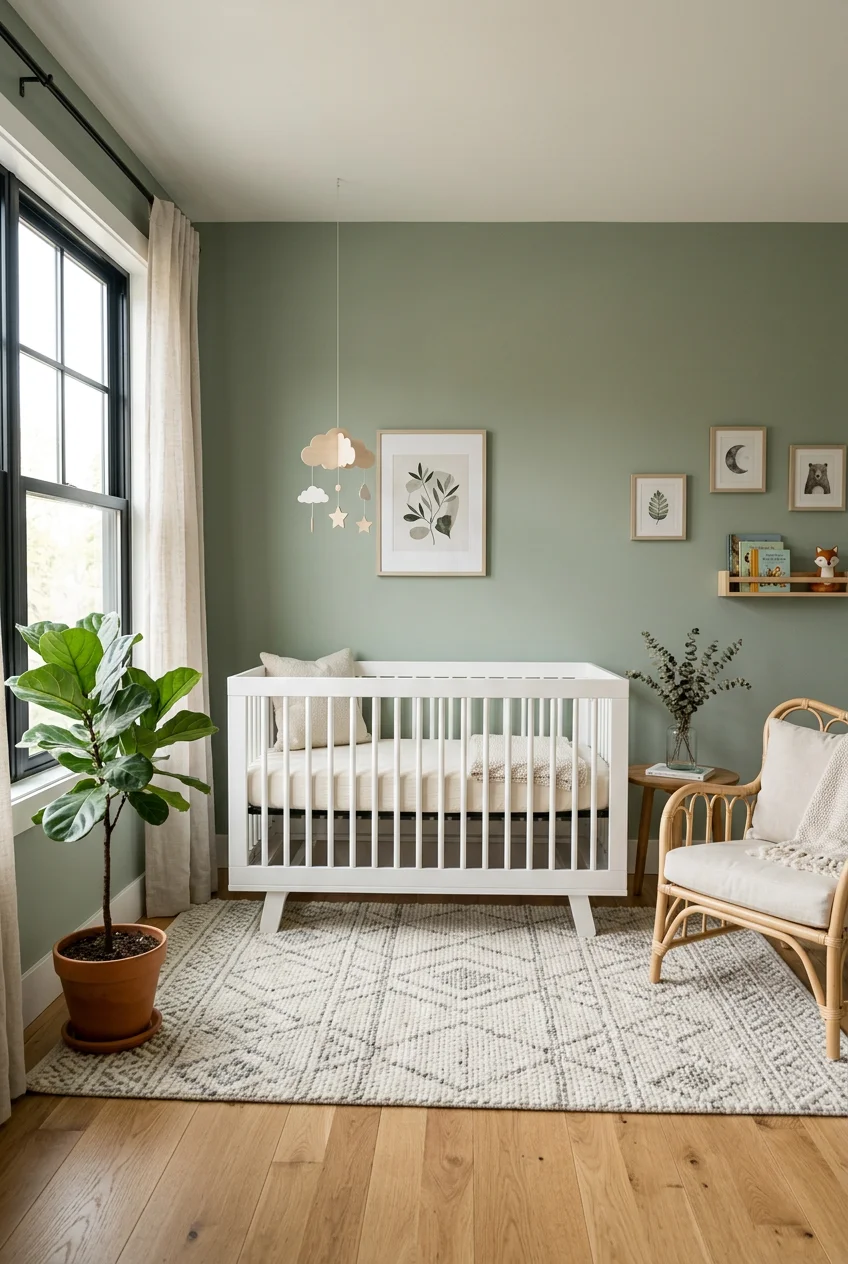
What’s Inside
- Benjamin Moore Saybrook Sage HC-114
- Sherwin-Williams Creamy SW 7012
- Sherwin-Williams Sea Salt SW 6204
- Benjamin Moore White Dove OC-17
- Sherwin-Williams Malted Milk SW 6057
- Benjamin Moore Pressed Violet CSP-520
- Sherwin-Williams Oyster White SW 7637
- Farrow & Ball Drop Cloth
- Clare Paint Headspace
- Behr Blank Canvas
- Magnolia Home Blanched
- Sherwin-Williams Evergreen Fog
- Benjamin Moore Pale Oak
- Valspar Novella
- Sherwin-Williams Pure White
- PPG Swirling Smoke
- Clare Paint Chill
- Benjamin Moore Revere Pewter
- Sherwin-Williams Alabaster
Most folks walk into a hardware store, grab a pastel swatch, and end up with a room that looks like a radioactive Easter egg. Nailing gender-neutral nursery paint colors requires understanding undertones, not just picking a soft yellow and hoping for the best. The lighting in your room dictates how a color behaves. Ignoring that is a fast track to repainting at 36 weeks pregnant. You need paints that won’t off-gas toxic fumes, finishes that wipe clean after inevitably getting hit with spit-up, and hues that won’t overstimulate a newborn. If you only try one idea from this list, make it #3 (Sherwin-Williams Sea Salt). It shifts between green, gray, and blue depending on the time of day, acting as the ultimate chameleon that works with any furniture finish. Trust me on this.
Skip this if you’re living in a strict rental where painting is a lease violation, or if you prefer highly saturated, primary-color character themes. These recommendations focus on muted, adaptable tones that grow with the child. They won’t satisfy someone looking for a neon or hyper-themed aesthetic.
1. Benjamin Moore Saybrook Sage HC-114

Soft sage is a breakout color for 2026 nurseries. It offers a calming, nature-inspired visual without screaming “jungle theme.” Saybrook Sage HC-114 has a distinct gray undertone that keeps it grounded and sophisticated. A standard 1-gallon can is usually enough for an accent wall, but budget for mid-range pricing if you’re doing the whole room. It works remarkably well in both north and south-facing rooms because the gray neutralizes harsh sunlight, preventing the walls from feeling overwhelmingly green. You can find Benjamin Moore products at local authorized hardware stores like Ace Hardware. The catch: if your room has zero natural light, this specific sage can read flat and muddy. You’ll have to rely heavily on warm artificial lighting—specifically 3000K LED bulbs—to bring out its subtle green notes. Without good lighting, it just looks like wet cement.
2. Sherwin-Williams Creamy SW 7012

Best for: north-facing rooms with cool light.
Cool, blue-tinted light from north-facing windows makes stark white walls look like a sterile hospital corridor. You need a warm cream to counteract that chill. Sherwin-Williams Creamy SW 7012 is a universally appealing option that brightens up gloomy spaces and photographs beautifully. A standard 10×10 foot nursery with 8-foot ceilings typically requires 1 gallon and 2 quarts of paint for two solid coats. You’re looking at a budget to mid-range price point for their quality interior lines. Pair this with natural wood furniture from Target or a textured wool rug to add depth and visual interest. The catch: it leans distinctly yellow under very warm artificial light. You have to be careful with your bulb choices to avoid it looking like aged parchment or a dusty antique shop.
3. Sherwin-Williams Sea Salt SW 6204

This is consistently North America’s most specified gender-neutral nursery color for a reason. Sea Salt SW 6204 is a true chameleon. Its unique aqua-gray-green undertone shifts constantly depending on the light, preventing it from reading as definitively blue or definitively green. It looks entirely different at 8 AM than it does at 4 PM. When buying supplies at Lowe’s or a dedicated Sherwin-Williams store, grab a high-quality 3/8-inch nap roller to get a smooth finish. Expect to spend between $50 and $100 on quality supplies alone. The catch: it washes out completely in rooms with intense, direct south-facing sunlight. It loses its green-blue nuance and just looks like a dull, flat gray during peak afternoon hours, stripping the room of the coastal vibe you were likely aiming for.

Beautiful Wooden Baby Closet Dividers Set of 7
Beautiful Wooden Baby Closet Dividers Set of 7 – Double-Sided Organize has been one of the most consistently praised picks in this category. 11 reviewers averaged 4.5/5.
4. Benjamin Moore White Dove OC-17

While soft colors dominate most Pinterest boards, infants are actually drawn to high-contrast items. Their developing eyes need sharp contrast to focus properly. Benjamin Moore White Dove OC-17 provides a warm, creamy white base that acts as the perfect backdrop for high-contrast elements. Use it on three walls and pair it with a bold, geometric patterned wallpaper on the fourth. You want a zero-VOC formula to keep the air clean and free of chemical smells. Always confirm with the retailer that the colorants used for the tint are also zero-VOC. The catch: White Dove has a subtle greige undertone that can clash aggressively if you pair it with stark, cool-toned white trim. It forces you to either repaint your baseboards to match or live with baseboards that look slightly blue next to the warm walls.
5. Sherwin-Williams Malted Milk SW 6057

Best for: parents wanting warmth without standard yellow.
If you want warmth without defaulting to beige or cream, blush taupe is a sophisticated choice. Sherwin-Williams Malted Milk SW 6057 offers a cozy, enveloping feel without being overtly feminine. It reads as a warm, earthy neutral rather than a traditional pink. You’ll want to opt for an eggshell finish for this one. An eggshell finish provides a low-sheen surface that wipes down easily with a damp 4 oz microfiber cloth, which is non-negotiable for a room where messes happen daily. The catch: this color is notoriously difficult to match with gray flooring. If your nursery has cool gray carpet or ash-toned laminate, the warm taupe walls will make the floors look dingy and blue by comparison, throwing off the entire color palette of the room. You might also like: 17 Crib And Toddler Bed Shared Room Worth Trying
6. Benjamin Moore Pressed Violet CSP-520

Pale lavender has completely shed its outdated “baby girl” reputation. Gray-forward formulations like Benjamin Moore Pressed Violet CSP-520 are proven to have a mildly calming effect on the nervous system. It pairs surprisingly well with olive green textiles or terracotta accents for a completely gender-neutral aesthetic. This floral-forward option brings a subtle sophistication to the space without feeling childish. You can find similar accent pieces at stores like World Market or Target to complete the look. When budgeting, expect DIY paint costs for two coats to run between $60 and $105. The catch: it requires at least two, sometimes three, coats for full opacity over darker existing paint. This drives up both your materials budget and your weekend labor time, turning a quick Saturday project into a full weekend commitment. Learned that the hard way. You might also like: 20 Brilliant Baby Nursery Themes Ideas You Can Try Today

Criusia Drawer Organizer Clothes
If you want something that just works, Criusia Drawer Organizer Clothes is a safe bet (12 reviews, 4.5 stars).
7. Sherwin-Williams Oyster White SW 7637

Oyster White is a creamy off-white with a gentle warm undertone that avoids looking too yellow. It’s a safe, reliable backdrop if you plan to change the room’s decor frequently as the child grows. When selecting this color, prioritize lines with Greenguard Gold certification, like Sherwin-Williams Harmony. The EPA notes that indoor air can contain 2 to 5 times more VOCs than outdoor air, and fresh paint is a massive culprit. Protecting your baby’s lungs is worth the slight upcharge for premium lines. The catch: because it’s so neutral, it demands layered textures in the room. You’ll need to incorporate items like a chunky knit blanket or woven rattan baskets to prevent the space from feeling completely flat, uninspired, and visually boring. Without texture, the room just looks unfinished. You might also like: 17 Baby Boy Nursery Woodland Worth Trying
8. Farrow & Ball Drop Cloth

Best for: older homes with imperfect walls.
Oat beige is the antidote to the stark gray trend that dominated the last decade. Farrow & Ball’s Drop Cloth brings a rich, traditional warmth that feels grounding. Their standard 1-gallon equivalent (often sold in 2.5-liter tins) sits at a premium price point, but the depth of pigment is undeniable. It looks spectacular against crisp white trim and natural brass hardware. The catch: Farrow & Ball’s Estate Emulsion finish, while beautiful and chalky, is notoriously difficult to clean. If you use it in a nursery, you’ll likely need to upgrade to their Modern Emulsion finish to get any scrubbability. This limits that signature matte look, but it’s a necessary compromise for a high-traffic room where sticky fingers are inevitable. You don’t want to repaint every single year.
9. Clare Paint Headspace

South-facing rooms get intense, warm light all day long. This light can make warm colors feel stifling and aggressive. A cool tone like Clare Paint’s Headspace, an airy dusty blue, balances out that intense warmth perfectly. Clare is a direct-to-consumer brand that ships zero-VOC paint straight to your door. This is convenient when you’re heavily pregnant and don’t want to haul heavy cans from Home Depot. Expect mid-range pricing per gallon. The catch: dusty blue can read very cold and unwelcoming at night under standard LED lighting. Lighting temperature makes or breaks this shade. You’ll need to invest in warm, low-wattage lamps to keep the room cozy after the sun goes down, otherwise the room feels like a walk-in freezer during late-night feedings.

Criusia Over the Door Organizer
Criusia Over the Door Organizer is sturdier in person than the photos suggest — over 336 buyers gave it 4.5 stars.
10. Behr Blank Canvas

When choosing any paint colors for a gender-neutral nursery, the base matters as much as the tint. Behr Blank Canvas, available at Home Depot, is a fantastic warm white. But here is a common mistake: people assume a “zero-VOC base” means the final tinted paint is also zero-VOC. You must confirm that the specific colorants the associate adds behind the counter don’t add VOCs back into the can. Lighter colors like Blank Canvas generally stay cleaner. The catch: Behr’s standard interior lines can sometimes be prone to roller marks if you don’t keep a wet edge while painting. This makes it slightly less forgiving for first-time DIYers tackling a weekend project. Always use an extension pole for smooth strokes to avoid a patchy, uneven final wall.
11. Magnolia Home Blanched

Blanched by Magnolia Home (often found at Ace Hardware or Lowe’s) is a soft, comforting neutral. Regardless of the brand you choose, an eggshell finish is highly recommended for nursery walls. Flat paint absorbs stains like a sponge, and semi-gloss highlights every single drywall imperfection. Eggshell hits the sweet spot of durability and aesthetics. You can wipe away stray fingerprints with a simple damp cloth without removing the paint film. The catch: touch-ups with eggshell paint are rarely invisible. If you have to patch a hole later, the new paint will flash against the older paint. It reflects light differently, often requiring you to repaint the entire wall to hide the fix completely. Keep this in mind before hanging heavy floating shelves or gallery walls.
12. Sherwin-Williams Evergreen Fog

Best for: small or awkwardly shaped rooms.
Color drenching is a trending approach where you paint the walls, ceiling, and trim the exact same shade. Sherwin-Williams Evergreen Fog is a stunning, muted green-gray that works perfectly for this technique. By removing visual interruptions (like white baseboards or a white ceiling), the room feels larger, more cohesive, and restful. It creates a cocoon-like environment for the baby. The catch: painting a ceiling with a pigmented color requires significantly more precision and physical effort than rolling a standard wall. Drips are highly visible, meaning you’ll spend double the time taping and prepping the space before you even open a can. It’s a massive commitment of weekend hours and will absolutely test your neck and shoulder strength.
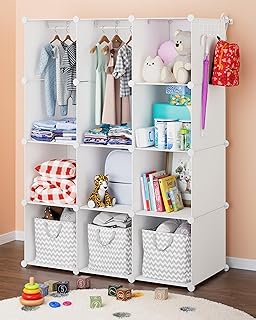
CUBEDIY Baby Closet Organizer for Nursery: Durable Baby
CUBEDIY Baby Closet Organizer for Nursery: Durable Baby Wardrobe for C punches above its price — 342 buyers rated it 4.5 stars. The kind of pick people reorder.
13. Benjamin Moore Pale Oak

A massive mistake parents make is painting an entire room a single pastel color. This leads straight to “Easter Egg Syndrome,” where the room feels overwhelming and visually juvenile. Benjamin Moore Pale Oak is a sophisticated greige that serves as a neutral base. You can then incorporate color through an accent wall, varied textures, or art. Pale Oak shifts beautifully between warm gray and off-white. The catch: it has a very subtle pink undertone that can suddenly become obvious and dominant if you pair it with warm, cherry-wood furniture or red-toned flooring. This completely alters the vibe of the room and clashes with your design. Always test a large swatch next to your crib before committing to a full gallon of this specific shade.
14. Valspar Novella

If you’re keeping a strict eye on expenses, Valspar Novella (available at Lowe’s) offers a beautiful, soft neutral tone at a budget-friendly price point. For a standard room, spending around $60 to $80 on paint leaves more room in the budget for a quality crib mattress or blackout curtains. Novella is soft enough to not dictate the room’s decor, letting you use colorful rugs or wall hangings from places like Target or Walmart to bring in personality. The catch: budget-tier paints generally contain fewer solids. This means you’ll absolutely need a high-quality primer underneath if you’re painting over a dark or vibrant existing wall color. Skipping primer here guarantees a blotchy finish, forcing you to buy a second gallon anyway to fix the mess.
15. Sherwin-Williams Pure White

Pure White SW 7005 is a staple for a reason. It’s clean without being stark. When designing a gender-neutral space, using Pure White on the walls allows you to bring in high-contrast elements that stimulate infant development. A black-and-white geometric rug or dark walnut shelving pops beautifully against this background. It’s a versatile choice that won’t require repainting when your child transitions to a toddler bed. The catch: it shows scuffs and dirt incredibly fast. Once your baby starts crawling and pulling up on the walls, you’ll be wiping down the lower three feet of the room on a weekly basis just to keep it looking fresh. Magic erasers will become your new best friend, and you’ll constantly be touching up baseboard marks.
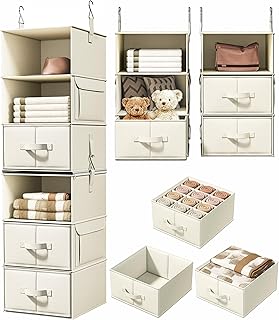
Vailando 6-Shelf Hanging Closet Organizer with 3 Drawers
Vailando 6-Shelf Hanging Closet Organizer with 3 Drawers has been one of the most consistently praised picks in this category. 35 reviewers averaged 4.5/5.
16. PPG Swirling Smoke

Best for: health-conscious parents and older homes.
Indoor air quality is a massive concern for newborns. PPG Swirling Smoke is a lovely, soft gray-beige that you can get in their premium, Greenguard Gold certified lines. This certification means it meets rigorous standards for low emissions of volatile organic compounds. Swirling Smoke provides a calm, misty backdrop that pairs well with natural linen curtains and light oak furniture. The catch: finding local retailers that stock the specific premium PPG zero-VOC lines can sometimes be difficult depending on your region. It often requires you to special order it days in advance rather than just walking into a store and leaving with a mixed can. Plan your timeline accordingly so you aren’t delayed on a weekend project.
17. Clare Paint Chill

If you want a green tone but sage feels too earthy, a soft mint like Clare Paint’s Chill is a refreshing alternative. It brings a crisp, clean energy to the room. It works wonderfully in south-facing rooms to cool down the intense afternoon sun. Pair it with crisp white trim and natural woven shades for a breezy, coastal-inspired gender-neutral look. The catch: mint can very easily veer into “toothpaste” territory if the room lacks adequate natural light. This makes the space feel artificial and stark rather than soft and welcoming. You have to balance it with warm wood tones to keep it grounded. Avoid pairing it with stark white furniture, or the room will end up looking like a sterile dental office.
18. Benjamin Moore Revere Pewter

Revere Pewter HC-172 is a classic warm stone color. It bridges the gap between gray and beige perfectly. It’s an excellent choice if you’re pulling together eclectic furniture pieces or hand-me-downs, as it unifies disparate wood tones and fabrics. A standard 1-gallon can will give you excellent coverage, usually requiring only two coats even over slightly darker colors. The catch: it’s a highly saturated neutral, meaning it absorbs a lot of light. In a small nursery with only one window, it can make the room feel heavy and cave-like without substantial artificial lighting to brighten it up. You’ll need multiple lamps to combat the shadows, otherwise the space feels more like a basement storage unit than a cozy room for a baby.
19. Sherwin-Williams Alabaster

Best for: parents painting late in the third trimester.
Alabaster SW 7008 is a warm, creamy white that feels inviting. Regardless of the color you choose, you must finish all painting at least eight weeks before your baby’s due date. This gives residual fumes ample time to dissipate. Keep the room well-ventilated with fans and open windows during this curing process. Alabaster is a safe, timeless choice that won’t trigger decision fatigue late in your pregnancy. It took me years to figure out that rushing this step is a bad idea. The catch: it can look slightly dingy or yellowed when placed directly next to stark, pure white items. This means you have to carefully coordinate your crib sheets, trim paint, and window treatments to match its warm undertone to avoid making the walls look dirty.
How we chose these ideas: I selected these specific shades based on their versatility, renter-friendliness, and overall visual impact in various lighting conditions. Cost and effort were heavily weighed, prioritizing options that offer excellent coverage and low-VOC formulations without requiring professional application.
Getting the nursery paint right sets the tone for those quiet, exhausted middle-of-the-night feedings. Take the time to test swatches on different walls and watch how the light changes them throughout the day. Honestly, skipping the swatch test is a rookie mistake you don’t want to make. Pin this list so you have these specific color codes handy when you finally make it to the hardware store this weekend.
Frequently Asked Questions
What are the safest paint types for a nursery?
Look for zero-VOC paints with Greenguard Gold certification. Brands like Benjamin Moore Natura and Sherwin-Williams Harmony minimize indoor air pollution. Always confirm that the colorants added at the store are also zero-VOC.
How long before the baby arrives should I paint the nursery?
Finish all painting at least eight weeks before your due date. This gives residual fumes ample time to dissipate. Always keep the room well-ventilated with fans and open windows during the curing process.
Do gender neutral nursery colors have to be gray or beige?
Not at all. Soft sage greens, pale lavenders, and dusty blues act as excellent gender-neutral bases. The key is choosing muted tones with gray or brown undertones to prevent the room from looking like a bright Easter egg.
What paint finish is best for nursery walls?
An eggshell finish is highly recommended for nursery walls. It provides a low-sheen surface that resists stains better than flat paint and can be easily wiped down with a damp cloth without highlighting every drywall imperfection.
