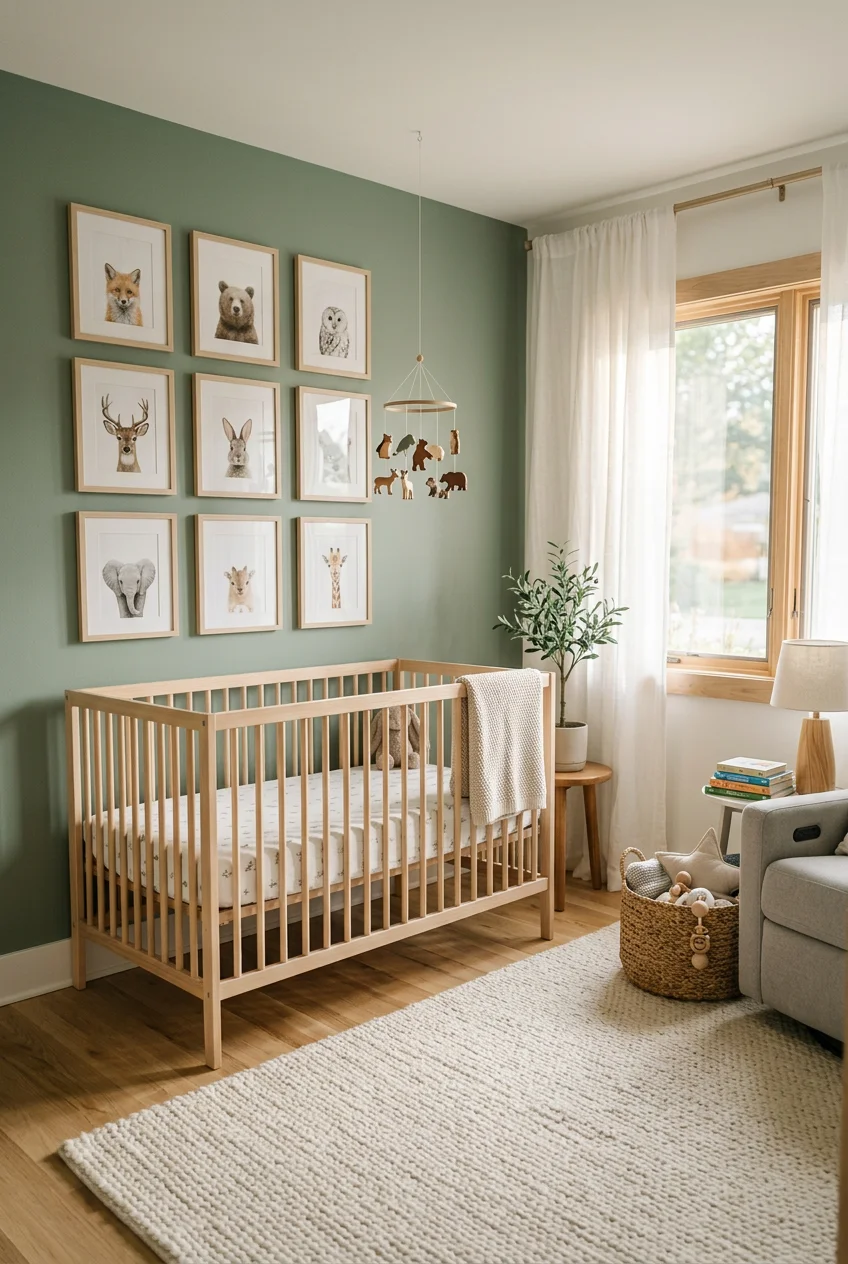
What’s Inside
- Ditch the Glass for Shatterproof Acrylic Nursery Wall Art
- Implement the Four-Inch Gravity Corridor
- Anchor Everything Twice (Yes, Everything)
- Scale Your Art to the Furniture Width
- Master the Eight-Inch Gap Rule
- Stick to the Two-Pound Weight Limit
- Swap Flat Decals for Dimensional Art
- Upgrade to Neutral-Adjacent Tones
- Hang Sensorial Woven Pieces Low
- Use GREENGUARD Gold Certified Canvas
- Create a Two-Inch Gap Gallery Wall
- Future-Proof with Magnetic Poster Hangers
- Choose Non-Toxic Fabric Decals
- Print Custom Name Art on a Budget
- Invest in One Massive Statement Mural
- Frame Meaningful Textiles or Quilts as Nursery Wall Art
- Keep Toddler Art Thirty-Six Inches High
Most folks hang heavy, glass-fronted art right over the crib and wonder why the room feels like a hazard zone. It’s a common mistake that picks looks over physics. When you’re setting up a space for a baby, the wall art needs to be as safe as the mattress they sleep on. If you only try one idea here, make it #2. Here’s why: pulling the crib away from the wall creates a safety gap that costs zero dollars but keeps your baby away from falling objects. Took me years to figure that one out.
Skip this guide if you’re set on hanging heavy antique mirrors or traditional glass frames over the sleep space. The methods below focus on lightweight, shatterproof, and securely anchored materials. If you aren’t willing to swap glass for acrylic or drill proper anchors into your drywall, these safety tips won’t work for you.
1. Ditch the Glass for Shatterproof Acrylic Nursery Wall Art

Traditional glass frames are a huge liability in a baby’s room. A slammed door or a thrown toy can send shards into the crib. Instead, use nursery art framed behind shatterproof plexiglass or acrylic. Target sells a great line of lightweight poster frames with acrylic fronts, usually $15 to $30. The acrylic looks just like glass from a distance but bends if it takes a hit. When buying from stores like Walmart or Ikea, tap the front panel. If it sounds high-pitched and cold, it’s glass. If it sounds dull and warm, it’s plastic. You can also skip frames entirely by choosing wrapped canvas or printed fabric stretched over a wooden frame. These add a soft, matte texture that absorbs sound. The catch: acrylic scratches easier than glass, so don’t wipe it down with rough paper towels or harsh cleaners.
Best for: homes with kids or pets.
2. Implement the Four-Inch Gravity Corridor

This is a structural safety rule that costs nothing but changes how you arrange the room. Most parents push the crib flush against the wall. Don’t. Instead, pull the crib exactly four inches away from the baseboard. This creates a safety trough. If a piece of art, a baby monitor, or a shelf falls, gravity pulls it straight down into this gap rather than into the crib. It’s a simple physics hack. You can measure this using a block or just your hand width. Even if you use lightweight foam-core prints from Costco (usually under $20), this gap adds a vital layer of protection. The visual difference is small, but the safety margin is huge. The catch: this gap means pacifiers and small toys will fall behind the crib, so you’ll be fishing them out regularly.
3. Anchor Everything Twice (Yes, Everything)

Hanging art with one nail is a beginner mistake. A single point of contact lets the frame swing like a pendulum if a toddler bangs on the wall or if the house shakes. You need dual anchoring for every frame. For heavier pieces, skip the basic nails and install stud-anchored hooks or French cleats. These spread the weight across a horizontal metal bracket. Then, secure the bottom two corners to the wall using earthquake putty, Velcro dots, or 3M Command strips. You can grab a bulk pack at Kroger or Home Depot for under $15. Press the bottom corners firmly until the strips click. This locks the art in place so it won’t budge. The catch: removing adhesive strips from the wall requires patience, and pulling too fast will rip the paint off your drywall. Learned that the hard way.

Beautiful Wooden Baby Closet Dividers Set of 7
Beautiful Wooden Baby Closet Dividers Set of 7 – Double-Sided Organize punches above its price — 11 buyers rated it 4.5 stars. The kind of pick people reorder.
4. Scale Your Art to the Furniture Width

A tiny 8×10 frame floating above a massive dresser looks ridiculous. Scale is where most DIY nursery designs fail. The golden rule for balance is that your wall art should span two-thirds to three-quarters the width of the furniture below it. For a standard 54-inch wide crib, you need art that measures roughly 36 to 40 inches across. You can do this with one large piece or three vertical frames side by side. Minted offers oversized framed canvas prints that hit these dimensions, generally ranging from $150 to $400. Filling the visual space anchors the room and makes the ceiling feel higher. The catch: buying art large enough for a 54-inch crib costs more than small, cheap prints.
Best for: large empty walls that need a clear focal point.
5. Master the Eight-Inch Gap Rule

Hanging art too high is a layout error I see in almost every beginner space. People hang frames at their own standing eye level, leaving a massive, awkward gap between the furniture and the art. When hanging pieces above a crib or changing table, the bottom of the lowest frame should sit exactly 8 to 10 inches above the furniture. This creates a cohesive unit. If you’re hanging art on an empty wall, the center should hit around 55 to 58 inches from the floor. Use a tape measure and mark it with a pencil. Brands like Pottery Barn Kids sell sets (often $100 to $200) that look terrible if floated too high. Keep them grounded. The catch: if you change your furniture to a taller dresser later, you’ll have to patch the holes and rehang the art. You might also like: 20 Stunning Layout Small Nursery Ideas That Are Totally Worth It
6. Stick to the Two-Pound Weight Limit

If you insist on hanging art over the sleep space, you must be ruthless about weight. Every piece positioned over the crib must weigh under two pounds (0.9 kg). This rules out solid wood frames, heavy glass, and thick ceramic. Rely on lightweight materials like printed fabric, balsa wood, or foam-core. You can order photos printed on lightweight foam boards from Walmart for under $25. These boards weigh mere ounces. Even if the anchors fail, a foam board won’t cause injury. Weigh your frames on a kitchen scale before putting a nail in the wall. It’s a non-negotiable safety metric. The catch: extremely lightweight frames often look cheaper up close because they lack the depth of solid oak or heavy metal frames. You might also like: 18 Car Toddler Room You Need to See

Criusia Over the Door Organizer
If you want something that just works, Criusia Over the Door Organizer is a safe bet (247 reviews, 4.5 stars).
7. Swap Flat Decals for Dimensional Art

Pediatric optometrists note that flat vinyl graphics don’t stimulate binocular vision in infants. A baby’s eyes need depth and shadow to practice focusing. Instead of sticking flat shapes to the wall, use dimensional art that protrudes into the room. Think stretched canvas prints with thick edges, layered wood cutouts, or soft fabric sculptures. Etsy is packed with sellers offering layered birch wood name signs or 3D felt animal heads, usually $30 to $80. These cast real shadows as the light shifts, giving your baby something dynamic to watch. The 1.5-inch depth of a wrapped canvas provides a sharp edge for their eyes to track. The catch: dimensional art collects dust on top ledges, so you’ll need to run a duster over them weekly. You might also like: 18 Dino Toddler Room That Actually Work
8. Upgrade to Neutral-Adjacent Tones

The stark, clinical white nurseries of the past decade are fading. The shift is moving toward warmer, richer neutral-adjacent palettes. We’re talking soft sage greens, slate blues, muted mauves, rusts, browns, and baked clays. These colors absorb light and make the room feel like a cozy den. When picking art, look for these muddy, grounded tones. A landscape print featuring terracotta and olive green brings warmth without overwhelming the senses. You can find beautiful, earthy digital downloads from Etsy shops like Printsinthegarden for under $10, then print them locally. These colors pair perfectly with natural wood cribs and linen curtains. The catch: neutral-adjacent colors can make a room feel smaller and darker if there isn’t much natural light.
Best for: south-facing rooms with plenty of natural light.
9. Hang Sensorial Woven Pieces Low

Nursery art shouldn’t just be for looking at. Tactile, sensory elements help stimulate a baby’s brain. Woven wall hangings, macramé, and fabric art introduce rough, soft, and bumpy textures into a room full of hard surfaces. You can hang these soft-touch pieces lower on the wall where a standing toddler can safely touch them. Look for materials like chunky bouclé yarn, thick cotton rope, or felted wool. West Elm occasionally stocks mixed-material wall hangings in the $50 to $150 range that work perfectly. The contrast between soft yarn and smooth drywall adds immediate interest. The catch: yarn and fabric wall hangings are magnets for pet hair and dust, requiring regular vacuuming with an upholstery attachment.

Baby Closet Divider, Baby Wardrobe Organizer
Baby Closet Divider has been one of the most consistently praised picks in this category. 371 reviewers averaged 4.5/5.
10. Use GREENGUARD Gold Certified Canvas

Babies spend up to sixteen hours a day sleeping in their nursery, so air quality is critical. Cheap canvas prints and synthetic frames can off-gas VOCs for months, leaving a sharp, chemical smell. You need to look for wall art with a GREENGUARD Gold certification or similar low-emission standard. This guarantees the inks, adhesives, and materials are VOC-free and safe for a newborn’s lungs. Oopsy Daisy offers a selection of stretched canvas art using GREENGUARD Gold certified inks, priced between $40 and $100. The colors stay vibrant, and you won’t get that toxic plastic smell when you unbox them. The catch: certified non-toxic art is more expensive than mass-produced, uncertified prints.
Best for: poorly ventilated rooms or tightly sealed modern homes.
11. Create a Two-Inch Gap Gallery Wall

A poorly spaced gallery wall looks like a chaotic thrift store display. The secret to a polished arrangement is strict, mathematical consistency. You must keep exactly 2 to 3 inches of space between every frame. Before picking up a hammer, lay all your art on the floor. Use a tape measure to make sure the gaps are the same on all sides. Cut newspaper to the size of your frames and tape them to the wall with painter’s tape to test the layout. You can source a matching set of lightweight frames from Target ($30 to $50) to keep the borders uniform. Consistent spacing turns a random assortment of pictures into a cohesive architectural feature. The catch: getting the spacing right requires precise measuring; off-center nails will ruin the look.
12. Future-Proof with Magnetic Poster Hangers

Babies outgrow nursery themes fast. The alphabet print you hang today will likely be rejected by a toddler requesting construction trucks in two years. To future-proof the room, skip the expensive custom framing and use magnetic poster hangers. These consist of two wooden slats with magnets that clamp onto the top and bottom of a print. You hang the top slat with a single string. When it’s time to swap the art, just pull the slats apart and slide a new poster in. Amazon and Etsy sell these in various finishes, usually $15 to $25. It makes rotating artwork cheap and fast. The catch: magnetic hangers offer zero protection for the front of the print, so the paper is exposed to humidity, dust, and sticky fingers.

Criusia Drawer Organizer Clothes
A dependable everyday pick — Criusia Drawer Organizer Clothes pulls in 11 ratings at 4.5 stars. Not flashy, just solid.
13. Choose Non-Toxic Fabric Decals

Wall decals are easy, but most cheap options are made from PVC and vinyl, which can release phthalates. Instead, use non-toxic, peel-and-stick fabric decals. Brands like One Trick Pony produce eco-friendly decals made from PhotoTex material printed with aqueous inks. They are free from vinyl, PVC, BPA, and phthalates. These fabric decals have a matte, woven texture that looks painted on rather than like a shiny sticker. They usually cost between $30 and $80 for a large set. You can peel and reposition them multiple times without damaging the drywall. The catch: fabric decals are slightly translucent, so if you stick them over a dark wall, the wall color will show through.
Best for: renters who can’t drill holes or paint walls.
14. Print Custom Name Art on a Budget

Personalized art makes a nursery feel intentional, but buying pre-framed pieces is expensive. The smartest way to get birth stat or name art is to buy a digital download and print it yourself. Online shops like Wall and Wonder or Etsy sellers like LotusArts offer custom files starting at $9.99. You type in the baby’s name and info, and they email you a high-resolution PDF. You can then upload that file to Staples or Walgreens and print it on high-quality matte cardstock for a few dollars. Pop it into a standard frame, and you have custom art for a fraction of the retail price. Let’s be clear though: the catch is that you’re responsible for quality control. If you choose cheap, glossy photo paper, it will look tacky and reflect glare.
15. Invest in One Massive Statement Mural

Instead of cluttering the walls with a dozen small frames, commit to one massive statement piece. Large-scale wallpaper murals act as the ultimate focal point, replacing standard art without needing a single nail. You can cover the wall behind the crib with a sweeping watercolor forest or an oversized celestial map. Minted offers artist-designed wall murals that arrive in easy-to-install panels, generally ranging from $300 to $600. A single large mural anchors the room and eliminates the need for other decor. It’s sophisticated and dramatic. The catch: installing a multi-panel mural needs two people, patience, and perfectly smooth walls; any heavy texture on your drywall will show through the paper.

Cube Storage Organizer with Storage Bins Included
Cube Storage Organizer with Storage Bins Included – The Perfect Closet has been one of the most consistently praised picks in this category. 107 reviewers averaged 4.5/5.
16. Frame Meaningful Textiles or Quilts as Nursery Wall Art

Not all nursery art has to be on paper or canvas. Framing a meaningful textile is a brilliant way to add texture and history to the room. If you have a handmade quilt from a grandmother or a special blanket, don’t leave it in a closet. Hang it. You can use a quilt hanger to display it flat against the wall. Alternatively, fold a smaller textile and mount it inside a deep shadowbox frame from a store like Michaels ($40 to $80). The fabric absorbs sound, reducing echo, and the woven threads provide a rich, tactile look. The catch: textiles exposed to direct sunlight will fade over time, so you must hang these on a wall that doesn’t get harsh, direct afternoon sun.
17. Keep Toddler Art Thirty-Six Inches High

As your baby grows into a toddler, the rules for hanging art change. Anything hung low becomes a target for grabbing, pulling, and coloring. For areas reachable by a toddler, make sure the lowest edge of any framed art is at least 36 inches from the floor. This keeps it safely out of reach of sticky hands and tantrums. If you want art below that 36-inch line, it must be flush to the wall and indestructible, like fabric decals or soft felt boards. You can find durable felt play mats at stores like Target or Ikea (under $30) that can be mounted low for safe, tactile play. The catch: hanging art only above the 36-inch line leaves the bottom half of the room feeling empty, which can make the space feel top-heavy.
Best for: homes transitioning from a nursery to a toddler room.
How we chose these ideas: We evaluated wall decor based on strict safety constraints for sleep spaces, ease of installation, and long-term versatility. We prioritized renter-friendly options, low-VOC materials, and budget-conscious methods that deliver high impact without compromising room function.
Designing a nursery is about balancing the beautiful with the practical. I’d skip the heavy glass frames and lean into the rich textures of canvas, wood, and fabric. They feel warmer, they absorb sound, and most importantly, they won’t shatter. Pin this list for your next weekend project, and focus on getting those safety anchors right before you worry about the color palette. Trust me.
Frequently Asked Questions
Is it safe to hang nursery wall art above a crib?
Yes, but only if you follow strict safety rules. Use shatterproof acrylic instead of glass, ensure each piece weighs under 2 lbs, and secure the bottom corners with adhesive strips. Pulling the crib four inches from the wall also creates a safe gravity corridor.
How high should I hang art above the changing table?
The bottom edge of your lowest frame should sit exactly 8 to 10 inches above the top of the changing table or dresser. This creates a cohesive visual connection between the furniture and the art without leaving an awkward gap.
What size art looks best over a standard crib?
Wall art should span two-thirds to three-quarters the width of the furniture below it. For a standard 54-inch crib, aim for a single large piece or a gallery grouping that measures roughly 36 to 40 inches across.
Are wall decals safe for a baby’s room?
They are safe if you choose the right materials. Avoid cheap vinyl or PVC decals that can release phthalates. Instead, look for non-toxic, peel-and-stick fabric decals printed with aqueous inks, which are free from harmful chemicals and VOCs.
