What’s Inside
- Start With Non-Toxic Nursery Ideas Wallpaper
- Embrace Earthy Neutrals For A Calming Base
- Peel-and-Stick Saves You From Long-Term Commitment
- Make Sure It Survives The Scrub Test
- Anchor The Room With A Feature Wall
- High-Contrast Patterns For The Newborn Stage
- Soft Geometrics For The 3-6 Month Window
- Vocabulary Building Prints For Toddlers
- Biophilic Designs Bring The Outside In
- Scale Down Prints In Tiny Rooms
- The Math On Ordering Extra Rolls
- Test Samples In Your Actual Lighting
- The Wall Prep Mistake Everyone Makes
- Storybook Themes Are Replacing Cartoons
- Gender-Neutral Nursery Ideas Wallpaper Lasts Longer
- The Fifth Wall Effect On The Ceiling
Last Tuesday at Whole Foods, a woman in the checkout line noticed my design binder and asked how I keep my clients from crying over nursery wallpaper. I told her the truth. Most people pick a pattern because it looks cute online, spend $400, and then realize it smells like a chemical factory when they unroll it. I’ve ruined three client walls and my own guest room trying to cut corners before I figured out the mechanics of what actually works. You don’t need to guess. The texture, the adhesive quality, and the ink composition matter far more than the print itself. I tried a discount brand in 2021, and the chemical odor—a sharp, synthetic sting—lingered in the room for a month despite leaving the windows wide open. I ended up tearing it down and eating the $200 cost. Learned that the hard way. Let’s skip the expensive mistakes. Here’s the exact breakdown I use for every single nursery project to make sure the walls look expensive and stay attached to the drywall.
1. Start With Non-Toxic Nursery Ideas Wallpaper

When you unroll a cheap roll of vinyl, it hits you with a sharp plastic smell. That smell is off-gassing VOCs. It makes no sense to buy organic cotton onesies at Sprouts and then wrap your baby’s room in phthalates. You need to look for GREENGUARD Gold Certified inks and PVC-free materials. Brands like Chasing Paper, Walls By Me, and Spoonflower actually test for this. Spoonflower’s smooth peel-and-stick costs exactly $99 for a 24-inch by 9-foot roll, and it prints with water-based inks. EazzyWalls also makes incredible PVC-free options that don’t smell like a cheap shower curtain. The heavy texture of these non-toxic papers actually hides minor wall imperfections better than thin vinyl anyway. Read the label and confirm it says VOC-free before you even look at the pattern. If a brand doesn’t list their ink composition on the product page, I won’t buy it. Trust me on this.
2. Embrace Earthy Neutrals For A Calming Base

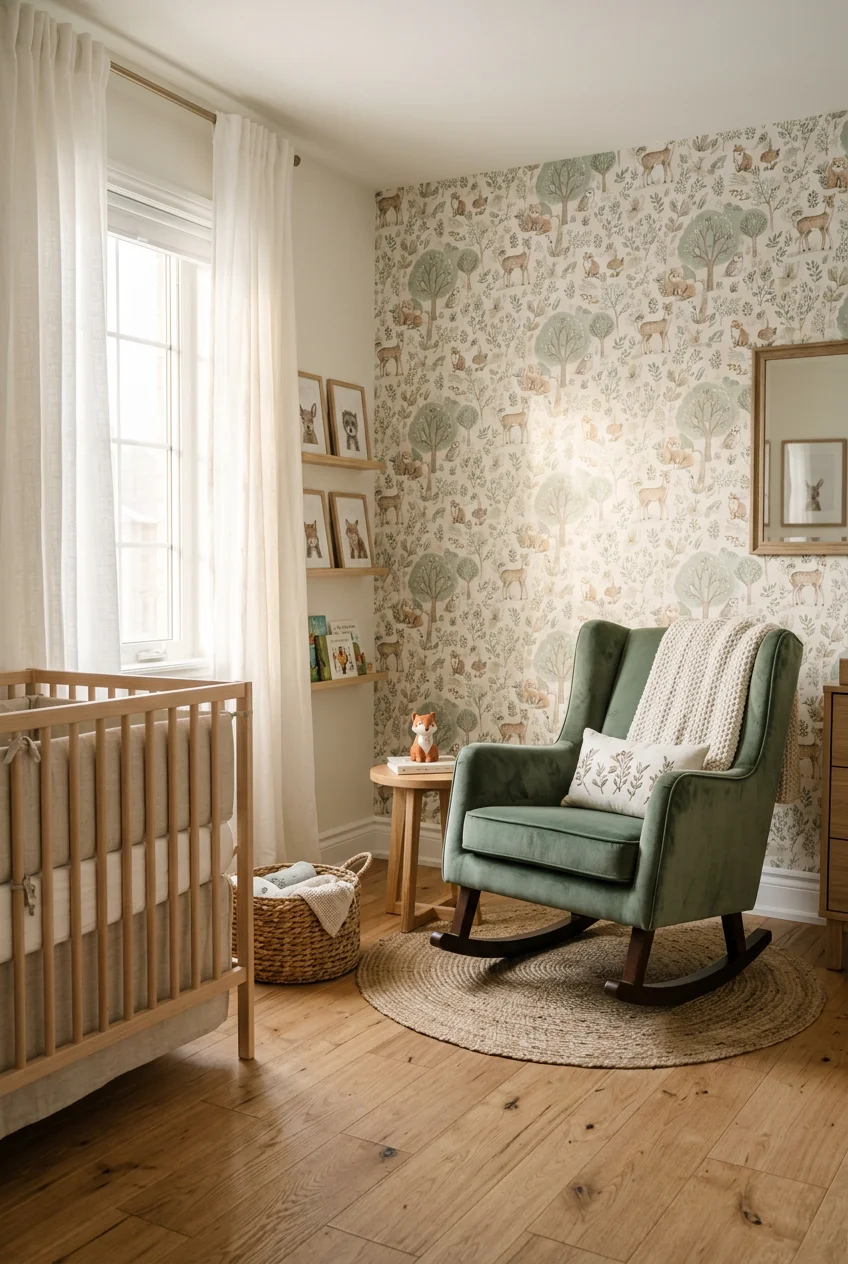
Warm neutral palettes are dominating nursery design right now. I’m talking about beige, taupe, warm cream, and soft sand. These tones create a grounded, quiet aesthetic that layers perfectly with natural materials. When I pair a sand-colored botanical print with a $45 woven rattan lamp from Target and some heavy linen curtains, the room instantly feels expensive. The mistake I see constantly is painting the walls bright yellow or baby blue, which reflects harsh light and makes the room feel chaotic. Warm neutrals absorb the light. They make the room feel like a quiet cocoon. You want the space to feel calm at 3 AM when you’re rocking a screaming infant. A soft taupe background on your wallpaper hides minor scuffs better than stark white, and it won’t clash with the inevitable plastic toys that will eventually take over the floor. Stick to earth tones for the hard fixtures and walls.
3. Peel-and-Stick Saves You From Long-Term Commitment

Removable peel-and-stick wallpaper is the only thing I recommend for renters or anyone who changes their mind frequently. It’s basically a giant sticker. Brands like Mayflower Wallpaper and Wall Blush formulate their adhesive to release cleanly without taking the drywall with it. Mayflower charges around $65 per roll, and their PVC-free paper actually has some weight to it. The heavy weight matters. Thin peel-and-stick stretches when you pull it, and once it stretches, the pattern won’t line up on the next panel. I learned this the hard way trying to install a cheap geometric print in my niece’s room. The paper stretched a quarter inch, and the triangles never matched up again. Wall Blush uses a thicker woven texture that holds its shape while you position it. It takes two people to install it properly, but you won’t lose your security deposit when you move out.

Criusia Over the Door Organizer
Criusia Over the Door Organizer punches above its price — 231 buyers rated it 4.5 stars. I would buy it again.
4. Make Sure It Survives The Scrub Test

Babies are messy. Toddlers are worse. Eventually, a sticky hand is going to drag across your beautiful walls. You need to choose vinyl-based or coated wallpapers that are explicitly labeled as scrubbable. This means you can wipe them down with a damp sponge and a drop of Dawn dish soap without the ink rubbing off. Last month, a client called me in a panic because her toddler smeared a thick layer of Desitin—which costs $7.49 at Walmart and is basically waterproof grease—directly onto her new floral mural. Because we installed a coated, washable paper, she wiped it off with a microfiber cloth and warm water in thirty seconds. If that was traditional untreated paper, the grease would have stained it permanently. Check the manufacturer’s cleaning instructions. If it says vacuum only or dry dust, don’t put it in a nursery. You need something that can handle spit-up, diaper cream, and whatever else flies across the room.
5. Anchor The Room With A Feature Wall

You don’t need to wallpaper every single wall. A feature wall behind the crib or the changing table introduces pattern without overwhelming the space. It also cuts your budget by 75 percent. If you’re looking at a premium $150 roll, doing one wall might cost $450 instead of $1,800 for the whole room. I usually pick the wall you see immediately when you open the door. It creates a focal point. I tried wrapping a tiny 10×10 nursery in a heavy floral print two years ago, and it made the room feel like a claustrophobic box. We ended up painting three walls a soft cream and leaving just the crib wall wallpapered. The difference was massive. The room breathed again. Plus, installing paper on one wall means you only have to cut around one set of baseboards and maybe one outlet, rather than dealing with window frames and closet doors. You might also like: 15 Lovely Baby Boy Crib Bedding Ideas That Are Totally Worth It
6. High-Contrast Patterns For The Newborn Stage

Newborns can’t see past 12 inches, and they don’t process pale colors. From zero to three months, they respond best to high-contrast colors and simple shapes. Black-and-white patterns, heavy dots, or thick stripes actually engage their developing vision. I installed a stark black-and-white birch tree pattern in a client’s modern nursery, and she told me her baby would stare at the wall during tummy time for twenty minutes straight. You don’t have to make the whole room look like a barcode, but incorporating a high-contrast print on the wall next to the changing pad gives them something to focus on while you’re dealing with a blowout. If stark black and white feels too harsh, a deep navy and cream stripe works just as well. The contrast is what matters, not the specific colors. It gives their eyes an anchor point in a blurry world. You might also like: 20 Stunning Layout Small Nursery Ideas That Are Totally Worth It
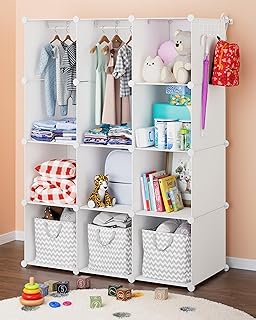
CUBEDIY Baby Closet Organizer for Nursery: Durable Baby
A dependable everyday pick — CUBEDIY Baby Closet Organizer for Nursery: Durable Baby Wardrobe for C pulls in 316 ratings at 4.5 stars. Not flashy, just solid.
7. Soft Geometrics For The 3-6 Month Window

As babies hit the three to six-month mark, they start recognizing patterns and processing slightly more complex visuals. Geometric wallpaper featuring repeating circles, squares, or soft triangles gently boosts cognitive growth. It gives their brain a predictable sequence to follow. I like to use muted terracotta arches or sage green grids for this stage. The repetition is naturally calming. I once used a scattered, random confetti print, and it just looked messy. The brain likes order. A structured geometric pattern provides that visual order. You can find excellent peel-and-stick geometric options at most major retailers now. Just ensure the lines aren’t too thin. You want shapes that are at least two or three inches wide so the baby can actually distinguish them from across the crib. Thick, soft shapes in warm colors hit the sweet spot for this developmental phase. You might also like: 20 Brilliant Baby Nursery Themes Ideas You Can Try Today
8. Vocabulary Building Prints For Toddlers

From six to eighteen months, babies enter the point-and-name phase. This is where your wallpaper can actually do some heavy lifting for vocabulary building. Wallpapers featuring animals, fruits, or vehicles give you endless things to talk about while you’re getting them dressed. I put a vintage farm animal print in my own son’s room. Every morning, we point to the pig, the horse, and the cow. It’s built-in entertainment. When you’re exhausted and dragging a bulk box of diapers from Costco into the room, you don’t have to think of a story to tell. You just point at the wall and ask where the yellow duck is. Avoid abstract art for nurseries if you want this interactive element. Pick something with clear, distinct objects. A subtle woodland scene with foxes and owls gives you months of bedtime conversation material without requiring any extra effort on your part.
9. Biophilic Designs Bring The Outside In

Nature-inspired nurseries are everywhere in 2026, driven by biophilic design principles. This just means bringing elements of the outdoors inside to create a calming sanctuary. You want lush botanical murals, pine forest scenes, or large tropical leaves. EazzyWalls has a soft landscape panorama that looks like a watercolor painting of a misty mountain. I used it in a downtown apartment nursery where the only window faced a brick wall. It completely changed the temperature of the room. The green tones lower your heart rate. When you’re trapped indoors during a rainy week with a fussy baby, having a floor-to-ceiling forest on the wall makes you feel slightly less confined. The trick is to choose muted greens and browns rather than neon jungle colors. You want it to feel like a quiet morning in the woods, not a chaotic rainforest.

Beautiful Wooden Baby Closet Dividers Set of 7
If you want something that just works, Beautiful Wooden Baby Closet Dividers Set of 7 – Double-Sided Organize is a safe bet (11 reviews, 4.5 stars).
10. Scale Down Prints In Tiny Rooms

If your nursery is the size of a walk-in closet, don’t use a massive, oversized floral print. Overly bold or cluttered designs make small rooms feel chaotic and enclosed. The scale of the pattern needs to match the scale of the room. You want small, repeating patterns or subtle textures. A tiny ticking stripe or a miniature block print adds interest without aggressive visual weight. I learned this the hard way when I tried to put a giant magnolia flower mural in an 8×10 room. The flowers were three feet wide. It looked like the walls were closing in to eat the crib. We tore it down and replaced it with a tiny 1-inch repeating acorn print. The room instantly felt twice as big. Keep the background color light, and keep the pattern elements under four inches wide if you’re working with less than 100 square feet.
11. The Math On Ordering Extra Rolls

The most common mistake people make is misjudging quantities. You have to measure your wall’s width and height carefully. Brands like WallsNeedLove allow you to input your exact dimensions for precise ordering, which eliminates the guesswork. But you still need to order extra. Always allow three extra inches at the top and bottom for trimming. Ceilings are rarely perfectly level. If you cut it exactly to size, you’ll end up with a gap at the baseboard. I always order one completely extra roll. For example, a standard 20.5-inch wide by 20-foot long roll from York Wallcoverings. You need this for pattern matching (the repeat means you lose paper aligning the design) and for future repairs. If you nick the wall with a stroller two years from now, that specific dye lot will be discontinued. I keep my extra rolls in the back of the closet next to the extra Kroger grocery bags. It’s cheap insurance.
12. Test Samples In Your Actual Lighting

Never buy ten rolls of wallpaper based on an image on your phone screen. Your phone is backlit. Your nursery wall is not. You have to order physical samples. Brands like Nestig sell 8×11.5 inch samples for about $5. Tape the sample to the wall you actually plan to cover. Leave it there for 24 hours. Look at it in the morning light, look at it at noon, and look at it at night with only the nursery lamp on. I had a client who loved a soft gray print online. We ordered the sample, taped it up, and realized the oak tree outside her window cast a green tint on the room that made the gray paper look like moldy cheese. We switched to a warm taupe instead. Five dollars spent on a sample saves you five hundred dollars on a mistake. Test the adhesive on your specific paint texture, too.

Delta Children Nursery Storage 48 Piece Set
Delta Children Nursery Storage 48 Piece Set – Easy Storage/Organizatio punches above its price — 17 buyers rated it 4.5 stars. I would buy it again.
13. The Wall Prep Mistake Everyone Makes

Improper wall preparation leads to bubbling, peeling, and ruined paper. You can’t just slap adhesive over dusty drywall. Ensure your walls are clean, dry, and perfectly smooth. Fill every nail hole with spackle, sand it flat, and wipe the dust off with a damp microfiber cloth. For traditional wallpaper, you must apply a primer first. I usually grab a gallon of heavy-duty wall primer from Home Depot for about $25. Even with non-toxic wallpaper, the paste matters. My colleague Isabel, who has installed paper for twenty years, recommends choosing glue made of pure methyl cellulose. It comes in powder form. You mix it with water. Avoid conventional pastes that are packed with artificial resins and chemical preservatives. If you’re using peel-and-stick, a clean, dry, smooth painted wall is usually sufficient, but wait at least 30 days if you’ve freshly painted the room. The paint needs to cure, or the off-gassing will create bubbles under your paper.
14. Storybook Themes Are Replacing Cartoons

The storybook nursery aesthetic is highly searched in 2026, and I completely understand why. It features hand-drawn illustrations, woodland creatures, enchanted forests, and gentle characters. It feels nostalgic. Brands like Little Greene offer designs like Potter’s Woodland or Riverside Capers that look like they were pulled straight from a vintage children’s book. This aesthetic replaces the bright, loud, licensed cartoon characters that used to dominate nurseries. A hand-drawn rabbit feels timeless; a neon movie character feels dated in three years. I installed a beautiful pen-and-ink style bear print in a client’s home last month. It looked like an old English etching. It sparks imagination without overstimulating the child before bedtime. You want the room to feel like a quiet story, not a television screen. Pair this style of paper with dark wood furniture and brass hardware for a classic, grounded look.
15. Gender-Neutral Nursery Ideas Wallpaper Lasts Longer

If you want to avoid completely redecorating in two years, choose patterns that can grow with your child. Gender-neutral nursery ideas wallpaper is the smartest financial choice you can make. Muted pastels, soft botanicals, or classic geometric shapes are far more timeless than hyper-specific gendered themes. Fancy Walls offers incredible gender-neutral options, like their Enchanted Nursery Safari Wallpaper in earth-tone hues. It works for a baby, it works for a toddler, and it even works for a five-year-old’s playroom. When you stick to neutral palettes like sage, mustard, and clay, you aren’t boxed into a specific color scheme if you have a second child and they share the room. I used to push heavy pink florals for girls and dark navy nautical prints for boys, but it always required a massive redesign when the kids got older. A neutral safari print or a soft botanical mural gives you five to seven years of use before it feels too young.

Criusia Drawer Organizer Clothes
Honestly, Criusia Drawer Organizer Clothes surprised me — sturdier than it looks in the photos, and over 11 buyers gave it 4.5 stars.
16. The Fifth Wall Effect On The Ceiling

This is my favorite surprising tip: wallpaper the ceiling. We call it the fifth wall in design. While it’s less common, wallpapering the ceiling creates a highly immersive experience for a baby who spends most of their time lying flat on their back in a crib. A soft cloud pattern changes the entire room. York Wallcoverings makes a peel-and-stick design called Atrium Clouds that looks incredibly realistic. I also love using a subtle, metallic star design on a dark navy background. It gives them something beautiful to look at as they drift off to sleep. Installing paper on the ceiling is physically exhausting. You will need two tall ladders, a scaffolding plank, and a lot of patience. Your neck will ache. But the result is always stunning. It draws the eye up, makes short ceilings feel taller, and leaves the four main walls free for artwork and shelving.
I’ve spent years testing these materials so you don’t have to. Pick a VOC-free brand, order the $5 sample, and test it in your actual lighting before you commit. If you found this breakdown helpful, pin this page to your nursery planning board so you can reference the brand names and measurements when you’re ready to order.
Frequently Asked Questions
What type of wallpaper is safest for a baby nursery?
Always choose VOC-free, PVC-free, and phthalate-free wallpaper. Look for GREENGUARD Gold Certified inks from brands like Chasing Paper or Spoonflower to ensure no harmful chemicals off-gas into the room.
Is peel-and-stick wallpaper good for nursery ideas wallpaper?
Yes, high-quality peel-and-stick wallpaper is excellent for nurseries, especially for renters. It removes cleanly without damaging drywall, provided you choose a thick, woven texture rather than thin, stretchy vinyl.
How much extra wallpaper should I order for a nursery?
Always order at least one extra roll (e.g., a standard 20.5-inch by 20-foot roll) for pattern matching and future repairs. Add three inches to your height measurements for top and bottom trimming.
Can I put wallpaper on just one wall in a nursery?
Absolutely. Creating a feature wall behind the crib or changing table adds personality without overwhelming a small room, and it cuts your total material and installation budget significantly.
