What’s Inside
- Earthy Paint Colors for a Neutral Baby Boy Nursery
- Investing in a Solid Wood Convertible Crib
- GOTS-Certified Organic Crib Sheets
- Machine-Washable Nursery Rugs
- Layered Lighting with Dimmer Switches
- Essential HEPA Air Purifiers
- Blackout Curtains for Better Sleep
- A Comfortable and Supportive Glider
- Dressers that Double as Changing Tables
- Woven Baskets for Toy Storage
- Floating Shelves for Books and Decor
- Minimalist Wall Art in a Neutral Baby Boy Nursery
- Temperature Control and Humidifiers
- Non-Toxic Mattress Choices
- Subtle Textures with Linen Window Treatments
- Safe Cord Management Strategies
- Adding Real Plants (Safely) for Warmth
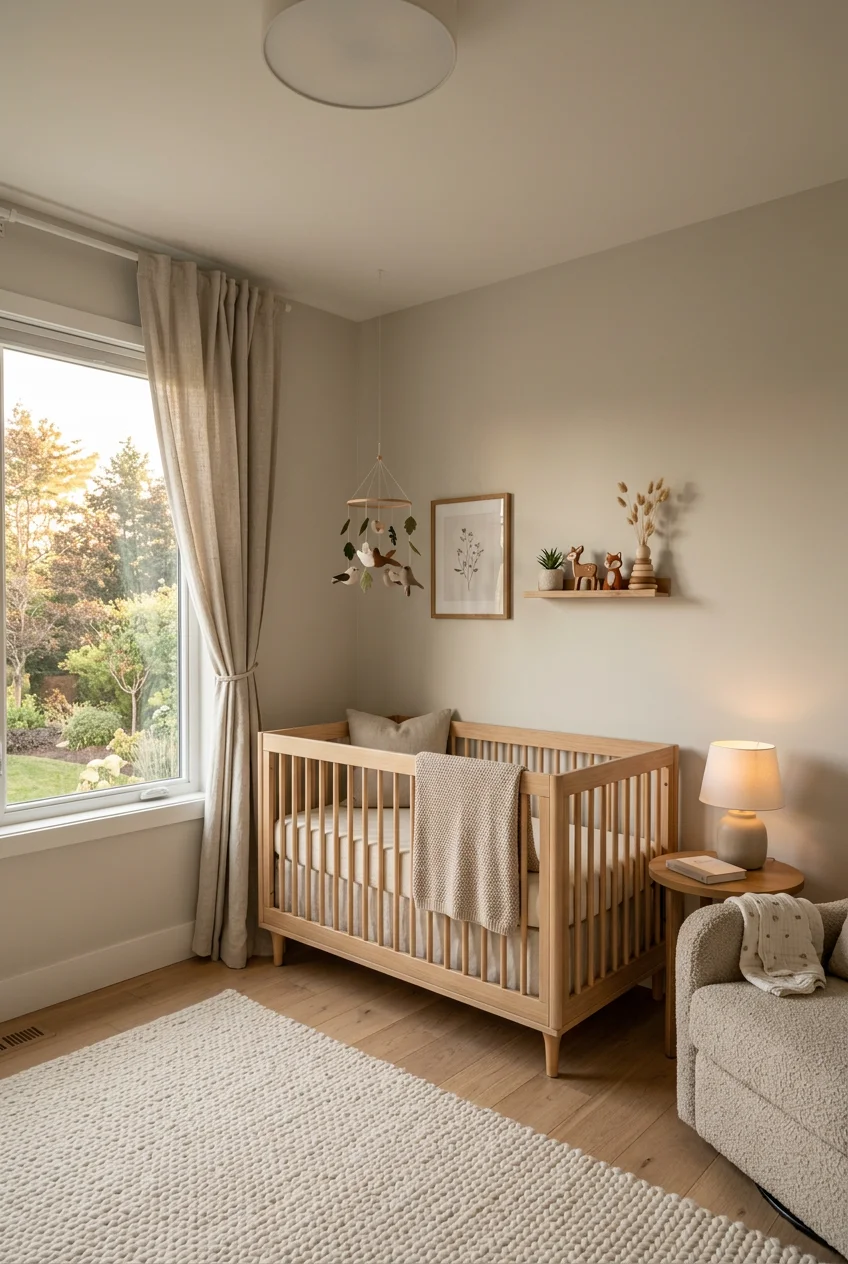
I painted my oldest son’s room a stark, icy gray back in 2018 because Pinterest told me it was modern. Three months later, sitting in the dark at 3 AM while he screamed, the walls felt like a concrete prison cell instead of a comforting neutral baby boy nursery. I learned the hard way that cool grays make a room feel sterile. Trust me on this. Designing a neutral baby boy nursery requires warm tones, layered textures, and practical furniture so it doesn’t look like an office waiting room. I’m Lauren Hayes, a nursery design consultant, and I’ve spent years fixing cold, impractical baby rooms. Let’s fix yours before you buy the wrong paint.
1. Earthy Paint Colors for a Neutral Baby Boy Nursery

I spent four weekends testing paint swatches on the walls of my third client’s house last November. We initially tried pure whites, but they reflected the harsh afternoon sun and made the room feel clinical. The trick to a modern space is moving away from stark white. You need warm, earthy tones like soft sage green, warm stone, mushroom, or muted terracotta. These colors complement natural wood furniture and hide the inevitable scuff marks from flying wooden blocks later on. I recommend Sherwin-Williams’ “Accessible Beige” or Benjamin Moore’s “Pale Oak” for the main walls. A gallon of Sherwin-Williams Emerald Interior Acrylic Latex costs $78.49, and it covers about 400 square feet. It wipes down easily when your toddler inevitably discovers crayons. If you want a subtle accent, a muted sage green brings in nature without overwhelming the space. Just avoid painting all four walls a dark color. I did that in a client’s 10×10 room in Chicago and we had to prime over it two days later because it felt like a cave. No exaggeration.
2. Investing in a Solid Wood Convertible Crib

Most parents buy a cheap $150 crib from Wayfair and then have to buy a toddler bed two years later. Skip that step. A convertible crib adapts as your child grows, transforming from a crib to a toddler bed and eventually a full-sized daybed. I bought a flimsy particleboard crib for my first baby and the screws stripped out the second time I tried to lower the mattress height. Learned that the hard way. Now I only recommend solid wood options. Brands like Pottery Barn Kids or Graco offer durable, JPMA-certified models. A high-quality convertible crib typically ranges from $300 to $1500. The Graco Benton 4-in-1 Convertible Crib is a solid budget option at Target for $169.99, but if you have the budget, the Pottery Barn Kids Kendall Convertible Crib at $399.00 is much heavier and doesn’t wobble when you lean against the rail. The hardware on the PBK crib is hidden, which stops pacifier clips from snagging on exposed bolts. Buy the toddler rail conversion kit separately for around $99.00 at the same time as the crib and store it under the bed.
3. GOTS-Certified Organic Crib Sheets

A baby’s sensitive skin rubs against their crib sheet for 12 to 14 hours a day. Standard polyester blend sheets trap heat and make babies sweat, leading to those angry red heat rashes on the back of their necks. I learned this when my youngest woke up drenched in sweat every night for a week in July. You need breathable, GOTS-certified organic cotton sheets. Burt’s Bees Baby offers fantastic budget-friendly options for $20.99 per sheet at Target. They stretch nicely over the mattress corners and hold up to weekly hot water washes. If you want something thicker, Naturepedic sheets run about $39.00 each, and Coyuchi offers luxurious organic cotton crinkle sheets starting at $48.00. I bought two Coyuchi sheets last spring at a boutique in Denver. They feel incredibly soft, but they do wrinkle heavily in the dryer if you don’t pull them out immediately. Buy exactly three fitted sheets. One for the mattress, one for the laundry basket, and one in the middle-of-the-night emergency drawer. You don’t need a top sheet or blankets in the crib due to safe sleep guidelines.

Criusia Over the Door Organizer
A dependable everyday pick — Criusia Over the Door Organizer pulls in 231 ratings at 4.5 stars. Not flashy, just solid.
4. Machine-Washable Nursery Rugs

Don’t put a vintage wool rug in a nursery. I placed a beautiful $800 hand-knotted Moroccan rug in a client’s nursery in 2021. Three weeks later, a massive diaper blowout ruined it permanently. You need a washable, hypoallergenic rug. Babies spit up, bottles leak, and toddlers mash blueberries into the floor. Washable rugs are non-negotiable. Brands like Lorena Canals, Ruggable, and Tumble specialize in machine-washable designs that actually fit in a standard washing machine. Ruggable’s “Cyrus Rose Gold Rug” in the 5×7 foot size costs $169.00 and comes with a Velcro-like pad underneath. The top layer peels off so you can wash it on a cold cycle. Tumble rugs are another option. Their 5×7 foot sizes run around $179.00 and have a cushioned pad that locks into the corners of the rug. The Tumble pad is slightly thicker, which cushions your knees when you’re doing tummy time on the floor. The edges of washable rugs sometimes curl up after the fifth or sixth wash. I use double-sided carpet tape from Home Depot ($6.98 for a 15-foot roll) to keep the corners pinned down safely.
5. Layered Lighting with Dimmer Switches

Lighting dictates the entire mood of a room. If you flip on a bright overhead boob light at 2 AM for a diaper change, your baby will think it’s morning and stay awake for two hours. I made this mistake for a month straight before my husband finally installed a dimmer switch. You need layered lighting. Install a simple Lutron Diva LED Dimmer Switch from Lowe’s for $34.97 on your main overhead light. Next, add a dedicated nightlight. The Hatch Rest+ costs $89.99 at BuyBuyBaby and combines a soft night light, a white noise sound machine, and a time-to-rise clock for later on. You can control the brightness and sound from your phone, which means you don’t have to tip-toe across creaky floorboards to turn it down. Finally, place a floor lamp next to your glider for reading. Use a warm-toned LED bulb, specifically between 2700K and 3000K. A 40-watt equivalent bulb provides enough light to read a board book without overstimulating the baby. Keep all lamp cords pinned to the baseboards with 3M Command Cord Clips ($11.49 for a 16-pack).
6. Essential HEPA Air Purifiers

Nurseries get dusty fast. Between the shedding textiles, baby powder, and whatever floats in from the window, the air quality drops quickly. Pediatricians emphasize clean air for developing lungs. A cheap fan just blows the dust around. You need a purifier with a True HEPA filter that traps 99.97 percent of airborne particles down to 0.3 microns. I keep a Levoit Core 300 in my son’s room. It costs $99.99 on Amazon, covers up to 219 square feet, and runs at a very quiet 40.7 decibels on the medium setting. The white noise it produces actually helps mask street sounds. If you have a smaller room, the Coway Airmega 150 runs about $189.99 and has a washable pre-filter you can just rinse in the sink. If you just painted the room or bought new furniture, the Alen Flex model ($349.00) offers specialized filters with activated carbon to remove VOCs off-gassing from the paint and glue. The replacement filters for the Levoit cost $29.99 and need swapping every six months. Don’t buy generic knock-off filters because they don’t seal properly inside the machine. You might also like: 16 Small Nursery Layout You Need to See
CUBEDIY Baby Closet Organizer for Nursery: Durable Baby
Honestly, CUBEDIY Baby Closet Organizer for Nursery: Durable Baby Wardrobe for C surprised me — sturdier than it looks in the photos, and over 316 buyers gave it 4.5 stars.
7. Blackout Curtains for Better Sleep

Babies don’t care about natural light when they need to nap at 1 PM in the middle of June. If the room is bright, they will fight sleep. Regular cotton curtains are useless here. You need heavy, lined blackout curtains. I bought the Eclipse Kendall Blackout Curtains from Target for $24.99 per panel. They block out 99 percent of light and help muffle the sound of my neighbor’s leaf blower. The mistake most people make is hanging the curtain rod right above the window frame. This creates a massive halo of light around the edges. You have to mount the curtain rod at least four to six inches above the window trim, and buy panels that are 84 or 95 inches long so they kiss the floor. I use the Umbra Twilight Room Darkening Curtain Rod ($35.99 on Amazon). It curves at the ends so the curtain wraps all the way to the wall, blocking that annoying side light. I tried using cheap paper blackout blinds underneath my curtains for a while, but the adhesive melted in the summer heat and ruined the window frame. You might also like: 16 Nursery Dresser Organization You Need to See
8. A Comfortable and Supportive Glider

You will spend hundreds of hours in your nursery chair. Rocking, feeding, crying, and accidentally falling asleep. Don’t buy a stiff wooden rocking chair because it looks cute on social media. I bought a vintage wooden rocker at a flea market for $50 and my lower back was destroyed within a week of bringing my baby home. You need a plush glider with a high back so you can rest your head. The Babyletto Kiwi Electronic Recliner and Swivel Glider costs $799.00 at Crate & Kids. It has a hidden control panel in the armrest to recline smoothly without jerking the baby awake, and it features a built-in USB port so you can charge your phone during a 45-minute feeding session. The fabric is water-repellent, which is crucial because milk spills happen daily. If you want a more budget-friendly option, the Delta Children Blair Slim Nursery Glider is $299.99 at Walmart. It has a smaller footprint for tight spaces, though the back is a bit low for anyone over 5 foot 9 inches. Always sit in a chair before you buy it if possible.
9. Dressers that Double as Changing Tables

Dedicated changing tables are a waste of money and floor space. Once your kid is potty trained, you’re stuck with a weird, shallow shelving unit. Instead, buy a wide, sturdy dresser and put a changing pad on top. I always recommend the IKEA Hemnes 8-drawer dresser for $399.00. It is 63 inches wide, which gives you plenty of room for a changing pad on one side and a basket of diapers and wipes on the other. The height is 37.7 inches, which is the perfect ergonomic height so you aren’t hunching over and hurting your back. Pair it with a wipeable changing pad. I use the Keekaroo Peanut Changer ($149.95 at Nordstrom). It’s made of a solid, squishy polyurethane material. You don’t need cloth covers for it. When the baby inevitably pees during a diaper change, you just wipe the Keekaroo down with a Clorox wipe. I used a traditional foam pad with cloth covers for my first baby and I was doing a load of laundry every single day just for changing pad covers. Skip the cloth covers entirely.

Beautiful Wooden Baby Closet Dividers Set of 7
If you want something that just works, Beautiful Wooden Baby Closet Dividers Set of 7 – Double-Sided Organize is a safe bet (11 reviews, 4.5 stars).
10. Woven Baskets for Toy Storage

Neutral nurseries look messy quickly if you have brightly colored plastic toys scattered everywhere. You need a storage system that hides the chaos but still looks earthy and warm. Heavy wooden toy chests are dangerous because the lids can slam on little fingers. Soft woven cotton or water hyacinth baskets are much safer and easier to move around. I use the Pehr Pom Pom Canvas Bins. The large size is 13 inches tall and costs $44.00 at Maisonette. They hold a massive amount of stuffed animals and wooden blocks. For a cheaper alternative, the Target Threshold Water Hyacinth Storage Baskets run about $20.00 each. I line these up on the bottom shelf of the closet for extra blankets and outgrown clothes. The natural texture of the hyacinth adds that warm, earthy feel you need in a neutral room. One negative about water hyacinth is that it can shed tiny flakes of dried grass onto the floor over time. I vacuum under them once a week to keep the dust down. Stick to soft cotton rope baskets for items the baby will actively touch. You might also like: 16 Nursery Paint Colors for Every Budget
11. Floating Shelves for Books and Decor

Floor space in a nursery is precious. Instead of a bulky bookcase, use floating shelves to display board books, small wooden toys, and framed photos. Books with beautiful covers act as cheap, colorful art against neutral walls. I install the IKEA Flisat wooden wall displays in almost every nursery I design. They only cost $19.99 each and are made of solid pine. They are 27.5 inches wide and have a small lip on the front edge so books don’t slide off and hit the baby. I usually stagger three of them on the wall next to the glider. The mistake I made in my own house was using the cheap plastic drywall anchors that came in the hardware kit. One of the shelves ripped out of the drywall when my toddler pulled on it. Always throw away the included hardware and buy heavy-duty Toggler SnapSkru drywall anchors from Lowe’s ($14.98 for a pack of 50). They hold up to 65 pounds each. Mount the lowest shelf at least 40 inches off the floor so your toddler can’t use it as a ladder.
12. Minimalist Wall Art in a Neutral Baby Boy Nursery

You don’t need giant cartoon animal murals to make a neutral baby boy nursery feel special. Keep the walls calm and use minimalist art prints. Botanical sketches, vintage maps, or simple line drawings in muted tones work perfectly. I bought a set of three digital download vintage tree sketches from an Etsy shop called NorthPrints for $15.00. I had them printed on matte cardstock at Walgreens for $12.50 and framed them in light oak frames. Target’s Room Essentials gallery frames cost $12.00 for an 11×14 size and look surprisingly high-end if you use the included white mat. Hang the frames securely. Never use wire hanging kits in a nursery because the frame can easily tilt and fall if bumped. Use 3M Command Picture Hanging Strips ($14.49 for a 14-pair pack at Costco). I put four strips on every frame so they are practically cemented to the wall. I once had a heavy glass frame fall and shatter near the crib because a door slammed too hard. I’ve strictly used Command strips or screwed the frames directly into the studs ever since.

Criusia Drawer Organizer Clothes
Criusia Drawer Organizer Clothes has been one of the most consistently praised picks in this category. 11 reviewers averaged 4.5/5.
13. Temperature Control and Humidifiers

Nurseries get incredibly dry in the winter when the heat is running. A dry room leads to a stuffed-up baby who wakes up coughing at 4 AM. You need a cool-mist humidifier to keep the room’s humidity between 40 percent and 60 percent. I use the FridaBaby 3-in-1 Humidifier, which costs $44.99 at Target. It holds enough water to run for 12 hours on the lowest setting, and it doubles as a nightlight and essential oil diffuser (though I skip the oils for babies under six months). The tank is easy to wipe out with a paper towel. I tried a massive one-gallon Vicks humidifier first, but the tank didn’t fit under my bathroom sink faucet, so I had to fill it in the bathtub every night. It was a huge hassle. Always place the humidifier on a waterproof tray or a folded towel on top of the dresser. The mist can settle and warp the wood veneer over time. I ruined the top of a beautiful vintage dresser in 2019 because I left a humidifier running on high right on the bare wood for three nights.
14. Non-Toxic Mattress Choices

Your baby spends more time on their mattress than anywhere else in the house. Cheap mattresses are often wrapped in vinyl and sprayed with chemical flame retardants that off-gas for months. I opened a $40 mattress from Amazon once and the chemical smell gave me a headache within ten minutes. I immediately returned it. You need a mattress with Greenguard Gold certification. The Naturepedic Organic Breathable Crib Mattress is a fantastic option. It costs $299.00 at Pottery Barn Kids. It features a waterproof sugarcane coating that wipes clean instantly, and it doesn’t crinkle loudly when the baby rolls over. Another popular choice is the Newton Baby Crib Mattress, which retails for $299.99 directly from their website. The Newton core is made of a polymer material that looks like a giant block of dry ramen noodles. It is 100 percent breathable, meaning if your baby rolls onto their stomach, air still flows through the mattress. The entire Newton cover unzips and goes in the washing machine, and you can literally wash the core in the shower with soap and water.
15. Subtle Textures with Linen Window Treatments

Since a neutral room lacks bright colors, you have to create visual interest through texture. Flat cotton curtains look cheap against painted walls. Linen provides a soft, organic texture that breaks up the flat beige walls. Washed linen Roman shades or linen-blend curtains drape heavily and have a relaxed, slightly wrinkled look that makes the room feel cozy. West Elm sells a beautiful European Flax Linen Curtain starting at $110.00 per panel. If you want a more affordable option, Quince offers 100 percent European Linen curtains for $89.90 for a set of two panels. I bought the Quince panels in the “Sand” color for a client’s nursery in Austin last month. They let in a beautiful soft light during the day, though you still need a blackout roller shade mounted behind them for nap time. Linen does shrink if you wash it in hot water. I ruined a $150 linen shade by tossing it in the dryer on high heat. It shrank three inches and no longer covered the bottom of the window. Always dry clean linen window treatments or wash on cold and hang dry.

JolyWell Night Light for Kids
Honestly, JolyWell Night Light for Kids surprised me — sturdier than it looks in the photos, and over 51 buyers gave it 4.5 stars.
16. Safe Cord Management Strategies

Once your baby starts crawling, every single cord in the nursery becomes a target. Monitors, lamps, sound machines, and humidifiers all have long white cords dangling near the floor. I caught my nine-month-old chewing on the monitor cord behind the glider and nearly had a heart attack. You have to secure every wire. I use the D-Line Cable Raceway Kit from Home Depot. A 157-inch kit costs $19.98. It’s a hard plastic channel with an adhesive backing that sticks directly to the baseboard or wall. You tuck the cords inside and snap the cover shut. You can even paint the plastic channels the same color as your walls so they disappear completely. For cords that have to cross open floor space, like a lamp cord under a rug, I use a SafCord Carpet Cord Cover. It costs $19.99 for a 6-foot strip on Amazon and uses heavy-duty Velcro to stick to low-pile rugs, preventing tripping hazards. Don’t rely on cheap zip ties. Toddlers are surprisingly strong and can pull zip-tied bundles of cords right off the wall.
17. Adding Real Plants (Safely) for Warmth

The easiest way to bring life into a neutral space is with greenery. A pop of green breaks up the beige and wood tones perfectly. However, many common houseplants are highly toxic to pets and kids, including Pothos, Snake Plants, and Philodendrons. I had to give away three massive Pothos plants when my son started pulling leaves off and putting them in his mouth. Stick to non-toxic options like a Spider Plant or a Boston Fern. You can buy a healthy Boston Fern in a 6-inch pot at Sprouts Farmers Market for $12.99. I put mine in a hanging macrame planter from World Market ($14.99) and suspended it from a ceiling hook in the corner of the room. This keeps the dirt and leaves completely out of reach. If you prefer a floor plant, a Parlor Palm is safe and adds great height. Put the plastic nursery pot inside a heavy ceramic planter from Target ($30.00) so the baby can’t easily tip it over. I also top the soil with large, heavy river rocks to stop my toddler from digging in the dirt.
Designing a neutral baby boy nursery is about choosing textures and warm tones that will grow with your child, rather than sterile grays that feel cold. I’ve used these exact products to build safe, functional rooms that actually look good. Pin this list so you have the brand names and prices handy when you’re standing in the aisle at Target trying to make a decision.
Frequently Asked Questions
What are the best paint colors for a neutral baby boy nursery?
Warm, earthy tones work best to avoid a sterile look. I recommend Sherwin-Williams ‘Accessible Beige’ or Benjamin Moore ‘Pale Oak’. Soft sage greens and muted terracotta also work beautifully as subtle accent colors alongside natural wood furniture.
How do I add texture to a neutral nursery?
Incorporate layered materials like washed linen curtains, woven water hyacinth baskets, and soft cotton rugs. Since you aren’t using bright colors, these physical textures prevent the room from looking flat and make the space feel much cozier.
Are washable rugs worth it for a baby’s room?
Absolutely. Babies spit up, bottles leak, and diaper blowouts happen. Washable rugs from brands like Ruggable or Tumble allow you to peel off the top layer and run it through a standard washing machine, saving you from expensive professional cleaning bills.
What plants are safe to keep in a baby’s nursery?
Many common houseplants are toxic if ingested. Stick to safe, non-toxic options like a Spider Plant, Boston Fern, or Parlor Palm. Always hang trailing plants from the ceiling or place floor plants in heavy ceramic pots out of the baby’s reach.
