What’s Inside
- The Three-Layer Rule for Mauve Nursery Lighting Ideas
- Warm White Dimmable LEDs (2700K to 3000K)
- Smart Dimmable Ceiling Fixtures
- Mauve-Toned Cotton Pendant Lighting
- Fabric-Shaded Task Lamps for the Changing Station
- Smart Night Lights for Remote Control
- Ditching Blue Light for Evening Routines
- Cord-Free Wall Sconces for Safety
- Celestial Projector Night Lights
- The Brutal 2 AM Test Method
- Battery-Operated Whimsical Accent Lights
- Layering Light with True Blackout Curtains
- Flicker-Free LED Technology
- Calculating 150 to 200 Lux for Playtime
- Portable Rechargeable Egg Lights
- Pairing Mauve with Brushed Brass Finishes
- Amber Glow Settings for Midnight Feeds
- Strategic Below-Eye-Level Placement
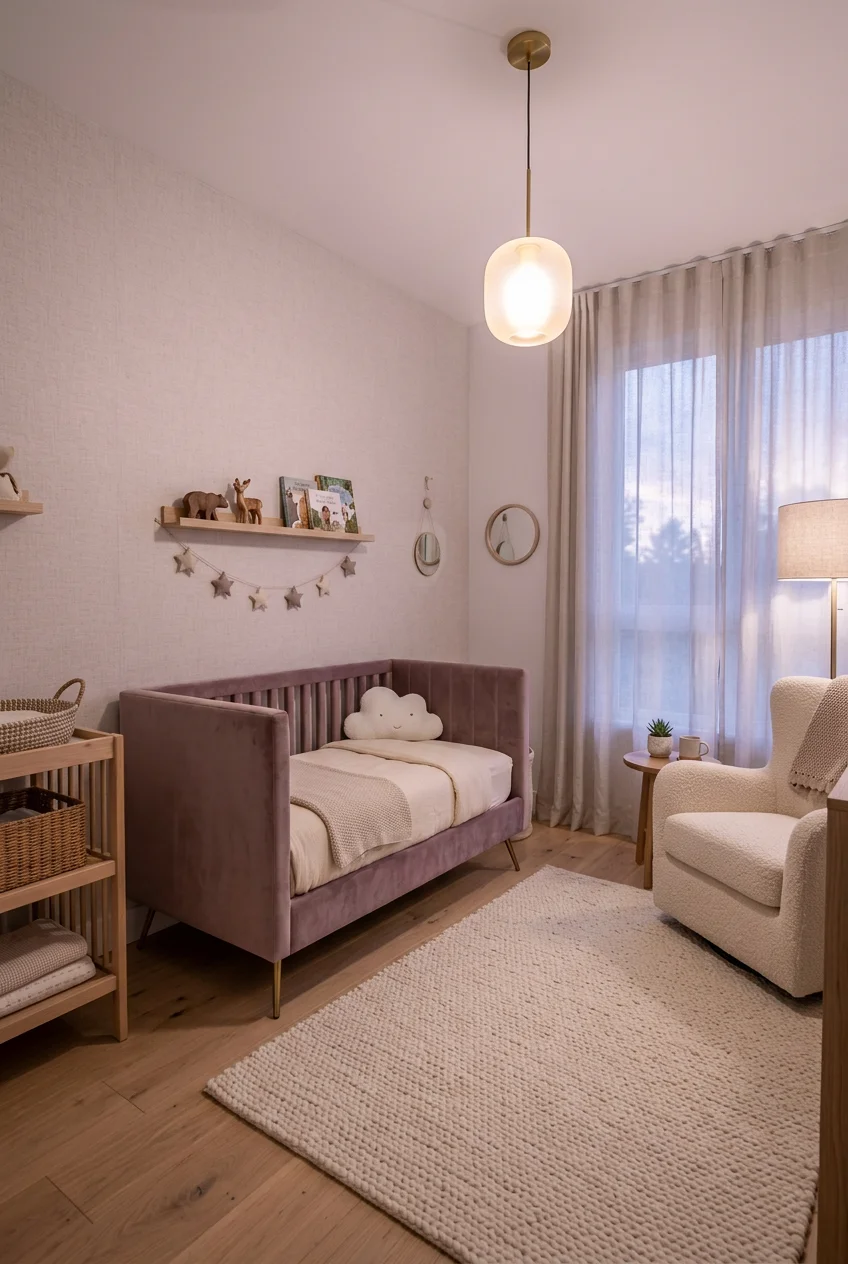
Most people hang one glaring overhead light in a baby’s room and wonder why the 3 AM feed feels like a police interrogation. Planning mauve nursery lighting isn’t just about looks. It’s about sleep science. You’re dealing with developing eyes and fragile circadian rhythms. A generic 60-watt bulb in a cheap paper shade won’t cut it. You need a plan that moves from bright daytime play to a soft, sleep-inducing glow. If you only try one idea here, make it #6. A smart night light removes the guesswork from midnight wake-ups, keeping everyone sleepy. Learned that the hard way.
Skip this list if you need ultra-bright, clinical lighting for a primary playroom or refuse to install dimmer switches. These mauve nursery lighting ideas prioritize soft ambiance over maximum wattage. Parents wanting daylight-level brightness 24/7 won’t find what they need here.
1. The Three-Layer Rule for Mauve Nursery Lighting Ideas

Most people rely on one ceiling light. This casts harsh shadows and washes out delicate paint, turning a dusty rose into a muddy gray. When planning mauve nursery lighting, you need three layers: ambient, task, and accent. Ambient lighting provides the overall glow. Task lighting focuses on the changing table or nursing chair, so you aren’t fumbling with diaper tabs in the dark. Accent lighting adds a soft touch to a bookshelf or windowsill. By splitting the light, you control the mood at any hour. You won’t have to blind your baby just to find a dropped pacifier. You can grab a basic task lamp at Target (usually under $40) to start your layers. The key is making sure the layers don’t compete. They should work together to highlight the warm undertones of your walls. Trust me.
The catch: wiring three separate sources often requires an electrician unless you stick to simple plug-in options.
2. Warm White Dimmable LEDs (2700K to 3000K)

Color temperature dictates how a room feels. Cool white bulbs belong in a dentist’s office, not a nursery. Opt for LED bulbs with a warm temperature between 2700K and 3000K. This range mimics natural evening light, which helps an infant relax. Anything higher than 3000K introduces blue light waves, which we want to avoid. You can find multipacks at Walmart (usually $10 to $20). Make sure the packaging says the bulbs are dimmable. A non-dimmable bulb on a dimmer switch will buzz and flicker, which is infuriating when you’re rocking a baby to sleep. That warm 2700K glow makes mauve paint feel cozy rather than stark.
Best for: rooms painted in cool-toned mauves that need warming up.
The catch: finding true 2700K bulbs can be annoying since brands often mislabel 3500K as warm white.
3. Smart Dimmable Ceiling Fixtures

A standard flush mount is a missed opportunity. Choose a fixture with smart dimming capabilities. The Minka Lavery 3-Light Flush Mount (budget $150 to $250) in brushed brass provides ample light for play and dims to a glow for nighttime. Brushed brass is a major 2026 trend that pairs beautifully with mauve. Instead of reaching for a wall switch while holding a sleeping baby, use voice commands or an app to lower the brightness as you walk in. This hands-free control prevents sudden shocks that wake a drowsy infant.
Best for: low ceilings under 8 feet where pendants aren’t an option.
The catch: smart fixtures need a stable Wi-Fi connection to avoid lag.

Criusia Over the Door Organizer
If you want something that just works, Criusia Over the Door Organizer is a safe bet (247 reviews, 4.5 stars).
4. Mauve-Toned Cotton Pendant Lighting

If you have the ceiling height, a unique pendant adds texture. Look for something like the Mauve Hanging Light Heart from Etsy (expect $120 to $150). It’s made from woven cotton, which acts as a natural diffuser. The textile softens the light, preventing glare from hitting the crib. The mauve fabric ties into your theme, making it a focal point even when off. Just ensure it’s on a dimmer switch. The woven texture casts subtle shadows, adding depth to the room without overwhelming it.
The catch: fabric pendants collect dust quickly and need frequent cleaning with a vacuum attachment.
5. Fabric-Shaded Task Lamps for the Changing Station

Midnight diaper changes need precision. Don’t rely on ambient ceiling light. Place a dimmable table lamp with a thick fabric shade near the changing table. The Radilum Snowflake Alabaster Table Lamp (prices vary) is a solid choice. The shade directs light downward onto the pad while shielding the baby’s eyes. When you’re dealing with a blowout at 3 AM, you need to see without signaling that it’s playtime. You can grab eco-friendly, low-wattage bulbs at Sprouts during your grocery run. The focused beam keeps the rest of the room dark, maintaining a sleepy atmosphere.
The catch: alabaster and ceramic bases are heavy and can tip if not anchored to the dresser.
6. Smart Night Lights for Remote Control

A dedicated smart night light is non-negotiable. Devices like the Hatch Baby Rest+ ($60 to $90) or the Amazon Echo Glow ($30 to $40) allow control from your smartphone. You can customize brightness and color. Before you step into the nursery, turn on a dim red or amber light from the hallway. This prevents you from stubbing your toe on the rocking chair while keeping the room dark enough for the baby. A schedule means the light shifts to a brighter setting in the morning, acting as a gentle wake-up signal.
Best for: tech-savvy parents who want phone control over the nursery environment. You might also like: 18 Car Toddler Room You Need to See
The catch: the Hatch Rest+ requires a paid subscription for the full library of sounds and light programs. You might also like: 19 Twin Girl Nursery Worth Trying

Beautiful Wooden Baby Closet Dividers Set of 7
Beautiful Wooden Baby Closet Dividers Set of 7 – Double-Sided Organize is sturdier in person than the photos suggest — over 11 buyers gave it 4.5 stars.
7. Ditching Blue Light for Evening Routines

Most parents sabotage sleep by using the wrong light spectrum. Steer clear of cool white or blue-toned lights entirely in the two hours before bedtime. Blue light suppresses melatonin and disrupts the sleep cycle. This includes electronic devices, humidifiers with bright displays, and cheap night lights. Opt for warm white, red, or amber hues. You can even find amber bulb options at places like Whole Foods if you’re overhauling your routine. Sticking to warm tones tells the baby’s brain that the sun is setting. You might also like: 18 Nursery Themes Boy Worth Trying
The catch: amber bulbs make everything look slightly orange, which distorts your carefully chosen mauve paint at night.
8. Cord-Free Wall Sconces for Safety

Dangling cords are a hazard once your baby becomes mobile. Securely mounting fixtures fixes this. Wall sconces from brands like The Lamp Goods (prices vary) offer brass and matte black options that complement mauve walls. Hardwired sconces eliminate cords entirely. Mount them flanking the crib or above the chair for a custom look. If you can’t hardwire, look for battery-operated sconces that mount with a bracket. Never hang heavy lighting directly above the crib mattress, no matter how secure the anchors are.
Best for: renters who can use battery-operated puck lights inside decorative sconce shells.
The catch: hardwired sconces mean cutting into drywall and patching it later if you rearrange the furniture.
9. Celestial Projector Night Lights

A projector night light is a surprising way to soothe a fussy baby. Models like the Cloud b Twilight Turtle ($40 to $45) or projectors from A Little Lovely Company (€17 to €23) cast slow-moving patterns onto the ceiling. The gentle movement gives the baby something to focus on, which often stops crying. Ensure the projector is Class 1 laser certified for eye safety and place it high up on a shelf, out of reach. Most models include a 30-minute timer. This is crucial because it encourages full darkness for deep sleep once the baby drifts off.
The catch: stars look blurry if your nursery ceilings are heavily textured or vaulted.

Night Lights, White Noise Machine
Night Lights punches above its price — 246 buyers rated it 4.5 stars. The kind of pick people reorder.
10. The Brutal 2 AM Test Method

Before you toss the receipts for your new lighting, perform the 2 AM test. Walk into the nursery in pitch black and turn on your light. If it feels painful or jarring to your sleepy eyes, it’s too bright for your baby. A light that seems dim at 8 PM will feel like a stadium floodlight at 2 AM. Adjust your dimmer switches and night light settings based on this midnight baseline. This strict test ensures your lighting supports nighttime care rather than disrupting it.
Best for: parents who are light-sensitive and struggle to fall back asleep after feeds.
The catch: a setting that passes the 2 AM test is usually too dim for tasks like clipping tiny baby nails.
11. Battery-Operated Whimsical Accent Lights

For a playful touch, scatter battery-operated LED accent lights around the room. You can find these in animal or cloud shapes on Etsy ($15 to $40). They provide a soft glow on floating shelves or in a bookcase. Because they don’t have cords, you can place them anywhere. Stock up on bulk AA batteries during your next Costco run. These small lights add whimsy to the mauve room without adding to the overall lumen count.
The catch: replacing batteries is expensive and annoying if you forget to turn them off in the morning.
12. Layering Light with True Blackout Curtains

While not a light fixture, blackout curtains are the most crucial element of your lighting plan. They regulate your baby’s circadian rhythm by blocking streetlights and morning sun. You can find heavy-duty options at Target (usually under $60 per panel). Ensure the nursery can be made pitch dark for naps. Natural light during the day combined with darkness at night helps infants distinguish between the two faster. The curtains act as the canvas, allowing your night lights to work without outside interference. No exaggeration.
Best for: nurseries facing bright streetlights or getting direct morning sun.
The catch: true blackout curtains are heavy and require sturdy anchors to keep the rod from ripping out of the wall.

Baby Closet Divider, Baby Wardrobe Organizer
Baby Closet Divider has been one of the most consistently praised picks in this category. 371 reviewers averaged 4.5/5.
13. Flicker-Free LED Technology

Most cheap LED bulbs have a micro-flicker. While this pulsing is imperceptible to adults, it can strain infant eyes and cause unexplained fussiness. Opt for high-quality bulbs labeled as flicker-free. Brands like Radilum prioritize this technology. When you’re rocking a colicky baby, the last thing you want is a subtle strobe effect causing headaches. Upgrading your bulbs is a small detail that makes a massive difference in comfort.
The catch: flicker-free certified bulbs cost more upfront than standard multipacks.
14. Calculating 150 to 200 Lux for Playtime

Daytime lighting needs to be bright enough for playing without feeling clinical. Aim for an illuminance of 150 to 200 lux. You can approximate this by adding the lumen output of all bulbs and dividing by the room’s square footage. A standard 107 square foot room needs roughly 1500 to 2000 total lumens. Hitting this measurement ensures the room is bright enough to stimulate the baby, which tires them out for their next nap. It also highlights the true tone of your mauve paint.
The catch: doing the math for lumens versus square footage is tedious, and brightness changes if you add dark, light-absorbing furniture.
15. Portable Rechargeable Egg Lights

For flexibility, look for wireless and rechargeable night lights. The FAWNEST Touch-Control Egg Night Light ($9 to $15) is a brilliant option. Keep it on the nightstand and carry it to the changing table or into the hallway. It eliminates cord hazards and offers excellent mood lighting. Because it’s rechargeable via USB, you don’t have to replace batteries. It’s also small enough to toss into a diaper bag when traveling, ensuring safe lighting in hotel rooms.
Best for: parents who travel frequently or move around the house at night.
The catch: the touch sensor is sensitive; a passing pet or bumped elbow can turn it on by accident.

Night Light for Kids, Baby Night Light with Sound Machine
Night Light for Kids punches above its price — 50 buyers rated it 4.5 stars. The kind of pick people reorder.
16. Pairing Mauve with Brushed Brass Finishes

The hardware on your fixtures matters. Pairing mauve walls with brushed brass is a major 2026 design trend. The warm, golden tones of the brass complement the dusty pink undertones of mauve, creating a sophisticated look. Avoid polished chrome or nickel, as these cool metals clash with mauve and make the room feel dated. Keep the brass looking fresh by wiping fixtures monthly with a microfiber cloth and 2 tablespoons of gentle cleaner (you can find baby-safe options at Kroger).
The catch: brushed brass shows fingerprints instantly, requiring constant wipedowns if you touch the bases often.
17. Amber Glow Settings for Midnight Feeds

When you’re up at 4 AM munching on Trader Joe’s snacks while nursing, you need a light that won’t wake your brain up. Setting smart lights to a deep amber or red glow preserves melatonin for both you and the baby. This wavelength doesn’t trigger a wake-up response. It provides enough visibility to ensure a safe feed without ruining your chances of falling back asleep. Keep this setting saved as a favorite on your phone so you can activate it instantly.
The catch: red light makes it hard to judge diaper contents or spot a rash.
18. Strategic Below-Eye-Level Placement

Where you place your light sources is critical. Ensure task lamps or night lights are positioned well below the eye level of the crib mattress. If a baby is lying flat, they shouldn’t be staring into a bare bulb or a glowing shade. Place lamps on lower dresser shelves or use floor-level night lights. This placement casts light across the floor where you need it for walking, while keeping the upper half of the room shrouded in sleep-inducing shadows.
Best for: the newborn phase before mobility kicks in.
The catch: low-placed lamps are targets for curious toddlers once they start walking.
How we chose these ideas: We evaluated these strategies based on renter-friendliness, cost, installation effort, and visual impact on mauve paint. We prioritized options that support infant sleep science over purely aesthetic fixtures.
Lighting dictates how a room feels, especially with tricky colors like mauve. Don’t leave it as an afterthought. Pin this list for your next weekend project, and build a lighting plan that actually lets you and your baby get some sleep.
Frequently Asked Questions
What is the best color temperature for a nursery?
You want warm white LED bulbs strictly between 2700K and 3000K. This mimics evening light and prevents melatonin suppression, helping your baby sleep better.
Are smart night lights worth the cost?
Yes, smart night lights allow you to adjust brightness and color from your phone. This means you won’t wake the baby by walking across the room to change a setting.
How many lumens do I need for a nursery?
Aim for 150 to 200 lux for daytime play. For a standard 107 square foot room, you’ll need roughly 1500 to 2000 total lumens across all your light fixtures.
Why should I avoid blue light in a baby’s room?
Blue light mimics daylight and actively suppresses melatonin production in the brain. Using amber or red light at night keeps the baby’s circadian rhythm on track for restful sleep.
