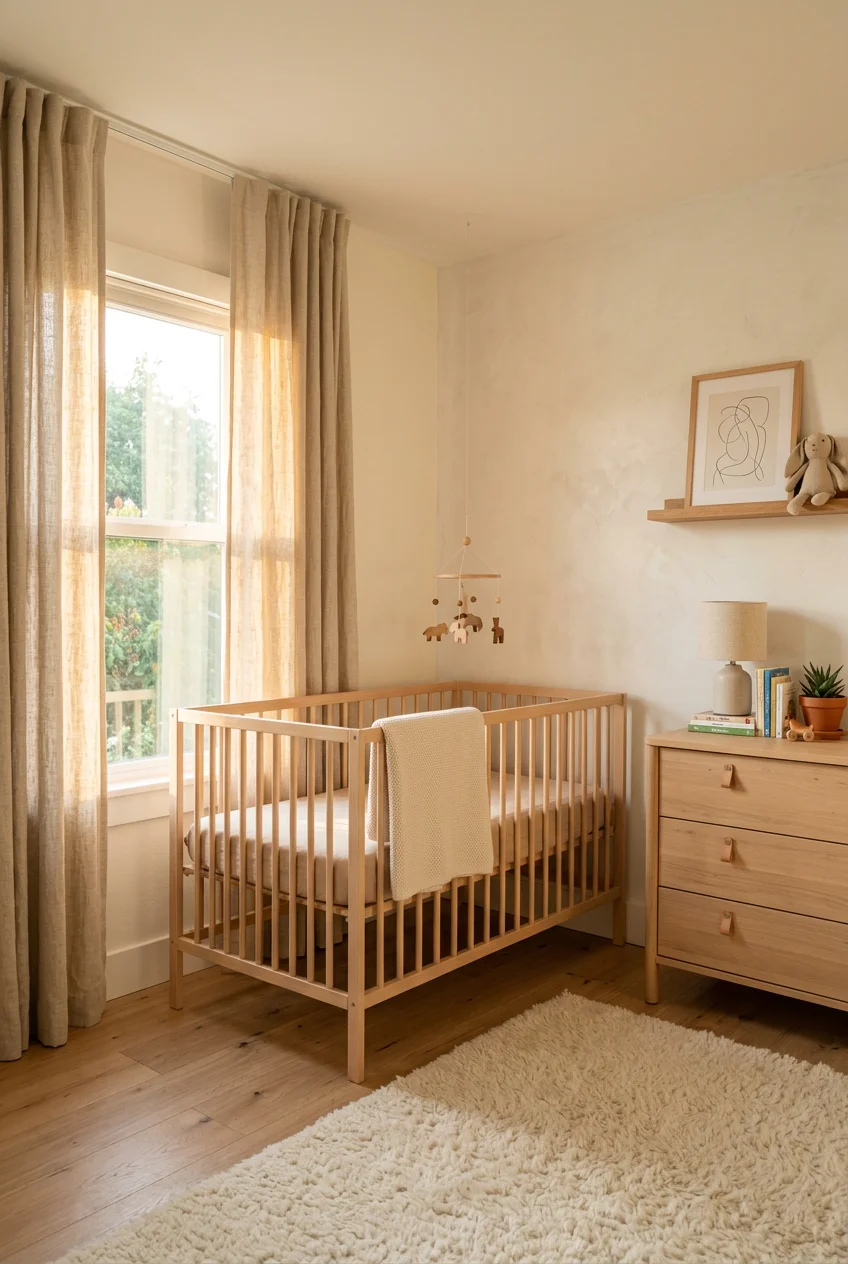
What’s Inside
- Embrace Warm, Earthy Neutrals for Walls in Your Gender-Neutral Nursery
- Invest in a GREENGUARD Gold Certified Convertible Crib
- Maximize Storage with a Multi-Functional Dresser
- Washable Rugs Are Non-Negotiable
- Layer Blackout Curtains Over Blinds
- Stick to Organic Cotton Crib Sheets
- Choose a Performance Fabric Glider
- Install Clear Acrylic Floating Bookshelves
- Add Texture with Beadboard Paneling
- Use Woven Seagrass Baskets for Floor Storage
- Provide Gentle Lighting with a Dimmable Floor Lamp
- Introduce Rattan or Bamboo Accents
- Hang a Minimalist Felted Wool Mobile
- Ditch the Cloth Changing Pad for a Wipeable Surface
- Hide the Tech with a Sleek Sound Machine
- Create a Gallery Wall of Nature Prints for a Gender-Neutral Look
- Bring in Life with a Faux Olive Tree or Real Snake Plant
- Soften the Glider with Linen Blend Throw Pillows
- Keep Drawers Tidy with Clear Acrylic Organizers
I painted my first client’s room a pale, sickly yellow back in 2018 because they asked for a gender-neutral nursery. The afternoon sun hit the walls and turned the entire room into what looked like the inside of a bruised banana. It took me three coats of primer to fix that mistake. Creating a gender-neutral nursery isn’t about stripping away personality or settling for boring beige. It’s about building a calm, functional foundation that works for a 3-month-old and a 3-year-old. Here are the 19 specific pieces and strategies I use to make these rooms actually feel like home.
1. Embrace Warm, Earthy Neutrals for Walls in Your Gender-Neutral Nursery

Skip the stark hospital whites and cold grays. When I design a gender-neutral nursery, I start with warm, earthy tones. My go-to right now is Sherwin-Williams Studio Clay. It costs about $75 a gallon, but the coverage is thick enough that you’ll usually only need two coats. It reads as a cozy taupey-beige that warms up instantly when you add wood furniture. If you want something darker, Clare Paint makes a deep green called Current Mood ($64 per gallon). I used this in a Brooklyn apartment last October, painting the bottom half to ground the room. I learned the hard way not to paint an entire room a single pastel color. You end up with what I call Easter Egg Syndrome. The room lacks visual weight and overstimulates the baby. You need contrast. Stick to muddy, muted colors like soft sage, warm stone, or dusty clay. They hide scuff marks better than bright whites anyway. Trust me on this.
2. Invest in a GREENGUARD Gold Certified Convertible Crib

You don’t want your baby breathing in off-gassing chemicals from cheap particleboard. I always specify a GREENGUARD Gold certified convertible crib. The Babyletto Hudson 3-in-1 Convertible Crib runs exactly $499 at Target, and it’s the workhorse of my designs. The spindle slats are spaced exactly 2 inches apart, which meets all safety regulations, and it feels visually light in a small room. I bought a cheaper pine crib once, and the hardware stripped instantly during assembly. The Babyletto transitions from a standard crib to a toddler bed using an included $89 conversion kit. I put one in my sister’s nursery three years ago. The natural washed wood finish hasn’t chipped despite her toddler gnawing on the top rail for six months. If you have a larger budget, the Evolur Aurora 5-in-1 Convertible Crib is another solid option, though it’s bulkier. Just make sure you measure your space. The Hudson is 53.6 inches long. Keep it away from windows and cords.
3. Maximize Storage with a Multi-Functional Dresser

A dedicated changing table is a waste of $200. You use it briefly, then you’re stuck with it. Instead, buy a wide, sturdy dresser and put a changing pad on top. The IKEA Hemnes 8-drawer dresser ($299) is my standard recommendation. It’s 63 inches wide, giving you 32 inches for the changing pad and 31 inches for wipes, creams, and a small lamp. I tried using a narrow 3-drawer vintage dresser once. I knocked over a full bottle of baby oil onto the rug because I had zero surface area. Never again. If you want solid wood, the West Elm Mid-Century 6-Drawer Dresser is $1,099. The drawers glide silently on metal tracks, which matters when you’re putting away laundry at 2 PM while the baby sleeps. Anchor whatever dresser you buy to the wall. The anti-tip kits cost $12 at Home Depot. It takes ten minutes to install with a standard drill and a 3/16 inch bit.

Criusia Drawer Organizer Clothes
If you want something that just works, Criusia Drawer Organizer Clothes is a safe bet (1 reviews, 4.5 stars).
4. Washable Rugs Are Non-Negotiable

Babies spit up. Toddlers grind crushed Cheerios into the floor. A plush, high-pile wool rug feels soft underfoot but traps every single crumb and stain. I only use washable rugs in nurseries now. The Ruggable Kamran Hazel Rug (8×10 size, $459) is my top pick. It has a low 0.1-inch pile and a waterproof polyurethane barrier on the bottom layer. Last Tuesday at my own house, my dog knocked a full 8 oz cup of black coffee onto a Ruggable. I peeled the top layer off, threw it in my standard Samsung front-loader with 2 tablespoons of Tide powder, and it came out completely clean. If the edges curl after washing, stick heavy-duty carpet tape ($8 at Walmart) underneath. Skip the thick shag rugs. You can’t roll a toy car across them, and vacuuming them requires a shop vac. Stick to a low pile synthetic blend that fits in your washing machine.
5. Layer Blackout Curtains Over Blinds

Light control dictates how much sleep you get. Flimsy linen curtains look pretty on Pinterest, but they let in a harsh glare at 6 AM. I double up on window treatments. I install standard cellular blackout shades inside the window frame, then hang heavy curtains outside. The Target Pillowfort Blackout Curtain Panels cost $25 per 84-inch panel. The white acrylic backing blocks light and dampens noise. I bought a cheap set off Amazon once that claimed to be room-darkening. They turned the room a weird glowing purple when the sun hit them, and the fabric felt like a cheap shower curtain. The Target ones feel like thick cotton canvas. Hang the curtain rod 4 to 6 inches above the window frame and extend it 8 inches past the sides. This prevents the annoying halo of light from leaking around the edges. I use a 1-inch matte black metal rod from Costco ($39 for the set) because it won’t bow in the middle under the weight.
6. Stick to Organic Cotton Crib Sheets

Babies spend up to 16 hours a day sleeping. The fabric they lie on matters. I skip the trendy muslin sheets because they snag on tiny fingernails and warp in the dryer. I use Burt’s Bees Baby 100% Organic Cotton Fitted Crib Sheets. They cost $19.99 at Whole Foods and Target. The ring-spun cotton is soft, and the elastic threads completely around the bottom edge. This is crucial. A loose sheet is a suffocation hazard. I bought a gorgeous $45 linen crib sheet from a boutique last year. After three washes, it shrank so much I couldn’t stretch it over the standard 28 by 52 inch mattress. I tore the corner seam trying to force it. The Burt’s Bees sheets stretch just enough and hold their shape. Buy exactly three sheets. One for the mattress, one for the wash, and one folded in the closet for the inevitable 3 AM blowout. You don’t need a matching quilt. Blankets aren’t safe in a crib anyway. You might also like: 20 Cozy Gender Neutral Baby Nursery Decor Ideas for Any Style

Delta Children Nursery Storage 48 Piece Set
A dependable everyday pick — Delta Children Nursery Storage 48 Piece Set – Easy Storage/Organizatio pulls in 17 ratings at 4.5 stars. Not flashy, just solid.
7. Choose a Performance Fabric Glider

You’ll spend hundreds of hours in the nursery chair feeding, rocking, and staring at the wall. Don’t buy a vintage wooden rocker. Your back will ache after ten minutes. I recommend the Namesake Crewe Recliner and Glider. It costs $599 on Wayfair. It rocks, swivels 360 degrees, and reclines silently. The fabric is treated with a water-repellent finish. I poured 2 oz of water on the armrest; it beaded up instantly. The seat cushion is 21 inches deep, which is enough room to use a Boppy pillow comfortably. I made the mistake of buying a narrow velvet chair for a client in 2021. The fabric held onto every piece of pet hair, and the armrests were too low to support her elbows while nursing. Look for a chair with armrests at least 24 inches from the floor. Add a small lumbar pillow for lower back support.
8. Install Clear Acrylic Floating Bookshelves

Traditional bookcases take up too much floor space in a 10 by 10 room. I use clear acrylic floating shelves to display books face-out. You can buy a 4-pack of 16-inch NIUBEE acrylic shelves on Amazon for $26.99. They are 2 inches deep, holding about three thick board books each. The books act as artwork, adding color without committing to a theme. I mount them exactly 12 inches apart, starting low to the ground so a crawling baby can reach the bottom shelf. Use the heavy-duty drywall anchors, not the cheap plastic ones included in the box. I learned this the hard way when my toddler pulled a shelf completely out of the drywall, leaving a jagged two-inch hole I had to patch and sand. The acrylic wipes clean with a damp microfiber cloth and a spray of Windex. Dust doesn’t settle on them as noticeably as it does on dark wood shelves. You might also like: 16 Baby Nursery Themes That Actually Work
9. Add Texture with Beadboard Paneling

Flat, painted walls can feel sterile. To add architectural interest without spending thousands, I install beadboard wainscoting. You can buy 4-foot by 8-foot sheets of primed MDF beadboard at Home Depot for $32 each. I cut them down to 40 inches high, glue them to the bottom half of the wall with a $6 tube of Liquid Nails, and finish the top edge with a simple 2-inch pine trim rail. It changes the acoustics by dampening echoes. I painted my own nursery beadboard a muddy beige (Sherwin-Williams Accessible Beige) and left the top half white. The vertical lines draw the eye up, making my standard 8-foot ceilings feel taller. Don’t use real wood beadboard in a nursery. Wood expands and contracts with humidity, causing the paint to crack at the seams. MDF stays perfectly stable. Just make sure you caulk the seams with a $4 tube of DAP Alex Plus before painting, or the gaps will look terrible under the room’s overhead light. You might also like: 15 Baby Girl Nursery Room Ideas for Every Budget

Criusia Over the Door Organizer
Honestly, Criusia Over the Door Organizer surprised me — sturdier than it looks in the photos, and over 218 buyers gave it 4.5 stars.
10. Use Woven Seagrass Baskets for Floor Storage

Plastic toy bins look cheap and crack easily. I use woven seagrass baskets to hide the visual clutter of plastic toys and stuffed animals. Target’s Threshold line makes a 14-inch round seagrass basket for $25. The natural tan color warms up the floor space, and the handles are thickly wrapped so they won’t snap when you carry a heavy load of wooden blocks. I keep one near the glider for burp cloths. Seagrass has a distinct, slightly earthy smell when you first unpack it. I usually leave them on the porch for 24 hours to air out. Avoid baskets with wire frames inside. I bought a cheap wire-framed basket at HomeGoods three years ago. The woven material snapped off, exposing a sharp wire point that scratched my ankle. Stick to soft-sided or tightly coiled rope baskets for safety. They hold their shape just fine if you stuff them full of blankets.
11. Provide Gentle Lighting with a Dimmable Floor Lamp

Overhead ceiling fixtures cast harsh downward shadows that wake up a sleeping baby during late-night diaper changes. You need layered, indirect lighting. I use the Brightech Carter LED Floor Lamp ($65 on Amazon). It has a walnut wood finish and a textured linen shade that diffuses the light beautifully. More importantly, it comes with a 9-watt LED bulb that you can dim with a foot pedal. I set it to 10% brightness at night. I used to rely on a small table lamp with a standard switch. Fumbling for a tiny plastic knob in the dark while holding a crying infant is miserable. The foot pedal solves that. Place the lamp in the corner behind the glider, ensuring the cord is tucked securely behind the baseboard. I use clear Command cord clips ($8 for a pack of 20 at Walmart) to pin the wire flat against the wall so a crawling baby can’t pull the lamp over.
12. Introduce Rattan or Bamboo Accents

A room full of painted MDF and soft fabrics needs some organic texture to keep it from looking flat. Rattan and bamboo bring in a natural, outdoorsy element that fits perfectly into a neutral design. I buy the rattan wall hooks from H&M Home. They cost $17.99 for a set of two. I mount them near the door to hold a lightweight sweater or a decorative linen tote bag. The warm rattan contrasts nicely with sage walls. I made the mistake of buying a massive rattan side table once. It had too many crevices and became a dust trap that I had to clean with a toothbrush. Keep the rattan accents small and easy to wipe down. A bamboo picture frame or a rattan light pendant ($89 at IKEA) adds enough texture without creating a cleaning nightmare. The natural fibers also absorb sound slightly better than hard plastic or metal fixtures.

Beautiful Wooden Baby Closet Dividers Set of 7
A dependable everyday pick — Beautiful Wooden Baby Closet Dividers Set of 7 – Double-Sided Organize pulls in 11 ratings at 4.5 stars. Not flashy, just solid.
13. Hang a Minimalist Felted Wool Mobile

Skip the loud, battery-operated plastic mobiles that play tinny electronic music. They overstimulate the baby and look terrible. I source handmade felted wool mobiles from Etsy. You can find beautiful neutral designs featuring clouds, sheep, or geometric spheres for around $45. The soft wool moves gently in the room’s air currents to capture a baby’s attention. I hang them from a $15 wooden crib arm attached to the side rail. Do not hang the mobile directly over the baby’s face. Hang it over their chest so they don’t have to strain their eyes backward to see it. I bought a heavy wooden mobile for my first client in 2019. The string snapped, and a wooden star fell right into the empty crib. It terrified me. I only use lightweight felt or paper mobiles now. If it falls, it weighs less than an ounce and won’t cause any harm. No exaggeration.
14. Ditch the Cloth Changing Pad for a Wipeable Surface

Traditional foam changing pads require a fabric cover. When a diaper blowout happens, you have to strip the cover, wash it, and wipe down the plastic foam. It’s a hassle. I completely stopped using them. Now, I recommend the Keekaroo Peanut Changer ($149 at BuyBuyBaby or Amazon). It’s made of a solid, impermeable polyurethane polymer. It feels like dense memory foam; liquids can’t penetrate it. Last month, I was babysitting my nephew and dealt with a massive mess. I just sprayed the Keekaroo with a 50/50 mix of white vinegar and water, wiped it with a paper towel, and it was sterile in ten seconds. The Vanilla color blends right into a neutral room. It’s heavy, weighing about 7 pounds, so it doesn’t slide around on the dresser top. The price feels steep for a changing pad, but when you factor in buying three $20 fabric covers and a $30 foam pad, the Keekaroo pays for itself in saved laundry time.
15. Hide the Tech with a Sleek Sound Machine

White noise is essential for masking the sound of dogs barking or UPS dropping packages at the front door. You don’t need a bulky, ugly fan taking up floor space. The Hatch Rest Sound Machine ($69.99 at Target) is a small, white cylinder that sits unobtrusively on the dresser. It’s just 4 by 6 inches. I control it from an app on my phone. I set it to the TV Static sound at 40% volume. It also functions as a nightlight. I program it to turn a dim amber color at 7 PM to signal bedtime. I tried a cheap $20 travel sound machine from Amazon first. The audio looped every 4 seconds, and I could hear the distinct click of the track restarting. It drove me insane while I was rocking the baby. The Hatch has seamless audio tracks. Keep it at least 6 feet away from the crib so the decibel level doesn’t damage the baby’s developing hearing.

StorageWorks Hanging Closet Organizer with Metal Rod
Honestly, StorageWorks Hanging Closet Organizer with Metal Rod surprised me — sturdier than it looks in the photos, and over 18 buyers gave it 4.5 stars.
16. Create a Gallery Wall of Nature Prints for a Gender-Neutral Look

Cartoon animals look dated by the time the kid turns three. I prefer vintage botanical or wildlife sketches for a gender-neutral nursery. You can buy high-resolution digital downloads on Etsy for $6 a set. I search for vintage oak tree sketch or antique rabbit illustration. I take the files to Walgreens and print them on 8×10 matte photo paper for about $3.99 each. I frame them in thin, matte black metal frames from IKEA (the Lomviken frames are $12.99). Black frames add dark contrast to soft neutrals. I tried using cheap plastic frames from the dollar store once. The plastic covers warped and created a terrible glare from the window. The IKEA frames use a clear polystyrene front that lies perfectly flat. Hang the center of the gallery wall exactly 57 inches from the floor, which is standard eye level. Use a small dab of mounting putty on the bottom corners of the frames so they don’t swing when you close the door.
17. Bring in Life with a Faux Olive Tree or Real Snake Plant

Every room needs a touch of greenery to feel finished. If you don’t have a green thumb, a faux tree fills an empty corner perfectly. Costco sells a fantastic 6-foot faux olive tree for $99 in their warehouse during the spring. The leaves have a dusty green color that looks incredibly realistic, and the trunk has natural-looking knots. I place the starter pot in a woven basket, topping it with Spanish moss ($5 at Michaels). If you want a real plant, get a Sansevieria (Snake Plant). I bought a 10-inch potted one at Sprouts for $14.99. They require exactly 1/2 cup of water every three weeks and thrive in low light. I killed a delicate Maidenhair fern in a nursery because I forgot to mist it for four days. Snake plants are practically indestructible. Just keep them elevated on a high shelf once the baby starts pulling up, as the leaves are mildly toxic if chewed.
18. Soften the Glider with Linen Blend Throw Pillows

The glider needs a lumbar pillow for back support, but it’s also an opportunity to add texture. I use linen-blend throw pillows. I usually find them at HomeGoods for $19.99. I look for covers that have a hidden zipper so I can remove the insert and wash the fabric. Linen has a nubby, slightly rough texture that contrasts well with a smooth upholstered chair. A 12 by 20 inch rectangular pillow fits behind the lower back without pushing you forward. I made the mistake of buying a pillow stuffed with cheap polyester fiberfill. It flattened into a pancake after two weeks of nursing. Now, I immediately throw away the cheap insert and buy a feather-down insert from Pottery Barn for $22. It holds its shape, provides actual support, and you can fluff it right back up. Make sure the zipper pull is tucked away so it doesn’t scratch your arm.
19. Keep Drawers Tidy with Clear Acrylic Organizers

Tiny baby socks and mittens will turn a dresser drawer into a chaotic mess in three days. I use modular acrylic drawer organizers to separate everything. The Container Store sells the Linus Shallow Drawer Organizers. A 4 by 4 inch square costs $4.99, and the 4 by 12 inch rectangle is $6.99. They are exactly 2 inches tall, which fits perfectly inside the shallow top drawers of the IKEA Hemnes dresser. I use squares for pacifiers and rectangles for onesies. I tried using fabric drawer dividers from Amazon initially. The cardboard inserts bent out of shape, and the fabric absorbed the smell of baby lotion and got stained. The acrylic bins wipe clean instantly. Put a small square of double-sided tape under each bin before you place it in the drawer. It stops the bins from sliding to the back of the drawer every time you open it. It takes twenty minutes to set up and saves you hours of digging for a clean sock in the dark.
Designing a gender-neutral nursery doesn’t require a massive budget or a degree in interior design. It just takes a few intentional choices, like prioritizing washable rugs, investing in a solid GREENGUARD crib, and layering your lighting. I’ve used these exact pieces in dozens of homes, and they hold up to the reality of spit-up, toddlers, and tired parents. Pick three of these ideas to start with this weekend. Pin this list so you have the exact measurements and paint colors handy when you make your Target or Home Depot run.
Frequently Asked Questions
What paint colors work best for a gender nursery neutral room?
Skip bright pastels and stark whites. Warm, earthy neutrals like Sherwin-Williams Studio Clay, soft sage green, or muted terracotta provide a cozy foundation that won’t overstimulate the baby and hides scuff marks better than lighter colors.
How do I add texture to a neutral nursery?
Layering different materials prevents a neutral room from feeling flat. Use linen-blend throw pillows, woven seagrass storage baskets, rattan wall hooks, and install MDF beadboard paneling on the lower half of the walls to add architectural interest.
What type of rug is best for a nursery?
A low-pile, machine-washable rug is essential. Babies and toddlers create constant messes, so avoid thick wool or shag rugs that trap dirt. Brands like Ruggable offer waterproof barriers and can be cleaned in a standard washing machine.
How can I maximize storage in a small nursery?
Skip the dedicated changing table and use a wide, 63-inch dresser like the IKEA Hemnes topped with a wipeable changing pad. Add clear acrylic floating bookshelves to save floor space, and use modular acrylic organizers inside the dresser drawers.
