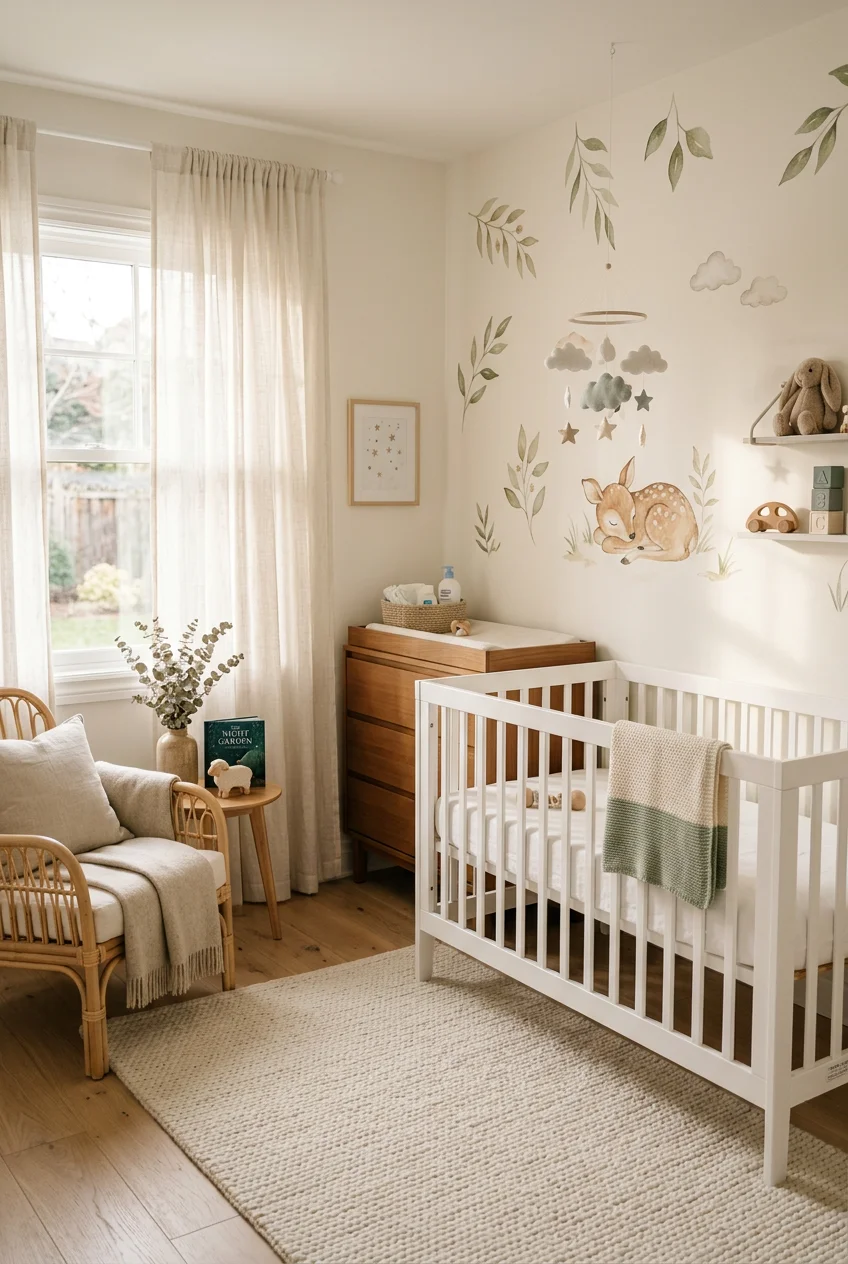
What’s Inside
- Prioritize Zero-VOC Paint for Healthier Air
- Create Removable Fabric Wall Decals
- Wallpaper the Ceiling for Visual Depth
- Craft a Personalized Felt Ball Garland
- DIY Blackout Curtains Using a Shower Curtain
- Create Custom Framed Fabric Art
- Build a Nature-Inspired Branch Mobile
- Embrace Warm Minimalism with Woven Textures
- DIY Sponge-Painted Accent Wall
- Create a Personalized Wooden Growth Chart
- Easy DIY Baby Nursery Decor: Pegboard Station
- Upcycle a Dresser into a Changing Table
- Install Acrylic Floating Bookshelves
- Design a Woven Basket Wall Art Display
- Paint a Geometric Arch Accent
- Upgrade Furniture with Tassel Drawer Pulls
- Easy DIY Baby Nursery Decor: Closet Dividers
- Stencil the Floor Pattern
- Create a Macrame Wall Hanging
- Customize the IKEA SNIGLAR Crib
Most parents start planning their nursery by buying a matching crib set and a gallon of standard pastel paint. That’s a mistake. Designing a beautiful, functional room takes texture, contrast, and safe materials, not just a coordinated bed-in-a-bag from a big box store. If you only try one idea from this list, make it #5. Here’s why: managing light is the best way to help a newborn sleep, and standard curtains just don’t cut it.
Skip this list if you’re looking for complex woodworking plans or full room remodels. These projects are for parents who want high visual impact with minimal power tools. If you’re hiring a contractor for custom built-ins, this guide won’t help you.
1. Prioritize Zero-VOC Paint for Healthier Air

Most people grab whatever pastel paint is on sale at Home Depot and wonder why the room smells like a chemical factory. Using conventional paints with high VOCs is a huge mistake. They off-gas chemicals that irritate a baby’s lungs. Instead, use zero-VOC formulas meant for nurseries. Brands like ECOS Lullaby Paints or Benjamin Moore Eco Spec are standard, usually costing $50 to $80 per gallon. You need one gallon for a standard accent wall, applied with a 3/8-inch nap roller. The catch: zero-VOC paints lack heavy chemical binders, so they often need three coats instead of two. It’s extra work, but you won’t sacrifice air quality. Don’t skip the primer. A zero-VOC primer ensures the topcoat sticks.
2. Create Removable Fabric Wall Decals

Standard vinyl wall decals often look cheap and peel. Fabric decals have a soft, matte texture that looks custom-painted. You need a roll of Steam-a-Seam2 Double Stick Fusible Web ($10 to $15 at JoAnn Fabrics) and 1/2 yard of quilting weight cotton fabric. Iron the fusible web to the back of the fabric, cut out shapes like stars or arches, peel the backing, and press them onto the wall. The catch: fabric edges can fray if touched often, so place them high up, out of reach. Best for: renters who need decor that leaves zero sticky residue behind.
3. Wallpaper the Ceiling for Visual Depth

Most parents leave the ceiling a flat, uninspiring white rectangle. Babies spend a lot of time looking up, making the ceiling prime space for visual stimulation. Designers often suggest wallpapering the ceiling instead of all four walls. Consider peel-and-stick options from brands like Chasing Paper; rolls are usually $40 to $80. You need a smoothing tool and a sharp utility knife for clean edges along the crown molding. The adhesive makes it easy to reposition panels. The catch: working overhead is a pain for your neck and shoulders, and aligning patterns while fighting gravity is frustrating. It’s a two-person job with two sturdy ladders.

Beautiful Wooden Baby Closet Dividers Set of 7
Beautiful Wooden Baby Closet Dividers Set of 7 – Double-Sided Organize has been one of the most consistently praised picks in this category. 11 reviewers averaged 4.5/5.
4. Craft a Personalized Felt Ball Garland

Hard wooden mobiles and plastic wall hangings lack the softness a nursery needs. A custom felt ball garland adds warmth without hard edges. Buy 1-inch felted wool balls (sets of 25 for $7.50 to $11 on Etsy) and a spool of cotton baker’s twine. For a 4-foot garland, you need 24 balls strung with a large tapestry needle, leaving a 1-inch gap between each. The wool grips the twine, so you don’t even need knots. The catch: these garlands tangle instantly if dropped. Wrap them around cardboard when you aren’t using them. I learned that the hard way.
5. DIY Blackout Curtains Using a Shower Curtain

You can’t ignore the need for a dark room for naps. Standard curtains labeled “room darkening” still let in a halo of light. To get true blackout conditions affordably, buy a heavy-duty navy blue or black plastic shower curtain ($5 to $10 at Walmart). Cut it to the width of your window and hang it behind your decorative curtains using rings with clips. This no-sew method blocks light completely. The catch: the plastic will smell like chemicals at first. Off-gas the curtain outdoors or in a garage for at least 48 hours before bringing it inside.
6. Create Custom Framed Fabric Art

Buying large-scale art is pricey, especially with custom framing. An affordable trick is stretching patterned fabric over cardboard and framing it. Get 8×10 inch frames from thrift stores ($2 to $5 each) and buy 1/4 yard of fabric that matches your colors. Wrap the fabric tightly over the frame’s backing, secure it with masking tape, and pop it back in. The catch: thrift store glass can be reflective and create harsh glares. You might want to remove the glass for a matte look. Best for: tight budgets where large wall spaces need to be filled. You might also like: 15 Unisex Nursery Ideas You Need to See

Modanais Baby Diaper Caddy Organizer Cart
Modanais Baby Diaper Caddy Organizer Cart – 3 Tier Rolling Cart with D punches above its price — 654 buyers rated it 4.5 stars. The kind of pick people reorder.
7. Build a Nature-Inspired Branch Mobile

Plastic, battery-operated mobiles can overstimulate infants with loud music. A nature-inspired mobile offers gentle, organic movement. Use a 10-inch metal macrame hoop ($5 to $10 at craft stores) as the base. Suspend lightweight items like wooden beads or felt leaves using 20 feet of clear fishing line. Hang it securely from the ceiling, making sure the lowest part is at least 12 inches above the mattress. The catch: intricate mobiles with small parts get dusty fast and are tedious to clean. You’ll have to wipe each bead and leaf with a microfiber cloth weekly. You might also like: 20 Inspiring Yellow Nursery Lighting Ideas for Every Budget
8. Embrace Warm Minimalism with Woven Textures

Nurseries easily get cluttered with bright plastic gear. Grounding the room with woven textures creates a calm, minimalist base. Use large woven storage baskets, like the IKEA BRANÄS ($15 to $20), to hide diapers and wipes. Add a textured bouclé nursing pillow cover and a flat-weave wool rug. This layers warmth into the room without adding visual noise. The catch: fabrics like bouclé and raw wool are magnets for pet hair and are hard to vacuum. Best for: homes without shedding pets, as these fibers need constant lint-rolling. You might also like: 16 Winnie The Pooh Nursery Ideas You Need to See
9. DIY Sponge-Painted Accent Wall

Custom wallpaper murals can cost over $500. You can get a similar organic look using a kitchen sponge. Buy two zero-VOC paint samples in earthy tones like sage or clay ($5 to $10 per can at Home Depot). Cut a rectangular sponge in half, dip it in paint, and press it onto the wall in a staggered, brick-like pattern. Leave about 4 inches of space between each stamp. The catch: it’s easy to overdo. If you press too hard, the paint drips; if you space them too close, the wall looks chaotic instead of curated.

Baby Closet Divider, Baby Wardrobe Organizer
If you want something that just works, Baby Closet Divider is a safe bet (371 reviews, 4.5 stars).
10. Create a Personalized Wooden Growth Chart

Marking a child’s height on a doorframe is a classic, but you lose those memories if you move. A DIY wooden growth chart is a permanent keepsake. Buy a 6-foot long, 1×8 inch pine board ($10 to $20 at Lowe’s). Sand the edges with 120-grit sandpaper and apply 2 ounces of non-toxic wood stain. Use a paint pen and a framing square to mark the inch lines. The catch: pine boards are heavy and warp if not stored flat before you hang them. Anchor the board directly into a stud with heavy-duty screws; drywall anchors won’t hold the weight.
11. Easy DIY Baby Nursery Decor: Pegboard Station

Changing tables often become a mess of lotion and cream. A wall-mounted pegboard keeps items out of reach while keeping the room clean. The IKEA SKÅDIS system ($20 to $30) is the standard for this. You need the 30×22 inch board and a set of elastic cords and trays. Mount it 12 inches above the changing pad so you can reach supplies without bending. The catch: the standard hooks pull out when you grab items quickly. Secure them with a dab of hot glue. Best for: small nurseries where you need vertical storage.
12. Upcycle a Dresser into a Changing Table

Dedicated changing tables are useless once the child is potty trained. Upcycling a solid wood dresser gives you storage that lasts for years. Find a waist-high dresser and sand it with 3 sheets of 120-grit sandpaper. Paint it with a durable, non-toxic finish like Rust-Oleum Chalked Paint ($20 to $30 per quart). Secure a changing pad to the top using non-slip liner and metal brackets. The catch: older dressers have sticky wooden glides that need sanding and paraffin wax so you can open them with one hand while holding the baby.

Criusia Drawer Organizer Clothes
A dependable everyday pick — Criusia Drawer Organizer Clothes pulls in 11 ratings at 4.5 stars. Not flashy, just solid.
13. Install Acrylic Floating Bookshelves

Standard bookcases take up floor space and hide book covers. Clear acrylic floating ledges turn books into wall art. Buy 24-inch clear acrylic ledges ($20 to $40 for four on Amazon). Mount them staggered, spacing them 14 inches apart to fit larger books. The clear material makes the room feel bigger. The catch: acrylic shows dust, fingerprints, and scratches instantly. You have to use a special plastic cleaner, as standard glass cleaners will cloud it over time. Best for: small, dark rooms that need storage without bulky furniture.
14. Design a Woven Basket Wall Art Display

A gallery wall of prints requires perfect measuring. A woven basket wall is forgiving, textural, and fast to install. Source shallow woven placemats or baskets from stores like Target ($5 to $10 each). Arrange an odd number, like 5 or 7, in a cluster above the crib. Secure them to the drywall using 1-inch finishing nails tapped through the weave. The catch: baskets with deep curves are hard to keep flush against the wall and might tilt forward. You might need to wire a D-ring hanger to the back of the deeper ones to keep them flat.
15. Paint a Geometric Arch Accent

Painting a whole room is exhausting, but an arch behind the crib creates a focal point with little effort. You need a roll of 1.88-inch ScotchBlue painter’s tape ($8 to $12), a pushpin, a pencil, and 3 feet of string. Tie the string to the pencil and the pushpin to act as a giant compass to draw your curve. Paint the inside with a contrasting zero-VOC color. The catch: if your walls have texture, the paint will bleed under the tape and ruin the line. Best for: smooth walls where the tape can create a tight seal.
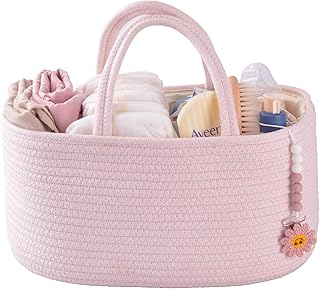
Baby Diaper Caddy Organizer for Girl Boy Rope Nursery
Baby Diaper Caddy Organizer for Girl Boy Rope Nursery Storage Bin Bask is sturdier in person than the photos suggest — over 21 buyers gave it 4.5 stars.
16. Upgrade Furniture with Tassel Drawer Pulls

Replacing hardware is the fastest way to upgrade a cheap dresser. DIY tassel pulls add a playful, soft element. You need a 4 oz skein of Lily Sugar’n Cream cotton yarn ($3 to $6 at Michael’s) and 4-inch cardboard to wrap it around. Make thick tassels and tie them to the existing knobs or loop them through the holes. The catch: once your baby starts pulling up to stand, these tassels are irresistible. A toddler will easily pull the yarn apart, so keep them on the top drawers out of reach. Trust me on this.
17. Easy DIY Baby Nursery Decor: Closet Dividers

Baby clothes are tiny, and finding the right size in the dark is a pain. Wooden closet dividers keep the rod organized. Buy a pack of 3-inch blank wooden rings ($5 to $8 for 10). Use a wood-burning tool or a paint pen to label them (Newborn, 0-3M, 3-6M, etc.). Cut a small slit in the top of the ring with a coping saw so it slips over the rod. The catch: babies outgrow these sizes fast. You’ll eventually have to toss or repurpose the smaller rings as your child hits toddler sizes.
18. Stencil the Floor Pattern

Ripping out old carpet or linoleum is expensive. Stenciling the existing floor is a budget-friendly fix. Use a floor coating system like the Rust-Oleum Home kit ($40 to $60) and a 12×12 inch mylar stencil. Tape the stencil down, apply the paint with a foam roller, and seal it with the provided topcoat. The catch: this is hard on your knees and needs 72 hours of curing time where you can’t walk on the floor or move furniture. It requires careful planning.
19. Create a Macrame Wall Hanging

Large-scale art is pricey, but a DIY macrame piece fills a wall with texture for pennies. You need 100 yards of 4mm cotton cord ($15 to $25) and an 18-inch wooden dowel or a sanded tree branch. Using basic square knots and lark’s head knots, you can make a bohemian piece in one afternoon. The catch: untreated cotton cord traps dust easily. Take the hanging outside and shake it out once a month to keep it from looking dingy.
20. Customize the IKEA SNIGLAR Crib

The IKEA SNIGLAR crib is a nursery staple because it’s solid beech wood and costs $119. However, the raw wood looks unfinished. You can customize it by applying 1/2 pint of a baby-safe wood stain or wax (like Osmo TopOil) to seal the grain and deepen the color. Or, paint the bottom rails a contrasting color while leaving the spindles natural. The catch: sanding and sealing 30 individual spindles by hand is tedious, mind-numbing work. Do all the staining and sealing outside before you assemble the crib in the room.
How we chose these ideas: Selections were based on renter-friendliness, cost, and visual impact. Projects requiring heavy power tools or structural changes were excluded to keep these weekend-friendly.
I’d suggest starting with the paint and lighting projects before moving to the decor. I’ve found that setting the foundation makes the smaller details fall into place much faster. Make sure you pin this guide so you have the measurements and brand names ready when you hit the hardware store.
Frequently Asked Questions
What is the safest paint for a DIY baby nursery?
Always use zero-VOC (Volatile Organic Compound) paints for nurseries. Brands like ECOS Lullaby Paints and Benjamin Moore Eco Spec are specifically formulated to minimize harmful off-gassing, ensuring the air quality remains safe for your baby’s developing respiratory system.
How can I make nursery decor renter-friendly?
Focus on removable solutions like peel-and-stick wallpaper, fabric wall decals made with fusible web, and lightweight woven wall baskets. These options provide high visual impact but can be removed without damaging the drywall or losing your security deposit.
What is the cheapest way to block light in a nursery?
The most cost-effective method is hanging a heavy-duty dark plastic shower curtain behind your regular decorative window curtains using ring clips. This blocks light entirely for under $10, though you must let the plastic off-gas outdoors first.
Are DIY felt ball garlands safe for a baby’s room?
Yes, provided they are hung securely out of the baby’s reach. Never drape garlands on the crib itself. Mount them high on the wall to prevent the twine or felt balls from becoming a choking or strangulation hazard.
