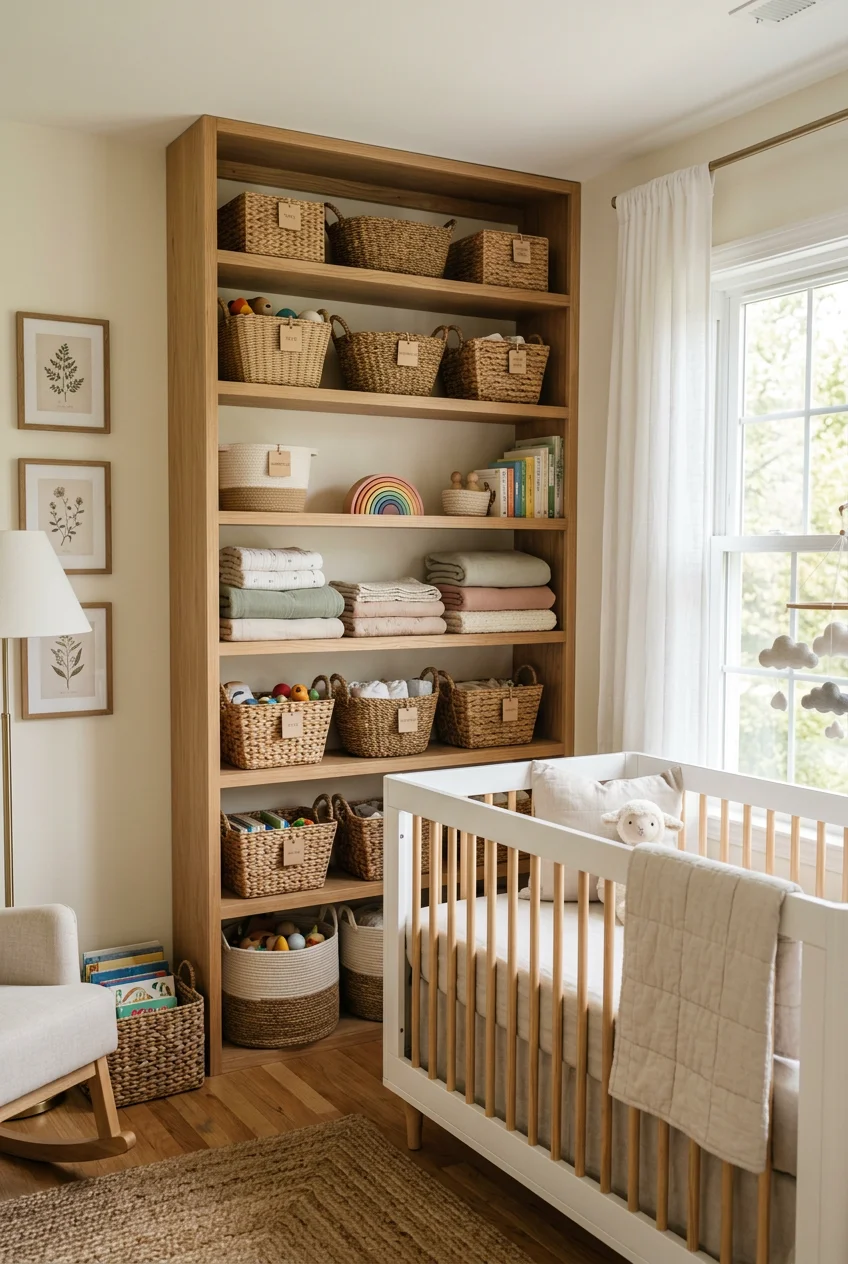
What’s Inside
- Optimize Your Changing Station with a Smart Caddy and Wipeable Pad
- Implement a Diaper Pail for Odor Control, Considering Long-Term Costs
- Categorize Clothing with Drawer Organizers and Closet Dividers
- Create a Flexible Toy Rotation System with Accessible Bins
- Utilize Vertical Space with Pegboards for Dynamic Storage
- Invest in Convertible Furniture for Longevity and Sustainability
- Embrace Layered, Warm Lighting to Create a Calming Sanctuary
- Prioritize Forward-Facing Book Storage to Encourage Early Literacy
- Utilize Under-Crib Storage for Seasonal Items or Bulk Supplies
- Designate a Feeding Station with Essential Supplies
- Avoid Over-Theming; Opt for Neutral, Adaptable Decor
- Childproof Early and Discreetly
- Label Everything Clearly, Especially for Caregivers
- Embrace the Japandi Trend for Minimalist Functionality
- Don’t Forget a Dedicated Laundry Hamper
Last Tuesday at Target, I watched a new mom cry in the baby aisle while trying to pick a diaper caddy. I knew exactly how she felt. When my first daughter was born, my nursery looked like a pastel explosion. I couldn’t find a clean burp cloth at 3 AM to save my life. I spent months tripping over stuffed animals and digging through overstuffed drawers while holding a screaming infant. Finding effective baby room organization ideas shouldn’t require a degree in interior design. It does require ignoring a lot of bad advice. You don’t need matching velvet hangers or decorative baskets that snag delicate fabrics. You need systems that work when you’re running on two hours of sleep and haven’t showered in three days. I tried doing this wrong for months. Learned that the hard way. A nursery is just a workspace. It gets messy, it smells weird, and you need to access things with one hand. Here are fifteen specific setups that actually work, using items that hold up to daily wear and tear.
1. Optimize Your Changing Station with a Smart Caddy and Wipeable Pad

Most people prioritize aesthetics over speed at the changing station. When your baby has a blowout at 2 AM, you don’t want to be unbuttoning a decorative cover or digging through a deep basket. I tried a cheap canvas bin from Walmart with my first. It got covered in greasy zinc oxide cream and smelled like sour milk within a week. You need a rigid container that keeps everything visible.
Invest in a portable organizer like the Skip Hop Light-Up Diaper Caddy. It costs around $44.99. The touch-sensitive light on the handle is a lifesaver for nighttime changes. You just tap it for a soft glow instead of blasting the overhead lights. It has a center divider and four small pockets. I keep exactly 15 size-one diapers in the main compartment, plus a 4 oz tube of barrier cream.
Pair this with a wipeable surface like the Keekaroo Peanut Changer. It retails for $169.95. Yes, it’s pricey, but it’s made of solid polyurethane. It feels rubbery and cold, but fluids wipe right off. It limits bacteria and kills the need for fabric covers. You’ll save hours of laundry. A mom of five once told me that keeping her wet wipes and 2 tablespoons of ointment within arm’s reach on a wipeable surface cut her change time in half.
2. Implement a Diaper Pail for Odor Control, Considering Long-Term Costs

Using a regular trash can for dirty diapers is a huge mistake. Plastic absorbs that sharp, acidic ammonia smell. A standard flip-top lid does nothing to contain the odor. I tried a kitchen can for three days before my upstairs smelled like a public restroom. You need a dedicated pail, but you also need to watch the cost of the bags.
The Munchkin Step Diaper Pail is great for its sealing system and baking soda puck, costing around $79.99. Still, I prefer the Ubbi Steel Diaper Pail. It usually runs between $80 and $100. The Ubbi is powder-coated steel. It feels cold and heavy, but it won’t absorb smells. It has a sliding lid with a rubber seal that locks the stink inside.
The real reason I chose the Ubbi is long-term savings. It uses standard 13-gallon kitchen bags. I buy the Kirkland brand bulk boxes at Costco. Proprietary refill rings for other pails can cost over $200 a year. Skipping those refills saves a fortune, and changing the bag takes thirty seconds instead of wrestling with a plastic cutter ring.
3. Categorize Clothing with Drawer Organizers and Closet Dividers

Baby clothes are tiny and a pain to keep folded. If you stack them like adult shirts, the piles fall over the second you open the drawer. I spent a whole Sunday folding tiny socks and pants, only for my husband to destroy the drawer the next morning looking for a green shirt. You can’t just toss everything in and hope for the best.
You need rigid drawer organizers. I use IKEA SKUBB boxes. You get a set of six for just $5.99. They come in sizes like 5.5×5.5×5.1 inches, 11×5.5×5.1 inches, and 11x11x5.1 inches. These fit perfectly in standard dressers. I use the smallest boxes for socks and mittens, and the medium ones for rolled onesies. Rolling clothes instead of folding them maximizes space and makes the fabric visible at a glance.
For the closet, use plastic baby closet dividers. You can find simple white rings on Amazon for about $8. Sort hanging clothes by size, from 0-3 months up to 12 months. When you’re frantically trying to dress a squirming infant, knowing exactly where the 3-6 month jackets are prevents a chaotic search.

JolyWell Night Light for Kids
A dependable everyday pick — JolyWell Night Light for Kids pulls in 51 ratings at 4.5 stars. Not flashy, just solid.
4. Create a Flexible Toy Rotation System with Accessible Bins

Dumping every toy into a giant bin is a recipe for disaster. It overwhelms the child and guarantees a daily mess. I used to keep 40 blocks and dozens of plastic toys in a huge wicker basket. Last October, I tripped over it in the dark, dumped the blocks on the floor, and the clatter woke the baby. Never again.
Instead, try a toy rotation. Store a small selection of toys in accessible bins and swap them every few weeks. I use Pehr Canvas Storage Containers. They cost $36 for the 13×13 inch size. They’re made of thick, durable cotton canvas that stands on its own but is soft enough that a crawling baby won’t get hurt bumping into them.
These 13-inch bins fit perfectly into standard cube bookcases like the IKEA KALLAX unit, which starts around $35 for a 2×2 square. Keeping 10 blocks in a soft bin rather than 40 in a hard chest makes cleanup take two minutes instead of twenty.
5. Utilize Vertical Space with Pegboards for Dynamic Storage

If you’re in a small nursery, empty wall space is a missed opportunity. Dresser tops get cluttered fast with lotions, thermometers, and nasal aspirators. I used to knock over baby oil once a week because my changing table was so crowded. Moving small, frequent items to the wall clears your surfaces and keeps dangerous things out of reach.
Install a pegboard. A DIY wooden one costs as little as $25 for raw materials, but I prefer the IKEA SKÅDIS. The 30×22 inch white board is $25. You can buy attachments like metal hooks, elastic cords, and small trays for a few dollars each. The satisfying click of the hooks makes it easy to rearrange as your baby grows. You might also like: 18 Baby Girl Nursery Ideas Worth Trying
A trick I learned from a pro is placing the pegboard inside the closet door. It keeps visual clutter hidden while providing storage. I hang 2 oz tubes of diaper cream, small scissors, and even tomorrow’s outfit on it. It forces you to keep things tidy because everything has a designated spot. You might also like: 16 Baby Nursery Themes That Actually Work
6. Invest in Convertible Furniture for Longevity and Sustainability

Buying single-use baby furniture is a trap. I bought a standalone changing table at Sprouts on clearance for my first. It took up way too much room, and once my daughter was potty trained, it became a dumping ground for laundry. By the time my second baby arrived, I realized the value of furniture that adapts. You might also like: 15 Lovely Baby Boy Crib Bedding Ideas That Are Totally Worth It
The trend is toward investment-grade furniture that grows with your child. Look for a convertible crib, like the Dream On Me Violet 7-in-1. It retails for around $150. It transitions from a crib to a toddler bed, a daybed, and eventually a full-size bed. The solid pine construction survives years of use.
Similarly, skip the dedicated changing table and choose a sturdy dresser with a removable tray. The Evolur Audrey Dresser costs about $450 and features deep wooden drawers with smooth glides. You attach a wooden tray for the first two years. When you’re done with diapers, you unscrew the tray, and you’re left with a beautiful dresser that works in a teenager’s room.

Mom’s Choice Awards丨Bunny White Noise Sound Machine Baby
Mom’s Choice Awards丨Bunny White Noise Sound Machine Baby for Sleep- AI punches above its price — 311 buyers rated it 4.5 stars. I would buy it again.
7. Embrace Layered, Warm Lighting to Create a Calming Sanctuary

Lighting is the most overlooked part of nursery design. Harsh overhead light is jarring. When you flip on a bright, cool-toned ceiling light at 3 AM, it shocks your baby and signals it’s time to wake up. I spent weeks wondering why my son wouldn’t go back to sleep after a night feed before realizing the 4000K daylight bulbs were the culprit.
Embrace warm layers. Avoid the main overhead light at night. Use a warm-glow table lamp and wall sconces on dimmers. Go to Home Depot and buy 2700K LED bulbs. They emit a soft, amber glow that promotes sleep.
I use a 40-watt equivalent amber bulb in a small ceramic lamp next to the rocker. It provides just enough light to see the 4 oz bottle, but it keeps the room feeling sleepy. Smart nursery tech is growing, including AI-powered fixtures that adapt to circadian rhythms by shifting to warmer tones as the sun goes down.
8. Prioritize Forward-Facing Book Storage to Encourage Early Literacy

Stacking books spine-out on a shelf is a common mistake. Toddlers can’t read spines. They’ll pull every book off the shelf until they find the right one, leaving you with a pile on the floor. I learned this the hard way after cleaning up the same pile of board books three times in one afternoon.
Install narrow, forward-facing wall shelves. This lets kids see the covers, making it easier for them to choose and put books away. I use Niubee 15-inch clear acrylic floating shelves. They cost $22.99 for a set of two on Amazon. The clear acrylic disappears against the wall, making the book covers look like art.
I mount the bottom shelf exactly 18 inches off the floor so my toddler can reach it. It limits the number of books you can display, which forces you to rotate the collection and keeps the room from feeling cluttered.
9. Utilize Under-Crib Storage for Seasonal Items or Bulk Supplies

The space under the crib is prime real estate that usually just collects dust. If you have a small nursery, ignoring this means you’re likely cramming your closets with things you don’t need daily. I used to shove loose wipes under the crib, and they’d get covered in pet hair.
You need structured, enclosed storage. Use shallow, rolling bins for out-of-season clothes, extra blankets, or bulk diaper purchases. I bought four Sterilite 41-quart rolling bins at Target for $19.99 each. They measure 34.8 x 16.6 x 6.1 inches, which slides perfectly under a crib.
I buy giant boxes of organic wipes from Whole Foods and store the extra packs in these. Make sure your bins have latching lids. The tight seal keeps dust out, and the clear plastic lets you see your inventory without opening the box. It keeps your main dresser free for daily items.

Color Noise Sound Machines with 10 Colors Night Light 25
Honestly, Color Noise Sound Machines with 10 Colors Night Light 25 Soothing Soun surprised me — sturdier than it looks in the photos, and over 113 buyers gave it 4.5 stars.
10. Designate a Feeding Station with Essential Supplies

When you sit down to feed a baby, you’re trapped for twenty to forty minutes. If you forget your water or a burp cloth, you’re out of luck. I once spilled 4 oz of breastmilk on my glider because I tried to balance the bottle on the armrest while reaching for a towel. You need a stable feeding station right next to your chair.
Create a setup using a small side table or a tiered rolling cart. I keep a 32 oz water bottle, 1/2 cup of almonds, and a tube of lanolin in the top basket of a utility cart. Having these supplies within arm’s reach is crucial during cluster feeds.
For bottle parts, I keep the OXO Tot Space Saving Drying Rack nearby. It costs between $20 and $25 and measures just 14.3 x 10.5 inches. It sits on a small cart and holds nine bottles vertically. This keeps pump parts out of the kitchen sink and contained in one zone.
11. Avoid Over-Theming; Opt for Neutral, Adaptable Decor

One of the biggest mistakes is choosing an aggressive theme. A floor-to-ceiling jungle motif might look cute for a newborn, but it feels chaotic, and a toddler will outgrow it quickly. I painted my first nursery bright pink, and by the time my daughter was two, the color gave me a headache.
The design consensus is moving toward earthbound neutrals. Think sage green, mushroom beige, and warm taupe. I repainted my nursery using Sherwin Williams Sea Salt, which costs about $60 a gallon. It’s a soft, muted greenish-gray. Neutral walls act as a blank canvas, letting you introduce color through swappable items like crib sheets, rugs, and art.
Combining these tones with natural materials creates a timeless space. Instead of plastic character lamps, choose woven rattan. Instead of bright bins, use natural canvas. This approach means you won’t have to redesign the room when your child turns three and decides they hate monkeys.
12. Childproof Early and Discreetly

Most people wait until their baby is crawling to start childproofing. I made this mistake. I thought I had time, but babies pull themselves up on furniture fast. Last December, I was sitting on the nursery rug when my daughter grabbed the edge of a heavy dresser and pulled it open, almost tipping the unit. The thud of the wood terrified me.
Integrate childproofing from the start using hidden hardware. I use Safety 1st Magnetic Locks. They cost about $20 for a set of four. You install them inside the drawers, so they’re invisible. You just tap the magnetic key against the wood, and the lock disengages. You don’t have to look at ugly plastic latches.
Secure every piece of furniture to the walls with anti-tip kits. The nylon straps cost maybe $10 at Home Depot and take twenty minutes to install. For cord management, I use simple white cable ties to bundle the cords from the sound machine. It keeps monitors and cords from cluttering your space.

Baby Sound Machine Baby Kids Night Light Projector with
Baby Sound Machine Baby Kids Night Light Projector with Star punches above its price — 783 buyers rated it 4.5 stars. I would buy it again.
13. Label Everything Clearly, Especially for Caregivers

You might know exactly where the sleep sacks are, but your mother-in-law doesn’t. When someone else helps with the baby, a lack of labels leads to chaos. My husband once put tight 3-month pants on my 9-month-old because they were mixed in the wrong drawer, and he couldn’t tell the difference in the dark.
Use a label maker. I use a Brother P-Touch, which costs about $35. I bought it with fresh batteries at Kroger specifically for the nursery. I print clean, bold labels and stick them on the lip of the dresser drawers and the edges of the SKUBB boxes.
Labeling drawers by size and type—like “0-3m Onesies” or “6m Sleepers”—is incredibly helpful. It helps caregivers find things, but it also forces you to maintain the system. When a bin is labeled “Socks,” you’re much less likely to toss a bib into it.
14. Embrace the Japandi Trend for Minimalist Functionality

If you want a nursery that feels serene, look into the Japandi style. It’s a fusion of Japanese and Scandinavian aesthetics. It focuses on minimalism, high functionality, neutral palettes, and natural materials like wood and linen. It fights against the plastic, brightly colored clutter that usually takes over.
This approach encourages thoughtful selection. Rather than buying ten cheap plastic toys, you buy three well-crafted wooden ones. I replaced my polyester curtains with nubby linen ones from Target’s Threshold line. The 96-inch panels cost $45 each, and the texture adds warmth without visual noise.
Opt for simple wooden furniture with clean lines. The beauty of Japandi is that it reduces clutter by design. When every item serves a purpose and is made of natural materials like raw oak or cotton, the room feels practical and restful.
15. Don’t Forget a Dedicated Laundry Hamper

Leaving dirty baby clothes on the floor or the changing table is the fastest way to ruin a tidy nursery. Baby clothes get soiled constantly. If you don’t have a spot for them, the room will smell like a dirty sponge. I used to carry burp cloths down to the laundry room, which was exhausting.
Place a small, accessible laundry hamper in the nursery. I use the IKEA FLÅDIS seagrass basket, which costs $17.99. It stands 9.75 inches high and has a beautiful, rough texture. While it doesn’t have a lid, the natural material lets damp clothes breathe, preventing mildew before wash day.
Choose a hamper that is lightweight and has sturdy handles. The FLÅDIS basket has foldable handles that make it easy to carry down the stairs with one hand. Doing frequent, small loads of baby laundry is much less cumbersome when you aren’t dragging a massive plastic bin through the house.
If you’re feeling overwhelmed by the nesting phase, start with the diaper station and work your way out. Implementing just a few of these ideas will drastically reduce your daily stress. I’ve learned that a functional nursery is about creating systems that support your exhaustion, not fighting it. Took me years to figure out. Save or pin this guide so you can reference these exact products and measurements when you’re ready to tackle your space!

ColorsNoise Sound Machine and White Noise Machine with 30
If you want something that just works, ColorsNoise Sound Machine and White Noise Machine with 30 Soothing Sou is a safe bet (31 reviews, 4.5 stars).
Frequently Asked Questions
What are the best baby room organization ideas for small spaces?
Maximize vertical space with wall-mounted pegboards for lotions and small items. Use shallow rolling bins under the crib to store bulk diapers and off-season clothing, and install forward-facing acrylic bookshelves to save floor space.
How should I organize baby clothes in dresser drawers?
Use rigid drawer dividers, like IKEA SKUBB boxes, to separate items by type. Roll the clothes instead of folding them so you can see every item at a glance without destroying the pile when grabbing an outfit.
Is a dedicated changing table necessary for a nursery?
No, standalone changing tables often waste space. It’s more practical to invest in a sturdy dresser and attach a removable wooden changing tray to the top, which adapts to a regular dresser as your child grows.
How do I keep the nursery from smelling like dirty diapers?
Invest in a steel diaper pail with a rubber sealing lid, like the Ubbi. Unlike plastic, steel won’t absorb ammonia odors over time. Pair this with a dedicated, breathable laundry hamper for milk-stained burp cloths.
