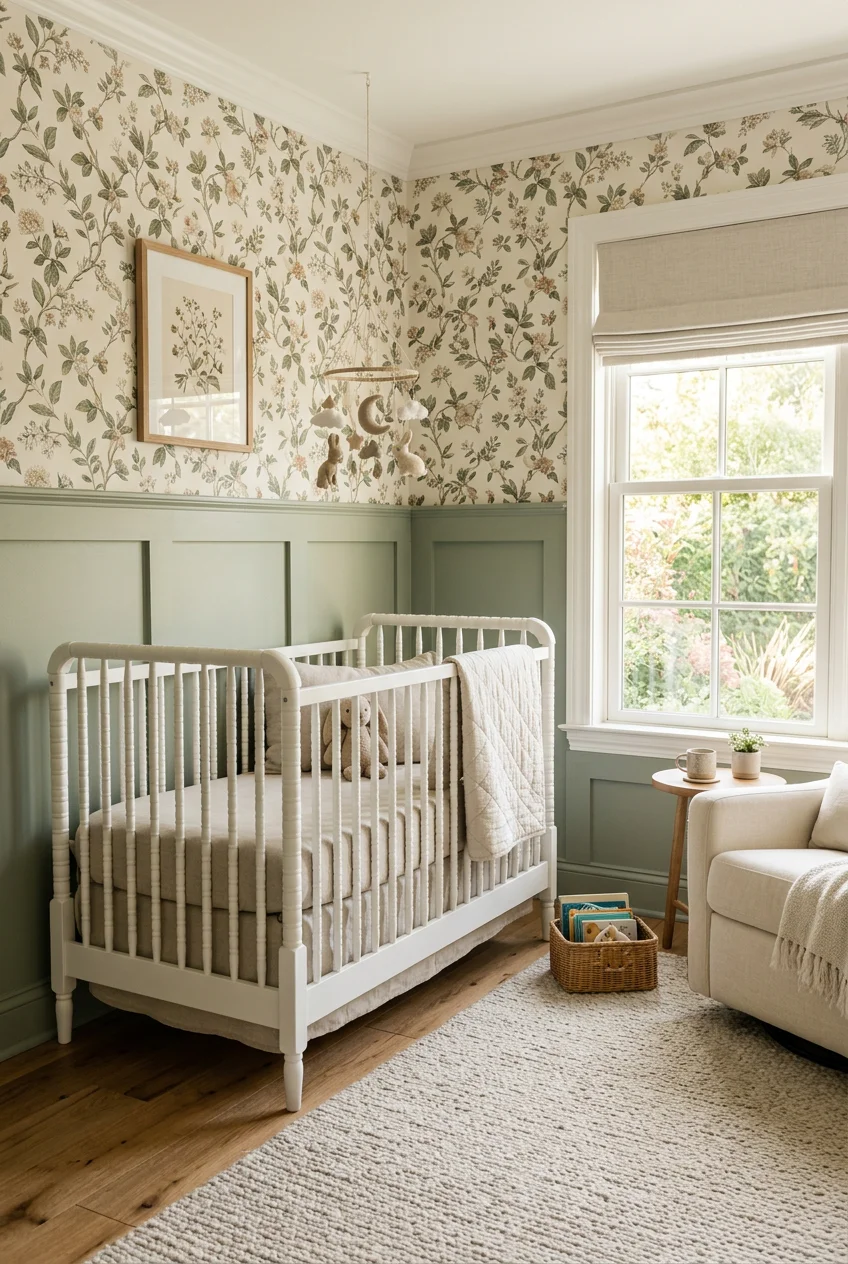
What’s Inside
- Prioritize Non-Toxic, Zero-VOC Paint for Walls
- Nailing the Exact Sage Green Shade
- Invest in GREENGUARD Gold Certified Furniture
- Choose Organic, GOTS-Certified Bedding
- The Washable Rug Requirement
- Add Nature-Inspired Wall Decals for Flexibility
- Layer Textures for Depth and Warmth
- Combining Blush Pink with a Baby Girl Nursery Green
- Avoid Over-Theming with Jungle Decor
- Incorporate Dimmable, Layered Lighting
- Use Wall Paneling for Physical Texture
- Choose Art That Grows with Your Child
- Integrate Eco-Friendly Baby Care Products
- Stop Neglecting the Natural Light
- Bring in Botanical and Nature-Inspired Elements
- Upgrade to Heavy Brass Hardware
I designed a nursery for a client back in 2019, and the room ended up smelling like a chemical plant. I hadn’t checked the paint specs closely enough. The walls off-gassed for a month, leaving a sharp, stinging scent that gave me a headache after ten minutes. We had to strip it and start over. That expensive mistake changed how I approach nursery design. Now, I focus on materials that don’t compromise air quality while still looking polished. Planning a green-themed nursery means filtering out the noise and focusing on exact measurements, specific materials, and functional layouts. I’m walking you through sixteen precise methods to execute this palette. Skip the cheap materials. They aren’t worth the headache. Trust me.
1. Prioritize Non-Toxic, Zero-VOC Paint for Walls

I learned this the hard way. In 2019, I bought a cheap gallon of green paint from Walmart for $15, and the room smelled like a chemical factory for a month. The fumes were so sharp they gave me a headache after ten minutes. You can’t risk that with a newborn’s lungs. Now, I only specify zero-VOC, non-toxic options. ECOS Paints Lullaby Nursery Collection is a solid choice. It costs $85.95 a gallon. It’s steep, sure. But it’s water-based and covers up to 560 square feet. That’s often 1.5 times more coverage than standard products, so you won’t buy as much. Benjamin Moore Aura Paint is another great zero-VOC option for about $90 a gallon. If you’re in Europe, Little Greene’s Intelligent paints are certified Child-Safe under strict EN 71-3:2019 standards. The application is smooth, but you’ll still need two solid coats if you’re covering a dark wall. The lack of off-gassing makes the higher price worth it.
2. Nailing the Exact Sage Green Shade

Sage green is a top trending color for nurseries through 2026. It offers a calming, versatile backdrop. Getting the undertone right is tricky. I spent a Tuesday evening at Home Depot last October swatching five different greens, and half of them looked like mint toothpaste under LED lights. For a north-facing room, you need a soft, muted sage. Benjamin Moore’s Sage Wisdom ($75 per gallon) provides a cool, airy feel that doesn’t turn neon in the afternoon sun. If your room gets intense southern light, October Mist by Benjamin Moore is a safer bet because it’s neither too warm nor too cool. Buy the $6.99 half-pint sample cans first. Paint a 24-inch by 24-inch square on two different walls. Check it at 8 AM, noon, and 8 PM with the overhead lights on. The color shifts depending on the light. Don’t skip this, or you’ll end up repainting when you realize the shade clashes with your flooring.
3. Invest in GREENGUARD Gold Certified Furniture

A crib is the one piece of furniture where you shouldn’t cut corners. You need GREENGUARD Gold certified pieces. This means the furniture is tested for over 10,000 chemicals and volatile organic compounds. Brands like Nestig, Babyletto, Oeuf, and Delta Children all carry certified lines. If your budget allows, Romina Furniture is excellent. Their cribs range from $1,200 to $1,795 and are made from 100 percent solid hardwood in Europe. They use non-toxic, water-based finishes. I tested a Romina dresser last year, and the heavy clunk of the solid wood drawers feels much better than flimsy particleboard. If you’re looking for a mid-range option, the Babyletto Hudson Convertible Crib costs $399. It’s made of sustainable New Zealand pine. Whichever brand you choose, verify the certification label on the manufacturer’s website. It’s the best way to ensure your baby isn’t inhaling formaldehyde while they sleep.

Beautiful Wooden Baby Closet Dividers Set of 7
Honestly, Beautiful Wooden Baby Closet Dividers Set of 7 – Double-Sided Organize surprised me — sturdier than it looks in the photos, and over 11 buyers gave it 4.5 stars.
4. Choose Organic, GOTS-Certified Bedding

Your baby’s skin is sensitive, so the textiles they sleep on matter. You need 100 percent GOTS-certified organic cotton crib sheets. I bought a cheap $12 polyester blend sheet from Target for my first project. It felt scratchy and pilled heavily after a single wash. I had to throw it away. Now, I recommend Oilo Studio’s Sea Moss Sage Green Nursery Bedding Collection. A fitted sheet costs $44. It’s soft, breathable, and chemical-free. The sage green color holds up well in the laundry. Burt’s Bees Baby also makes a solid GOTS-certified organic cotton fitted sheet for $19.99. It’s thinner than the Oilo Studio version, but it gets the job done if you’re buying three or four backups. Naturepedic and Lambs & Ivy offer great organic options too. Wash all new bedding in a fragrance-free detergent before use.
5. The Washable Rug Requirement

A rug adds warmth and sound dampening, especially over hardwood. You must buy a washable rug. I learned this when my dog threw up on a $400 thick wool rug from Costco that I couldn’t fit in my washing machine. I spent two hours scrubbing it, and the stain never fully lifted. Look for rugs made from natural fibers like organic cotton, certified by GOTS or OEKO-TEX Standard 100. Lorena Canals makes fantastic machine-washable cotton rugs starting around $250. They are soft and free from harmful chemical treatments. Nestig also offers beautiful illustrated washable rugs. Their 3.5-foot by 5-foot size starts at $675. That price is high, but the convenience of throwing it into a standard front-load washer is worth it. Avoid cheap synthetic rugs with rubber backings. They off-gas VOCs and the backing crumbles in the wash. Stick to natural cotton. You might also like: 16 Baby Nursery Themes That Actually Work
6. Add Nature-Inspired Wall Decals for Flexibility

Permanent wallpaper is a massive commitment. It’s expensive, difficult to install, and a nightmare to remove when your child outgrows the pattern. Instead, use removable, non-toxic, phthalate-free fabric wall decals. Cool Kids Sticker Co. offers a Leafy Greens Wall Decal set for $45. The set includes 60 individual stickers ranging from 0.8 inches to 7.3 inches. One set covers a standard 7-foot 10-inch by 11-foot 10-inch accent wall. I applied these to a client’s nursery last month. The fabric feels like thin canvas, not cheap shiny vinyl. They peel off cleanly without taking the drywall texture with them. This allows you to update the room easily. You can arrange the leaves in a cascading pattern or cluster them around the crib. Wait at least thirty days after painting before applying decals. If the paint hasn’t fully cured, the adhesive bonds with the moisture in the paint, and you’ll tear the wall up later. You might also like: 16 Baby Boy Room Ideas Worth Trying

JolyWell Night Light for Kids
JolyWell Night Light for Kids punches above its price — 51 buyers rated it 4.5 stars. I would buy it again.
7. Layer Textures for Depth and Warmth

A room painted entirely in sage green can look flat if you don’t introduce physical texture. You need to mix materials. I incorporate chunky knits, crisp organic cottons, and heavy linens. I recently bought a heavy knit throw blanket for $65 at Crate & Kids. Draping it over a smooth leather rocking chair softened the corner of the room. Wood tones are also crucial for balancing cooler green shades. Warm oak or maple furniture prevents the space from feeling clinical. A solid oak side table next to the glider provides a warm, organic contrast. Avoid matching everything perfectly. If your crib is white, choose a natural wood dresser. If your curtains are smooth linen, add a textured bouclé pillow. The goal is to give the eye different surfaces to process. I’ve found that adding a wicker or rattan laundry basket ($35 at Target) is a cheap way to inject a rough, natural texture into a polished room. You might also like: 20 Clever Daycare Nursery Room Ideas You Can Try Today
8. Combining Blush Pink with a Baby Girl Nursery Green

You don’t have to stick exclusively to green. Pairing sage green with soft blush pink creates a sweet, feminine touch without relying on outdated stereotypes. The colors work beautifully together. I recommend using the green on the walls and bringing the pink in through textiles. A blush pink linen blackout curtain panel ($45 at West Elm) against a Sage Wisdom wall looks sophisticated. If pink isn’t your preference, warm ivory, cream, or soft taupe create a modern, soothing palette. I tried pairing sage green with a stark white trim once, and the contrast was too harsh. It made the green look muddy. Switching to a creamy off-white trim like Benjamin Moore’s White Dove ($30 per quart) softened the transition. Gold or brass accents are the final layer. A brushed brass curtain rod or a gold-framed mirror reflects light and adds a subtle luxury. The metallic finish cuts through the matte fabrics, giving the room an intentional, professional look.
9. Avoid Over-Theming with Jungle Decor

One of the most frequent mistakes I see is parents turning a green palette into a chaotic jungle theme park. They buy the leaf rug, the monkey curtains, the zebra crib sheets, and the giant stuffed giraffe. It’s visually exhausting. My advice is to let the color lead the design, not a literal theme. Sage green itself provides a calming backdrop. You want the art and decor to have a presence without overwhelming the space. If you want animal elements, limit them. A single, well-made stuffed elephant ($28 from Jellycat) sitting on a shelf is charming. A wall covered in cartoon monkey decals is stressful. I worked with a client who insisted on a full forest theme, and within six months, she admitted the room felt cluttered. We removed half the decor, swapped the patterned curtains for solid cream linen, and the room instantly felt larger and more serene. Trust the paint color to do the heavy lifting.

Criusia Over the Door Organizer
If you want something that just works, Criusia Over the Door Organizer is a safe bet (231 reviews, 4.5 stars).
10. Incorporate Dimmable, Layered Lighting

Overhead lighting is terrible for a baby’s sleep. You need dimmable, layered lighting to create a soft glow for nighttime routines. I rely on the Hatch Rest sound machine and nightlight combo. It costs $69.99 and allows you to control the brightness and color from your phone. I set it to a dim amber color at 20 percent brightness for 2 AM feedings. It provides just enough light to see without waking the baby fully. You should also swap your standard overhead bulbs for dimmable Philips Hue smart bulbs ($49 for a two-pack). I installed these in my own home after blinding myself too many times stumbling into a bright room at midnight. Place a small, low-wattage table lamp next to the nursing chair. The lampshade should be a thick fabric to diffuse the light downwards. A $25 ceramic lamp from Target with a 40-watt equivalent warm white bulb is perfect. Layering these three light sources gives you complete control over the atmosphere.
11. Use Wall Paneling for Physical Texture

Here is a tip that’s trending for 2025 and 2026: use wall paneling. Instead of just rolling flat paint onto drywall, add board and batten or square molding to an accent wall. Painting the textured molding in a muted green shade adds architectural character. I did this in my own house last year. I bought 1×4 MDF boards from Lowe’s for $8.50 each. I spent a Saturday cutting them in my driveway, getting sawdust in my hair because I forgot safety goggles—I learned that the hard way. I nailed them to the wall in a grid, caulked the seams, and painted the entire wall Sage Wisdom. The total project cost was under $150, but it made the room look like a custom build. The shadows created by the molding change throughout the day, giving the green paint a rich appearance. If you’re intimidated by power tools, you can hire a local carpenter to install the trim for roughly $400. It’s worth it.
12. Choose Art That Grows with Your Child

Nursery art is often overly juvenile. Bright, primary-colored cartoon prints look out of place in an elegant, muted green room. You need to select pieces that feel appropriate for a baby now but also make sense as they become toddlers. Muted watercolor animals, gentle nature scenes, or simple quotes in soft script are excellent. I buy digital prints from Etsy artists for about $12 each and have them printed on high-quality matte paper at a local print shop for $4. I made the mistake of buying cheap plastic frames at IKEA once. The plastic backing snapped, and they looked terrible. Now, I buy solid wood frames from Target ($14.99 for an 8×10). The wood adds another layer of texture. Hang the art securely using drywall anchors, not just nails. A set of three watercolor botanical prints arranged horizontally above the dresser creates a focal point that ties the green theme together without being aggressively babyish. They transition easily into a big kid room.
CUBEDIY Baby Closet Organizer for Nursery: Durable Baby
CUBEDIY Baby Closet Organizer for Nursery: Durable Baby Wardrobe for C has been one of the most consistently praised picks in this category. 316 reviewers averaged 4.5/5.
13. Integrate Eco-Friendly Baby Care Products

An elegant green nursery isn’t just about the paint; it’s about extending that eco-friendly mindset to the items you use daily. The changing station is a prime spot for this. I recommend stocking the top drawer with non-toxic, sustainable baby products. I use Dr. Bronner’s Baby Unscented Pure-Castile Liquid Soap. A 32-ounce bottle costs $15.99 at Whole Foods or Sprouts. I dilute it in a foaming pump to use with reusable cloth wipes. It’s free of synthetic preservatives and fragrances. For pacifiers, Natursutten makes excellent ones from 100 percent natural rubber sap. They cost $14 and don’t contain artificial colors or softeners. They have a distinct yellow hue and a slight rubber smell initially, but boiling them for five minutes removes the odor. I keep a small, woven cotton basket ($18 at Target) on the dresser to corral these items. Choosing brands that prioritize natural ingredients reinforces the clean, healthy environment you’re trying to build.
14. Stop Neglecting the Natural Light

A common mistake parents make is turning the nursery into a dark cave. They buy heavy blackout drapes to force the baby to sleep, completely neglecting the natural light during waking hours. I did this with my first client. I installed thick, velvet blackout curtains. During the day, even when pulled back, the heavy fabric absorbed all the light, making the beautiful green walls look murky. You must maximize natural light to make the room feel airy. I recommend a double curtain rod system ($35 at Home Depot). Hang sheer white linen panels ($25 per panel at Target) on the inner rod to diffuse the harsh sunlight without blocking it. Hang your functional blackout curtains on the outer rod, and choose a light color like cream or soft taupe. The sheer curtains interact beautifully with the green tones. When the afternoon sun hits the sage walls through the white sheers, the room glows. It drastically improves the mood.
15. Bring in Botanical and Nature-Inspired Elements

Bringing the outdoors in is a massive trend for 2026. A green nursery naturally lends itself to botanical elements. You don’t need a literal jungle, but adding a few plant motifs emphasizes the calm, nurturing atmosphere. I like to include one large faux plant in the corner. I bought a 6-foot faux olive tree from Costco for $99 last month. I placed it in a heavy, woven seagrass basket ($30 from Target) so it won’t tip over. It adds vertical height and a different shade of green. If you prefer real plants, make sure they are non-toxic to pets and children, like a Spider Plant or a Boston Fern. Keep them on high floating shelves, completely out of reach. The organic shapes of the leaves break up the rigid, straight lines of the crib and dresser. I also incorporate subtle leaf motifs in the textiles, like a muslin swaddle blanket with a delicate fern print ($18 from Little Unicorn). It ties the room to nature subtly.

Criusia Drawer Organizer Clothes
If you want something that just works, Criusia Drawer Organizer Clothes is a safe bet (11 reviews, 4.5 stars).
16. Upgrade to Heavy Brass Hardware

The fastest way to make a mid-range dresser look expensive in a green nursery is to replace the factory hardware. Most affordable dressers come with cheap, hollow wooden knobs or flimsy silver pulls. I always swap them out. Last week, I bought a basic white six-drawer dresser from IKEA for $249. Before assembling it, I threw the included plastic knobs in the trash. I went to Home Depot and bought heavy, brushed brass drawer pulls for $4.50 each. The warm, golden tone contrasts perfectly with sage green walls. The physical weight of the brass makes the entire piece of furniture feel more substantial when you open a drawer. It’s a minor detail, but you’ll touch those handles ten times a day while changing diapers. You want them to feel solid. If you’re mixing metals, keep the brass dominant on the furniture and use matte black for the curtain rods or picture frames. This prevents the room from looking too uniform and adds a custom, designer finish. No exaggeration.
Designing a nursery is exhausting, but focusing on the physical materials rather than just the aesthetic makes the process easier. You won’t regret spending a little extra on the zero-VOC paint or the solid brass hardware. Pin this list for later when you’re standing in the middle of Home Depot trying to remember which paint finish to buy. Let’s get to work.
Frequently Asked Questions
What is the best shade for a baby girl nursery green theme?
Sage green is highly recommended because it provides a calming, versatile backdrop. Benjamin Moore’s Sage Wisdom is perfect for north-facing rooms, while October Mist works well in spaces with intense southern light.
How do I make a green nursery look feminine?
Pair your green walls with soft blush pink textiles, such as linen curtains or throw pillows. Adding warm ivory tones and brushed brass hardware also brings an elegant, feminine touch without relying on heavy themes.
What paint is safe for a baby’s room?
You must use zero-VOC, non-toxic paints to prevent harmful off-gassing. ECOS Paints Lullaby Nursery Collection and Benjamin Moore Aura are excellent water-based options that ensure safe indoor air quality for your baby.
Should I use a theme in a green nursery?
Avoid over-theming with heavy jungle or forest decor. Let the sage green color lead the design. Incorporate subtle botanical elements, like a faux olive tree or delicate leaf wall decals, to keep the space serene and uncluttered.
