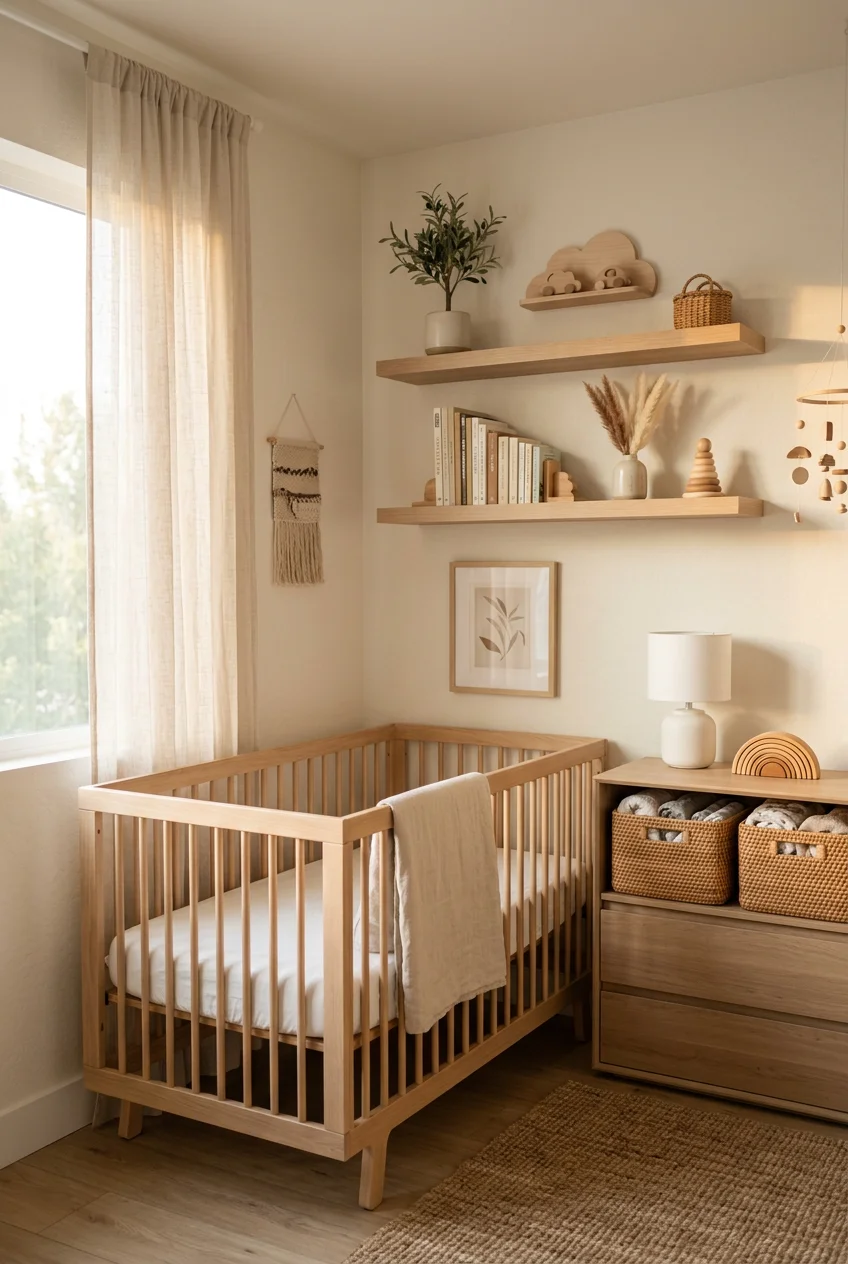
What’s Inside
- Maximize Vertical Space at the Changing Station
- Implement Drawer Dividers for Tiny Apparel
- Establish a Daily Outfit Basket for Streamlined Mornings
- Ideas Daycare Baby Room Organization: Optimize Closet Space with Sizing Dividers
- Maintain a Designated Donation and Sell Bin
- Label Everything for Quick Identification
- Assemble a Portable Feeding Caddy for Night Feeds
- Ensure Safety with Secure Cord Management
- Invest in Multi-functional Furniture
- Ideas Daycare Baby Room Organization: Implement Curated Toy Rotation
- Install 100% Blackout Curtains for Optimal Sleep
- Create a Command Center for the Baby’s Schedule
- Utilize Under-Crib Storage for Bulk Items
- Integrate Smart Home Devices for Convenience
- Adhere to the One-Hand Rule at the Changing Station
- Install Acrylic Floating Ledges for Board Books
- Use Over-the-Door Shoe Organizers for Bottles and Lotions
- Stash a Mini Trash Can Exclusively for Snack Wrappers
Most people walk into a nursery, see a mountain of mismatched socks mixed with half-empty diaper cream tubes, and shut the door. Finding functional daycare baby room organization strategies usually means sorting through perfectly styled photos that look pretty but fail completely when a screaming infant is involved. You aren’t building a museum exhibit. You’re building a workstation. The goal is efficiency, not perfection. If you only try one idea from this list, make it #10 (Curated Toy Rotation). Here’s why: hiding 80% of the toys in opaque bins drastically cuts down daily visual clutter and forces deeper independent play, which buys you twenty minutes of quiet when you need it most. Took me years to figure out that less is definitely more.
Skip this if: You have a massive walk-in closet, a dedicated playroom, and zero budget constraints. These strategies rely strictly on maximizing tight spaces and repurposing basic organizational tools, which won’t matter to anyone hiring a custom closet designer.
1. Maximize Vertical Space at the Changing Station

Most people clutter the top of the changing dresser with bulky caddies and wonder why they knock over the diaper cream every single night. The surface area next to a changing pad is prime real estate. You need to clear it completely. Utilizing wall-mounted storage keeps diapers, wipes, and barrier creams within arm’s reach while adhering strictly to the safety protocols of keeping one hand on the baby. You can’t step away from a rolling infant. A 3 Sprouts Wall Organizer (typically $17-$25) hangs flat against the wall, holding up to 50 diapers in the main compartment. Alternatively, the Ubbi Diaper Caddy (around $28-$45) sits cleanly on a floating shelf just above the changing zone. Both options force you to keep inventory visible. When you can see you only have three diapers left, you aren’t caught off guard at 3 AM. The catch: heavy wall organizers require drilling anchors into the drywall. That means patching holes later if you rearrange the room.
2. Implement Drawer Dividers for Tiny Apparel

Baby clothes are notoriously small and prone to immediate disorganization. Tossing newborn onesies into a wide, deep drawer guarantees they’ll morph into a tangled knot of cotton within three days. You need strict physical boundaries to categorize items like socks, burp cloths, and sleep sacks. Adjustable drawer dividers or structured fabric bins are mandatory for maintaining order. The IKEA Skubb Box sets (6 boxes for around $7-$9) fit perfectly into standard dresser drawers, allowing you to separate long-sleeve items from short-sleeve ones. If you prefer hard plastic, the OXO Tot Drawer Organizers (sets typically $15-$25) snap firmly into place and wipe clean easily. Creating these micro-zones prevents the common mistake of clothes getting lost in the back of deep drawers until the baby has already outgrown them. The catch: fabric bins like the Skubb boxes lose their rigid shape over time, especially if you overstuff them with thick winter sweaters.
3. Establish a Daily Outfit Basket for Streamlined Mornings

Mornings with an infant are chaotic enough without digging through a dark closet looking for a matching pair of pants. Preparing 3-5 complete outfits for the day or the next day in a small, easily accessible basket near the changing area saves valuable time during high-stress periods. Grab a Target Threshold Woven Storage Basket (approximately 10x8x6 inches, priced around $10-$15) and load it with exactly what the baby needs for the next 24 hours, including socks and a bib. This system stops you from making tired, mismatched clothing decisions at 6 AM. It also helps partners or babysitters know exactly what to dress the child in without asking questions. Best for: parents with tight morning commute schedules. The catch: this system doesn’t work well for bulky winter gear like snowsuits, which take up too much physical space in a standard 10-inch basket.

Night Light for Kids, Baby Night Light with Sound Machine
A dependable everyday pick — Night Light for Kids pulls in 50 ratings at 4.5 stars. Not flashy, just solid.
4. Ideas Daycare Baby Room Organization: Optimize Closet Space with Sizing Dividers

Baby clothes change sizes rapidly, and keeping a 3-month onesie next to an 18-month jacket is a recipe for frustration. A single closet rod leaves three feet of wasted vertical space underneath the hanging clothes. Installing a double-rod system completely doubles your hanging capacity. The ClosetMaid ShelfTrack (starting around $50) is a highly durable option that lets you adjust the rod height as the child grows. Pair this with basic Baby Closet Dividers (sets of 7 for $10-$25) labeled by age brackets. Organizing by size allows you to easily access current clothes and visually inventory future sizes, preventing you from accidentally buying duplicate jackets. You won’t waste money on clothes the baby never wears. The catch: installing a hardwired track system like ClosetMaid takes a full afternoon and requires a stud finder, a drill, and a decent amount of patience.
5. Maintain a Designated Donation and Sell Bin

Babies outgrow clothing at an aggressive pace. If you leave outgrown items in the main dresser, they immediately crowd out the clothes that actually fit. You need a dedicated drop zone for items that are too small. Keep an empty, foldable fabric storage bin in the bottom of the closet or tucked neatly under the crib. A DII Collapsible Storage Bin (measuring 13x13x13 inches, usually $10-$15) works perfectly for this. When you try to put a shirt on the baby and realize it’s too tight, immediately toss it into this bin. Once the bin is full, dump it into a trash bag and drop it off at a local charity or a consignment store near your local Walmart. This is a simple yet effective way to manage the constant outflux of baby items. The catch: a 13-inch bin takes up valuable floor space, which can be annoying in closets with a very tight footprint.
6. Label Everything for Quick Identification

Relying on memory to know which opaque bin holds the size 4 diapers and which holds the winter hats is a losing game. You must use clear, readable labels on all bins, baskets, and even the inside lips of dresser drawers. This is particularly critical for caregivers, partners, or babysitters who need to quickly locate items without tearing the room apart. A Dymo LabelWriter (around $60-$100) offers a crisp, professional look that won’t peel off in humid environments. If you’re on a strict budget, simple Avery Removable Labels ($5-$10) do the exact same job. A smart tactic is to label the inside front edge of the drawers. This maintains a clean, minimalist aesthetic on the outside while still providing clear guidance when the drawer is pulled open. Best for: households with multiple caregivers or rotating nannies. The catch: cheap paper labels often leave a sticky, stubborn residue on plastic bins when you try to peel them off. You might also like: 16 Baby Nursery Themes That Actually Work

Modanais Baby Diaper Caddy Organizer Cart
Modanais Baby Diaper Caddy Organizer Cart – 3 Tier Rolling Cart with D has been one of the most consistently praised picks in this category. 654 reviewers averaged 4.5/5.
7. Assemble a Portable Feeding Caddy for Night Feeds

Stumbling into a bright kitchen at 2 AM to mix formula is a miserable experience. You need a portable station that holds everything required for a middle-of-the-night feed right in the nursery. Create a dedicated caddy containing clean bottles, a formula dispenser, three fresh burp cloths, and a small thermos of warm water. A Munchkin Portable Diaper Caddy (around $18-$30) has enough rigid compartments to keep the bottles upright and prevent spills. You can even stash a few granola bars from Costco in the side pockets for yourself. This setup completely eliminates fumbling in the dark and keeps all essentials within arm’s reach of the rocking chair. You won’t have to leave the quiet environment of the baby’s room. The catch: a fully loaded feeding caddy with a metal water thermos is surprisingly heavy to lug up and down the stairs every single morning for restocking. You might also like: 17 Pink Toddler Room That Actually Work
8. Ensure Safety with Secure Cord Management

Most parents spend hours picking out the perfect crib sheet but completely ignore the massive tangle of electrical cords behind the rocking chair. Child safety experts emphasize that securing all cords is non-negotiable to prevent strangulation hazards once the baby starts crawling. You must use rigid cord covers or heavy-duty cable ties to pin cords tightly to the baseboards. A D-Line Cable Management Kit (around $20-$30) provides hard plastic channels that snap shut over lamp cords, sound machine wires, and baby monitor cables. Ensure every single cord is anchored at least 3 feet away from any part of the crib. Don’t rely on tucking cords under rugs; babies will pull them out. The catch: the heavy-duty adhesive tape on the back of most cord management tracks will absolutely strip cheap builder-grade paint off the baseboards when you eventually remove them. You might also like: 15 Clever Neutral Small Nursery Ideas for Every Budget
9. Invest in Multi-functional Furniture

Buying a standalone changing table that you’ll only use for 18 months is a massive waste of both money and square footage. A major trend moving into 2026 is prioritizing sustainability and longevity in nursery design. You need furniture that actually grows with the child. Opt for a heavy-duty convertible piece like the Graco Remi 4-in-1 Convertible Crib and Changer (around $350-$530). This unit transitions from a standard crib to a toddler bed, and eventually to a full-size bed. It also includes an attached changing table with three built-in storage drawers and two open shelves underneath. Consolidating the sleeping and changing zones into one footprint frees up floor space for a play mat or a rocking chair. The catch: convertible cribs with attached changing tables are incredibly heavy and wide, making them a nightmare to maneuver through narrow hallways or standard bedroom doors during assembly.

Modanais Baby Diaper Caddy Organizer Cart
Modanais Baby Diaper Caddy Organizer Cart – 3 Tier Rolling Storage Car punches above its price — 325 buyers rated it 4.5 stars. The kind of pick people reorder.
10. Ideas Daycare Baby Room Organization: Implement Curated Toy Rotation

Dumping fifty plastic toys into a massive open bin is the fastest way to overstimulate a child and guarantee a messy room. A highly effective strategy, rooted firmly in Montessori principles, is to aggressively rotate toys. Instead of having every toy out at once, present a small, curated selection of 5-7 items on a low shelf every week. Store the rest completely out of sight. The IKEA Trofast Storage Systems (frames starting at $30, bins from $3) are ideal for this. Use Sterilite Opaque Storage Bins (approx. $5-$10 each) in a closet for the hidden inventory. When a child only has a few options, they engage in deeper, more focused play. When they get bored, you simply swap the items out for fresh ones from the closet. Best for: small nurseries with very limited floor space. The catch: this system requires strict weekly maintenance on your part; if you get lazy and stop rotating, the toys lose their novelty.
11. Install 100% Blackout Curtains for Optimal Sleep

If you can read a book in the nursery during a daytime nap, the room is too bright. Sleep consultants universally agree that a pitch-black sleep environment is mandatory for extending naps and preventing early morning wake-ups. Don’t fall for standard room darkening panels; you need heavy, lined, 100% blackout curtains. Nicetown Blackout Curtains (panels typically $20-$40 each) are thick enough to block streetlamps and harsh afternoon sun. The most common mistake people make is hanging the rod too close to the window frame. You must ensure the curtains extend at least 6 inches beyond the window frame on all four sides to completely eliminate light bleed around the edges. A dark room signals to the baby’s brain that it’s time to sleep, regardless of what time it is outside. The catch: thick, dark blackout curtains are massive dust magnets and require frequent vacuuming or washing to keep the room’s air quality clean.
12. Create a Command Center for the Baby’s Schedule

Trying to remember the exact time of the last feeding or when the next dose of Tylenol is due is impossible when you’re running on two hours of sleep. You need a centralized location to track essential daily information. Designate a small section of wall space near the door for a physical command center. An U Brands Magnetic Dry Erase Board (18×24 inches, usually $20-$30) serves as a perfect hub for caregivers. Use it to log feeding times, diaper output, medication schedules, and upcoming pediatrician appointments. You can also pin emergency contact numbers and the Wi-Fi password to the magnetic surface for the babysitter. Having this data visible on the wall stops the endless text messages between partners asking for updates. The catch: a dry erase board quickly becomes a chaotic, unreadable mess of smudged ink if you don’t take the time to wipe it completely clean at the end of every single day.

Night Lights, White Noise Machine
Night Lights is sturdier in person than the photos suggest — over 246 buyers gave it 4.5 stars.
13. Utilize Under-Crib Storage for Bulk Items

The gaping void under the crib is usually ignored or allowed to become a dusty graveyard for stray pacifiers. This space offers roughly ten square feet of prime storage real estate. You should use long, low-profile containers to store bulk items that you don’t need daily access to. The IRIS USA Under Bed Storage Box (approx. 30x18x6 inches, $20-$30) features a latching lid and smooth wheels, making it easy to slide in and out. This is the perfect spot to stash the massive boxes of wipes you bought at Target, out-of-season clothing, or extra crib sheets. Keeping these bulky items under the bed frees up critical drawer space in the main dresser for daily essentials. Best for: parents living in apartments without dedicated linen closets. The catch: accessing these boxes is incredibly annoying if your nursery layout forces you to push the crib tight into a corner, blocking the pull-out path.
14. Integrate Smart Home Devices for Convenience

Fumbling for a light switch with a crying baby in your arms is a fast way to stub your toe. Integrating basic smart home technology into the nursery allows for hands-free control of the environment. A Google Nest Mini or Amazon Echo Dot (around $30-$50) paired with smart bulbs completely changes the nighttime routine. Install Philips Hue Bulbs ($15-$39 each) in the main lamp and set up a voice routine. You can whisper a command to turn the lights to a dim 10% red hue and start playing continuous white noise without ever shifting the baby’s weight. You can also ask the smart speaker to set a 15-minute timer if you’re tracking a feeding session. Best for: tech-comfortable parents who already use smart ecosystems in the rest of the house. The catch: these devices rely entirely on your local internet connection; a random Wi-Fi outage renders your voice commands and lighting routines completely useless.
15. Adhere to the One-Hand Rule at the Changing Station

Pediatricians constantly warn parents about the dangers of turning away from a changing table, even for a second. To prevent falls, you must organize your changing station around the strict one-hand rule. This means every single item you need for a blowout diaper change must be accessible with one hand, allowing your other hand to remain firmly on the baby’s chest at all times. A well-stocked Munchkin Diaper Caddy Organizer (around $18-$30) placed directly next to the changing pad achieves this. You need open access to diapers, a pop-up wipe dispenser that doesn’t require two hands to pry open, and a tube of diaper cream with a flip-top cap. If you have to unscrew a lid or unzip a bag, the system is broken. The catch: open caddies sitting on a dresser collect nursery dust and stray baby powder very quickly, requiring you to empty and wipe out the compartments weekly.

Baby Sound Machine, Momcozy White Noise Machine for Baby
Baby Sound Machine has been one of the most consistently praised picks in this category. 71 reviewers averaged 4.5/5.
16. Install Acrylic Floating Ledges for Board Books

Traditional bookshelves take up massive amounts of floor space and often turn into dumping grounds for random toys. If you want to encourage reading without sacrificing square footage, utilize the blank walls behind the rocking chair. Clear acrylic floating ledges display books facing outward, which makes the colorful covers act as natural wall art. The NIUBEE Clear Acrylic Shelves (6-pack, 15 inches wide, usually $25-$40) are highly durable and virtually invisible against the paint. Mounting three or four of these ledges vertically allows you to store dozens of thick board books without encroaching on the room’s footprint. It also allows toddlers to easily spot and grab the exact book they want without pulling every single spine off a traditional shelf. The catch: the hard plastic corners on acrylic shelves can be sharp, so you must mount them high enough that a stumbling toddler won’t hit their head on the bottom edge.
17. Use Over-the-Door Shoe Organizers for Bottles and Lotions

When dresser drawers are full and wall space is maxed out, the back of the nursery door is your last line of defense. Hanging a standard shoe organizer over the door instantly provides two dozen isolated storage pockets. A Simple Houseware Crystal Clear Organizer (24 pockets, $10-$15) is incredibly cheap and highly effective. Instead of shoes, fill these clear vinyl slots with extra bottles of baby lotion, rolled-up swaddles, spare pacifiers, and nasal aspirators. Because the pockets are transparent, you can instantly see your inventory levels and grab exactly what you need without digging through a dark cabinet. You can even stash a few extra packs of organic baby snacks from Sprouts in the higher pockets for late-night cravings. Best for: renters who are strictly prohibited from drilling holes into the walls. The catch: if the metal hanging hooks are too thick, the nursery door won’t shut flush against the frame, which can be noisy to force closed.
18. Stash a Mini Trash Can Exclusively for Snack Wrappers

The main diaper pail is sealed tight for a reason, and you absolutely don’t want to open it just to throw away a granola bar wrapper. Parents spend countless hours in the nursery rocking, feeding, and surviving on quick snacks. You need a secondary, standard trash can positioned right next to the rocking chair. A simplehuman 4.5 Liter Step Can ($25-$35) is small enough to tuck behind a side table but holds plenty of trash. Use this exclusively for non-diaper waste: empty water bottles, snack wrappers from Kroger, used tissues, and broken tags from new clothes. Having a dedicated clean trash zone stops you from leaving empty wrappers sitting on the window sill or cramming them into your pockets. The catch: the mechanical foot pedal on small stainless steel cans often jams or breaks if you kick it too aggressively during a stressful 3 AM feeding session.
How We Chose These Strategies
We evaluated dozens of nursery organization strategies based on strict criteria including renter-friendliness, overall cost, required installation effort, and daily visual impact. We prioritized solutions that utilize vertical space and hidden storage to maximize tight footprints without requiring expensive custom renovations.
Final Thoughts on Nursery Organization
Organizing a nursery isn’t about creating a pristine, magazine-ready aesthetic. It’s about building a functional space that supports you when you’re exhausted and running on fumes. Start by clearing the changing table and implementing the one-hand rule, then tackle the closet. If you found these daycare baby room organization tips helpful, pin this article to your nursery planning board so you can reference the specific dimensions and layouts when you start buying supplies. Trust me on this.
Frequently Asked Questions
How do you organize a small daycare baby room?
Maximize vertical space with wall-mounted caddies and floating acrylic ledges for books. Utilize under-crib storage boxes for bulk items like wipes, and hang an over-the-door shoe organizer for small essentials.
What are the best ideas daycare baby room organization for tight budgets?
Repurpose household items like woven baskets for daily outfits and use standard removable labels instead of expensive custom tags. Basic fabric drawer dividers from IKEA keep tiny apparel sorted without breaking the bank.
How often should I rotate toys in a baby room?
Rotate a curated selection of 5-7 toys every one to two weeks. Keep the remaining toys hidden in opaque bins. This reduces visual clutter and encourages deeper, independent play.
Where should I store outgrown baby clothes?
Keep a dedicated, collapsible fabric bin in the bottom of the closet. When an item no longer fits, toss it directly into the bin. Once full, bag it up for donation or consignment.
