What’s Inside
- Embrace Layered Sage Green Nursery Lighting Ideas
- Stick to Warm White Bulbs (2700K-3000K)
- Install Dimmers on Every Single Fixture
- Choose a Diffused Overhead Flush Mount
- Task Lighting for the Changing Station
- Swap to Red or Amber Night Lights
- Maximize Natural Daylight Early
- The Cool White Mistake Ruins Sleep
- Secure Cords and Heavy Bases
- 2026 Trends Highlight Natural Materials
- Explore Circadian Rhythm Smart Systems
- Hang Playful Rattan Pendants High
- Calculate General Illumination Needs
- Never Hang Heavy Objects Over the Crib
- Keep a Portable Night Light for Travel
- Anchor the Room with a Ceramic Table Lamp
- Utilize Plug-in Sconces for Tight Corners
- Filter Light with Woven Wood Shades
- Automate with Smart Plugs
- Match Metals in Your Sage Green Nursery Lighting Ideas
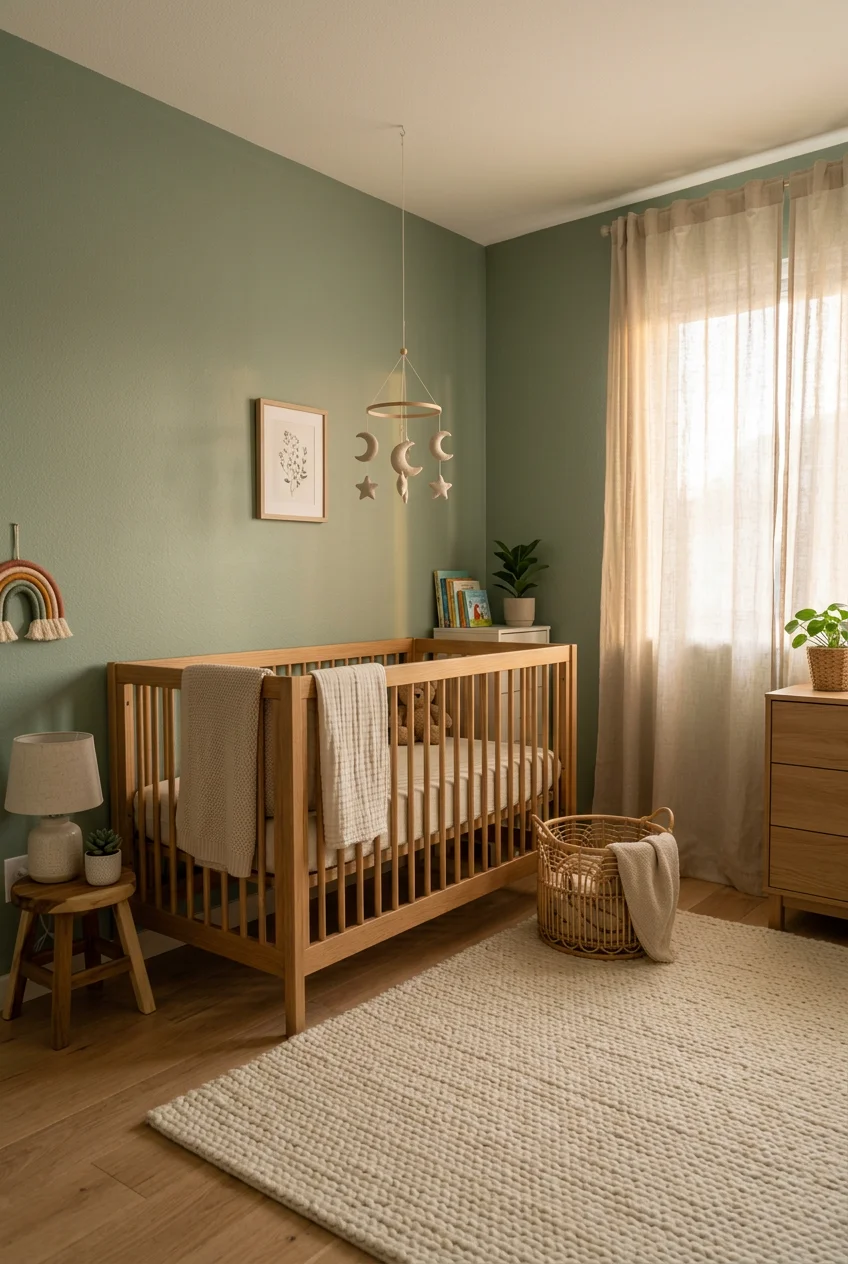
Most folks flip on a harsh overhead light at 2 AM and wonder why their baby thinks it’s playtime. Nailing your sage green nursery lighting ideas right from the start prevents those middle-of-the-night wake windows. A soft, earthy green room needs specific lighting temperatures to keep the paint color looking like calming sage rather than a murky swamp. Proper illumination highlights the rich textures of the room while keeping the atmosphere sleepy and functional. If you only try one idea from this list, make it #6. Swapping standard white nightlights for amber wavelengths physically supports a baby’s melatonin production, which means everyone gets more sleep. Trust me on this.
Skip this if you rent a room with a single, unchangeable fluorescent ceiling fixture and your landlord won’t let you plug in floor lamps or install smart bulbs. Layered lighting requires multiple light sources, so a one-bulb approach simply won’t work here.
1. Embrace Layered Sage Green Nursery Lighting Ideas

A single overhead dome light makes a room feel like a sterile waiting room. The foundation of good sage green nursery lighting ideas starts with layering three distinct light sources. You need ambient light for playing on the soft rug, task lighting for messy diaper blowouts, and accent lighting for soothing routines. A dimmable ceiling fixture handles the ambient layer. A floor lamp next to the glider tackles the task layer. A tiny wall plug handles the accent layer. Splitting the illumination across the room prevents heavy shadows in the corners, which makes small nurseries feel twice as large. You can easily find basic metal floor lamps at Target or Walmart (typically under $40) to start building these layers without spending a fortune. The catch: managing three different light switches when you’re carrying a crying infant requires some strategic furniture placement. Learned that the hard way.
Best for: homes with kids or pets where lighting needs change constantly.
2. Stick to Warm White Bulbs (2700K-3000K)

Light temperature drastically changes how green paint reads on the walls. Cool white bulbs turn a soft earthy sage into a sickly, institutional mint green. Always choose LED bulbs with a color temperature between 2700 Kelvin (K) and 3000K. This specific range mimics the warm, golden glow of a natural sunset. It promotes relaxation and supports healthy circadian rhythms for infants. You can buy bulk packs of 2700K LED bulbs at Costco for around $15 to $25, making it an inexpensive fix for the whole house. Check the back of the cardboard bulb box before buying. If it says 4000K or “Daylight,” put it back on the shelf. The catch: reading tiny print on medicine bottles under 2700K light requires squinting, so you might need a small, brighter flashlight in your medical kit.
3. Install Dimmers on Every Single Fixture

Dimmers aren’t just a nice upgrade. You need the ability to drop the light intensity from full brightness during tummy time to a barely-there glow for a 3 AM feeding. Installing smart dimmers compatible with LED bulbs prevents that awful flickering effect that happens with older switch models. Brands like Lutron offer reliable dimmer switches (usually pricing out between $30 and $70 per switch). Being able to slowly turn up the lights in the morning helps wake a baby gently instead of jolting them awake with a sudden blast of brightness. It’s a simple electrical swap most people can do in an afternoon. The catch: if your house has older wiring, installing modern smart dimmers often requires hiring an electrician to run a neutral wire.
Best for: homeowners comfortable with basic DIY electrical work.

Criusia Drawer Organizer Clothes
If you want something that just works, Criusia Drawer Organizer Clothes is a safe bet (11 reviews, 4.5 stars).
4. Choose a Diffused Overhead Flush Mount

Bare bulbs create harsh glare that shines directly into a baby’s developing eyes when they lie flat in their crib. You need an overhead fixture that physically covers the light source. A frosted glass shade or a tight fabric drum shade diffuses the light evenly across the ceiling. The Crate & Kids Bouquet Sage Green 22-inch Kids Flower Flush Mount Ceiling Light (typically ranging from $150 to $250) is a prime example of a fixture that softens the glare while perfectly matching a botanical room theme. The 22-inch diameter is wide enough to push light into the corners of a standard 10×10 room. The catch: fabric drum shades act as dust magnets and require weekly vacuuming with a brush attachment to keep them looking clean.
5. Task Lighting for the Changing Station

Changing a diaper in the dark usually ends in a mess. You need a dedicated, soft light source right next to the changing pad. A small wall sconce or a heavy-based table lamp works perfectly here. Aim for a bulb output of 200 to 300 lumens for this specific task area. It provides enough visibility to clean up properly without flooding the entire room with light. A simple plug-in sconce from West Elm (budget around $80 to $150) keeps the changing table surface clear for wipes and heavy barrier creams. Position the light so it shines on the baby’s lower half, not directly at their face. The catch: plug-in sconces leave an exposed cord dangling down the wall, which becomes a pulling hazard once your baby learns to stand.
6. Swap to Red or Amber Night Lights

Standard white or blue-toned nightlights actively suppress melatonin production. If you want everyone to get back to sleep faster after a night waking, use a nightlight that emits red or amber wavelengths. These colors are the least disruptive to human sleep cycles. You want a very dim output, specifically around 5 to 20 lux. The Jolywell Silicone Night Light (usually priced between $20 and $40) is a solid choice. It’s rechargeable, soft to the touch, and emits a warm amber glow that won’t shock your system at 2 AM. You can easily carry it from the nursery to the kitchen if you need to warm a 4 oz bottle. The catch: a red-lit room looks a bit like a darkroom, making it very difficult to distinguish between a blue pacifier and a green pacifier in the middle of the night. You might also like: 18 Nursery Closet Ideas You Need to See
Best for: small dark rooms where a bright nightlight would feel blinding. You might also like: 17 Nursery Storage Ideas You Need to See

Baby Closet Divider, Baby Wardrobe Organizer
Baby Closet Divider punches above its price — 371 buyers rated it 4.5 stars. The kind of pick people reorder.
7. Maximize Natural Daylight Early

Sunlight is the best tool for fixing a newborn’s day-night confusion. You want as much natural light pouring into the room as possible during the morning and early afternoon hours. This exposure physically sets their internal clock. Use sheer white curtains to diffuse the brightest midday rays without completely blocking the sun. You can find inexpensive sheer panels at Target or even pick them up while grabbing groceries at Fred Meyer or Kroger (usually under $20 a pair). Layer these sheers behind heavy blackout curtains so you still have total darkness for naps. The catch: relying heavily on natural light means your room’s brightness is entirely at the mercy of the weather, leaving the nursery gloomy on rainy days. You might also like: 19 Baby Nursery Girl That Actually Work
8. The Cool White Mistake Ruins Sleep

A shockingly common mistake is buying bulbs labeled “Daylight” for a nursery. These are cool white LED bulbs measuring 4000K or higher on the temperature scale. They emit a sharp, blue-toned light that mimics high noon. Turning these on before bedtime sends a biological signal to the brain that it’s time to wake up and be alert. It completely derails the wind-down routine. Stick strictly to warm white bulbs to keep the atmosphere calm and sleepy. If you accidentally bought a pack of 5000K bulbs at Home Depot, return them or use them in your garage instead. The catch: warm white light alters color perception, making crisp white crib sheets look slightly yellow or cream-colored at night.
9. Secure Cords and Heavy Bases

Safety dictates every lighting decision in a child’s room. Floor lamps with flimsy bases will get pulled over the second a baby starts crawling. Choose lamps with heavy, solid metal or marble bases to prevent tipping. More importantly, you must manage every single cord. Tuck them firmly behind heavy dressers or install hard plastic cord covers along the baseboards to eliminate strangulation hazards. Cordless, rechargeable LED lamps completely bypass this issue and are becoming much easier to find. A heavy ceramic lamp base from Pottery Barn Kids (budget $100 to $200) offers stability. The catch: heavy marble or metal lamp bases are incredibly painful if you accidentally stub your toe on them during a late-night pacing session. No exaggeration.
Best for: homes with kids or pets where tipping hazards are a daily reality.

Night Light for Kids, Baby Night Light with Sound Machine
If you want something that just works, Night Light for Kids is a safe bet (50 reviews, 4.5 stars).
10. 2026 Trends Highlight Natural Materials

Lighting design for 2026 leans heavily into natural textures and warm metal finishes. Think woven rattan, light ash wood, and textured matte ceramics. These materials pair beautifully with sage green walls, creating an earthy, grounded aesthetic. Pair a wooden lamp base with warm metal accents like antique brass or champagne bronze. It adds a timeless quality that won’t feel outdated by the time your baby hits preschool. You can often find affordable rattan shades at World Market (ranging from $40 to $90) to update an existing lamp base. The catch: woven natural materials are incredibly difficult to dust thoroughly, as dirt settles deep into the tiny crevices of the rattan over time.
11. Explore Circadian Rhythm Smart Systems

Smart lighting systems can automate the color temperature changes for you. Systems like Philips Hue or Lutron allow you to program the bulbs to emit bright, cooler light in the morning and automatically transition to dim, warm amber light by 6 PM. This mimics the natural progression of the sun and physically supports your baby’s developing sleep-wake cycles. It takes the guesswork out of setting the mood for bedtime. You just need a smart hub and compatible bulbs (starter kits usually run $100 to $200). The catch: smart bulbs require the physical wall switch to remain in the “on” position at all times, which confuses guests who instinctively flip switches off when leaving a room.
12. Hang Playful Rattan Pendants High

Don’t ignore the ceiling. A playful pendant light adds architectural interest to a plain square room. A woven rattan pendant diffuses the light beautifully, casting soft, textured shadows across the ceiling. Since the baby can’t reach the ceiling, it’s a safe place to add a decorative element. You can find beautiful woven pendants online or at stores like West Elm (price range $50 to $200). Just ensure it’s mounted high enough that a tall adult won’t hit their head on it while lifting the baby out of the crib. The catch: installing a new ceiling pendant usually requires hardwiring, which means dealing with your home’s breaker box and potentially hiring a professional electrician.

Beautiful Wooden Baby Closet Dividers Set of 7
Beautiful Wooden Baby Closet Dividers Set of 7 – Double-Sided Organize punches above its price — 11 buyers rated it 4.5 stars. The kind of pick people reorder.
13. Calculate General Illumination Needs

Guessing how bright a room should be usually results in a cave-like nursery. For general daytime illumination, aim for 150 to 200 lux. You calculate this by adding up the lumens of all your light bulbs and dividing by the room’s square footage (converted to square meters). For example, a standard 107 square foot room (about 9.95 square meters) requires roughly 1500 to 2000 total lumens. A standard 60-watt equivalent LED bulb produces about 800 lumens. Therefore, two of those bulbs will adequately light a small nursery. The catch: this calculation only measures raw brightness, not how the light reflects off dark furniture or dark green accent walls, which can absorb a lot of the illumination.
14. Never Hang Heavy Objects Over the Crib

This is a strict safety rule. Never install heavy light fixtures, wall sconces, or thick decorative shelving directly above the crib. If an earthquake hits or a mounting bracket fails, you don’t want anything heavy falling into the sleep space. Keep the area above the crib completely clear of hard objects. If you want visual interest on that wall, use lightweight decals or wallpaper instead. Position your wall-mounted reading lights over the glider or the changing table, keeping them well out of arm’s reach from the mattress. The catch: leaving the wall above the crib blank can make the room’s design feel slightly unbalanced or empty to the adult eye.
15. Keep a Portable Night Light for Travel

A baby gets used to the specific glow of their nursery. When you travel to a hotel or visit grandparents, a completely dark room can cause immediate sleep regressions. A small, portable, dimmable night light solves this. The G Keni Nursery Night Light for Baby (typically around $20 to $30) is small enough to toss in a diaper bag next to the wipes. It provides a consistent, comforting light source no matter where you sleep. It’s also incredibly useful for walking down dark hallways to the kitchen for a bottle without turning on the main house lights. The catch: you have to remember to pack the specific USB charging cable, as these proprietary chargers are rarely interchangeable with standard phone cords.
Best for: renters or frequent travelers who need adaptable, cord-free solutions.

TeckyGem Baby Sound Machine & Night Light for Nursery |
If you want something that just works, TeckyGem Baby Sound Machine & Night Light for Nursery | 3-In-1 White N is a safe bet (58 reviews, 4.5 stars).
16. Anchor the Room with a Ceramic Table Lamp

A solid ceramic table lamp adds visual weight to a delicate nursery design. Look for a base in a cream or muted terracotta color to contrast nicely with sage green walls. A 12-inch tall lamp sits perfectly on a standard dresser without towering over the changing pad. You can easily grab a stylish, budget-friendly ceramic lamp at Target or Walmart (usually priced between $30 and $60) while picking up baby supplies. Choose one with a simple toggle switch on the base rather than a twist knob under the shade, which is much harder to operate one-handed while holding an infant. The catch: ceramic shatters easily, so this lamp must be moved out of the room entirely once your toddler starts throwing wooden blocks.
17. Utilize Plug-in Sconces for Tight Corners

Not every nursery has the floor space for a bulky tripod lamp. If you’re squeezing a glider into a tight corner, a plug-in wall sconce is the smartest solution. It requires zero floor space and provides excellent downward light for reading bedtime stories. You just screw the mounting plate to the wall and plug the cord into the nearest outlet. Many options from retailers like Crate & Kids or Pottery Barn (budget $70 to $130) come with stylish brass cord covers to hide the ugly wire. The catch: you are limited to installing the sconce directly above an existing wall outlet unless you want a long, unsightly cord stretching horizontally across your baseboards.
Best for: tight budgets where hiring an electrician for hardwiring isn’t an option.
18. Filter Light with Woven Wood Shades

Window treatments are a crucial part of your lighting strategy. Woven wood shades made from bamboo or jute filter harsh afternoon sunlight into a soft, dappled glow. They add incredible rough texture to a room, breaking up the flat surface of painted drywall. You can order custom-cut woven shades from Home Depot or Lowe’s (typically ranging from $60 to $150 per window). When layered under a sage green valance, they bring an earthy, outdoor feel inside. The catch: woven shades provide privacy during the day, but at night, when the lights are on inside, people outside can see right through the tiny gaps in the bamboo.
19. Automate with Smart Plugs

You don’t need expensive smart bulbs to automate your nursery lighting. A simple smart plug turns any cheap, basic lamp into an automated fixture. Plug your standard floor lamp into a smart plug (like those from Kasa or Wyze, usually under $15 each), and you can control it from your phone. You can set a schedule so the lamp turns on at 20% brightness exactly at 6:30 AM to signal that it’s time to wake up. It’s a highly affordable way to build consistency into a baby’s routine. The catch: if your home Wi-Fi router goes down, you lose the ability to control the lamp from your phone and have to manually press the tiny button on the plug itself.
20. Match Metals in Your Sage Green Nursery Lighting Ideas

Cohesive design requires attention to detail. When finalizing your sage green nursery lighting ideas, look at the metal finishes on your door knobs and dresser drawer pulls. If your dresser has brushed brass handles, choose a floor lamp or ceiling fixture with a matching brass base. Mixing too many metals in a small room makes it look cluttered and chaotic. Sticking to one warm metal, like antique brass or brushed gold, pulls the entire space together and complements the green tones perfectly. You can easily find matching hardware and lighting fixtures at big box stores like Lowe’s. The catch: finding the exact same shade of “antique brass” across different brands is nearly impossible, so you often have to settle for finishes that are merely close enough.
How we chose these ideas: We evaluated these lighting strategies based on renter-friendliness, overall cost, and daily effort required for parents. Priority was given to solutions that offer high visual impact and strictly adhere to safe cord management and healthy sleep principles.
Getting the lighting right in a sage green nursery dictates how the room functions at 3 AM. Stick to warm bulbs, install dimmers, and hide those cords. Pin this list to your nursery planning board so you have the exact lumen counts and bulb temperatures handy when you hit the hardware store.
Frequently Asked Questions
What is the best color temperature for nursery lighting?
Always use warm white LED bulbs between 2700K and 3000K. This temperature mimics natural sunset light and supports healthy circadian rhythms, unlike cool white bulbs (4000K+) which can suppress melatonin and disrupt your baby’s sleep.
How bright should a nursery night light be?
A nursery night light should be very dim, ideally between 5 and 20 lux. Choose a light that emits red or amber wavelengths, as these colors are the least disruptive to human sleep cycles during middle-of-the-night feedings.
How many lumens do I need for a baby’s room?
For general daytime illumination, aim for 150 to 200 lux. In a standard 100-square-foot room, you need roughly 1500 to 2000 total lumens. For specific task lighting near the changing table, a softer 200 to 300 lumen bulb works best.
Is it safe to hang a light over a crib?
No. Never hang heavy light fixtures, sconces, or decorative objects directly above the crib. If a mounting bracket fails, it poses a severe safety hazard. Keep the area above the sleep space completely clear of hard objects.
