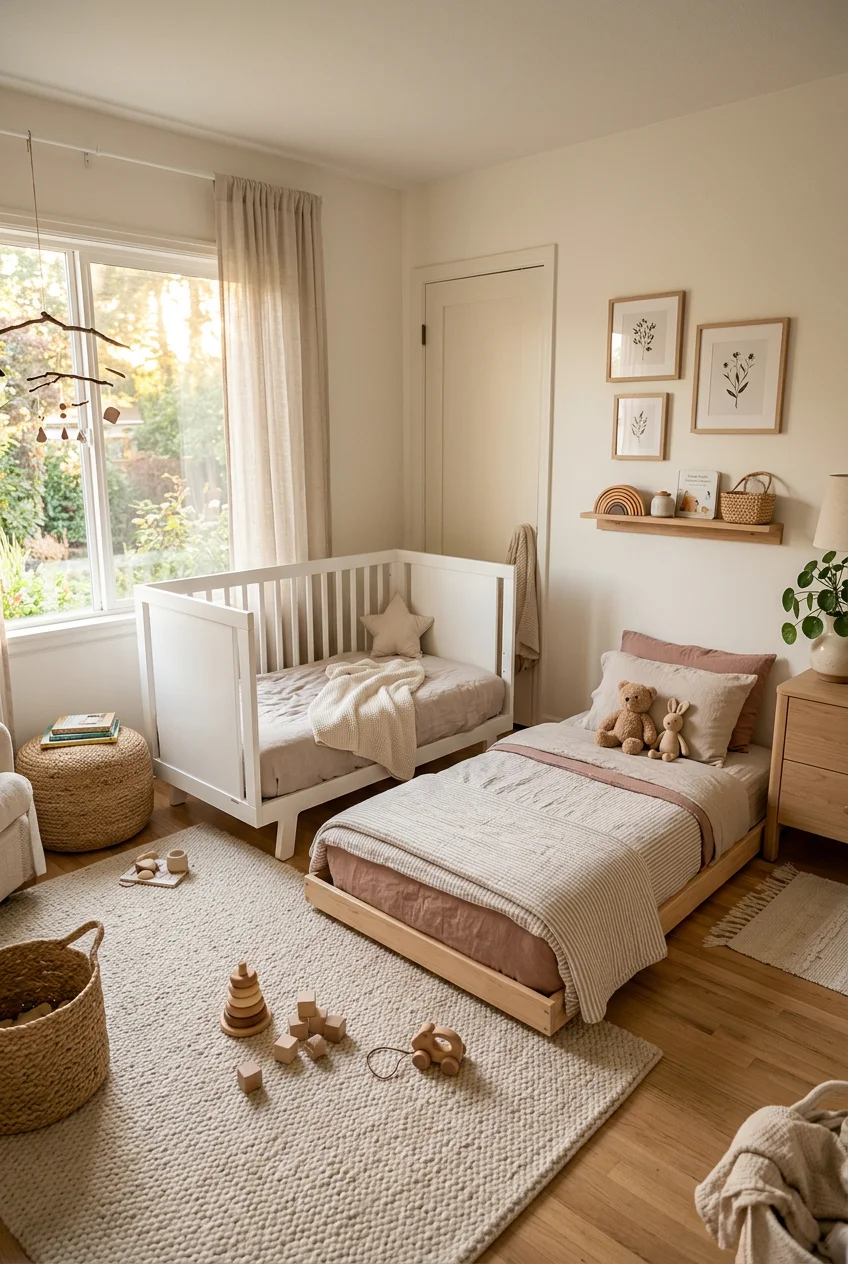
What’s Inside
- Embrace Multi-Functional Furniture as a Core Strategy
- Prioritize Vertical Storage to Maximize Floor Space
- Invest in a Convertible Crib with Integrated Storage
- Opt for a Compact Glider Designed for Small Spaces
- Implement Smart Lighting Solutions for Layered Functionality
- Utilize a High-Quality Sound Machine to Create Sleep Zones
- Choose a Dresser-Changing Station Combo to Save Space
- Consider a Montessori Floor Bed for the Toddler
- Employ Room Dividers for Baby and Toddler Shared Room Small Nursery Ideas
- Select a Portable Playard with Bassinet for Flexibility
- Anchor All Furniture to the Wall to Prevent Tipping
- Choose a Calming, Earthy Color Palette for Longevity
- Incorporate Biophilic Design Elements for a Nurturing Environment
- Avoid Over-Theming and Focus on Personalization Without Clutter
- Maximize Under-Crib Storage Drawers or Bins
- Install Wall-Mounted Acrylic Ledges Behind Doors
- Build Slim Wardrobe Systems Instead of Standard Closets
- Lay Down Washable Rugs for High-Traffic Shared Spaces
- Utilize Corner Shelving for Awkward Layouts
- Hang Minimalist Blackout Curtains for Baby and Toddler Shared Room Small Nursery Ideas
Most people shove a crib against one wall, toss a toddler bed against the other, and wonder why the room feels like a cramped storage unit. Finding functional baby and toddler shared room small nursery ideas requires a clinical approach to square footage. You’re dealing with two completely different developmental stages in one tiny footprint. That means standard decorating rules don’t apply. The crib takes up massive real estate, the toddler needs floor space to play, and you need room to walk without stepping on a stray toy at 2 AM. It’s a geometric puzzle that demands precise planning. If you only try one idea from this list, make it #6. Here’s why: managing sound is the single biggest hurdle in a shared room. Getting the audio environment right prevents the toddler from waking the baby. Trust me on this.
Skip this list if you have a room larger than 150 square feet or if your toddler is already transitioning out of naps. These strategies are engineered for highly restricted spaces where every inch dictates how well your children sleep. If you have the luxury of a separate playroom or a massive walk-in closet, you won’t need this level of aggressive vertical optimization.
1. Embrace Multi-Functional Furniture as a Core Strategy

In small shared spaces, every piece of furniture must serve more than one purpose. A standard standalone crib is a waste of valuable floor space. Instead, a convertible crib that transitions from a crib to a toddler bed, daybed, and eventually a full-size bed offers long-term utility. The Delta Children Mercer 6-in-1 Convertible Crib with Storage Trundle, typically priced around $300 to $500 depending on the retailer, adapts as your children grow. This eliminates the need to buy multiple beds over the next five years. The integrated trundle drawer provides immediate storage for heavy winter blankets or extra crib sheets. Best for: tight budgets. The catch: these convertible units are heavy. Learned that the hard way. They’re a nightmare to move once assembled.
2. Prioritize Vertical Storage to Maximize Floor Space

Most people ignore the top third of their walls, leaving valuable storage space completely empty. Look up and use the vertical plane. Installing floating shelves above a changing station or dresser keeps necessary items visible but out of a toddler’s reach. The IKEA LACK series shelves, usually $15 to $20 per shelf, measure exactly 43.25 inches long and provide a sleek, minimalist look. Use these to store diapers, wipes, and small items, freeing up the dresser surface. If you prefer a different aesthetic, Target offers similar floating ledges in their Threshold line. The catch: open shelving collects dust quickly, requiring weekly wiping to keep the nursery sanitary.
3. Invest in a Convertible Crib with Integrated Storage

If you don’t want a trundle, look for cribs that come with attached changing tables and side drawers. The Graco Solano 4-in-1 Convertible Crib and Changer with Drawer, generally falling in the $380 to $450 range, or the Carter’s by daVinci Colby 4-in-1 Convertible Mini Crib with Trundle, typically $250 to $300, consolidate two major pieces of furniture into one footprint. Keeping bedding and clothes right within the crib’s structure prevents visual clutter. Best for: rooms with no closet space. The catch: the attached changing pads are often smaller than standard sizes. My sister hates the texture but my husband can’t get enough of the convenience. Your baby might outgrow the changing station before they outgrow the crib.

Criusia Drawer Organizer Clothes
A dependable everyday pick — Criusia Drawer Organizer Clothes pulls in 11 ratings at 4.5 stars. Not flashy, just solid.
4. Opt for a Compact Glider Designed for Small Spaces

A comfortable feeding spot is necessary, but standard recliners swallow small rooms whole. Slim-profile gliders are the solution here. The Delta Children Blair Slim Nursery Glider Swivel Rocker Chair and the Babyletto Madison Swivel Glider feature compact designs with external widths under 30 inches. They fit into tight corners without monopolizing the floor. For a more traditional look, the Stork Craft Hoop Glider and Ottoman sits in the $150 range and features a narrow 25.75-inch width. Best for: awkward corners. The catch: slim gliders offer less lounging room, which isn’t ideal if you prefer to sit cross-legged while feeding.
5. Implement Smart Lighting Solutions for Layered Functionality

Harsh overhead lights ruin sleep transitions. Layered lighting creates a calming atmosphere and supports healthy sleep patterns for both ages. Dimmable lamps and wall sconces provide mood-first design without the glare. Smart bulbs, like those from Philips Hue with starter kits around $70 to $100, allow you to control brightness and color temperature via an app. You can shift to a dim amber light at night to change a diaper without fully waking the toddler. The catch: smart bulbs require a stable Wi-Fi connection to function via the app, and manual switches can disrupt their connectivity.
6. Utilize a High-Quality Sound Machine to Create Sleep Zones

A sound machine is mandatory for masking noise between a baby and a toddler. The Yogasleep Duet Sound Machine is highly effective due to its frequency-reliable fan sounds. It maintains consistent frequency profiles even at safe volumes of 40 to 45 dBA, masking household noise without harsh high pitches. The Hatch Rest+ 2nd Gen, usually $60 to $90, offers a nightlight, soothing sounds, and remote app control. Placing the machine directly between the two sleep spaces creates an auditory wall. The catch: sound machines require careful cord management to ensure they aren’t a strangulation hazard for a roaming toddler.

Night Light for Kids, Baby Night Light with Sound Machine
Night Light for Kids is sturdier in person than the photos suggest — over 50 buyers gave it 4.5 stars.
7. Choose a Dresser-Changing Station Combo to Save Space

Standalone changing tables become obsolete the moment your child is potty trained. A sturdy dresser with a removable changing topper is a much smarter investment. This setup combines a roomy dresser with a secure changing station on top. Once your baby is out of diapers, you remove the pad, leaving a timeless piece of furniture. Many dressers from Pottery Barn Kids and West Elm include optional toppers. Best for: long-term furniture planning. The catch: standard dressers combined with a topper can sit quite high, which isn’t ergonomically comfortable for shorter parents.
8. Consider a Montessori Floor Bed for the Toddler

A twin-size Montessori floor bed promotes independence and makes a small room feel significantly larger by removing bulky bed frames. Brands like Sprout Kids and Roomix offer GREENGUARD Gold Certified floor beds. A standard twin mattress measures 38 by 75 inches, providing ample space for growth. The low profile prevents the room from feeling top-heavy with furniture. The catch: using a floor bed requires intense, meticulous baby-proofing of the entire room, as the toddler has unrestricted access to the space at all hours.
9. Employ Room Dividers for Baby and Toddler Shared Room Small Nursery Ideas

Creating distinct zones helps both children feel they have their own territory. Visual separation limits light and movement distractions during opposite nap schedules. Use sheer curtains mounted to a ceiling track, or anchor a tall, narrow bookshelf like the IKEA KALLAX securely to the wall to divide the space. This physical barrier defines the baby’s sleep zone versus the toddler’s play area. The catch: physical dividers eat up a few inches of floor space, and tension-rod curtains won’t withstand a toddler pulling on the fabric. You might also like: 15 Sage Green Nursery Ideas That Actually Work

Modanais Baby Diaper Caddy Organizer Cart
If you want something that just works, Modanais Baby Diaper Caddy Organizer Cart – 3 Tier Rolling Cart with D is a safe bet (654 reviews, 4.5 stars).
10. Select a Portable Playard with Bassinet for Flexibility

For the newborn stage, a bulky wooden crib isn’t always necessary right away. A portable playard with a bassinet attachment, like the Graco Pack ‘n Play On the Go, usually priced between $80 and $150, offers incredible versatility. It serves as a safe sleep space that you can easily collapse and move. Later, it converts into a contained playpen to keep the baby safe from the toddler’s rougher play. The catch: playards have a utilitarian look that doesn’t blend well with high-end, elegant nursery aesthetics. You might also like: 18 Colorful Toddler Room for Every Budget
11. Anchor All Furniture to the Wall to Prevent Tipping

Safety dictates every layout decision in a shared space. All dressers, bookshelves, and tall furniture must be securely anchored to the wall to prevent tip-overs. Toddlers are climbers, and a dresser with open drawers acts like a ladder. Most new furniture comes with anti-tip kits in the box. If you buy secondhand, hardware stores like Home Depot sell heavy-duty furniture straps for under $15. The catch: proper anchoring requires drilling directly into wall studs. It’s a pain, no exaggeration. You’ll need to patch those holes later. You might also like: 20 Lovely Space Saving Small Nursery Ideas for Every Budget
12. Choose a Calming, Earthy Color Palette for Longevity

Bright, primary colors overstimulate babies and look dated quickly. Earthy brown color palettes and soft atmospheric neutrals like warm mushroom, cocoa brown, sage green, and muted greige create a grounding environment. These hues make the space feel cohesive rather than split down the middle by gender or age. If a standard gallon of greige paint looks too dark for a small room, ask the hardware store to mix in 4 oz of pure white colorant to lighten the visual weight. The catch: muddy earth tones can make a room look dreary if it doesn’t receive adequate natural sunlight.

Modanais Baby Diaper Caddy Organizer Cart
If you want something that just works, Modanais Baby Diaper Caddy Organizer Cart – 3 Tier Rolling Storage Car is a safe bet (325 reviews, 4.5 stars).
13. Incorporate Biophilic Design Elements for a Nurturing Environment

Bringing nature indoors adds texture without clutter. Use natural materials like wood, rattan, and bamboo for furniture and storage baskets. Pair these with soft textiles like organic cotton and linen sheets. Adding a few child-safe, non-toxic plants placed high on a secure shelf introduces organic shapes into a rigid room layout. The catch: real plants require consistent watering and maintenance, and dropped leaves can become a choking hazard if they fall into the crib or onto the floor.
14. Avoid Over-Theming and Focus on Personalization Without Clutter

Rigid themes like jungle or space quickly feel chaotic when you double the amount of gear in the room. Opt for subtle personalization instead. Custom name plaques in natural wood or clear acrylic hung above each child’s sleep space provide identity without visual noise. Choose one or two high-quality art prints rather than plastering the walls with decals. Best for: minimalist aesthetics. The catch: custom acrylic or carved wood signage is expensive, often running upwards of $75 to $150 per piece on sites like Etsy.
15. Maximize Under-Crib Storage Drawers or Bins

The empty space under a standard crib is prime real estate. If your crib doesn’t have a built-in trundle, buy low-profile rolling storage bins or canvas drawers. Measure the clearance carefully, as most cribs only allow about 6 to 8 inches of height underneath. Use this zone for out-of-season clothing, extra wipes, or bulky sleep sacks. The catch: open bins under a crib are magnets for dust bunnies, requiring you to pull them out and vacuum the area frequently.

Criusia Over the Door Organizer
Criusia Over the Door Organizer has been one of the most consistently praised picks in this category. 247 reviewers averaged 4.5/5.
16. Install Wall-Mounted Acrylic Ledges Behind Doors

The space behind the bedroom door is rarely utilized. Installing slim, clear acrylic ledges creates an invisible library for the toddler’s books. Because the ledges are transparent, the books appear to float, which reduces visual weight. Ensure you install a rigid doorstop so the door handle doesn’t smash into the shelves. The catch: slim ledges only hold books facing outward, meaning you can only store about ten to fifteen books total compared to a traditional deep bookshelf.
17. Build Slim Wardrobe Systems Instead of Standard Closets

If the room lacks a closet, a modular wardrobe system is a necessity. The IKEA PAX system can be customized with shallow frames that only protrude about 14 inches from the wall. You can configure the interior with double hanging rods to fit tiny baby clothes on top and toddler clothes on the bottom. The catch: modular wardrobe systems require tedious assembly and must be perfectly leveled and anchored to function properly without the doors sticking.
18. Lay Down Washable Rugs for High-Traffic Shared Spaces

A shared room sees double the spills, diaper blowouts, and muddy footprints. A washable rug from brands like Ruggable is practical and sanitary. You just peel the top layer off the pad and throw it in the washing machine. If you need to spot-treat a stubborn stain before washing, mix 1/2 cup of distilled white vinegar with 2 tablespoons of mild dish soap and apply it directly to the fibers. The catch: the edges of two-piece washable rugs tend to curl up over time, creating a minor tripping hazard for early walkers.
19. Utilize Corner Shelving for Awkward Layouts

Corners are notorious dead zones in small rooms. Floating corner shelves or a tall, narrow corner bookcase reclaims this wasted space. This is the ideal spot to place the baby monitor camera, giving you a wide-angle view of both the crib and the toddler bed without needing two separate cameras. The catch: corner shelves have awkward triangular dimensions, making it difficult to find storage baskets or bins that fit perfectly onto the ledges.
20. Hang Minimalist Blackout Curtains for Baby and Toddler Shared Room Small Nursery Ideas

Controlling light is just as important as controlling sound. Blackout window treatments prevent the toddler from waking at dawn and keep the room dark for the baby’s daytime naps. Brands like Target’s Pillowfort or Walmart’s mainstays offer affordable blackout panels. Mount the curtain rod close to the ceiling and let the fabric fall to the floor to create the illusion of taller ceilings. The catch: heavy blackout curtains can make a small room feel like a cave during the day, requiring you to open them completely to let any natural light in.
How we chose these ideas: This list was compiled by evaluating common spatial constraints in modern apartments and smaller homes. Criteria included renter-friendliness, overall cost, ease of implementation, and the visual impact on tight square footage, prioritizing solutions that address both safety and multi-functionality.
Designing a shared room for two different ages is challenging, but applying these specific strategies ensures the space remains functional and calm. I recommend starting with the floor plan and locking in the crib and bed placement before buying a single accessory. Pin this list to your nursery planning board so you don’t lose track of these layout rules when you’re ready to start measuring.
Frequently Asked Questions
How do you separate a baby and toddler in a shared room?
Use visual and physical barriers like sheer ceiling-mounted curtains, securely anchored narrow bookshelves, or strategic rug placement. Positioning a sound machine between their sleep spaces also creates an auditory wall that helps prevent them from waking each other.
What is the best layout for baby and toddler shared room small nursery ideas?
Place the crib and toddler bed on opposite sides of the room to maximize distance. Utilize multi-functional furniture, like a dresser with a changing topper, and prioritize vertical wall storage to keep the center floor space open for safe play.
How do you handle different bedtimes in a shared nursery?
Establish a consistent routine where the younger baby goes down first in a dark, quiet room. Use a dimmable smart bulb and a sound machine to allow you to quietly bring the toddler in later without turning on harsh overhead lights.
Are floor beds safe for a shared toddler and baby room?
Yes, but they require strict safety measures. The entire room must be meticulously baby-proofed, with all tall furniture anchored to the wall and small hazards removed, since the toddler has unrestricted access to the space while the baby sleeps.
