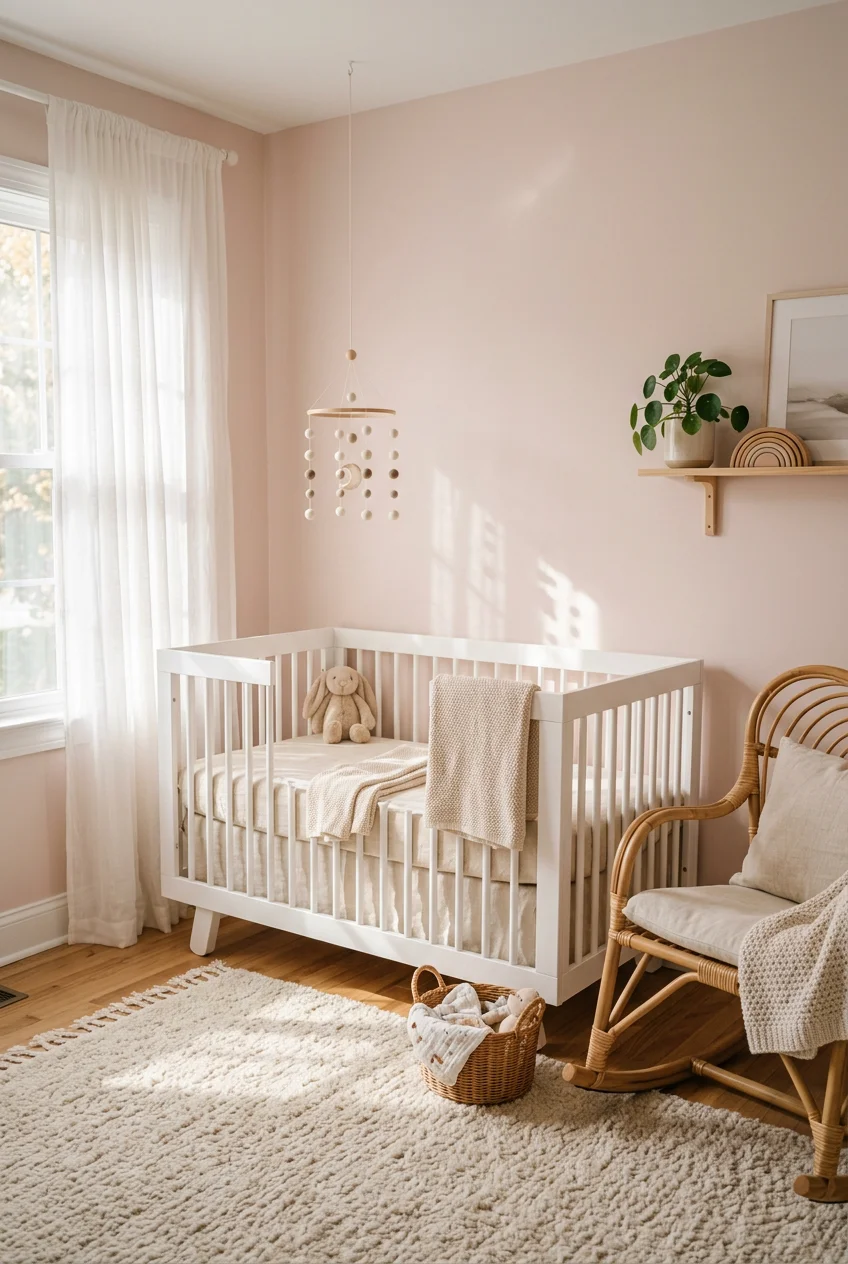
What’s Inside
- Embrace The New Neutrals For Longevity
- Prioritize Zero-VOC Paint For Health
- Pair Sage Green And Terracotta
- Try Soft Clay Blush Instead Of Bubblegum
- Use Botanical Wallpaper For A Feature Wall
- Calculate Your Paint Needs Before Buying
- Avoid Highly Saturated Girl Nursery Colors
- Introduce Muted Blues For Better Sleep
- Layer Dramatic Textiles Over Neutral Walls
- Paint The Ceiling A Soft Complementary Tone
- Apply Limewash For Breathable Texture
- Buy Your Rugs And Curtains First
- Allow Three Weeks For The Paint To Cure
- Mix In Vintage Finds For Character
- Choose A Mood Instead Of A Theme
Last Tuesday at the hardware store, I watched a very pregnant woman holding a neon pink paint swatch against her forehead while crying. It brought back exact memories of my first attempt at picking girl nursery colors. That ended with a room so aggressively fuchsia it gave me a physical migraine. I spent three days painting that tiny space. Only to realize my eyes hurt when the afternoon sun hit the walls. Choosing paint for a baby’s room is highly stressful because we attach so much emotional weight to it. You want it to be perfect. You want it to feel calm. Instead, you’ll end up staring at forty different white swatches until they all look like dirty snow. After consulting on dozens of nurseries over the last five years, I’ve learned a few hard truths about how color actually behaves in a room. Trust me on this. Skip the overly saturated pastels. They look like a cartoon. The nursery should be a place where you can actually breathe and relax. Not a place that gives you sensory overload before you’ve even changed a diaper. Here are fifteen specific approaches to nursery palettes that actually work in real houses with real lighting.
1. Embrace The New Neutrals For Longevity

Move beyond stark white and opt for warm, earthy neutrals like mushroom taupe or soft greige. When I first started consulting, clients always asked for bright white. It looks great on a screen but feels incredibly sterile when you’re sitting in a rocking chair at 3 AM. Warm neutrals provide a sophisticated backdrop that allows the room to evolve with your child. Benjamin Moore’s Pale Oak (OC-20) or Farrow & Ball’s Skimming Stone (241) are excellent choices. I used Benjamin Moore Regal Select in Pale Oak ($69.99 for a gallon) in a client’s south-facing nursery last month. The color shifts throughout the day. It looks like a warm cream in the morning and a soft taupe by late afternoon. It creates a cocoon-like, calming atmosphere that doesn’t feel cold. If you buy cheap contractor-grade white paint, you’ll end up with walls that scuff the second a toy hits them. Investing in a washable, high-quality greige means you won’t be repainting when your toddler discovers crayons. I’ve also noticed that when you use stark white, every single shadow looks harsh. A warmer greige absorbs those shadows and makes the corners of the room recede softly. It’s a total win.
2. Prioritize Zero-VOC Paint For Health

Always select zero-VOC paint to ensure optimal air quality for your baby. I learned that the hard way when I painted my own guest room with a standard cheap latex paint. The chemical smell lingered for four weeks. I had to keep the windows open the entire time. Brands like ECOS Paints, specifically their Lullaby range, or Clare Paint are highly recommended. I recently ordered a gallon of ECOS Lullaby paint ($85.95 per gallon) for a nursery project. The formula is thick, almost like pudding, and it genuinely has no odor. While these premium paints cost about thirty percent more than conventional options at big box stores, the health benefits justify the investment. You’re going to spend hours in this room with a newborn. You don’t want to be inhaling off-gassing chemicals. I usually grab a four-pack of microfiber rollers from Walmart for $9.98 to apply this. The thicker formula requires a smoother nap to avoid leaving heavy roller marks on the drywall. I also highly recommend buying a good quality painter’s tape like FrogTape ($8.99 at Home Depot). When you’re working with premium zero-VOC paint, you don’t want to waste time scraping dried drips off your baseboards.
3. Pair Sage Green And Terracotta

The combination of sage green and terracotta is a major decorating trend right now. It offers a perfect balance of warmth and freshness. It feels grounded. Consider Sherwin-Williams Rosemary (SW 6187) for a muted green or Farrow & Ball Vert De Terre (234) for a nature-inspired feel. I paired Rosemary with natural terracotta clay pots on a floating shelf. The contrast is visually striking without being loud. I bought a gallon of Sherwin-Williams Emerald interior acrylic latex ($85.49) in Rosemary for an accent wall. The paint goes on like butter and dries to a hard, scrubbable finish. To bring out the terracotta tones, I stopped by Sprouts last week and picked up a $12.99 dried eucalyptus and rust-colored floral bouquet to place on the dresser. The earthy smell of the dried plants matches the visual warmth of the walls perfectly. Don’t use a bright lime green here. It’ll clash horribly with any warm tones and make the room feel like a tropical smoothie shop instead of a calming retreat. If you want to add a third color to this palette, a very soft, creamy white on the trim works best to maintain that earthy vibe.

Beautiful Wooden Baby Closet Dividers Set of 7
Beautiful Wooden Baby Closet Dividers Set of 7 – Double-Sided Organize has been one of the most consistently praised picks in this category. 11 reviewers averaged 4.5/5.
4. Try Soft Clay Blush Instead Of Bubblegum

Instead of bright pink, opt for a sophisticated soft clay blush with warm undertones. A common mistake parents make is buying a highly saturated pink swatch that looks cute in the store. Once it’s on four walls, it reflects off itself and turns the room into a glowing neon box. I prefer muted, mineral-infused shades like Benjamin Moore Pink Bliss (2093-70) or Farrow & Ball Setting Plaster. These colors feel natural and calming. They pair beautifully with mushroom taupes and warm whites. I used Farrow & Ball Estate Emulsion in Setting Plaster ($130.00 per gallon) for a client’s ceiling recently. The chalky, matte finish absorbs light rather than bouncing it around. It creates a soft, warm glow in the room. I took a paint chip to Target to find matching textiles and ended up buying a $24.99 threshold velvet throw pillow that perfectly mirrored the clay undertones. Skip the glossy finishes when using blush tones. A flat or matte finish makes the color look intentional and sophisticated. No exaggeration. Make sure you test your paint swatch in the room with the actual lamps you plan to use. Cool-toned LED bulbs will turn a beautiful clay blush into a muddy purple instantly.
5. Use Botanical Wallpaper For A Feature Wall

Wallpaper adds depth and character without requiring a full room renovation. Illustrative styles and delicate florals are incredibly popular right now. I highly recommend peel-and-stick botanical murals or vintage rose patterns for a single feature wall behind the crib. I tried installing traditional paste wallpaper once and ended up with glue in my hair and uneven seams that drove me crazy for two years. Now, I strictly use peel-and-stick options. I recently applied a Rifle Paper Co. peel-and-stick botanical print ($65.00 per roll) in a small nursery. The vinyl material is thick enough that it doesn’t tear when you inevitably have to pull it off and reposition it. The trick is to use a $6.98 plastic smoothing tool from Lowe’s to push out the air bubbles as you go. If your walls have a heavy orange peel texture, peel-and-stick wallpaper won’t adhere properly. You’ll need to skim coat the wall flat first. Otherwise, the paper will start curling at the edges within a month. I always buy an extra roll just in case I mess up a panel. Keep the extra paper stored flat under a bed for future patch jobs if the wall ever gets damaged by a rogue toy. You might also like: 18 Vintage Nursery Ideas You Need to See
6. Calculate Your Paint Needs Before Buying

For a standard 12×12 foot room with 8-foot ceilings, you’ll typically need about two gallons of paint for two coats on the walls. One gallon usually covers 350 to 400 square feet per coat. I always add an extra twenty percent to my estimate for touch-ups. I learned this lesson when I ran out of paint with a three-foot section of wall left. I had to drive back to the store in paint-covered sweatpants, only to find they were out of the base I needed to mix my exact color. It delayed the project by a week. Always buy your paint in one batch. I buy Purdy White Dove 3-pack roller covers ($14.98 at Lowe’s) because cheap rollers shed lint directly into your fresh paint. There is nothing worse than picking fuzz out of wet paint with your fingernails. Keep a small 8-ounce sample jar of your final color mixed and stored in a cool closet. You’ll definitely need it when the crib accidentally scrapes the wall during assembly. I also strongly suggest buying a sturdy metal paint tray instead of the flimsy plastic ones. Spend the extra $5 on the metal tray so you don’t accidentally crack the plastic and flood your floor. You might also like: 16 Nursery Dresser Organization You Need to See

Criusia Drawer Organizer Clothes
Criusia Drawer Organizer Clothes has been one of the most consistently praised picks in this category. 11 reviewers averaged 4.5/5.
7. Avoid Highly Saturated Girl Nursery Colors

A common mistake is using highly saturated hues like bright reds, electric blues, or vivid yellows. These colors overstimulate babies and actively interfere with their sleep patterns. I once had a client who insisted on a bright lemon yellow nursery because she wanted it to feel cheerful. Three months later, she called me exhausted because her baby absolutely refused to nap in that bright, glowing room. We repainted it a soft pastel yellow, and the sleep issues improved dramatically. When choosing girl nursery colors, you want muted, toned-down versions of your favorite shades. Instead of bright peach, choose a soft, dusty apricot. If you’re stuck with a bright color you can’t paint over immediately, you can soften the harshness with lighting. I bought a 4-pack of GE Relax LED warm white bulbs ($11.99 at Walmart) for a room with overly bright walls. The warm 2700K light temperature significantly toned down the aggressive wall color and made the space feel much more relaxing in the evenings. You also have to consider the sheer amount of brightly colored plastic toys that’ll enter this room. A muted wall color provides a quiet background that absorbs the visual noise of everyday baby clutter. You might also like: 16 Baby Nursery Themes That Actually Work
8. Introduce Muted Blues For Better Sleep

While often associated with boys, soft, muted blues are excellent for a girl’s room. Blue promotes a restful atmosphere and lowers the heart rate. Benjamin Moore Breath of Fresh Air (806) or Sherwin-Williams Adrift (SW 7608) offer a dreamy, peaceful environment. I painted a nursery in Breath of Fresh Air last spring. We used a gallon of Benjamin Moore Aura interior paint ($98.99 per gallon) in a matte finish. The color feels like a crisp, cool morning. We paired it with brass hardware and warm oak furniture to keep the room from feeling too icy. I picked up a set of $4.99 brass drawer pulls from a local hardware store to update an old white dresser. The gold tones popped beautifully against the blue walls. Don’t use a highly pigmented navy blue on all four walls of a small room. It absorbs all the natural light and makes the space feel like a cave. Stick to lighter, airy blues if the room only has one window. I also prefer using a flat or matte finish with blue paints. An eggshell finish on a blue wall tends to reflect light in a way that looks very shiny and cheap.
9. Layer Dramatic Textiles Over Neutral Walls

When working with neutral wall colors, bring in warmth and drama through textiles. Incorporate a bold patterned rug, textured linen curtains with interesting trim details, or layered quilts. I used to think all the color in a room had to come from the walls. I was completely wrong. A neutral wall lets you use much more interesting fabrics without the room looking chaotic. I recently hung a pair of Quince European Linen Blackout Curtains ($119.90 per panel) in a pale taupe nursery. The heavy weight of the linen and the subtle texture completely changed the acoustics and the feel of the room. It went from sounding hollow to feeling soft and quiet. I strongly advise against buying cheap polyester curtains. I bought a set from Amazon once for $20, and under the nursery’s ceiling light, they had a shiny, plastic-like sheen that looked terrible. Spend your budget on heavy, natural fiber textiles. They hang better, block light more effectively, and add crucial visual weight to the room. I also love layering a smaller, highly textured rug over a larger neutral rug to anchor the crib area and provide a soft landing spot.

Criusia Over the Door Organizer
If you want something that just works, Criusia Over the Door Organizer is a safe bet (231 reviews, 4.5 stars).
10. Paint The Ceiling A Soft Complementary Tone

For a surprising detail, consider painting the ceiling a complementary soft color or adding a subtle wallpaper pattern. This fifth wall can enhance the room’s cocooning effect and provide visual interest for a baby who spends most of their time lying down. I painted a nursery ceiling a soft blush pink while keeping the walls a warm cream. I used Benjamin Moore Waterborne Ceiling Paint ($54.99 per gallon), which is formulated to be ultra-flat to hide drywall imperfections. The pink ceiling cast a beautiful, warm glow over the entire room. Painting a ceiling is physically exhausting. My neck cramped for two days after I tried doing it without an extension pole. Always buy a Wooster 4-foot extension pole ($16.48 at Home Depot) before you start. Make sure you use a dedicated ceiling paint, not just flat wall paint. Ceiling paint is formulated to splatter less, which matters immensely when you’re rolling paint directly above your own head. I also recommend taping off the top of the walls very carefully. A wobbly cut-in line between a colored ceiling and a neutral wall is incredibly distracting, so take your time with the prep work.
11. Apply Limewash For Breathable Texture

For a truly unique and healthy approach, consider zero-VOC limewash from Portola Paints or Venetian plaster from Romabio. These natural mineral finishes are breathable, regulate humidity, and can even absorb carbon dioxide, improving air quality over time. I applied Portola Paints Roman Clay ($85.00 for a 10 kg bucket) in a shade called Sable for a nursery last year. The texture is incredible. It looks like soft, aged suede. You can’t apply this with a standard roller. I tried that once on a test board and it looked like lumpy oatmeal. You have to apply it with a specific masonry brush or a metal trowel in sweeping, overlapping motions. It takes significantly more physical effort than standard painting. I spent four hours troweling one wall and my right arm was completely numb. However, the mottled, matte finish is impossible to replicate with standard latex paint. It gives the room an immediate sense of history and architectural depth that basic drywall lacks completely. If you decide to go this route, you also need to purchase the specific mineral primer recommended by the manufacturer so the limewash absorbs properly into the wall.
12. Buy Your Rugs And Curtains First

A common mistake is picking paint colors first. Instead, select your larger textile elements like rugs, window treatments, and upholstery before you look at a single paint swatch. Fabric choices are far more limited than paint colors. You can custom tint paint to match any fabric, but you can’t custom tint a factory-made rug. I made this mistake early in my career. I painted a room a beautiful dusty rose, then spent three agonizing months trying to find a rug that didn’t violently clash with it. I ended up returning four different rugs. Now, I always start with the textiles. I recently bought a Loloi II Skye Collection rug (5×7 for $148.50 on Amazon) that featured muted sage, terracotta, and cream. I took the rug directly to the Benjamin Moore store, laid it out on the floor, and matched my paint swatches to the threads. It makes the entire design process logical and straightforward. Rather than a guessing game of trying to match a tiny color chip from memory. I also recommend buying your window treatments at the same time as your rug to ensure the major elements are sorted out.
CUBEDIY Baby Closet Organizer for Nursery: Durable Baby
If you want something that just works, CUBEDIY Baby Closet Organizer for Nursery: Durable Baby Wardrobe for C is a safe bet (316 reviews, 4.5 stars).
13. Allow Three Weeks For The Paint To Cure

Even with zero-VOC paints, it’s recommended to paint the nursery at least two to three weeks before the baby’s arrival. This allows for proper ventilation and dissipation of any residual odors. Paint doesn’t just dry; it cures. As the water evaporates, the chemical binders harden. During this curing process, the paint releases moisture and mild odors into the air. I painted a room two days before a baby arrived once, and the room felt damp and smelled slightly like wet clay. We had to run a Honeywell True HEPA Air Purifier ($159.99 at Target) on maximum speed for a week to clear the air. I actually stopped by Costco to buy a 4-pack of replacement HEPA filters ($49.99) just to ensure the machine was running at peak efficiency. Don’t rush this step. Keep the windows open slightly, run a ceiling fan, and let the room breathe. If you put the crib mattress in the room while the paint is still curing, the fabric will absorb that lingering moisture and smell. I also suggest leaving the interior closet doors open during this curing period to force the trapped air out.
14. Mix In Vintage Finds For Character

Designers note a shift away from all-new nurseries towards a more collected aesthetic. Incorporate one or two curated vintage pieces, like a thrifted lamp or a unique handcrafted mirror, to add character and a storied feel to the space. Buying a matching 6-piece furniture set from a big box store makes a room look like a catalog showroom, not a home. I found a beautiful, heavy brass mirror at a local thrift store for $35. The frame was slightly tarnished, so I used a tube of Rub ‘n Buff metallic wax ($8.99 at Michaels) in Antique Gold to restore the finish. The slightly musty smell of the antique shop washed right off with some Murphy Oil Soap. That single vintage piece broke up the monotony of the new modern crib and dresser. I also frequently check Facebook Marketplace for solid wood dressers. Older furniture often features dovetail joints and solid wood construction that you simply can’t find in modern, flat-pack nursery furniture without spending thousands of dollars. When buying vintage wooden pieces, always check the drawers to make sure they slide smoothly on their wooden tracks before bringing them home.
15. Choose A Mood Instead Of A Theme

Parents are choosing a mood rather than a rigid theme. Instead of a princess room or a jungle room, think about how you want the space to feel. Calm, warm, or nostalgic. Use color to create that specific feeling. I highly recommend Benjamin Moore Vanilla Milkshake (2141-70) for a creamy, neutral warmth. I used a gallon of this in their Aura line ($98.99) for a client who wanted a quiet morning mood. We layered in elements that supported that feeling: soft linen textures, natural wood, and muted art. When you pick a rigid theme, you end up buying novelty items that the child outgrows in two years. A mood grows with them. To test the vibe of the Vanilla Milkshake paint, I went to Kroger and bought a $5.99 bouquet of fresh chamomile flowers. I set them on the windowsill against the fresh paint. The creamy white petals matched the wall perfectly, and the subtle, apple-like scent of the chamomile reinforced the exact calming mood we were trying to achieve. Focusing on a mood also prevents you from over-decorating and filling every empty wall space with themed art.
Designing this space doesn’t have to be a stressful exercise in comparing fifty identical white swatches. If you stick to muted tones, invest in quality zero-VOC paint, and layer your textiles thoughtfully, you’ll create a room that actually feels good to sit in at three in the morning. I’ve spent enough time staring at aggressively bright walls to know that softer is always better for a nursery. Take your time, buy the rug first, and don’t skip the curing time. If you found these ideas helpful, pin this article to your nursery planning board so you don’t lose these specific paint color names before your next hardware store run.

Delta Children Nursery Storage 48 Piece Set
Delta Children Nursery Storage 48 Piece Set – Easy Storage/Organizatio punches above its price — 17 buyers rated it 4.5 stars. I would buy it again.
Frequently Asked Questions
What are the best calming girl nursery colors?
Soft, muted tones like mushroom taupe, pale sage green, and dusty clay blush are excellent choices. These low-saturation colors prevent overstimulation and create a restful environment for sleep, unlike bright pinks or electric yellows.
Should I use zero-VOC paint for a baby’s room?
Yes, you absolutely should use zero-VOC paint. It drastically reduces the off-gassing of harmful chemicals into the air. Brands like ECOS Paints or Clare offer formulas that are much safer for your newborn’s developing lungs.
How long should paint cure before the baby sleeps in the nursery?
You need to let the paint cure for at least two to three weeks. Even zero-VOC paints release moisture and mild odors as the chemical binders harden. Keep windows open and run an air purifier during this time.
Is it better to pick paint or textiles first?
Always buy your rugs and curtains first. Fabric choices are limited, while paint can be custom-tinted to match any thread in your rug. Picking paint first often leads to frustrating color-matching issues later.
