What’s Inside
- Choose A Muted, Calming Paint Based On LRV
- Bring In Warmth With Natural Wood Furniture
- Layer Textures Using Organic Textiles
- Invest In A GREENGUARD Gold Certified Crib
- Build A Dedicated Nursing Nook With Ergonomic Seating
- Hide Your Smart Nursery Tech
- Use A 6-Drawer Dresser As Your Changing Station
- Try Subtle Blue Patterns For An Accent Wall
- Install True Blackout Window Treatments
- Keep Your Baby Blue Nursery Boy Room Free Of Heavy Themes
- Stick To Removable Wall Decor
- Create A Floor-Level Nighttime Changing Station
- Install Warm, Dimmable Lighting
- Stock Up On Sustainable Wooden Toys
- Lean Into The Japandi Aesthetic
- Pick A Washable Wool Or Cotton Rug
- Add A Woven Rattan Basket For Laundry
- Hang Floating Bookshelves For A Reading Nook
- Use Velvet Curtains For Sound Dampening
- Finish Your Baby Blue Nursery Boy Space With A Crisp White Ceiling
When I tried to design my first baby blue nursery boy room back in 2018, I made a massive mistake. I bought a cheap gallon of bright blue paint from Home Depot, slapped it on the walls, and closed the door. Two days later, the room smelled like a chemical factory and looked like a radioactive Smurf. I had to sand it down, prime it twice, and start completely over. It cost me an extra $150 and a weekend of back-breaking work. I learned that the hard way. Designing a peaceful space requires methodical choices, not impulse buys. You need to balance light reflectance values, prioritize non-toxic materials, and layer textures so the room doesn’t feel like a sterile hospital ward. I’m going to walk you through exactly how to build a functional, breathable space without making the expensive errors I did. Let’s break down the specific products, measurements, and paint codes that actually work.
1. Choose A Muted, Calming Paint Based On LRV

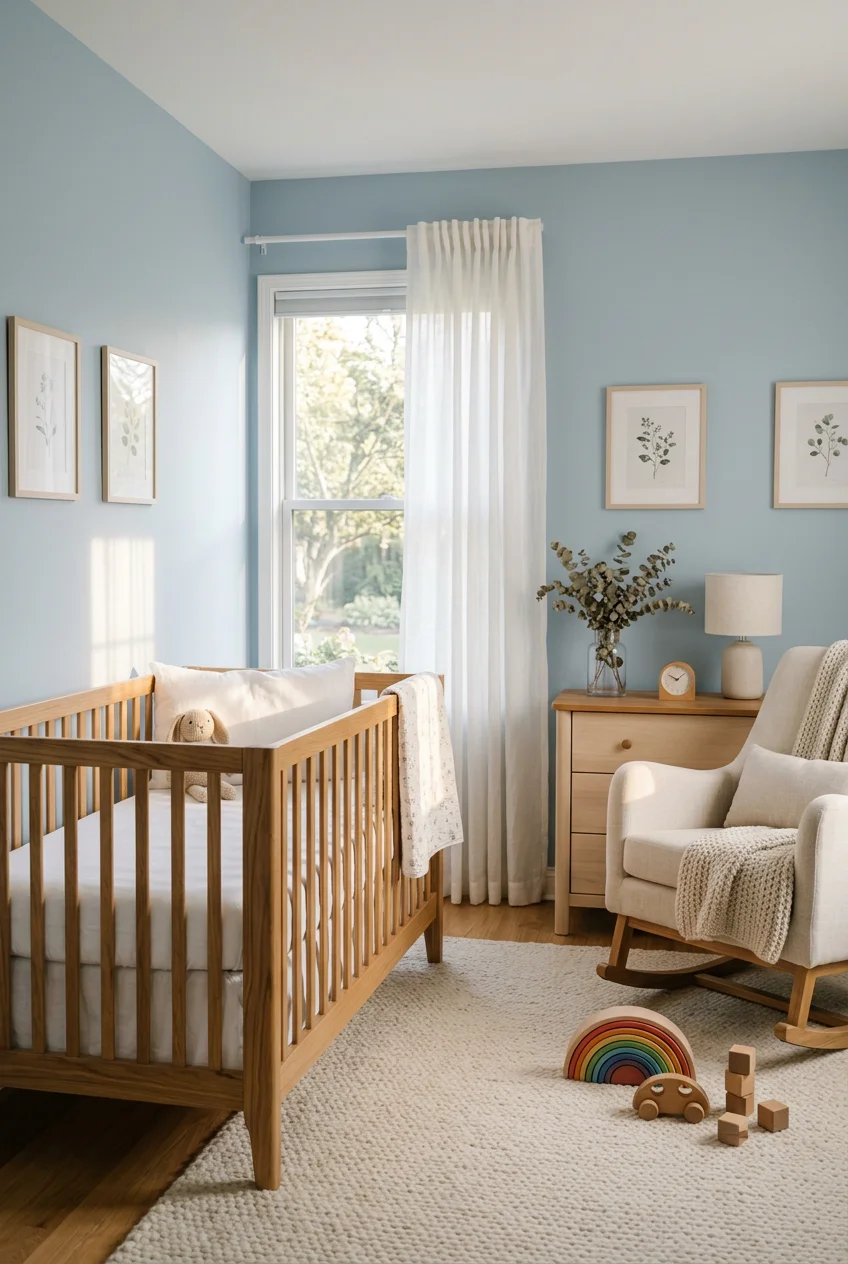
Paint color affects infant sleep. You need a soft, muted blue tone with a Light Reflectance Value (LRV) between 60 and 75. Pediatric research indicates this specific light absorption range promotes melatonin release and longer naps. Anything below LRV 50 absorbs too much light and makes a small 10×10 room feel like a dark cave. I use Benjamin Moore’s Misty Blue (820). It’s got an LRV of 64 and costs about $75 per gallon. Always select zero-VOC paint, like Benjamin Moore Natura or Sherwin-Williams Harmony. You want the GreenGuard Gold certification to minimize respiratory exposure for your baby during their vulnerable 0-24 month window. Even with zero-VOC paint, you need to open the windows and let the room off-gas for 72 hours before moving any furniture inside. Don’t skip the off-gassing step. The lingering smell of wet paint will give you a headache, and it’s worse for a newborn.
2. Bring In Warmth With Natural Wood Furniture

Cool blue walls need visual warmth. If you pair baby blue walls with stark white plastic furniture, the room looks like a dentist’s office. You need natural wood tones to balance the temperature. I prefer pine or birch. A convertible crib, like the Storkcraft Santos 3-in-1 Convertible Crib, costs $229.99 at Target. It’s crafted from solid pine wood and engineered wood. It transitions from a crib to a toddler bed, and eventually to a daybed. Buying furniture that grows with the child saves you roughly $400 over three years. Look for the FSC-certified label on the box to ensure the wood was responsibly sourced. The natural grain of the pine breaks up the solid blocks of blue on the walls. I wipe the wood down with a damp microfiber cloth once a week to prevent dust buildup on the rails.
3. Layer Textures Using Organic Textiles

To prevent a blue nursery from feeling flat, you have to layer different physical textures. I learned this the hard way last November when I finished a client’s room and it felt completely cold. I drove straight to Target and bought three different textured throws. For the crib, stick to organic cotton sheets. Conventional cotton often feels stiff and carries residual pesticides. I use Burt’s Bees Baby organic fitted sheets. They cost $19.99 each and hold up to weekly hot water washes without pilling. The GOTS-certified cotton is soft against delicate skin. Add a chunky knit blanket draped over your glider. I found a heavy 100% cotton knit one at Pottery Barn Kids for $69. The contrast between the smooth crib sheets, the ribbed knit blanket, and the matte painted walls gives the eye something to process. It breaks up the visual monotony of a single color palette.

Beautiful Wooden Baby Closet Dividers Set of 7
Honestly, Beautiful Wooden Baby Closet Dividers Set of 7 – Double-Sided Organize surprised me — sturdier than it looks in the photos, and over 11 buyers gave it 4.5 stars.
4. Invest In A GREENGUARD Gold Certified Crib

Indoor air quality is a measurable metric, not just a buzzword. Standard MDF furniture off-gasses formaldehyde and other volatile organic compounds for months after you unbox it. I refuse to put a newborn in a crib that hasn’t been chemically tested. You need a crib that is GREENGUARD Gold Certified. This means it’s been tested for over 10,000 chemical emissions and VOCs. Brands like daVinci and Babyletto dominate this category. The daVinci Sammy Scallop 4-in-1 Convertible Crib costs $299 on Amazon. It feels incredibly sturdy and doesn’t have that sharp, chemical factory smell when you open the shipping box. The paint used on these certified cribs is non-toxic, which matters when your eight-month-old inevitably starts chewing on the top rail. Spending an extra $50 for the certification is a strict requirement for any room I design.
5. Build A Dedicated Nursing Nook With Ergonomic Seating

Moms need a dedicated space to physically recover and feed the baby. I bought a cheap, rigid wooden rocker for my first nursery because it looked cute. That was a miserable mistake. By month two, my lower back was in agony, and the wood joints squeaked loudly enough to wake the baby every time I stood up. I replaced it with the Baby Relax Mikayla Swivel Glider Nursery Recliner from Walmart. It costs $349. The specific dimensions are 30 inches long by 37 inches wide by 41.75 inches high. It takes up a solid corner of the room, but the thick foam padding provides actual lumbar support. The swivel mechanism is completely silent. You want a chair that allows you to shift positions easily while holding an eight-pound infant at 3 AM. Skip the aesthetic wooden rockers. Your spine will thank you.
6. Hide Your Smart Nursery Tech

Modern nurseries require technology, but you don’t want black plastic cameras and tangled cords ruining the aesthetic. I use low-EMF baby monitors to keep the room safe and visually clean. The Bebcare low-EMF monitor costs $259 at Best Buy. It emits significantly less wireless radiation than standard Wi-Fi monitors. You need to mount the camera at eye level for the best viewing angle. I use a $12 white plastic cable concealer kit from Home Depot to hide the power cord against the wall. Never leave loose cords dangling near the crib; it’s a severe strangulation hazard. I run the concealed cord straight down behind the dresser. The smart monitor tracks breathing motion and room temperature, but because the hardware is matte white, it blends directly into the pale blue and white background of the room. You might also like: 16 Small Nursery Layout You Need to See

JolyWell Night Light for Kids
If you want something that just works, JolyWell Night Light for Kids is a safe bet (51 reviews, 4.5 stars).
7. Use A 6-Drawer Dresser As Your Changing Station

Don’t buy a standalone changing table. They become useless the moment your child is potty trained. Instead, buy a wide dresser and attach a removable changing pad to the top. The Storkcraft Santos 6 Drawer Dresser costs $299 and provides exactly 47 inches of surface area on top. That’s enough room for a 32-inch changing pad and a small basket for wipes. I organize the inside of the drawers using SKUBB fabric dividers from IKEA. They cost $5.99 for a set of six. I keep diapers and 4-ounce tubes of diaper cream in the top right drawer, and onesies in the top left. The heavy glide mechanisms on the Storkcraft drawers mean they don’t slam shut and pinch your fingers. When your baby outgrows diapers, you just unbolt the changing pad tray, and you’re left with a standard piece of bedroom furniture. You might also like: 20 Creative Small Spaces Baby Room Organization Ideas You Haven’t Thought Of
8. Try Subtle Blue Patterns For An Accent Wall

Wallpaper drenching—covering all four walls—is a current trend, but it makes a small nursery feel suffocating. I prefer applying wallpaper to a single accent wall behind the crib. You want subtle cloud patterns or gentle geometrics in muted blue tones. Spoonflower sells excellent peel-and-stick wallpaper for $35 per roll. I used their “Watercolor Indigo Clouds” pattern in a client’s house last month. The peel-and-stick vinyl is forgiving. If you align a panel crookedly, you just peel it back and re-stick it. It took me three hours to cover a standard 10×8 foot wall. An accent wall creates a focal point that captivates a baby’s developing eyesight without causing overstimulation. Just ensure the wall is completely smooth before application. Heavy texture will cause the vinyl to peel at the seams. You might also like: 20 Charming Gender Neutral Crib Bedding Ideas for Every Budget
9. Install True Blackout Window Treatments

If you want your baby to sleep past 5 AM, you need absolute darkness. Regular cotton curtains filter light, which signals to the baby’s brain that it’s time to wake up. I tried using cheap unlined curtains early on, and my son woke up with the sunrise every single day for a month. I switched to the Eclipse Absolute Zero blackout panels from Target. They cost $34.99 per panel. These curtains have a thick thermal lining that blocks 100% of exterior light and dampens street noise. You need to install the curtain rod at least 4 inches above the window frame and let the fabric extend 2 inches past the sides of the window to prevent light from bleeding through the edges. Ensure the pull cords for the blinds behind them are secured high out of reach using a $3 wall cleat.

Criusia Over the Door Organizer
Criusia Over the Door Organizer punches above its price — 231 buyers rated it 4.5 stars. I would buy it again.
10. Keep Your Baby Blue Nursery Boy Room Free Of Heavy Themes

A common mistake is committing too hard to a specific theme. I see people paint a room baby blue and immediately fill it with wooden anchors, sailor hats, and ship steering wheels. A heavily themed baby blue nursery boy room won’t age well. By the time he’s two, he might hate boats and only care about tractors. Instead of a rigid theme, focus on creating a specific mood. Aim for a serene, airy atmosphere using color and texture. I use simple wooden frames from West Elm ($25 each) to display abstract watercolor shapes instead of cartoon characters. You want the room to feel calm and transitional. When you rely on high-quality materials—like a solid wood crib and a heavy woven rug—the room feels intentionally designed rather than looking like a temporary set from a children’s television show.
11. Stick To Removable Wall Decor

Tastes change quickly, and babies grow fast. I don’t recommend painting elaborate murals directly onto the drywall. If you want to change it later, you’re stuck sanding and applying three coats of primer. I use removable wall decals instead. RoomMates sells packs of watercolor cloud decals for $14.99 on Amazon. You just peel them off the backing and smooth them onto the wall with a plastic squeegee. I applied a set of these over the changing table last year. When the client decided she wanted a minimalist look six months later, we peeled them off in ten minutes. They left zero sticky residue and didn’t strip the paint. This is the smartest approach for renters or anyone who likes to update a room’s aesthetic frequently without spending hundreds of dollars on supplies.
12. Create A Floor-Level Nighttime Changing Station

You don’t want to carry a crying, leaking baby across a dark room in the middle of the night. I tripped over a stray wooden block doing exactly this last Tuesday, nearly dropping my son. Set up a secondary, floor-level diaper station right next to the crib. I use the Keekaroo Peanut Changer for this. It costs $129.95. It’s made from a solid, impermeable polyurethane polymer that wipes clean instantly. I keep it tucked under the crib during the day. At night, I pull it out and place a small $12 rope basket from Target next to it. Inside the basket, I keep exactly five diapers, a travel pack of WaterWipes, and a 2-ounce tube of Aquaphor. When a blowout happens at 2 AM, I just lift the baby out of the crib, place him straight down on the Keekaroo, and handle it without turning on the overhead lights.

Criusia Drawer Organizer Clothes
Criusia Drawer Organizer Clothes has been one of the most consistently praised picks in this category. 11 reviewers averaged 4.5/5.
13. Install Warm, Dimmable Lighting

Harsh blue LED lights inhibit melatonin production and disrupt your baby’s circadian rhythm. If you flip on a bright 60-watt overhead light at 3 AM, your baby’s brain thinks it’s morning. You need warm, dimmable lighting. I install dimmer switches on all main fixtures, but the real workhorse is the Hatch Rest+ sound machine and nightlight. It costs $89.99 at Best Buy. I program it to emit a dim, warm red or amber glow during nighttime hours. Red light doesn’t interfere with melatonin. I also keep a small ceramic table lamp from HomeGoods ($39) on the dresser with a 40-watt equivalent warm white bulb (2700K color temperature) for reading before bed. Controlling the light spectrum in the room is the easiest way to signal to your baby that it’s time to sleep.
14. Stock Up On Sustainable Wooden Toys

Babies explore their environment by putting everything in their mouths. You can’t fill the room with cheap plastics containing PVC, BPA, and phthalates. I prioritize toys made from natural, non-toxic materials. I bought the Tiny Land Wooden Toy Set at Costco for $59.99. It includes stacking rings and blocks made from FSC-certified wood and finished with water-based, non-toxic paint. Ensure any wooden toy you buy has the ASTM F963 certification stamped on the box. I also keep a few natural rubber teethers in a small basket on the bookshelf; they usually cost under $25 at Whole Foods or local baby boutiques. Wooden toys look beautiful sitting on a shelf against a baby blue wall, acting as functional decor. They don’t require batteries, they don’t flash annoying lights, and they don’t shatter into sharp plastic shards when dropped on hardwood floors. No exaggeration.
15. Lean Into The Japandi Aesthetic

If you want a room that feels timeless, look into the Japandi aesthetic. It’s a fusion of Japanese minimalism and Scandinavian functionality. It emphasizes natural materials, neutral color palettes, and uncluttered spaces. A muted baby blue fits perfectly into this style when paired with light oak and bamboo. I use West Elm floating shelves in a light ash finish ($45 each) to display a few select books and a small potted snake plant. Japandi design forces you to be intentional about what you bring into the room. You aren’t stuffing every corner with plastic gear. You focus on clean lines, like a sleek wooden crib and a simple linen nursing chair. This approach creates a serene environment that lowers your own stress levels when you walk into the room after a long day.
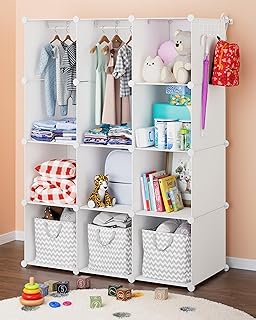
CUBEDIY Baby Closet Organizer for Nursery: Durable Baby
A dependable everyday pick — CUBEDIY Baby Closet Organizer for Nursery: Durable Baby Wardrobe for C pulls in 316 ratings at 4.5 stars. Not flashy, just solid.
16. Pick A Washable Wool Or Cotton Rug

Nurseries are messy. Spit-up, diaper leaks, and spilled bottles happen daily. I ruined a beautiful, expensive viscose rug in my first nursery because you can’t clean viscose with water—it turns into a hard, yellowed crust. Now, I only use machine-washable rugs. Lorena Canals makes incredible washable cotton rugs. I use their 4×6 foot “Tribal” rug in a soft cream color to contrast the blue walls. It costs $239. When it gets dirty, I literally fold it up, shove it into my standard washing machine on a cold cycle, and let it air dry over a railing. Skip the cheap polyester rugs you find at discount stores. They trap dust mites, feel rough under your bare feet, and off-gas chemical odors. A washable cotton rug provides a soft surface for tummy time without the maintenance nightmare.
17. Add A Woven Rattan Basket For Laundry

You need a place to throw dirty onesies that doesn’t look like a plastic college dorm hamper. A woven rattan or water hyacinth basket adds necessary organic texture to a blue room. I use the Serena & Lily La Jolla basket. It’s pricey at $168, but the tight weave holds up for years, and the lid hides the smell of soiled clothes. If you’re on a tighter budget, Target sells a great braided water hyacinth basket with a lid for $35. The warm brown tones of the rattan complement the cool blue walls perfectly. I line the inside with a washable cotton canvas bag ($12 on Amazon). On laundry day, I just pull the canvas bag out and carry it to the washing machine, leaving the heavy rattan basket in the nursery. It keeps the room looking organized and styled.
18. Hang Floating Bookshelves For A Reading Nook

Standard bookcases take up too much floor space and pose a tipping hazard if they aren’t bolted to the studs. I prefer installing floating acrylic or wooden ledges to create a forward-facing library. I use the IKEA FLISAT wall storage ledges. They cost $19.99 each and measure 27.5 inches long. I mount three of them vertically on the wall next to the glider, spacing them 14 inches apart. Forward-facing shelves allow the baby to see the colorful covers of the books, which acts as dynamic wall art against the pale blue paint. I use heavy-duty drywall anchors that hold up to 50 pounds to ensure the shelves won’t rip out of the wall if a toddler yanks on them. It keeps books organized, accessible, and off the floor.
19. Use Velvet Curtains For Sound Dampening

If you live on a busy street or have loud dogs, you need to manage the acoustics in the nursery. Hardwood floors and flat drywall bounce sound waves around, making the room echo. I fix this by hanging heavy velvet curtains. I buy the Signature Velvet blackout panels from Half Price Drapes. They cost $79 per panel. I buy the 96-inch length and mount the rod close to the ceiling to make the room feel taller. The thick velvet material absorbs high-frequency sounds, muffling street traffic and barking dogs. The heavy drape of the fabric adds a luxurious, tactile element to the room. I stick to a soft ivory or warm cream velvet to contrast the blue walls. The combination of the heavy fabric and the blackout lining creates a quiet, dark cocoon for daytime naps.
20. Finish Your Baby Blue Nursery Boy Space With A Crisp White Ceiling

Don’t ignore the ceiling. When designing a baby blue nursery boy room, you might be tempted to paint the ceiling the same color as the walls to create a “jewel box” effect. I strongly advise against this in standard 8-foot ceiling rooms. It visually lowers the ceiling and makes the space feel cramped. I use Sherwin-Williams Extra White (SW 7006) in a flat finish for the ceiling. It costs about $65 a gallon. The stark white ceiling reflects light from the windows down into the room, making the blue walls look brighter and cleaner. If you want to add visual interest for the baby, who spends most of their time looking up, install a lightweight, geometric wooden mobile above the crib instead of painting the ceiling. It keeps the room feeling expansive and airy.
Designing a nursery doesn’t have to be overwhelming if you stick to a methodical plan. Focus on non-toxic materials, practical storage, and washable textures. I’ve learned that spending a little more on a GREENGUARD certified crib and a quality mattress pays off in peace of mind and durability. If you found these specific measurements and product recommendations helpful, pin this article to your nursery inspiration board so you have the exact paint codes and dimensions ready when you head to the store.
Frequently Asked Questions
What is the best paint color for a baby boy nursery?
Soft, muted blues with a Light Reflectance Value (LRV) between 60 and 75 are ideal. Benjamin Moore’s Misty Blue is a great choice. Always prioritize zero-VOC and GreenGuard Gold certified paints to ensure safe indoor air quality.
How do I make a baby blue nursery boy room feel warm?
Balance the cool blue walls with natural wood furniture, like pine or oak cribs. Layer organic textures using chunky knit cotton blankets, washable wool rugs, and woven rattan baskets to add physical and visual warmth.
Are blackout curtains necessary for a nursery?
Yes, true blackout curtains are essential for establishing a baby’s circadian rhythm. They block 100% of exterior light and help muffle street noise, ensuring longer, uninterrupted daytime naps and preventing early morning wake-ups.
What is the safest crib material for a nursery?
Look for solid wood cribs that are GREENGUARD Gold Certified. This certification ensures the crib has been rigorously tested for over 10,000 chemical emissions and VOCs, preventing harmful off-gassing in your baby’s sleeping environment.
