What’s Inside
- Prioritize Non-Toxic, Zero-VOC Paint
- Embrace Biophilic Design with Earthy Tones
- Hang Nursery Wall Decor Ideas at the Correct Height
- Size Art Proportionally to Furniture
- Create an Engaging yet Calming Gallery Wall
- Utilize Removable Wall Decals for Flexibility
- Install a Statement Wallpaper Accent Wall
- Incorporate Personalized Wooden Wall Art
- Avoid Overstimulation with Muted Tones
- Layer Lighting for Functionality and Mood
- Anchor All Heavy Nursery Wall Decor Ideas
- Consider a Montessori-Inspired Low Art Approach
- Integrate Curated Vintage Pieces
- Display Your Older Child’s Artwork
- Choose a Developmentally Appropriate Mobile
- Add Functional Floating Shelves for Books
- Introduce Soft Textures with Fabric Pennants
- Use Mirrors to Bounce Natural Light
- Display Sentimental Clothing as Art
I spent three weeks trying to hang a heavy wooden gallery wall in my first client’s nursery back in 2018. I watched a $45 frame crash onto the changing table because I didn’t use the right drywall anchors. Nobody was hurt, but the sound of shattering glass on hardwood still haunts me. When you’re looking for nursery wall decor ideas, it’s easy to get distracted by cute pastel prints and completely ignore safety, scale, and air quality. I’ve designed dozens of nurseries since that disaster. Most people buy tiny art, hang it way too high, and use cheap paint that off-gasses chemicals for months. I’m going to walk you through exactly how I fix these rooms now. We’ll skip the generic fluffy advice. Here are the specific measurements, brands, and layouts that actually work when you’re staring at a blank wall at 2 AM.
1. Prioritize Non-Toxic, Zero-VOC Paint

Before you even think about hanging art, you need to address the walls themselves. I used standard interior paint on a nursery project early in my career, and the room smelled like a chemical factory for a solid month. The sharp, headache-inducing odor of volatile organic compounds isn’t something a newborn should breathe. I switch all my clients to zero-VOC paints like ECOS Paints’ Lullaby collection ($79 per gallon) or Benjamin Moore AURA ($98 per gallon). These formulas are independently certified for indoor air quality, which means they don’t off-gas harmful chemicals as they dry. If you’re on a stricter budget, Behr Pro i300 is a highly reliable zero-VOC option you can grab at Home Depot for about $25 a gallon. The application is slightly thicker than standard paint, so you’ll need a high-quality 3/8-inch nap roller to get a smooth finish. It takes two coats to fully cover dark colors, but the lack of toxic fumes makes the extra rolling effort worth it. Trust me on this.
2. Embrace Biophilic Design with Earthy Tones

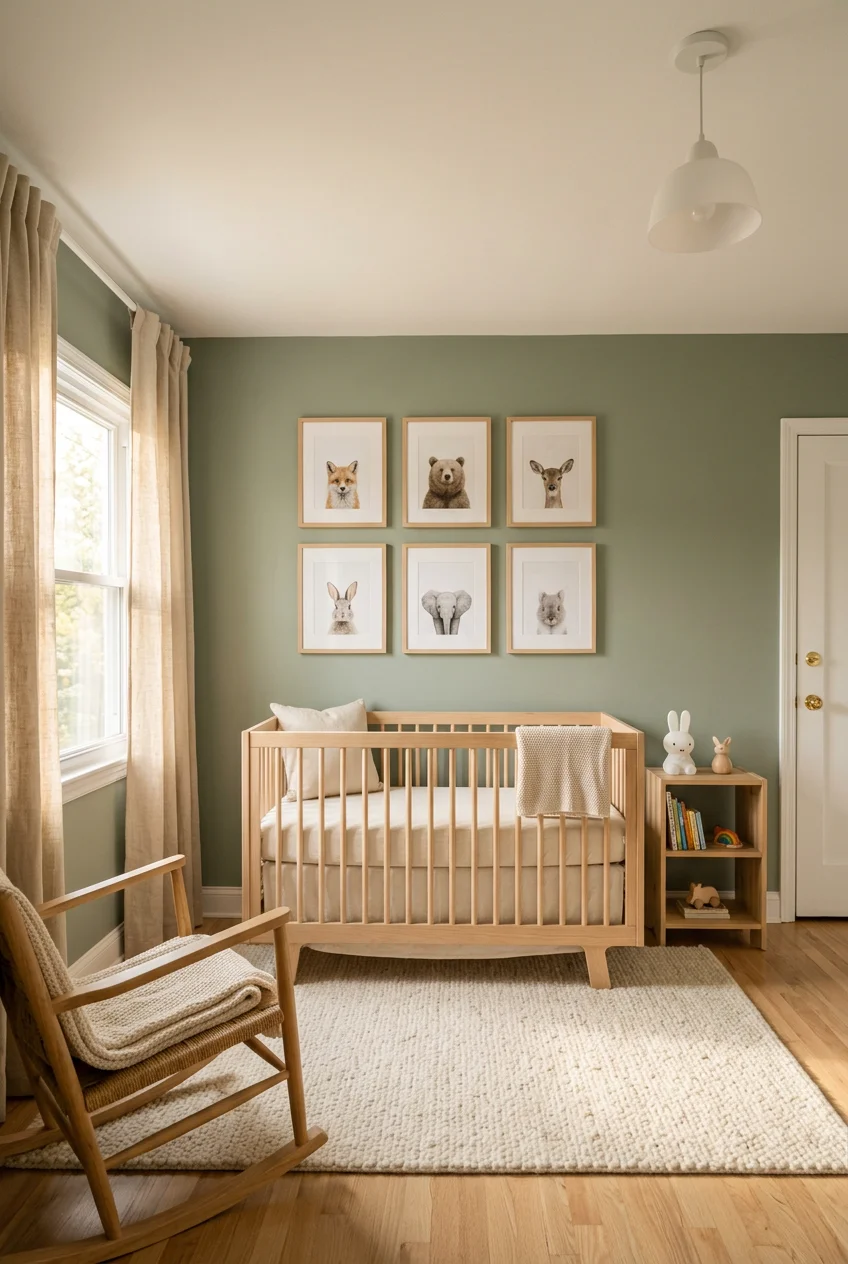
Move beyond traditional stark white or baby pink by incorporating nature-inspired elements. I lean heavily into a calming palette of sage green, warm whites, and terracotta. Adding natural textures breaks up the flat drywall look. A macrame wall hanging from a brand like The Citizenry ($135 for a 24×36 inch piece) adds immediate warmth. The rough woven cotton against a smooth painted wall provides distinct visual contrast. I tried using cheap synthetic yarn hangings from a craft store once, and they just collected static dust and looked limp. You want heavy, natural fibers. If The Citizenry is out of budget, I’ve found surprisingly sturdy woven seagrass wall baskets at Target for $25 each. Grouping three of these 12-inch baskets above a reading chair brings in that earthy, biophilic design trend without requiring a massive budget. Just hang them with standard 2-inch finishing nails so they sit flush against the wall.
3. Hang Nursery Wall Decor Ideas at the Correct Height

A common mistake I see constantly is hanging art way too high. You aren’t decorating a museum gallery for six-foot-tall adults. When plotting out nursery wall decor ideas, the bottom edge of your frame should sit exactly 6 to 10 inches above the furniture below it. If your standard dresser is 35 inches tall, your art needs to begin between 41 and 45 inches from the floor. I spent years straining my neck looking at tiny rabbit prints floating near the ceiling before I learned this proportion rule. Keeping the artwork visually grounded connects it to the crib or changing table. It makes the whole wall look like one deliberate unit. If you hang a 16×20 inch frame two feet above the crib, it looks disconnected and floating in space. Grab a tape measure and mark your 6-inch gap with a pencil before you reach for the hammer.
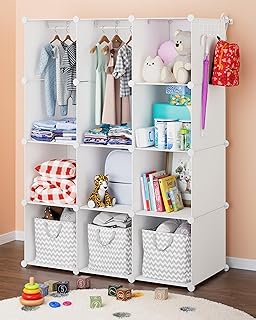
CUBEDIY Baby Closet Organizer for Nursery: Durable Baby
If you want something that just works, CUBEDIY Baby Closet Organizer for Nursery: Durable Baby Wardrobe for C is a safe bet (316 reviews, 4.5 stars).
4. Size Art Proportionally to Furniture

When placing art above a crib or dresser, the artwork needs to be 60 to 75 percent of the furniture’s width. For a standard 54-inch wide crib, you should aim for a single piece or a grouping that spans 32 to 40 inches wide. A tiny 8×10 inch frame above a massive solid wood crib looks like a postage stamp. It’s a total waste of wall space. Brands like Pottery Barn Kids and Minted offer oversized prints specifically for this reason. I recently used a 30×40 inch framed canvas from Minted ($228) over a client’s crib. The large scale instantly anchored the room. If you can’t afford one massive piece, build a 36-inch wide grid of four smaller frames. Just ensure the total footprint hits that 60 to 75 percent rule. Otherwise the furniture dominates the room and the art disappears entirely.
5. Create an Engaging yet Calming Gallery Wall


Design a gallery wall using a strict palette of one to three main frame colors to maintain cohesion. I usually stick to matte black, natural oak, and white. Space your frames exactly 2 inches apart. Anything wider looks disjointed, and anything tighter looks cluttered. Include a mix of rectangular prints and non-rectangular pieces for visual interest, like a framed print alongside a small 8-inch round mirror or a solid brass decorative letter. I source a lot of art from Society6 because you can buy 11×14 inch prints for about $24 each. I pair those with basic $12.99 black frames from Michael’s. I used to eyeball the spacing, which resulted in walls that looked like a drunken jigsaw puzzle. Now, I cut a 2-inch block of scrap wood and use it as a physical spacer between every single frame during installation. It guarantees perfect gaps every time.
6. Utilize Removable Wall Decals for Flexibility

Wall decals provide a budget-conscious way to add personality without the permanent commitment of wallpaper. Brands like The Lovely Wall or Wordy Bird Studios offer excellent star and floral options. My current preference is One Trick Pony. They sell eco-friendly, non-toxic, peelable decals made from biodegradable PhotoTex material. A pack of 40 decals costs around $45. Because they are free from vinyl, PVC, and phthalates, they don’t emit that terrible plastic shower-curtain smell when you open the tube. I bought cheap vinyl decals from a discount site once, and the adhesive was so aggressive it ripped the top layer of drywall paper off when I tried to reposition a piece. The PhotoTex fabric has a slight woven texture and peels off smoothly, even if you leave it on the wall for two years. Apply them using a hard plastic squeegee to push out tiny air bubbles. You might also like: 20 Creative Small Spaces Baby Room Organization Ideas You Haven’t Thought Of

Beautiful Wooden Baby Closet Dividers Set of 7
Beautiful Wooden Baby Closet Dividers Set of 7 – Double-Sided Organize punches above its price — 11 buyers rated it 4.5 stars. I would buy it again.
7. Install a Statement Wallpaper Accent Wall

Wallpaper is making a massive return, particularly for accent walls directly behind the crib. I look for illustrative, botanical styles that feel timeless rather than overly themed cartoon characters. Removable or peel-and-stick options from WallPops or WallShoppe ($55 for a 20.5-inch by 18-foot roll) are incredibly practical for easy updates as your child grows out of the baby phase. I once tried to pattern-match a cheap, thin paper from an unknown online seller, and it stretched diagonally while I was smoothing it out, resulting in permanent, ugly wrinkles. Quality peel-and-stick paper is thick enough to hold its shape. You’ll need an exacto knife with a brand-new blade to trim the edges at the baseboards. A dull blade will tear the wet paper and leave a jagged edge. Buy one more roll than your square footage dictates to account for pattern repeats and cutting mistakes. You might also like: 16 Baby Nursery Themes That Actually Work
8. Incorporate Personalized Wooden Wall Art


Adding a personalized element creates a strong focal point in the room. I use custom name art made from laser-cut wooden letters or high-quality vinyl. Etsy shops like Sticky Wall Vinyl offer custom name decals where you can choose exact fonts and colors. A 24-inch wide custom name usually runs about $38. If you prefer physical dimension, 1/4-inch thick birch wood letters provide a beautiful shadow effect on the wall. I appreciate the faint, smoky smell of the laser-cut wood when it arrives in the mail. I attach wooden letters using heavy-duty double-sided mounting tape, specifically the Scotch brand that holds up to 15 pounds ($6.99 at Target). Don’t use standard sticky tack. I tried that in my own son’s room and his wooden letter fell off the wall at 3 AM, scaring us half to death. Secure mounting is absolutely non-negotiable. You might also like: 20 Cozy Gender Neutral Baby Nursery Decor Ideas for Any Style
9. Avoid Overstimulation with Muted Tones

While bright color is trending in modern homes, you need to avoid overly bold neon colors and busy, high-contrast geometric patterns near the crib. Expert Mae Osz points out that we must balance visual interest with calmness. Soft colors like pale blues, gentle greens, and muted pinks are scientifically linked to lowering heart rates and promoting sleep. I painted a client’s nursery a bright, saturated lemon yellow once because she insisted on a sunny vibe. The baby wouldn’t nap for more than twenty minutes. The yellow walls reflected harsh light everywhere, acting like a giant stimulant. We eventually repainted it a muted sage green, and the sleep issues resolved within a week. If you want to use patterns on the wall, opt for subtle, tonal stripes or delicate watercolor florals that blend into the background rather than demanding constant visual attention.

Criusia Over the Door Organizer
Criusia Over the Door Organizer punches above its price — 231 buyers rated it 4.5 stars. I would buy it again.
10. Layer Lighting for Functionality and Mood


Don’t rely entirely on a single, glaring overhead light. You need layered lighting to handle different tasks. I install a dimmable LED ceiling fixture, a soft wall sconce for nighttime feeds, and thick blackout curtains. This setup allows you to adjust the brightness based on the time of day. I use Philips Hue smart dimmable bulbs ($49 for a 2-pack at Costco). You can control them via an app on your phone, meaning you don’t have to stand up and flip a switch while holding a sleeping infant. The soft amber glow at 2 AM is infinitely better than a blinding white light. I once bought cheap smart bulbs online, and they had a faint, high-pitched buzzing sound when dimmed to 10 percent. The Philips bulbs are dead silent. Mount your wall sconce about 48 inches from the floor, right next to your gliding chair.
11. Anchor All Heavy Nursery Wall Decor Ideas

This is the most critical safety step in the entire room. You must anchor all heavy pieces, including dressers, bookshelves, and large framed art, directly to the wall studs. A heavy mirror leaning casually on a dresser is a disaster waiting to happen once your baby starts pulling up to stand. For heavy wall decor, I use toggle bolts ($6.48 for a 10-pack at Home Depot) if I can’t hit a wooden stud. They hold up to 100 pounds in hollow drywall. Ensure any decor with small, detachable parts or long string accents is mounted at least 4 feet away from the crib to prevent choking or strangulation hazards. I bought a beautiful beaded garland once, only to realize the cotton string was weak enough to snap with a light tug. I immediately threw it in the trash. Never compromise structural integrity for aesthetics.
12. Consider a Montessori-Inspired Low Art Approach

If you follow a Montessori-aligned approach, you need to focus on clarity and accessibility. This means hanging simple wall art extremely low to the ground. I position the center of the frame about 18 to 24 inches from the floor. This allows a crawling baby or sitting toddler to actually see and interact with the images. I use realistic animal art or simple nature labels rather than abstract cartoons. You can buy a set of four digital downloads of realistic farm animals on Etsy for $15, print them at a local shop, and put them in shatter-proof acrylic frames. I initially resisted this trend because low frames look strange to adult eyes standing in the doorway. But watching a ten-month-old crawl over to a low-hanging picture of a horse and pat the frame completely changed my perspective on spatial design for children. It took me years to figure out.

Criusia Drawer Organizer Clothes
A dependable everyday pick — Criusia Drawer Organizer Clothes pulls in 11 ratings at 4.5 stars. Not flashy, just solid.
13. Integrate Curated Vintage Pieces

Instead of buying an entirely new, matching furniture set, incorporate one or two unique vintage finds. A room full of brand-new MDF and plastic feels sterile. A vintage piece adds character and history. I frequently hunt for thrifted brass wall mirrors or handcrafted wooden shelves at HomeGoods or local antique malls. Last Tuesday, I found a solid, heavy oak frame from the 1970s for $14 at a Goodwill. I cleaned it with a simple mixture of 1/2 cup warm water and 2 tablespoons of white vinegar, popped a new mat inside, and hung it above a modern acrylic bookshelf. The contrast between the aged wood and the clear plastic is striking. Be cautious with painted vintage items, though. Anything painted before 1978 might contain lead, so I strictly stick to stained wood, brass, or glass items when sourcing secondhand decor for a baby’s room.
14. Display Your Older Child’s Artwork

If you have older children, framing their artwork to display in the new baby’s nursery is a brilliant strategy. It adds unique, abstract pops of color and makes the older sibling feel important during a major life transition. I take my three-year-old’s finger paintings, trim them down to 8×10 inches, and place them in crisp white $9.99 frames from Target. The crinkly, dried tempera paint texture looks surprisingly sophisticated behind glass with a wide white mat. I used to just tape their drawings to the fridge, where the edges curled and ripped within days. Framing protects the art and creates a personal, evolving collection that you can swap out every few months. Just make sure you use frames with plexiglass fronts rather than real glass if you’re hanging them anywhere near the play area. The plexiglass won’t shatter into dangerous shards if an errant toy block hits the wall.
15. Choose a Developmentally Appropriate Mobile

A mobile isn’t just a decoration. It’s a developmental tool. You need to select one that engages a newborn’s developing eyesight without causing overstimulation. Newborns can only see high-contrast black and white patterns for the first few months. I use the Manhattan Toy Wimmer-Ferguson Infant Stim-Mobile ($34.99). It features interchangeable cards with stark geometric patterns designed specifically for brain development. I used a fuzzy, pastel pink bear mobile with my first client, and the baby completely ignored it because her eyes couldn’t process the low-contrast blobs. The high-contrast patterns actually hold their focus. You must ensure the mobile is securely attached to a ceiling hook and hangs at least 12 inches above the crib mattress. Once the baby can push up on their hands and knees, you have to remove it completely from the crib area to prevent them from pulling it down.

Delta Children Nursery Storage 48 Piece Set
Delta Children Nursery Storage 48 Piece Set – Easy Storage/Organizatio punches above its price — 17 buyers rated it 4.5 stars. I would buy it again.
16. Add Functional Floating Shelves for Books
Books are visually beautiful, so I use them as actual wall decor. Installing shallow, floating bookshelves allows you to display the colorful covers facing outward. I use the IKEA FLISAT wooden book displays ($19.99 each). They are 27.5 inches wide and made of solid pine. The smooth, unfinished wood brings a great natural texture to the wall. My biggest mistake with these was installing them too low near a changing table. A squirming toddler kicked the bottom shelf and sent three heavy board books flying onto the floor. Now, I mount them securely on a dedicated reading wall, starting the lowest shelf at 36 inches from the floor, well out of kicking range. I buy natural beeswax tapers at Whole Foods for $6 to place on the high floating shelves for added organic texture, keeping them safely out of reach.
17. Introduce Soft Textures with Fabric Pennants

Hard frames and wooden shelves need to be balanced with soft fabrics. I hang linen or cotton pennant banners to break up the rigid lines of the furniture. A custom linen name pennant from an Etsy shop costs about $45 and measures 10 by 14 inches. The soft, slightly wrinkled texture of natural linen adds a relaxed, cozy feel to the room. I pick up heavy-duty Command hooks in the hardware aisle at Kroger for $4.99 to hang these lightweight banners securely. I tried making my own pennant once out of cheap polyester felt, and it looked stiff and collected lint instantly. Stick to high-quality natural fabrics like linen, cotton, or wool. If you’re running errands, you can occasionally find beautiful, pre-made fabric garlands at World Market for around $20. Just drape them over the top corner of a large mirror.
18. Use Mirrors to Bounce Natural Light

Nurseries are often squeezed into the smallest bedroom in the house. A strategically placed mirror acts like an extra window, bouncing natural light around a cramped space. I use a 24-inch round brass mirror from Walmart ($49.98) and place it directly opposite the room’s main window. The reflection immediately makes a tiny 10×10 foot room feel significantly larger and brighter. The heavy brass frame adds a touch of elegance that cheap plastic mirrors lack. When I first started consulting, I hung a heavy mirror using a single standard nail. Over time, the vibration from closing the nursery door caused the nail to slip, and the mirror slid two inches down the wall. I caught it in time, but it taught me a lesson. Always use a 50-pound rated D-ring hanger and a heavy-duty wall hook when dealing with glass. Wipe the glass down weekly with 1/4 cup of distilled vinegar mixed with water.
19. Display Sentimental Clothing as Art

Instead of packing special clothing away in a dark attic bin, I turn it into wall decor. Framing a delicate coming-home outfit, tiny newborn shoes, or a vintage christening gown adds a deeply personal touch. I use an 11×14 inch deep shadow box frame ($22 at Michael’s). Pin the clothing to the linen backing using rust-proof stainless steel sewing pins. The soft, worn cotton or intricate lace looks beautiful preserved behind glass. I once tried to use regular tape to hold a pair of knitted booties inside a frame, and the adhesive permanently stained the yarn yellow within a year. Always use archival-quality, acid-free backing and stainless pins. If you want to add a sensory element to the room’s environment, keep a small natural sea sponge (you can find these at Sprouts for $6) lightly misted with lavender essential oil on a high shelf nearby. No exaggeration, the smell is heavenly.
Decorating a nursery shouldn’t involve toxic fumes, dangerous heavy frames, or art that your baby can’t even see. By focusing on correct proportions, safe mounting, and calming textures, you can build a room that actually functions well at three in the morning. I’ve learned these lessons the hard way so you don’t have to. If you’re standing in the paint aisle at Home Depot or scrolling through Etsy right now, take a breath. Start with the zero-VOC paint, measure your furniture, and stick to the 60 to 75 percent scale rule for your frames. It makes a massive difference. Save or pin this guide to your nursery planning board so you have all these exact measurements and brand names handy when it’s time to start hammering nails.
Frequently Asked Questions
How high should I hang nursery wall decor?
Hang artwork so the bottom edge sits exactly 6 to 10 inches above the crib or dresser. This keeps the pieces visually connected to the furniture. If you hang it any higher, the art looks disconnected and floating near the ceiling.
What is the best paint for a nursery?
Always use zero-VOC interior paint like ECOS Paints or Benjamin Moore AURA. These formulas don’t off-gas harsh chemicals, keeping the indoor air quality safe for your newborn’s developing lungs. It’s totally worth the slightly higher price tag.
How big should art be above a crib?
The total width of your art grouping should span 60 to 75 percent of the crib’s width. For a standard 54-inch crib, your framed piece or gallery wall needs to be 32 to 40 inches wide for proper visual balance.
Are wall decals safe for nursery walls?
Yes, but you must choose high-quality, non-toxic options. Skip cheap vinyl that peels drywall paper. Opt for biodegradable PhotoTex fabric decals from brands like One Trick Pony. They peel off smoothly and don’t emit strong plastic odors.
