What’s Inside
- Prioritize Zero-VOC Formulas for Little Lungs
- Stick to Eggshell or Satin Finishes
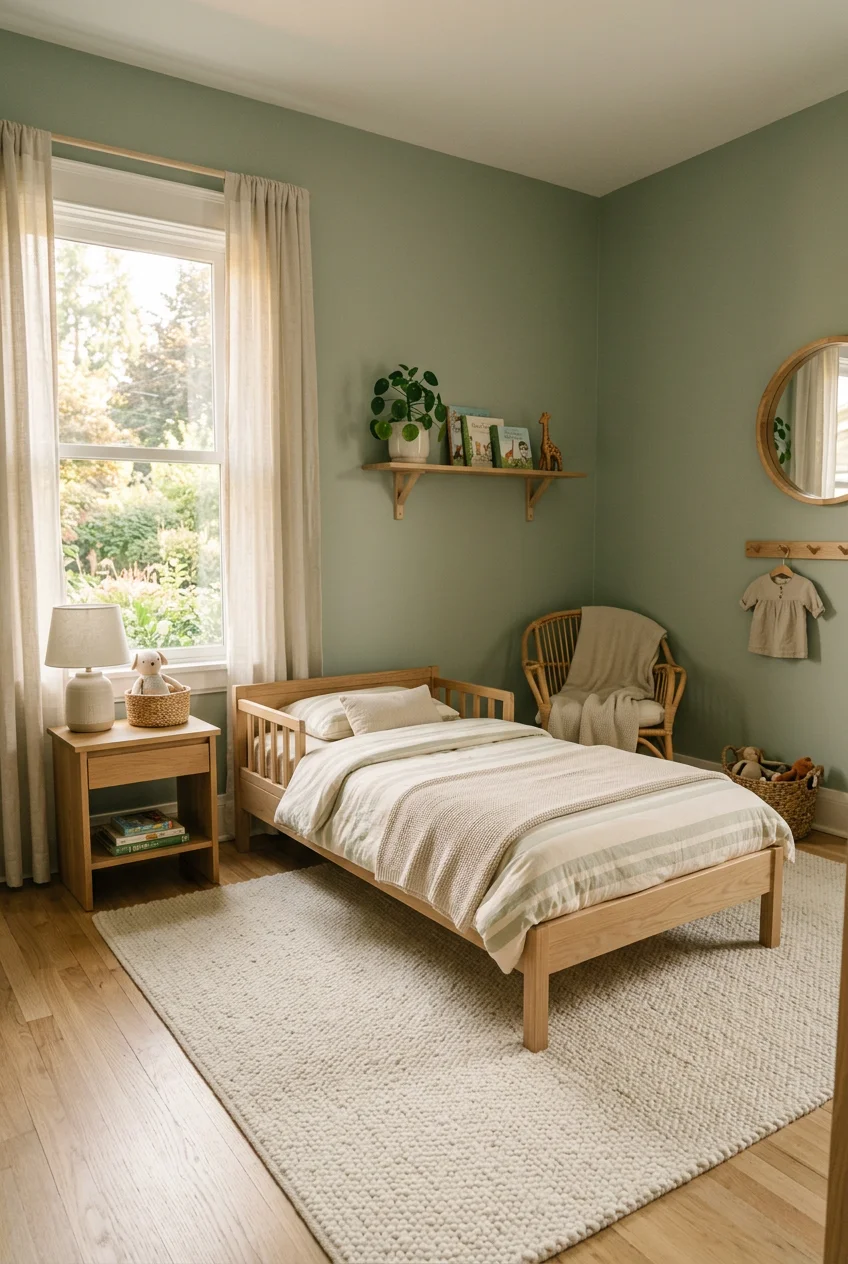
- Earthy Toddler Room Paint Ideas: The Smoky Sage Trend
- Color-Drenching the Entire Room
- Prime with a Zero-VOC Base First
- Buy Your Textiles Before the Paint
- Check the Light Reflectance Value (LRV)
- Earthy Mushroom Taupe for Warmth
- Paint 12×12 Inch Swatches First
- Limewash for Breathable Texture
- Soft Clay Blush Instead of Bubblegum Pink
- Colored Chalkboard Walls for Play
- Muted Olive for a Grounded Feel
- Paint the Ceiling a Soft Complementary Color
- Allow 8 Weeks for Proper Ventilation
- Venetian Plaster for Natural Humidity Control
- Calculate Paint Quantities Correctly
- Warm Camel Accents Are Underrated Toddler Room Paint Ideas
- Pale Blues for Sleep Psychology
- Avoid Neon and High-Contrast Reds
I spent four days scraping dried mint green paint off my hardwood floors in 2019 because I skipped the drop cloth. If you’re looking for toddler room paint ideas, learn from my ruined floors. My first daughter’s room was a disaster of peeling edges and chemical smells because I tried to rush the process on a weekend. I ended up with a headache and a room that looked like a cheap motel. You don’t need a professional painter to get a flawless finish. You just need the right materials and a little patience. I’ve painted seven nurseries since that disaster. Some were for clients, some for my own kids. I’ve learned exactly which finishes wipe clean after a crayon incident and which ones leave permanent shiny bald spots when you scrub them. Let’s walk through the specific colors, finishes, and techniques that actually work for a kid’s space.
1. Prioritize Zero-VOC Formulas for Little Lungs

When I painted my first nursery, I bought the cheapest gallon I could find. Two days later, the chemical smell was so strong I had to open windows in November. Always prioritize zero-VOC or low-VOC paints for your baby’s developing respiratory system. Look for the GREENGUARD Gold certification. Benjamin Moore Eco Spec is a zero-VOC, asthma-friendly option that usually self-primes and comes in thousands of colors. A gallon costs around $45.99. You’ll pay a slight premium of $10 to $15 per gallon for zero-VOC paints compared to standard options, but the lack of fumes makes it worth it. I also recommend ECOS Paints’ Lullaby range. It’s plant-based and specifically designed for nurseries. When I picked up my last batch after a grocery run to Sprouts, the clerk told me they sell out constantly. Learned that the hard way. Plan on buying two gallons for a standard room.
2. Stick to Eggshell or Satin Finishes

I tried a trendy matte finish in my daughter’s room for the velvety look. Three months later, she dragged a black wax crayon across the wall. When I scrubbed it, the paint rubbed off and left a shiny bald spot. For nursery walls, an eggshell or satin finish is highly recommended due to its durability. You need a surface that wipes clean easily because inevitable scuffs will happen. Flat or matte finishes are difficult to clean without altering the color. For trim and doors, a semi-gloss or satin finish provides extra resilience. I usually pick up my paint supplies and cheap plastic drop cloths at Walmart for about $3.98 a pack. Protecting your floors is just as important as choosing the right sheen. If you use eggshell, a damp cloth removes smudges without damaging the pigment. Trust me on this.
3. Earthy Toddler Room Paint Ideas: The Smoky Sage Trend

Trending nursery colors for 2026 lean heavily towards warm, grounded, and atmospheric hues. We’re moving away from sterile whites and stark grays. If you want specific toddler room paint ideas, look into smoky sage. Benjamin Moore Saybrook Sage HC-114 is a perfect example of this muted green. A gallon retails for about $54.99 depending on the finish. These earthy greens pair beautifully with natural wood furniture and woven baskets. I used this exact shade for a client last year. The room faces north, and the sage warmed up the chilly natural light perfectly. It creates a calming, cocoon-like environment that feels sophisticated enough to grow with your child. You won’t have to repaint when they transition to a big kid bed. You can easily transition the decor from woodland animals to abstract art as they age.

Criusia Over the Door Organizer
Criusia Over the Door Organizer has been one of the most consistently praised picks in this category. 231 reviewers averaged 4.5/5.
4. Color-Drenching the Entire Room

A significant trend for 2026 is painting all four walls, including the trim, doors, and wainscoting, in the exact same soft shade. Designers call this the color-drenched wall trend. This technique creates a smooth, immersive look that removes visual distraction. Stark white trim against a colored wall breaks up the visual plane. Painting everything the same color makes small bedrooms feel much larger and cohesive. When in doubt, go tone-on-tone. I tried this in a small 10×10 room using a muted terracotta. I was worried it would feel like a cave, but it actually blurred the edges of the room and made the ceiling feel higher. Start with a light neutral like a warm chalky white if you’re nervous. You can use an eggshell finish on the walls and a satin finish on the trim in the exact same custom mixed color.
5. Prime with a Zero-VOC Base First

A high-quality, zero-VOC primer is essential for a flawless finish. This is especially true when painting new drywall, covering dark colors, or dealing with bare wood. I once tried to paint pale yellow over a dark navy wall without priming first. Four coats later, the blue still bled through and the wall looked bruised. ECOS Paints offers a Lullaby Wall Primer for $52.95 a gallon. They also make a Lullaby Furniture Primer specifically designed to be zero-VOC and non-toxic. Benjamin Moore’s low-VOC primers are also excellent choices. I usually grab a gallon of primer during my weekend errands, right after a Target run for diapers. Do not skip this step. A good primer seals the wall and ensures the true color shows up.
6. Buy Your Textiles Before the Paint

There are thousands of paint colors available, but fabric choices for rugs and curtains are limited. A common mistake is choosing your paint color first and then struggling to find a rug that matches. Select your larger textile elements first. Then choose a paint color that coordinates. I learned this the hard way when I bought a custom $80 gallon of peach paint. I spent three months looking for a rug that didn’t clash. I finally gave up, bought a simple $49.99 Cloud Island rug from Target, and repainted the room to match the rug’s cream background. Bring a fabric swatch to the paint store. The staff can custom match the exact undertone of your fabric using their digital scanners. You might also like: 20 Cozy Whimsical Nursery Lighting Ideas You Haven’t Thought Of

Criusia Drawer Organizer Clothes
Criusia Drawer Organizer Clothes has been one of the most consistently praised picks in this category. 11 reviewers averaged 4.5/5.
7. Check the Light Reflectance Value (LRV)

Most people completely overlook the Light Reflectance Value when picking a paint color. The LRV indicates how much light a paint color reflects on a scale of 0 to 100. For nurseries, aim for a paint color with an LRV of 60 or lower. This minimizes glare, which can be irritating for newborn babies’ eyes when lying on their backs. Many paint brands list the LRV directly on the paper swatch. If you choose a bright white with an LRV of 90, the room bounces artificial light around like a hospital. I painted a ceiling with a high LRV white once, and the reflection gave me a headache. Stick to mid-tone colors that absorb light to keep the room soft. You might also like: 19 Baby Boy Nursery Room Ideas Worth Trying
8. Earthy Mushroom Taupe for Warmth

Instead of stark gray, try an earthy mushroom taupe for a cozy atmosphere. Sherwin Williams Poised Taupe is a fantastic option that blends brown and gray perfectly. A gallon of their SuperPaint interior acrylic costs around $64.49. This color acts as a chameleon. It looks more gray in the morning light and warmer brown in the evening. I used a similar taupe in my nephew’s room. We paired it with crisp white furniture and forest green curtains. The result was incredibly grounding. Taupe hides fingerprints much better than pure white or pastel shades. If you want a room that feels like a warm hug, skip the cool-toned grays and opt for a mushroom shade. It provides a solid neutral base. You might also like: 20 Small Baby Room Ideas That Actually Work
9. Paint 12×12 Inch Swatches First

Paint colors look dramatically different on a wall than they do on a tiny paper swatch under hardware store fluorescent lights. Lighting conditions like natural sunlight versus artificial lamps significantly alter their appearance. Paint large swatches that are at least 12×12 inches on several different walls. Observe them throughout the day before committing. I once painted a whole room based on a one-inch square. It looked like soft cream in the store but turned neon yellow in the afternoon sun. Clare Paint offers convenient stick-on color swatch samples for $3.00 each. These allow you to test colors mess-free. Check the color at 10 AM, 3 PM, and 8 PM with the lamps turned on to see how undertones shift.

Beautiful Wooden Baby Closet Dividers Set of 7
If you want something that just works, Beautiful Wooden Baby Closet Dividers Set of 7 – Double-Sided Organize is a safe bet (11 reviews, 4.5 stars).
10. Limewash for Breathable Texture

For a unique, natural, and healthy finish, explore limewash. Portola Paints offers a beautiful zero-VOC limewash that creates a soft, matte, breathable texture. It helps regulate moisture in the room naturally. A gallon costs about $59.00. Limewash isn’t applied with a standard roller. You use a large block brush to create cloud-like, sweeping strokes. It gives the walls a subtle, suede-like appearance. I applied limewash in a client’s nursery last spring. The texture added so much depth that we didn’t even need to hang much wall art. Because it’s a natural mineral finish, it doesn’t emit harmful chemicals. It requires a specific mineral primer first, so factor that into your budget. It’s an incredible alternative to standard flat paint.
11. Soft Clay Blush Instead of Bubblegum Pink

Soft pinks can be calming, but bubblegum pink quickly feels overwhelmingly bright. Opt for a soft clay blush instead. Farrow & Ball Setting Plaster is a gorgeous, muted pink with brown undertones that feels historical and warm. It costs around $130.00 a gallon, making it a splurge, but the depth of pigment is unmatched. I was carrying groceries from Whole Foods when I first saw this color in a neighbor’s house. I immediately asked for the name. It doesn’t look like a typical nursery pink. It feels like a warm sunset. Soft clay blush pairs beautifully with warm woods, brass accents, and creamy whites. It provides a cheerful but grounded energy that won’t overstimulate your baby. If Farrow & Ball isn’t in the budget, ask your local paint store to color-match the swatch using a more affordable zero-VOC base.
12. Colored Chalkboard Walls for Play

Instead of traditional black, many brands offer chalkboard paint in a variety of colors. You can find pink, green, yellow, and blue to match your nursery’s decor. Rust-Oleum makes a Tintable Chalkboard Paint that costs about $22.98 a quart. Dedicate a lower section of a wall or a toy box for drawing. Always apply a dark-tinted primer first. Then apply two coats of the chalkboard paint. The biggest mistake people make is skipping the curing process. You must cure it by rubbing the side of a piece of chalk over the entire painted surface, then erasing it. If you don’t do this, the first thing your toddler draws will be permanently burned into the paint forever. Having a designated drawing wall saves your other painted walls from rogue crayon attacks.

Babelio Memory Foam Crib Mattress Dual-Sided Baby Toddler
A dependable everyday pick — Babelio Memory Foam Crib Mattress Dual-Sided Baby Toddler Mattress Sta pulls in 597 ratings at 4.5 stars. Not flashy, just solid.
13. Muted Olive for a Grounded Feel

Muted olive is another earthy tone dominating 2026 nursery trends. It provides a grounded, natural feel that works well for gender-neutral spaces. I was hauling a giant box of diapers from Costco into my house when I noticed how beautiful the olive trees looked against the gray sky. That inspired me to use a muted olive in my own home. It acts as a surprisingly versatile neutral. Look for shades that have a bit of gray or brown in them to keep the green from looking too vibrant. Benjamin Moore’s Sussex Green offers that perfect muddy olive tone. It costs around $54.99 a gallon. Olive walls look especially striking when paired with natural rattan furniture and layered textured rugs.
14. Paint the Ceiling a Soft Complementary Color

Don’t limit your ceilings to plain flat white. Painting the ceiling a soft, complementary color makes the room feel more cohesive and enveloping. This works perfectly with the color-drenched trend. Consider using a lighter shade of the wall color or a soft, atmospheric neutral. When babies are lying in their cribs, they spend a lot of time staring at the ceiling. A stark white ceiling against dark walls creates a harsh contrast. I painted a nursery ceiling a very pale sky blue while the walls were a soft cream. It completely changed the feeling of the room, making it feel taller. Ask the paint counter to mix your ceiling paint at 25 percent strength of the wall color for a subtle tint.
15. Allow 8 Weeks for Proper Ventilation

A common mistake is painting the nursery too close to your due date. Even if you use zero-VOC paints, you need to allow at least 24 to 48 hours of curing time with good ventilation. For traditional paints, experts recommend finishing all painting at least 8 weeks before your due date. This ensures all fumes completely dissipate. I once painted a bookshelf with standard enamel paint just two weeks before my daughter was born. The smell lingered for a month, and I had to move it to the garage. Keep the windows open and run a box fan pointing outward to pull the air out. Don’t rely on your home’s HVAC system, as it circulates the paint smell to other bedrooms.

SNSLXH 5 Pack Stackable Closet Storage Basket
If you want something that just works, SNSLXH 5 Pack Stackable Closet Storage Basket is a safe bet (4 reviews, 4.5 stars).
16. Venetian Plaster for Natural Humidity Control

Venetian plaster is a fantastic alternative to standard paint if you want natural humidity control. Brands like Romabio or Vasari offer zero-VOC Venetian plasters that actually absorb carbon dioxide as they cure. They naturally regulate humidity, making them antibacterial and mold-resistant. A 5-gallon bucket of Vasari plaster costs around $125.00. Applying plaster is more labor-intensive than rolling on paint. You use a trowel to apply thin layers, creating a smooth, marble-like finish. I love using plaster in older homes where the drywall isn’t perfectly smooth because it hides imperfections beautifully. Since it’s made from natural limestone and marble dust, it doesn’t off-gas synthetic chemicals into your baby’s sleeping environment. It’s an investment in both aesthetics and air quality.
17. Calculate Paint Quantities Correctly

Estimating paint quantities accurately saves you money and multiple trips to the hardware store. For a standard 10×12 foot nursery, plan on buying approximately 2 to 3 gallons of paint to cover the walls with two solid coats. Benjamin Moore Eco Spec typically covers 400 to 450 square feet per gallon. ECOS Paints boast coverage up to 560 square feet per gallon. Always check the specific product’s coverage rate. I miscalculated once and ran out of paint with a three-foot section of wall left. I had to pause my project and drive to Kroger to buy snacks for my toddler before heading back to the paint store. Buy an extra quart if you’re unsure. You can always use the leftover paint for touch-ups.
18. Warm Camel Accents Are Underrated Toddler Room Paint Ideas

Warm camel is a highly underrated color for a toddler room. It provides a rich, cozy backdrop that feels very 1970s vintage in the best way possible. Behr makes several beautiful camel shades that cost about $34.98 a gallon at standard home improvement stores. Camel pairs flawlessly with navy blue, crisp white, and deep forest green. It brings a lot of warmth to rooms that don’t get much direct sunlight. I used a warm camel in a playroom recently, and it hid minor dirt and smudges incredibly well. If you don’t want to paint the entire room camel, it makes a fantastic accent color for a single focal wall behind the crib. It’s a great gender-neutral option if you want to avoid the typical grays and yellows. It gives the room a sophisticated edge while feeling inviting.
19. Pale Blues for Sleep Psychology

Use color psychology to create a calming environment for sleep. Soft, muted tones are generally best because they don’t overstimulate a baby’s developing senses. Pale blues and greens are scientifically known for their calming effects. They help reduce anxiety and lower heart rates. Sherwin Williams Upward is a beautiful, breezy pale blue that costs around $64.49 a gallon. I painted my son’s room this color, and it instantly felt like a serene retreat. Choose a blue with gray undertones rather than a bright primary blue. Bright colors keep the brain active, which is the exact opposite of what you want at bedtime. A dusty blue mimics the twilight sky and naturally signals to the body that it’s time to wind down.
20. Avoid Neon and High-Contrast Reds

Avoid overly intense or bright colors like bold red, neon green, or hot pink. These high-contrast shades can cause restlessness and overstimulation. I once visited a friend who painted her baby’s room a vibrant fire engine red. She couldn’t figure out why her infant fought naps every single day. The color was visually loud and aggressive. I was buying frozen mandarin oranges at Trader Joe’s when we talked about it. No exaggeration. I suggested she repaint just one wall a softer color to see if it helped. She eventually repainted the whole room a soft cream, and the baby’s sleep improved dramatically. If you absolutely must have bright colors, use them in small, easily changeable accents like picture frames or a small throw pillow. Keep the large surface areas of the walls soft and muted to promote a peaceful atmosphere.
Choosing the right paint is about more than just picking a pretty color from a paper swatch. It’s about creating a safe, durable, and calming environment for your little one to grow. Whether you decide to try the color-drenched trend with a smoky sage or stick to a classic mushroom taupe, always prioritize zero-VOC formulas and durable eggshell finishes. I’ve learned from my own messy mistakes that taking the time to prime properly and test swatches in different lighting saves you hours of frustration later. If you found these toddler room paint ideas helpful, please save this article and pin it to your nursery planning boards for later. Take your time, buy the right supplies, and enjoy the process of building a cozy space for your family.
Frequently Asked Questions
What is the safest paint for a toddler room?
Always look for zero-VOC or low-VOC paints that carry the GREENGUARD Gold certification. These formulas minimize harmful chemical emissions and odors. Brands like Benjamin Moore Eco Spec and ECOS Paints are fantastic, asthma-friendly options for your baby’s developing respiratory system.
Which paint finish is best for nursery walls?
An eggshell or satin finish is highly recommended for toddler rooms. These finishes offer enough durability to wipe clean from inevitable scuffs and crayon marks. Flat or matte finishes are difficult to clean and often leave shiny bald spots when scrubbed.
How long should a toddler room air out after painting?
Even if you use zero-VOC paints, you should allow at least 24 to 48 hours of curing time with good ventilation. For standard paints, experts recommend finishing all painting at least 8 weeks before your baby sleeps in the room.
What colors are best for a toddler’s sleep?
Soft, muted tones like pale blues, earthy greens, and mushroom taupes are best for promoting sleep. Avoid bright reds, neons, or high-contrast colors. These vibrant shades can overstimulate the brain and make it difficult for your toddler to wind down.
