What’s Inside
- Embrace Layered Lighting for Versatility
- Prioritize Warm Color Temperatures (2700K-3000K)
- Install Dimmable Switches on All Fixtures
- Choose Diffused Overhead Lighting
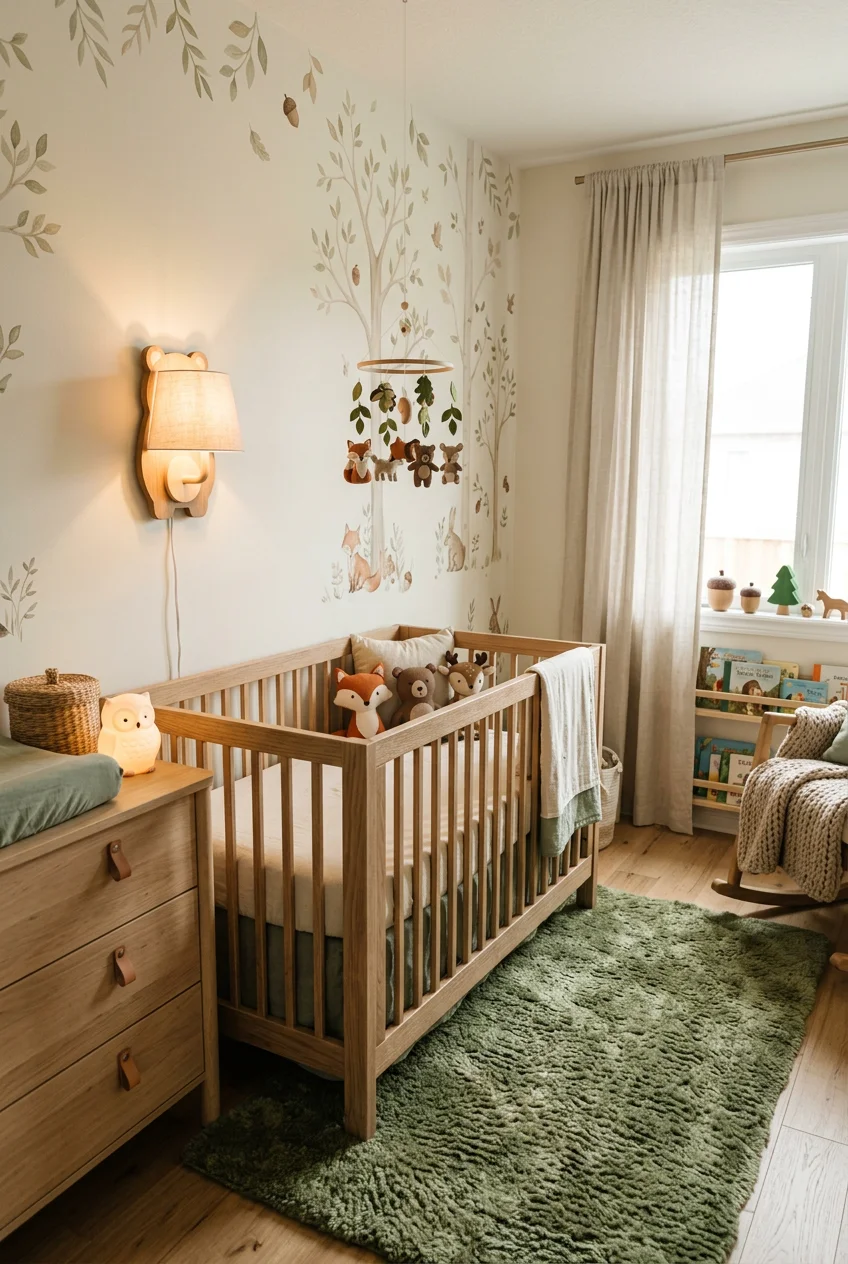
- Incorporate Woodland-Themed Table Lamps
- Utilize Smart Night Lights for Convenience
- Consider a Projector Light for Whimsical Ambiance
- Opt for LED Bulbs for Safety and Efficiency
- Strategic Task Lighting for Changing and Feeding
- Surprising Tip: Red or Yellowish Light for Nighttime Care
- Common Mistake: Unsecured Cords and Unsafe Placement
- Trending in 2026: Personalized Wooden Night Lights
- Expert Opinion: Avoid Direct Light on Baby’s Eyes
- Implement Blackout Solutions for Optimal Sleep
- Consider a Himalayan Salt Lamp (with strict safety precautions)
Most folks hang nursery pendants way too high, then wonder why the room feels like a sterile hospital ward instead of a cozy forest. I’m constantly fixing nurseries where the lighting actually fights the baby’s sleep cycle. When you’re planning woodland nursery lighting, you aren’t just picking out cute bear lamps; you’re building a sleep environment. Harsh overhead bulbs will jolt a baby awake faster than dropping a heavy book on hardwood. I’ve seen too many nice rooms ruined by cold, bluish light that makes green and brown paint look muddy. We need to focus on warmth, layers, and total control. Let’s get one thing straight: looks matter, but sleep is the boss. Trust me. You might also like: 15 Tiny Nursery Ideas That Actually Work
If you only try one idea here, make it #3. A $30 dimmer switch does more for a baby’s circadian rhythm than a high-end chandelier ever will. You might also like: 20 Toddler Boys Room You Need to See
Skip this if: You’re aiming for a hyper-modern, stark white nursery that relies on clinical, bright daylight bulbs. These concepts are all about warm, layered, and textured lighting meant to mimic a natural, shadowy forest.
1. Embrace Layered Lighting for Versatility

Relying on one overhead light is a rookie mistake. It’s either blindingly bright or pitch black, leaving you fumbling with a diaper. Instead, smart woodland lighting is all about layers. You want to mix ambient, task, and accent fixtures. Think of a forest canopy—light filters through at different levels. You want a soft glow near the floor, focused light by the chair, and a gentle wash across the ceiling. A smart starting point is a flush mount from Kichler ($80 to $150 at Lowe’s) for your ambient layer. You can’t just slap a 100-watt bulb in the center and call it done. The textures of your woodland decor—the woven baskets, the faux fur rugs—need directional light from a 6-foot floor lamp to create calming shadows. Learned that the hard way.
Best for: Starting from scratch.
The catch: Layering needs multiple wall outlets, which older homes often lack.
2. Prioritize Warm Color Temperatures (2700K-3000K)

Stop buying “daylight” bulbs for bedrooms. They emit a harsh, blue tint that makes a nursery look like a convenience store at 2 AM. For a woodland theme, you want the golden hour. Stick to LED bulbs in the 2700K to 3000K range. This produces a warm, yellowish light that’s much easier on a tired infant. It supports melatonin production, signaling that it’s time to sleep. Think of a campfire’s amber glow. When you’re at Home Depot, look for Philips LED Warm Glow bulbs (usually under $15 for a multi-pack). They make sage green murals and oak furniture look rich. A 40-watt equivalent is plenty for a 10×10 foot room.
The catch: Warm lighting can make cool-toned grays look a bit yellow at night.
3. Install Dimmable Switches on All Fixtures

This is a non-negotiable tip. If you skip everything else, don’t skip this. Dimmers let you adjust brightness, which is crucial for 3 AM feedings when you can’t wake the baby. A sudden blast of light resets their internal clock instantly. It’s also a great way to signal that wind-down time has started. The mechanical slide of a Lutron Diva dimmer ($30-$40 at hardware stores) turning down the light becomes a physical cue for sleep. You won’t regret having that control when you’re trying to sneak out without stepping on a squeaky floorboard. Standard switches are just too aggressive.
Best for: Anxious parents who want control over the sleep environment.
The catch: Older homes with aluminum wiring might need an electrician, which adds to the cost.

Beautiful Wooden Baby Closet Dividers Set of 7
If you want something that just works, Beautiful Wooden Baby Closet Dividers Set of 7 – Double-Sided Organize is a safe bet (11 reviews, 4.5 stars).
4. Choose Diffused Overhead Lighting

Exposed bulbs are a bad idea for a space where someone spends half their time lying flat on their back. Interior expert Rachel Zepernick suggests ceiling fixtures with thick shades or diffusers to avoid harsh glare. A diffuser spreads light evenly, softening shadows and protecting sensitive eyes. I’d avoid exposed bulbs entirely. For a woodland theme, look for fixtures wrapped in rattan, linen, or frosted glass. West Elm Kids offers beautiful, 24-inch linen drum pendants ($150-$250) with an acrylic bottom diffuser. This hides the bulb while casting a warm glow that feels like sunlight filtering through leaves. It works.
The catch: Fabric diffusers and rattan shades collect dust and need frequent vacuuming.
5. Incorporate Woodland-Themed Table Lamps

Table lamps are where people usually inject the theme. Pick lamps with heavy, stable bases and fabric shades that soften the output. Brands like Lambs & Ivy offer options like their Woodland Forest Gray Bears lamp ($62.99-$69.99 at Target). You want a base that feels solid—like a 3-pound resin block—so a flailing toddler arm won’t knock it over. The texture of a linen shade paired with an animal base adds a nice tactile feel. Keep this lamp at least 3 feet from the crib so the 60-inch cord stays out of reach.
Best for: Adding a theme without expensive wallpaper.
The catch: The cheap bulbs that come in the box are usually terrible and need replacing with warmer LEDs.
6. Utilize Smart Night Lights for Convenience

Trending for 2026, smart night lights offer app-based control that plug-ins lack. The Hatch Rest 2nd Gen ($59.99-$89.99) is a night light, sound machine, and clock in one 4-inch footprint. The Amazon Echo Glow is another solid option with voice control. The beauty here is adjusting brightness from the hallway using your phone, avoiding that floorboard creak when you check on the baby. The faint, warm pink glow combined with white noise helps mask loud household sounds.
Best for: Tech-savvy parents who want to program schedules from their phones.
The catch: These rely on Wi-Fi; if the internet goes down, you’re stuck with the buttons.

Criusia Over the Door Organizer
A dependable everyday pick — Criusia Over the Door Organizer pulls in 247 ratings at 4.5 stars. Not flashy, just solid.
7. Consider a Projector Light for Whimsical Ambiance

A woodland projector can cast stars or branches onto the ceiling, adding a magical touch to the nighttime routine. Brands like A Little Lovely Company offer themes like their Forest Friends projector (around $25). Casting branch shadows gives a restless baby something calming to focus on. However, ensure the projector has an auto-off timer (15-30 minutes). Leaving a moving image on the ceiling all night leads to overstimulation.
The catch: The small motor can develop a rhythmic clicking sound over time.
8. Opt for LED Bulbs for Safety and Efficiency

Incandescent bulbs have no place in a nursery. Safety experts recommend LEDs because they stay cool to the touch, which eliminates burn risks when toddlers start reaching for lamps. They use 75% less electricity and last way longer. Look for GE Relax LEDs (under $10 for a two-pack). A standard 9-watt LED provides 800 lumens without the heat sink of older models. You get the warm glow without the fire hazard on the dresser.
The catch: Some cheap LED bulbs have a subtle flicker that can cause headaches.
9. Strategic Task Lighting for Changing and Feeding

You need localized light near the changing table and nursing chair. Relying on the main light for a 2 AM blowout is a mistake. A dimmable task lamp provides visibility without hitting the baby’s face with a beam. A heavy-based, adjustable metal lamp from Pottery Barn Kids ($75-$130) lets you angle the shade exactly where you need it. The physical action of clicking a base button on an 18-inch lamp is easier when you’re holding a squirming infant. Keep the cord tucked behind the dresser.
Best for: Functional zones in larger nurseries.
The catch: The base takes up valuable real estate on a changing table.

Night Lights, White Noise Machine
Night Lights is sturdier in person than the photos suggest — over 246 buyers gave it 4.5 stars.
10. Surprising Tip: Red or Yellowish Light for Nighttime Care

Here’s a tip backed by sleep science: for 2 AM changes, use a light with a red or deep amber bulb. Architect Thais notes that these spectrums aren’t as disruptive to sleep cycles. Unlike blue light, a 1600K amber hue won’t halt melatonin production. A tiny 2-ounce clip-on Hooga Amber Book Light (under $20) attached to the changing tray gives enough light to get the job done. The deep orange glow mimics a campfire, fitting the woodland theme while protecting everyone’s sleep.
The catch: Amber light makes it hard to distinguish between a wet and dirty diaper.
11. Common Mistake: Unsecured Cords and Unsafe Placement

A beautiful lamp is useless if it’s a strangulation hazard. A dangerous error is leaving lamp cords dangling or placing unstable fixtures within reach. You must secure every wire. Use cord shorteners or hide them behind furniture. Command Cord Clips (under $10) are perfect for routing wires down the back legs of a table. The 1/2 inch clips hold the wire flush. Ensure all lamps sit at least 40 inches off the floor and away from the crib to prevent tipping. No exaggeration.
Best for: Renters who need to manage cables without drilling holes.
The catch: The strong adhesive on clips can peel paint off plaster walls.
12. Trending in 2026: Personalized Wooden Night Lights

Aligning with the 2026 trend toward natural materials, a custom wooden night light adds a personalized woodland touch. Instead of plastic, look for laser-cut wood designs featuring pine trees or bears. Brands like Brighter Made offer personalized night lights ($34.95-$55.90 on Etsy). The light glows warmly from behind the plywood, highlighting the grain and casting forest shadows. The faint smell of burnt wood is a nice sensory detail. It acts as both lighting and art.
Best for: A unique baby shower gift.
The catch: Custom orders can take 3-4 weeks to ship.

Criusia Drawer Organizer Clothes
Criusia Drawer Organizer Clothes is sturdier in person than the photos suggest — over 11 buyers gave it 4.5 stars.
13. Expert Opinion: Avoid Direct Light on Baby’s Eyes

Infant eyes are sensitive to glare. Ensure no lighting, especially bare bulbs, points straight into the crib. When a baby is lying on their back, a bare bulb feels like staring at the sun. Instead of a chandelier, opt for a flush mount with a frosted bottom. Crate & Kids offers 12-inch frosted glass domes ($100-$200) that sit tight against the ceiling and diffuse light laterally. This creates a soft bounce that won’t strain tiny eyes during a wake-up.
The catch: Flush mounts with heavy glass diffusers are annoying to open, making bulb changes a two-person chore.
14. Implement Blackout Solutions for Optimal Sleep

While technically a window treatment, blackout curtains are the most important lighting decision you’ll make. Total darkness is vital for nap rhythms. You need to block the afternoon sun. Look for heavy velvet or thick woven panels like Sun Zero curtains (under $30 a panel). Hanging 84-inch velvet panels on a sturdy rod blocks 99% of light, muffles street noise, and insulates the window, enhancing that cozy, cave-like feel.
Best for: Bright, south-facing nurseries.
The catch: Blackout curtains are heavy and require solid wall anchors.
15. Consider a Himalayan Salt Lamp (with strict safety precautions)

A salt lamp provides a gorgeous, uneven, amber glow that mimics a glowing rock. Many parents find the 5-7 pound chunks of pink salt soothing. Brands like Spantik ($20-$30 at HomeGoods) offer hand-carved options on wooden bases. Safety is critical. You must place it on a high, stable shelf out of reach of children and pets. Ingestion of salt or the rock tipping over onto a toddler presents a physical danger that isn’t worth the look.
The catch: Salt lamps “sweat” in humid rooms, pooling salty water that will ruin expensive wood furniture.
How we chose these ideas: We prioritized renter-friendliness, safety for toddlers, and sleep science. Cost and visual impact were weighed against the daily needs of tired parents.
Wrapping up your woodland nursery lighting doesn’t have to be stressful. Stick to warm bulbs, put everything on a dimmer, and keep those cords out of reach. Save this list and pin your favorites before you start drilling holes.

TeckyGem Baby Sound Machine & Night Light for Nursery |
TeckyGem Baby Sound Machine & Night Light for Nursery | 3-In-1 White N has been one of the most consistently praised picks in this category. 58 reviewers averaged 4.5/5.
Frequently Asked Questions
What is the best color temperature for a woodland nursery?
Always stick to warm white LED bulbs between 2700K and 3000K. This temperature mimics a natural sunset, highlighting earthy green and brown forest tones while supporting the baby’s natural melatonin production for better sleep.
How many light sources does a nursery need?
A well-designed nursery requires at least three distinct light sources. You need a diffused overhead ambient light, a focused task lamp near the changing table, and a dimmable nightlight or low-wattage accent lamp for late-night feedings.
Are projector lights safe for a baby’s sleep?
Projector lights casting forest or star scenes are safe if used correctly. However, they must include an auto-off timer set for 15 to 30 minutes. Leaving moving lights on all night causes severe overstimulation and disrupts deep sleep cycles.
How can I hide lamp cords in a nursery safely?
Never leave cords dangling. Use heavy-duty plastic cord clips to route wires tightly down the back legs of furniture. Keep all table lamps at least 40 inches from the floor, ensuring the cords remain completely out of a toddler’s reach.
