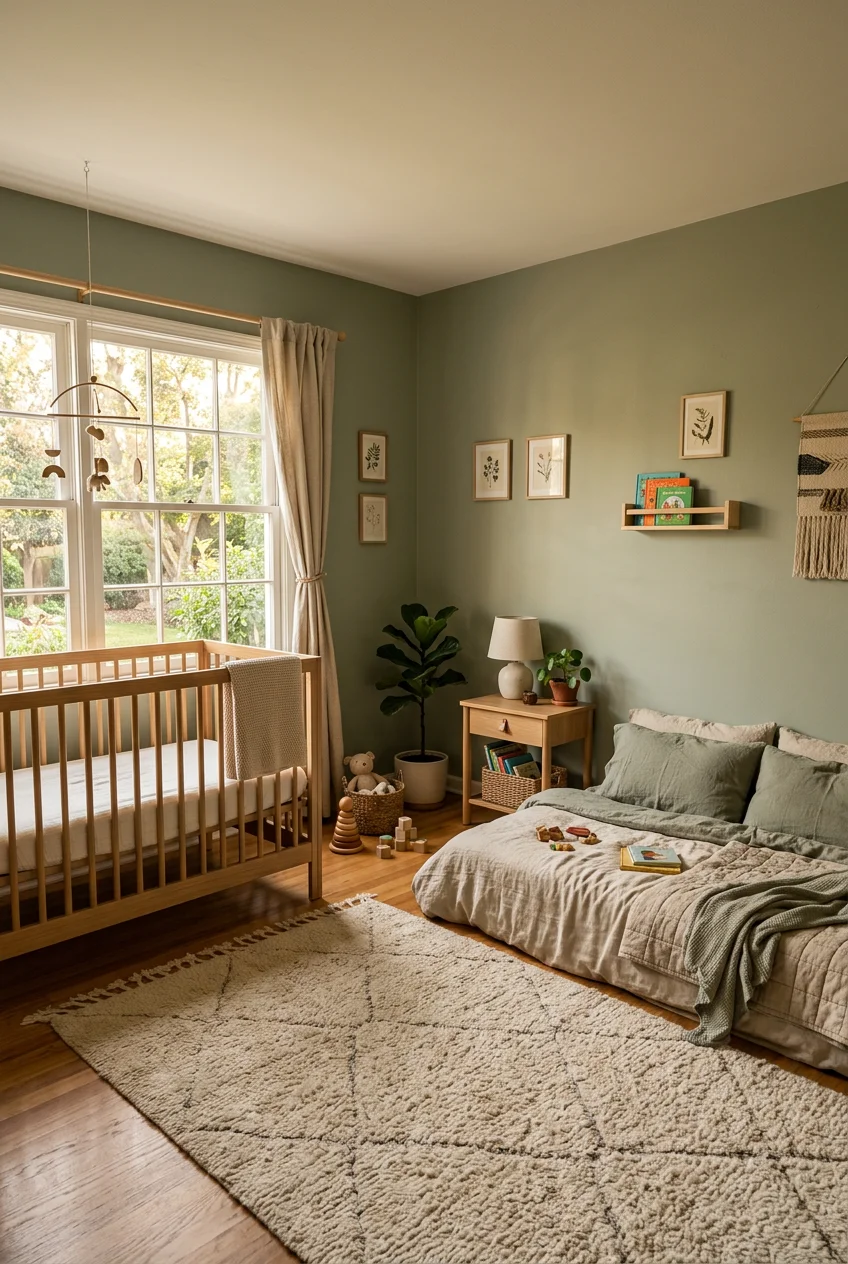
What’s Inside
- Anchor the Crib in the Safest Corner of the Toddler Baby Shared Room
- Install a Physical Sound and Visual Barrier
- Use Independent Light Sources for Each Zone
- Lock Down the Diaper Station Completely
- Create a Toddler-Only Safe Play Zone
- Standardize the White Noise Strategy
- Color-Code the Storage Bins Rigidly
- Mount Everything to the Wall Studs
- Skip the Shared Dresser Completely
- Optimize the Closet for Two Different Sizes
- Introduce a Decoy Toy Basket
- Use Rugs for Visual Boundaries
- Establish a Strict No Small Pieces Rule
- Invest in Blackout Curtains That Actually Work
- Create a Dedicated Nursing Corner in the Toddler Baby Shared Room
- Set Up a Morning Wake Box
- Use Vertical Space for Baby Gear
- Implement a Visual Timer System
- Maintain Realistic Expectations for a Toddler Baby Shared Room
Last November, I woke up at 3 AM to the sound of a heavy wooden block hitting the floor. My three-year-old was trying to “feed” his four-month-old sister through the crib slats. That was the moment I realized my first attempt at this setup was a total failure. Setting up a shared room requires actual defensive architecture, not just matching crib sheets and cute art. I spent six months rearranging heavy furniture, measuring clearances to the inch, and testing sound machines to figure out what works. I did this wrong for months before it clicked. No exaggeration. Here is exactly how I fix these spaces now, focusing on physical boundaries, acoustic separation, and strict routines.
1. Anchor the Crib in the Safest Corner of the Toddler Baby Shared Room

I always tell clients to put the baby’s bed in the furthest corner from the door. The AAP recommends keeping babies in your room until they’re six months old. When you finally transition them, you need a physical buffer. I learned this the hard way when my toddler started throwing Kroger fruit snacks ($3.49) into the crib from his bed. You need at least 36 inches of clearance between the two beds. This stops the older child from reaching through the slats. I use the Delta Children Emery 4-in-1 Crib ($199.99). It has solid end panels on two sides. I angle the solid side toward the toddler’s bed. The wood panels stop toys from rolling through. If you put the crib near the center, it becomes a target. Keep it anchored in a corner.
2. Install a Physical Sound and Visual Barrier

You need a physical barrier between the two sleep zones. An open layout invites chaos. I use the IKEA Kallax 4×4 shelving unit ($149.99). I turn it perpendicular to the wall to split the room. You must anchor this to the wall studs. I made the mistake of using standard drywall anchors once. The shelf pulled away by two inches when my toddler leaned on it. I fill the bottom rows with heavy wooden toys to lower the center of gravity. I leave the top row open so the air circulates. This division stops the toddler from wandering over to the crib at 6 AM. It forces them to walk around the barrier, giving me time to intervene before the baby wakes up.
3. Use Independent Light Sources for Each Zone

Sharing a room means sharing a lighting schedule. It’s a nightmare if you rely on the overhead light. You need independent light sources. I use the Hatch Rest+ 2nd Gen ($89.99) for the toddler and a basic Vava night light ($23.99) for the baby. The Hatch stays near the toddler bed and turns green at 6:30 AM. The Vava sits on the changing table. It has a warm, dim setting I tap on during 2 AM diaper changes. The light points down at the pad instead of flooding the room. I tried using a table lamp for three months. The light bleed woke up the toddler every time I fed the baby. You need localized, low-lumen lighting you can control with one hand. The Vava is rechargeable, so there’s no cord to trip over.

Modanais Baby Diaper Caddy Organizer Cart
Modanais Baby Diaper Caddy Organizer Cart – 3 Tier Rolling Cart with D has been one of the most consistently praised picks in this category. 635 reviewers averaged 4.5/5.
4. Lock Down the Diaper Station Completely

The diaper station requires strict security. Toddlers love to mimic parents, which leads to them applying diaper cream to the walls. I spent an hour scrubbing Boudreaux’s Butt Paste off a baseboard last Tuesday. Now I use the Munchkin Secure Grip Diaper Caddy ($21.99) on a shelf 60 inches off the floor. The changing pad needs to be wipeable. I use the Keekaroo Peanut Changer ($149.95). Fabric covers just absorb spills. You also need a locking trash can. The Ubbi Steel Odor Locking Diaper Pail ($79.99) has a childproof lock. My toddler figured out how to open the standard plastic pedal bin in two days. The steel construction absorbs odors better than plastic, which matters in a shared 10×12 space.
5. Create a Toddler-Only Safe Play Zone

Every toddler needs a space where they can play without the baby destroying their setup. I set up a gated zone in the corner. I use the Regalo 192-Inch Super Wide Adjustable Gate ($109.99) to make a small square enclosure. This is where the toddler keeps Magna-Tiles and small blocks. I line the bottom with a 4×6 foot interlocking foam mat from Costco ($29.99). The foam dampens the sound of plastic tiles hitting the floor. I tried letting them share the main floor for a week. The baby knocked over towers, leading to screaming matches. Creating a physical boundary preserves the toddler’s autonomy. It keeps small pieces away from the baby.
6. Standardize the White Noise Strategy

Don’t rely on one sound machine. A single machine in the center creates a weak hum. You need point-source noise masking. I place one Marpac Dohm Classic ($44.98) two feet from the crib and a second one near the toddler’s door. The mechanical fan masks the sharp noise of a toddler dropping toys. I previously used a digital machine playing a looping rain track. My toddler could hear the baby crying right over it because the frequency was too thin. Two mechanical machines create a cross-fade effect. I adjust the cap to set the baby’s machine to a deeper tone and the toddler’s to a higher pitch. This layered strategy isolates their sleep zones. You might also like: 15 Cozy Baby Nursery Decor Ideas for Any Style

Modanais Baby Diaper Caddy Organizer Cart
Modanais Baby Diaper Caddy Organizer Cart – 3 Tier Rolling Storage Car punches above its price — 315 buyers rated it 4.5 stars. I would buy it again.
7. Color-Code the Storage Bins Rigidly

Organizing clothes for two sizes requires a rigid system. If you mix up the laundry, you’ll end up trying to force a 2T shirt onto a six-month-old in the dark. I use strict color-coding. I buy Target Brightroom Y-Weave plastic bins ($7.00 each). I use white for the baby and gray for the toddler. I label the outside with a Brother P-Touch label maker ($34.99). I tried fabric bins initially. They collapsed after a month. The plastic bins hold their shape and slide easily. I line them up in the closet to prevent a chaotic pile. It helps babysitters find the right size pants without texting me. You might also like: 20 Cozy Gender Neutral Baby Nursery Decor Ideas for Any Style
8. Mount Everything to the Wall Studs

You must mount every piece of furniture to the wall. A toddler will climb a dresser to reach a baby toy. I use Safety 1st Furniture Wall Straps ($14.99 for an 8-pack). I secure the dresser, changing table, and bookshelf. I even secure the floor lamp using heavy-duty zip ties. I learned this after my toddler knocked over a metal lamp from Walmart. It missed the baby’s bouncy seat by three inches. I now use a stud finder ($19.98 at Home Depot) to ensure the anchors go into wood. Drywall anchors pull out under the weight of a 30-pound child. Keep the center of gravity as low as possible. You might also like: 19 Baby Boy Nursery Room Ideas Worth Trying
9. Skip the Shared Dresser Completely

Skip the shared dresser. I tried dividing a large six-drawer Hemnes dresser between my two kids. It failed. The toddler constantly pulled out the baby’s clothes and stretched the necklines trying to put them on his stuffed animals. Now I use two separate units. I use a 3-drawer Delta Children dresser ($149.99) for the toddler. I put a small rolling cart from Michaels ($29.99) inside the closet for the baby’s onesies. The cart stays hidden behind the closed door. The toddler only has access to his own clothes. This separation eliminates the daily cleanup of unfolded baby clothes scattered across the rug. It gives the toddler ownership over his furniture.

JolyWell Night Light for Kids
A dependable everyday pick — JolyWell Night Light for Kids pulls in 45 ratings at 4.5 stars. Not flashy, just solid.
10. Optimize the Closet for Two Different Sizes

The closet needs to accommodate hanging clothes of vastly different lengths. A standard rod wastes three feet of space beneath toddler shirts. I rip out the builder-grade wire and install the Rubbermaid Configurations Custom Closet Kit ($125.99). I set up two tiers of hanging rods on the left for the toddler. On the right, I install three tiers of narrow shelving for baby shoes and blankets. The adjustability is crucial because baby clothes get longer every three months. I spent a weekend measuring the drop length of a 3T coat to set the rod height perfectly. Maximizing the closet keeps bulky items out of the main room, giving them more floor space.
11. Introduce a Decoy Toy Basket

You need a decoy toy basket to keep the toddler busy while you manage the baby. Nursing or feeding takes 20 minutes of sitting still. A bored toddler will use this time to dismantle the room. I keep a specific basket of high-interest items next to the glider. I repurposed a bulk Kirkland Signature baby wipes box ($22.99). I covered it in contact paper and filled it with quiet toys. It contains a Water Wow pad ($5.99) and three Hot Wheels cars. The toddler is only allowed to touch this box when I’m feeding the baby. The novelty keeps his attention. I rotate the contents every Sunday night. Last week I swapped the cars for Trader Joe’s peanut butter pretzels.
12. Use Rugs for Visual Boundaries

Use rugs to establish visual boundaries. Toddlers understand physical markers better than verbal instructions. I use a large 5×7 Ruggable Washable Rug ($159.00) in the center as the shared play zone. I place a smaller 3×5 faux sheepskin rug ($19.99) directly in front of the baby’s crib. I taught my toddler that the fluffy rug is the quiet zone. He knows he can’t bring hard plastic toys onto the fluffy rug. This visual cue stops him from driving trucks into the crib legs while the baby sleeps. The Ruggable in the center handles the actual messes. I wash it twice a month. Don’t buy a high-pile wool rug. Stick to low-pile, machine-washable options.

Baby Sound Machine, Momcozy White Noise Machine for Baby
If you want something that just works, Baby Sound Machine is a safe bet (71 reviews, 4.5 stars).
13. Establish a Strict No Small Pieces Rule

You have to enforce a strict no small pieces rule. This means removing all Lego sets, small figures, and marbles. Even if you have a gated zone, pieces escape. I found a loose wooden bead inside the baby’s crib last month. It terrified me. Now, all small-part toys live in the living room. The bedroom only houses large, chunky toys. I stock the room with Mega Bloks ($19.99) and large Melissa & Doug wooden vehicles ($24.99). I measure everything against a standard toilet paper tube. If a toy fits through the tube, it doesn’t go in the bedroom. I do a visual sweep of the floor every night at 8 PM.
14. Invest in Blackout Curtains That Actually Work

You need curtains that block 100 percent of the light. A toddler waking up at 5:15 AM because of a sunbeam will immediately wake the baby. I used cheap room-darkening panels for a year. They left a glowing halo around the window. Now I use the Eclipse Absolute Zero Blackout Curtains from Walmart ($12.88 per panel). I mount the rod six inches above the frame and extend it four inches past the sides. This overlap eliminates the light bleed. I use 3M Command Strips ($4.99) to tape the sides of the curtain directly to the wall. The room stays dark until 7 AM. This single change fixed 90 percent of our early morning waking issues.
15. Create a Dedicated Nursing Corner in the Toddler Baby Shared Room

The nursing corner needs to face the door. You need to see who is entering while you’re pinned under a feeding infant. I place the Babyletto Kiwi Electronic Glider ($799.00) in the corner opposite the entrance. I keep a side table next to it holding a 32 oz Yeti Rambler ($38.00) and Lansinoh nipple cream ($9.94). I initially had the chair facing the window. My toddler would sneak up behind me and pull my hair while I was nursing. Facing the room allows me to track the toddler’s movements. I also keep a basket of Whole Foods 365 graham crackers ($3.99) on the table to hand to the toddler if he gets restless.

Kipcush White Noise Machine with Night Light
If you want something that just works, Kipcush White Noise Machine with Night Light – Nursery Sound Machine w is a safe bet (28 reviews, 4.5 stars).
16. Set Up a Morning Wake Box

Set up a morning wake box to buy yourself 20 extra minutes of sleep. When the toddler wakes up before the baby, you need them to stay quiet. I keep a plastic shoebox size Sterilite bin ($1.48) on the toddler’s nightstand. Inside, I put two board books, a small water bottle, and a dry snack. Usually, it’s a pouch of Sprouts organic rice rusks ($4.29). I tell the toddler he can open the box when his Hatch light turns green. He sits in his bed, eats his snack, and looks at the books. The crunching sound is quiet enough that it won’t disturb the baby. The wake box redirects his morning energy into a quiet, focused activity.
17. Use Vertical Space for Baby Gear

You have to use vertical space to keep the floor clear. Floor space is the most valuable commodity in a shared room. I mount floating shelves high on the walls to store bulk items. I use IKEA Lack wall shelves ($29.99) installed 72 inches off the ground, well above the toddler’s reach. I store extra boxes of Pampers Swaddlers ($44.99) and backup wipes up there. I also use over-the-door hanging organizers for small items. The SimpleHouseware Over Door Organizer ($13.97) holds baby socks, thermometers, and tubes of Aquaphor. Keeping these off the dresser prevents the toddler from treating them like toys. I once found my toddler trying to paint the wall with a $15 tube of diaper cream.
18. Implement a Visual Timer System

Implement a visual timer system for shared activities. Toddlers have zero concept of time. Telling them five more minutes means nothing. I use the Time Timer MOD ($29.95). It features a red disk that slowly disappears as time elapses. I use it when the toddler needs to play quietly while I put the baby down. I set the timer for 15 minutes. I tell the toddler they can talk again when the red is gone. The visual cue works incredibly well. I tried using the timer on my iPhone first. He just grabbed the phone and tried to play games. You need a dedicated, physical clock. It reduces the constant negotiating and gives a concrete boundary.
19. Maintain Realistic Expectations for a Toddler Baby Shared Room

It takes about four weeks for siblings to adapt to a shared room. The first week is usually a disaster. They’ll wake each other up. The toddler will regress. I panicked on day three and almost moved the crib into the hallway. You have to push through the adjustment period. I use a natural room spray from Sprouts ($7.99, lavender scent) as part of their bedtime routine. It creates a sensory cue that it’s time to sleep. Don’t expect perfect harmony immediately. The baby will cry, and the toddler will eventually learn to sleep through it. Stick to your physical boundaries, keep the room dark, and rely on the dual sound machines. Fix the architecture of the room, and the sleep will follow.
Frequently Asked Questions
What age is safe for a toddler baby shared room?
The AAP recommends keeping babies in the parents’ room for at least six months. For sibling sharing, experts suggest waiting until the baby is one year old so the older child can’t throw blankets or small toys into the crib.
How do I handle different sleep schedules in a shared room?
Use dual mechanical sound machines to create a cross-fade of white noise. Install blackout curtains and use localized, dim night lights for diaper changes so you don’t wake the older child.
Where should I put the crib in a shared bedroom?
Anchor the crib in the furthest corner from the door and at least 36 inches away from the toddler’s bed. This prevents the older child from reaching through the slats or throwing items directly into the crib.
How do I store clothes for two different sizes?
Skip the shared dresser. Use separate, smaller storage units or strictly color-coded plastic bins inside the closet. This prevents laundry mix-ups and stops the toddler from stretching out the baby’s clothes.
