What’s Inside
- Embrace Earthy, Gender-Neutral Palettes for Longevity
- Invest in Multifunctional, Convertible Furniture
- Opt for Compact Cribs to Reclaim Floor Space
- Maximize Vertical Storage with Floating Shelves and Wall Hooks
- Choose a Compact Glider Designed for Small Spaces
- Implement Layered Lighting with Dimmers for Optimal Ambiance
- Select Zero-VOC Paints for a Healthier Environment
- Opt for a Thoughtfully Sized Rug to Define the Space
- Create a “Top-Drawer Diaper Zone” for Efficiency
- Avoid Over-Theming and “Matchy-Matchy” Furniture Sets
- Utilize Under-Crib Storage and Closet Organization Hacks
- Incorporate Sculptural Furniture for Modern Sophistication
- Mount Clear Acrylic Bookshelves Behind the Door
- Install Inside-Mount Blackout Cellular Shades
- Utilize a Fold-Down Wall-Mounted Changing Table
- Hang a Pegboard Over the Changing Station
- Swap Table Lamps for Plug-In Wall Sconces
- Roll in a 3-Tier Metal Utility Cart
Most people shove a massive, bulky armchair into a 10×10 room and wonder why the space feels like a storage closet. When you’re dealing with limited square footage, generic design advice won’t cut it. Finding practical small nursery ideas requires looking at every single inch of the room as usable real estate, from the back of the door to the vertical space above the changing pad. If you only try one idea from this list, make it #9. Here’s why: skipping the standalone changing table for a dedicated top-drawer diaper zone reclaims at least a quarter of your floor space instantly, giving you room to actually breathe. I learned that the hard way.
Skip this list if you have a massive suburban bonus room to fill or a bottomless budget for custom built-ins. These strategies are specifically for tight square footage, strict rental agreements, and real-world floor plans where every inch actually matters. Let’s get into the specifics of making a tiny room work hard.
1. Embrace Earthy, Gender-Neutral Palettes for Longevity

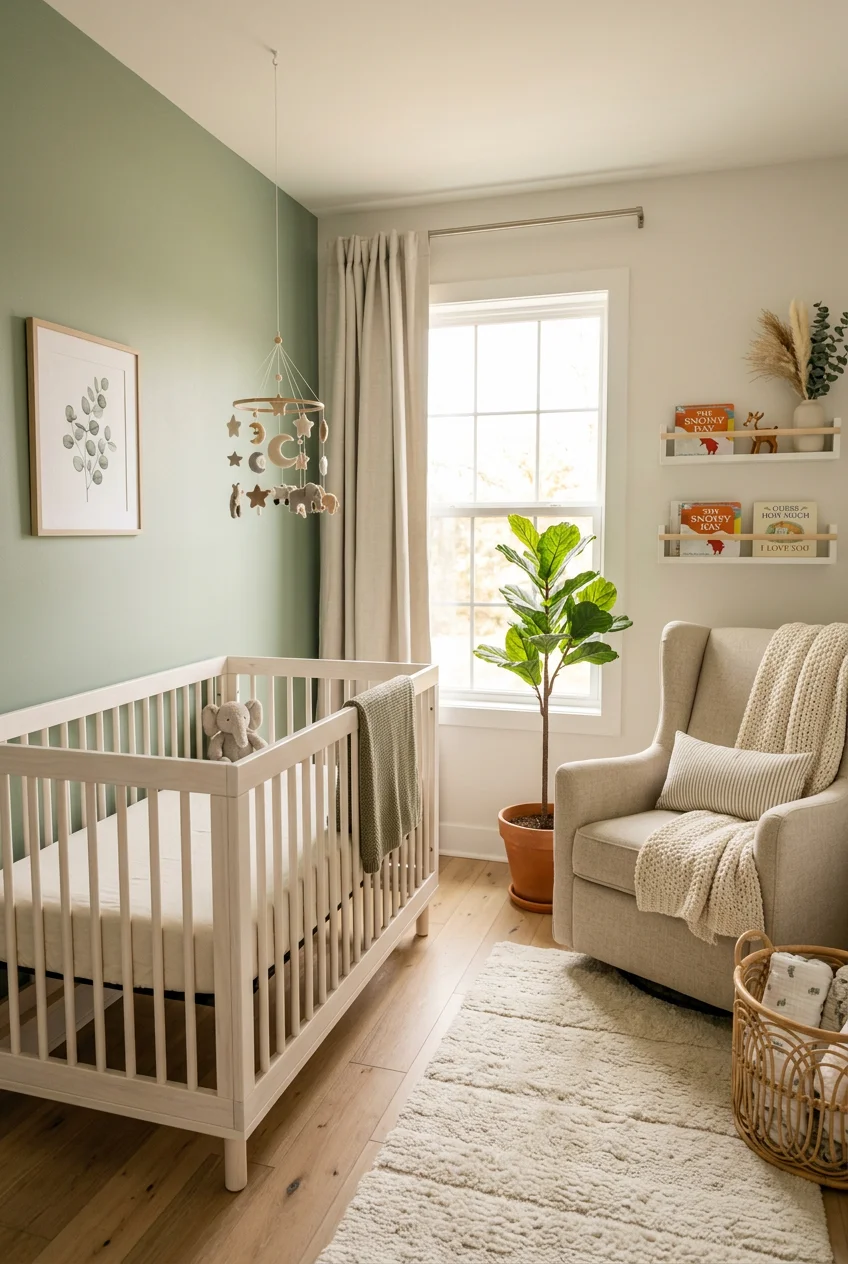
Most people default to stark baby pink or powder blue, which instantly dates the room and forces a total repaint in three years. Moving beyond traditional pastels to muted greens, soft browns, creams, and warm pastels is the smartest way to ensure the room grows with the child. These grounded palettes create a soothing environment that doesn’t feel like a preschool classroom. Paint the walls in a sage green or warm terracotta to strike a perfect balance between warmth and freshness. A standard 1-gallon can of Benjamin Moore’s Regal Select in a shade like ‘Saybrook Sage’ (typically $70-$90) covers about 400 square feet, which is plenty for a tight space. The flat finish hides drywall imperfections beautifully, while an eggshell finish on the trim adds subtle contrast. The catch: dark earthy tones can make a room feel smaller and cave-like if you lack natural light, so stick to the lighter end of the spectrum if you only have one small window. Best for: Rooms with large south-facing windows that get plenty of harsh afternoon sun, as the earthy tones absorb the glare perfectly.
2. Invest in Multifunctional, Convertible Furniture

In a tight layout, every single piece of furniture must earn its footprint. Prioritizing items that adapt to changing needs over time prevents the constant cycle of buying and selling bulky baby gear. A prime example of this efficiency is the Babyletto Yuzu 8-in-1 Convertible Crib (price range typically $400-$700). It transitions from a compact bassinet to a midi crib, a full-size crib, a toddler bed, and finally a junior bed. This approach dramatically reduces waste and means you aren’t trying to cram a separate bassinet and a massive crib into the same 100-square-foot room simultaneously. The hardware is hidden, so it maintains a clean, modern aesthetic through every stage. The catch: storing the various conversion pieces and different-sized mattresses takes up closet space you might not easily have available. You’ll need a dedicated storage bin for the spare parts. Best for: Minimalist parents who want to buy one bed that lasts from the newborn stage straight through preschool.
3. Opt for Compact Cribs to Reclaim Floor Space

Standard cribs are massive, typically measuring around 53 by 30 inches. Shoving one into a tiny room usually means sacrificing a comfortable chair or a dresser. A mini crib can significantly save space without compromising safety. The Bloom Alma Mini, for instance, measures just 39 by 24 inches, freeing up valuable floor area for a play mat or a laundry hamper. Brands like Delta Children also offer portable mini cribs (usually under $150) that fold completely flat and include heavy-duty casters for mobility. This is ideal if you need to roll the crib into the hallway or living room to vacuum. The slat spacing remains at the required 2.375 inches, ensuring total safety in a smaller package. The catch: babies grow out of mini cribs much faster than standard ones, usually maxing out the length by 18 to 24 months, forcing you to transition to a toddler bed sooner than you might prefer.

Beautiful Wooden Baby Closet Dividers Set of 7
Beautiful Wooden Baby Closet Dividers Set of 7 – Double-Sided Organize is sturdier in person than the photos suggest — over 11 buyers gave it 4.5 stars.
4. Maximize Vertical Storage with Floating Shelves and Wall Hooks

When the floor is completely occupied, the only direction left is up. Installing floating shelves above a dresser or changing table provides immediate storage for daily essentials, books, and lightweight decor. Stack natural wood shelves, like the 24-inch Pillowfort wooden shelves from Target (usually under $25 each), to keep wipes and lotions out of baby’s reach but perfectly at your fingertips. Take it a step further by mounting a row of heavy-duty wooden pegs right beneath the bottom shelf. You can hang canvas storage baskets from these hooks to hold lightweight toys, muslin swaddles, or extra pacifiers, making use of awkward empty wall space. The catch: you absolutely can’t hang these directly over the crib or the changing pad due to earthquake guidelines and general falling hazards. They must be mounted over a dresser or an empty corner. Best for: Renters who can easily patch a few drywall anchor holes before moving out.
5. Choose a Compact Glider Designed for Small Spaces

A comfortable glider is strictly necessary for late-night feedings, but a standard plush recliner will immediately overwhelm a small room. You need a chair with a slim profile, ideally measuring no more than 30 inches wide. The Babyletto Madison Swivel Glider is a highly practical choice for its sleek, compact design and smooth 360-degree rotation, fitting nicely into tight 90-degree corners. For a more budget-friendly alternative, the Delta Children Blair Slim Nursery Glider Swivel Rocker Chair runs around $250 and offers gliding, rocking, and swiveling functions in a highly compressed form factor. The upholstery is usually a tight-weave polyester that resists spit-up stains better than loose-weave linen. The catch: slim gliders rarely have a high enough back for parents over 5’9″ to comfortably rest their heads during exhaustion-fueled 3 a.m. feeding sessions. You sacrifice neck support for floor space. Trust me on this.
6. Implement Layered Lighting with Dimmers for Optimal Ambiance

Harsh overhead lighting is a common mistake that ruins the mood of a room and disrupts a baby’s circadian rhythm. A single bright bulb signals to the brain that it’s daytime, making midnight wake-ups much harder to manage. Install a main overhead light with a hardwired dimmer switch to adjust brightness from a lively play session to a soft glow for bedtime. Supplement this with a warm-glow table or floor lamp, specifically using 9-watt LED bulbs (equivalent to 60W) to avoid heat buildup, as toddlers will eventually touch them. Aim for ambient lighting levels between 100 and 300 lux, strictly using warm white light in the 2700K to 3000K range for a calming effect. Philips Hue Smart Bulbs (A19 size, usually $40-$50 for a two-pack) allow you to control the dimming from your phone. The catch: installing hardwired dimmers requires shutting off the breaker and having basic electrical knowledge, or paying an electrician for a one-hour service call.

Baby Closet Divider, Baby Wardrobe Organizer
Baby Closet Divider has been one of the most consistently praised picks in this category. 371 reviewers averaged 4.5/5.
7. Select Zero-VOC Paints for a Healthier Environment

A major error during room prep is ignoring the harsh chemicals in traditional paints. Standard wall paint off-gasses Volatile Organic Compounds (VOCs) for months after it dries, which isn’t ideal for a newborn’s developing respiratory system. Using zero-VOC paints is a non-negotiable step for a healthy indoor climate. Brands like AFM Safecoat, ECOS Paints (specifically their Lullaby range, around $60-$90 per gallon), and Benjamin Moore Eco Spec offer excellent coverage without the lingering chemical headache. It’s like buying organic produce at Whole Foods—you’re paying a slight premium for absolute peace of mind. For a unique, breathable finish, Portola Paints’ limewash or Romabio’s Venetian plaster are naturally zero-VOC and actually help regulate room humidity by allowing the walls to breathe. The catch: zero-VOC paints lack the chemical solvents that make traditional paint glide on smoothly, meaning they often require three coats instead of two for full, opaque coverage. You might also like: 16 Boy Nursery Ideas Themes for Every Budget
8. Opt for a Thoughtfully Sized Rug to Define the Space

A rug adds necessary warmth and a soft surface for tummy time, but an incorrectly sized one will make a small room feel visually fragmented and chaotic. For rooms under 8 square meters (approximately 86 square feet), a 120×180 cm (about 4×6 ft) rug placed precisely near the crib or under a reading corner is the ideal proportion. If you have a slightly larger layout, a 5×7 ft rug works for a central play area, provided you leave at least a 12-inch border of bare floor around the edges to prevent the room from looking like wall-to-wall carpeting. Avoid high-pile shag rugs with loose fibers that pose a choking hazard. Washable options like Ruggable (4×6 size, typically $120-$160) are highly practical. The catch: placing heavy furniture half-on and half-off a small rug creates an uneven surface that makes cribs wobble and dressers lean forward dangerously. You might also like: 20 Stunning Childcare Nursery Room Ideas Worth Trying This Year
9. Create a “Top-Drawer Diaper Zone” for Efficiency

A surprising but highly effective tactic for small nursery ideas is completely ditching the standalone changing table. Instead, dedicate the top drawer of a sturdy dresser to diaper changing essentials. Place a contoured changing pad directly on top of the dresser (secured with safety straps to the back). Inside the top drawer, use adjustable bamboo organizers, like the 3-inch depth dividers from The Container Store (budget to mid-range), to keep diapers, wipes, and barrier creams visible and strictly separated. This allows for rapid, one-handed access during changes while keeping your other hand firmly on the baby. You can easily store your bulk Costco wipes in the back of the drawer out of sight. The catch: you permanently lose your most accessible, convenient drawer for actual clothing storage, forcing you to bend down for onesies and pajamas. Best for: Extreme minimalist setups and tiny footprint nurseries where a separate changing table physically won’t fit. You might also like: 15 Dinosaur Nursery Baby Boy for Every Budget

Criusia Drawer Organizer Clothes
Criusia Drawer Organizer Clothes punches above its price — 11 buyers rated it 4.5 stars. The kind of pick people reorder.
10. Avoid Over-Theming and “Matchy-Matchy” Furniture Sets

Buying the matching crib, dresser, and side table from the same catalog page makes a small room feel like a sterile furniture showroom. It’s a rigid look that lacks personality. Instead, mix finishes and incorporate curated, storied pieces to add depth. Pair a crisp, modern IKEA Sniglar crib (under $150) with a vintage, warm-toned thrifted wooden dresser. Choose one or two unique items, like a handcrafted brass mirror or an antique ceramic lamp, to add character without adding physical clutter. This eclectic approach allows for much more flexibility and creates a timeless aesthetic that won’t feel juvenile when the baby turns five. The catch: successfully mixing wood tones and furniture eras requires a careful eye for scale; if the proportions are off, the room just looks like a messy garage sale pile rather than a curated space.
11. Utilize Under-Crib Storage and Closet Organization Hacks

Don’t let the 10 square feet of floor space under the crib go to waste. Use low-profile, rolling under-bed storage bins to stash extra blankets, seasonal clothes, or oversized items you don’t need daily. Inside the closet, the vertical space is usually wasted because baby clothes are so short. Add a second tension rod, like the Walmart Mainstays Tension Rod (28-48 inches, typically under $10), halfway down the wall to instantly double your hanging capacity. Use plastic closet dividers to organize the tiny garments strictly by month size. This prevents the inevitable clutter explosion and makes finding a clean 3-6 month sleeper at midnight much easier. The catch: basic tension rods won’t hold the weight of heavy winter coats or dense hanging organizers; they will eventually slip and crash down if overloaded.
12. Incorporate Sculptural Furniture for Modern Sophistication

Boxy, right-angled furniture creates harsh visual lines that chop up a small room. Using sculptural furniture with soft curves and rounded silhouettes softens the visual weight of the space. Instead of a standard rectangular crib, look for an oval design or a glider with a distinctly curved back. This adds an artistic, inviting feel to the room without demanding any extra square footage. A rounded crib, like the Crate & Kids Canyon Spindle Crib (mid-to-high range, $600-$900), instantly upgrades the room’s aesthetic and improves the flow of foot traffic since there are no sharp corners to bump your hips into in the dark. The catch: curved and oval cribs absolutely require custom-shaped mattresses, which are significantly harder to find tight-fitting sheets for compared to standard rectangular mattresses.

Criusia Over the Door Organizer
A dependable everyday pick — Criusia Over the Door Organizer pulls in 247 ratings at 4.5 stars. Not flashy, just solid.
13. Mount Clear Acrylic Bookshelves Behind the Door

The space behind the bedroom door is almost always dead space. Reclaim it by installing ultra-slim clear acrylic ledges to hold books flat against the wall. Because the shelves are transparent, they don’t add visual bulk to the room, and the colorful covers of the books act as the actual art. NIUBEE Acrylic Wall Shelves from Amazon (15-inch 4-pack, typically $20-$35) have a profile of less than 2 inches, meaning the door can still open fully without hitting them. This keeps the floor clear of bulky wooden bookcases that attract dust and take up a massive footprint. The catch: you absolutely must install a rigid, heavy-duty baseboard doorstop. If the door swings open too hard, the handle will smash directly into the acrylic plastic and shatter it. Best for: Renters who can only patch small drywall anchor holes before moving out.
14. Install Inside-Mount Blackout Cellular Shades

Floor-to-ceiling blackout curtains are beautiful, but the heavy fabric panels eat up valuable corner space and make the room feel physically smaller. For tiny nurseries, switch to inside-mount cellular blackout shades. Because they sit entirely inside the window frame, they maintain a crisp, flush line with the wall. SelectBlinds Blackout Cellular Shades (custom cut, mid-range pricing) trap air in their honeycomb structure, which also provides excellent thermal insulation against drafty windows. This keeps the room warmer in winter and cooler in summer, which is crucial for infant sleep safety. The catch: inside-mount shades will always leave a tiny, 1/4-inch halo of light bleeding around the left and right edges where the shade meets the window jamb, which might bother parents obsessed with pitch-black rooms.
15. Utilize a Fold-Down Wall-Mounted Changing Table

Commercial bathrooms have the right idea when it comes to saving space. If you literally do not have the floor space for a dresser, a fold-down wall-mounted changing table is a drastic but brilliant solution. Units like the BoDesign Wall Mounted Changing Table (typically $250-$400) fold completely flat against the wall when not in use, taking up zero floor space. They often feature small built-in shelves inside the housing to hold a few diapers and a pack of wipes. When it’s time for a change, the hydraulic arm lowers the platform safely and smoothly. The catch: these units require heavy-duty lag bolts drilled directly into wooden wall studs. You cannot use standard drywall anchors for a fold-down table, which makes installation impossible in some older apartments with plaster walls.

SNSLXH 5 Pack Stackable Closet Storage Basket
SNSLXH 5 Pack Stackable Closet Storage Basket has been one of the most consistently praised picks in this category. 41 reviewers averaged 4.5/5.
16. Hang a Pegboard Over the Changing Station

If you’re using a small dresser, the top surface will instantly become cluttered with thermometer cases, diaper cream tubes, and nail clippers. Move all of that up onto the wall by installing a pegboard directly above the changing pad. The IKEA Skadis Pegboard (30×22 inches, typically under $25) has a sleek, modern look and offers dozens of custom attachments, from tiny elastic cords to small white bins. Hang your daily essentials here, leaving space in the closet for those bulk Kroger diaper boxes. It keeps dangerous items completely out of a grabbing baby’s reach while keeping them perfectly visible for you. The catch: open storage means you have to keep the items meticulously organized and tidy. If you just throw things into the pegboard bins haphazardly, the entire wall looks chaotic and messy.
17. Swap Table Lamps for Plug-In Wall Sconces

Table lamps waste prime dresser space and are easily knocked over by a flailing toddler. Instead, use an accordion or plug-in wall sconce next to the glider or over the changing area. A fixture like the West Elm Accordion Sconce (budget to mid-range, $80-$130) allows you to pull the light exactly where you need it for a 2 a.m. diaper change, then push it flat against the wall when you’re done. Because it’s a plug-in model, you don’t need to hire an electrician to hardwire a junction box. The catch: the dangling electrical cord is a major strangulation hazard once the baby starts pulling up and reaching. You must install rigid plastic cord covers screwed into the wall to hide the wire completely from the fixture down to the outlet.
18. Roll in a 3-Tier Metal Utility Cart

When you don’t have enough fixed shelving, a mobile cart is the perfect solution for small nursery ideas. A metal 3-tier cart holds breast pump parts, burp cloths, swaddles, and late-night snacks. Stock the middle tier with 2-ounce protein bars from Trader Joe’s or trail mix from Sprouts for those exhausting night shifts. Roll it right next to the glider when you’re feeding, and push it into the closet when guests arrive. The Target Brightroom 3-Tier Metal Utility Cart (typically $30-$40) has smooth-rolling casters and a tiny footprint. It’s incredibly versatile and can be repurposed as an art supply cart when the child gets older. The catch: the hard metal wheels can easily scratch soft hardwood floors or snag on thick rugs. Best for: Multitasking parents who pump in different rooms and need a mobile station.
How we chose these ideas: The strategies above were selected based on strict renter-friendliness, low upfront cost, minimal installation effort, and maximum visual impact for rooms under 100 square feet. We prioritized solutions that reclaim vertical space and eliminate single-use furniture.
Designing a tiny room doesn’t mean sacrificing style or function. By choosing multi-use furniture, utilizing vertical space, and keeping the palette grounded, you can create a space that feels intentional rather than cramped. Pin your favorite tips from this list so you have them handy when you’re ready to start measuring and painting. Took me years to figure out.
Frequently Asked Questions
What is the best color for a small nursery?
Earthy, gender-neutral tones like sage green, warm terracotta, and soft creams work best. Light, muted colors reflect natural light, preventing the room from feeling like a dark cave while offering a calming environment.
How do you fit a changing table in a small nursery?
Skip the standalone changing table entirely. Secure a contoured changing pad to the top of a sturdy dresser and use the top drawer with bamboo organizers as your dedicated diaper zone to save floor space.
Can I use a mini crib instead of a standard crib?
Yes, mini cribs are an excellent space-saving solution. They meet the same strict safety standards as full-size cribs but take up significantly less room. Just remember your baby will outgrow it around 18 to 24 months.
What are the best small nursery ideas for storage?
Maximize vertical space by installing floating shelves and wall hooks high on the walls. Use under-crib rolling bins for seasonal clothing and add a second tension rod in the closet to double your hanging capacity.
