What’s Inside
- Embrace Low-VOC Sage Green Paint for the Base
- Anchor the Room with Natural Wood Cribs
- Ground the Floor with Washable Organic Cotton Rugs
- Layer Lighting with Smart Electronic Gliders
- Integrate Biophilic Design with Live Pothos
- Utilize Structured Neutral Plaid Wallpaper
- Prioritize Safety with Heavy-Duty Anchors
- Hide Clutter in Woven Storage Baskets
- Build a Board and Batten Accent Wall
- Maximize Natural Light with Sheer Linen Curtains
- Paint the Ceiling for an Enveloping Feel
- Integrate Montessori-Inspired Foam Play Blocks
- Streamline the Changing Station with Bulk Caddies
- Prep Furniture with Non-Toxic Cleaners
- Install Dark Green Blackout Roller Shades
- Soften the Dresser with Muslin Changing Pad Covers
- Display Books on Minimalist Floating Ledges
- Hang Subtle Nature Art Prints over Mobiles
- Set Up a Wash Station with Natural Sea Sponges
- Add Contrast with Matte Black Hardware
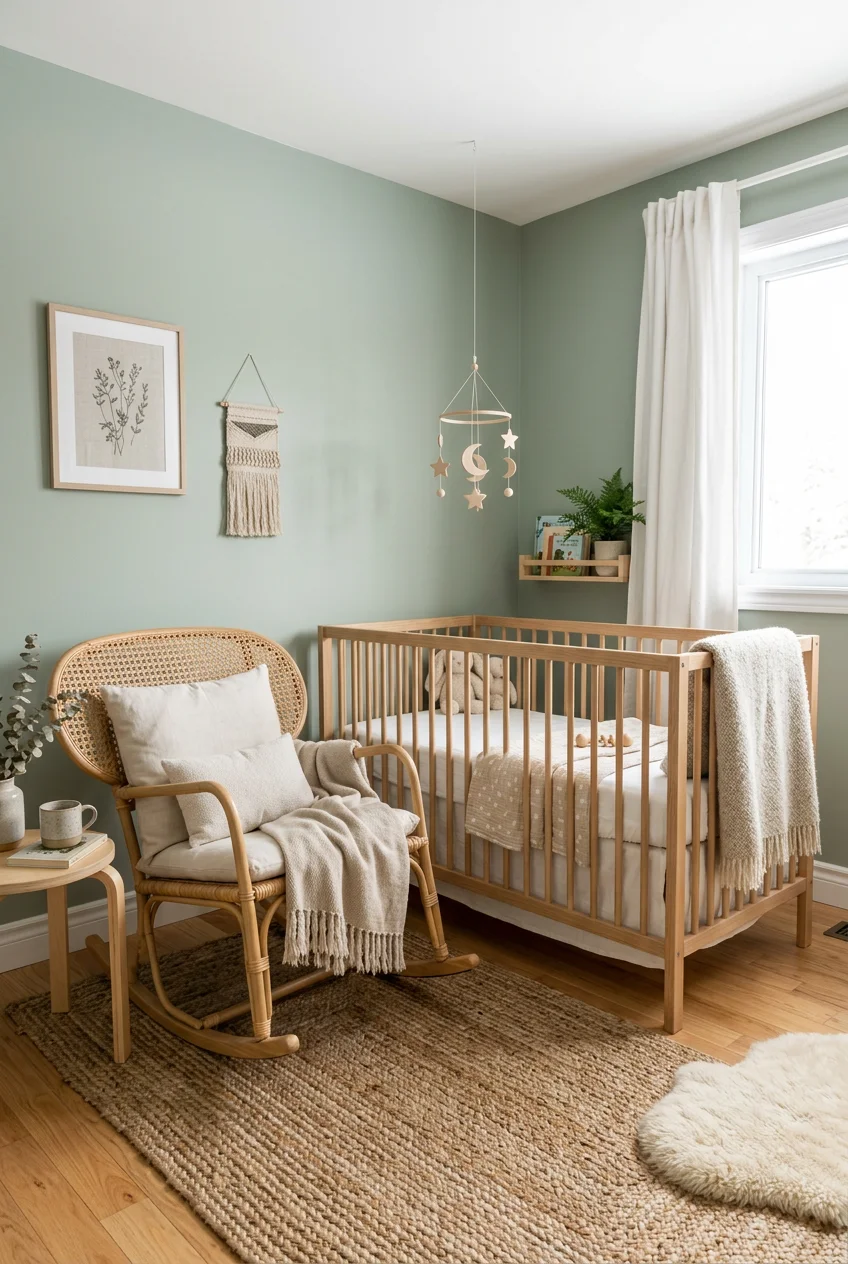
Most folks paint a nursery four shades too bright and wonder why their newborn won’t sleep. You need something grounding, not stimulating. Mastering sage green nursery decor fixes this fast. It’s a modern neutral that balances nature’s freshness with the gray undertones, keeping the room from feeling like a cartoon. I see parents default to sterile white rooms all the time, which just makes every plastic toy and bright book pop. A muddy green absorbs that visual chaos. We aren’t building a magazine cover; we’re creating a functional, calm space that won’t need a total redesign in three years. If you only try one thing from this list, make it #9. Here’s why: a board and batten accent wall adds architectural weight that paint alone can’t touch. Trust me.
Skip this if your rental agreement bans wall modifications. You’re better off focusing on textiles, as this look relies on colored walls to anchor the space. Without the paint, green fabrics just float against sterile white walls.
1. Embrace Low-VOC Sage Green Paint for the Base

Prioritize air quality by choosing low-VOC paint for the walls. Sherwin Williams offers “Evergreen Fog SW 9130,” which reads as a complex, muddy green rather than a minty pastel. For a standard 10×10 foot nursery with 8-foot ceilings, you’ll need about 1 gallon and 2 quarts for two solid coats. This covers roughly 284 square feet. The muddy undertone keeps the room from feeling too juvenile, so you won’t be repainting as tastes change. Budget-wise, premium low-VOC gallons sit in the mid-range. Most people paint nurseries way too bright; this shade grounds the space immediately. The catch: flat finishes in dark colors show scuffs the second a plastic toy hits the wall. Best for: blank slate rooms needing a total reset.
2. Anchor the Room with Natural Wood Cribs

Instead of defaulting to stark white furniture, natural wood tones create a warm, organic vibe that complements green walls. The Finn Sage Green Wood Convertible Baby Crib from Crate & Kids, measuring 54 inches wide, bridges the gap between color and grain. It usually retails in the mid-to-high price range. Wood brings a necessary weight that stops the room from feeling flat. DaVinci also makes similar 3-in-1 options in light honey finishes that warm up those cool paint tones. You want furniture that feels real, not like plastic props. The catch: mixing too many wood stains in one small room quickly looks messy. I learned that the hard way.
3. Ground the Floor with Washable Organic Cotton Rugs

A common mistake is buying a high-pile wool rug that’s impossible to clean after a 3 AM blowout. Washable organic cotton rugs are the practical choice. Sage & Wild offers GOTS certified organic washable rugs; a 5×8 foot size usually falls in the mid-range price bracket. The flat weave lets doors open easily, and the subtle green threading ties the floor to the walls without matching perfectly. Magnolia Home also makes machine-washable options in muted natural tones. Skip the dry-clean-only materials. The catch: cotton rugs lack the plush cushioning needed for floor play, so you’ll need a thick rug pad. Best for: homes with pets prone to accidents.

Beautiful Wooden Baby Closet Dividers Set of 7
Beautiful Wooden Baby Closet Dividers Set of 7 – Double-Sided Organize is sturdier in person than the photos suggest — over 11 buyers gave it 4.5 stars.
4. Layer Lighting with Smart Electronic Gliders

Overhead lighting is brutal on a baby’s eyes. You need layered light, starting where you sit. The Babyletto Kiwi Electronic Recliner measures 39 inches tall and features a built-in USB port, letting you plug in a small, warm reading light right by the chair. It sits in the premium price tier but offers structural support that cheap rockers lack. Having a light source next to the glider means you aren’t stumbling in the dark after a feed. Pair this with warm, 2700K yellow-toned bulbs to enhance the cozy feel. The catch: since it’s electronic, the chair must be near a wall outlet, which limits your layout.
5. Integrate Biophilic Design with Live Pothos

Biophilic design connects the indoor space with nature, which fits perfectly in a green room. Grab a non-toxic Pothos plant in a 6-inch pot while at Sprouts or Trader Joe’s; they’re usually under $15. Place it on a high shelf safely out of reach. The trailing vines break up the rigid lines of bookshelves, adding literal life to the room. Fake plants just collect dust. Real plants improve air quality and add a varied shade of green that breaks up the painted surfaces. The catch: you have to remember to water it, and a trailing plant needs actual sunlight, which is tough in a blackout room.
6. Utilize Structured Neutral Plaid Wallpaper

For an enduring look, use a structured neutral wallpaper rather than whimsical prints. A modern sage green plaid wallpaper comes in 24-inch wide panels and provides a tailored backdrop. It usually falls into the mid-range price category per roll. Plaid works for a nursery and easily transitions into a teenager’s room later on. It adds texture without relying on cartoon animals. Apply it behind the crib to create a focal point. Most people go overboard with murals that age poorly. The catch: pattern matching a plaid design wastes a lot of paper, so you’ll need to buy an extra roll for the overage. Best for: renters who use peel-and-stick versions. You might also like: 15 Unisex Nursery Ideas You Need to See

YACHANCE Kids Sound Machine with Night Light Projector
A dependable everyday pick — YACHANCE Kids Sound Machine with Night Light Projector pulls in 71 ratings at 4.5 stars. Not flashy, just solid.
7. Prioritize Safety with Heavy-Duty Anchors

Safety hardware isn’t decorative, but it dictates where your decor can go. Anchor all heavy dressers using 2-inch drywall anchors and steel brackets. A standard anti-tip kit costs under $15 and is non-negotiable. Conceal cords from lamps and baby monitors behind furniture using hard plastic covers. Green rooms look terrible when cluttered with white dangling wires. Securing furniture also ensures clean lines and stops pieces from shifting on carpet. The catch: installing anchors requires drilling holes, which means patching and repainting when you move the furniture. You might also like: 18 Dino Toddler Room That Actually Work
8. Hide Clutter in Woven Storage Baskets

Babies come with a surprising amount of plastic gear that ruins a serene aesthetic. Use woven baskets to hide the mess. A standard 11-inch coiled rope bin from Target fits most cube organizers and is budget-friendly. Use these for toys, swaddles, and diaper backups. The natural texture contrasts nicely against smooth painted walls. Skip the clear plastic bins; you don’t want to see the clutter. Grouping these baskets in threes creates visual harmony. The catch: natural woven baskets shed fibers initially, so you’ll need to vacuum around the shelves. You might also like: 15 Gender Neutral Nursery Ideas You Need to See
9. Build a Board and Batten Accent Wall

For visual interest without painting the entire room, create an accent wall behind the crib. A board and batten design using 1×4 inch MDF boards painted in Sherwin Williams “Retreat” adds depth. The materials for a standard wall sit in the budget to mid-range tier. This architectural detail makes the wall a statement and looks more expensive than flat paint. It grounds the crib and gives the room a custom feel. The catch: measuring, cutting, and nailing the boards requires a miter saw and a brad nailer, making it tough for beginners.

Mr. Pen- Baby Diaper Caddy Organizer, Gray, Medium
A dependable everyday pick — Mr. Pen- Baby Diaper Caddy Organizer pulls in 4 ratings at 4.5 stars. Not flashy, just solid.
10. Maximize Natural Light with Sheer Linen Curtains

Heavy blackout drapes can make a green room feel like a cave. Use sheer curtains to diffuse light during wake windows. Standard 84-inch sheer linen panels from Walmart are budget-friendly and make the space feel airy. Hang the rod as close to the ceiling as possible to draw the eye up. The light filtering through the linen softens the green paint, keeping it from looking harsh. If room darkening is needed for naps, layer these sheers over a light-filtering roller blind. The catch: sheer curtains offer no thermal insulation, so drafty windows will still let the cold in.
11. Paint the Ceiling for an Enveloping Feel

A surprising tactic is to paint the ceiling the exact same sage green as the walls. You’ll need about 1 gallon of flat ceiling paint, which falls in the mid-range price tier. This technique, called color drenching, draws the eye up and makes the room feel cozy. It stops the stark contrast of a white ceiling from jarring the eye. When paired with wood accents, it feels like a forest canopy. The catch: painting a ceiling is exhausting, and a dark ceiling visually lowers the room height. Best for: rooms with ceilings that are 9 feet or higher.
12. Integrate Montessori-Inspired Foam Play Blocks

Creating development-friendly, screen-free spaces is crucial. As your baby becomes mobile, incorporate sculptural play elements like the 8-inch foam play cubes from Project Nursery. These sit in the mid-range price tier. Soft, stackable foam pieces in muted patterns add geometric interest and support development without sacrificing the room’s design. They act as functional floor decor. You don’t have to settle for primary colors; muted greens and creams exist now. The catch: foam blocks take up a lot of floor space, quickly crowding smaller nurseries.

Criusia Over the Door Organizer
Criusia Over the Door Organizer punches above its price — 336 buyers rated it 4.5 stars. The kind of pick people reorder.
13. Streamline the Changing Station with Bulk Caddies

A changing table is a high-traffic zone that gets messy fast. Stock up on bulk organic baby wipes at Costco and store them in a 14-inch sage green metal diaper caddy. These caddies are budget-friendly and keep creams and diapers in one portable unit. The metal is easy to wipe down, unlike fabric caddies that absorb spilled cream. Having a dedicated station prevents the dresser top from becoming a dumping ground. The catch: a loaded 14-inch metal caddy is heavy to carry with one hand while holding a baby.
14. Prep Furniture with Non-Toxic Cleaners

Before bringing a newborn in, every surface needs a wipe down. Use a 16 oz bottle of organic multi-surface cleaner from Whole Foods to clean wood furniture. It’s budget-friendly and ensures no harsh chemical residues are left behind. Conventional cleaners leave strong fragrances that clash with the natural, earthy vibe. A clean, scent-free room lets the materials—wood, cotton, linen—smell like themselves. The catch: natural cleaners relying on acetic acid smell like vinegar for an hour, so you need good ventilation.
15. Install Dark Green Blackout Roller Shades

For actual sleep, you need darkness. A 36-inch wide dark green blackout roller shade mounted inside the window frame does the heavy lifting behind sheer curtains. These typically fall in the mid-range price bracket. The dark green shade blends with the walls, avoiding the ugly white backing seen on cheaper blinds. It provides a minimalist look that doesn’t compete with other textiles. You get the function of a blackout room without the visual weight of heavy drapes. The catch: inside-mounted roller shades always have a small half-inch gap where sunlight bleeds through. Best for: parents who want a minimalist look.

Night Lights, White Noise Machine
A dependable everyday pick — Night Lights pulls in 255 ratings at 4.5 stars. Not flashy, just solid.
16. Soften the Dresser with Muslin Changing Pad Covers

The changing pad takes up a lot of visual space on the dresser. Cover it with a 32×16 inch organic muslin changing pad cover in cream or pale sage. These are budget-friendly and add a soft, crinkled texture that contrasts against smooth wood. Muslin gets softer with every wash and breathes well, preventing the baby from sweating against the plastic pad. It’s a small detail that makes functional areas look intentional. The catch: light-colored muslin stains easily from blowouts, so you’ll need at least three in rotation. Best for: tight budgets looking for quick texture updates.
17. Display Books on Minimalist Floating Ledges

Traditional bookcases take up valuable floor space. Install 24-inch long, 4-inch deep floating picture ledges to display books facing outward. These ledges are budget-friendly and turn covers into artwork. Paint the ledges the same sage green as the wall so they blend in, making the books look like they’re floating. This encourages reading and keeps the floor clear for play mats. The catch: a 4-inch deep ledge holds fewer books than a standard shelf, so you’ll need secondary storage in a closet.
18. Hang Subtle Nature Art Prints over Mobiles

Skip the complicated, dusty crib mobiles. Instead, hang a series of three 11×14 inch framed nature prints high on the wall opposite the crib. You can find budget-friendly digital downloads of botanical sketches. Use thin oak frames to tie in with the natural wood crib. Art prints mature with the child, whereas a plastic mobile is obsolete by month six. The artwork provides a sophisticated focal point that maintains the calming atmosphere. The catch: heavy glass frames pose a safety risk if hung above the crib, so stick to opposing walls.
19. Set Up a Wash Station with Natural Sea Sponges

If your nursery has an attached bathroom, ditch the bright plastic tubs and synthetic washcloths. Kroger sells good 4-inch natural sea sponges for under $10. They look beautiful in a ceramic dish, adding a raw, organic texture that fits the earthy theme. They are incredibly soft on newborn skin and hold a ton of warm water for gentle rinsing. It’s a tiny detail, but it makes the daily routine feel better. The catch: natural sea sponges break down quickly and need frequent replacement.
20. Add Contrast with Matte Black Hardware

An all-green and wood room can look a little muddy without a sharp contrast. Swap out the generic knobs on your dresser for 3-inch matte black drawer pulls. These are budget-friendly and take ten minutes to install. The matte black provides a crisp, modern edge that cuts through the softness of the sage green and linen. It anchors the piece and gives flat-pack furniture a custom look. The catch: matte black hardware shows fingerprints instantly, requiring frequent wiping. No exaggeration.
How we chose these ideas: We looked at renter-friendliness, cost, DIY effort, and long-term impact. The focus was on materials and layouts that prioritize indoor air quality and functional longevity over fleeting social media trends.
Creating a nursery shouldn’t feel like building a movie set. By sticking to low-VOC paints, natural woods, and practical textiles, you’re building a room that actually works for you and the baby. I’d highly recommend starting with the board and batten wall if you have the tools; it completely changes the room’s geometry. Pin this list so you have the measurements handy when you hit the hardware store. It took me years to figure out how to balance these textures properly.
Frequently Asked Questions
What colors pair best with a sage green baby nursery?
Warm whites, natural wood tones, and muted mustard yellows complement sage perfectly. Avoid stark, cool whites, which make the green look sterile. Earthy terracotta accents also provide a grounding contrast without overwhelming the primary green palette.
Is sage green a good color for sleep?
Yes, muddy greens with gray undertones are inherently calming and mimic natural environments. This reduces visual stimulation, signaling to a baby’s brain that it’s time to rest. Just avoid bright, minty greens that reflect too much light.
How much paint do I need for a standard nursery?
For a typical 10×10 foot room with 8-foot ceilings, plan for about 1 gallon and 2 quarts to complete two full coats. Always choose a low-VOC or zero-VOC formula to protect indoor air quality for your newborn.
Should I paint the ceiling in a nursery?
Painting the ceiling a flat sage green draws the eye upward and creates a cozy, enveloping feel. It works exceptionally well in rooms with ceilings 9 feet or higher, though it can make shorter rooms feel slightly compressed.
