What’s Inside
- Embrace Layered Lighting For Versatility
- Install Dimmable LED Ceiling Lights
- Prioritize Warm White Light
- Incorporate Red or Amber Night Lights
- Position Main Lighting Away From The Crib
- Provide Dedicated Task Lighting
- Integrate Natural Light With Blackout Solutions
- Consider Smart Lighting Systems
- Ensure Fixtures Are Child-Safe
- Use The 2 A.M. Test
- Opt For Indirect Lighting
- Choose Themed Projector Night Lights
- Select Thick Diffused Fixtures
- Incorporate Decorative Themed Pendants
- Avoid Over-Reliance On Recessed Cans
- Hang Blush Pink Glass Pendants
- Anchor With Sage Green Ceramic Lamps
- Utilize Battery-Operated Sconces
- Install Motion-Sensor Closet Lighting
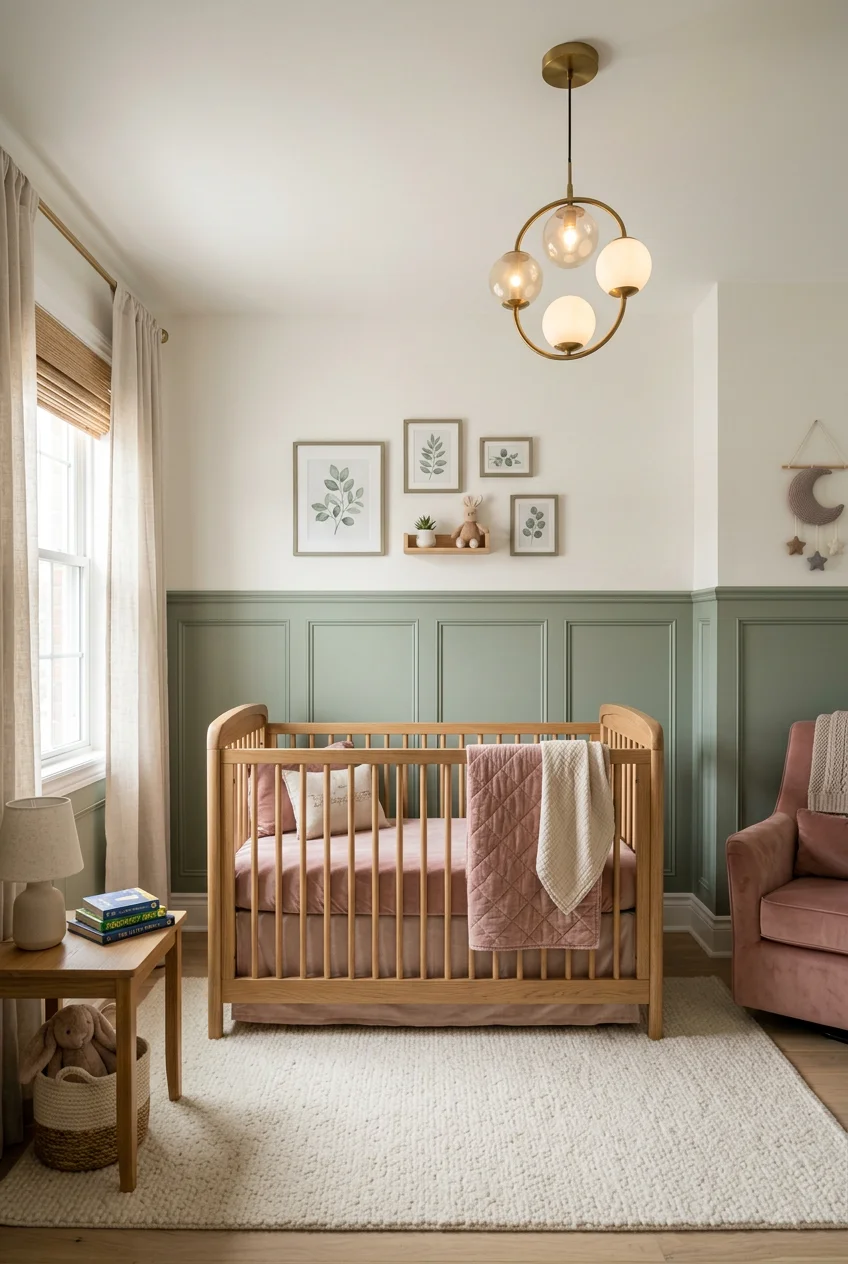
Most folks treat nursery lighting as an afterthought. They throw a harsh 60-watt bulb into a cheap paper shade and wonder why the baby won’t settle. When you’re planning your sage green and pink nursery, the light temperature and placement matter just as much as the paint on the walls. A stark white bulb washes out a delicate blush pink textile. It turns a calming sage green wall into a sickly hospital corridor hue. Let’s fix that. The right fixtures set the mood. They turn a chaotic space into a functional, calming environment. If you only try one idea from this list, make it #4. Trust me. It’s a total shift. A dedicated red-wavelength night light changes the 2 A.M. feeding dynamic by keeping both you and the baby in a sleep-ready state. It prevents the jarring shock of bright overheads.
Skip this if: You’re building a high-contrast, primary-color playroom or a purely minimalist, stark-white space. These strategies rely on manipulating warm tones to complement soft pinks and greens. They won’t translate well to rooms dominated by neon signs or cool-toned LED gaming lights.
1. Embrace Layered Lighting For Versatility

Most people rely entirely on the builder-grade ceiling boob light and call it a day. That’s a massive mistake. I learned that the hard way. Instead, a true layered strategy combines ambient, task, and accent sources to create depth. When you’re dealing with delicate colors, a single overhead light flattens the room. It makes the walls look dull. You need at least three distinct light sources. Start with a soft ambient ceiling fixture. Add a focused task lamp near the changing station. Finish with a gentle accent light near the floor. This method lets you shift the mood from bright morning playtime to a dim, relaxing evening wind-down. You’ll typically find basic Hampton Bay 3-piece lighting sets at stores like Home Depot ranging from budget to mid-tier prices.
Best for: Rooms with small windows that lack natural sunlight.
The catch: Buying three separate fixtures instead of one requires a larger upfront budget and more planning for outlet placement.
2. Install Dimmable LED Ceiling Lights

A dimmable ceiling light isn’t a luxury. It’s a structural requirement for a functional nursery. Opt for a flush-mount or semi-flush LED fixture to provide even, diffused ambient light. Dangling chandeliers look cute on Pinterest, but they become safety hazards once a toddler starts throwing heavy wooden toys. Ensure the dimmer switch on the wall is compatible with LED bulbs. If it isn’t, the lights will buzz or flicker. That’s incredibly irritating during a quiet rocking session. A solid quality Project Source 13-inch flush mount dimmable LED fixture from Lowe’s typically runs between $50 and $200. The flush design keeps the visual space clean. Your sage green walls stay the focal point without competing with a massive, heavy fixture hanging down.
The catch: Retrofitting an older home with a new dimmer switch requires shutting off the breaker and dealing with 120-volt wiring, which often means hiring an electrician.
3. Prioritize Warm White Light

Selecting the right color temperature dictates exactly how your paint colors read in the space. You want LED bulbs with a warm color temperature, strictly between 2700K and 3000K. This range mimics natural evening light. It promotes a calm atmosphere and aids melatonin production. Cool white or blue-toned lights above 3000K turn a cozy pink room into a sterile dental office. They also disrupt a baby’s circadian rhythm at night. When shopping, check the back of the bulb box for the exact Kelvin rating. Don’t just trust labels that say “soft white,” as brands use that term loosely. An Up&Up 4-pack of 60W equivalent 2700K LED bulbs from Target usually sits under $15.
The catch: Warm light does slightly alter how crisp whites look, often giving white furniture a subtle yellow undertone at night.

YACHANCE Kids Sound Machine with Night Light Projector
A dependable everyday pick — YACHANCE Kids Sound Machine with Night Light Projector pulls in 71 ratings at 4.5 stars. Not flashy, just solid.
4. Incorporate Red or Amber Night Lights

For nighttime feedings and diaper changes, a standard white night light is your worst enemy. It signals to the brain that the sun is up. Instead, use a very dim red or amber night light. These specific wavelengths, measuring around 2200K or lower, or pure 625nm red light, don’t suppress melatonin. This means minimal disruption to the baby’s sleep cycle and yours. The G Keni Nursery Night Light for Baby is a solid portable 1-unit option that usually costs between $20 and $30. It offers adjustable brightness and a simple tap interface. Keeping the room bathed in a faint amber glow complements the warmth of blush pink textiles while keeping the harsh reality of 3 A.M. at bay.
Best for: Parents who struggle to fall back asleep after middle-of-the-night wakings.
The catch: A pure red light casts heavy, unnatural shadows that make it difficult to distinguish between colors, making messy diaper changes slightly trickier.
5. Position Main Lighting Away From The Crib

Never place the main overhead light directly above the crib. Most people center their ceiling fixture perfectly in the middle of the room, and then push the crib right under it. This guarantees a glaring, uncomfortable beam shining straight into a baby’s sensitive eyes while they lie flat on their back. Instead, map out the furniture first. Position the primary light source slightly off-center, favoring the walking paths or the play area. If the junction box is already dead center, push the crib to a far wall. Use a large, opaque fabric shade to force the light sideways rather than straight down. You can find massive West Elm 24-inch drum shades that diffuse light beautifully, though they sit in the premium price bracket.
The catch: Moving an existing ceiling junction box to avoid the crib placement costs hundreds of dollars in drywall repair and electrical work.
6. Provide Dedicated Task Lighting

You need a soft, focused task light anchored right next to the changing table and the feeding chair. For the changing pad area, aim for a bulb output of 300 to 600 lumens for daytime visibility, dropping to 150 to 300 lumens for the middle of the night. A swing-arm wall light is the smartest structural choice here. Pottery Barn Kids sells heavy-duty brass and painted 1-unit swing-arm sconces ranging from $100 to $300. These allow you to pull the light source down toward the diaper bin and push it flat against the wall when you’re done. It keeps the light entirely out of the baby’s direct line of sight while giving you the visibility you need. You might also like: 15 Cozy Baby Nursery Decor Ideas for Any Style
Best for: Tight corners where a bulky floor lamp simply won’t fit.
The catch: Hardwired swing-arm sconces require cutting into the drywall, and the plug-in versions leave a visible cord trailing down the wall that must be secured.

Criusia Over the Door Organizer
Criusia Over the Door Organizer is sturdier in person than the photos suggest — over 336 buyers gave it 4.5 stars.
7. Integrate Natural Light With Blackout Solutions

Integrating natural sunlight during the day is critical for establishing a newborn’s internal clock. The way morning sun hits a sage green wall brings out the rich, earthy undertones. However, you must pair that natural exposure with aggressive light-blocking solutions for naps. Flimsy sheer curtains won’t cut it. You need heavy, dense blackout curtains. Nicetown Blackout Curtains, typically priced between $30 and $60 for a 2-panel set, feature a thick woven backing that stops UV rays completely. Hang the curtain rod at least 4 inches above the window frame and let the fabric pool slightly on the floor to prevent light from bleeding out the bottom edges. You might also like: 15 Tiny Nursery Ideas That Actually Work
The catch: True blackout curtains are notoriously heavy, requiring heavy-duty drywall anchors and a thick metal rod to prevent the entire assembly from ripping out of the wall.
8. Consider Smart Lighting Systems

A smart lighting system removes the friction of fumbling for switches in the dark. A Philips Hue 3-bulb starter kit, generally ranging from $100 to $200, allows you to program highly specific routines. You can set the nursery lights to slowly fade up over 30 minutes in the morning, or drop to a 10% warm amber glow automatically at 7 P.M. You control everything from an app on your phone, meaning you don’t even have to open the nursery door to dim the lights if you notice the baby stirring on the monitor. The ability to dial in the exact hue of soft pink or warm white to match your decor is satisfying. You might also like: 20 Nursery Decor Ideas for Every Budget
Best for: Tech-comfortable households already using voice assistants.
The catch: If your home Wi-Fi drops, the smart bulbs default to their brightest white setting the next time the physical switch is flipped, which is a nasty surprise at night.
9. Ensure Fixtures Are Child-Safe

Safety dictates every single lighting decision in a room built for a child. Use only UL-certified fixtures and stick exclusively to LED bulbs. Incandescent bulbs routinely heat up to 200 degrees Fahrenheit, creating a severe burn risk. LEDs produce minimal heat, usually hovering between 80 and 100 degrees Fahrenheit. Furthermore, cord management isn’t optional. If you use a plug-in lamp, route the cord tightly behind heavy furniture or use rigid plastic covers. A Wiremold 5-foot channel cord cover from Ace Hardware usually costs under $10. Avoid standing floor lamps entirely unless they feature a heavily weighted base of at least 10 pounds and a footprint wider than 8 inches.
The catch: Rigid plastic cord covers look utilitarian and clunky, slightly detracting from the soft, aesthetic vibe of a carefully styled room.
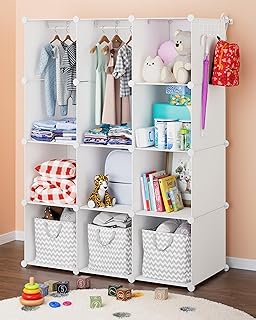
CUBEDIY Baby Closet Organizer for Nursery: Durable Baby
A dependable everyday pick — CUBEDIY Baby Closet Organizer for Nursery: Durable Baby Wardrobe for C pulls in 342 ratings at 4.5 stars. Not flashy, just solid.
10. Use The 2 A.M. Test

Before permanently installing any fixture, put it through the 2 A.M. test. Ask yourself bluntly: “Would this light feel like a physical assault to my eyeballs in the middle of the night?” If a light is too bright, too cool-toned, or lacks a thick diffuser, it fails. A harsh light triggers a wakefulness response, making it significantly harder for both you and the baby to fall back asleep. Test your bulbs in a dark room before committing. You want the illumination level of a dying campfire, not a stadium floodlight. A simple GE Lighting 1-unit 4-watt LED bulb from Walmart usually costs under $5 and passes this test with flying colors.
The catch: Designing lighting specifically for the middle of the night means the room will likely feel too dim during overcast winter afternoons, requiring you to turn on every single lamp.
11. Opt For Indirect Lighting

Indirect lighting creates a much softer and more relaxing ambiance than pointing a bulb directly into the room. This technique involves bouncing light off the walls or the ceiling. You can achieve this by mounting LED strip lighting hidden behind floating bookshelves or using wall sconces that point exclusively upward. This approach is highly effective for enhancing a sage green and pink palette, as the bounced light casts a gentle, watercolor-like wash across the paint rather than a harsh spotlight. You can pick up a Govee 16-foot spool of warm white LED strip lights at Best Buy for under $40.
Best for: Creating a moody, calming atmosphere during the bedtime routine.
The catch: The adhesive backing on cheap LED strips degrades quickly, causing the strips to peel and sag off the back of the furniture after a few months of use.
12. Choose Themed Projector Night Lights

While minimalist designers hate them, a dim projector night light works wonders for soothing older infants and toddlers. Products like the Cloud b 1-unit Twilight Turtle, usually priced between $30 and $40, project a soft, static starry night sky onto the ceiling. The key is ensuring the device has a strict auto-shutoff timer. You want the projection to fade out after 30 minutes once the child is asleep, preventing continuous visual stimulation. The soft green and pink projection options tie perfectly into your room’s theme without requiring permanent fixture changes.
The catch: These projectors devour AA batteries at an alarming rate, forcing you to constantly unscrew the tiny plastic battery door every two weeks.

Beautiful Wooden Baby Closet Dividers Set of 7
Beautiful Wooden Baby Closet Dividers Set of 7 – Double-Sided Organize punches above its price — 11 buyers rated it 4.5 stars. The kind of pick people reorder.
13. Select Thick Diffused Fixtures

A baby’s developing eyes are incredibly sensitive to brightness and glare. You must choose light fixtures with thick shades or frosted glass diffusers to soften the light and prevent any direct line of sight to the bare bulb. A heavy fabric drum shade ceiling lamp, like the Navaris 15-inch Flush Mount Ceiling Light, is an excellent structural choice. It typically costs around $60 to $80 and comes with a bottom diffuser panel. When paired with a warm white 3000K bulb pushing about 970 lumens, it fills the room with a buttery, gentle light. The fabric texture also adds a nice tactile element to the ceiling.
The catch: Fabric ceiling shades are notorious dust magnets, and cleaning them requires a step ladder and a sticky lint roller to avoid staining the material.
14. Incorporate Decorative Themed Pendants

Functionality matters, but you still need to integrate your color scheme through the actual light fixtures. Look for pendant lights with specific pink or sage green accents. The Baby Cot Shop offers high-end, whimsical designs like a 14-inch diameter hot air balloon pendant light in soft blush pink, with prices often starting over $150. Bringing the room’s color palette up onto the ceiling or the walls via the lighting hardware makes the design feel intentional and cohesive, rather than just relying on the paint job to do all the heavy lifting.
The catch: Highly specific, themed decorative fixtures are expensive and have a very short lifespan; a hot air balloon light will feel far too childish by the time your kid turns five.
15. Avoid Over-Reliance On Recessed Cans

Relying exclusively on recessed ceiling cans is a common mistake that ruins the vibe of a nursery. Recessed cans blast light straight down, creating harsh, unflattering shadows under the eyes and making the room feel like a corporate hallway. While they are fine for cleaning up a massive blowout during the day, they are terrible for setting a calm mood. If your room already has recessed lights, put them on a strict dimmer switch and supplement them heavily with table lamps. A standard Halo 4-inch can from Home Depot runs $20 to $40 per can, but shouldn’t be your only light source.
Best for: General daytime illumination when organizing closets or vacuuming.
The catch: If you don’t already have recessed lighting, installing it requires cutting multiple large holes in the ceiling drywall and running extensive new wiring through the joists.

Criusia Drawer Organizer Clothes
A dependable everyday pick — Criusia Drawer Organizer Clothes pulls in 12 ratings at 4.5 stars. Not flashy, just solid.
16. Hang Blush Pink Glass Pendants

Hanging a blush pink glass pendant light over a nursing chair adds a massive dose of style. The tinted glass acts as a natural filter, warming up the light bulb and casting a rosy, flattering glow across that corner of the room. It makes the space feel like a cozy boutique rather than a standard bedroom. You can often find beautifully fluted or ribbed 8-inch glass pendants at retailers like CB2, usually ranging from $100 to $250 each. Suspend them about 36 inches above the side table so they provide ample reading light without hanging low enough to bump your head.
The catch: Glass pendants show every single speck of dust and fingerprint, requiring weekly polishing with glass cleaner to keep them looking crisp.
17. Anchor With Sage Green Ceramic Lamps

A heavy, glazed ceramic table lamp in a deep sage green anchors the room visually. Placing one on a solid wood dresser brings an earthy, grounding element to the space, balancing out the lighter pink textiles. Target frequently stocks excellent, heavy-bottomed Threshold 18-inch ceramic lamps, usually priced comfortably under $50. The glossy finish of the ceramic reflects ambient light beautifully, adding a subtle shine to the room’s textures. Pair it with a stark white linen shade and a 6-foot cord to ensure the light output remains clean and bright for late-night diaper duty.
The catch: A heavy ceramic lamp is a massive hazard once a toddler learns to pull themselves up; it must be pushed to the absolute back edge of the dresser, completely out of reach.
18. Utilize Battery-Operated Sconces

If you’re dealing with strict rental agreements or just refuse to cut into your drywall, battery-operated sconces are the answer. These fixtures mount to the wall with a simple bracket and 2 screws, operating entirely on rechargeable LED puck lights. You can flank a mirror or a piece of wall art with them to add instant architectural interest. Amazon carries dozens of styles, like the Lighttrio 2-pack, typically ranging from $40 to $80. They provide excellent, low-level accent lighting that highlights your sage green and pink color blocking without requiring a single wire.
Best for: Renters who want a custom look without losing their security deposit.
The catch: The rechargeable puck lights require constant charging, and they simply don’t produce enough lumens to serve as the primary light source in the room.
19. Install Motion-Sensor Closet Lighting

Don’t neglect the closet. Fumbling through a dark closet for a clean swaddle at 4 A.M. is infuriating. Install simple motion-sensor LED light bars directly above the door frame inside the closet. These battery-powered strips snap into magnetic brackets and turn on instantly when you open the door, shutting off automatically after 20 seconds of no movement. Costco often sells Feit Electric 3-pack motion sensor lights for roughly $20 to $30. It’s a tiny, cheap upgrade that dramatically improves the daily functionality of the room, allowing you to grab what you need without turning on the main overhead lights.
The catch: The motion sensors are highly sensitive to temperature changes, occasionally triggering themselves if a draft hits the closet, which drains the battery faster.
How we chose these ideas: We evaluated lighting strategies based on renter-friendliness, upfront cost, installation effort, and their direct visual impact on soft color palettes. We prioritized functional safety for infants alongside aesthetic value, ensuring every recommendation serves a practical purpose during late-night care routines.
Wrapping up your lighting plan doesn’t have to be stressful. Stick to warm bulbs, heavy diffusers, and layered options to keep the room functional and beautiful. Save this list to your nursery planning Pinterest board so you don’t forget the exact lumen counts when you’re standing in the hardware store aisle.
Frequently Asked Questions
What is the best color temperature for a nursery?
You should use warm white LED bulbs measuring between 2700K and 3000K. This range mimics warm evening light and prevents the disruption of melatonin production, keeping your baby calm before bedtime.
Are LED lights safe for a baby’s room?
Yes, LED lights are the safest option because they produce minimal heat, typically staying between 80 and 100 degrees Fahrenheit. This eliminates the severe burn risks associated with older incandescent bulbs.
Where should I place the main light in a nursery?
Never place the main ceiling light directly over the crib. Position it slightly off-center over walking paths or play areas to prevent harsh glare from shining directly into the baby’s eyes.
What color night light is best for babies?
Red or amber night lights are best. Wavelengths around 2200K or pure 625nm red light do not suppress melatonin, making it much easier for both you and the baby to return to sleep.
