What’s Inside
- Prioritize Zero-VOC Paints for Baby’s Health
- Allow Ample Ventilation and Curing Time
- Embrace Earthy, Muted Tones for a Calming Atmosphere
- Understand Color Psychology for Better Sleep
- Opt for Durable, Washable Finishes
- Don’t Forget the Ceiling – It’s a Baby’s First View
- Sample Paint Colors Extensively First
- Consider Natural Plasters for Enhanced Air Quality
- Implement “Color Drenching” for a Modern Feel
- Incorporate Formaldehyde-Reducing Paints
- Test for Lead Paint in Older Homes
- Skip the Overly Themed Nursery Painting Ideas
- Use Paint Certified as “Child-Safe” for Furniture
- Use an IoT Air Quality Monitor for Peace of Mind
- Prep Your Walls Properly Before the First Drop
- Pick the Right Tools to Avoid Roller Marks
- Layer Lighting to Complement Your Nursery Painting Ideas
I spent three weeks crying on my daughter’s nursery floor because the “soft blush” paint I picked looked like radioactive Pepto-Bismol at 2 AM. If you’re hunting for nursery ideas, learn from my expensive mistake. I bought cheap paint, slapped it on over a weekend, and spent the next month fighting a chemical stench that gave me a migraine every time I walked in. Designing a nursery is stressful enough; don’t make the walls toxic or visually jarring. It’s tough.
As a nursery design consultant, I see parents make the same three painting mistakes constantly. They pick colors that look great on Instagram but ruin sleep cycles. They ignore off-gassing. They use flat finishes that look trashed the second a toddler touches them. Let’s break down the exact formulas, finishes, and techniques that work in a real home. I’ve compiled the methods I use with clients, plus the specific brands and prices you’ll need to budget for.
1. Prioritize Zero-VOC Paints for Baby’s Health

I can’t stress this enough. You need paint labeled “zero-VOC” (Volatile Organic Compounds). The EPA notes indoor air can hold two to five times more VOCs than outdoor air. Infants breathe twice as fast as adults relative to body weight. That means they inhale those chemicals at double the speed. I learned this the hard way. I used a standard hardware store brand, and the smell lingered for weeks. Now, I only specify zero-VOC brands. My go-to is the ECOS Paints Lullaby Collection. It runs $75 to $90 per gallon and covers up to 560 square feet. It stays zero-VOC even after tinting. That matters because many brands claim zero-VOC for the base, but the colorants add the chemicals right back in. Benjamin Moore Natura is another solid pick at $65 to $75 per gallon. It’s GreenGuard Gold certified. It applies well and won’t make your house smell like a factory.
2. Allow Ample Ventilation and Curing Time

Even with the safest zero-VOC paint, you still need to ventilate. Paint doesn’t just dry; it cures. During that process, it releases moisture and residual compounds. Experts suggest 24 to 72 hours of heavy ventilation for GreenGuard Gold paints before a baby sleeps in the room. For standard paints, that window is 7 to 14 days. I always tell clients to finish painting 8 weeks before their due date. Last Tuesday, I visited a client who painted at 38 weeks pregnant. She had the windows shut because of rain. The humidity trapped the paint odor, and the room felt damp. Don’t do that. Open the windows. Buy a 20-inch Lasko box fan from Walmart for $22.98. Point it out the window to pull the air from the room. Run it on high for three days to physically clear the space. Trust me.
3. Embrace Earthy, Muted Tones for a Calming Atmosphere

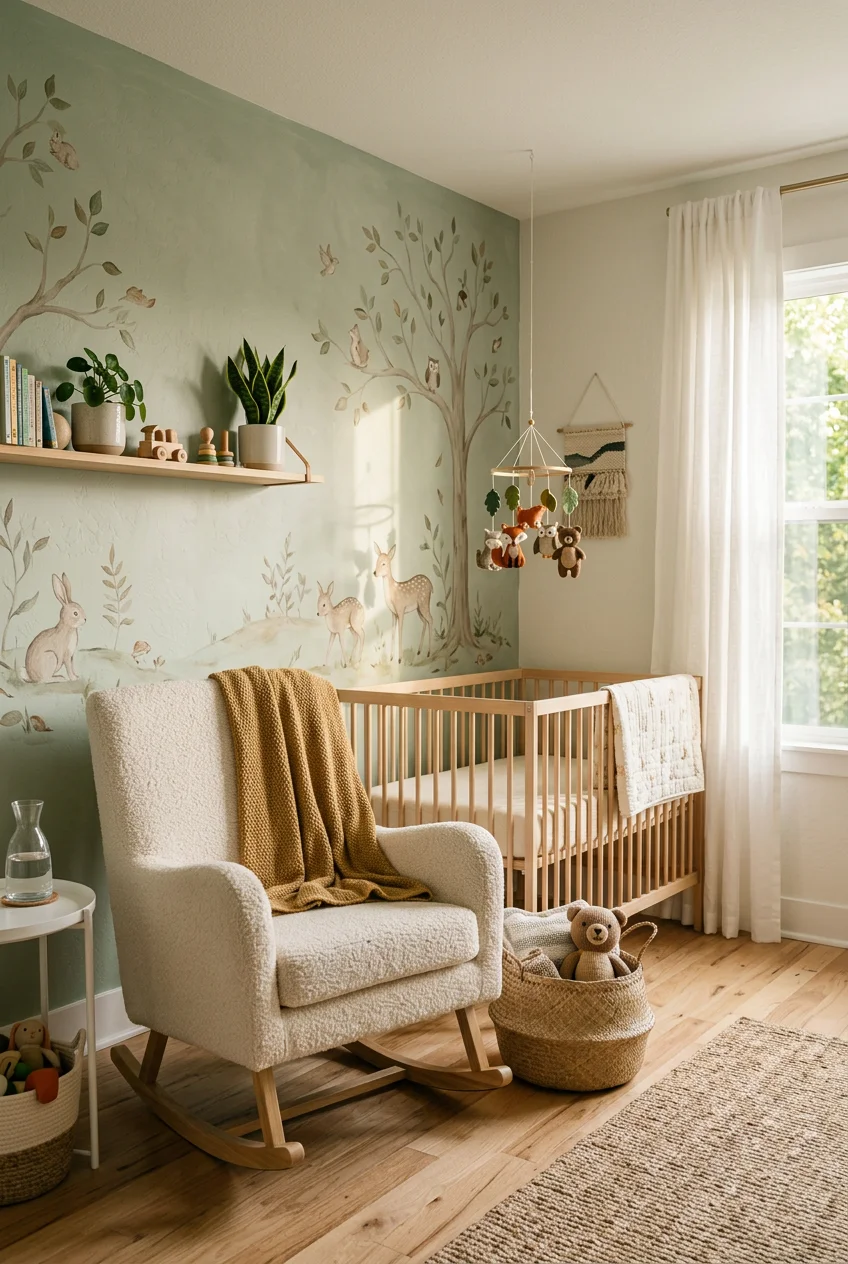
Nursery trends for 2026 are moving away from bright primary colors. We’re going toward grounded, soothing palettes. You want colors that help regulate mood and promote sleep. Soft sage, muted terracottas, warm neutrals, and mushroom taupes are the standard. I used a bright lemon yellow in a client’s room in 2018. Massive mistake. The baby was constantly overstimulated and fought naps. The parents were miserable. I had to pay a crew to repaint it three months later. Now, I stick to colors like Benjamin Moore Saybrook Sage HC-114. It’s about $65 a gallon and has a dusty green undertone that feels like a quiet forest. Another winner is Sherwin-Williams Universal Khaki, their 2026 Color of the Year. It’s a warm neutral that pairs beautifully with natural wood cribs. These muted tones absorb light, creating a cocoon-like environment that tells a baby’s brain it’s time to rest.

Delta Children Nursery Storage 48 Piece Set
If you want something that just works, Delta Children Nursery Storage 48 Piece Set – Easy Storage/Organizatio is a safe bet (17 reviews, 4.5 stars).
4. Understand Color Psychology for Better Sleep

Color psychology isn’t just a buzzword. It impacts how well your infant rests. Look at the Light Reflectance Value (LRV) of the paint. The LRV measures how much light a color reflects on a scale from 0 to 100. For sleep, you want a cool, calm tone with an LRV between 60 and 75. This range supports natural melatonin. High-saturation reds and oranges can actually raise an infant’s heart rate. I recommend Benjamin Moore Quiet Moments 1563; it has an LRV of 64. It’s a soft blue-gray that feels incredibly serene. Sherwin-Williams Sea Salt 6204 is another favorite with an LRV of 63. I recently bought a $9.99 sample quart of Sea Salt for a south-facing room. The afternoon sun made the room glow softly without being harsh. Pick a color with an LRV over 80, and the room will feel too energetic, making naps a struggle.
5. Opt for Durable, Washable Finishes

Nurseries are high-traffic zones. You’ll deal with spit-up, diaper cream, and eventually, a toddler with crayons. Choosing a flat or matte finish is a rookie mistake. Flat paint absorbs stains. If you wipe a flat wall with a damp cloth, you’ll leave a permanent water mark. An eggshell or satin finish is the only way to go. These offer a slight sheen that makes them durable and easy to wipe. Last month, my three-year-old smeared Aquaphor all over her wall. Because I used a satin finish, I grabbed a $3.99 Mr. Clean Magic Eraser from Kroger and wiped it off in ten seconds. The paint looked untouched. For baseboards and doors, use semi-gloss. It provides extra durability against vacuum bumps. It costs a few dollars more, but the scrubbability is worth every penny. You might also like: 15 Cozy Baby Nursery Decor Ideas for Any Style
6. Don’t Forget the Ceiling – It’s a Baby’s First View

Most people leave the ceiling stark white. Think about your baby’s perspective. They spend their first six months flat on their back, staring up. A plain white ceiling is a missed design opportunity. Paint it a shade lighter than the walls. If you have soft green walls, ask the paint counter to mix that green at 25 percent strength for the ceiling. It creates a soothing canopy effect. A soft sky blue also works. I used Benjamin Moore Constellation AF-540 on a ceiling last year. It costs $65 a gallon and looks like a clear spring morning. We added a $45 brass mobile from Target in the center. The contrast against the blue gave the baby something gentle to focus on. Painting the ceiling draws the eye upward, making the room feel intentional. You might also like: 17 Nursery Ideas Boy for Every Budget

Criusia Drawer Organizer Clothes
Honestly, Criusia Drawer Organizer Clothes surprised me — sturdier than it looks in the photos, and over 1 buyers gave it 4.5 stars.
7. Sample Paint Colors Extensively First

Never buy a full gallon based on a tiny paper swatch. Colors look different on your wall due to lighting and furniture. I’ve seen a beautiful gray turn harsh lavender the second the sun hit it. Buy samples. They usually cost $5 to $10. Pick two or three shades. Don’t paint them on the wall. Go to Costco and grab a 3-pack of 20×30 inch white foam core boards for $12.99. Paint two coats on the boards. Now you can tape these boards to different walls. Move them around. Look at them at 10 AM with natural light and at 8 PM with overhead lights. I tried a dusty rose that looked gorgeous at noon but muddy brown by dinner. Testing on boards prevents expensive mistakes. You might also like: 16 Baby Girl Nursery Themes You Need to See
8. Consider Natural Plasters for Enhanced Air Quality

For a unique, healthy environment, skip paint and look into natural plasters. This is a pro tip. Limewash from Portola Paints or Venetian plaster from Romabio or Vasari are great zero-VOC options. They’re made from ingredients like crushed limestone and water. Here is the cool part: these plasters absorb carbon dioxide as they cure. They regulate humidity, and the high pH makes them antibacterial and mold-resistant. A gallon of Portola Limewash costs about $75. It requires a primer and a brush-applied technique to get that suede-like texture. I applied a warm beige limewash in a nursery last fall. It gave the room a high-end, spa-like feel that standard paint can’t match. It takes more elbow grease to apply with a block brush, but the breathable air and visual depth are incredible.
9. Implement “Color Drenching” for a Modern Feel

Color drenching is a major 2026 nursery trend. Instead of painting walls one color and keeping trim white, paint everything the same color. Extend your shade to the trim, doors, and even the ceiling. This creates an immersive, cohesive mood. It removes the harsh visual breaks white trim creates, which makes a small nursery feel larger and more intentional. I did this in my own home using Sherwin-Williams Evergreen Fog. I bought two gallons of satin for the walls at $68 each and one quart of semi-gloss for the trim at $24. By matching the color but varying the finish, the room gained subtle texture. With muted, earthy tones, color drenching makes the nursery feel like a cozy, sophisticated jewelry box. It’s a bold choice, but it pays off.

Criusia Over the Door Organizer
Criusia Over the Door Organizer punches above its price — 218 buyers rated it 4.5 stars. I would buy it again.
10. Incorporate Formaldehyde-Reducing Paints

We worry about paint chemicals, but forget about the furniture. New cribs and synthetic rugs often off-gas formaldehyde for months. Some zero-VOC paints offer air purification benefits. Sherwin-Williams Harmony is my go-to. It costs $58 to $68 per gallon and is GreenGuard Gold certified. It features technology that breaks down ambient VOCs from your other nursery items. I recommended this to a couple who bought a cheap synthetic rug from Wayfair that smelled like chemicals. We painted with two coats of Harmony. Within 48 hours, the smell was noticeably reduced. It turns your walls into an air filter. If you’re buying budget-friendly furniture, using a formaldehyde-reducing paint is a smart, proactive way to protect your baby’s lungs.
11. Test for Lead Paint in Older Homes

If your home was built before 1978, don’t start sanding. Lead paint is a severe hazard, and the dust is dangerous for infants. Before doing any prep work, test the surfaces. You can buy an EPA-recognized 3M LeadCheck swab kit at Home Depot for about $35. It takes two minutes. Snap the swab, rub it on a notch cut into the paint, and check if it turns red. I was consulting on a 1920s craftsman home last year. The parents were ready to sand the original window frames. I made them test it first. The swab turned bright pink instantly. If lead is present, you can’t just paint over peeling areas. You have to consult professionals for abatement. It’s an annoying extra step, but ignoring it risks neurological damage. Don’t skip the test.
12. Skip the Overly Themed Nursery Painting Ideas

One of the biggest mistakes I see is parents committing to a massive, hyper-specific theme. Painting a giant jungle mural seems fun when you’re pregnant. But themed nurseries date quickly and are often overstimulating for a newborn. Plus, your child will outgrow it by age three, meaning you’ll be repainting sooner than you want. Focus on creating a calm mood with a solid, beautiful color. Let the color and texture lead the design. I once spent $400 on custom mountain range stencils for a client, only for them to hate the busy result a week later. Now, I advise painting the room a versatile shade and layering in the theme through art prints. You can buy a $15 woodland creature print from Etsy. When your toddler decides they only like trucks, you swap the print instead of repainting the room.

Beautiful Wooden Baby Closet Dividers Set of 7
Honestly, Beautiful Wooden Baby Closet Dividers Set of 7 – Double-Sided Organize surprised me — sturdier than it looks in the photos, and over 11 buyers gave it 4.5 stars.
13. Use Paint Certified as “Child-Safe” for Furniture

If you plan to upcycle an old dresser or paint wooden toys, standard wall paint isn’t enough. Babies chew on everything. You must ensure the paint is safe for direct contact and ingestion. Look for paints certified under EN 71-3:2019. It’s the European standard for Toy Paint Regulations, which is far stricter than US hardware store labels. Little Greene Intelligent paints are my favorite. They carry this certification. Their Intelligent Eggshell costs around $48 for a liter. I used it to paint a vintage rocking chair. It goes on smooth, cures to a hard finish, and I didn’t panic when my daughter chewed on the armrest a year later. It’s worth the price for the peace of mind.
14. Use an IoT Air Quality Monitor for Peace of Mind

You can buy the safest paint and organic furniture, but how do you know the air is safe? Technology helps. Pair your material choices with an IoT indoor air quality monitor. The Awair Element is a brilliant device that costs about $149. You plug it in, and it connects to an app. It provides real-time data on VOC levels, temperature, and fine dust. I bought one after finishing my second daughter’s room. I noticed that every time I brought in a stack of clothes using a heavily scented detergent, the VOC meter spiked. It proved my ventilation wasn’t as good as I thought. It gives you hard data, confirming your paint choices and ventilation actually worked before you put the baby in the crib. No exaggeration.
15. Prep Your Walls Properly Before the First Drop

A $90 gallon of paint will look like garbage if you don’t prep the walls. Most parents just wipe the wall with a dry towel. That’s a mistake. You need a clean, smooth surface. First, fill every nail hole with lightweight spackle. I use DAP DryDex from Lowe’s. It costs $6.98 for an 8-ounce tub. It goes on pink and turns white when dry, so you know exactly when to sand. Sand it flush. Then, wash the walls. Dust and oils from your hands prevent paint from adhering. I mix a few drops of Dawn dish soap (the original blue, $3.29 at Sprouts) into a bucket of warm water. Wipe the walls down and let them dry. If you skip this, the paint will eventually peel in large strips, especially around light switches.
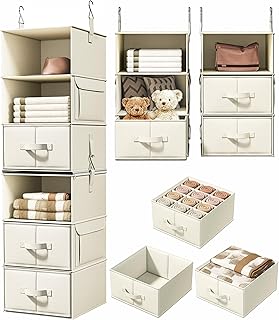
Vailando 6-Shelf Hanging Closet Organizer with 3 Drawers
If you want something that just works, Vailando 6-Shelf Hanging Closet Organizer with 3 Drawers is a safe bet (35 reviews, 4.5 stars).
16. Pick the Right Tools to Avoid Roller Marks

Cheap tools ruin good paint. If you buy those $10 all-in-one kits, you’ll end up with fuzz and streaks. You need quality tools for a pro finish. For cutting in around trim, buy a Purdy 2.5-inch angled brush. It costs $17.98 at Home Depot. The stiff bristles give you a perfect line without needing miles of painter’s tape. For the walls, use a high-quality roller cover. I always use a 3/8-inch nap microfiber roller for eggshell or satin. The 3/8-inch thickness holds enough paint to cover quickly but doesn’t leave an “orange-peel” texture. I once tried to save money with a generic roller. It shed tiny fibers into my dark green paint with every pass. I had to wait for it to dry, sand the wall, and start over. Spend the extra $15.
17. Layer Lighting to Complement Your Nursery Painting Ideas

The final step is getting the lighting right. Beautiful paint looks sterile under a cheap, bright white LED. Layer your lighting and watch your bulb temperatures. For a nursery, use bulbs rated between 2700K and 3000K. This is “soft white.” Anything above 3500K will cast a harsh blue light that distorts earthy paint tones and disrupts a baby’s circadian rhythm. I buy the GE Relax Soft White LED bulbs at Lowe’s for $9.99 a four-pack. Put these in your overhead fixture on a dimmer. Then, add a small lamp with a 40-watt equivalent warm bulb on the dresser for middle-of-the-night changes. This warm lighting enhances the cozy undertones of your paint, making the room feel like a sanctuary rather than a hospital. It took me years to figure this out.
Painting a nursery is a labor of love, but it requires strategy. Don’t let the excitement of decorating blind you to off-gassing, durability, and color psychology. If you stick to zero-VOC formulas, choose muted tones with the right LRV, and prep your walls correctly, you’ll create a beautiful space that actually supports your baby’s health and sleep. I’ve used these methods in dozens of homes; they work every time. Save this guide, pin your favorite colors, and take your time with the prep work. Your future sleep-deprived self will thank you for getting it right the first time.
Frequently Asked Questions
What kind of paint is safest for nursery painting ideas?
Always choose zero-VOC paints like ECOS Lullaby or Benjamin Moore Natura. They eliminate harmful chemical off-gassing, keeping the indoor air quality safe for your baby’s developing lungs.
How long should a painted nursery air out before the baby sleeps there?
Even with zero-VOC paint, you need 24 to 72 hours of heavily ventilated curing time. Keep a box fan running in the open window to actively pull air out of the room.
Which paint colors help babies sleep better?
Muted, earthy tones with a Light Reflectance Value (LRV) between 60 and 75 are best. Soft sage greens and blue-grays like Sherwin-Williams Sea Salt promote natural melatonin release.
Should I use a flat or satin finish for a nursery?
Never use flat paint in a nursery because it absorbs stains instantly. Always opt for an eggshell or satin finish on the walls so you can easily wipe away messes without ruining the color.
