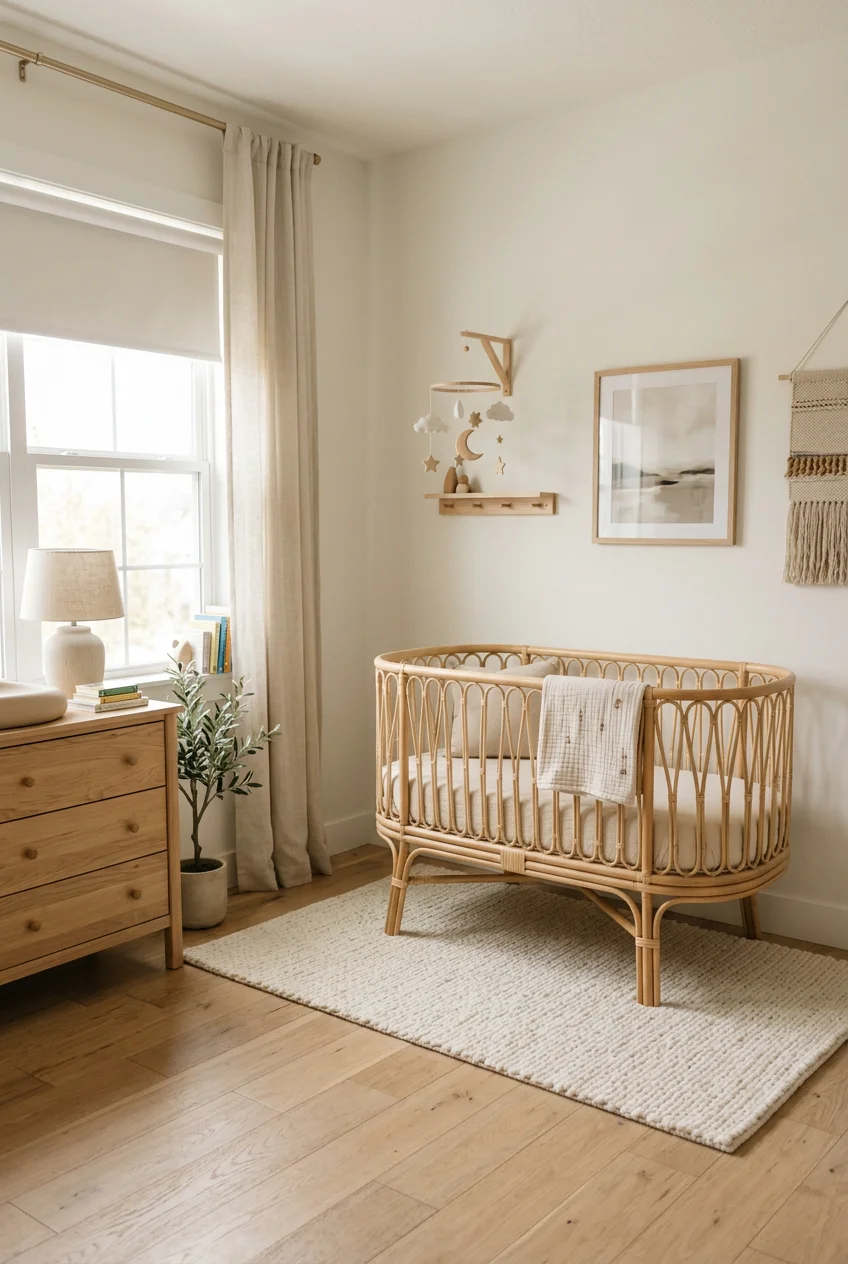
What’s Inside
- Embrace Earthy, Muted Paint Palettes
- Prioritize Zero-VOC Paints for Air Quality
- Invest in Convertible Natural Wood Cribs
- Layer Lighting for Late-Night Functionality
- Select the Right-Sized Washable Rug
- Layer Textures Instead of Colors
- Ground the Room with Subtle Wall Art
- Paint the Ceiling as the Fifth Wall
- Anchor Everything for Strict Safety
- Build Smart Dresser Storage Solutions
- Choose a Glider with Proper Lumbar Support
- Install Wrap-Around Blackout Curtains
- Display Books on Clear Acrylic Ledges
- Soften Corners with Rattan and Wicker
- Style Open Shelving with Functional Items
- Add Oversized Linen Floor Cushions
- Conceal the Diaper Pail
- Position the Sound Machine Correctly
- Introduce Safe Botanicals for Life
Most folks paint their walls stark white, grab a matching gray glider, and wonder why the room feels like a sterile waiting area. You walk in, the echo hits the bare walls, and you catch a whiff of harsh chemical paint. Neutral nursery decor needs a deliberate tension between textures and warm undertones—not just a lazy lack of color. A flat gray room won’t stimulate a baby, and it definitely won’t comfort you during a 3 AM feeding. If you only try one idea here, make it #4. Layered lighting fixes that clinical vibe faster than any expensive paint ever could. It’s a total shift.
Skip this list if you love high-contrast themes or primary color explosions. This approach focuses on subdued, earthy palettes and tactile materials. If you want neon accents or cartoon decals, these methods will feel way too restrained. Trust me.
1. Embrace Earthy, Muted Paint Palettes

Most people default to stark, cool grays for a nursery, which makes the room feel cold. Move toward warmer, inviting earthy shades. The 2026 trends lean into soft sage, warm stone, mushroom, and dusty clay. These shades offer depth while growing with your child. Look at Benjamin Moore’s Saybrook Sage (HC-114) for a calming, nature-inspired base. If you want something lighter, Sherwin-Williams Oyster White (SW 7637) is a creamy off-white that feels warm in person. Budget mid-range to premium per gallon for these finishes. A common mistake? Picking a paint chip under harsh hardware store lights. The catch: warmer off-whites often pull a heavy yellow tone in south-facing rooms with intense afternoon sun.
2. Prioritize Zero-VOC Paints for Air Quality

Infants spend 14 to 18 hours a day inhaling whatever is off-gassing from those walls. The chemical makeup of your paint matters. Choose Zero-VOC and Greenguard Gold certified options. Brands like ECOS Paints’ Lullaby collection are formulated to be child-safe, meeting standards like EN 71-3:2019. These premium paints usually start around $70 per gallon, but the air quality benefits are worth it. Best for: older homes with poor ventilation where fumes linger. The catch: Zero-VOC paints lack heavy chemical binders, so they usually need three full coats for a streak-free finish.
3. Invest in Convertible Natural Wood Cribs

Avoid babyish furniture with intricate carvings that look dated in a year. Pick pieces with longevity. Natural wood cribs, especially in light oak or ash, fit perfectly into neutral nursery decor. Target has several mid-range options ($200 to $400) that meet JPMA safety standards. The visual weight of a solid wood backboard works better than thin spindles. The catch: toddler bed conversion rails are almost always sold separately and often go out of stock by the time you need them two years later.

YACHANCE Kids Sound Machine with Night Light Projector
YACHANCE Kids Sound Machine with Night Light Projector has been one of the most consistently praised picks in this category. 71 reviewers averaged 4.5/5.
4. Layer Lighting for Late-Night Functionality

Poor lighting ruins more nurseries than bad paint. Overhead flush mounts cast harsh shadows that wake a baby instantly. Use a layered scheme instead. Maximize natural light with sheer curtains by day, but install dimmable LED ceiling lights for the evening. Add a wall sconce for gentle light during night feeds. Stick to warm-white bulbs around 2700K; anything above 3000K feels like a hospital. The catch: installing a dimmer switch requires basic electrical skills or paying a pro to rewire the box.
5. Select the Right-Sized Washable Rug

A rug adds warmth over hardwood and a soft spot for tummy time. For most nurseries, a 5×7 or 6×9 rug balances the room well. In spaces under 80 square feet, a 120×180 cm (roughly 4×6 ft) rug placed parallel to the crib works best. Choose machine-washable options from brands like Tumble to handle spills. Best for: homes with pets or messy toddlers. The catch: washable rugs are thinner than traditional tufted wool, offering less padding for falls. You might also like: 18 Nursery Ideas Colorful You Need to See
6. Layer Textures Instead of Colors

A neutral room without texture looks like a cardboard box. To stop it from feeling clinical, layer diverse materials. Mix a chunky knit cotton blanket with smooth linen sheets. Add a bouclé nursing chair, a rough jute rug, and woven baskets. You can find affordable textured baskets at Walmart to keep costs down. This builds interest without needing loud patterns. The catch: bouclé fabric traps lint and is a nightmare to scrub clean after a spit-up accident. You might also like: 17 Toca Boca Toddler Room Ideas You Need to See

Beautiful Wooden Baby Closet Dividers Set of 7
If you want something that just works, Beautiful Wooden Baby Closet Dividers Set of 7 – Double-Sided Organize is a safe bet (11 reviews, 4.5 stars).
7. Ground the Room with Subtle Wall Art

Skip the massive woodland mural your child will outgrow by three. Opt for subtle, structured decor. Botanical prints or abstract geometric shapes in neutral tones provide stimulation without the clutter. Minted has great gender-neutral prints that look curated. Pro tip: most people hang art way too high. Keep it at eye level for a standing adult. A single 24×36 inch piece looks much more sophisticated than a dozen scattered frames. The catch: custom framing for oversized prints often costs double the price of the art itself. You might also like: 20 Toddler Room Boy You Need to See
8. Paint the Ceiling as the Fifth Wall

Babies spend months lying on their backs staring up. Leaving the ceiling flat white is a missed chance. Treat it as the fifth wall. A subtle stripe pattern or painting it a 10 percent tint of your wall color draws the eye upward and adds height. You can also use matte decals. The catch: painting a ceiling is brutal on your neck and shoulders, and a fresh coat highlights every drywall tape imperfection.
9. Anchor Everything for Strict Safety

A pretty room means nothing if it isn’t safe. Anchor heavy furniture, especially dressers, directly into studs to prevent tipping. Ensure crib slats are no wider than 6 cm (2.375 inches) to prevent entrapment. Hide all cords from lamps and monitors inside rigid covers to stop strangulation risks. Best for: renters who need heavy-duty drywall toggle bolts when studs don’t align. The catch: safety anchors leave large holes in the drywall that need patching when you move out.

Momcozy Sound Machine for Baby-20 Soothing Sounds & Touch
Momcozy Sound Machine for Baby-20 Soothing Sounds & Touch Warm Light P punches above its price — 14 buyers rated it 4.5 stars. The kind of pick people reorder.
10. Build Smart Dresser Storage Solutions

Insufficient storage turns a serene room into a cluttered mess. Use a dresser with deep, smooth-gliding drawers from day one. Buy bulk drawer organizers from Costco to sort tiny socks and onesies. A pile of infant clothes becomes a disaster without boundaries. Mix open shelving for display items and closed storage for the ugly stuff. The catch: deep drawers become bottomless pits without rigid dividers.
11. Choose a Glider with Proper Lumbar Support

Don’t ignore your own comfort. You’ll spend hours in this chair. Pick a glider that prioritizes firm lumbar support over a trendy look. Look for stain-resistant performance fabrics. Don’t buy a chair you can’t easily stand up from while holding 15 pounds of dead weight in the dark. Test the armrest height to make sure they support your elbows. The catch: ergonomic gliders have a huge footprint that can crowd tight nursery layouts.
12. Install Wrap-Around Blackout Curtains

Sleep hygiene needs absolute darkness. Standard rods let light bleed out the sides, ruining your blackout panels. Install wrap-around rods that curve into the wall. Walmart has budget-friendly thermal panels that block light and help with insulation. Best for: small, drafty rooms. The catch: heavy blackout curtains look industrial and need serious wall anchors so they don’t rip the drywall down.

Criusia Drawer Organizer Clothes
If you want something that just works, Criusia Drawer Organizer Clothes is a safe bet (12 reviews, 4.5 stars).
13. Display Books on Clear Acrylic Ledges

Traditional bookcases take up floor space. Install clear acrylic floating ledges (24-inch or 36-inch) on the wall. This lets books act as decor, showing off colorful covers instead of just spines. It encourages reading and fills wall space without feeling heavy. Keep them low enough for a toddler to reach. The catch: clear acrylic shows every fingerprint and speck of dust, so you’ll be wiping them constantly.
14. Soften Corners with Rattan and Wicker

Break up the monotony of wood and drywall with rattan. A large wicker hamper or a rattan pendant adds warmth and organic texture. You can find budget-friendly cotton rope and wicker baskets at Kroger. Use them for swaddles or soft toys. The catch: cheap wicker splinters and will snag delicate knit sweaters if they brush the interior.
15. Style Open Shelving with Functional Items

Open shelving needs curation. Install wood shelves with simple brackets at a 10-inch depth. Instead of useless trinkets, style with things you actually use. Display glass bottles, wooden stacking toys, and aesthetic skincare. Sprouts carries natural baby wash in nice amber bottles, and Whole Foods has organic balms that look great on a shelf. Pro tip: group items in odd numbers. The catch: open shelving means you can’t hide the ugly, brightly colored plastic medical gear you reach for daily.

Modanais Baby Diaper Caddy Organizer Cart
Modanais Baby Diaper Caddy Organizer Cart – 3 Tier Rolling Cart with D is sturdier in person than the photos suggest — over 688 buyers gave it 4.5 stars.
16. Add Oversized Linen Floor Cushions

Once the baby crawls, you’ll spend hours on the floor. A thin rug won’t save your knees. Toss a few 36-inch linen floor cushions in the corner. They add a relaxed look and provide comfort for you. Look for covers with hidden zippers for easy washing. The catch: oversized cushions take up precious space and become tripping hazards during 3 AM feeds.
17. Conceal the Diaper Pail

Nothing ruins a nice nursery like a glaring white plastic trash can. Plastic pails absorb odors over time. Upgrade to a powder-coated stainless steel option like the Ubbi pail (usually under $80). It locks in smells better and comes in muted tones like sage that blend into your decor. Keep it beside the dresser, not by the door. The catch: stainless steel pails build up internal condensation in humid rooms and need frequent wipe-downs.
18. Position the Sound Machine Correctly

A sound machine is a must, but placement matters. Don’t blast white noise next to their ears. Place devices like the Hatch Rest at least 6 feet from the crib, ideally near the door or window where outside noise enters. Keep the volume under 50 decibels to protect their hearing. The catch: if your WiFi goes down, the app controls on modern machines fail completely.
19. Introduce Safe Botanicals for Life

A room without organic life feels stagnant. Add greenery to liven up neutral tones. Grab inexpensive eucalyptus branches from Trader Joe’s and put them in a heavy ceramic vase high on a shelf. The scent is calming, and the green leaves fit a neutral palette. Best for: beginners who can’t keep real plants alive. The catch: dried branches shed brittle leaves and require frequent sweeping around the base.
How we chose these: We looked at design strategies based on long-term cost, renter-friendliness, and daily effort. We prioritized materials that keep the room calm while meeting safety and air quality standards without constant maintenance.
Creating a calm space isn’t about stripping away personality; it’s about being intentional with what you include. I’d start with the paint and lighting, then layer in the textiles once the foundation is set. Learned that the hard way. Pin this list for your next planning session, and tackle one section at a time so you don’t get overwhelmed.
Frequently Asked Questions
What colors work best for neutral baby nursery decor?
Move away from stark whites and cool grays. Warm earthy tones like soft sage green, mushroom, warm stone, and dusty clay create a calming environment that won’t feel like a sterile waiting room.
How do I add warmth to a gray nursery?
Layer diverse tactile materials to build visual interest. Incorporate a chunky knit cotton blanket, smooth linen cot sheets, a bouclé nursing chair, and woven jute baskets to break up flat walls.
What size rug is best for a standard nursery?
For most standard rooms, a 5×7 or 6×9 foot rug offers the best balance. It covers key activity areas without overwhelming the floor plan. Ensure it sits partially under the crib for stability.
Are zero-VOC paints necessary for a baby’s room?
Yes, they minimize harmful chemical emissions in a space where infants spend 14 to 18 hours daily. Look for Greenguard Gold certified options to ensure the best indoor air quality.
