What’s Inside
- Embrace 2026’s Earthy And Muted Palette
- Choose Versatile Neutral Base Paints
- Invest In Convertible Farmhouse Furniture
- Opt For A Dresser As A Changing Station
- Layer Textures With Natural Materials
- Select Organic Cotton Crib Sheets
- Anchor The Room With A Washable Neutral Rug
- Incorporate Nature-Inspired Or Geometric Decor
- Prioritize Safety With Furniture Anchoring
- Integrate Your Home’s Existing Aesthetic
- Explore Japandi Design Principles
- Choose Repurposable Lighting
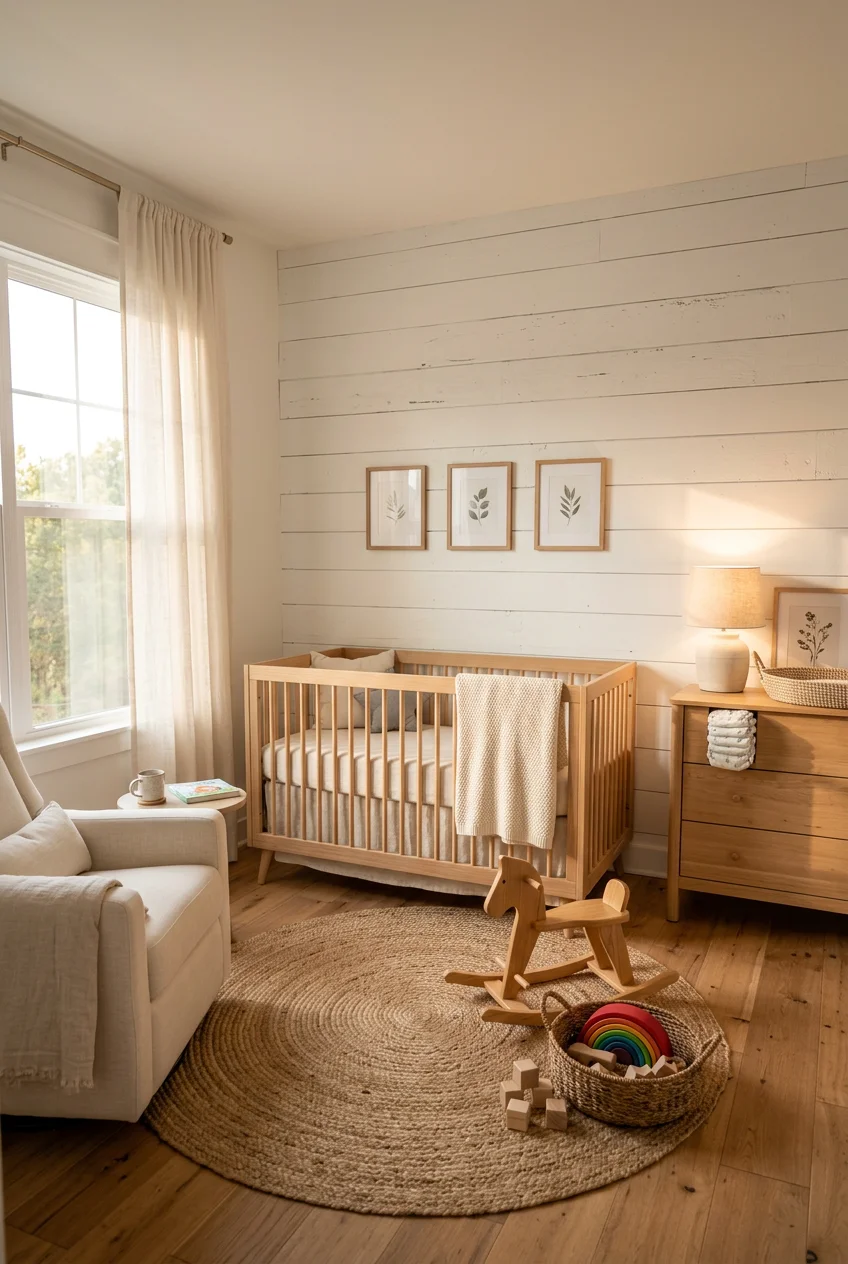
- Add A Subtle Accent Wall With Shiplap
- Don’t Over-Decorate Focus On Functionality
- Consider A Narrow Rocking Chair For Smaller Spaces
I spent four weeks painting my first nursery a blinding lemon yellow because I thought that was the only way to do a gender neutral farmhouse design. The room smelled like wet chalk. The walls practically vibrated when the afternoon sun hit them. I had to repaint the entire thing three days before my due date. You don’t need primary colors or sterile hospital white to avoid gender stereotypes. A gender neutral farmhouse nursery actually works best when you lean into natural textures and muted tones. I learned that the hard way after wasting $140 on the wrong paint at Home Depot.
Let’s walk through how to build a space that feels calm, functional, and actually looks like it belongs in your house. I’ve made plenty of mistakes designing these rooms for clients over the years. I’ll share what actually holds up to a toddler and what you should skip entirely.
1. Embrace 2026’s Earthy And Muted Palette

When I first started consulting on nursery designs, everyone wanted stark white or pale gray. The 2026 color trends are shifting toward warm, earthy neutrals. Think soft sage green, warm stone, mushroom, muted terracotta, and dusty clay. These colors give a room depth without forcing a pink or blue stereotype. I painted my own toddler’s room a muted terracotta last October. Specifically, I used Behr Premium Plus in the shade Canyon Dusk ($34.98 per gallon at Home Depot).
I bought two gallons for a standard 10×12 room. The paint goes on thick and covers up the crayon marks from the previous owners. A lot of parents worry that brown or terracotta will make the room look like a cave. It won’t, as long as you balance it with natural light and lighter furniture. I tried a dark chocolate brown once in a client’s north-facing room, and it was a mistake. The space felt tiny and depressing. Stick to the muted, dusty versions of these earthy colors. They hide smudges better than white, and they feel incredibly calming at night.
2. Choose Versatile Neutral Base Paints

If you aren’t ready for terracotta, you still need a solid neutral base. Opt for sophisticated, calming neutrals for your walls. Popular choices right now include Benjamin Moore Pale Oak (OC-20). It’s a greige that works with both warm and cool tones. Another great option is Sherwin Williams Alabaster (SW 7008), which is a soft, warm white. I used two gallons of Benjamin Moore Regal Select in Pale Oak ($74.99 per gallon) for a client’s nursery last month.
This approach avoids the Easter Egg Syndrome of an overly uniform pastel room. I painted my niece’s room a solid mint green five years ago. It looked exactly like a candy shop, and the green cast a sickly shadow on her skin in photos. A warm white or greige gives you a blank canvas. You can change out the art and rugs as the child grows without repainting the walls every two years. The Pale Oak shade specifically hides the inevitable scuff marks from toys much better than a pure, bright white.
3. Invest In Convertible Farmhouse Furniture

You need main furniture pieces with strong, simple lines in white, gray, or natural wood finishes. A farmhouse black crib anchors the room beautifully. I bought the Million Dollar Baby Classic Winston 4-in-1 Convertible Iron Crib in black for $399.00. It measures 54 inches wide and feels incredibly sturdy. I tried a cheaper $150 wooden crib from a random website first. The screws stripped during assembly, and the paint chipped when I bumped it with the vacuum.
The iron crib doesn’t chip, and the black metal provides a sharp contrast against light walls. Because it’s a 4-in-1, it converts to a toddler bed and eventually a full-sized bed. You’re getting a decade of use out of one purchase. The 54-inch width fits standard mattresses perfectly without leaving dangerous gaps. Just make sure you measure your room first. I once ordered a massive solid oak crib for a small room, and we couldn’t even open the closet door all the way. Stick to standard sizes with clean lines.

Criusia Over the Door Organizer
Honestly, Criusia Over the Door Organizer surprised me — sturdier than it looks in the photos, and over 218 buyers gave it 4.5 stars.
4. Opt For A Dresser As A Changing Station

Skip the dedicated changing table. They’re a waste of money and you’ll throw them out in two years. Instead, choose a large, long dresser. Ensure it’s long enough for a removable changing pad topper. I use the IKEA Hemnes 8-drawer dresser in white stain ($299.00). It measures 63 inches long. This gives you exactly enough room for a standard 32-inch changing pad and a large basket for wipes and diapers.
I put a Summer Infant contoured changing pad ($22.99) right on top. I secure it to the back of the dresser with the included safety straps. I tried using a standard 36-inch wide changing table with my first baby. I had nowhere to set the wipes, and I kept knocking the diaper cream onto the floor. The 63-inch Hemnes solves this completely. Plus, when your kid is potty trained, you just take the pad off. Now they have a regular dresser for their clothes. It’s a much smarter way to spend your budget. You might also like: 20 Cozy Gender Neutral Baby Nursery Decor Ideas for Any Style
5. Layer Textures With Natural Materials

A neutral room gets boring fast if everything is flat and smooth. You need to introduce warmth and sensory interest by incorporating a variety of textures. I rely heavily on bouclé fabrics, linen, and woven storage baskets. Last Tuesday at Whole Foods, a cashier asked me where I got the large wicker pom basket I was using to hold my groceries. It was actually a nursery bin. I buy the Pehr large pom pom bin ($75.00). It measures 13 by 12 inches and holds about twenty rolled-up swaddles. You might also like: 15 Lovely Baby Boy Crib Bedding Ideas That Are Totally Worth It
I also added a bouclé nursing chair from Target for $250.00. The nubby texture of the bouclé hides spit-up stains surprisingly well. I previously bought a smooth velvet chair, and every single drop of milk left a permanent water mark. Layering these rougher, natural textures makes the room feel cozy instead of sterile. You can hang a washed linen canopy over a reading corner to add height. Just keep the fabrics breathable and easy to spot-clean. You might also like: 15 Clever Neutral Small Nursery Ideas for Every Budget
6. Select Organic Cotton Crib Sheets

Prioritize your baby’s comfort with GOTS-certified organic cotton crib sheets. You want something around a 300 thread count. Brands like Lambs & Ivy or Little Unicorn offer excellent gender-neutral patterns. I buy the Little Unicorn cotton muslin standard crib sheet in the Taupe Stripe pattern. They cost $29.00 each and fit standard 52 by 28-inch mattresses. I’ve used these specific sheets for two years now. They actually get softer every time you wash them.
I made the mistake of buying cheap polyester sheets from Amazon when I was pregnant. My baby would wake up sweating through his pajamas because the fabric didn’t breathe at all. The 100 percent organic cotton muslin solved the sweating issue completely. The taupe stripe pattern fits the farmhouse vibe perfectly without screaming farm animal theme. I recommend buying exactly three sheets. One for the crib, one for the wash, and one for the middle-of-the-night blowout emergency. Any more than three just clutters up your linen closet.

Delta Children Nursery Storage 48 Piece Set
If you want something that just works, Delta Children Nursery Storage 48 Piece Set – Easy Storage/Organizatio is a safe bet (17 reviews, 4.5 stars).
7. Anchor The Room With A Washable Neutral Rug

You absolutely need a low-pile, soft, and washable rug in a neutral tone like ivory, sand, or muted gray. Babies ruin rugs. It’s just a fact. I use the Ruggable Kamran Hazel 5×7 rug ($219.00). It’s only 2 millimeters thick, which means the rocking chair smoothly glides over it without getting stuck. When the baby inevitably spits up on it, I just peel the top layer off and throw it in my washing machine.
Before I found washable rugs, I bought a gorgeous, thick wool rug for $600. Within three months, it was covered in formula stains that I couldn’t scrub out. The room constantly smelled like sour milk. The Ruggable option eliminates that stress entirely. The hazel color has enough variation in the pattern to hide small crumbs and dirt between washes. Make sure you buy the cushioned pad base ($60.00 extra) if you have hardwood floors, because the standard pad is too thin for a baby who is learning to crawl and bumping their head.
8. Incorporate Nature-Inspired Or Geometric Decor

Steer clear of overly gendered themes. Instead, opt for gender-neutral motifs like woodland creatures, stars, clouds, or simple geometric patterns. I like to frame art featuring subtle farm animals or abstract chevrons. I buy digital prints from Etsy for about $6.50 each. I print them at Walgreens and put them in 8×10 natural wood frames from Target ($15.00 each). This costs a fraction of what large canvas art costs.
Last month, I hung a set of three pencil-sketch sheep prints above a client’s dresser. It adds personality without committing the entire room to a farm theme. I once went overboard and bought a massive, brightly colored barnyard mural for a wall. It completely dominated the room and made the space feel chaotic. Simple, framed prints are much easier to swap out when your toddler suddenly decides they only like dinosaurs. Stick to black-and-white or sepia tones for the art to maintain that calm, earthy aesthetic we established with the paint colors.
9. Prioritize Safety With Furniture Anchoring

A common mistake is neglecting safety for the sake of aesthetics. You must anchor all heavy furniture to the wall. This includes dressers, bookshelves, and even heavy floor mirrors. I use Safety 1st furniture wall straps. An 8-pack costs $14.99 at Walmart. I didn’t anchor a small, waist-high bookshelf in my living room once. My toddler tried to climb it, and the whole thing tipped over. Thankfully, he wasn’t hurt, but it was terrifying. Now I anchor everything.
You also need to conceal all cords from lamps, monitors, and humidifiers to prevent strangulation hazards. I buy 3M cord concealers from Lowe’s. A pack of four 48-inch strips costs $19.98. They stick directly to the baseboards and hide the white cords completely. I paint right over the plastic concealers so they blend into the wall. It takes an extra hour of work on a Saturday, but the peace of mind is entirely worth it. Don’t skip this step just because the room looks finished.

Criusia Drawer Organizer Clothes
Honestly, Criusia Drawer Organizer Clothes surprised me — sturdier than it looks in the photos, and over 1 buyers gave it 4.5 stars.
10. Integrate Your Home’s Existing Aesthetic

For a cohesive feel, pull design ideas and color palettes from the rest of your home. If your home has a soft Scandi style, let that influence the nursery’s foundation. You don’t want the nursery to feel like a completely different house when you open the door. My living room has a lot of natural linen and light oak. I brought that same feel into the nursery by hanging West Elm European Flax Linen curtains in the shade Natural.
They cost $110.00 per 48×84-inch panel. I bought blackout liners ($40.00) to attach to the back so the baby could actually sleep during the day. I used to think nurseries had to look like a baby explosion. I decorated my first one with bright polka dots, while the rest of my house was very muted and traditional. Walking into that room gave me a headache. By matching the nursery to your home’s existing style, you create a smooth transition between spaces. It feels like a natural extension of your home.
11. Explore Japandi Design Principles

Japandi is a blend of Japanese wabi-sabi and Scandinavian design. It emphasizes simplicity, natural materials, and uncluttered spaces. This is a massive trend for 2026, and it’s inherently gender-neutral. Japandi creates a calm environment that doesn’t overstimulate a developing baby’s senses. I incorporate this by using natural wood floating shelves instead of bulky bookcases. I buy the 24-inch natural oak floating shelves from Crate & Kids for $49.00 each.
I mount two of them above the glider to hold a few specific wooden toys and books. The key to Japandi is negative space. You don’t need to fill every corner of the room with stuff. I used to jam a toy box, a bookshelf, and a play tent into a 10×10 room. I couldn’t walk without tripping over a stuffed animal. Leaving open floor space and keeping the walls relatively bare actually makes the room feel much larger and far more relaxing to sit in during those long nights.
12. Choose Repurposable Lighting

Instead of themed baby lamps shaped like giraffes or tractors, select modern floor lamps with clean lines. You want lighting that can easily move to a guest room or home office as your child grows. I use the Brightech Maxwell LED floor lamp. It costs $64.99 on Amazon and features a Japanese-inspired wood frame with three small display shelves built into the base. I put an 800-lumen warm white LED bulb in it.
The shade diffuses the light beautifully, so it doesn’t shine directly into the baby’s eyes when they are lying in the crib. I bought a cheap plastic star-shaped lamp for my first baby. It broke within six months when the cord got snagged on the vacuum. A solid wood floor lamp is much more durable. Consider options with irregular shapes or natural wood grains for added visual interest. Just make sure the base is heavy enough that a crawling baby can’t easily tip it over, and tuck the cord behind the glider.

Beautiful Wooden Baby Closet Dividers Set of 7
If you want something that just works, Beautiful Wooden Baby Closet Dividers Set of 7 – Double-Sided Organize is a safe bet (11 reviews, 4.5 stars).
13. Add A Subtle Accent Wall With Shiplap

To avoid a bland neutral space, create a textured accent wall behind the crib. Shiplap adds a classic farmhouse texture without relying on colors. I buy 8-foot MDF shiplap boards from Lowe’s for $11.98 each. It takes about 15 boards to cover a standard accent wall. If you don’t want to deal with saws and nail guns, choose a gender-neutral wallpaper with a subtle pattern. I recently used a Spoonflower peel-and-stick wallpaper in a delicate forest motif.
It costs $45.00 per 24×108-inch roll. The peel-and-stick option is very forgiving if you make a mistake. I hung it slightly crooked on my first try, and I just peeled it back and smoothed it out again. I once tried using traditional paste wallpaper in a half-bath, and it was a sticky, miserable disaster that took me two days to clean up. Stick to the peel-and-stick versions. A subtle black XO print or a soft gray tree pattern adds just enough visual interest without overwhelming the small space.
14. Don’t Over-Decorate Focus On Functionality

I always tell my clients to avoid a too perfect nursery that feels stressful to use. You aren’t building a museum exhibit. Design for comfort and practicality. Choose wipe-clean fabrics and items that make your daily routines easier. I stock the changing station with Little Sleepies bamboo swaddles ($32.00 each) because they wipe up messes easily and wash beautifully. I also use a Delta Children wipeable hamper ($19.99 at Target).
The inside is lined with a waterproof material. When my baby had a massive blowout, I threw the soiled clothes in the hamper. The wet mess didn’t soak through onto the nursery floor. I used to use a beautiful, expensive woven grass hamper. It absorbed smells immediately and I had to throw it in the trash after one bad stomach bug. Functionality always beats aesthetics in a baby’s room. If you are afraid to spill something on a piece of furniture, it doesn’t belong in the nursery. Keep it simple, durable, and highly washable.
15. Consider A Narrow Rocking Chair For Smaller Spaces

If your space is limited, look for rocking chairs under 29 inches wide. You need to ensure they actually fit through the doorframes and into cozy corners without blocking the closet. I use the Babyletto Madison Swivel Glider in gray microsuede. It costs $299.00 on Wayfair and is exactly 28 inches wide. The high back provides great neck support for middle-of-the-night feedings.
I bought a massive, oversized recliner for my first apartment. It was 36 inches wide. It got stuck in the hallway doorway, and we had to take the door off the hinges just to shove it into the room. Once it was in, I couldn’t open the dresser drawers fully because the chair was in the way. The 28-inch Babyletto glider fits perfectly in the corner. The microsuede material is also incredibly easy to clean with just a damp cloth and a drop of Dawn dish soap. Measure your doorways and your floor space twice before you order any seating.
Building a gender neutral farmhouse nursery doesn’t mean you have to settle for boring beige walls and zero personality. By mixing rich textures, smart convertible furniture, and muted earthy tones, you create a room that actually works for your daily life. I’ve used these exact pieces in my own home and in dozens of client projects because they hold up to real toddlers. You won’t regret prioritizing functional, washable items over trendy decor. Save this post to your nursery Pinterest board so you have all these exact measurements and paint colors handy when you head to the hardware store.

SNSLXH 5 Pack Stackable Closet Storage Basket
SNSLXH 5 Pack Stackable Closet Storage Basket punches above its price — 4 buyers rated it 4.5 stars. I would buy it again.
Frequently Asked Questions
What colors work best for a gender neutral nursery farmhouse?
Move away from stark whites and pastels. The best colors are warm, earthy neutrals like soft sage green, mushroom, muted terracotta, and Benjamin Moore’s Pale Oak. These shades provide depth and hide smudges much better than pure white.
Do I need a dedicated changing table for a farmhouse nursery?
No, skip the dedicated changing table. Use a long, 63-inch dresser like the IKEA Hemnes instead. You can attach a removable changing pad to the top. This gives you more surface area for wipes and transitions into a regular dresser later.
How do I add texture to a neutral baby room?
Layer natural materials to keep the room from feeling flat. Use a bouclé nursing chair, organic cotton muslin crib sheets, linen curtains, and woven wicker baskets. These textures add warmth and sensory interest without relying on bright colors.
What is the safest way to arrange heavy nursery furniture?
Always anchor heavy furniture like dressers and bookshelves to the wall using heavy-duty safety straps. Additionally, use plastic cord concealers along the baseboards to hide monitor and lamp cords, eliminating dangerous strangulation hazards near the crib.
