What’s Inside
- Earthy Muted Color Palettes for Gender Neutral Baby Nursery Themes
- GREENGUARD Gold Certified Cribs
- Multifunctional Mid-Century Dressers
- Texture Layering for Warmth
- Japandi Serene Minimalism
- Layered Lighting with Dimmers
- Incorporating Woodland Art Into Gender Neutral Baby Nursery Themes
- Montessori Floor Beds and Low Shelving
- Avoiding the Easter Egg Syndrome
- Safe and Sustainable Materials
- Abstract and Geometric Wall Art
- Strategic Mirror Placement
- Diverse Board Book Collections
- Keeping Core Elements Flexible
- Mini Cribs for Small Spaces
- Celestial Dreams and Night Sky Elements
- Neutral Safari and Savannah Textures
- Ocean and Coastal Waves
- Botanical and Herbal Touches
- Warm Desert and Terracotta Accents
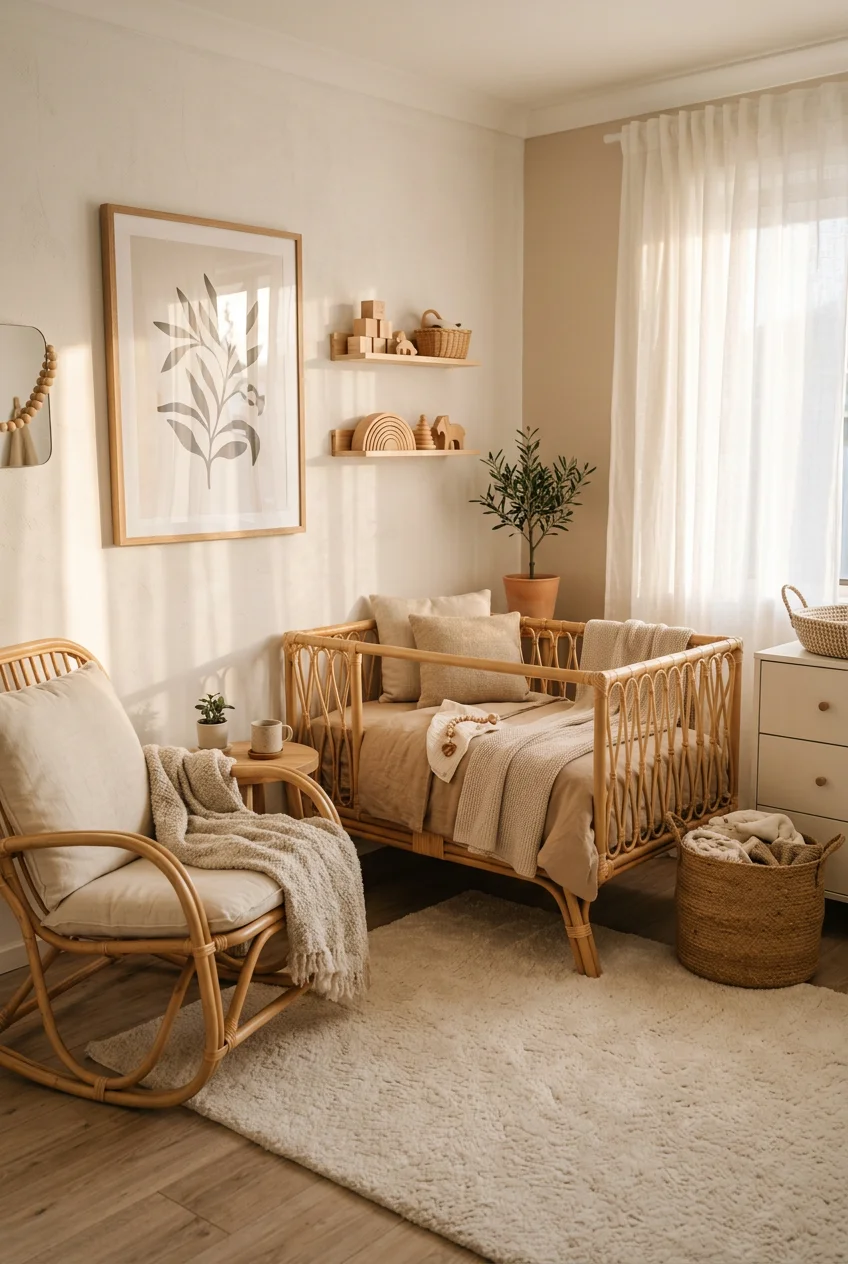
Most people paint the entire room a pale yellow when planning gender neutral baby nursery themes. That’s a fast track to a room that feels like a hospital corridor. I’ve seen too many parents panic-buy matching gray furniture sets, only to realize the room feels cold and sterile. Let’s fix that. Designing a space for a baby means creating a calm environment that actually functions for the adults who spend hours awake in it at 3 AM. If you only try one idea from this list, make it #9. Here’s why: paint fixes everything, and avoiding the all-pastel trap immediately makes a room look professionally designed. Trust me on this.
Skip this list if you’re looking for a hyper-traditional pink-and-blue space or plan to buy a matching 10-piece themed furniture set from a big-box store. These ideas lean heavily on mixing textures, sourcing from different retailers, and building a room that feels like the rest of your house.
1. Earthy Muted Color Palettes for Gender Neutral Baby Nursery Themes

Start with the paint. Most people default to stark white or cool gray when planning gender neutral baby nursery themes. That’s a fast track to a room that feels like a doctor’s waiting area. Instead, use warm, earthy neutrals. A shade like Benjamin Moore Saybrook Sage (HC-114) or a dusty terracotta brings depth without committing to a traditional stereotype. A gallon of premium zero-VOC paint typically ranges from $50 to $80 at hardware stores like Home Depot or Lowe’s. The earthy tones ground the space and hide baseboard scuffs better than pure white. It’s an easy way to add personality. You aren’t stuck with boring beige. The right color acts as an anchor for the rest of your furniture choices.
Best for: homes with abundant natural light.
The catch: dark terracotta or deep olive can make a small, north-facing room feel like a cave if you aren’t careful with your lighting.
2. GREENGUARD Gold Certified Cribs

Air quality matters more than aesthetics. A common mistake is buying a vintage crib and painting it, which introduces unknown chemicals and outdated safety standards into the space. GREENGUARD Gold Certification ensures the furniture is tested for over 360 volatile organic compounds (VOCs). The Babyletto Hudson 3-in-1 Convertible Crib is a solid benchmark here. It’s made from sustainably sourced New Zealand pine and usually retails around $400 to $500 at stores like Target or Crate & Kids. If you’re on a tighter budget, the DaVinci Union 4-in-1 hits the same safety standards and typically costs between $150 and $200. Investing in a certified crib means you don’t have to worry about off-gassing while the baby sleeps.
The catch: these modern, lower-profile cribs often require you to bend down further to pick up the baby, which can be tough on your back.
3. Multifunctional Mid-Century Dressers

Skip the dedicated changing table. They’re useful for exactly two years and then become obsolete clutter taking up valuable floor space. Instead, buy a classic mid-century modern dresser. The Babyletto Lolly 3-Drawer Changer Dresser sits in the $400 to $500 range and comes with a removable changing tray on top. Once the diaper days are over, you lift the tray off, and you’re left with a standard piece of furniture that works for a teenager. You can find similar modular dressers at IKEA or West Elm. Sourcing a standard dresser gives you deeper drawers and better construction quality than most baby-specific furniture.
Best for: tight budgets that need furniture to last a decade.
The catch: three drawers fill up incredibly fast once you start stockpiling bulky items like winter sleep sacks and bulk boxes of wipes.

Mr. Pen- Baby Diaper Caddy Organizer, Gray, Medium
Mr. Pen- Baby Diaper Caddy Organizer punches above its price — 4 buyers rated it 4.5 stars. The kind of pick people reorder.
4. Texture Layering for Warmth

A neutral room without texture is just a boring room. To prevent a beige space from feeling sterile, you have to layer tactile materials. Drape a chunky knit cotton blanket over the back of a bouclé nursing chair. Put a smooth linen crib sheet on the mattress. Place a 5×7 foot braided jute rug (which usually runs $100 to $300 at stores like Rugs USA or Target) under a soft quilted playmat. The visual interest comes from how the light hits the different fabrics. Mixing wood, linen, wool, and cotton creates a sensory environment that feels rich and lived-in. You’ll likely need to vacuum twice a week to keep the dust down.
The catch: jute rugs shed significantly during the first few months and aren’t the softest surface for a baby learning to crawl.
5. Japandi Serene Minimalism

The Japandi aesthetic blends Japanese minimalism with Scandinavian functionality. It focuses on low-profile furniture in pale oak or solid ash, paired with thoughtful, hidden storage. Sleep researchers note that an uncluttered, calm room prevents overstimulation for a developing baby. You achieve this by keeping toys out of sight in woven baskets (a set of three usually costs $40 to $80 at West Elm) and leaving plenty of negative space on the walls. It creates a breathing room. The clean lines keep the focus on the natural wood grains rather than loud, distracting patterns. You have to be ruthless about decluttering to make this look work long-term.
The catch: maintaining a minimalist aesthetic requires constant discipline, which goes out the window when well-meaning relatives start gifting bright plastic toys that don’t fit the vibe.
6. Layered Lighting with Dimmers

Most people install one bright ceiling light and wonder why the baby won’t settle down at night. Good nursery lighting requires a mix of ambient, task, and accent lights. Install dimmable overhead lighting with a shielded fixture to protect sensitive eyes. Add a structured reading lamp by the rocking chair and a plug-in nightlight near the door. Use Full Spectrum LED bulbs to mimic natural daylight in rooms lacking windows. A basic smart dimmer switch usually costs under $30 at Home Depot. Layering your lighting means you can navigate the room at 2 AM without waking the baby fully.
The catch: installing hardwired dimmers requires basic electrical knowledge or hiring a professional, adding to your overall room budget.

Beautiful Wooden Baby Closet Dividers Set of 7
Beautiful Wooden Baby Closet Dividers Set of 7 – Double-Sided Organize has been one of the most consistently praised picks in this category. 11 reviewers averaged 4.5/5.
7. Incorporating Woodland Art Into Gender Neutral Baby Nursery Themes

Nature themes are the backbone of classic gender neutral baby nursery themes. Forest animals or celestial maps never go out of style. You don’t need a massive wall mural to achieve this. A set of four 8×10 inch woodland creature prints from an Etsy seller typically costs $30 to $60. Frame them in simple natural wood frames from Target. This brings the outdoors inside without overwhelming the space. I’d skip the cartoonish decals and stick to realistic sketches. It keeps the room feeling sophisticated rather than juvenile, allowing the art to grow with the child. You might also like: 20 Gender Neutral Baby Nursery for Every Budget
The catch: woodland themes are incredibly common, so it can be difficult to make the room feel unique if you rely entirely on mass-produced prints. You might also like: 18 Vintage Baby Boy Nursery You Need to See
8. Montessori Floor Beds and Low Shelving

Designing with Montessori principles means building the room for the child, not the adult. This involves using a floor bed (a 4-inch thick mattress resting directly on the floor or in a low wooden frame) to allow the child freedom of movement. Pair this with low, accessible shelving for books and toys. Ensure the top shelf is no higher than 24 to 36 inches off the ground so a toddler can reach their own items. I’m not saying you have to abandon the crib immediately, but planning for this layout early saves headaches later. You might also like: 15 Unisex Nursery Ideas You Need to See
Best for: parents committed to child-led exploration and independence.
The catch: a floor bed requires you to completely baby-proof the entire room from day one, as the child will have unrestricted access to the space at night.
9. Avoiding the Easter Egg Syndrome

A massive mistake is painting all four walls a single pastel color. It immediately makes the room look like a giant Easter egg. Instead, use a sophisticated neutral base. Paint three walls in Benjamin Moore Pale Oak (OC-20). Then, choose one accent wall for a pale teal, like Benjamin Moore At Sea (#666), or a muted sage. This grounds the room and allows your furniture to stand out rather than blending into a sea of mint green or baby yellow. The contrast creates a visual hierarchy in the room. Learned that the hard way.
The catch: painting an accent wall requires precise taping and edging, and mistakes are highly visible against the lighter adjacent walls.
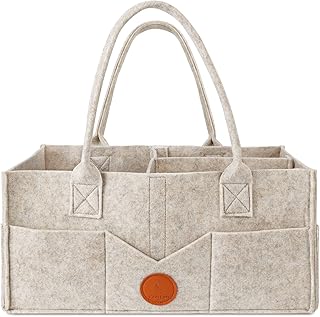
Maliton Baby Diaper Caddy Organizer for Changing Table
A dependable everyday pick — Maliton Baby Diaper Caddy Organizer for Changing Table pulls in 33 ratings at 4.5 stars. Not flashy, just solid.
10. Safe and Sustainable Materials

Beyond zero-VOC paint, look at the actual construction of your textiles and furniture. Seek out furniture made from solid wood certified by the FSC (Forest Stewardship Council). Buy crib sheets with GOTS (Global Organic Textile Standard) certification. A two-pack of GOTS-certified organic cotton crib sheets usually runs $30 to $50 at Pottery Barn Kids. This minimizes the chemical footprint in the room and supports better manufacturing practices. Choosing natural fibers also helps regulate a baby’s body temperature much better than synthetic polyester blends.
The catch: certified organic and sustainably harvested materials almost always carry a 20 to 40 percent price premium over standard alternatives.
11. Abstract and Geometric Wall Art

Instead of literal drawings of animals or alphabet letters, hang abstract art or geometric patterns. A gallery wall above the dresser featuring neutral-framed prints of soft wave motifs or abstract seafoam shapes personalizes the room. You can also use removable wallpaper with a subtle geometric grid. A double roll of high-quality peel-and-stick wallpaper typically costs $80 to $150 at stores like Spoonflower or Wayfair. Abstract art provides visual stimulation for the baby without locking you into a rigid theme that feels outdated in two years.
The catch: peel-and-stick wallpaper is notoriously frustrating to align perfectly, especially if your home has textured walls or uneven ceilings.
12. Strategic Mirror Placement

Small nurseries feel cramped fast. A large round mirror, roughly 30 to 36 inches in diameter, placed directly opposite a window doubles the perceived light. It makes a tiny 10×10 foot room feel significantly larger. Look for mirrors with simple brass or wood frames, which usually retail between $60 and $150 at Target or IKEA. Ensure you use heavy-duty drywall anchors, not just picture hooks. Mirrors also provide excellent developmental stimulation when placed at a safe, accessible height for tummy time.
Best for: small dark rooms that only get indirect sunlight.
The catch: babies love looking at themselves, but toddlers love smudging glass. You’ll be wiping fingerprints off the bottom half of that mirror daily.

Criusia Drawer Organizer Clothes
Criusia Drawer Organizer Clothes punches above its price — 12 buyers rated it 4.5 stars. The kind of pick people reorder.
13. Diverse Board Book Collections

The books you display function as decor. Start building a library with books that avoid heavily gendered language. Display them on acrylic floating ledges (a set of four 24-inch ledges is usually under $40 on Amazon). Books like Cori Doerrfeld’s “The Rabbit Listened” or “LMNOPeas” by Keith Baker feature inclusive themes and beautiful illustrations. These board books typically range from $8 to $15 each at local bookstores or Walmart. The covers add pops of color to an otherwise neutral wall, making the space feel intentionally designed.
The catch: acrylic ledges attract dust quickly and show every single scratch if a child drags a hard toy across them.
14. Keeping Core Elements Flexible

Don’t over-theme the room. Committing to a floor-to-ceiling jungle motif means you’ll be repainting in three years when the child decides they only like construction vehicles. Keep the core elements completely neutral. Introduce the theme through easily changeable accessories like a $40 crib mobile, a $25 throw pillow, or unframed art prints. If you do this right, you can swap the entire vibe in an afternoon. Flexibility is the smartest investment you can make when decorating for a child.
The catch: a highly flexible room can sometimes look a bit generic or unfinished until you add enough layered accessories to give it personality.
15. Mini Cribs for Small Spaces

If you’re turning a home office or a large closet into a nursery, a standard crib won’t fit. A mini crib offers a compact footprint (usually around 38×24 inches compared to a standard 52×28 inches). The Babyletto Gelato Mini Crib is a common solution, typically priced around $300 to $400. Many mini cribs are on wheels, allowing you to roll them from the bedroom to the living room. This mobility is incredibly useful during the first few months when sleep schedules are chaotic.
Best for: renters in tight apartments or families sharing a bedroom with the baby.
The catch: babies grow fast. Your child will outgrow a mini crib much sooner than a standard one, forcing you to buy a toddler bed earlier.

Parker Baby Diaper Caddy
If you want something that just works, Parker Baby Diaper Caddy – Nursery Storage Bin and Car Organizer for D is a safe bet (172 reviews, 4.5 stars).
16. Celestial Dreams and Night Sky Elements

A night sky theme is calming and inherently neutral. Paint the ceiling a deep navy blue (like Sherwin-Williams Naval) and add brass star decals. A pack of 100 vinyl star decals usually costs $15 to $25 on Etsy. Hang a brass moon phase mobile over the changing station. It gives the room a sleepy, quiet atmosphere that works perfectly for nighttime routines. You can’t go wrong with stars. The high contrast of gold against navy also helps with newborn visual development.
The catch: painting a ceiling a dark color requires excellent lighting, otherwise the room will feel visually heavy and shorter than it actually is.
17. Neutral Safari and Savannah Textures

A safari theme doesn’t require bright yellow giraffes and cartoon lions. Do it with texture. Bring in a large, faux-leather pouf (usually $80 to $150 at CB2 or West Elm) for resting your feet. Add a large, potted faux olive tree in the corner (a 6-foot faux tree runs $100 to $200 at Target). Frame vintage-style, sepia-toned sketches of savannah animals. The leather and greenery add warmth without relying on bright, primary colors that disrupt the serene vibe.
The catch: faux trees are massive dust magnets, and a crawling baby will inevitably try to pull the fake moss or decorative rocks out of the base.
18. Ocean and Coastal Waves

A coastal theme works beautifully when you stick to muted colors. Think sea glass, driftwood, and soft sand. Install removable wallpaper featuring a soft, abstract wave motif behind the crib. Use a whitewashed wood dresser (typically $300 to $600 at Wayfair) and hang a mobile made of smooth, tumbled driftwood pieces. It feels like a high-end beach house rather than a pirate ship. The soft blues and greens are naturally calming, which is exactly what you want in a sleep space. No exaggeration.
The catch: whitewashed furniture can easily lean into a shabby-chic look, which might clash if the rest of your house is highly modern or industrial.
19. Botanical and Herbal Touches

Bring the greenhouse inside. Use a pale sage green for the walls and hang botanical illustration prints. Install a high shelf (at least 6 feet up) to hold trailing plants like pothos. If you lack a green thumb, high-quality artificial trailing plants from IKEA cost under $20. Add linen curtains in a natural, unbleached oatmeal color to soften the windows. The green adds life and breaks up the monotony of a purely beige room without committing to a specific animal theme.
The catch: real plants require watering, which means climbing on a step stool in a room where a baby is sleeping. Fake plants require regular dusting.
20. Warm Desert and Terracotta Accents

The desert aesthetic relies on warmth. Combine a dusty terracotta accent wall with natural rattan furniture. A rattan side table or a woven pendant light shade (usually $50 to $100 at World Market or Target) adds instant texture. Incorporate a washable rug with a subtle Southwestern geometric pattern. This style feels incredibly grounded and hides stains brilliantly. The warm tones make the room feel cozy, especially during the colder months when natural light is scarce.
Best for: homes with kids or pets where pristine white rugs simply aren’t an option.
The catch: rattan and wicker furniture can snag delicate clothing, and the woven gaps are notoriously difficult to clean if something spills on them.
How we chose these ideas: We prioritized renter-friendliness, overall cost, and visual impact. The focus was on adaptable elements that don’t require heavy construction and can easily transition into a toddler or guest room later.
Designing a nursery shouldn’t feel like a temporary set design. By sticking to these principles, you build a room that actually functions well for both you and the baby. Don’t forget to save or pin this list when you’re ready to start picking out paint colors.
Frequently Asked Questions
What colors work best for gender neutral baby nursery themes?
Warm, earthy neutrals like sage green, pale oak, dusty terracotta, and warm mushroom are excellent choices. They provide depth and hide scuffs better than stark white, while avoiding the traditional pastel pink or blue stereotypes.
How do you add warmth to a neutral nursery?
Layering textures is the most effective method. Combine a braided jute rug, a chunky knit cotton blanket, smooth linen crib sheets, and a bouclé nursing chair. The contrast in tactile materials prevents the room from feeling cold or sterile.
Are mini cribs a good idea for small nurseries?
Yes, mini cribs are highly practical for tight spaces or apartments. They offer a compact footprint, often around 38×24 inches, and many come on wheels. The drawback is that your child will outgrow it faster than a standard crib.
How can I decorate without using a specific theme?
Focus on abstract art, geometric patterns, and natural textures rather than literal drawings of animals or characters. Removable wallpaper with soft wave motifs or a gallery wall of landscape sketches keeps the room flexible as the child grows.
