What’s Inside
- Embrace Warm Neutrals and Earthy Tones
- Implement Color Drenching for a Calming Effect
- Prioritize Zero-VOC, GreenGuard Gold Certified Paints
- Invest in a Convertible Wood Crib for Longevity
- Ensure Strict Crib and Mattress Safety Standards
- Layer Lighting with Dimmable Options
- Integrate Smart Dresser Storage Solutions
- Incorporate Natural Woven Textures
- Choose a Boucle Glider for Comfort
- Avoid Overstimulating Bold Primary Colors
- Add a Cool Mist Humidifier for Health
- Anchor All Furniture to the Wall
- Choose Age-Appropriate and Timeless Themes
- Install Cordless Window Treatments
- Plan for Electrical Safety and Conceal Cords
- Introduce Soft Colors for 3-Month Vision
- Utilize Under-Crib Storage Bins
- Install Open Shelving for Books
Most folks start a nursery by painting the walls baby blue and grabbing matching elephant bedding. It’s the quickest way to make a room look dated before the baby even gets home. When you’re planning boy nursery ideas, you want a space that feels calm at 3 AM. Not a primary-colored theme park. Let’s skip the bland decor that feels like wet cardboard and focus on concepts that actually last. A nursery needs to function like a well-oiled machine while looking like a peaceful retreat. The visual details, textures, and lighting all dictate how the room feels during those long nights. If you only try one idea from this list, make it #2. Color drenching the room in a warm neutral creates a cocoon effect that changes everything. Trust me.
Skip this list if you’re looking for licensed character themes or high-contrast, primary-colored plastic decor. These ideas focus on muted tones, natural textures, and long-term investments. If your goal is a temporary, hyper-stimulating playroom aesthetic, these concepts won’t fit your vision.
1. Embrace Warm Neutrals and Earthy Tones

Let’s talk paint. Most people walk into a hardware store and grab the first pastel blue they see. It’s a classic mistake. I learned that the hard way. Instead, go for warm neutrals and earthy tones for a timeless base. You’re creating a room that needs to feel calm during late-night feedings. Moving beyond traditional blues and opting for shades like beige, oat, sand, soft taupe, or mushroom changes the vibe entirely. Muted greens like sage, olive, and eucalyptus work wonders, too. For instance, painting the walls with Sherwin-Williams’ “Universal Khaki” or Benjamin Moore’s “Quiet Moments 1563” offers a soothing quality that doesn’t scream “nursery.” These palettes grow with your child, so you won’t be repainting in three years. Pricing this out, a standard 1-gallon can from these premium brands usually hits the $50 to $80 range. An eggshell finish wipes down easily when sticky fingers eventually touch the walls. The catch: warm neutrals can look muddy in north-facing rooms without enough natural or layered lighting.
2. Implement Color Drenching for a Calming Effect

Best for: small dark rooms.
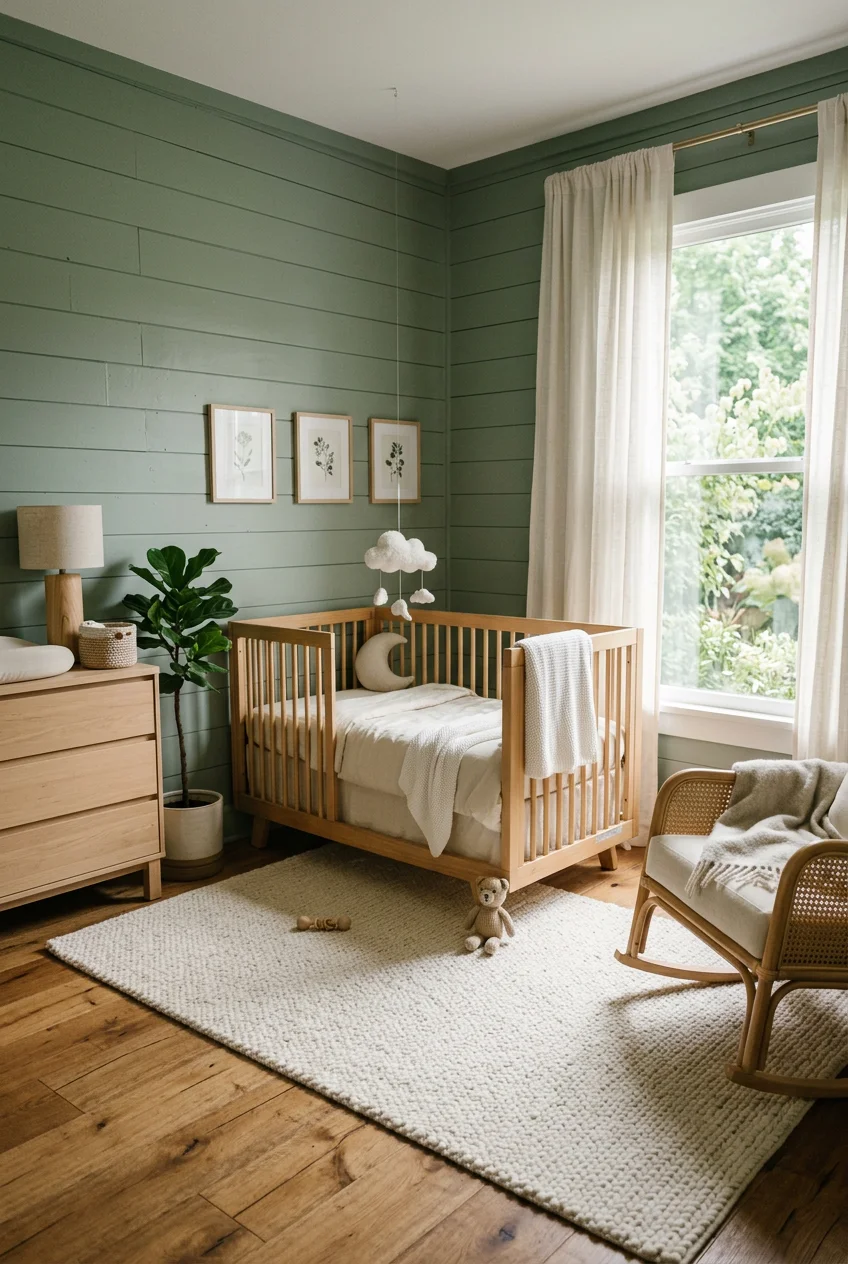
A lesser-known approach for boy nursery ideas is “color drenching.” You paint all four walls, the ceiling, the skirting boards, and the door frames in the exact same tone. Soft sage green or warm stone work beautifully here. By ditching the stark white contrast of a standard ceiling and trim, you create an immersive, cocoon-like effect that feels restful. The eye has nowhere to catch, which makes small rooms feel larger and more cohesive. Brands like Clare Paint offer excellent muted tones in 1-gallon buckets (mid-range pricing) that suit this method perfectly. You’ll need to calculate your square footage carefully because painting the ceiling and trim requires way more product than just the walls. A matte finish on the ceiling with a satin finish on the trim, using the same color code, adds subtle depth. The catch: it requires more paint and prep work than a standard accent wall, making it a tedious weekend project.
3. Prioritize Zero-VOC, GreenGuard Gold Certified Paints

Protecting a baby’s lungs starts before they even enter the room. Using paints free from volatile organic compounds (VOCs) is non-negotiable. Standard paints release invisible, strong-smelling chemicals for months. Brands like Benjamin Moore Eco Spec, ECOS Paints (the Lullaby range), AFM Safecoat, and Clare Paint offer zero-VOC options. You’ll want to buy standard 1-gallon cans, which usually sit in the $60 to $90 price range. Even with zero-VOC formulas, make sure the room off-gasses for 24 to 72 hours with the windows wide open before putting the crib or textiles in there. The lack of that harsh, chemical smell is noticeable. You’re paying for peace of mind and cleaner air. The catch: zero-VOC paints often require more coats for full coverage compared to the chemical-heavy stuff.

Baby Closet Divider, Baby Wardrobe Organizer
Baby Closet Divider punches above its price — 371 buyers rated it 4.5 stars. I would buy it again.
4. Invest in a Convertible Wood Crib for Longevity

Buying a crib that only lasts two years is a waste. Choose a convertible crib that turns into a toddler bed and eventually a full-sized bed. This future-proofing is a smart move. Look for models with clean lines and natural wood finishes, which bring organic warmth into the room. A solid pine or oak finish grounds the space. Brands at Target or Pottery Barn Kids offer these models ranging from budget to premium prices. You want a sturdy frame that doesn’t rattle or squeak when you lean on it. The hardware should be hidden or flush with the wood for a cleaner look. The natural grain adds texture that painted MDF can’t touch. The catch: conversion kits—the toddler rail and full-bed side rails—are almost always sold separately and cost extra, and they frequently go out of stock right when you need them.
5. Ensure Strict Crib and Mattress Safety Standards

Safety isn’t a design choice; it’s a requirement. Always use a crib made after 2011, because federal safety standards changed that year. Drop-side cribs are illegal and dangerous. The crib mattress must be exceptionally firm. It should measure 27 1/4 inches wide by 51 5/8 inches long and be no more than 6 inches thick. There should be no more than a 1-inch gap between the mattress and the crib sides. If you can fit two fingers in that gap, the mattress is too small and poses a severe entrapment risk. Brands like Sealy or Newton Baby offer standard options in the mid-to-premium price range. A proper mattress feels hard to an adult, but it prevents a baby from sinking in. The catch: ultra-firm safety mattresses aren’t plush, which sometimes makes parents think they need to add unsafe padding.
6. Layer Lighting with Dimmable Options

Best for: renters (if using plug-in sconces).
Avoid relying on a single, glaring overhead light. Poor lighting ruins the mood. Install dimmable LED ceiling lights for daytime and add a soft bedside lamp or a wall sconce near the chair for late-night feeds. This layered approach helps create a calm environment. You don’t want to blast a 60-watt bulb into a baby’s eyes at 2 AM. Philips Hue smart bulbs (sold in 2-packs, mid-range pricing) let you control the dimness and color temperature from your phone, which is a lifesaver when you’re trapped under a sleeping infant. A warm amber glow mimics sunset and signals it’s time to rest. The catch: hardwired wall sconces require an electrician and drywall patching if you don’t have the junction boxes ready. You might also like: 20 Baby Girl Room Ideas for Every Budget

Criusia Drawer Organizer Clothes
A dependable everyday pick — Criusia Drawer Organizer Clothes pulls in 11 ratings at 4.5 stars. Not flashy, just solid.
7. Integrate Smart Dresser Storage Solutions

Babies come with a ton of gear, and poor storage leads to clutter. Skip the tiny changing tables. Grab a wide, sturdy dresser with deep drawers that can double as a changing station. The Ikea Hemnes 8-drawer dresser is a classic (mid-range price) because the top is wide enough for a 32-inch changing pad plus a basket for wipes. Line the drawers with heavy-duty shelf liner and use fabric dividers to separate tiny socks from onesies. Smooth-gliding drawer tracks are essential because you’ll be opening them one-handed constantly. The weight of a solid dresser also makes it safer once anchored. The catch: assembling large flat-pack dressers takes hours, needs floor space, and tests your patience. You might also like: 18 Nursery Themes Boy Worth Trying
8. Incorporate Natural Woven Textures

Flat, painted surfaces need contrast. Adding earthy textures like rattan, wicker, macrame, and natural wood keeps the room from feeling sterile. A woven flush mount light or a large rattan pendant adds organic warmth without taking up floor space. You can find great woven fixtures at World Market or Target (budget to mid-range). The rough, natural fibers contrast beautifully against smooth, matte walls. You might also bring in a chunky, hand-knit cotton throw draped over the glider. These tactile elements make the space feel collected and intentional. The catch: woven rattan and wicker fixtures collect dust quickly and require regular cleaning with a vacuum brush. You might also like: 17 Nursery Storage Ideas You Need to See
9. Choose a Boucle Glider for Comfort

You’ll spend hundreds of hours in the nursery chair. It needs to be comfortable, but it doesn’t have to look like a bulky theater recliner. Consider a boucle glider in a warm neutral like ivory or oatmeal. Boucle fabric has a looped, nubby texture that feels soft and adds a high-end touch. Retailers like Crate & Kids or West Elm offer beautiful boucle gliders (premium price). The thick texture hides minor wear, and the high back provides crucial neck support during those long feeding sessions. A smooth, silent gliding mechanism is key; test it to make sure it doesn’t squeak. The catch: light-colored boucle is notoriously hard to spot-clean when milk spills happen, often requiring professional upholstery cleaning.

Beautiful Wooden Baby Closet Dividers Set of 7
If you want something that just works, Beautiful Wooden Baby Closet Dividers Set of 7 – Double-Sided Organize is a safe bet (11 reviews, 4.5 stars).
10. Avoid Overstimulating Bold Primary Colors

While bold colors are trending, too much contrast can be a sensory overload for a baby, making it hard for them to relax. Expert opinion suggests that soft sage, muted blue-gray, and warm off-white support melatonin and longer naps. When brainstorming boy nursery ideas, you don’t need bright red fire trucks and yellow construction signs everywhere. If you love color, use it sparingly. Maybe paint a single accent wall in a muddy shade, or use a muted, washable rug. A 5×8 foot rug from Ruggable (mid-range pricing) in a faded vintage pattern adds color without screaming for attention. The catch: finding baby gear, toys, and books that aren’t neon-colored plastic takes more effort and curation.
11. Add a Cool Mist Humidifier for Health

Best for: dry climates.
This is a practical necessity that hits the design. Pediatricians often recommend cool mist humidifiers, especially in dry climates or winter months. They help soothe dry skin, protect against respiratory infections, and can even help with cradle cap. Aim to keep humidity between 40% and 60%. Brands like Crane or Frida Baby offer sleek, modern designs with 1-gallon tanks (budget to mid-range pricing) that don’t look like medical gear. The quiet, white-noise hum of the machine helps babies sleep longer. Place it on a water-resistant tray on a shelf, away from the crib. The catch: humidifiers require daily emptying and weekly deep cleaning with white vinegar to prevent mold.
12. Anchor All Furniture to the Wall

This is a critical safety step most people ignore until it’s too late. Dressers, bookshelves, and tall furniture must be securely anchored to the wall studs to prevent tip-overs. These are life-threatening hazards once your baby starts to pull up or climb. Don’t rely on the flimsy plastic zip-ties that come free with the furniture. Buy heavy-duty metal furniture straps or brackets. Safety 1st offers metal anchoring kits (under $20) that hold significant weight. You’ll need a stud finder and a drill to install them right. It gives you peace of mind when you leave the room while your toddler is napping. The catch: you have to drill screws into your studs, which means patching holes if you ever move the furniture.

Criusia Over the Door Organizer
Criusia Over the Door Organizer punches above its price — 247 buyers rated it 4.5 stars. I would buy it again.
13. Choose Age-Appropriate and Timeless Themes

While themed nurseries are popular, avoid committing too hard to a specific concept your child might outgrow in 18 months. Nature-inspired boy nursery ideas like a woodland adventure, a soft safari, or a celestial theme with muted colors are trending for their calming feel and longevity. Instead of painting a massive jungle mural, use high-quality, removable vinyl wall decals. Etsy is packed with independent artists selling beautiful, watercolor-style decals (prices vary, usually budget-friendly). You can apply a cluster of subtle pine trees or a muted crescent moon above the dresser. It gives the room personality without a permanent commitment. The catch: large-scale peel-and-stick wallpaper murals can be tedious to align and often peel at the seams in humid climates.
14. Install Cordless Window Treatments

Dangling cords from blinds and draperies pose severe strangulation risks. Don’t compromise here. Opt for completely cordless window treatments or ensure all cords are permanently secured out of reach with wall cleats. Blackout curtains are also essential for daytime naps. A high-quality cordless cellular shade blocks light efficiently and operates with a simple push or pull. Retailers like SelectBlinds or Home Depot offer custom-cut cordless blackout shades (mid-range pricing). Layering these under floor-length linen curtain panels softens the hard edges of the window frame and adds texture. The catch: true blackout cellular shades have a rigid, accordion look that rarely looks as flowing as custom fabric drapery.
15. Plan for Electrical Safety and Conceal Cords

Best for: homes with crawling babies.
Before you arrange the furniture, map out your outlets. Cover every single one. As babies grow, the number of cords will multiply. Floor lamps, baby monitors, humidifiers, and white noise machines all need power. Plan to hide cords behind furniture or use hard plastic cord covers along the baseboards to prevent pulling hazards. A product like the Sleek Socket (under $30) hides the outlet and provides a flat cord that runs flush against the wall. It’s a brilliant way to plug in a lamp behind a dresser. The catch: bulky, square plug-in adapters for video monitors often don’t fit inside standard flat outlet cover boxes.

Cube Storage Organizer with Storage Bins Included
A dependable everyday pick — Cube Storage Organizer with Storage Bins Included – The Perfect Closet pulls in 107 ratings at 4.5 stars. Not flashy, just solid.
16. Introduce Soft Colors for 3-Month Vision

While newborns primarily see in black and white, by around 3 months, babies can perceive colors. This means you don’t have to restrict the room to a stark, high-contrast monochrome palette. Incorporating soft, stimulating colors in the decor supports visual development without causing overstimulation. Think muted mustard yellows, soft terracotta, or faded denim blues. You can introduce these shades through smaller accessories like canvas storage bins. Pehr offers excellent heavy canvas bins (13×13 inches, mid-range pricing) with subtle, colorful pom-poms or stripes. These add enough visual interest for a baby to focus on during tummy time. The catch: soft, muted canvas fabrics show dirt and smudges faster than dark, high-contrast patterns.
17. Utilize Under-Crib Storage Bins

Best for: tight budgets and small spaces.
If you’re working with a small footprint, the space under the crib is prime real estate. Don’t let it go to waste. Use shallow, rolling under-crib storage bins for extra diapers, outgrown clothes, or blankets. The Container Store sells excellent clear, low-profile bins with latching lids (budget to mid-range). Measuring the exact clearance under your specific crib before buying is crucial, as the mattress height drops as the baby grows, reducing space. Keeping the overflow hidden keeps the visible areas of the room calm. The catch: pulling heavy plastic bins out constantly can scratch hardwood floors if you don’t stick felt pads to the bottom.
18. Install Open Shelving for Books

A nursery needs books, but a deep bookcase takes up floor space and invites a toddler to pull everything onto the floor. Install shallow, open ledge shelving on the walls instead. This lets you display books facing outward, which encourages reading and adds colorful artwork to the walls. The Ikea Flisat wooden spice racks or Target Pillowfort acrylic ledges (budget-friendly) are perfect. Mount them low enough for a toddler to reach the bottom shelf, but keep the upper shelves for fragile items or longer storybooks. It turns your book collection into functional wall art. The catch: open shelves require constant styling to look neat; otherwise, they look like a chaotic pile of paper. It took me years to learn that lesson.
How we chose these ideas: This list prioritizes long-term visual impact, safety compliance, and practical storage. The focus is on concepts that balance elegant design with daily functionality, avoiding temporary trends that require complete room overhauls within two years.
Designing a nursery is exhausting, but focusing on these functional, elegant boy nursery ideas ensures you create a room that works for you, not against you. Save this list to your Pinterest board so you have the specific measurements and safety guidelines handy when you’re standing in the hardware store. No exaggeration, it’s a lifesaver.
Frequently Asked Questions
What are the best paint colors for a boy nursery?
Warm neutrals like beige, oat, and soft taupe, alongside muted greens like sage and olive, are excellent choices. They provide a calming atmosphere that grows with your child, avoiding the overstimulation of bright primary colors.
How thick should a crib mattress be?
A safe crib mattress should be no more than 6 inches thick. It must fit snugly within the crib, leaving no more than a 1-inch gap between the mattress and the crib sides to prevent entrapment.
Why use a cool mist humidifier in a nursery?
A cool mist humidifier helps maintain indoor humidity between 40-60%. This soothes dry skin, alleviates congestion, and provides a quiet white noise that can help babies sleep longer, especially in dry climates.
What is color drenching in nursery design?
Color drenching involves painting the walls, ceiling, and trim the exact same color. In a nursery, using a soft, warm tone creates a cohesive, cocoon-like effect that feels restful and makes small rooms appear larger.
