What’s Inside
- Soft Botanical Baby Nursery Themes
- Sage Green and Terracotta
- The Convertible Classic
- Safe & Sound Minimalism
- The Grounded Explorer
- Layered Twilight
- The Comfort Cocoon
- Woven Storage Haven
- The Grounded Play Space
- Sensory Wonder
- The Skyward Gaze
- The Subtle Woodland
- Zero-VOC Sanctuary
- Color-Drenched Stone
- The Cordless Oasis
- The Flexible Nomad
- Organic Modernist Baby Nursery Themes
- The Vintage Eclectic
Walking into most modern nurseries feels like stepping into a plastic explosion. The walls are too bright, the furniture feels flimsy, and the overhead lighting mimics a sterile hospital cafeteria. It’s a common mistake that leaves parents exhausted and babies totally overstimulated. When planning baby nursery themes, you’ve got to prioritize daily function just as much as Pinterest aesthetics. You’re building a room for sleep, late-night feeding, and messy reality. Not a museum exhibit. The smell of off-gassing synthetic materials and the visual chaos of primary colors aren’t conducive to rest. Trust me on this. If you only try one idea from this list, make it #6 (Layered Twilight). Here’s why: harsh overhead lighting ruins infant sleep cycles faster than anything else. A simple bulb change solves the problem immediately.
Skip this list if you’re looking for hyper-traditional, heavily gendered pink and blue rooms covered in cartoon characters. These concepts focus on longevity, muted color palettes, and highly functional modern design. If you want disposable fast-furniture that won’t last past the toddler years, these strategies simply won’t align with your goals.
1. Soft Botanical Baby Nursery Themes

Most people default to stark white walls and wonder why the room feels cold and sterile. Biophilic design fixes this by pulling natural elements indoors. You don’t need a literal jungle painted on the walls to achieve this look. A soft botanical approach uses earthy neutrals to create a calm, grounded baseline. Paint the walls with Valspar’s Warm Eucalyptus (you’ll typically need 1 to 2 gallons for a standard 10×12 foot room). This muted green prevents the space from looking like a cartoon while providing a serene backdrop that supports early visual development. Pair it with natural wood finishes and unbleached cotton textiles. A common mistake is buying cheap synthetic vines to hang from the ceiling. They gather dust instantly and look cheap. Stick to framed botanical prints from Target or a real, non-toxic plant like a Boston Fern in a heavy, floor-standing ceramic pot.
The catch: muted greens can look incredibly dreary in north-facing rooms that lack natural light.
Best for: rooms with large south-facing windows.
2. Sage Green and Terracotta

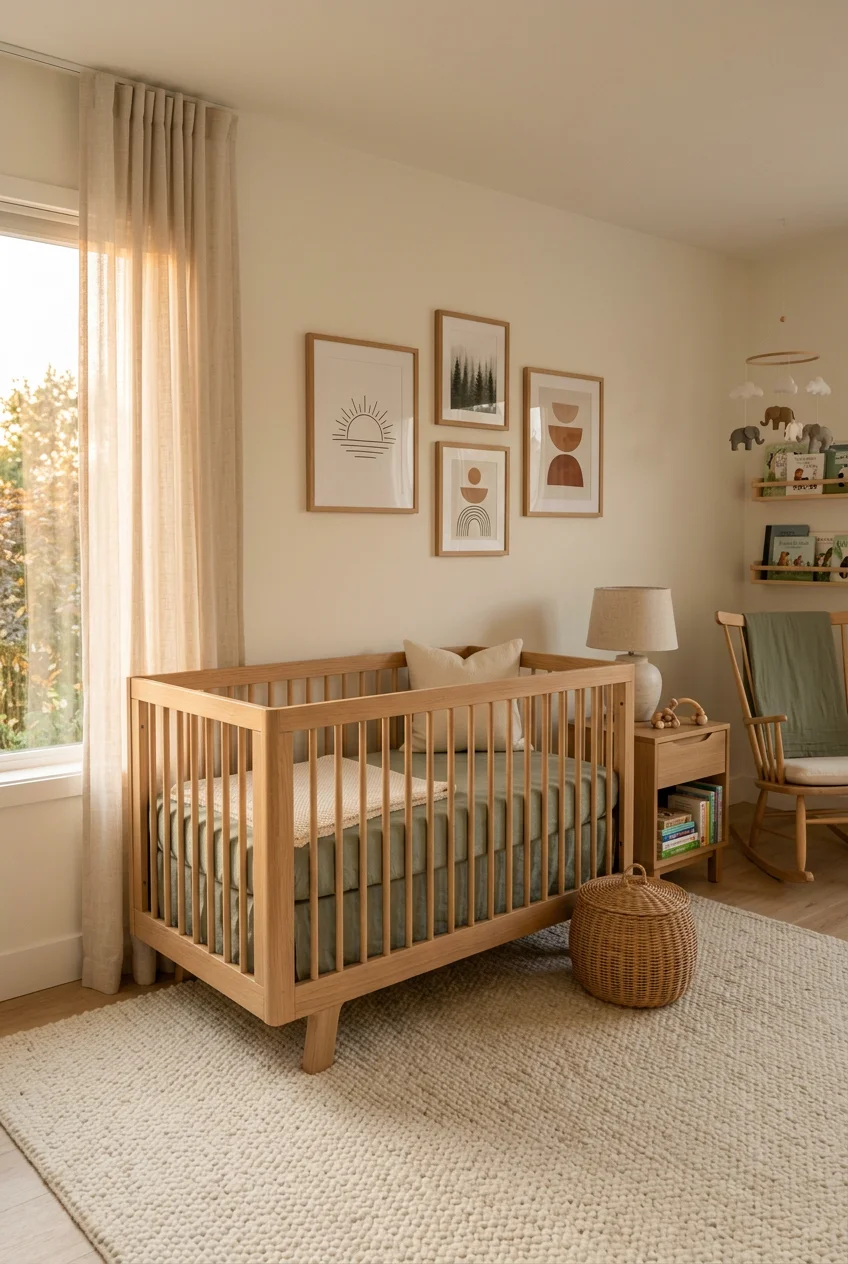
Warm, earthy tones are finally replacing the stark, sterile grays of the last decade. A sage green and terracotta palette creates a grounded, calming environment that doesn’t feel overly juvenile. Use Benjamin Moore’s Saybrook Sage HC-114 on the walls (plan for 2 gallons for standard coverage). Bring in terracotta through heavy textiles, like a rust-colored rough linen crib skirt or a burnt orange throw blanket draped over the glider. This combination mimics nature and provides a beautiful, high-contrast backdrop for natural wooden toys and books. A common mistake is painting the entire room terracotta, which makes the space feel like a dark, enclosed cave. Keep the heavier, warmer colors as intentional accents. You can find excellent terracotta-hued heavy cotton curtains at West Elm to frame the windows and block out afternoon glare.
The catch: terracotta fabrics tend to fade quickly and look washed out if exposed to direct, harsh sunlight every day.
3. The Convertible Classic

Buying a single-use crib is a massive waste of money. The smart approach builds the room around a 3-in-1 or 4-in-1 convertible crib. The Babyletto Hudson or DaVinci Kalani are standard recommendations for a very good reason. They transition from a crib to a toddler bed, a daybed, and eventually a full-size bed frame. You’ll spend between $300 and $700 upfront. This saves you from buying three different beds before your child hits elementary school. Make sure the crib slats are no wider than 6cm (roughly 2.3 inches) to prevent dangerous entrapment. A solid wood frame grounds the room visually. You can style it with minimalist linen sheets or heavier quilted blankets depending on the season. Don’t buy the matching bedroom set. Matchy-matchy furniture makes a room look like a cheap catalog showroom.
The catch: the toddler rail and full-size bed conversion kits are almost never included in the base price and cost extra.
Best for: budget-conscious parents planning for the long term.

Mr. Pen- Baby Diaper Caddy Organizer, Gray, Medium
Mr. Pen- Baby Diaper Caddy Organizer is sturdier in person than the photos suggest — over 4 buyers gave it 4.5 stars.
4. Safe & Sound Minimalism

Minimalism isn’t just an aesthetic choice. It’s a highly effective safety strategy. Fewer items mean fewer hazards and significantly less dust accumulation. Start with GREENGUARD Gold certified furniture to ensure low chemical emissions and better indoor air quality. The Babyletto Swell Changing Table is a solid example of a piece that meets modern safety standards without looking clunky or cheap. Keep the area around the crib completely bare. No heavy wall art, no trailing cords, and no bulky shelves within arm’s reach. The visual quiet helps the baby wind down for sleep. You can source simple, certified organic cotton crib sheets from Pottery Barn Kids to complete the clean, unbothered look. When you limit the visual noise, the room immediately feels more expensive.
The catch: true minimalist spaces require rigorous daily tidying, or the few items left out just look like a neglected mess.
5. The Grounded Explorer

Once a baby starts pulling up on things, every piece of furniture becomes a dangerous climbing wall. The grounded explorer theme focuses on low-profile, heavily secured pieces. You must anchor all tall furniture to the wall. This is non-negotiable. Dressers and tall bookshelves pose serious tip-over hazards that can be fatal. Use the anti-tip kits that come with heavy pieces like the Pottery Barn Kids Kendall 7-Drawer Dresser. If you buy second-hand, purchase heavy-duty metal brackets from Home Depot (a pack of 4 costs under $10) and secure them directly into the wall studs. Keep heavy wooden toys in the bottom drawers and display lightweight, soft items up top to maintain a low center of gravity.
The catch: drilling heavy-duty metal anchors into the wall will leave substantial holes that require patching and repainting when you eventually move the furniture.
Best for: homes with active toddlers or large pets that bump into furniture.
6. Layered Twilight

Relying on a single overhead light is a rookie mistake. It blinds the baby during late-night diaper changes and creates harsh, unappealing shadows across the room. You need layered lighting. Start with dimmable LED ceiling lights. A 4-pack of Philips Hue smart bulbs allows you to adjust both brightness and color temperature straight from your phone. Set them to a warm amber glow at 20 percent brightness for the 3 AM feed. Add a floor lamp in the corner and a dedicated low-wattage nightlight near the changing station. This prevents visual overstimulation when you want the baby to go right back to sleep. You can find decent, heavy-based floor lamps at IKEA. Make sure the base weighs at least 10 pounds so a crawling baby can’t easily knock it over. You might also like: 19 Baby Boy Nursery Room Ideas Worth Trying
The catch: smart bulbs require a stable Wi-Fi connection and often a separate smart hub to function reliably. You might also like: 15 Unisex Nursery Ideas You Need to See

Criusia Drawer Organizer Clothes
Criusia Drawer Organizer Clothes is sturdier in person than the photos suggest — over 11 buyers gave it 4.5 stars.
7. The Comfort Cocoon

You’re going to spend hundreds of hours sitting in this room, mostly in the middle of the night. The seating area requires just as much attention as the crib setup. A comfort cocoon setup centers around a high-quality, performance fabric glider. Look for models featuring water-repellent and stain-resistant materials, like the Nurture& Glider Plus (typically priced between $1,000 and $1,500). Ensure the seat is at least 18 inches wide and the back is high enough to fully support your head while you hold a sleeping baby. Pair it with a small, sturdy side table from Target to hold water bottles, sound machines, and burp cloths. A cheap rocking chair will destroy your lower back within a month. I learned that the hard way. You might also like: 20 Inspiring Yellow Nursery Lighting Ideas for Every Budget
The catch: performance fabric gliders are incredibly heavy and bulky, making them difficult to maneuver through narrow doorways or up tight staircases.
8. Woven Storage Haven

Babies require an absurd amount of gear. If you don’t plan for aggressive storage, the room will turn into a chaotic dumping ground within a week. A storage-focused setup utilizes multi-functional pieces to hide the daily clutter. Choose a dresser with deep, smooth-gliding drawers, like the Storkcraft Modern Convertible Baby Changing Table, which doubles as a changing station on top. Incorporate woven baskets for loose toys and extra blankets. The Container Store sells highly durable water hyacinth baskets (buy a set of 3 or 4) that slide perfectly under open shelving units. Add wall-mounted shelves with rounded edges for displaying hardback books safely out of reach.
The catch: woven natural baskets shed fibers over time and can be incredibly difficult to clean if a bottle spills inside them.
Best for: smaller nurseries that lack built-in closet space.
9. The Grounded Play Space

A bare hardwood floor is cold, echoes loudly, and is unforgiving for a baby learning to crawl. A proper rug adds warmth, absorbs sound, and visually defines the activity zones. Sizing is where most people fail entirely. For a medium room (8 to 12 square meters), a 160×230 cm rug (roughly 5×7 feet) works perfectly when placed under the front legs of the crib and the glider. For larger rooms, a 200×300 cm rug (roughly 8×10 feet) fills the floor and grounds the entire furniture arrangement. You can find excellent, tightly woven options at Crate & Kids. Avoid high-pile flokati rugs entirely. They trap dirt, hide dropped safety pins, and present a choking hazard if the baby pulls loose fibers.
The catch: large, heavy rugs require professional cleaning once a year to remove deep-seated dust mites and allergens.

Modanais Baby Diaper Caddy Organizer Cart
If you want something that just works, Modanais Baby Diaper Caddy Organizer Cart – 3 Tier Rolling Storage Car is a safe bet (325 reviews, 4.5 stars).
10. Sensory Wonder

A nursery shouldn’t just look good in photographs. It needs to engage a developing baby’s senses through varied textures and gentle stimuli. Build a sensory wonder theme by layering different tactile materials throughout the space. Start with a highly textured rug. A washable wool shag rug from Ruggable (a 5×7 foot size is usually sufficient) provides a soft surface for tummy time while remaining easy to throw in the washing machine. Hang a mobile with high-contrast geometric patterns, like the Skip Hop Celestial Dreams Mobile, directly above the crib to encourage early visual tracking. Add soft, safe toys that crinkle or rattle to a low, accessible floor basket.
The catch: layering too many different textures and patterns can quickly make a small room feel visually cluttered and chaotic.
11. The Skyward Gaze

Babies spend their first few months flat on their backs, staring straight up at the ceiling. Leaving the ceiling completely blank is a missed design opportunity. The skyward gaze approach treats the ceiling as the fifth wall. Apply a subtle, calming ceiling treatment to provide visual interest without causing overstimulation before naps. A delicate cloud pattern wallpaper from Chasing Paper (you’ll need 2 to 3 rolls for a standard ceiling) draws the eye upward and actually makes the room feel taller. Alternatively, you can paint the ceiling a soft, muted blue while keeping the walls a warm cream to mimic the sky.
The catch: installing wallpaper on a ceiling is physically exhausting, messy, and usually requires hiring a professional to get the seams perfectly straight.
12. The Subtle Woodland

Committing heavily to a specific, rigid theme is a fast track to a dated room. Wall-to-wall dinosaurs or giant cartoon farm animals lose their appeal by the time the child turns two. The subtle woodland approach uses intentional, minimal elements instead of overwhelming graphics. Apply a quiet, repeating woodland animal wallpaper accent to just one wall behind the crib. Keep the remaining three walls a solid, neutral color. Frame three small, 8×10 inch vintage animal illustrations from an Etsy artist to hang above the changing table. This allows the room to evolve naturally as your child’s interests inevitably change.
The catch: accent walls can sometimes make a room feel lopsided or unbalanced if the heavier furniture isn’t arranged properly against the solid colored walls.
Best for: renters who want personality without painting the entire room.

Blissful Diary Floral Diaper Caddy Organizer
Blissful Diary Floral Diaper Caddy Organizer has been one of the most consistently praised picks in this category. 348 reviewers averaged 4.5/5.
13. Zero-VOC Sanctuary

Indoor air quality is critical for infants whose lungs are still developing. Traditional paints release Volatile Organic Compounds (VOCs) into the air for months after drying, creating that distinct, headache-inducing fresh paint smell. A sanctuary theme prioritizes non-toxic materials from the ground up. Select paints with zero VOCs and GREENGUARD Gold certification to minimize harmful emissions. Brands like Sherwin-Williams offer excellent zero-VOC lines in calming shades like Universal Khaki (buy 2 gallons for a standard room). Pair the clean walls with an organic cotton crib mattress and solid wood furniture that hasn’t been treated with heavy, off-gassing chemical varnishes.
The catch: zero-VOC paints often require an extra coat or two to achieve the same opaque, streak-free coverage as traditional, chemical-heavy paints.
14. Color-Drenched Stone

If you want a sophisticated, highly cocooning atmosphere, skip the standard bright white trim. Color drenching involves painting all four walls, the ceiling, the skirting boards, and the door frames in the exact same soft, muted tone. A warm stone or greige creates an immersive, incredibly cozy environment that feels custom-designed. You’ll need about 3 to 4 gallons of paint to cover every surface in a 10×12 foot room. This technique blurs the sharp visual edges of the room, making it feel larger and more serene. It works exceptionally well in gender-neutral nurseries where you want the furniture to stand out.
The catch: painting the ceiling and trim the exact same color makes it very difficult to touch up scuffs later without repainting entire sections.
15. The Cordless Oasis

Modern nurseries are packed with necessary electronics. Between video baby monitors, white noise machines, and smart humidifiers, electrical cords quickly become a tangled, dangerous mess. The cordless oasis approach hides every single wire. Use hard plastic outlet covers (a 12-pack from Walmart costs under $5) on every exposed socket. Run all monitor and lamp cords through rigid plastic cord concealers mounted flush against the wall. Opt for cordless cellular blinds from Lowe’s to completely eliminate strangulation risks near the windows. This ensures a perfectly safe environment the second your baby starts crawling and pulling on things.
The catch: adhesive-backed cord concealers often rip the drywall paper completely off when you try to remove them a few years later.

Night Lights, White Noise Machine
Night Lights is sturdier in person than the photos suggest — over 246 buyers gave it 4.5 stars.
16. The Flexible Nomad

A massive, heavy changing table isn’t always practical, especially if you spend most of your day on a different floor of the house. The flexible nomad setup relies on total mobility. Instead of a dedicated, bulky station, use a portable changing pad. The Skip Hop Light-Up Changing Pad (typically priced around $50 to $80) offers incredible flexibility. You can place it securely on a standard dresser, move it to the floor, or carry it to the living room. It features a built-in soft nightlight for discreet 3 AM diaper changes without ever turning on the harsh overhead lights.
The catch: portable pads with built-in electronics run through batteries quickly and require constant wiping down since they lack removable, washable fabric covers.
Best for: homes with multiple floors where carrying a baby up and down stairs is exhausting.
17. Organic Modernist Baby Nursery Themes

The organic modernist look combines clean, straight architectural lines with warm, natural materials. It prevents the room from feeling like a sterile hospital ward or a plastic toy store. Focus on mixing light wood tones with matte black hardware. Install a low-profile birch wood shelving unit from Sprout (look for the 30-inch wide models) to display wooden blocks and simple books. Add a woven rattan pendant light shade to soften the overhead bulb. This theme relies heavily on physical texture rather than bright color to create visual interest, making it incredibly easy to update as the child grows.
The catch: matching different species of wood (like birch shelves with a walnut crib) is notoriously difficult and often looks accidental if not done perfectly.
18. The Vintage Eclectic

You don’t have to buy everything brand new. A vintage eclectic room mixes older, thrifted pieces with modern safety staples to create a space with actual character. You can use an antique solid wood dresser as a changing table by securing a modern changing pad to the top. Source unique brass drawer pulls from Anthropologie to update the look. However, you must pair these older aesthetic pieces with a brand new, safety-certified crib. Never use a vintage crib, as drop-sides and wide slats are illegal and dangerous. Always test thrifted painted furniture with a 3M lead paint test kit (a 2-swab pack is under $15) before bringing it indoors. No exaggeration, it’s a lifesaver.
The catch: older vintage dressers rarely have smooth metal drawer glides, making it noisy and frustrating to open them while holding a sleeping baby.
How we chose these ideas: I evaluated these concepts based on renter-friendliness, overall cost, and long-term visual impact. The focus remained strictly on practical applications that balance daily functionality with modern safety standards, rather than purely decorative trends that expire in six months.
Designing a nursery is stressful enough without falling into the trap of buying useless, overly themed junk. Stick to functional layouts, safe materials, and muted colors, and you’ll create a room that actually serves you during those exhausting first few months. Pin this list to your nursery planning board so you don’t lose track of these specific paint colors and safety guidelines when it’s time to start shopping.
Frequently Asked Questions
What are the best colors for a baby nursery?
Earthy neutrals and muted tones like sage green, warm terracotta, and soft greige are ideal. They create a calming environment that prevents visual overstimulation. Avoid bright primary colors, which can disrupt a baby’s sleep cycle and make the room feel chaotic.
How do I make my nursery safe for a crawling baby?
Anchor all tall furniture to the wall using heavy-duty metal brackets. Conceal all electrical cords with hard plastic covers, install cordless cellular blinds, and ensure your crib slats are no wider than 6cm to prevent dangerous entrapment.
Are convertible cribs worth the extra money?
Yes. A 3-in-1 or 4-in-1 convertible crib transitions into a toddler bed and eventually a full-size bed. While the upfront cost is higher, it eliminates the need to purchase multiple bed frames as your child grows, saving money long-term.
What size rug do I need for a standard nursery?
For a standard medium-sized room, a 160×230 cm (roughly 5×7 feet) rug is usually sufficient to anchor the crib and glider. For larger rooms, opt for a 200×300 cm (roughly 8×10 feet) rug to cover the majority of the floor space.
