What’s Inside
- Try Japandi Style For Unique Nursery Ideas
- Paint With Earthy, Grounded Color Palettes
- Invest In Convertible Furniture Early On
- Layer Your Lighting (Don’t Rely On The Ceiling)
- Bring In Natural Textures And Fibers
- Build A Montessori-Inspired Floor Space
- Splurge On A High-Quality Ergonomic Glider
- Secure Everything To The Walls Immediately
- Maximize Your Storage With Cube Shelves
- Skip Character Themes For Artful Wall Decor
- Stick To Gender-Neutral Foundations
- Add High-Contrast Details For Newborns
- Check For GREENGUARD Gold Certifications
- Keep The Room Completely Screen-Free
- Install Cordless Blackout Curtains
- Use Acrylic Shelves For Unique Nursery Ideas
- Washable Rugs Are Mandatory
- Manage Air Quality And Scent
- Thrift Vintage Accents For Unique Nursery Ideas
- Stock Up On The Right Diaper Pail
Last Tuesday at Target, I saw a very pregnant woman crying in the baby aisle. She was staring at a $29.99 mass-produced plastic crib mobile that smelled like burnt tires. I felt that pain in my soul. When I designed my first son’s room, I bought a neon jungle set from Walmart. It gave me literal migraines every time I walked in. If you’re hunting for unique nursery ideas, please learn from my early mistakes. Finding a great nursery isn’t about buying the most expensive matched set. It’s about blending function, safety, and your actual sanity into a room where you’ll spend hundreds of sleepless hours. Let’s skip the headache and build something beautiful.
1. Try Japandi Style For Unique Nursery Ideas

In 2026, the Japandi style is taking over, and it’s easy to see why. This fusion of Japanese minimalism and Scandinavian functionality creates a calm, uncluttered space. When you’re running on two hours of sleep, you don’t want to stare at loud, chaotic plastic toys. You want clean lines and natural wood. I’m obsessed with the Babyletto Lolly 3-in-1 convertible crib for this look. It costs exactly $399, and the natural pine spindles against the white frame give it that perfect minimalist vibe.
Pair it with a simple, low-profile dresser. Skip the bulky, ornate furniture. It just gathers dust and makes the room feel cramped. I did this wrong for months before figuring it out in my own house—it took me years to get it right. I bought a massive, dark cherry wood crib that swallowed the whole room. It felt like a cave. The Japandi approach focuses on neutral color palettes and natural materials, keeping the visual noise to a minimum. It’s a breath of fresh air for tired parents.
2. Paint With Earthy, Grounded Color Palettes

Move away from those stark whites and overly bright primary colors. Trending right now are muted greens, soft browns, and warm terracotta. Two years ago in my old duplex, I painted my daughter’s room a shocking bubblegum pink. Big mistake. The fumes gave me a headache, and the color bounced light around the room so aggressively she wouldn’t sleep past 5 AM.
Now, I always recommend earthy, grounded tones. They create a soothing environment that actually helps your baby wind down. Look into a low-VOC paint like Little Greene. Their “Sage Green” or “Mushroom” shades cost about $65 a gallon, and they go on beautifully without that horrible chemical smell. I painted my youngest son’s room in Mushroom, and the soft, cocoa-brown undertones make the space feel like a warm hug. It’s incredibly grounding. Plus, these colors hide tiny fingerprints much better than a pure, brilliant white wall ever could.
3. Invest In Convertible Furniture Early On

You’re going to want furniture that actually grows with your kid. Buying a bassinet, then a crib, then a toddler bed is a massive waste of money. Invest in a convertible crib right away. The Storkcraft Alpine 6-Drawer Dresser is another perfect example of smart buying. It costs $299.99 and doubles as a massive changing table. It even comes with a tip-over restraint device, which is non-negotiable for safety.
When your baby outgrows diapers, you just remove the changing topper, and you’ve got a regular, stylish dresser. I’ve seen too many parents buy those flimsy, standalone changing tables that end up in the garage a year later. They wobble, they look cheap, and they serve no long-term purpose. A solid dresser with deep drawers holds all those tiny 4 oz bottles of lotion, stacks of wipes, and endless onesies. It’s an investment that lasts until they’re in high school.

Delta Children Nursery Storage 48 Piece Set
Delta Children Nursery Storage 48 Piece Set – Easy Storage/Organizatio has been one of the most consistently praised picks in this category. 17 reviewers averaged 4.5/5.
4. Layer Your Lighting (Don’t Rely On The Ceiling)

Pediatric sleep experts are loud and clear about this. Babies need complete darkness for deep sleep. But you can’t change a blowout diaper in pitch black. Avoid relying on a single, harsh overhead light. It’s blinding at 3 AM. Instead, layered lighting is crucial. Install dimmable LED ceiling lights first. Then, hang a small, dimmable pendant light exactly 30 to 36 inches above the changing table.
This gives you focused illumination right where you need it, without waking the baby fully. For those quick nighttime check-ins, I personally swear by the VAVA SqueezyGlow night light. It’s $19.99, made of soft silicone, and emits a gentle, warm glow. Make sure you’re buying warm white light bulbs, specifically in the 2700K to 3000K range. Anything cooler looks like a hospital waiting room. I used a bright blue-toned LED bulb for a week, and my newborn thought it was party time every single night. Stick to warm, layered options.
5. Bring In Natural Textures And Fibers

Biophilic design sounds fancy, but it just means bringing elements of nature indoors. It’s a huge trend right now, emphasizing materials like raw wood, rattan, bamboo, and jute. You don’t want a room full of shiny synthetic plastics. You want textures that feel good to touch. I love using Pehr organic cotton muslin blankets. They run about $42, and the fabric gets softer with every wash.
Throw one over the back of your glider. For storage, head to Target and grab a few of their Threshold wicker baskets for $25 each. They smell faintly of sweet grass and add incredible visual interest to the room. I also highly recommend a thick, organic wool rug. The tactile stimulation is great for babies when they start crawling. I used a cheap polyester rug once, and it felt like walking on a plastic bag. It also generated so much static electricity I kept shocking my poor baby.
6. Build A Montessori-Inspired Floor Space

Most people get this wrong by treating the nursery like an adult’s display room. A lesser-known tip is to apply Montessori principles from day one. You want to create a “prepared environment” that encourages independence. This means putting things at the child’s actual eye level. I love the Sprout Kids low bookshelf. It costs $189 and sits just 12 inches off the ground.
When your baby starts crawling, they can easily reach their own board books. Once it’s safe and they’re old enough, consider moving from a traditional crib to a floor bed to allow freedom of movement. A space that is ordered and harmonious directly impacts your baby’s mood. If toys are stuffed into high bins where they can’t see them, they’ll just cry for your help constantly. Lower the art on the walls, lower the mirrors, and make the room accessible. You might also like: 20 Lovely Space Saving Small Nursery Ideas for Every Budget

Criusia Over the Door Organizer
A dependable everyday pick — Criusia Over the Door Organizer pulls in 218 ratings at 4.5 stars. Not flashy, just solid.
7. Splurge On A High-Quality Ergonomic Glider

You’re going to spend hundreds of hours in this chair. Do not skimp here. A comfortable glider is your lifeline for late-night feeds, rocking through teething fevers, and endless cuddles. I bought a used wooden rocker on Facebook Marketplace for $40 when I had my first son. Big mistake. Last winter, I sat in it at 3 AM to nurse, and the loud squeak woke my husband two rooms away. Plus, my tailbone ached for weeks. You might also like: 20 Inspiring Yellow Nursery Lighting Ideas for Every Budget
You need something plush and silent. The Babyletto Kiwi Swivel Glider Recliner is fantastic. It’s around $799, offers a smooth 270-degree swivel, reclines quietly, and even has a built-in USB charging port for your phone. If you want to splurge, the Nurture& The Glider Plus is $1,299. It features automated lumbar support and power recline, all wrapped in a gorgeous, soft boucle fabric. Trust me, when you’re trapped under a sleeping infant for two hours, you’ll be glad you invested in good lumbar support. You might also like: 15 Charming Safari Nursery Lighting Ideas for Every Budget
8. Secure Everything To The Walls Immediately

It’s terrifying how many parents skip this step because they think a heavy dresser won’t tip. Forgetting that safety comes first is the biggest mistake you can make. As soon as your baby can pull up, that dresser becomes a climbing wall. You must anchor all heavy furniture, including dressers and bookshelves, directly to the wall studs.
I use the Safety 1st Furniture Wall Straps. They cost $8.99 for a pack and take ten minutes to install. Also, measure your crib slats. They should be no more than 6cm apart to prevent your baby’s head from getting trapped. Never hang heavy framed artwork or floating shelves directly above the crib. If there’s an earthquake or a loose screw, that glass is coming down on the mattress. Finally, buy outlet covers and physically conceal all electrical cords behind furniture to prevent strangulation risks.
9. Maximize Your Storage With Cube Shelves

Insufficient storage always leads to massive clutter, which ruins the calming vibe of any room. You need to maximize your vertical space. The absolute best hack for this is the classic IKEA KALLAX shelf unit. A basic 2×2 unit starts at just $34.99, and it’s practically indestructible. I use one in my own home, paired with Pehr Canvas Storage Containers, which run about $36 each.
They slide perfectly into the cubbies and hide all the ugly plastic toys and loose diapers. If you prefer a more natural look, grab the FLÅDIS Seagrass Baskets from IKEA for $14.99. They fold down in the middle and offer a great textural contrast against the smooth white shelves. I used to just toss toys into a giant fabric bin, but I could never find the exact pacifier or rattle I needed when my baby was screaming. The cube system forces you to categorize things.

Criusia Drawer Organizer Clothes
Criusia Drawer Organizer Clothes punches above its price — 1 buyers rated it 4.5 stars. I would buy it again.
10. Skip Character Themes For Artful Wall Decor

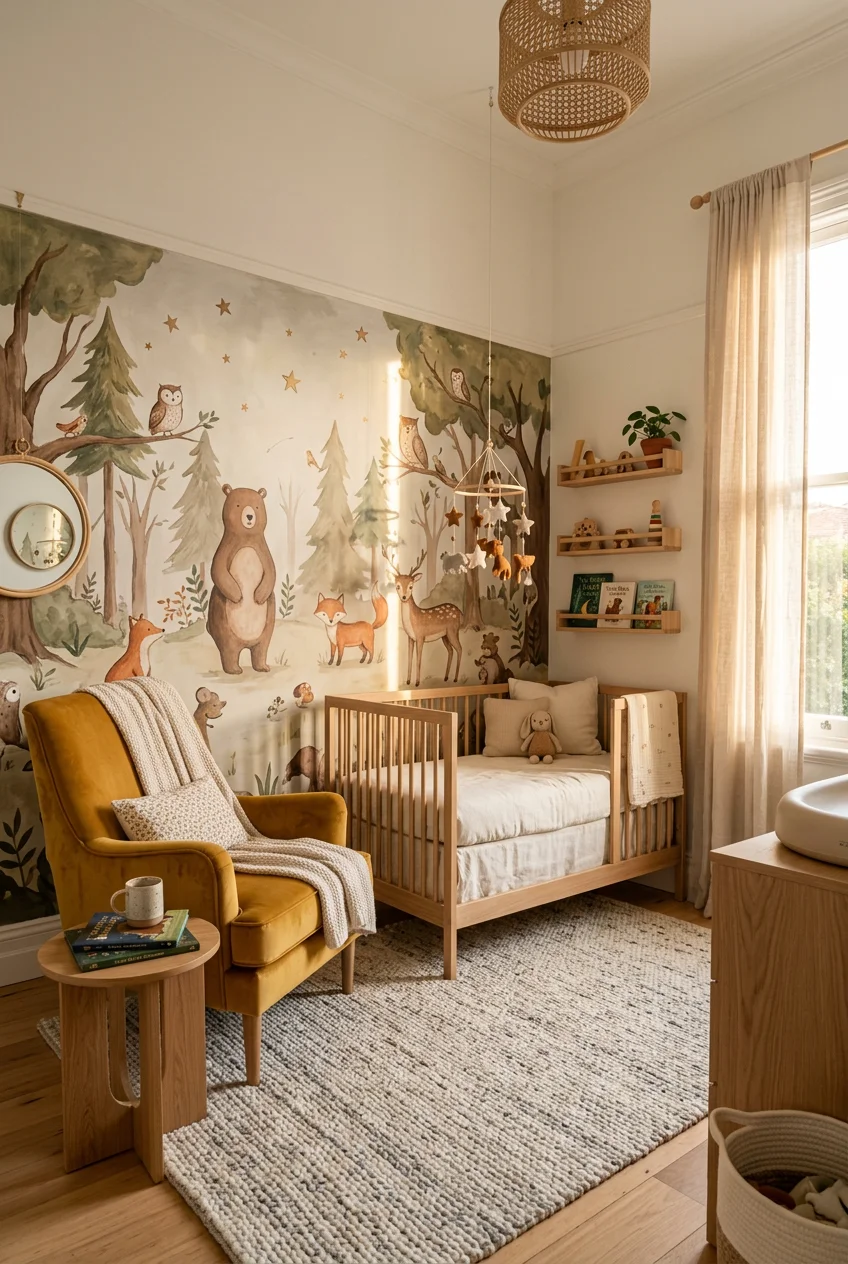
Overly themed rooms are officially out. You don’t need a room covered head-to-toe in cartoon elephants or licensed characters. Instead of strict themes, opt for beautiful, artful walls. I highly recommend using illustrative wallpapers with timeless designs. A soft floral mural or a whimsical, muted forest scene looks incredibly sophisticated.
Spoonflower sells gorgeous, high-quality peel-and-stick wallpaper for about $45 a roll. I recently installed a subtle birch tree pattern in a client’s home, and it completely changed the room’s energy. It feels like a boutique hotel rather than a preschool classroom. The best part about this approach is that it grows with your child. You won’t have to scrape off cartoon decals in three years when they suddenly decide they hate elephants. Keep the walls beautiful and let the toys provide the playful elements.
11. Stick To Gender-Neutral Foundations

Committing too hard to a highly gendered theme is a trap. Gender-neutral design remains a massive trend because it offers incredible flexibility and longevity. If you plan on having more kids, a neutral room means you won’t have to repaint and buy all new furniture for baby number two. Focus on neutral color palettes, warm woods, and soft linens.
Brands like Crate & Kids have fantastic natural wood accents that work for any baby. You can always add specific pops of color later with cheap accessories like a $15 throw pillow or a colorful crib sheet. I designed a strictly navy-and-plaid room for my first son, and when my daughter came along, I had to replace literally everything. It was an expensive lesson. Stick to a base of creams, soft greens, and natural oak. It feels calming, looks expensive, and gives you a blank canvas to work with.
12. Add High-Contrast Details For Newborns

Here’s a surprising fact most new parents don’t know. For the first few months of life, newborns primarily see in shades of black, gray, and white. Their eyes can’t process soft pastels yet. If you want to stimulate their visual development, you need high-contrast elements. You don’t have to paint the walls black, but you should incorporate simple graphic prints in small doses.
I love the Wee Gallery Art Cards. They cost $14.95 for a set of 5×7 inch cards featuring bold, black-and-white animal faces. I used to prop them up against the wall on the changing table. It gave my son something to focus on, and it actually stopped him from crying during diaper changes. You can also hang a high-contrast mobile right above the changing area. As your baby grows, usually around 3 to 5 months, their color vision improves, and you can start introducing bright primary colors.

Beautiful Wooden Baby Closet Dividers Set of 7
Honestly, Beautiful Wooden Baby Closet Dividers Set of 7 – Double-Sided Organize surprised me — sturdier than it looks in the photos, and over 11 buyers gave it 4.5 stars.
13. Check For GREENGUARD Gold Certifications

Using non-certified paints or synthetic fabrics that off-gas harmful chemicals is a huge mistake. Babies spend up to 16 hours a day sleeping in their nursery. You want that air to be as clean as possible. Always look for GREENGUARD Gold or OEKO-TEX certified products. These certifications mean the items have been rigorously tested for thousands of chemical emissions and VOCs.
I highly recommend the Saatva crib mattress. It’s $345, completely organic, and GREENGUARD Gold certified. It doesn’t have that gross, plastic factory smell when you unbox it. I remember buying a cheap mattress at a discount store years ago, and it smelled like harsh chemicals for a month. I felt terrible putting my baby on it. For sheets, I shop at Sprouts. They often carry organic cotton crib sheets for around $24.99 that are incredibly soft and safe. Prioritize furniture made from FSC-certified wood, too.
14. Keep The Room Completely Screen-Free

Keep the nursery completely screen-free. I’m seeing a huge push for this right now, and it makes perfect sense. The nursery should be a sanctuary for sleep and tactile exploration, not a place for digital distractions. Don’t put a tablet on a stand to play white noise. Don’t install digital picture frames that emit blue light.
Those screens actively disrupt melatonin production and ruin your baby’s sleep cycle. Instead, focus on physical books, soft toys, and sensory elements. I love keeping a basket of Melissa & Doug wooden blocks in the corner. A set costs $19.99, and the sound of wooden blocks clanking together is so much better than a loud electronic toy singing the same song on repeat. I used to keep my iPad in the nursery to watch shows while nursing, but the glowing screen kept my baby wide awake. Once I banished all screens from the room, we both slept significantly better.
15. Install Cordless Blackout Curtains

You absolutely can’t overlook the importance of good window treatments. Last Tuesday at Whole Foods, I saw a mom buying temporary blackout shades, and it reminded me of my own disaster. I tried using cheap paper shades for months before figuring it out. They ripped, let light in around the edges, and had a dangerous dangling string.
You need to invest in quality blackout curtains to create the perfect sleeping environment during the day. I use the Eclipse Absolute Zero Blackout Curtains. They run about $24.99 per panel and block out 100% of the sunlight. The fabric is heavy and helps muffle street noise, too. Most importantly, ensure whatever blinds or curtains you buy are completely cordless. Dangling window cords are a severe strangulation hazard for toddlers. It’s a critical safety measure that gets ignored far too often because corded blinds are slightly cheaper. Spend the extra money for cordless.

Vailando 6-Shelf Hanging Closet Organizer with 3 Drawers
A dependable everyday pick — Vailando 6-Shelf Hanging Closet Organizer with 3 Drawers pulls in 35 ratings at 4.5 stars. Not flashy, just solid.
16. Use Acrylic Shelves For Unique Nursery Ideas

If you want truly unique nursery ideas for organization, look at how you store your daily essentials. You’ll go through thousands of wipes and tubes of diaper cream. Instead of leaving them cluttered on top of the dresser, install clear acrylic shelves right above the changing station. I buy the Upsimples 15-inch acrylic shelves on Amazon. A 4-pack costs just $16.99.
Because they’re completely transparent, they don’t add visual bulk to the room. They practically disappear against the wall. You can line up your 4 oz tubes of Aquaphor, your baby lotion, and your wipes dispenser perfectly. I used to keep all my creams in a deep drawer, and I’d inevitably get diaper rash cream all over the drawer handle while trying to open it with one hand. Having everything visible and at arm’s reach on a floating shelf is incredibly efficient.
17. Washable Rugs Are Mandatory

Let’s talk about the reality of babies. They spit up. They have diaper blowouts. They spill milk. If you put an expensive, dry-clean-only rug in the nursery, you’re going to cry. I bought a beautiful, fluffy wool rug for $300 at Costco when I was pregnant. The very first week, my son had a massive blowout on it. I spent three hours scrubbing it with a toothbrush, and it still smells like sour milk to this day.
You need a washable rug. I’m a massive fan of Ruggable. Their 5×7 washable rugs cost around $159, and they come in gorgeous, muted patterns that fit the Japandi and earthy trends perfectly. When an accident happens, you just peel the top layer off the velcro pad and throw it straight into your washing machine. It comes out looking brand new. The peace of mind this gives you is worth every single penny.
18. Manage Air Quality And Scent

Diaper pails stink. Even the best ones eventually leak a little odor when you open them. You have to manage the air quality proactively. I highly recommend running a small air purifier in the corner of the room. The LEVOIT Core 300 Air Purifier is $99.99 and features a true HEPA filter. It runs quietly in the background, acting as a soft white noise machine while literally scrubbing the air of dust, dander, and odors.
For a natural scent, skip the heavy artificial plug-ins. They’re loaded with synthetic fragrances that aren’t great for tiny lungs. Instead, I like to buy fresh lavender sprigs from Trader Joe’s for $3.99 a bunch. I tie them with a piece of twine and hang them on the back of the door. They dry out beautifully and release a very faint, calming scent that helps signal to your baby that it’s time to sleep.
19. Thrift Vintage Accents For Unique Nursery Ideas

If you want your room to have actual soul, you can’t buy everything brand new from a big box store. Incorporating vintage finds is my favorite way to add character. A room full of flat-pack furniture feels sterile. You need something with history. I love scouring local antique shops for unique pieces.
Last month, I found a gorgeous, heavy antique brass lamp at Goodwill for $12. I cleaned it up, put a warm LED bulb in it, and it looks incredible sitting on a modern white dresser. The contrast between old and new is exactly what makes a space feel curated rather than manufactured. You can also look for vintage wooden rocking horses, old framed maps, or a beautifully worn wooden side table to set your coffee on while you nurse. Just make sure any vintage painted items are tested for lead paint before you bring them into the house.
20. Stock Up On The Right Diaper Pail

I’m ending with the most practical advice possible. You need a serious diaper pail. Do not buy a plastic one. Plastic absorbs odors over time, and after six months, the bin itself will smell like a public restroom, no matter how much you bleach it. I learned this the hard way with a cheap plastic bin that I eventually had to throw in the dumpster.
You need stainless steel. The Ubbi Steel Odor Locking Diaper Pail is $79.99, and it’s worth its weight in gold. It holds about 55 newborn diapers and uses standard trash bags, so you aren’t forced to buy expensive proprietary refills. The steel completely traps the smell inside. To keep it extra fresh, I always sprinkle a generous handful of plain baking soda at the bottom of the bag. You can grab a huge box at Kroger for $1.29. It absorbs any lingering moisture and neutralizes the acid smells instantly. Function over form is critical here.
Designing a space for your new baby shouldn’t be a source of stress. It’s all about balancing safety, function, and a calm aesthetic that you actually enjoy. I’ve spent countless hours rocking, feeding, and pacing in nurseries, and I promise you that prioritizing comfortable seating, layered lighting, and smart storage will save your sanity. Skip the cheap plastic trends and focus on natural materials that breathe life into the room. If you loved these tips, please pin this article to your nursery inspiration board and share it with a friend who’s expecting. You’ve got this, and your baby’s room is going to be absolutely beautiful.
Frequently Asked Questions
What makes a nursery design truly unique?
A unique space comes from blending personal vintage pieces with highly functional, modern items. Instead of buying a matching set, mix textures like rattan and organic cotton, and focus on a calming, gender-neutral color palette.
How do I choose the right nursery lighting?
You need layered lighting. Skip harsh overhead lights and opt for a dimmable LED fixture. Add a small pendant light about 30 inches over the changing table, and a soft, warm night light for 3 AM feedings.
Are nursery themes still popular?
Strict character themes are fading. Instead, parents are choosing artful, illustrative wallpapers and earthy color palettes. This approach creates a soothing environment that easily transitions into a toddler room without needing a total redesign.
What is the most important furniture piece in a nursery?
Aside from a safe crib, a high-quality ergonomic glider is crucial. You’ll spend countless hours nursing and rocking your baby. Look for one with a smooth swivel, quiet recline, and firm lumbar support.
