What’s Inside
- Anchor with an Earthy Neutral Base
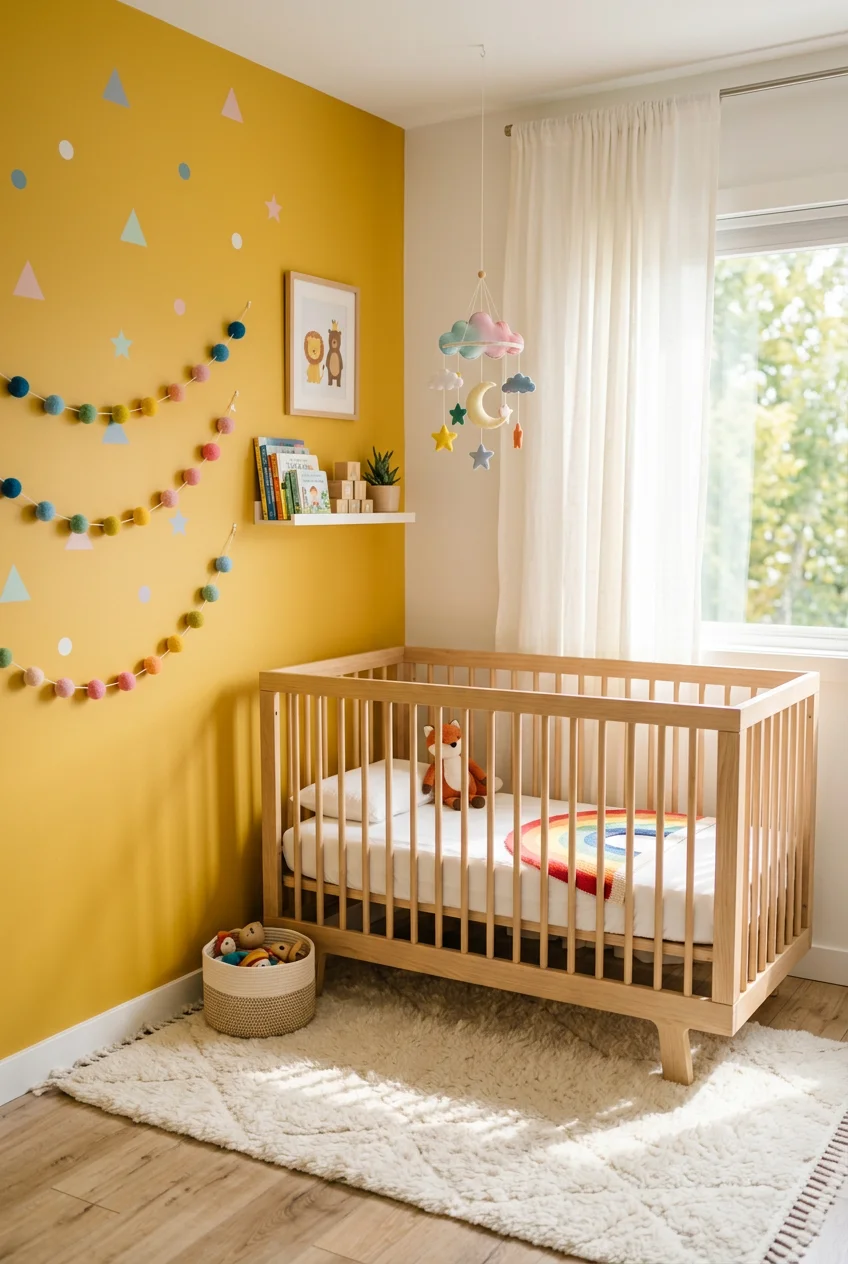
- Color Drench a Single Focal Wall
- Layer High-Contrast Black and White for Newborns
- Ground the Space with a Washable Sage Green Rug
- Invest in High-Quality, Colorful Muslin Crib Sheets
- Paint the Fifth Wall a Calming Muted Sky Blue
- Curate Meaningful Art Sets Instead of Generic Themes
- Hang a Handcrafted Wool Mobile for Sensory Play
- Repurpose an Old Dresser with Zero-VOC Paint
- Introduce Warmth with Woven Rattan Baskets
- Swap Harsh Overhead Bulbs for Warm-White LEDs
- Add Colorful Blackout Curtains for Better Sleep
- Use Removable Wall Decals for Adaptability
- Soften the Floor with Interlocking Foam Play Mats
- Install Floating Bookshelves for a Colorful Display
- Choose a Warm Terracotta Upholstered Glider
Most people start designing colorful baby nursery decor by panic-buying a bright yellow rug and matching curtains, only to realize the room feels like a fast-food joint. It’s a common trap. You want a joyful space, but slapping saturated primary colors on every surface overstimulates a baby and ruins sleep patterns. The trick is anchoring the room with strategic neutrals and pulling in specific, intentional shades through textiles and art. If you only try one idea from this list, make it #4. Here’s why: a washable, patterned rug grounds the entire color palette while surviving the inevitable messes that come with an infant. Trust me on this.
Skip this list if you’re renting a strict white-box apartment where your landlord prohibits swapping out light fixtures, painting walls, or drilling holes for heavy wall anchors. These strategies require at least some willingness to mount hardware, paint surfaces, or invest in large-scale textiles.
1. Anchor with an Earthy Neutral Base

Most people assume a colorful room needs colorful walls. That’s a massive mistake. The smartest foundation for a vibrant room is a warm, earthy neutral. Cool, stark whites feel clinical and make bright plastic toys look harsh and cluttered. Instead, look at 2026’s trending earthy palettes. A base of Sherwin-Williams Oyster White (SW 7637) or Benjamin Moore White Dove (OC-17) provides a creamy, grounding backdrop. These shades let you introduce vibrant hues like sage green and terracotta in your textiles without the room feeling chaotic. When you walk in, the visual reads as calm, not loud. You can grab test samples at your local hardware store (typically under $10 for a small pot) before committing to a full gallon. Paint needs proper ventilation. Keep those windows open and run a fan to clear out the sharp, chemical smell.
Best for: small dark rooms.
The catch: Oyster White can pull slightly green in north-facing rooms that lack natural sunlight.
2. Color Drench a Single Focal Wall

If you want a bold statement, color drenching is the method to use. This means painting the walls, baseboards, and trim all the exact same saturated shade. It creates an immersive, monochromatic look that feels custom. Try this on just one accent wall behind the crib using a deep forest green, warm terracotta, or dusty rose. The texture of matte paint on the drywall contrasting with satin paint on the wooden trim creates subtle visual interest that wallpaper can’t match. A gallon of premium paint from Benjamin Moore usually runs mid-range, typically between $60 and $80. You’ll need a high-quality angled brush (a 2-inch width works best) to cut in sharply around the ceiling line.
The catch: Painting wooden trim requires a specific bonding primer first, or the color chips immediately when you bump it with a vacuum.
3. Layer High-Contrast Black and White for Newborns

Newborns don’t actually see pastel colors. For the first five months, their vision is blurry, and they primarily register high-contrast black, grey, and white. Introducing these sharp contrasts stimulates their visual development and helps them focus. You don’t need an entirely monochromatic room, but adding specific black and white elements near the crib is highly functional. Think about incorporating black and white board books on a display shelf or small geometric art prints. A simple 8×10 inch black frame with a crisp white mat provides sharp lines that a baby can actually track with their eyes. You can find inexpensive frames at Target or Walmart (usually under $15).
The catch: High-contrast patterns look incredibly chaotic and visually overwhelming if you mix too many different geometric shapes in one small corner.

Beautiful Wooden Baby Closet Dividers Set of 7
Beautiful Wooden Baby Closet Dividers Set of 7 – Double-Sided Organize has been one of the most consistently praised picks in this category. 11 reviewers averaged 4.5/5.
4. Ground the Space with a Washable Sage Green Rug

A rug dictates the entire mood of a nursery. A sage green rug grounds the space visually and hides minor stains significantly better than a cream alternative. Look at brands like Ruggable or Rugs USA for machine-washable options. Prices typically range from $100 to $400 for a standard 5’x7′ rug. Sage green (similar to Benjamin Moore Saybrook Sage HC-114) is a calming hue that promotes relaxation, which is exactly what you want near a crib. When a bottle spills or a diaper leaks, you just peel the top layer off and throw it in the washing machine with 1/2 cup of mild liquid detergent. The texture isn’t as plush as thick wool, but the convenience is unmatched. I learned that the hard way.
Best for: homes with pets or toddlers.
The catch: Washable rugs are notoriously thin and require a thick, expensive separate rug pad if you want any actual cushion for floor time.
5. Invest in High-Quality, Colorful Muslin Crib Sheets

Crib sheets offer the easiest way to inject personality into the room. They sit right in the center of the space. Brands like Pottery Barn Kids and Burt’s Bees Baby offer organic cotton fitted crib sheets in vibrant prints, typically ranging from $20 to $50. Mushie makes extra soft muslin fitted crib sheets (around $30) that feel incredibly breathable and lightweight. Pima cotton sheets (starting around $50 to $80) provide a luxurious, silky texture that holds color beautifully through endless hot wash cycles. Stock up on at least three sheets so you won’t be doing laundry at midnight after a blowout.
The catch: Loosely woven muslin fabric snags easily on velcro swaddles if you wash them in the exact same load without zipping everything up. You might also like: 20 Stunning Layout Small Nursery Ideas That Are Totally Worth It
6. Paint the Fifth Wall a Calming Muted Sky Blue

Most people completely ignore the ceiling. In a nursery, the baby spends hours staring straight up. Treating the ceiling as the fifth wall offers a surprising pop of color without overwhelming the room’s footprint. A soft, muted sky blue or a pale yellow draws the eye upward and makes short walls feel taller. It provides visual interest for a baby lying in the crib without being overstimulating. You’ll need a specialized ceiling paint formula that splatters less than standard wall paint. Plan to buy a roller with a thick 3/8-inch nap to hold enough paint for smooth, even coverage across the drywall tape lines. You might also like: 16 Toddler Room Inspiration for Every Budget
The catch: Painting a ceiling is physically exhausting on the neck and shoulders, and it requires taping drop cloths over absolutely every inch of the floor. You might also like: 20 Creative Small Spaces Baby Room Organization Ideas You Haven’t Thought Of

YACHANCE Kids Sound Machine with Night Light Projector
YACHANCE Kids Sound Machine with Night Light Projector has been one of the most consistently praised picks in this category. 71 reviewers averaged 4.5/5.
7. Curate Meaningful Art Sets Instead of Generic Themes

Committing to a strict jungle or ocean theme guarantees the room will look dated by the time your child is three. Instead of generic themes, use color as the theme itself. Select a few meaningful pieces of colorful baby nursery decor and wall art that can grow with the child. Brands like Olive et Oriel, Pottery Barn Kids (often collaborating with Minted), and Society6 offer incredible prints featuring playful botanicals or abstract designs. A set of three 8×10 inch prints makes a perfect gallery wall above a changing table. You can mix in a larger 16×20 inch statement piece to anchor the arrangement.
The catch: Custom framing gets expensive fast, so stick to standard dimensions to ensure you can buy cheap off-the-shelf frames.
8. Hang a Handcrafted Wool Mobile for Sensory Play

A mobile above the crib provides crucial visual stimulation. Avoid the clunky plastic models that play tinny electronic music. Instead, look for colorful, handcrafted options. Flensted makes beautiful kinetic mobiles (typically around $50 to $60), and Pehr offers 100% wool felted options (usually in the $100 to $120 range). The soft texture of wool and the gentle, silent spinning motion create a calming environment. Secure the arm tightly to the crib railing. The slight breeze from an open window or an overhead air vent is enough to keep a lightweight mobile moving naturally.
The catch: Mobiles must be completely removed from the crib the second your baby can sit up or pull to a standing position, making their lifespan relatively short.
9. Repurpose an Old Dresser with Zero-VOC Paint

You don’t need to buy a brand new, perfectly matching furniture set. Giving second-hand furniture a colorful makeover adds character and saves money. A sturdy vintage wooden dresser can double as a changing table simply by adding a contoured 32-inch changing pad on top. Use a zero-VOC paint, such as Sherwin-Williams Harmony or Benjamin Moore Natura, to avoid harsh chemical off-gassing in the baby’s room. A bright coral or a deep navy blue turns a boring piece of wood into the room’s focal point. Always secure the dresser to the wall with heavy-duty furniture straps to prevent tipping hazards.
Best for: tight budgets.
The catch: Proper prep work, which includes sanding the old glossy finish and applying a chemical deglosser, takes a full weekend before you even open the paint can.

PeraBella Diaper Caddy Organizer for Changing Table
A dependable everyday pick — PeraBella Diaper Caddy Organizer for Changing Table pulls in 23 ratings at 4.5 stars. Not flashy, just solid.
10. Introduce Warmth with Woven Rattan Baskets

Colorful rooms need natural textures to keep them from looking like plastic toy stores. The 2026 trend heavily emphasizes organic materials like linen, natural wood, rattan, and jute. A large woven rattan storage basket adds incredible warmth and depth to a bright space. You can find these at most home goods stores, typically priced between $30 and $80 depending on the size. They smell faintly of dried grass and add a beautiful tactile element to the corner of the room. Use a large 18-inch basket to stash a bulky Costco box of diapers or a mountain of brightly colored plush toys.
The catch: Cheap rattan splinters easily, which poses a serious scratching hazard for crawling babies who like to pull themselves up on edges.
11. Swap Harsh Overhead Bulbs for Warm-White LEDs

Color looks completely different depending on the lighting. A harsh, cool-toned bulb makes warm terracotta look muddy and turns soft sage green into a hospital-ward grey. Swap out standard builder-grade bulbs for warm-white LED bulbs (specifically look for a color temperature around 2700K). This creates a cozy, inviting atmosphere that makes colorful baby nursery decor pop beautifully. Install a dimmer switch on the main light fixture. Being able to lower the brightness to 10% during a 3 AM feeding is crucial for keeping the baby sleepy. No exaggeration.
The catch: Installing a dimmer switch requires basic electrical knowledge to wire safely, and you must ensure the LED bulbs are specifically marked as dimmable.
12. Add Colorful Blackout Curtains for Better Sleep

Window treatments are a massive block of fabric and a great place to inject color. Heavy velvet blackout curtains in a rich mustard yellow or a deep teal instantly upgrade the room’s design while serving a critical function. Babies sleep better in pitch-black rooms. True blackout curtains block streetlights and early morning sun. You can find decent options at Target or Walmart, usually ranging from $30 to $70 per panel. The thick fabric also helps muffle outside street noise, creating a quieter environment for afternoon naps.
Best for: rooms facing streetlights or busy roads.
The catch: True blackout curtains are heavy and require heavy-duty wall anchors, not just standard drywall screws, to keep the metal curtain rod from ripping out of the wall.

Modanais Baby Diaper Caddy Organizer Cart
Modanais Baby Diaper Caddy Organizer Cart – 3 Tier Rolling Cart with D has been one of the most consistently praised picks in this category. 688 reviewers averaged 4.5/5.
13. Use Removable Wall Decals for Adaptability

Tastes change, and kids outgrow themes quickly. Removable wall decals let you add massive splashes of color without the commitment of traditional paste wallpaper. You can create a faux-wallpaper look by spacing out small, colorful geometric shapes, or apply a large-scale botanical mural behind the crib. Brands like Urban Walls offer high-quality vinyl decals that look painted on. They typically cost between $40 and $150 per set. If the layout feels off, you just peel them off and stick them somewhere else. It’s a low-stakes way to experiment with bright colors.
Best for: renters.
The catch: Decals peel off highly textured walls (like heavy orange peel or popcorn textures) within a week.
14. Soften the Floor with Interlocking Foam Play Mats

Hardwood floors look beautiful, but they aren’t practical for a baby learning to crawl. Interlocking foam play mats provide a soft, safe landing zone. Modern brands have completely redesigned these mats. Instead of loud primary colors and alphabet letters, you can find mats printed with beautiful, colorful vintage rug patterns or subtle terrazzo designs. They wipe clean with a damp cloth and a quick spray of mild all-purpose cleaner. Expect to spend between $80 and $150 for a high-quality set that covers a standard 4’x6′ area.
The catch: Foam mats trap dust and pet hair underneath the jigsaw seams, requiring you to lift the entire assembly frequently to vacuum the actual floor.
15. Install Floating Bookshelves for a Colorful Display

Children’s books feature incredible, vibrant illustrations. Instead of hiding them in a closed drawer, use them as art. Install three or four narrow floating acrylic or painted wood ledges on a blank wall. Displaying board books with their covers facing out adds instant, interchangeable color to the room. It also encourages reading as the child gets older. You can source simple 24-inch floating shelves from hardware stores or online retailers for budget to mid-range prices (usually under $40 a shelf).
The catch: Books are deceptively heavy. If you miss the wall stud during installation, the shelf will eventually rip out of the drywall and crash down.

Criusia Over the Door Organizer
If you want something that just works, Criusia Over the Door Organizer is a safe bet (336 reviews, 4.5 stars).
16. Choose a Warm Terracotta Upholstered Glider

You’ll spend hundreds of hours in the nursery chair. It shouldn’t be an afterthought. Instead of a generic grey or beige recliner, opt for an upholstered glider in a warm terracotta or a soft blush pink. This piece of furniture anchors a corner of the room and brings a massive dose of color. Look for fabrics that feel soft against the skin, like a performance velvet or a durable cotton blend. A wide seat (at least 22 inches across) gives you room to shift positions while holding a sleeping baby or a nursing pillow.
The catch: Upholstered gliders without removable, machine-washable slipcovers will inevitably show milk stains and require expensive professional spot cleaning.
How we chose these ideas
We prioritized methods that balance high visual impact with realistic effort levels for tired parents. The focus remained on adaptable elements, renter-friendly options, and safety-first materials, ensuring the recommendations serve both aesthetic and functional purposes without demanding professional contractor budgets.
Final Thoughts
Creating a beautiful space shouldn’t require a design degree or a massive budget. By mixing a grounding neutral base with intentional pops of color through textiles, art, and smart lighting, you get a room that feels both vibrant and restful. Don’t rush the process. Start with the rug or the paint color, and let the rest of the room evolve naturally. Pin this list to your nursery planning board so you can reference these specific paint colors and safety tips when you’re ready to start decorating.
Frequently Asked Questions
How do I choose colourful baby nursery decor without overstimulating the baby?
Anchor the room with a warm neutral wall color like Oyster White, then add saturated colors through washable rugs, muslin crib sheets, and blackout curtains. This keeps the main visual field calm for sleep while adding joyful personality.
What are the best colors for a baby’s room?
Soft blues and sage greens are excellent for promoting relaxation and sleep. Warm tones like terracotta or dusty rose add coziness. Avoid painting entire rooms in bright primary colors, as they can interfere with a baby’s settling routine.
How can I add colourful baby nursery decor if I am renting?
Renters should focus on large, high-impact textiles. Use a vibrant 5×7 area rug, hang thick velvet curtains, and apply high-quality removable vinyl wall decals. These elements completely change the room’s palette without requiring a drop of paint.
When should I introduce high-contrast decor?
Newborns primarily see in shades of black, white, and grey for the first five months. Introduce high-contrast geometric art prints or a monochrome mobile near the crib immediately to help stimulate their early visual development and focus.
