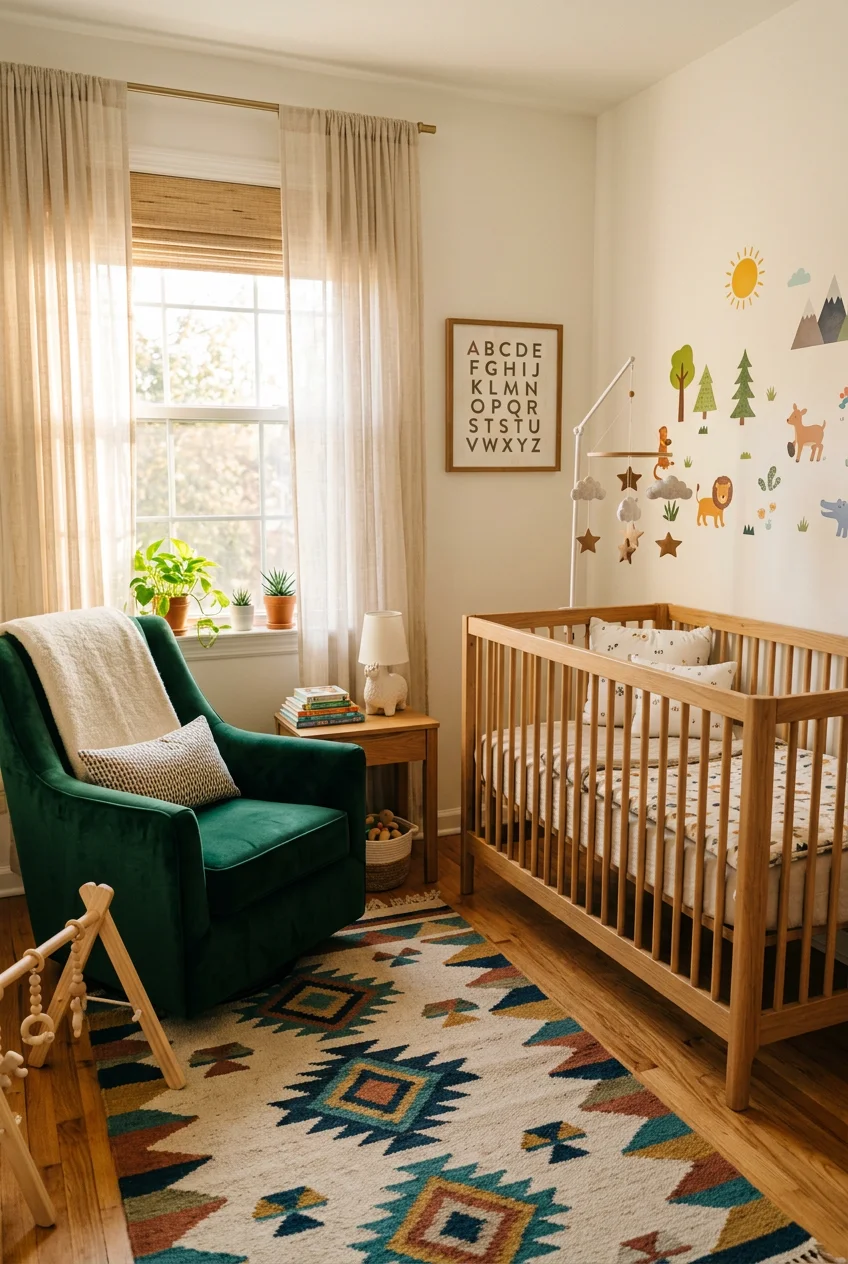
What’s Inside
- Embrace Earthy, Muted Color Palettes for Walls
- Prioritize Zero-VOC Paint for Health and Safety
- Strategically Incorporate High-Contrast Elements for Newborns
- Use Color Drenching on an Accent Wall for Impact
- Opt for Colorful, Non-Toxic Wall Decals for Flexibility
- Integrate Playful Pastels with a Modern Twist
- Avoid Overly Saturated Colors on All Walls
- Incorporate a Colorful Area Rug as a Focal Point
- Upcycle Furniture with Safe, Vibrant Paints
- Utilize Colorful Storage Solutions for Organization
- Don’t Forget the Fifth Wall Ceiling Treatment
- Mix and Match Textures with Colorful Textiles
- Incorporate a Rainbow Theme Thoughtfully
- Choose Multi-functional Furniture with Colorful Accents
- Create a Collected Look with Vintage Finds
- Layer Window Treatments with a Pop of Color
- Build a Colorful Gallery Wall with Tactile Art
- Paint Interior Doors and Trim for Unexpected Color
- Install Bold Lighting Fixtures
- Use Bookshelves as Colorful Decor
Most people paint a room electric blue or bubblegum pink and wonder why the space feels chaotic. Creating a stimulating but soothing room takes actual strategy. That’s why planning your colorful baby nursery decor matters before you buy a single crib sheet. A well-designed room balances visual development with a calming atmosphere. If you only try one idea from this list, make it #4. Here’s why: color drenching an accent wall gives you maximum visual impact without turning the room into a chaotic funhouse. No exaggeration.
Skip this list if you’re renting an apartment with strict rules against painting or applying decals. These strategies rely on pigment and layered visuals that require a bit of commitment. Minimalists who prefer a stark, all-white aesthetic won’t find much use here either.
1. Embrace Earthy, Muted Color Palettes for Walls

Instead of stark primaries, modern nurseries lean into earthy, grounded palettes like muted greens, soft browns, and warm pastels. These tones create a soothing environment for rest. Consider colors like Benjamin Moore’s Saybrook Sage (HC-114) for a calming, nature-inspired green, or Sherwin-Williams’ Universal Khaki for a warm neutral with subtle green undertones. You can easily pair these walls with affordable cotton crib sheets from Target to pull the room together. The muted tones provide a sophisticated backdrop that grows with the child rather than screaming “baby room.” Best for: homes with abundant natural light. The catch: muted, earthy colors can look muddy or dreary in north-facing rooms that lack adequate sunlight.
2. Prioritize Zero-VOC Paint for Health and Safety

Indoor air can contain 2 to 5 times more VOCs than outdoor air. Always use zero-VOC paint to ensure a healthy environment for a developing respiratory system. Brands like ECOS Paints (specifically their Lullaby line), Clare Paint, and Benjamin Moore Eco Spec offer excellent coverage without harmful fumes. ECOS Paints covers up to 560 square feet per gallon, which is roughly 1.5 times more than conventional products. It’s water-based and odor-free, making application much more pleasant. A standard 10×10 nursery usually requires about two gallons for proper coverage. The catch: zero-VOC paints typically cost significantly more per gallon and often require meticulous wall preparation and a specific zero-VOC primer to adhere correctly. Learned that the hard way.
3. Strategically Incorporate High-Contrast Elements for Newborns

Babies don’t fully recognize color until around five months old. However, contrasting colors, especially black and white, send strong signals to a baby’s brain. This stimulates brain growth and aids visual development in those crucial early months. Introduce these high-contrast elements through geometric mobiles, bold art prints, or a small 3×5 foot patterned rug. Once the baby reaches six months, you can gradually introduce brighter, more saturated colors into the mix. Best for: the first six months of development. The catch: high-contrast black and white items often clash with softer, colorful baby nursery decor once you start bringing in pastels and earth tones later on.

Beautiful Wooden Baby Closet Dividers Set of 7
Beautiful Wooden Baby Closet Dividers Set of 7 – Double-Sided Organize punches above its price — 11 buyers rated it 4.5 stars. The kind of pick people reorder.
4. Use Color Drenching on an Accent Wall for Impact

Color drenching involves painting walls, trim, and sometimes ceilings in a single, saturated shade. For a nursery, choose one accent wall for a bolder hue like a muted terracotta or a dusty blue, and paint the remaining walls in a complementary soft neutral. This adds incredible depth without overwhelming the small space. It creates a distinct focal point behind the crib or the changing table. A quart of high-quality trim enamel matched to your wall color is usually enough for the baseboards on a single wall. The catch: color drenching requires painting the baseboards and window casings, which is tedious to sand and repaint white if you ever decide to sell the house.
5. Opt for Colorful, Non-Toxic Wall Decals for Flexibility

Wall decals offer a flexible way to add color and pattern without the permanence of wallpaper. Brands like The Lovely Wall, Wallums, and Wall Dressed Up provide a variety of non-toxic, peel-and-stick options printed with eco-solvent ink. Simple Shapes offers star decals in sets ranging from 68 to 272 pieces. This allows for a custom starry sky in almost any color configuration over the crib. You can easily wipe them clean with a damp cloth and a drop of mild dish soap. Best for: renters who can’t drill holes or paint. The catch: peel-and-stick decals will eventually peel at the edges if your walls have heavy texture like orange peel or knockdown.
6. Integrate Playful Pastels with a Modern Twist

Playful pastels like mint greens, blush pinks, and buttery yellows create serene environments. Instead of traditional baby pink or blue, a soft lavender or a pastel peach offers a modern, sophisticated feel. You can anchor these colors with matte black hardware or natural oak furniture to prevent the room from looking like a giant marshmallow. Even big-box stores like Walmart now carry modern pastel nursery accessories, making this trend highly accessible on a budget. Mix a pastel peach wall with a 4 oz sample pot of contrasting mint green for small wooden accents. The catch: pastel rooms easily read as generic and flat if you don’t incorporate contrasting dark elements or heavy textures to ground the space. You might also like: 18 Nursery Classroom Decoration Ideas That Actually Work

YACHANCE Kids Sound Machine with Night Light Projector
If you want something that just works, YACHANCE Kids Sound Machine with Night Light Projector is a safe bet (71 reviews, 4.5 stars).
7. Avoid Overly Saturated Colors on All Walls

A common mistake is using overly bright or saturated hues like electric blue or super dark tones on all four walls. This overstimulates babies and interferes with sleep patterns. While red evokes strong emotion, it belongs strictly as an accent color. Stick to muted tones for larger surfaces to create a calming base. If you want bright colors, reserve them for small items like a 12-inch wall clock or a single piece of framed art. The catch: limiting wall saturation means you have to work much harder to bring personality and visual interest into the room through textiles, rugs, and accessories. You might also like: 18 Toddler Princess Room That Actually Work
8. Incorporate a Colorful Area Rug as a Focal Point

A colorful area rug anchors the room and adds a massive pop of color without touching the walls. For a pastel rainbow theme, a piece like the Crate & Barrel Hi/Low Scallop Elegant Pink Flatweave Area Rug sits comfortably in the mid-range budget, typically around $450. Ensure the rug is low-pile and made from natural, easy-to-clean fibers like wool or cotton for safety and practicality. A standard 5×8 foot rug usually fits perfectly in front of the crib. The catch: flatweave cotton rugs lack the plush, thick cushioning needed to protect little knees once babies start crawling and pulling themselves up. You might also like: 18 Cute Nursery Ideas for Every Budget
9. Upcycle Furniture with Safe, Vibrant Paints

Give inexpensive or second-hand furniture a colorful makeover instead of buying new. Crown’s senior designer Justyna Korczynska advises rubbing down furniture, applying a high-quality wood primer, and finishing with a topcoat of satin or gloss paint. Use zero-VOC paints like Real Milk Paint Co. for a distinct matte, chalky look, or EarthSafePaints for a baby-safe finish on cribs and dressers. You only need about a pint of paint for a standard three-drawer dresser. The catch: milk paint requires mixing from a dry powder, has a short shelf life once hydrated, and demands a separate topcoat sealer for durability.

Criusia Drawer Organizer Clothes
Criusia Drawer Organizer Clothes punches above its price — 12 buyers rated it 4.5 stars. The kind of pick people reorder.
10. Utilize Colorful Storage Solutions for Organization

Integrate colorful storage baskets and bins to keep clutter hidden while adding to the decor. Brands like Petit Pehr offer stylish storage bins made from 100% cotton canvas in various sizes, ranging from modern geometric prints to animal themes. A Khosrov 8-Drawer Storage Chest, typically under $90, features fabric drawers perfect for lightweight items like onesies and burp cloths. You can even grab bulk drawer dividers at Costco to keep the inside organized. Best for: tight budgets needing quick organization. The catch: fabric storage drawers can’t hold heavy items like board books or large wooden toys without bowing and losing their shape.
11. Don’t Forget the Fifth Wall Ceiling Treatment

The ceiling is a completely overlooked canvas for color. Painting the ceiling in a soft, complementary shade or applying a colorful, patterned wallpaper adds an immediate architectural feature. It also provides visual interest for a baby lying flat on their back in the crib. A soft buttery yellow or pale sky blue works wonders overhead. You’ll need about one gallon of ceiling-specific flat paint for a standard room. The catch: wallpapering a ceiling is physically exhausting, fights gravity the entire time, and usually requires hiring a professional installer to avoid visible seams.
12. Mix and Match Textures with Colorful Textiles

Layering textiles and textures creates warmth. Incorporate colorful bamboo crib sheets, chunky knit throws, and airy linen canopies. Mixing different textures, such as a heavy wool rug with crisp cotton bedding, creates a soft, layered look that feels intentional. You can occasionally find organic cotton baby blankets at places like Whole Foods or Sprouts if you look in their seasonal home sections. A standard 30×40 inch knit blanket draped over the glider adds just the right amount of color. The catch: heavily layered textiles mean significantly more laundry and create extra surfaces for dust accumulation, which isn’t ideal for allergy-prone infants.

PeraBella Diaper Caddy Organizer for Changing Table
PeraBella Diaper Caddy Organizer for Changing Table has been one of the most consistently praised picks in this category. 23 reviewers averaged 4.5/5.
13. Incorporate a Rainbow Theme Thoughtfully

Rainbow nurseries remain highly requested, but the modern approach uses desaturated or pastel rainbow motifs rather than primary colors. Achieve this with soft pastel rainbow wall decals from brands like Urbanwalls or a custom watercolor rainbow mural. A subtle, handcrafted rainbow mobile hanging 16 inches above the crib adds a sweet touch without dominating the visual space. It keeps the room feeling calm rather than chaotic. The catch: rainbow themes are highly specific and trendy, meaning the room risks looking dated much faster than a room with a more generalized, abstract color palette.
14. Choose Multi-functional Furniture with Colorful Accents

Avoid solitary, single-use furniture pieces that eat up floor space. Opt for multi-functional items instead. A sturdy dresser topped with a brightly colored, wipeable changing pad serves as both clothing storage and a changing station. Look for smart cribs or gliders in popping colors from brands like Cradlewise to transform the space into a lively area. A colorful slipcover on a standard glider works just as well. Best for: small dark rooms where every square inch matters. The catch: high-end multi-functional pieces like smart cribs often cost well over $1,000 and have a steep technological learning curve.
15. Create a Collected Look with Vintage Finds

Overly styled rooms with matching, out-of-the-box furniture sets look sterile. The current trend leans toward a lived-in, collected aesthetic. Incorporate colorful vintage children’s books, solid wooden toys, and artisan-made pieces. A reupholstered vintage chair in an unexpected color like mustard yellow or emerald green adds massive character. This approach avoids the generic showroom feel and gives the room a soul. The catch: vintage furniture lacks modern safety certifications, requiring you to rigorously check for lead paint, loose hardware, and proper wall-anchoring capabilities.

Mr. Pen- Baby Diaper Caddy Organizer, Gray, Medium
If you want something that just works, Mr. Pen- Baby Diaper Caddy Organizer is a safe bet (4 reviews, 4.5 stars).
16. Layer Window Treatments with a Pop of Color

Window treatments do heavy lifting in a nursery for sleep training, but they don’t have to be boring. Start with solid blackout shades, then layer colorful, patterned curtains over them. Adding a 2-inch wide colorful velvet trim to the leading edge of a basic neutral curtain panel creates a custom look for a fraction of the price. You need about 6 yards of trim for two standard 84-inch curtain panels. The catch: custom trimmed curtains are expensive to buy pre-made, and DIY iron-on tape solutions often peel off after the first run through the washing machine.
17. Build a Colorful Gallery Wall with Tactile Art

Flat posters get boring. Build a colorful gallery wall using tactile art pieces. Frame a piece of vibrant, patterned fabric, hang small woven wall hangings, or mount felt animal heads. You can sometimes find local felt artisan goods at natural markets like Sprouts. Mixing 5×7 and 8×10 frames in different colors (like mustard, navy, and white) keeps the eye moving. The catch: gallery walls hung directly over a crib pose a severe safety hazard if a frame falls, meaning you must use heavy-duty wall anchors or acrylic glazing instead of actual glass. Trust me on this.
18. Paint Interior Doors and Trim for Unexpected Color

Leave the walls neutral and paint the interior doors and window trim a contrasting color. A soft sage green door against cream walls looks incredibly custom. It frames the room beautifully without requiring a massive amount of paint. You typically only need one quart of high-gloss or satin trim paint for a standard interior door and its casing. It’s a weekend project with a huge visual payoff. The catch: painting trim correctly requires high-quality enamel paint, which takes significantly longer to cure and is prone to dripping if applied too thickly.
19. Install Bold Lighting Fixtures

Swap out the builder-grade ceiling boob light for a bold, colorful pendant or a modern chandelier. A brightly painted metal dome pendant or a woven rattan fixture dyed in a vibrant hue changes the entire mood of the room. Add a dimmer switch so the bright fixture can still provide soft, low light during 2 AM feedings. A standard 14-inch diameter pendant works perfectly in a medium-sized nursery. The catch: swapping hardwired fixtures requires basic electrical knowledge or hiring an electrician, which adds at least $150 to your overall budget.
20. Use Bookshelves as Colorful Decor

Children’s books are naturally colorful. Install forward-facing acrylic or wooden ledges on a blank wall to display the covers. This turns your book collection into a rotating, colorful art installation. Space the ledges about 12 to 14 inches apart to accommodate taller picture books. You can even grab colorful dried florals from Kroger’s floral department to place on the highest shelf out of reach. The catch: forward-facing ledges hold significantly fewer books than standard deep shelving, meaning you’ll still need a secondary storage solution for the bulk of your library.
How we chose these ideas: The nursery decor strategies above were selected based on a balance of renter-friendliness, overall cost, and visual impact. Emphasis was placed on practical solutions that prioritize non-toxic materials and adaptable designs that grow with the child.
Creating a colorful space doesn’t mean sacrificing your sanity or your home’s aesthetic. Stick to a few high-impact choices and let the room evolve naturally. Pin this list for your next weekend project, and don’t be afraid to paint that ceiling.
Frequently Asked Questions
When should I introduce colorful baby nursery decor?
Introduce soft, muted tones immediately. High-contrast black and white items work best for the first five months. After six months, you can safely integrate brighter, more saturated colorful baby nursery decor without overstimulating the child.
Are wall decals safe for a baby’s room?
Yes, provided you choose non-toxic, eco-solvent options. Brands offering zero-VOC adhesives ensure the indoor air quality remains safe. Always apply them firmly to prevent peeling edges from becoming a choking hazard.
How do I choose the right paint for a nursery?
Always select zero-VOC paints. These formulas prevent harmful off-gassing. Expect to pay a premium and spend extra time on wall preparation, as zero-VOC formulas often require specific primers for smooth application.
Can I use dark colors in a small nursery?
Dark colors work if applied strategically. Color drenching a single accent wall adds depth without shrinking the room. Pair dark walls with light wood furniture and ample layered lighting to keep the space functional.
