What’s Inside
- Earthy Base Palettes with Zero-VOC Paints
- Sponge-Painted Statement Walls
- Safety-First Felt Mobiles
- Custom Draped Fabric Garlands
- Layered Organic Cotton Textiles
- Repurposed Vintage Storybook Art
- Hand-Stitched Canvas Storage Bins
- Macrame Wall Hangings
- Custom Wood Name Signs
- Painted Wooden Peg Rails
- DIY Natural Wood Play Gyms
- Hand-Tufted Wool Rugs
- Upcycled Dresser Changing Tables
- Handmade Baby Nursery Decor Floating Shelves
- Natural Wicker Basket Pendants
- Block-Printed Blackout Curtains
- Personalized Handmade Baby Nursery Decor Growth Charts
Walk into a freshly finished nursery and you’ll often get hit by that sharp, chemical sting of new paint and synthetic rugs. Planning nursery decor means treating air quality and safety with the same weight as the look of the room. A catalog-perfect space doesn’t mean much if the air makes your eyes water. Let’s stick to materials that actually work. If you only try one thing here, make it #3. Creating a custom mobile with strict safety measurements adds visual interest exactly where newborns need it, without costing a fortune. It’s a total win. Trust me.
Skip this list if you’re hunting for a one-click furniture set. These projects demand measuring tapes, weekend hours, and a willingness to get paint under your fingernails. Renters who can’t paint or drill holes will find some of these structural ideas frustrating. I learned that the hard way.
1. Earthy Base Palettes with Zero-VOC Paints

Most people grab a bright pastel, paint the room on a Sunday, and wonder why the space feels chaotic. The 2026 shift toward earthy palettes is key for a calm environment. Think mushroom taupe, smoky sage, and warm chalky whites. Try painting three walls in a soft neutral like Benjamin Moore Pale Oak and keep one accent wall for a muted forest green like Benjamin Moore Saybrook Sage HC-114. You have to use zero-VOC paints. Benjamin Moore Eco Spec is known for durability, while ECOS Paints Lullaby line is made specifically for nurseries. These usually range from mid-to-high prices per gallon. Don’t paint right before the due date. Finish at least eight weeks before the baby arrives. Even zero-VOC paints need time to off-gas. The catch: zero-VOC paint often needs more coats than standard paint, so expect to spend more time and money on the base layers.
2. Sponge-Painted Statement Walls

Hand-painted murals are replacing those sterile decals from a few years ago. A sponge-painted accent wall adds texture without requiring you to be an artist. Start with a matte base coat. Grab a standard natural sea sponge (usually under $10 at Michaels or Joann) and lightly dab a slightly darker, non-toxic acrylic paint over the surface. It looks like custom cloud wallpaper. It absorbs light well and hides wall flaws. This works great behind the crib or changing station. Best for: older homes with uneven drywall where wallpaper is a nightmare. The catch: if you don’t off-load most of the paint onto a paper plate first, you’ll get gloppy spots that drip and ruin the effect.
3. Safety-First Felt Mobiles

People buy heavy, plastic mobiles that hang way too close to a baby’s face. Safety is everything here. When building custom mobiles, strings must never be longer than 7 inches. Anything longer is a strangulation hazard. Position the mobile 10 to 14 inches above the mattress for newborns. That’s the sweet spot for their developing eyes. Use lightweight, untreated wood hoops and organic cotton felt. Skip small plastic beads entirely. You can source pure wool felt online or at specialty shops for a budget to mid-range price. Remove or move the mobile when the baby hits five months old. The catch: handmade felt collects dust fast, so you’ll need to gently vacuum it with an upholstery attachment to keep allergens away.

Beautiful Wooden Baby Closet Dividers Set of 7
A dependable everyday pick — Beautiful Wooden Baby Closet Dividers Set of 7 – Double-Sided Organize pulls in 11 ratings at 4.5 stars. Not flashy, just solid.
4. Custom Draped Fabric Garlands

A bare wall needs a textile element to soften the acoustics. Designing custom garlands using organic cotton fabric or repurposed pages is a great acoustic trick. The formula for the drape is strict. Measure the length you want to cover and multiply it by 1.5. A 6-foot span needs 9 feet of material for a natural, sweeping look. Source soft, lightweight organic cotton fabric by the yard. Brands like Organic Fabric Company offer unbleached options in the mid-range price tier. Cut the fabric into thick strips and tie them along a heavy-duty cotton cord. Best for: large nurseries with high ceilings that echo. The catch: string accents are risky if they fall, so secure them high up, completely out of reach.
5. Layered Organic Cotton Textiles

Skip the stiff, polyester-blend sheets. They trap heat and feel scratchy. Layering natural textiles builds warmth in a room that might otherwise feel sparse. Look for pure bamboo or organic cotton crib sheets. These breathe and regulate temperature better than synthetic blends. You can find organic cotton yardage at Joann or local boutiques to sew your own crib skirts or nursing chair slipcovers. You’ll pay a premium for certified organic yardage. When layering, mix a chunky knit with smooth percale cotton for contrast. The catch: organic cotton wrinkles constantly. If you want a magazine-ready crib, you’ll spend a lot of time ironing these sheets after every wash. You might also like: 16 Boy Toddler Room for Every Budget
6. Repurposed Vintage Storybook Art

Framing mass-produced prints makes a room look like a waiting area. Instead, hunt for damaged vintage children’s books at thrift stores or Goodwill. You can find books with ruined spines but perfect illustrations for under $5. Carefully slice out the best pages with a craft knife and frame them in simple, raw oak frames. This adds a nostalgic character that modern prints lack. Use acid-free matting (available at any Michaels custom frame counter) to keep the paper from yellowing. Always use shatterproof acrylic instead of heavy glass. The catch: vintage paper is sensitive to light. Hang these away from direct afternoon sun, or they’ll fade to pale blue within a year. You might also like: 18 Baby Girl Room Decorating Ideas for Every Budget

YACHANCE Kids Sound Machine with Night Light Projector
If you want something that just works, YACHANCE Kids Sound Machine with Night Light Projector is a safe bet (71 reviews, 4.5 stars).
7. Hand-Stitched Canvas Storage Bins

Plastic storage bins crack and look cheap on open shelving. Heavy-duty cotton canvas bins provide structure and a soft feel. Buy plain, unbleached canvas bins; Target and The Container Store usually stock these in budget-friendly packs. Use thick embroidery floss to stitch the baby’s initials or simple patterns onto the front. The thick canvas needs a heavy-duty leather needle and a thimble. Keep thread colors tied to your earthy palette, like deep greens or burnt oranges. Best for: tight budgets where you need storage to double as decor. The catch: untreated canvas absorbs stains instantly. If a bottle leaks, the bin is marked unless you pre-treat it with a fabric protector. You might also like: 20 Nursery Wall Ideas That Actually Work
8. Macrame Wall Hangings

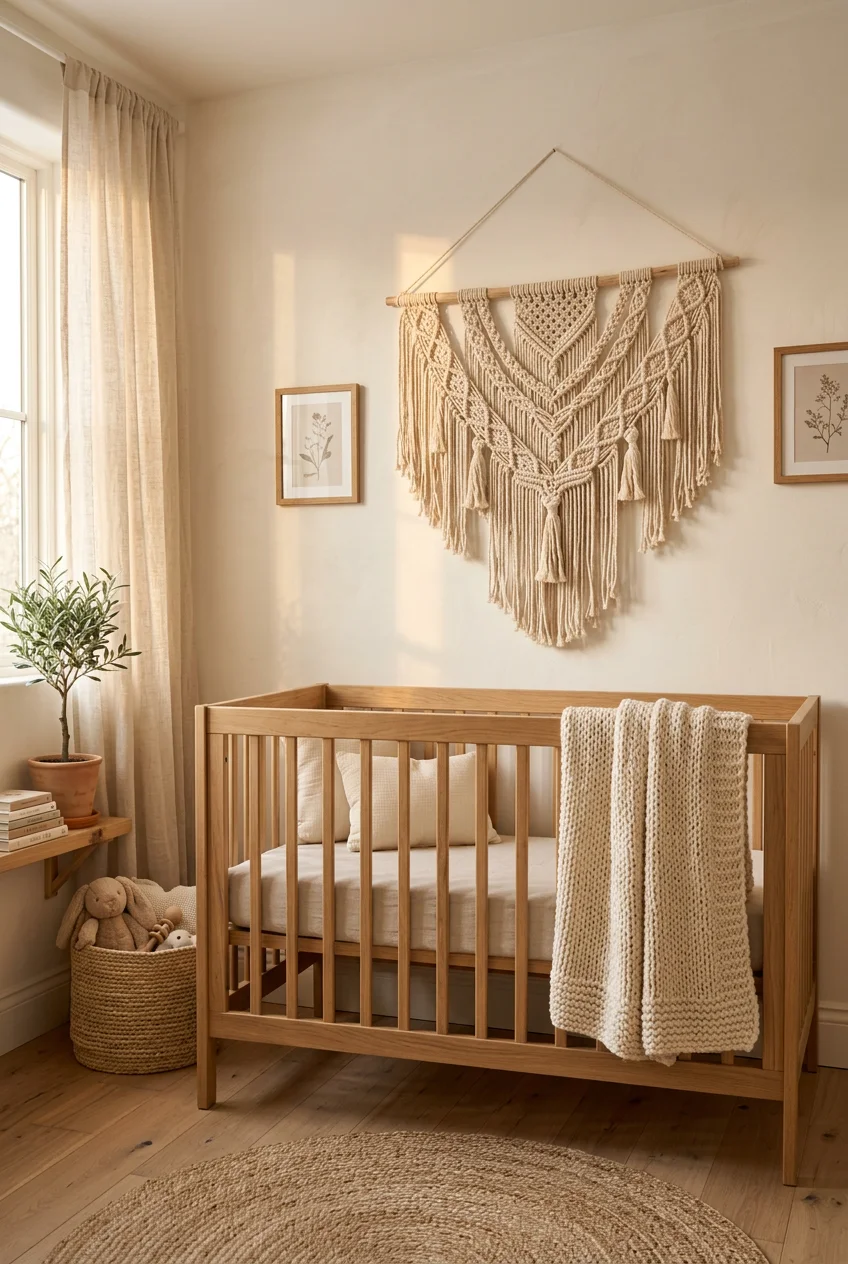
Woven wall hangings add texture without taking up floor space. A handmade macrame piece using thick, natural cotton rope creates a grounded, organic focal point. You can buy bulk cotton rope from craft suppliers or hardware stores like Home Depot for a low cost. Stick to simple square knots and half-hitches if you’re a beginner. Mount the weaving on a piece of sanded driftwood or a clean birch branch. Safety note: these heavy pieces need proper drywall anchors, not just a nail. Never hang a heavy wooden piece directly above the crib. The catch: macrame is a giant dust trap. The knots hold onto lint and pet hair, so you’ll need to use a lint roller weekly.
9. Custom Wood Name Signs

Laser-cut acrylic signs feel cold and trendy. A hand-cut, sanded, and stained wooden sign grounds the room. Buy a piece of high-grade birch plywood from Lowe’s or a lumber yard. Use a jigsaw to cut out simple letters. Sand the edges until they’re perfectly smooth. Seal the wood with a non-toxic, food-grade mineral oil instead of harsh chemical stains. This keeps the air quality pristine. Mount the letters individually using heavy-duty tape or small finishing nails. Best for: homeowners with basic power tools and a well-ventilated workspace. The catch: getting smooth, rounded edges on plywood takes hours of tedious hand-sanding. If you rush it, the edges will splinter.
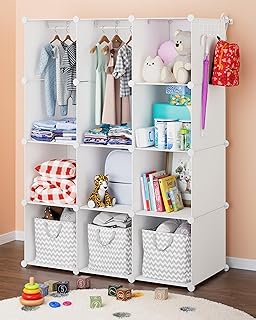
CUBEDIY Baby Closet Organizer for Nursery: Durable Baby
If you want something that just works, CUBEDIY Baby Closet Organizer for Nursery: Durable Baby Wardrobe for C is a safe bet (342 reviews, 4.5 stars).
10. Painted Wooden Peg Rails

Standard metal closet rods and plastic hangers lack character. Installing a continuous wooden peg rail along one wall provides accessible storage that looks intentional. Buy a length of Shaker-style peg rail (often available unfinished at hardware stores or online). Paint the rail the same color as your wall. This monochromatic look makes the rail blend into the architecture while giving you a place to hang tiny sweaters or canvas bags. Secure the rail directly into the studs with long wood screws. Drywall anchors will fail under the weight of a loaded rail. The catch: peg rails encourage clutter. If you hang too many mismatched items, the wall quickly turns into a messy focal point.
11. DIY Natural Wood Play Gyms

Plastic, battery-operated play gyms are loud and overstimulating. A handmade wooden play gym is a calm, minimalist alternative. You need three thick wooden dowels and two wooden A-frame side panels. You can source oak or pine dowels from Home Depot for a budget-friendly price. Drill holes through the side panels and insert the main crossbar. Leave the wood raw or seal it with natural beeswax. Hang simple wooden shapes or soft felt rings from the crossbar using short, secure leather straps. The A-frame design lets you fold it flat to slide under the crib. The catch: if your measurements are off by even a quarter inch when drilling, the structure will wobble, making it unsafe.
12. Hand-Tufted Wool Rugs

Synthetic rugs off-gas chemicals for months, leaving a lingering odor. A 100 percent wool rug is the only logical choice for a floor where a baby will crawl. Wool is naturally flame retardant, durable, and repels dirt. You can find plain, un-dyed wool rugs at stores like IKEA or West Elm. To customize it, use a latch-hook or tufting gun to add geometric accents in a contrasting yarn color along the border. Always use a thick, non-slip felt rug pad underneath. Costco often sells dense pads that add crucial cushioning over hard floors. The catch: new wool rugs shed relentlessly for the first six months. You’ll be vacuuming up fist-sized balls of wool fibers multiple times a week.

Modanais Baby Diaper Caddy Organizer Cart
Modanais Baby Diaper Caddy Organizer Cart – 3 Tier Rolling Storage Car is sturdier in person than the photos suggest — over 347 buyers gave it 4.5 stars.
13. Upcycled Dresser Changing Tables

Buying a flimsy changing table is a waste of money. They’re useless once the child is out of diapers. Instead, find a solid wood, mid-century dresser on Facebook Marketplace or at an antique store. Sand down the old finish and paint it with a durable, zero-VOC enamel. Secure a wooden changing tray to the top using brackets on the back so you don’t ruin the top surface. This gives you deep drawers for supplies and a piece of furniture that lasts through the teenage years. Replace the hardware with brass knobs or leather pulls for a custom finish. Best for: small nurseries that can’t fit both a dresser and a changing station. The catch: vintage dressers often have sticky drawers. You’ll likely need to rub paraffin wax on the tracks to get them to open smoothly.
14. Handmade Baby Nursery Decor Floating Shelves

Chunky, floating wooden shelves provide vertical storage for monitors, sound machines, and books. Integrating handmade baby nursery decor floating shelves keeps these items out of reach while adding architectural interest. Buy thick, rough-sawn pine boards from a local lumber yard. Sand them lightly to remove splinters but keep the rustic texture. Mount them using heavy-duty, hidden steel brackets that drill into the wall studs. A shelf held up by drywall anchors will rip out the second a toddler pulls on it. Keep the styling minimal. Group books by color and add a small, trailing non-toxic plant like a Spider Plant. The catch: hidden floating brackets require precise drilling and a level. If your studs aren’t aligned or your drywall is uneven, the shelves will sit at a noticeable, frustrating tilt.
15. Natural Wicker Basket Pendants

The harsh glare from a standard ceiling fixture is terrible for a baby looking up. Swapping the builder-grade light for an oversized, inverted wicker basket diffuses the light beautifully. You can find large, woven baskets at World Market or Target for a reasonable price. Cut a hole in the center of the basket’s base just large enough for a pendant light cord kit. The woven texture casts soft, patterned shadows across the ceiling, acting as a natural visual element. Always use a low-wattage, warm-toned LED bulb to keep the light soft and prevent the basket from overheating. The catch: modifying a basket means cutting through the weave. If you don’t secure the cut edges with strong glue or wire, the basket will slowly unravel.

Night Light for Kids, Baby Night Light with Sound Machine
Night Light for Kids punches above its price — 57 buyers rated it 4.5 stars. The kind of pick people reorder.
16. Block-Printed Blackout Curtains

Standard blackout curtains usually look like cheap motel drapes. They’re stiff, shiny, and heavy. You can fix this by block-printing your own patterns onto plain, heavy-weight cotton panels. Buy a set of basic cotton curtains and a separate blackout liner. Walmart sells inexpensive liners that clip to the back of standard drapes. Carve a simple shape, like a half-moon, into a linoleum block. Use fabric-safe ink to stamp the pattern across the panels. This gives you a custom, boutique look while keeping the light-blocking functionality needed for naps. Hang the curtain rod high and wide to make the window feel larger. The catch: block printing panels takes a lot of floor space and hours of drying time. If you misalign a stamp, there’s no way to erase the ink.
17. Personalized Handmade Baby Nursery Decor Growth Charts

Marking heights on a doorframe is a bad idea if you ever plan to move. Creating personalized handmade baby nursery decor growth charts solves this and serves as a permanent keepsake. Purchase a six-foot piece of clear pine (a 1×6 or 1×8 board). Sand it smooth and use a wood-burning tool or dark paint to mark the inch lines. Add the child’s name or a simple botanical border at the top. Hang the board six inches off the floor to account for baseboards, and secure it with a flush-mount French cleat so it sits flat. Best for: renters who want to track milestones without marking the walls. The catch: pine is a soft wood that dents easily. If you drop the board during installation or a toy hits it, it’ll carry a permanent gouge.
How we chose these ideas: We filtered dozens of nursery concepts based on realistic cost, renter-friendliness, and the actual effort required for a weekend project. We prioritized materials that impact indoor air quality, specifically avoiding heavy VOCs and synthetic off-gassing, while focusing on high visual impact and strict safety guidelines for infants. No exaggeration.
Building a nursery shouldn’t mean compromising on air quality or settling for sterile, mass-produced plastic. These handmade approaches require more elbow grease than clicking a checkout button, but the result is a grounded, textured room that feels like a home. Save this list, pin your favorites, and start gathering your materials before the third-trimester exhaustion hits. That took me years to figure out.
Frequently Asked Questions
What materials are safest for handmade baby nursery decor?
Stick to natural, untreated materials like organic cotton, pure wool felt, and raw wood finished with food-grade mineral oil. Avoid plastics, synthetic blends that off-gas, and any paints or stains that are not clearly labeled as zero-VOC.
How do I ensure handmade hanging decor is safe for a baby?
Any hanging decor, including mobiles and garlands, must be completely out of reach. Mobile strings should never exceed 7 inches to prevent strangulation hazards. Always secure heavy wall hangings with heavy-duty drywall anchors, and never hang heavy items directly over the crib.
Are zero-VOC paints really necessary for a nursery?
Yes. Standard paints release volatile organic compounds that degrade indoor air quality for months. Zero-VOC paints eliminate this risk. However, you still need to finish painting at least eight weeks before the baby arrives to allow the room to properly cure and air out.
How can I make handmade decor look professional instead of messy?
Focus on precise measurements and high-quality base materials. Sand wood edges completely smooth, use level lines for hanging shelves, and stick to a strict, earthy color palette. The difference between messy and professional is usually just patience during the preparation phase.
