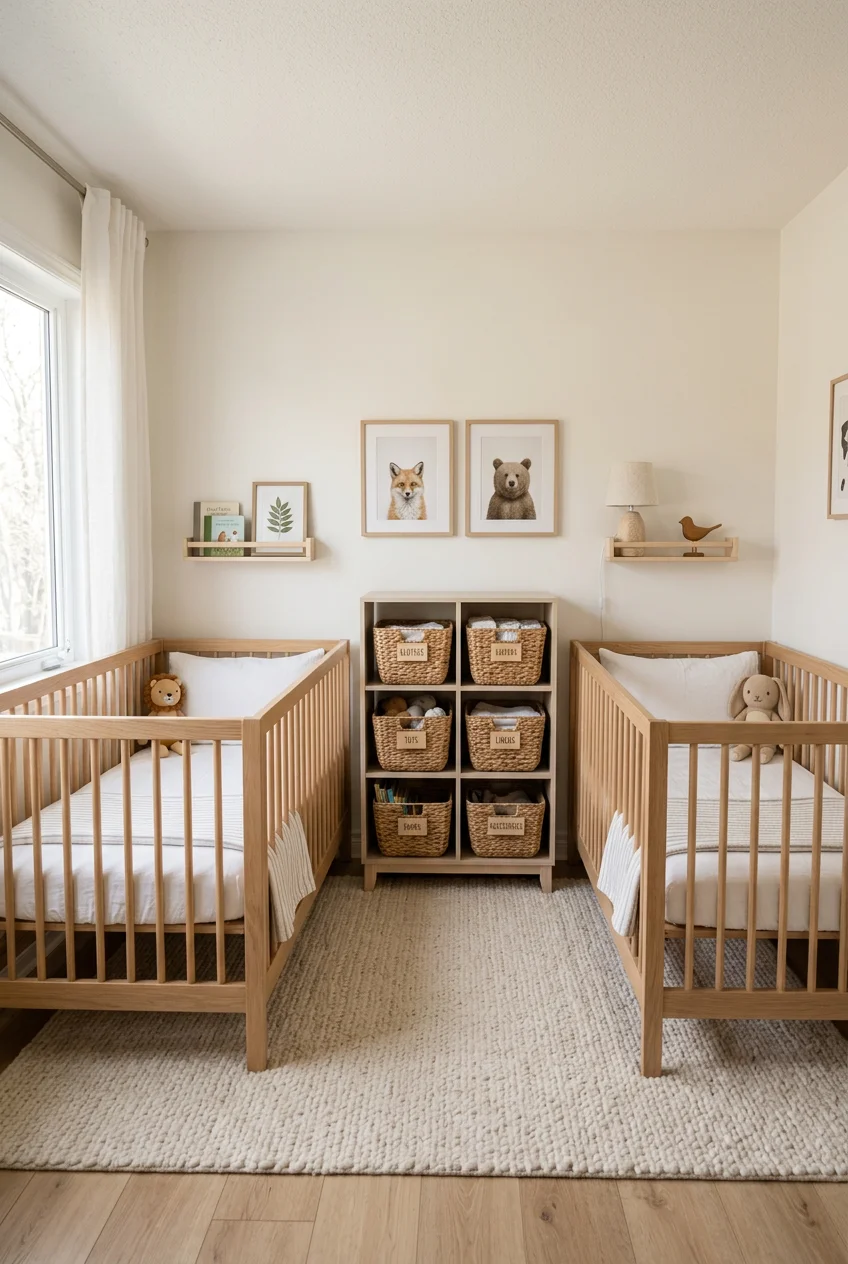
What’s Inside
- Invest in Convertible Cribs with Integrated Storage
- Utilize a Dresser as a Multi-functional Changing Station
- Maximize Vertical Space with Secure Floating Shelves for Shared Nursery Storage Solutions
- Implement Over-the-Door Storage for Quick Access
- Employ Drawer Dividers and File Folding for Clothing
- Designate Under-Crib Storage with Rolling Bins
- Use Bookshelf Room Dividers for Visual Separation
- Install Wall-Mounted Pegboards for Diapering Stations
- Implement Color-Coded Canvas Bins
- Employ Rolling Utility Carts for Mobile Stations
- Compress Outgrown Clothes with Vacuum Storage Bags
- Hang Closet Organizers with Labels
- Install Corner Hammocks for Soft Toys
- Scatter Woven Baskets for Floor Storage
- Repurpose Kitchen Spice Racks for Books
- Choose Double-Duty Ottomans with Storage
- Clever Shared Nursery Storage Solutions Using Magnetic Wall Strips
- How We Chose These Ideas
- Final Thoughts
Most people shove two cribs against opposite walls, pile a mountain of diapers in the corner, and call it a day. A shared nursery usually ends up as a chaotic mess of mixed-up onesies and tripped-over sound machines. To make the space work, you need aggressive editing and vertical thinking. If you only try one idea from this list, make it #2 (the double-duty dresser). It reclaims the biggest chunk of floor space while keeping the daily chaos hidden behind heavy wooden drawers.
Skip this if: You have a massive walk-in closet for each child or unlimited square footage. These strategies are engineered for tight quarters, standard 10×10 bedrooms, and parents who need to fit twice the gear into half the expected footprint.
1. Invest in Convertible Cribs with Integrated Storage

Most people ignore the gap between the crib mattress and the floor. That’s a mistake. Get a crib with integrated storage drawers. Products like the Storkcraft Portofino 4-in-1 Convertible Crib or the Carter’s by DaVinci Colby 4-in-1 Mini Crib with Trundle (usually $200 to $400) capture this dead zone. The trundle drawer slides out, offering a shallow cavity perfect for bulk diaper boxes or heavy winter sleep sacks. When you’re managing two babies, every square inch counts. A standard crib footprint is roughly 28 by 52 inches. Double that and you’re losing a massive chunk of walkable area. Reclaiming the bottom 8 inches keeps the closet from overflowing. The wood finishes on these models usually match standard nursery decor, keeping the room quiet. The catch: dust bunnies accumulate fast, and you’ll need to pull the whole crib away from the wall to vacuum properly.
2. Utilize a Dresser as a Multi-functional Changing Station

Skip the standalone changing table. It’s a single-purpose piece of furniture that becomes useless the minute your youngest child is potty trained. Instead, use a wide, sturdy dresser as a changing station. A heavy-duty piece like the Delta Children babyGap Legacy Six Drawer Dresser ($300 to $500) gives you enough surface for a 32-inch changing pad, plus a wipe dispenser and a basket for creams. The six-drawer layout makes sense for a shared room. Assign the left three drawers to child A and the right three to child B. This creates a hard physical boundary for clothing. The bottom drawers hold heavy items like blankets, while the top ones keep bodysuits within arm’s reach. Best for: tight budgets. Buying one solid dresser is cheaper than buying a dresser plus a dedicated table. The catch: opening the top drawer forces you to step awkwardly to the side while standing in front of the pad. I learned that the hard way.
3. Maximize Vertical Space with Secure Floating Shelves for Shared Nursery Storage Solutions

Blank walls are wasted real estate. Use floating shelves to keep fragile items away from curious toddlers. A common mistake is hanging these too high and wondering why the room feels off. Install them 12 to 18 inches above the dresser. The Target Room Essentials 24-inch floating shelves (under $20 each) provide a clean ledge for items you need visible but out of reach. Think glass lotion bottles, baby monitors, or small wooden toys. When you move decorative elements to the walls, you free up flat surfaces for functional tasks. Natural wood shelves against a painted wall add warmth without taking up floor space. The catch: weight limits on budget shelves are strict. If you overload them with heavy books, the drywall anchors will eventually pull loose and sag.

Criusia Over the Door Organizer
If you want something that just works, Criusia Over the Door Organizer is a safe bet (336 reviews, 4.5 stars).
4. Implement Over-the-Door Storage for Quick Access

The back of the nursery door is a blank canvas. Use it for the items you reach for ten times a day. The Delta Children 4 Pocket Over The Door Hanging Organizer (around $60) uses heavy-duty hooks that slide over standard interior doors. The fabric pockets are surprisingly rigid. Use the top for thermometer kits and nail clippers, the middle for burp cloths, and the bottom for backup pacifiers. When you’re holding a crying baby, you can’t be digging through a closet. Having these essentials at eye level saves time. Best for: renters. You get significant storage without drilling a single hole in the drywall. The catch: interior doors won’t sit perfectly flush against the frame, and the metal hooks can scrape the door jamb over time.
5. Employ Drawer Dividers and File Folding for Clothing

Throwing tiny socks and mittens into a massive drawer is a recipe for irritation. Employ drawer dividers and file folding. Adjustable spring-loaded organizers (like the Mainstays multi-packs at Walmart, starting around $14) let you customize the width of each column. The real trick is file folding. Instead of stacking onesies, fold them into small rectangles and stand them upright. This lets you see every graphic tee or pajama set at a glance. When you’re managing wardrobes for two different sizes, visual clarity prevents you from wrestling a newborn into a 6-month sleeper at 3 AM. The rigid dividers keep the rows from collapsing. The catch: this system requires discipline on laundry day. If you get lazy and stuff unfolded clothes back into the columns, the whole system breaks down.
6. Designate Under-Crib Storage with Rolling Bins

The space beneath a crib is prime real estate. Use rolling bins to capture this footprint. Shallow, wheeled boxes from The Container Store ($20 to $50) slide easily over carpet or hardwood. These are ideal for stashing the next size up in diapers, heavy winter coats, or extra sheets. In a shared room, assign one bin to each child. Clear plastic versions let you take inventory without pulling the bin out. If you prefer a softer look, look for fabric bins with reinforced bottoms and hidden casters. Keeping the floor clear makes the room feel larger. The catch: these bins are difficult to access once you drop the crib mattress to its lowest setting for a standing toddler. You’ll barely have four inches of clearance.

Criusia Drawer Organizer Clothes
Criusia Drawer Organizer Clothes is sturdier in person than the photos suggest — over 12 buyers gave it 4.5 stars.
7. Use Bookshelf Room Dividers for Visual Separation

When siblings share a room, distinct zones help maintain order. Use bookshelf room dividers to separate the sleeping areas. The IKEA Kallax 4×4 unit (budget to mid-range) is an architectural workhorse. Place it perpendicular to the wall between the two cribs. Fill the lower cubbies with wooden toys and the upper ones with sound machines or monitors. This creates a visual barrier that gives an older toddler a sense of privacy. The thick, geometric lines add structure. Best for: shared toddler and baby rooms. It gives the older child a distinct territory. The catch: a freestanding bookshelf is a tipping hazard. It must be anchored to the wall stud with heavy-duty steel brackets, which permanently dictates the room layout. You might also like: 15 Unisex Nursery Ideas You Need to See
8. Install Wall-Mounted Pegboards for Diapering Stations

Traditional shelving can feel heavy in a small space. Use wall-mounted pegboards to keep the diapering area light. The IKEA Skadis system (under $30) offers a customizable grid. Attach small cups for diaper cream, hooks for spare pacifiers, and trays for nail clippers. Mounting this above the changing pad keeps dangerous items out of reach while ensuring you never have to take a hand off the baby to dig through a drawer. The matte finish blends into the background. The catch: a fully loaded pegboard looks cluttered if you aren’t meticulous. Randomly hanging brightly colored items turns the wall into a chaotic focal point. You might also like: 16 Toddler Room Ideas You Need to See
9. Implement Color-Coded Canvas Bins

Sorting laundry for two tiny humans is a nightmare. Use color-coded canvas bins to streamline it. Pick up structured fabric cubes from Target or eco-friendly cotton bins from Sprouts ($10 to $25 each). Assign a specific color to each child. Sage green bins hold baby A’s swaddles, while navy blue holds baby B’s sleep sacks. This visual shorthand means anyone knows exactly where things belong without reading tiny tags. The soft texture adds warmth, contrasting nicely with hard wooden furniture. Avoid stark white bins; they show dirty fingerprints instantly. Trust me. The catch: cheap fabric bins lack internal structure and will eventually slouch, especially if you overstuff them with heavy denim or thick sweaters. You might also like: 18 IKEA Nursery Ideas Worth Trying
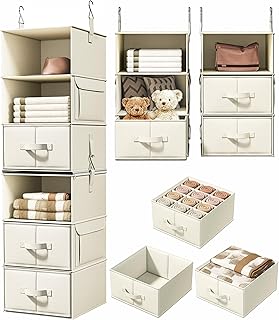
Vailando 6-Shelf Hanging Closet Organizer with 3 Drawers
Vailando 6-Shelf Hanging Closet Organizer with 3 Drawers punches above its price — 35 buyers rated it 4.5 stars. The kind of pick people reorder.
10. Employ Rolling Utility Carts for Mobile Stations

Babies require a shocking amount of gear that needs to move. Use rolling utility carts for mobile feeding and pumping stations. The classic IKEA Raskog or the Target Brightroom 3-tier cart ($35 to $40) is narrow enough to tuck into a corner. Load the top tier with pump parts, the middle with burp cloths, and the bottom with snacks for parents. When the baby wakes up hungry, just roll the station next to the glider. Best for: homes with kids or pets. You can roll the cart out of the room to keep a toddler away from expensive gear. The catch: the small caster wheels get stuck on thick, high-pile nursery rugs.
11. Compress Outgrown Clothes with Vacuum Storage Bags

A shared nursery means dealing with multiple clothing sizes. Use vacuum storage bags to compress the bulk. Ziploc Space Bags (under $25) allow you to flatten a massive pile of 0-3 month onesies into a rock-hard brick. Slide these under the crib or onto the top closet shelf. This prevents hand-me-downs from eating up drawer space while you wait for the younger sibling to grow into them. The airtight seal also protects fabrics from moisture. The catch: natural fibers like cotton come out with deep, aggressive wrinkles. You’ll have to wash and steam every item before the second child can wear it.
12. Hang Closet Organizers with Labels

Standard nursery closets come with a single rod, which is useless for baby clothes. Hang vertical organizers with labels to multiply your shelving. The Container Store offers 6-compartment hanging organizers (budget-friendly) that strap onto the rod. Use these cubbies to separate clothing by size or category. Dedicate one column to the older child and one to the baby. Adding clip-on labels ensures the 2T pants don’t get mixed up with the 3-6 month leggings. This utilizes the empty vertical gap between hanging clothes and the floor. The catch: the velcro loop at the top eventually sags and tears if you load the bottom cubbies with heavy items like shoes or books.

StorageWorks Hanging Closet Organizer with Metal Rod
StorageWorks Hanging Closet Organizer with Metal Rod is sturdier in person than the photos suggest — over 18 buyers gave it 4.5 stars.
13. Install Corner Hammocks for Soft Toys

Stuffed animals multiply in the dark and take over the floor. Install corner hammocks to reclaim that square footage. A simple mesh net like the Lilly’s Love stuffed animal hammock (under $20) stretches across any empty corner. Tossing the plush toys near the ceiling draws the eye upward, making the room feel taller. It also keeps the floor clear for play. The woven mesh fades into the background, letting the toys act as the decor. Best for: small, dark rooms. By getting clutter off the floor, light from the window can actually bounce around. The catch: these nets collect a shocking amount of dust, and you’ll need a step stool every time your child wants a toy from the back.
14. Scatter Woven Baskets for Floor Storage

You need a place to dump items when you’re cleaning in a hurry. Scatter oversized woven baskets. Grab thick, cotton rope baskets from Costco or Target ($20 to $45). These are perfect for tossing extra swaddles, wooden blocks, or laundry. The braided texture adds a tactile, cozy element that feels warmer than plastic. Because they’re soft-sided, they won’t scratch the baseboards or injure a crawling baby. The catch: I’ve noticed that toddlers view empty floor baskets as personal vehicles. They will dump out all the clean laundry just so they can sit inside, defeating the entire purpose.
15. Repurpose Kitchen Spice Racks for Books

Traditional bookcases eat up floor space. Repurpose kitchen spice racks for forward-facing storage. The IKEA Bekvam wooden spice racks (under $10) can be screwed directly into the wall at toddler height. This displays colorful covers, making them look like wall art while encouraging the older child to read. Paint the wood to match the trim or leave it natural for a Scandinavian look. Staggering three or four creates a library with zero footprint. The catch: the depth is shallow. Each rack only holds about three or four board books, so this won’t solve your problems if you have a massive library.
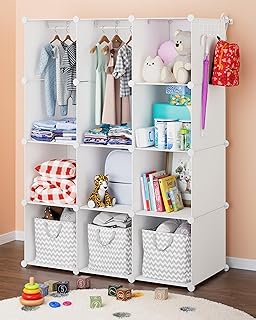
CUBEDIY Baby Closet Organizer for Nursery: Durable Baby
CUBEDIY Baby Closet Organizer for Nursery: Durable Baby Wardrobe for C punches above its price — 342 buyers rated it 4.5 stars. The kind of pick people reorder.
16. Choose Double-Duty Ottomans with Storage

Seating is non-negotiable, but a bulky armchair wastes space. Choose double-duty ottomans with hidden storage. A piece like the Target Threshold round storage ottoman (mid-range pricing) provides a place to rest your feet during feedings. Pop the lid off, and you have a cavity perfect for nursing pillows, extra sheets, or blankets. The upholstered fabric softens the room’s acoustics. Best for: tight quarters. It serves as a footrest, a temporary seat, and a storage trunk all at once. The catch: the internal hinges on budget ottomans are weak. If an older sibling sits on the open lid or pushes it backward, the metal brackets will snap.
17. Clever Shared Nursery Storage Solutions Using Magnetic Wall Strips

Small metal accessories get lost in the shuffle of a shared room. Mount magnetic wall strips inside the closet door or above the changing station. You can find heavy-duty magnetic tool strips at Kroger or Home Depot (under $20). These are brilliant for holding nail clippers, safety scissors, hair clips, and small metal-tinned diaper balms. The satisfying click of the metal snapping against the bar ensures the item is secure. It keeps these tiny, sharp items visible and out of the hands of toddlers. The catch: the industrial look of a metal strip can feel harsh. You’ll need to camouflage it inside a closet or behind a door to keep the room cozy.
How We Chose These Ideas

We prioritized renter-friendliness, cost, and installation effort. Every idea on this list was selected based on its ability to maximize vertical space and deliver high impact without requiring a general contractor. We focused on solutions that handle the challenge of organizing two different clothing sizes in one footprint. Took me years to figure out, no exaggeration.
Final Thoughts
Managing a shared nursery doesn’t mean surrendering to chaos. By forcing your furniture to multitask and aggressively using your vertical wall space, you can create a room that feels calm. I’m confident that implementing even two or three of these strategies will change how the room functions. Pin this list for your next weekend project and tackle one corner at a time.
Frequently Asked Questions
How do you separate clothes in a shared nursery closet?
Use hanging closet organizers to create vertical columns for each child. Add clip-on labels to the shelves to clearly mark sizes. I’d also recommend using different colored hangers for each child so you can instantly identify whose jacket you’re grabbing.
What is the best way to store diapers for two babies?
Keep a small daily supply in the top drawer of your changing dresser or on a wall-mounted pegboard. Store the massive bulk boxes in rolling bins under the cribs or in the trundle drawers to keep the floor clear.
How can I maximize space in a small shared nursery?
Utilize the vertical space on your walls and the back of your doors. Install floating shelves, over-the-door pocket organizers, and magnetic strips. Moving your shared nursery storage solutions off the floor makes the room feel much larger.
Are rolling utility carts safe in a nursery?
Yes, provided they aren’t loaded with heavy items on the top tier that could cause tipping. They’re excellent for mobile feeding stations, but you’ll want to roll them into a closet or lock the wheels once the babies start crawling.
