What’s Inside
- Start with a Ruthless Pre-Organization Purge
- Micro-Categorize by Exact Type and Size
- Install Adjustable Drawer Dividers
- Utilize Fabric Bins for Small Accessories
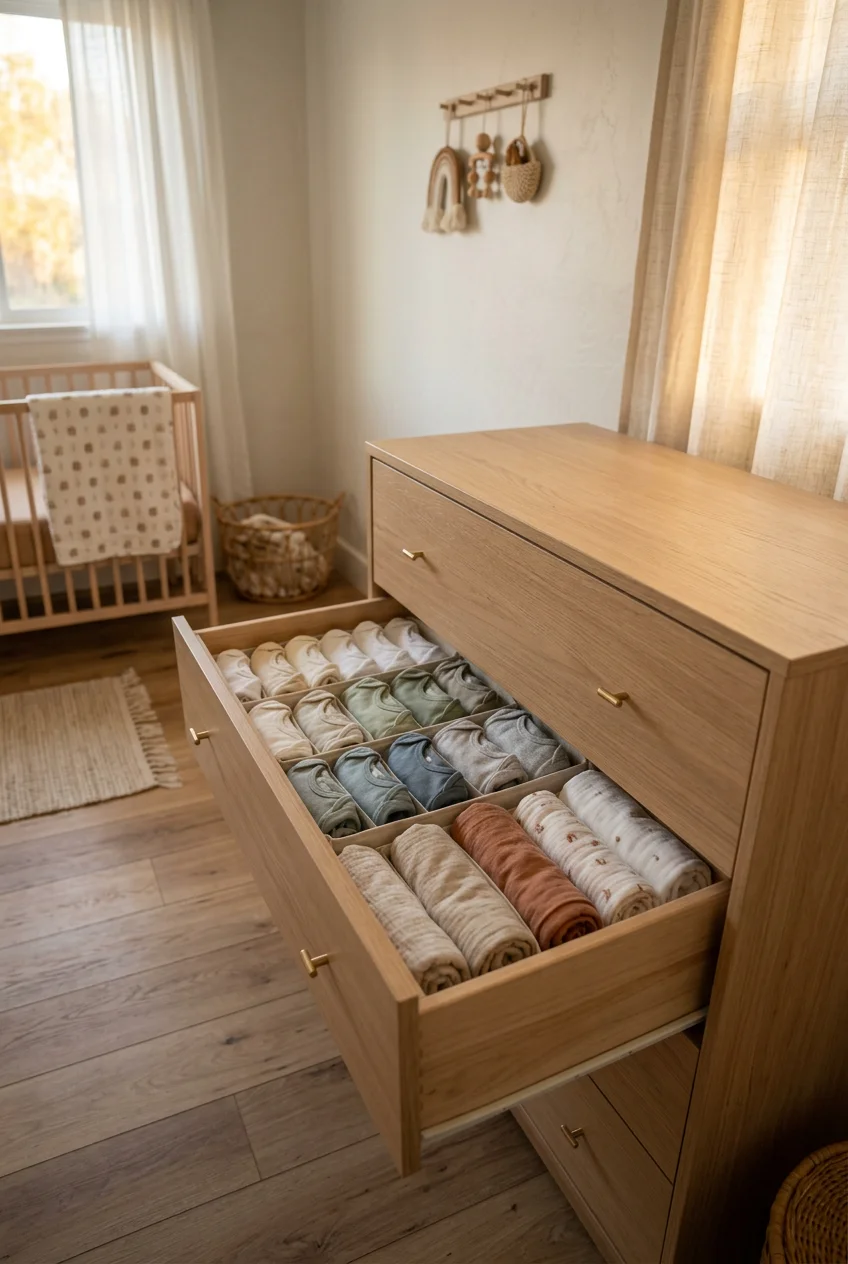
- Master Vertical File Folding
- Build a Top Drawer Diapering Command Center
- Reserve Middle Drawers for Daily Wear
- Push Heavy Backstock to the Bottom Drawers
- Apply Clear Visual Labeling
- Establish a Dedicated Outgrown Bin
- Prioritize Accessibility Over Perfect Aesthetics
- Invest in Multi-Functional Convertible Dressers
- Incorporate Eco-Friendly Bamboo Organizers
- Use a Mobile Diaper Station Cart
- Leave Room to Grow (Don’t Over-Stuff)
- Add Acrylic Trays for Tiny Health Items
- Freshen Drawers with Natural Scents
A 3 AM diaper blowout is the ultimate test of your nursery setup. When you’re holding a screaming infant in one hand and desperately grabbing for fresh wipes with the other, proper drawers baby room organization is the only thing standing between you and total chaos. Most people just shove folded tiny clothes into a massive dresser and wonder why the room feels off a week later. The reality is that baby items are overwhelmingly small. Without a strict system, those tiny socks and newborn onesies morph into a tangled, unmanageable pile of cotton. If you only try one idea from this list, make it #6. Here’s why: dedicating the top drawer strictly to diapering essentials prevents you from ever turning your back on a wiggly baby to grab supplies. Trust me on this.
Skip this list if you’re relying entirely on a closet hanging system or open minimalist shelving. These specific micro-organizing techniques require actual closed dresser drawers. If your nursery storage consists of open wicker baskets on a bookshelf, these exact divider strategies will just frustrate you.
1. Start with a Ruthless Pre-Organization Purge

Before buying a single plastic bin, empty every single drawer onto the floor. Sorting items into strict “keep,” “donate,” and “discard” piles is mandatory. Babies accumulate a ridiculous amount of small items, from hand-me-down bibs with permanent stains to socks missing their match. Using standard 13-gallon up&up trash bags from Target (typically under $10 for a large box) makes the sorting process fast and visually clear. Don’t hold onto stained burp cloths just because they were a gift. Keep only the items that are currently useful, intact, and relevant to your daily routine. A common mistake is organizing clutter instead of removing it. You can’t organize your way out of simply owning too much stuff. I learned that the hard way.
The catch: This process is incredibly time-consuming and requires a large block of uninterrupted time, which is rare with a newborn in the house.
2. Micro-Categorize by Exact Type and Size

Grouping similar items together sounds basic, but you need to be militant about it. Separate the short-sleeve onesies from the long-sleeve onesies. Keep the pajamas away from the daytime outfits. More importantly, separate the current sizes from the “next size up.” A three-month-old wears drastically different clothing than a six-month-old, and mixing them guarantees frustration. Store the upcoming sizes in clear 2-gallon Ziploc bags (grab a bulk box at Costco for budget-friendly pricing) so you can easily identify when it’s time to swap them into the current rotation. Keeping the future sizes visible but contained prevents the daily clothing pile from becoming contaminated with items that don’t fit.
Best for: Parents dealing with a massive influx of baby shower clothing gifts.
The catch: It requires constant, weekly maintenance to pull out items the baby has abruptly outgrown.
3. Install Adjustable Drawer Dividers

Tiny baby items become a jumbled mess in standard adult-sized dresser drawers. Adjustable dividers are the structural foundation of drawers baby room organization. The OXO Tot Expandable Drawer Dividers (usually available in 2-packs in the $20-$30 range) are highly rated for a reason. They expand up to 17 inches and install without tools, using a simple locking mechanism that creates a firm barrier. The Container Store also sells Dream Drawer Organizers ranging from $7.69 to $13.99 per package. These dividers create distinct lanes for different clothing categories, preventing the socks from migrating into the pajama section every time you open the drawer.
Best for: Wide, deep dresser drawers that lack built-in compartments.
The catch: The spring tension mechanism in cheaper dividers often weakens over time, causing them to slip out of place.

Modanais Baby Diaper Caddy Organizer Cart
If you want something that just works, Modanais Baby Diaper Caddy Organizer Cart – 3 Tier Rolling Cart with D is a safe bet (688 reviews, 4.5 stars).
4. Utilize Fabric Bins for Small Accessories

For the truly microscopic items like newborn socks, scratch mittens, and folded burp cloths, rigid dividers aren’t enough. Fabric drawer organizer bins contain these loose items perfectly. A 6-pack of mDesign Fabric Baby Nursery Drawer Organizer Bins typically runs in the $20-$50 range, offering customized storage that fits like a puzzle. Alternatively, IKEA’s SKUBB boxes (a 6-piece set for around $4.99) are an incredibly affordable option. They come in specific dimensions (like 5.5×5.5×5.1 inches and 11x11x5.1 inches) that fit perfectly into standard dressers like the IKEA MALM. The soft fabric prevents snags on delicate knits. You might also like: 20 Inspiring Gold Crib Bedding Ideas You Can Try Today
The catch: The rough polyester fabric of these bins acts like a magnet for lint, dust, and pet hair, requiring frequent vacuuming.
5. Master Vertical File Folding

Stacking baby clothes in a traditional pile is a guaranteed way to ruin your organization. The moment you pull a onesie from the bottom, the entire stack topples. Instead, fold clothes into small 4×4 inch rectangles and store them vertically, like files in a cabinet. This vertical file folding method allows you to see the exact pattern and color of every single item at a glance. You never have to dig. It keeps the drawer perfectly level and maximizes the available depth. Even thick winter sweaters can be folded this way to maintain visual order. You might also like: 20 Stunning Layout Small Nursery Ideas That Are Totally Worth It
The catch: It takes significant practice to fold slippery baby fabrics tight enough so they stand up on their own without unrolling.
6. Build a Top Drawer Diapering Command Center

If your dresser doubles as a changing station, the top drawer must be strictly reserved for diapering essentials. Position the heavy-rotation items right where your hand naturally falls. Stock it with a thick stack of Pampers Swaddlers, a bulk pack of water wipes, and a 14 oz tub of Aquaphor (easily found at Walmart or Target). Professional organizer James Lott, Jr. emphasizes keeping it simple and accessible. The top drawer holds the items you need to grab in a split second. This setup keeps the actual changing surface completely clear of clutter, which is a major safety advantage when dealing with a rolling infant. No exaggeration. You might also like: 16 Purple Nursery Ideas Worth Trying
The catch: Dedicating the most accessible drawer to diapers takes prime real estate away from daily clothing.

Modanais Baby Diaper Caddy Organizer Cart
Modanais Baby Diaper Caddy Organizer Cart – 3 Tier Rolling Storage Car is sturdier in person than the photos suggest — over 347 buyers gave it 4.5 stars.
7. Reserve Middle Drawers for Daily Wear

The onesies, daily sleepers, and casual outfits belong in the middle drawers. This placement makes them readily available without requiring excessive bending or reaching up high. A standard multipack of Carter’s cotton sleepers takes up surprisingly little space when file-folded here. Divide these middle drawers by specific categories: short-sleeve on the left, long-sleeve in the middle, and pants on the right. This creates an intuitive map of the baby’s wardrobe. When it’s time to get dressed, you simply pull one item from each designated lane.
Best for: Standard 3-drawer or 6-drawer dressers where the middle section is at waist height.
The catch: Once your baby becomes a walking toddler, these middle drawers are at the exact perfect height for them to pull everything out.
8. Push Heavy Backstock to the Bottom Drawers

Less frequently used items need to be banished to the bottom drawers. This includes extra crib sheets, heavy winter blankets, sleep sacks, and clothing in larger sizes. Thick items like a Halo SleepSack (especially the 1.5 TOG winter weight) or a 36×46 inch Burt’s Bees Baby quilt (often stocked at Sprouts) take up massive amounts of room. Storing them at the bottom keeps them organized but entirely out of the way of your daily routine. The bottom drawer acts as your nursery warehouse.
The catch: Bending down to the floor to retrieve heavy blankets is physically uncomfortable, especially during postpartum recovery.
9. Apply Clear Visual Labeling

Labels aren’t just for making the drawer look nice; they are a functional necessity for sleep-deprived parents and visiting caregivers. When a babysitter or grandparent needs to find a burp cloth, they shouldn’t have to open every drawer. Use a basic Brother P-Touch label maker (typically budget-to-mid-range, under $40) with 12mm black-on-white tape to mark the lip of each drawer or the edge of the internal fabric bins. For toddlers, visual labels featuring simple pictures (a sock, a shirt) help them learn where things belong.
The catch: Strong adhesive labels can peel the finish off cheap veneer dressers when you try to remove them later.

Night Light for Kids, Baby Night Light with Sound Machine
A dependable everyday pick — Night Light for Kids pulls in 57 ratings at 4.5 stars. Not flashy, just solid.
10. Establish a Dedicated Outgrown Bin

Babies grow at an alarming rate, sometimes jumping a clothing size overnight. Keep a designated bin or sturdy canvas bag directly in the nursery specifically for clothes the baby has outgrown. A heavy-duty canvas tote from Whole Foods works perfectly for this. The moment you try to put a onesie on the baby and realize it’s too tight, immediately toss it into this outgrown bin. Never put it back in the clean drawer. Regularly assess the dresser contents and move these tight items out to prevent the drawers from becoming clogged with unwearable clothes.
The catch: An open tote bag full of discarded clothes takes up valuable floor or closet space in a small nursery.
11. Prioritize Accessibility Over Perfect Aesthetics

A common mistake is prioritizing a Pinterest-perfect look over actual functionality. If a storage system takes five steps to put a single pair of socks away, you won’t maintain it. As professional organizer James Lott, Jr. suggests, keep it simple. Sometimes, tossing loose items into an open bin is better than meticulously folding them. Simplehuman open bins (mid-range pricing) provide a sturdy drop-zone for things like bibs or hats that don’t require neat folding. The goal is a system that holds up during a chaotic Tuesday morning, not just one that looks good in photos.
Best for: First-time parents who tend to overcomplicate their organizing routines.
The catch: Open drop-bins look visually messy and chaotic compared to perfectly folded rows.
12. Invest in Multi-Functional Convertible Dressers

The 2026 trend in nursery design is heavily focused on multi-functional furniture that evolves with the child. Opt for a dresser designed to serve as a changing table initially, which later transitions into a standard piece of furniture. The Babyletto Hudson 3-Drawer Changer Dresser (mid-to-high range pricing) is a prime example. At 39.5 inches wide, it provides ample surface area for a changing pad while offering deep, spacious drawers below. This aligns with the practical approach of buying furniture that lasts beyond the toddler years.
The catch: Convertible dressers are often significantly heavier and harder to move than basic, lightweight nursery furniture.

YACHANCE Kids Sound Machine with Night Light Projector
A dependable everyday pick — YACHANCE Kids Sound Machine with Night Light Projector pulls in 71 ratings at 4.5 stars. Not flashy, just solid.
13. Incorporate Eco-Friendly Bamboo Organizers

Move away from cheap, brittle plastics and embrace storage solutions made from sustainable materials. The current trend leans heavily toward natural textures and gender-neutral palettes like sage green and warm terracotta. Bamboo drawer organizers, like those found in the Marie Kondo line at The Container Store (featuring 6×9 inch modular bins), offer a solid, eco-friendly alternative. They bring a warm, natural wood tone into the drawer interior, creating a cohesive look that matches modern, earthy nursery designs.
The catch: Bamboo is completely rigid, meaning you can’t squeeze or squish these bins into tight, awkwardly sized drawer spaces.
14. Use a Mobile Diaper Station Cart

Sometimes the best drawer organization happens outside the drawer entirely. A rolling cart stocked with diapers, wipes, and barrier creams serves as a highly functional portable changing station. The IKEA RÅSKOG cart (measuring 13 3/4×17 3/4×30 3/4 inches) is the industry standard for this. It frees up massive amounts of space in your actual dresser drawers. You can roll this cart into the living room during the day and back to the nursery at night, keeping all the bulky diapering supplies mobile and accessible.
Best for: Multi-story homes where you don’t want to carry the baby upstairs for every single diaper change.
The catch: The hard metal caster wheels can easily scratch soft hardwood floors if dragged sideways.
15. Leave Room to Grow (Don’t Over-Stuff)

While it’s tempting to maximize every square inch of space, over-stuffing drawers is a fatal organizational error. When a drawer is packed tight, pulling one item out ruins the fold of everything around it. Follow the 80% rule: leave at least 20% of the drawer completely empty. Whether you’re using a high-end boutique piece or a basic Mainstays dresser from Walmart, leaving physical breathing room ensures you can actually slide your hands in to retrieve items. It also accounts for the inevitable influx of new clothes as the baby grows.
The catch: Leaving 20% of a drawer empty feels like a massive waste of storage space when you live in a tiny apartment.

Baby Sound Machine Baby Night Light Projector with Star
If you want something that just works, Baby Sound Machine Baby Night Light Projector with Star is a safe bet (845 reviews, 4.5 stars).
16. Add Acrylic Trays for Tiny Health Items

Baby health and grooming items are notoriously difficult to store. Nail clippers, digital thermometers, and nasal aspirators get lost instantly in deep drawers. Shallow acrylic trays keep these micro-items visible and contained. STORi clear plastic vanity trays (often found in 9×3 inch dimensions at Target for budget-friendly prices) fit perfectly in the shallowest top drawers. Because they are transparent, they don’t add visual bulk to the drawer interior, and they keep the sharp or sanitary items completely separate from the soft clothing.
The catch: Clear acrylic shows every single fingerprint, dust speck, and smudge, requiring constant wiping down to look clean.
17. Freshen Drawers with Natural Scents

The final step in mastering drawers baby room organization is addressing the scent. Dressers, especially vintage or hand-me-down pieces, can develop a stale, musty smell that transfers to the clean baby clothes. Tucking small, natural scent sachets into the back corners of the drawers makes a huge difference. Trader Joe’s often sells small 4 oz lavender sachets that provide a subtle, clean aroma without being overpowering. Cedar blocks are another excellent, natural option that helps repel moths while keeping the thick winter sleep sacks smelling fresh.
Best for: Musty vintage dressers or homes located in highly humid climates.
The catch: Strong scents, even natural ones, can irritate highly sensitive newborn skin if the sachets are placed directly on top of the clothing.
How we chose these ideas: We selected these organization strategies based on their practical functionality in real-world nurseries, prioritizing methods that offer high visual impact with minimal daily effort. The focus was on renter-friendly, tool-free solutions and cost-effective products that accommodate the rapid pace of a baby’s changing wardrobe.
Organizing a nursery isn’t a one-time event; it’s an ongoing routine. By setting up strict zones, utilizing the right dividers, and ruthlessly editing out the clutter, you create a space that actually supports you during those exhausting early months. I highly recommend starting with the top drawer and working your way down. It took me years to figure out that order. Pin this list to your nursery planning board so you have these exact measurements and strategies handy when it’s time to build your baby’s dresser.
Frequently Asked Questions
What is the best way to fold clothes for drawers baby room organization?
Vertical file folding is the most effective method. Fold the tiny clothes into small rectangles and stand them upright. This allows you to see every single item at a glance without toppling a stack when you pull one out.
What should go in the top drawer of a baby’s dresser?
If the dresser is used as a changing station, the top drawer must hold diapering essentials. Stock it with diapers, wipes, and barrier creams so you never have to turn your back on the baby to grab supplies.
Are drawer dividers really necessary for baby clothes?
Yes. Baby items are incredibly small and easily become tangled. Adjustable dividers or small fabric bins act as physical barriers, keeping socks, onesies, and accessories separated and preventing the drawer from becoming a chaotic mess.
How do I handle baby clothes they have outgrown?
Keep a dedicated canvas tote or bin inside the nursery specifically for outgrown items. The moment an outfit is too tight, toss it in the bin immediately. This prevents unwearable clothes from clogging up your clean, organized drawers.
