What’s Inside
- Prioritize Baby-Safe Yarn for All Projects
- Embrace the Warm Neutral Palette
- Crochet a Versatile Receiving Blanket
- Craft Safe Amigurumi Shelf Friends
- Design a Visually Engaging Hoop Mobile
- Create Sturdy Storage Baskets with Chunky Yarn
- Incorporate Textured Wall Hangings
- Crochet a Dual-Purpose Playmat and Storage Bag
- Choose Certified Non-Toxic Materials for Nursery Rugs
- Layer Textures within a Cohesive Color Palette
- Add Surprising Embellishments to Mobiles
- Avoid Non-Washable Yarns Entirely
- Integrate Sculptural Crochet Elements
- Personalize with Crocheted Name Banners
- Ensure All Stitches are Soft and Breathable
- Crochet Heavy-Duty Curtain Tie-Backs
- Wrap Wooden Teether Rings in Textured Stitches
- Add Crochet Trim to Plain Curtains
- Crochet a Removable Rocking Chair Headrest
- Design a Chunky Crochet Floor Cushion
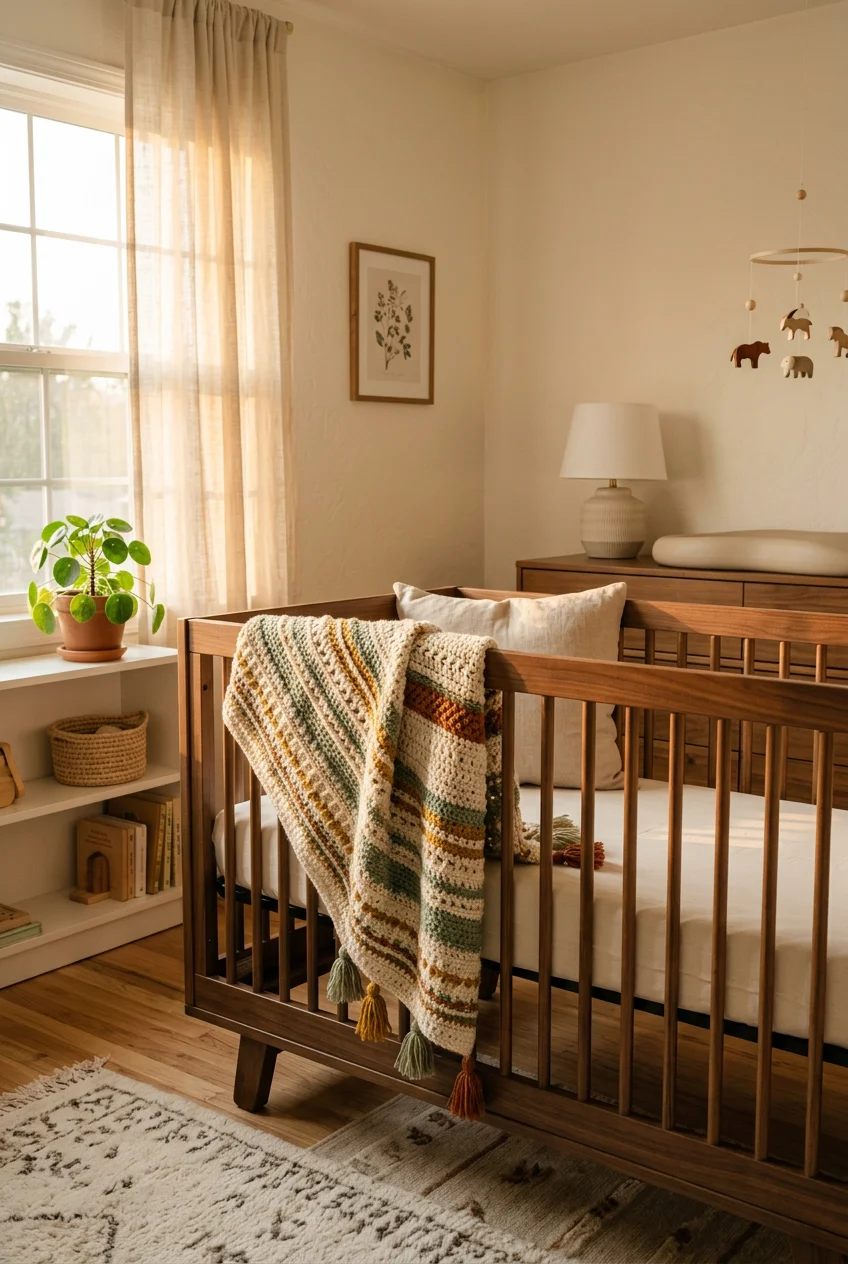
Most people walk into a nursery and see the sterile, harsh lines of mass-produced furniture. A crib from Target or a changing table from Walmart does the job, but it lacks any real soul. That’s where crochet nursery decor shifts the mood. Handmade textiles add acoustic dampening and tactile variety that flat-pack furniture just can’t match. You aren’t just filling space; you’re layering textures that soften the room’s echo. If you only try one idea here, make it #8. A dual-purpose playmat solves floor-time comfort and toy storage in one functional piece. Took me years to figure that one out.
Skip this list if you’re outfitting a nursery with wipe-clean vinyl and sleek metal. Crochet needs the occasional wash and brings a soft, textured look that clashes with ultra-minimalist design. If you hate doing laundry, yarn-based decor isn’t for you.
1. Prioritize Baby-Safe Yarn for All Projects

Walking down the yarn aisle at Joann or Michaels is overwhelming. Most people grab the fluffiest skein they see, ignoring the fiber content. That’s a mistake. When planning nursery decor, you need materials that survive bodily fluids and high-heat wash cycles. Experts recommend acrylic, polyester, or cotton-acrylic blends because they don’t hold odors and dry fast. Brands like Lion Brand Baby Soft (Weight 3) or Bernat Softee Baby are solid choices. You’ll spend between $4 to $8 per skein, which keeps it budget-friendly for heavy crib blankets. The texture is soft against delicate skin, avoiding the scratchy finish of cheap craft acrylics. Check the label for the machine-washable symbol. Hand-washing a stained blanket at 3 AM won’t ever happen. Trust me. The catch: pure acrylic yarns tend to pill after a few trips through the dryer, leaving tiny fuzzballs that require a fabric shaver.
2. Embrace the Warm Neutral Palette

Nursery aesthetics lean into warm neutrals like creamy whites, soft taupes, and subtle hints of terracotta or sage green. Neon brights and harsh primary colors overstimulate babies and make the room feel chaotic. By sticking to a muted palette, the room stays calm and grounded. When buying at stores like Hobby Lobby, check that your dye lots match. A dusty pink or pale blue accent works well when anchored by a large cream or taupe base. This keeps the decor relevant as the child grows. The catch: lighter neutral colors show spit-up and dirt instantly, requiring more frequent washing than darker shades.
3. Crochet a Versatile Receiving Blanket

Best for: tight budgets.
A standard receiving blanket is about 40 by 40 inches. This size is perfect for swaddling, tummy time, or acting as a temporary car seat cover. For a cozy, breathable option, you’ll need 4 to 5 skeins of GOTS-certified organic cotton. Gazzal Organic Baby Cotton (Light-DK weight) is a reliable choice that usually runs $3.75 to $5.00 per skein online. Organic cotton breathes better than synthetics, keeping the baby from overheating during naps. The catch: crocheting a 40-inch square by hand takes dozens of hours, which is a massive time commitment for beginners.

Beautiful Wooden Baby Closet Dividers Set of 7
Beautiful Wooden Baby Closet Dividers Set of 7 – Double-Sided Organize is sturdier in person than the photos suggest — over 11 buyers gave it 4.5 stars.
4. Craft Safe Amigurumi Shelf Friends

When crocheting stuffed animals (amigurumi) for the shelf, safety dictates every choice. Most people buy cheap plastic safety eyes on Etsy and assume they’re secure. They aren’t. Plastic parts can detach and become choking hazards. Instead, embroider facial features using contrasting yarn. An ideal size for shelf decor is 5 to 8 inches tall. This makes them visible from across the room without dominating the space. Stick to simple shapes like a rounded bear or a basic bunny to keep visual clutter low. The catch: embroidering eyes and noses cleanly takes practice, and early attempts often look asymmetrical.
5. Design a Visually Engaging Hoop Mobile

Best for: homes with kids or pets.
Hoop mobiles are functional pieces of art. Use a wooden or metal hoop measuring 10 to 12 inches in diameter. Hang lightweight crocheted stars, clouds, or small 15 cm hot air balloon motifs at varying lengths using thin yarn. This creates a layered effect that moves with the air currents from the HVAC vent, captivating the baby. You can find wooden hoops at any craft store for under $5. Always ensure the mobile is anchored to a ceiling stud, well out of the baby’s reach. The catch: dusting a complex yarn mobile is nearly impossible without a vacuum attachment, and it collects dust quickly.
6. Create Sturdy Storage Baskets with Chunky Yarn

A common mistake is using yarn that’s too thin, resulting in flimsy baskets that collapse. For a durable basket that holds its shape, use super bulky (Weight 6) or jumbo (Weight 7) yarn. Lion Brand Wool-Ease Thick & Quick is a solid choice. To make it even sturdier, crochet with two strands held together. You’ll need 2 to 3 skeins for a medium basket to hold diapers or swaddles. The catch: crocheting with double-stranded bulky yarn requires a massive hook (10mm or larger) and is notoriously hard on your wrists. You might also like: 17 Crib And Toddler Bed Shared Room Worth Trying

YACHANCE Kids Sound Machine with Night Light Projector
YACHANCE Kids Sound Machine with Night Light Projector punches above its price — 71 buyers rated it 4.5 stars. The kind of pick people reorder.
7. Incorporate Textured Wall Hangings

Best for: renters.
Handwoven wall art provides impact without requiring paint or wallpaper. Create a unique piece by combining fringe techniques using a larks head knot on a wooden dowel. Add rows of single or half-double crochet for the body. Adding 3D elements like a stuffed crocheted moon or cloud brings dimension to flat drywall. You’ll need 30 to 50 yards of worsted weight yarn per 3D piece. Caron Simply Soft is a great mid-range option, usually under $6 a skein at Walmart. The catch: hanging fringe is a magnet for household cats, who will inevitably try to climb or chew it. You might also like: 20 Nursery Wall Ideas That Actually Work
8. Crochet a Dual-Purpose Playmat and Storage Bag

This is a practical solution for small spaces. Crochet a large circular playmat that converts into a drawstring toy bag when floor time is over. Patterns for plush playmats usually require 250 to 320 yards of super bulky plush yarn. Lion Brand Cover Story is excellent for this, creating a soft surface that protects against hard floors. Make the mat about 33.5 by 31.5 inches for enough play space. When the baby finishes playing, pull the hidden drawstring, and it scoops up all the toys instantly. The catch: long drawstrings are a strangulation hazard, so the cords must be fully secured and hidden during active play. You might also like: 16 Small Nursery Layout You Need to See
9. Choose Certified Non-Toxic Materials for Nursery Rugs

Babies spend a lot of time face-down on the floor. Selecting rugs made from 100% natural fibers like organic cotton or untreated wool is non-negotiable. Look for certifications like GOTS (Global Organic Textile Standard) or OEKO-TEX Standard 100. These ensure the yarn is free from harmful chemicals, flame retardants, and synthetic dyes. Avoid high-pile fluffy yarns with loose fibers or fringe that pose choking hazards when babies start grabbing everything. The catch: untreated natural wool retains a faint, earthy animal smell when it gets wet from spills or steam cleaning.

Night Lights, White Noise Machine
Night Lights has been one of the most consistently praised picks in this category. 255 reviewers averaged 4.5/5.
10. Layer Textures within a Cohesive Color Palette

Visual interest comes from mixing different yarn textures rather than splashing ten colors everywhere. Combine a chunky cream wall hanging, a mobile with smooth cotton sage pieces, and a fluffy terracotta bunny on a bookshelf. This creates a rich, layered look without overwhelming the space. It provides tactile stimulation for the baby once they’re old enough to touch the decor. Finding matching tones across different yarn lines at stores like Crate & Barrel Kids or local boutiques takes patience. The catch: sourcing exact color matches across different yarn weights and brands is frustrating and often requires buying samples first.
11. Add Surprising Embellishments to Mobiles

Beyond standard crocheted shapes, thread small wooden beads onto the hanging strings between yarn elements for an earthy touch. Another tactic is using hand-dyed yarn for specific pieces to achieve a watercolor effect. This adds visual depth that solid factory colors lack. You can find hand-dyed hanks on Etsy, usually ranging from $20 to $35. The mix of raw wood and soft yarn creates a high-end boutique look. The catch: hand-dyed yarn often fades quickly if the mobile hangs near a window with harsh, direct sunlight.
12. Avoid Non-Washable Yarns Entirely

A common mistake is falling for delicate, expensive yarns that require handwashing or dry cleaning. For baby items, machine washability is crucial. Blowouts, spit-up, and spilled milk are daily realities. Always check yarn labels for care instructions before checking out. Acrylic or cotton blends are typically machine washable and dryable. If a yarn says lay flat to dry, put it back. You don’t have the time or space to block and air-dry a blanket while managing an infant. The catch: high-quality, truly machine-washable wool (superwash) is expensive, often pushing project costs over $50.

Modanais Baby Diaper Caddy Organizer Cart
Modanais Baby Diaper Caddy Organizer Cart – 3 Tier Rolling Storage Car punches above its price — 347 buyers rated it 4.5 stars. The kind of pick people reorder.
13. Integrate Sculptural Crochet Elements

Reflecting current interior design trends, crochet pieces with soft curves and rounded silhouettes update the room instantly. Think large floor poufs that mimic sculptural furniture like rounded cribs and curved gliders. These poufs require several skeins of jumbo yarn and plenty of stuffing to hold their shape. They work as footrests during late-night feedings and eventually become toddler seating. The catch: heavily used floor poufs lose their structural integrity and flatten into lumpy pancakes after a few months.
14. Personalize with Crocheted Name Banners

For subtle personalization without visual clutter, a crocheted name banner or a garland of small flags is perfect. Hang these along a blank wall or above the changing table to add a custom touch. A simple garland requires only a few skeins of DK weight yarn. Hobbii Rainbow Cotton 8/8 is fantastic for sharp, defined stitches and comes in dozens of shades. You can complete a banner for under $15. The catch: crocheting individual letters is tedious, and weaving in the dozens of tiny yarn ends will test your patience.
15. Ensure All Stitches are Soft and Breathable

Beyond the yarn type, the stitch pattern matters. For blankets and wearable decor, choose stitches that create a soft, flexible fabric without large gaps. Tiny fingers and toes catch in loose, lacy patterns, which cuts off circulation. The blanket stitch or simple half-double crochet creates a dense but flexible fabric that’s much safer. It provides warmth without the risk of trapped digits. The catch: dense, gap-free stitch patterns consume almost twice as much yarn as open, lacy patterns, driving up the cost.

Mr. Pen- Baby Diaper Caddy Organizer, Gray, Medium
Mr. Pen- Baby Diaper Caddy Organizer punches above its price — 4 buyers rated it 4.5 stars. The kind of pick people reorder.
16. Crochet Heavy-Duty Curtain Tie-Backs

Best for: small dark rooms.
If the nursery feels like a cave, maximizing natural light is a priority. Crocheted curtain tie-backs are a functional touch that pulls heavy blackout curtains away from the window during the day. Using a tight single crochet stitch with sturdy cotton yarn ensures the tie-back holds the weight of thick fabric. You can finish the ends with a wooden button or a hidden metal snap. It adds a handmade element to otherwise plain window treatments. The catch: yarn naturally stretches under constant tension, meaning your tie-backs will loosen and sag after a few months.
17. Wrap Wooden Teether Rings in Textured Stitches

While technically a baby accessory, these look beautiful displayed in a small wooden bowl on the dresser. Buy smooth, untreated maple wood rings (under $10 for a multi-pack online) and crochet a tight, textured cover over one half of the ring using 100% cotton yarn. The contrasting textures of hard wood and soft yarn are great for sensory development. Ensure the yarn is tied off tightly so no loose strands can escape into the baby’s mouth. The catch: cotton holds onto moisture, meaning these require constant, thorough washing and complete air-drying to prevent mold buildup.
18. Add Crochet Trim to Plain Curtains

You don’t have to crochet an entire piece to make an impact. Upgrading basic, inexpensive blackout curtains from Target or Walmart with a handmade crochet trim completely transforms the room. Crochet a long, 2-inch wide strip of scalloped edging using a smooth cotton blend. Pin it to the inner edge of the curtain panels and sew it down. This gives you a high-end, custom look for a fraction of the price of custom drapery. The catch: attaching crochet trim to fabric requires a sewing machine for stability; hand-sewing it results in puckered, uneven edges.
19. Crochet a Removable Rocking Chair Headrest

Nursing chairs take a beating. Hair oils and sweat stain the upholstery right where your head rests during 4 AM feedings. Crocheting a removable headrest cover out of a soft, washable acrylic blend protects the chair fabric. Make it a simple rectangle, roughly 12 by 18 inches, and attach it with hidden ties around the back of the chair. It adds a pop of texture to a plain glider while serving a practical purpose. The catch: unless you sew a grippy silicone backing onto the yarn, the headrest will constantly slip down the chair fabric.
20. Design a Chunky Crochet Floor Cushion

Best for: beginners.
A large, flat floor cushion provides a dedicated soft spot for parents to sit during floor playtime. Using a jumbo weight yarn and a massive hook, you can work up a 30-inch round cushion in a weekend. Stick to basic single crochet working in the round. It’s an excellent project for beginners because the thick yarn hides minor tension mistakes. Once stuffed, it looks like an expensive boutique floor pillow but costs less to make yourself. The catch: filling a 30-inch cushion requires an absurd amount of stuffing, usually 3 to 4 large bags of Poly-Fil, which gets expensive fast.
How we chose these ideas: We evaluated these concepts based on renter-friendliness, material cost, effort, and visual impact. The focus is on functional pieces that survive frequent washing rather than decorative items that just collect dust. No exaggeration.
I’d recommend starting with the dual-purpose playmat if you’re ready to commit to a weekend project. It solves the toy clutter issue immediately. Pin this list to your nursery planning board so you have the exact yarn weights and measurements handy when you finally make it to the craft store.
Frequently Asked Questions
What is the best yarn for crochet baby nursery decor?
Experts recommend machine-washable acrylic, polyester, or cotton-acrylic blends. These materials withstand frequent high-heat washing and dry quickly. Avoid delicate wools or hand-wash-only fibers that cannot survive daily spills and stains.
Are crocheted mobiles safe for a baby’s crib?
Yes, provided they are hung high enough to be completely out of the baby’s reach. Always anchor the mobile securely to a ceiling stud and ensure all crocheted pieces are tightly attached without loose strings.
How do I wash crocheted nursery items?
Always check the yarn label first. Most acrylic and cotton items can be machine washed on a gentle, cold cycle. Place smaller items in a mesh laundry bag to prevent snagging, and tumble dry on low heat.
Can I use plastic safety eyes on nursery amigurumi?
No. Plastic safety eyes can detach and become severe choking hazards for infants and toddlers. Always embroider facial features directly onto the toy using contrasting yarn to ensure the piece is completely safe.
