What’s Inside
- Aesthetic Blue Fixtures with Warm Bulbs
- Smart Bulbs for Daytime Blue Stimulation
- Blue Projectors for Awake Play, Not Sleep
- Layered Lighting with Navy Ceramic Lamps
- Smart Under-Crib Lighting with Controlled Color
- Blue-Blocking Night Lights for Sleep
- The Hatch Rest+ Programmed Color Setup
- Warm Metals Paired with Blue Decor
- Dimmable Blue-Tinted Shades
- Portable Blue-Free Light for Night Feeds
- Avoiding Bright Blue LEDs at Night
- The Reality of Medical Blue Light
- Floor Lamps with Navy Linen Shades
- Plug-In Blue Wall Sconces
- Painted Rattan Pendants for Texture
- Ditching the Recessed Lighting Trap
Most folks hang one harsh overhead fixture, screw in a blinding 5000K bulb, and wonder why their newborn treats 2 AM like high noon. Nailing blue nursery lighting means keeping daytime style separate from nighttime biology. You can’t just slap a blue bulb in a lamp and expect a sleeping baby. Blue light kills melatonin production, so those cool-toned LEDs are actively fighting your kid’s sleep. The trick is using blue for finishes, shades, and smart bulbs, while sticking to warm, amber, or red light after sunset. If you only try one thing here, make it #7. Why? The Hatch Rest+ separates daytime color from nighttime sleep cues automatically, removing human error from that 3 AM sleep-deprived fog. Trust me.
Skip this if: You’re hunting for blue night lights to leave on all night. Direct blue light in the dark destroys infant sleep. This guide focuses on blue fixtures and decor, pairing them only with warm light for sleep.
1. Aesthetic Blue Fixtures with Warm Bulbs

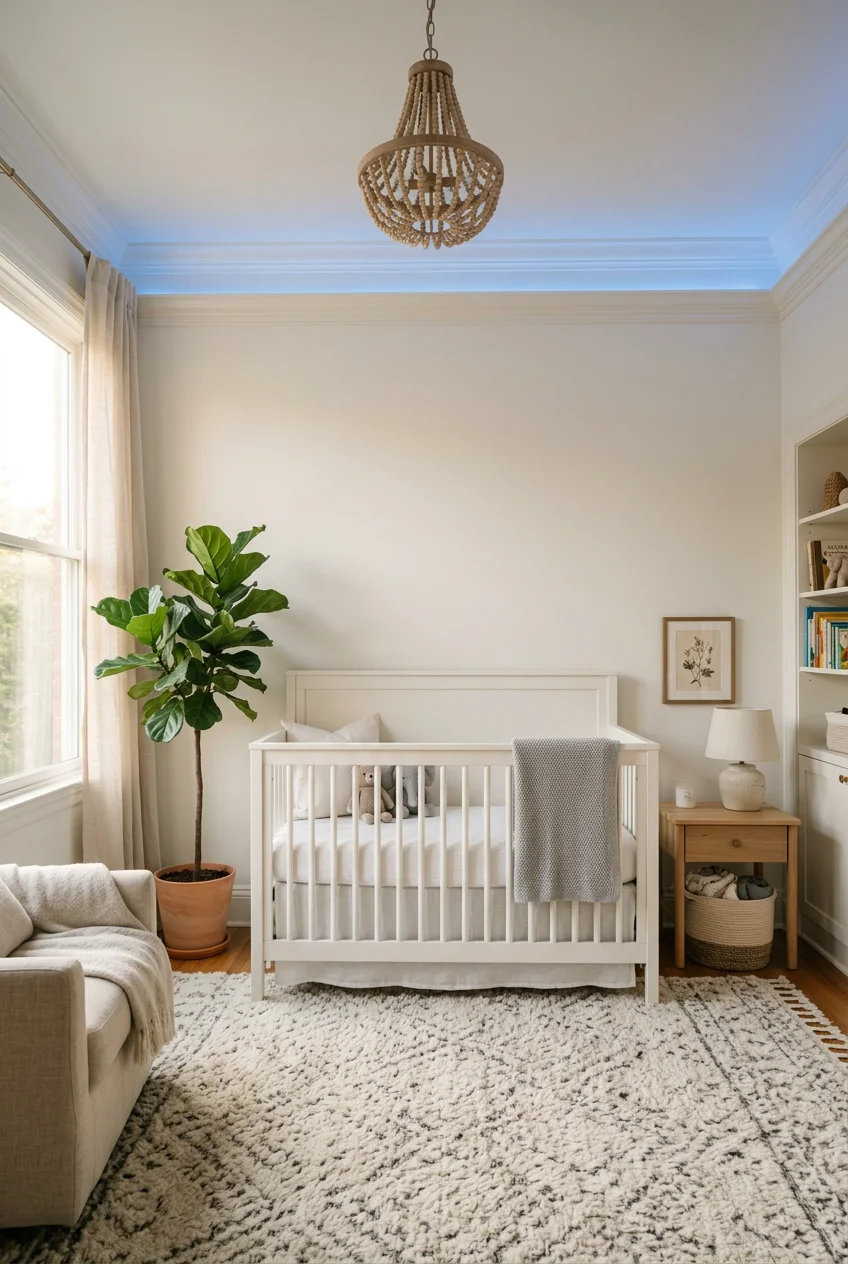
A common mistake is thinking a blue room needs blue light. Instead, pick fixtures that are blue or have blue accents, then use warm white LED bulbs. The VILUXY Bohemia Wood Beaded Flush Mount ($100–$150) comes in a muted blue finish that adds great texture to a flat ceiling. The wooden beads filter light, creating soft shadows. Pair this with a Philips Hue White Ambiance bulb ($30–$40). You get the coastal blue look by day, but the bulb emits a sleep-friendly 2700K glow at night. The blue beads against a white ceiling draw the eye up, making small rooms feel taller. It’s a smart way to add color without wrecking your baby’s sleep. The catch: Wood beaded chandeliers get dusty fast and need tedious cleaning with a microfiber duster.
Best for: Standard 8-foot ceilings where dangling pendants are a hazard.
2. Smart Bulbs for Daytime Blue Stimulation

Smart lighting is great if you use it right. Grab color-changing LED bulbs like the Philips Hue White and Color Ambiance ($40–$50 plus a $65 bridge) or Kasa Smart Bulbs (a 4-pack is about $30–$40). Set them to a soft blue during playtime to reinforce awake hours. Just make sure you program them to switch to a warm white (2700K) or amber setting at least two hours before bed. This shift supports natural melatonin. A strict app schedule means you aren’t relying on your own exhausted brain to change the temp. The catch: Smart bulbs need the wall switch to stay ‘on,’ which always confuses grandparents who instinctively flip it off.
3. Blue Projectors for Awake Play, Not Sleep

Projectors are fun for sensory play if you time them right. Use blue light projectors during awake periods or early evening wind-downs. The Cloud B Twilight Turtle ($30–$40) projects blue stars across the room. The visual tracking helps eye development, and the deep blue is engaging. Just be sure the device has an auto-shutoff. The Turtle has a 45-minute timer, which is vital. These aren’t meant for all-night sleep. Leaving a blue starry sky on all night is counterproductive. Use it for tummy time, then let the room go dark. The catch: Devices like this burn through AAA batteries fast if used for the full 45 minutes daily.

YACHANCE Kids Sound Machine with Night Light Projector
If you want something that just works, YACHANCE Kids Sound Machine with Night Light Projector is a safe bet (71 reviews, 4.5 stars).
4. Layered Lighting with Navy Ceramic Lamps

A single overhead light creates harsh shadows and a sterile vibe. Layer your lighting by mixing a warm overhead light, task lighting by the changing table, and ambient accents. For the accent layer, use a blue-toned piece. A table lamp with a navy ceramic base and a warm linen shade works wonders. Target’s Pillowfort line often has these. The heavy base stays put, and the ceramic adds a glossy pop of color against neutral walls. Use a bulb that emits warm light (2700K to 3000K). The linen shade diffuses the light, warming it up even more. The catch: Ceramic lamps will shatter if a toddler pulls them down, so eventually, you’ll need to move them to higher shelves.
5. Smart Under-Crib Lighting with Controlled Color

Middle-of-the-night check-ins need visibility without stimulation. Installing a Safety 1st Under Crib Smart Light ($30–$50) solves this. While the app lets you pick blue for daytime, you must program it to a soft, warm amber or red for motion-activated night trips. The sensor triggers a low-level light on the floor, letting you navigate around toys without flipping on a lamp. The soft light bouncing off the floor prevents waking the baby with direct glare. It’s a functional way to keep the room safe at 3 AM. The catch: The adhesive backing can peel the finish off cheaper cribs when you eventually remove it.
Best for: Parents who want motion-activated safety lighting without cluttering outlets.
6. Blue-Blocking Night Lights for Sleep

Standard white night lights are a mistake if you care about sleep. For real support, use lights designed to block blue light. Brands like Bon Charge offer blue-blocking plug-in night lights ($35). These emit a pure, deep amber or red light with zero blue spectrum. You can see enough to change a diaper, but the baby’s brain doesn’t register it as daylight. It looks intense, but your eyes adjust in seconds. It’s the most biologically appropriate way to light a room overnight. The catch: These units take up a wall outlet, which is annoying if you also need room for a sound machine or monitor.
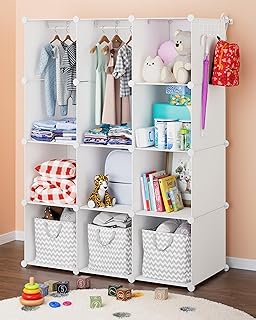
CUBEDIY Baby Closet Organizer for Nursery: Durable Baby
CUBEDIY Baby Closet Organizer for Nursery: Durable Baby Wardrobe for C has been one of the most consistently praised picks in this category. 342 reviewers averaged 4.5/5.
7. The Hatch Rest+ Programmed Color Setup

The Hatch Rest+ ($90–$130) is popular for a reason, but many people configure it wrong. It lets you program specific colors and brightness levels tied to a clock. While it offers a bright blue for ‘time-to-wake’ or play, the bedtime routine should be warm hues like red or dark orange. Setting it to glow blue at 7 AM tells a toddler it’s okay to get up. Setting it to a dim red at 7 PM signals that melatonin should kick in. It automates your lighting cues. The catch: The app is a bit clunky to set up, and you need stable Wi-Fi to keep the clock synced.
Best for: Homes with toddlers moving to big-kid beds who need visual boundaries.
8. Warm Metals Paired with Blue Decor

Hardware finishes change the room’s tone just like bulbs do. Warm metals like antique brass or champagne bronze are perfect for nurseries right now. Use these metals in fixtures that have blue glass. Home Depot often has mid-range chandeliers ($150–$250) that pair brass stems with muted blue globes. The brass warms up the room, keeping the blue glass from feeling cold or sterile. It complements navy wall decor perfectly without adding sleep-disrupting light. The catch: Blue glass shows dust and fingerprints faster than frosted white glass, so expect to clean them often.
9. Dimmable Blue-Tinted Shades

If you want a blue-lit room without smart bulbs, try a dimmable fixture with a subtle blue-tinted fabric shade. Lowe’s often stocks drum shades with light blue linen. Pair this with a low-wattage, warm bulb (15 to 25 watts, 2700K). The warm light pushing through the blue fabric creates a gentle, muted hue rather than harsh blue light. Because the wattage is low and the bulb is warm, the sleep impact is minimal. It creates a moody, underwater effect that’s great for wind-downs. The catch: The blue-tinted light will change how paint and textiles look, often making warm pinks or yellows look gray.

Criusia Over the Door Organizer
If you want something that just works, Criusia Over the Door Organizer is a safe bet (336 reviews, 4.5 stars).
10. Portable Blue-Free Light for Night Feeds

Fumbling for a wall switch while holding a crying baby is a disaster. For late-night feeds, use a portable, blue-free light you can carry from the chair to the changing pad. The G Keni Nursery Night Light ($20–$30) has adjustable warm white settings. Or, a red light from a brand like Block Blue Light ($40–$60) provides visibility without waking the baby. Just tap it to turn it on, and the glow stays in your immediate area. The catch: Since it’s portable, you have to remember to charge it, or it will die at 2 AM. I learned that the hard way.
Best for: Breastfeeding moms or parents handling multiple night wakings who need non-stimulating light.
11. Avoiding Bright Blue LEDs at Night

The biggest mistake parents make is buying bulbs based on brightness, not color temp. Using bright, cool-toned LEDs (anything labeled 5000K or ‘Daylight’) at night is a biological disaster. These emit tons of blue light, which suppresses melatonin and wrecks sleep for everyone. Even if the room is painted blue, a 5000K bulb makes it feel like a hospital. Always go for warm bulbs (2700K to 3000K) for ambient light. Check the package; if it says ‘Cool White’ or ‘Daylight,’ put it back. The catch: Warm 2700K light does make it harder to match tiny navy and black socks in the dark.
12. The Reality of Medical Blue Light

There is a massive misunderstanding about blue light and infant health. Blue light therapy (430 to 490 nanometers) is used medically to treat jaundice by breaking down bilirubin. This is a clinical treatment done under doctor supervision with specific gear. It is not a nursery lighting choice. Parents often buy cheap blue LEDs on Amazon thinking they’re helping their newborn. They aren’t. They’re just ruining sleep. Keep medical treatments at the hospital and focus your nursery lighting on warm, comforting illumination. The catch: Explaining to relatives why their ‘healing blue lamp’ is actually bad for sleep can lead to awkward talks.

Night Light for Kids, Baby Night Light with Sound Machine
Night Light for Kids punches above its price — 57 buyers rated it 4.5 stars. The kind of pick people reorder.
13. Floor Lamps with Navy Linen Shades

Overhead lighting is often too aggressive for a nursery. Floor lamps offer a softer alternative by bringing the light source down. A floor lamp with a dark navy linen shade provides a big block of blue for your design. Crate & Kids has great options ($100–$200). The dark linen absorbs light, so the glow is directed mostly up at the ceiling or down at the floor, creating a cozy pool of light. It’s perfect next to a rocking chair. The catch: Floor lamps tip over easily once your baby starts crawling and pulling themselves up.
Best for: Large nurseries with dark corners that overhead lights miss.
14. Plug-In Blue Wall Sconces

Wall sconces look high-end, but hardwiring is invasive. Plug-in sconces are a practical fix. IKEA has playful, cheap plug-in sconces (under $30) in various colors, including soft blues. Mounting one near the changing table or reading nook adds task lighting exactly where you need it, and it doubles as blue wall art by day. Because they plug into standard outlets, installation takes five minutes. The catch: The dangling cord is a strangulation hazard, so you must buy and install rigid plastic cord covers securely to the wall.
Best for: Renters who can’t drill large holes or mess with wiring.
15. Painted Rattan Pendants for Texture

Natural textures warm up a nursery, but brown rattan can look off in a blue palette. A great DIY approach is to buy a standard rattan pendant and paint it a dusty blue. Find basic shades at hardware stores and brush them with about 1/2 cup of matte chalk paint. The paint settles into the weave, leaving a matte, coastal blue finish that looks custom. Pair it with a warm LED, and the light spills through the gaps, casting soft shadows. The catch: Paint tends to flake off natural rattan over time, especially if the fixture gets bumped during cleaning.

Criusia Drawer Organizer Clothes
Criusia Drawer Organizer Clothes has been one of the most consistently praised picks in this category. 12 reviewers averaged 4.5/5.
16. Ditching the Recessed Lighting Trap

A common mistake is relying only on recessed ceiling lights. Recessed cans push light straight down, creating harsh shadows and glare for a baby lying in a crib. If you have recessed lights, put them on a dimmer and use them sparingly. Instead, combine them with floor lamps and table lamps for a softer vibe. You can pick up functional accent lamps at Walmart for cheap. Use blue only as a decorative element in the bases or shades. The catch: Layering multiple light sources costs more upfront than just flipping on the existing ceiling lights. No exaggeration.
How we chose these ideas: We prioritized sleep science, focusing on melatonin-friendly temps and practical nighttime use over just looks. Options include a mix of budget-friendly plug-ins and mid-range fixtures for both renters and homeowners.
Getting the lighting right is the difference between a nursery that looks good in photos and one that actually works for a tired family. Stick to warm bulbs, use blue for daytime decor, and don’t compromise on your blackout strategy. I’d suggest saving this guide so you have the specific temps and brand names handy when you’re standing in the hardware aisle.
Frequently Asked Questions
Does blue light keep babies awake?
Yes. Direct exposure to blue light wavelengths, especially from cool-toned LED bulbs or screens, actively suppresses melatonin production in infants and adults. This disrupts circadian rhythms and makes it significantly harder for babies to fall asleep and stay asleep.
What is the best color light for a nursery at night?
The best lighting for a nursery at night is red or deep amber. These warm colors contain zero blue light spectrum, meaning they do not interfere with melatonin production. They provide enough visibility for parents without waking the baby.
Can I use a blue night light in the nursery?
You shouldn’t use a blue-emitting night light overnight. While blue projectors are fine for daytime play or the very start of a wind-down routine, leaving a blue light on all night will negatively impact your baby’s sleep cycles.
What color temperature bulb should I buy for a nursery?
Always choose warm white bulbs with a color temperature between 2700K and 3000K for ambient nursery lighting. Avoid anything labeled ‘Daylight’ or 5000K, as these emit harsh, sleep-disrupting blue light.
