What’s Inside
- Ground the Space with Earthy Neutrals
- Invest in a Solid Wood Convertible Crib
- Prioritize a High-Back Ergonomic Glider
- Install Cordless Blackout Roller Shades
- Layer Your Lighting with Dimmable LEDs
- Integrate Smart Home Lighting Controls
- Choose a Washable, Low-Pile Area Rug
- Add Architectural Interest with Wainscoting
- Hang Heavyweight Linen Curtains High and Wide
- Anchor the Room with One Oversized Art Piece
- Utilize Woven Baskets for Hidden Storage
- Create a Floor-Level Reading Nook
- Repurpose a Solid Wood Dresser as a Changing Table
- Apply a Subtle, Non-Thematic Wallpaper
- Upgrade to Antique Brass or Oil-Rubbed Bronze Hardware
- Block Hallway Light with a Door Draft Stopper
- Suspend a Minimalist, High-Contrast Mobile
Most people start by painting four walls a blinding shade of baby blue and tossing up sailboat decals. It’s the fastest way to make a room look dated before the baby even arrives. If you want classic nursery ideas that age well, focus on texture, light, and longevity instead of themes. A truly classic space relies on rich woods, muted tones, and heavy fabrics that absorb sound. Designing a nursery shouldn’t feel like a race to cram as much gear into one room as possible. If you only try one idea from this list, make it #4. Here’s why: blackout shades are the single most important factor for infant sleep. Skipping them means you’re setting yourself up for 5 AM wakeups. Trust me on this.
Skip this list if you’re renting a tiny apartment where you can’t paint walls or install heavy window treatments. These ideas require some structural commitments, like swapping light fixtures or mounting heavy hardware, which won’t work for strict lease agreements.
1. Ground the Space with Earthy Neutrals

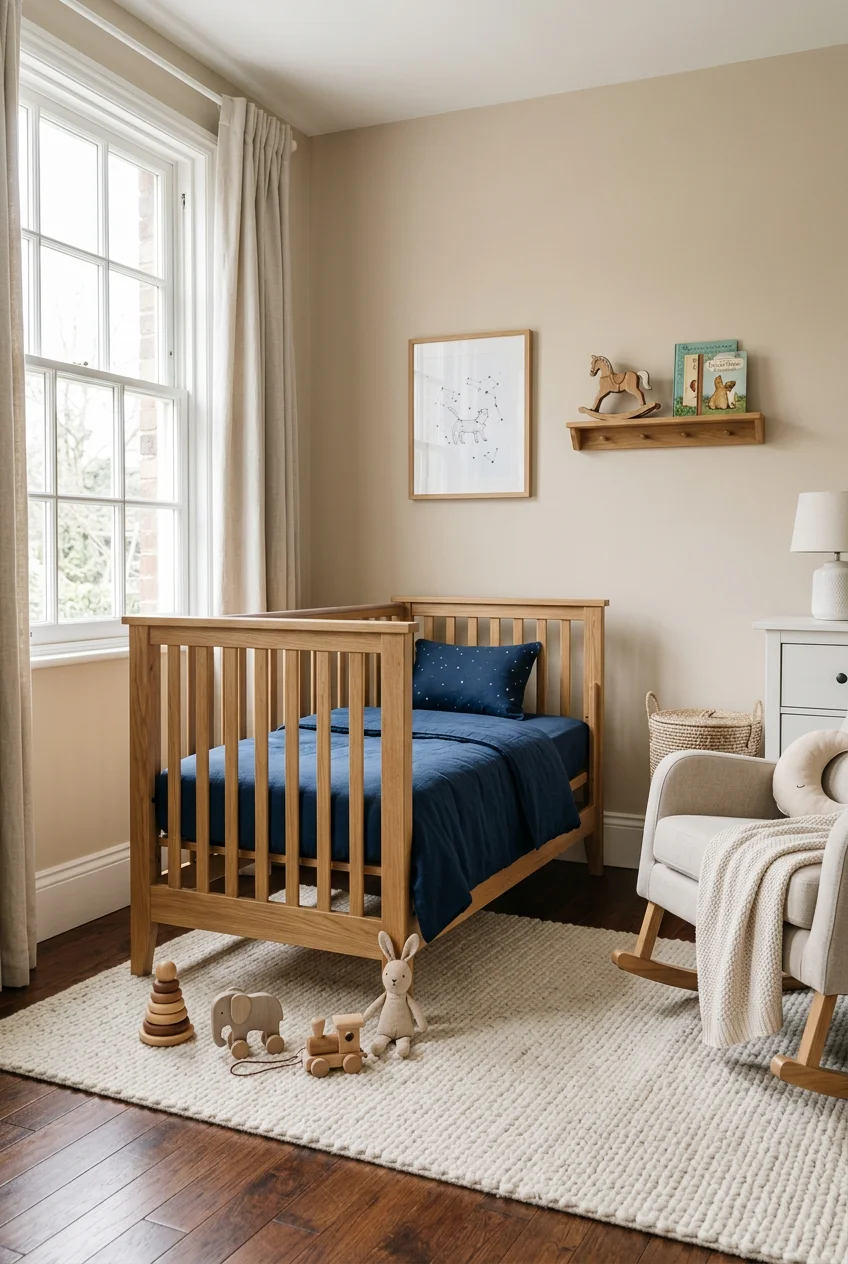
Forget primary colors. The best nursery ideas start with a calming, earthy palette. Warm neutrals like beige, oat, or soft taupe create a serene environment that helps your baby sleep. Muted greens like sage or gentle blues like denim are the current standard for a reason. Studies show these tones help regulate mood. A common mistake is using a high-gloss finish; stick to eggshell or matte so the light diffuses softly. Brands like Farrow & Ball or Benjamin Moore offer these, typically ranging from mid-tier to premium pricing. One gallon covers about 400 square feet, which is plenty for an accent wall. You can find color matches at local hardware stores or even Walmart if you’re on a budget. Best for: rooms with intense southern light that need cooling down. The catch: matte paint shows scuffs easily, so keep a damp sponge handy once your baby starts crawling.
2. Invest in a Solid Wood Convertible Crib

A crib that only lasts 18 months is a waste of money. Choose a solid wood convertible crib that transitions into a toddler bed and eventually a full-sized bed. Brands like Graco, available at Target, or Pottery Barn Kids for premium pricing, offer these in natural wood or matte white. These finishes hold up. The trick is to buy the conversion kit when you buy the crib. Most people wait two years only to find the manufacturer discontinued the matching rails. That’s a frustrating spot to be in. Look for solid pine or beechwood with adjustable mattress heights. Soft woods won’t dent as easily as cheap composite boards when a teething toddler decides to gnaw on the railing. Best for: tight budgets that need furniture to last a decade. The catch: convertible cribs are often bulkier than standard ones, making them difficult to move if you rearrange the layout.
3. Prioritize a High-Back Ergonomic Glider

A comfortable glider is essential for late-night feedings. A cheap rocking chair will wreck your lower back by month three. Look for ergonomic support, a high back for a headrest, and stain-resistant, water-repellent fabric. The Monte Design Como Glider is a premium option, while the Nurture& Glider Plus offers power recline and a 360-degree swivel. Prices range from $400 to well over $1000. You can also find decent options at Crate & Kids or West Elm. Performance velvet or treated bouclé are the smartest fabrics here because 2 ounces of spit-up wipes right off. Pro tip: ensure the armrests are wide enough to support a nursing pillow. The catch: power recliners need an electrical outlet, which limits where you can place the chair in a small room.

Beautiful Wooden Baby Closet Dividers Set of 7
Beautiful Wooden Baby Closet Dividers Set of 7 – Double-Sided Organize is sturdier in person than the photos suggest — over 11 buyers gave it 4.5 stars.
4. Install Cordless Blackout Roller Shades

Eliminate strangulation hazards by choosing cordless blinds. This is non-negotiable. As of June 2024, traditional corded window coverings are banned in the U.S. and Canada due to safety risks. Opt for cordless cellular shades or heavy-duty blackout rollers with a 100% polyester backing. Blindsgalore Envision Blackout Roller Shades or similar options from Home Depot are reliable. When installing, mount them outside the window frame and overlap the edges by at least two inches. Inside-mount shades leave a halo of light that wakes a sensitive sleeper at dawn. You can layer inexpensive linen curtains from IKEA over the shades to soften the look. Best for: light-sensitive babies and daylight savings transitions. The catch: high-quality cordless blackout shades are surprisingly expensive.
5. Layer Your Lighting with Dimmable LEDs

Avoid a single, harsh overhead light. It casts shadows and jolts a baby awake during a 2 AM change. Instead, layer your lighting with a ceiling fixture, wall sconces, and a small table lamp. Use LED bulbs with a warm temperature, ideally 2700K or lower, and install dimmer switches. This lets you adjust brightness for different tasks, from playtime to a soft glow for nighttime changes. You can find stylish sconces at Target or Wayfair that plug into the wall, saving you the cost of an electrician. Just use rigid cord covers so little hands can’t yank them down. A 60-watt equivalent amber bulb in a table lamp is ideal for middle-of-the-night feeds. The catch: plug-in sconces require visible cord covers, which can look slightly cluttered.
6. Integrate Smart Home Lighting Controls

Smart home tech isn’t just for the living room. Consider systems like Philips Hue, which let you pre-set moods and adjust temperature remotely via an app. This enables you to softly lighten the room for a feed without entering and waking your baby. You can program lights to slowly fade up in the morning, mimicking a sunrise, which helps establish a natural circadian rhythm. Starter kits are available at Best Buy or Amazon and generally fall in the mid-range bracket. If you use a smart speaker for white noise, you can sync the lights and sound to turn on with a single voice command. You’ll need a stable 2.4 GHz Wi-Fi connection. The catch: smart bulbs require the physical switch to stay “on,” which confuses guests who inevitably flip it and disconnect the system. You might also like: 18 Vintage Baby Boy Nursery You Need to See

Modanais Baby Diaper Caddy Organizer Cart
Modanais Baby Diaper Caddy Organizer Cart – 3 Tier Rolling Storage Car punches above its price — 325 buyers rated it 4.5 stars. The kind of pick people reorder.
7. Choose a Washable, Low-Pile Area Rug

Babies spend a massive amount of time on the floor. Tummy time, crawling, and blowouts happen right on the rug. A vintage wool rug looks stunning, but it’s a nightmare to clean. Instead, choose a washable, non-toxic rug with a low 1/4 inch pile. Brands like Ruggable or Boutique Rugs offer classic patterns that you can throw in the washing machine. Look for an 8×10 size for a standard room; a common mistake is buying a 5×7 that floats awkwardly in the center. The front legs of the crib and the glider should sit on the rug to anchor the space. These rugs typically run in the low to mid-hundreds. Best for: homes with pets or allergy-prone kids. The catch: washable rugs are thin, so you’ll need a separate, thick rug pad for cushioning.
8. Add Architectural Interest with Wainscoting

Bare drywall feels cold. Adding wainscoting or beadboard to the lower two-thirds of the wall gives a room a bespoke, traditional feel. This is a classic look that never goes out of style. You can buy pre-primed beadboard panels at Lowe’s or Home Depot for a low cost. Paint the wainscoting a crisp, durable semi-gloss white, bringing it up to 32 to 36 inches, and use your earthy tone on the upper section. The semi-gloss finish is scrubbable, protecting walls from toy cars and sticky fingers. Cap it off with a chunky wooden chair rail. It takes a weekend of measuring and a brad nailer, but the result looks high-end. The catch: installing wainscoting involves adhesive and nails, meaning it’ll damage the drywall if you ever remove it. You might also like: 15 Sage Green Nursery Ideas That Actually Work
9. Hang Heavyweight Linen Curtains High and Wide

Window treatments dictate the feel of the room. Most people hang curtains right above the window frame, which makes the ceiling look low and the window look tiny. Hang your rod as close to the ceiling as possible, and extend it 10 to 12 inches past the frame on each side. Use heavyweight linen or cotton canvas in 96-inch or 108-inch lengths. You can find thick linen-blend panels at Pottery Barn or affordable dupes at Target. The heavy fabric absorbs sound, making echoey rooms feel cozier. Make sure the curtains just barely kiss the floor. Puddled curtains collect dust, while “high-water” curtains look cheap. You’ll need at least two panels per side for a full look. The catch: heavyweight linen is prone to wrinkling and usually requires dry cleaning. You might also like: 16 Toddler Corner In Living Room That Actually Work

Night Light for Kids, Baby Night Light with Sound Machine
Night Light for Kids is sturdier in person than the photos suggest — over 50 buyers gave it 4.5 stars.
10. Anchor the Room with One Oversized Art Piece

A gallery wall of tiny frames often looks cluttered. Instead, anchor the room with one oversized, striking piece of art. Think a large-scale vintage map, a botanical print, or a classic landscape. You can buy high-resolution digital downloads from Etsy for under $20 and have them printed at Walgreens or Costco. Frame it in a simple, thin oak or brass frame with a crisp 2-inch white mat. Hang this above the dresser, but never directly above the crib. Earthquakes or a loose nail make heavy frames above a sleeping baby a hazard. A 24×36 inch print is usually the sweet spot. Best for: minimalists who hate dusting small frames. The catch: custom framing for oversized art is expensive, often costing three times the print itself.
11. Utilize Woven Baskets for Hidden Storage

Plastic bins look cheap and ruin a classic aesthetic. Swap them for natural woven baskets made of water hyacinth, seagrass, or cotton rope. These add warmth and texture. You’ll need them for everything: swaddles, burp cloths, stuffed animals, and eventually, a mountain of toys. HomeGoods and IKEA are great places to source large, sturdy 12×12 inch baskets. Line them with a simple cotton canvas insert so delicate fabrics don’t snag on the rough edges. Keep a large, lidded basket near the changing table for dirty laundry; the lid hides the mess better than an open hamper. The catch: natural baskets shed tiny fibers, requiring frequent vacuuming around the base.
12. Create a Floor-Level Reading Nook

Bookshelves are great, but a floor-level reading nook encourages independence. Install a few acrylic or wooden picture-ledge shelves low to the ground. IKEA’s FLISAT wall storage is a budget-friendly staple, offering a perfect 3-inch depth for board books. Displaying books with covers facing out makes them more appealing than seeing just the spines. Throw a thick, tufted floor cushion or a small faux sheepskin rug underneath to define the space. Keep the bottom shelf no higher than 12 inches so a crawling baby can reach their favorites safely. It’s a simple setup that transitions well from the infant stage through the preschool years. The catch: forward-facing ledges hold fewer books than a traditional shelf, so you’ll need secondary storage for the rest of your library.

Criusia Over the Door Organizer
Criusia Over the Door Organizer punches above its price — 247 buyers rated it 4.5 stars. The kind of pick people reorder.
13. Repurpose a Solid Wood Dresser as a Changing Table

Buying a standalone changing table is a rookie mistake. They’re bulky, have zero use after the diaper stage, and look utilitarian. Instead, buy a wide, solid wood dresser and secure a changing pad to the top. A mid-century modern or shaker-style dresser from West Elm or a vintage find works beautifully. You want a dresser at least 36 inches high and 18 to 20 inches deep; anything lower will destroy your back during the 3,000 diaper changes you’ll do in the first year. Use the top drawer for diapers and wipes, keeping the surface clear. You can buy a removable wooden changing topper that screws into the back, leaving the dresser pristine when you eventually remove it. The catch: vintage dressers often have sticky glides that are hard to open with one hand.
14. Apply a Subtle, Non-Thematic Wallpaper

Wallpaper is back, but heavy, cartoonish murals are out. For a classic look, choose a subtle, non-thematic print. Think thin ticking stripes, a delicate block-print, or a grasscloth texture. Brands like Spoonflower or Chasing Paper offer peel-and-stick options in 2-foot wide panels that are forgiving to install. Apply the wallpaper to just one accent wall, usually the one anchoring the crib, to avoid overwhelming the room. If you’re using a ticking stripe, run it vertically to make the ceiling feel taller. Keep colors muted. A subtle pattern adds depth that plain paint can’t achieve. Best for: renters who need a temporary but high-impact change. The catch: peel-and-stick paper requires smooth walls; any bump in the drywall will show through and ruin the adhesion.
15. Upgrade to Antique Brass or Oil-Rubbed Bronze Hardware

The easiest way to upgrade a basic dresser is to swap out the builder-grade hardware. Shiny chrome or plastic knobs look sterile. Antique brass or oil-rubbed bronze adds instant age and character. You can buy heavy, solid brass knobs with a 1.25 inch diameter from Rejuvenation for quality, or find excellent multipacks on Amazon for a fraction of the cost. The warm tones pair beautifully with muted greens and blues, while bronze adds a striking contrast against light oak or white furniture. It takes ten minutes and a screwdriver to make a standard IKEA Hemnes dresser look custom. Just measure the center-to-center hole distance before buying. The catch: unlacquered brass requires regular polishing, or it’ll develop a dark, uneven patina.

Modanais Baby Diaper Caddy Organizer Cart
Modanais Baby Diaper Caddy Organizer Cart – 3 Tier Rolling Cart with D punches above its price — 654 buyers rated it 4.5 stars. The kind of pick people reorder.
16. Block Hallway Light with a Door Draft Stopper

You’ve installed the blackout shades, but there’s still a glaring beam of light shining under the nursery door. This is a common oversight that ruins naptime. A simple, heavy-duty door draft stopper is the fix. You can find 36-inch fabric stoppers at Target or Walmart for under $20. Slide it under the door to block light and muffle hallway noise. If you want a more permanent solution, install an automatic door bottom that drops a rubber seal when the door closes. It keeps the room pitch black, which is crucial when you’re trying to sneak out after rocking the baby to sleep. It also keeps drafts out. The catch: slide-on stoppers drag on carpet, making the door frustratingly difficult to close.
17. Suspend a Minimalist, High-Contrast Mobile

Skip the bulky plastic mobiles that play tinny music and need constant batteries. They’re visually chaotic. Instead, suspend a minimalist, high-contrast mobile above the crib. Newborns can only focus on high-contrast shapes at 8 to 12 inches in the first few months, so a simple geometric mobile in black, white, and wood is better for their development. Etsy is flooded with handmade felt and wood mobiles. Hang it from a ceiling hook using clear fishing line, making sure it’s at least 16 inches above the mattress. Air currents will keep it moving organically, providing a calming anchor for your baby. I learned that the hard way—don’t hang it too low. The catch: ceiling-mounted mobiles require drilling a hole in the drywall, which you’ll eventually have to patch.
How we chose these ideas: I focused on renter-friendliness, long-term cost efficiency, and visual impact. I excluded trendy micro-aesthetics in favor of materials and layouts that adapt from the infant stage through the toddler years without requiring a total overhaul.
Stick to these classic principles—good lighting, heavy fabrics, and solid wood—and you’ll create a space you actually want to spend time in at 3 AM. Save this list and pin your favorite ideas to your mood board so you have a clear plan before you buy a single can of paint.
Frequently Asked Questions
What colors are best for a classic baby boy nursery?
Warm neutrals like beige, oat, and soft taupe, alongside muted tones like sage green or dusty blue, are ideal. These earthy colors create a calming environment that promotes better sleep and easily transitions as your child grows.
Are convertible cribs worth the extra money?
Yes, solid wood convertible cribs are highly cost-effective in the long run. They transition from an infant crib to a toddler bed and eventually a full-sized bed, eliminating the need to buy new bed frames every few years.
How do I completely block out light in a nursery?
Install cordless blackout roller shades mounted outside the window frame, overlapping the edges by at least two inches. Pair them with heavyweight curtains and a door draft stopper to eliminate all light leaks from windows and hallways.
What is the safest window treatment for a baby’s room?
Cordless cellular shades or cordless roller shades are the safest options. Traditional corded blinds pose a severe strangulation hazard and are banned in many regions. Always opt for 100% cordless mechanisms in any child’s room.
