What’s Inside
- Opt for a Mini Crib to Save Precious Floor Space
- Demand Multi-Functional Furniture for Every Corner
- Install Floating Shelves to Exploit Vertical Walls
- Choose a Slim-Profile Glider to Avoid Cramping
- Build Layered Lighting with Dimmable Fixtures
- Ground the Space with Earthy Color Palettes
- Hack Your Closet with Smart Organization Systems
- Soften the Room with Sculptural Furniture
- Place Mirrors Strategically to Bounce Light
- Prioritize Sustainable and Natural Materials
- Ditch the Theme for a Mood-First Approach
- Mount a Changing Station Directly to the Wall
- Conceal Clutter with Smart Nursery Tech
- Repurpose Your Existing Bedroom Furniture
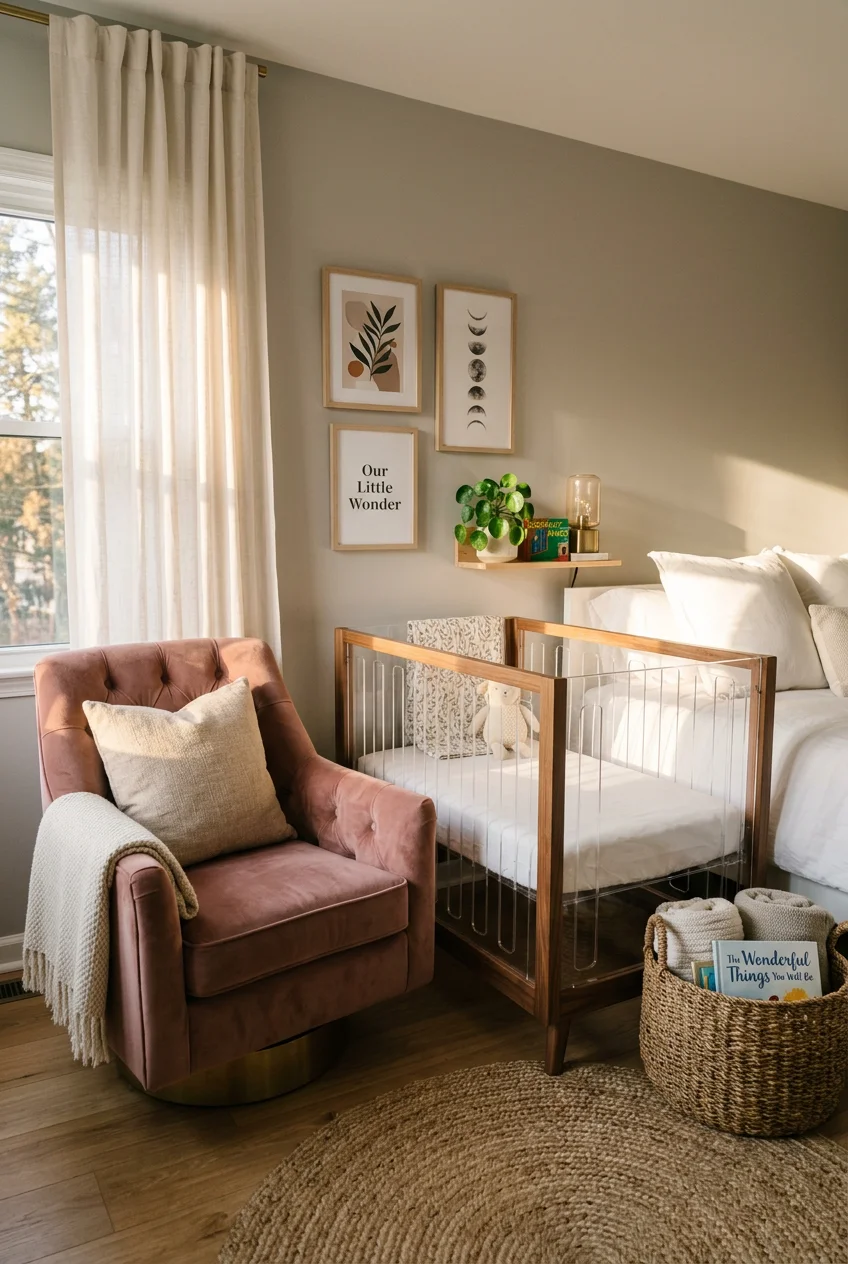
- Introduce Acrylic Furniture for Visual Lightness
- Define the Zone with Layered Rugs
Most folks shove a massive 60-inch wooden crib into their master bedroom corner, block the closet, and call it a day. That’s a recipe for stubbed toes, bruised hips, and middle-of-the-night frustration. Finding practical nursery ideas for a shared room takes a different approach to spatial planning. You aren’t just decorating for a baby. You’re negotiating a shared space where tired adults still need to sleep, dress, and function without tripping over plastic toys. The trick is blending baby gear into your home without making it look like a commercial daycare exploded. Let’s be honest, nobody wants to sleep next to a primary-colored plastic tower. If you only try one idea from this list, make it #2. Here’s why: dual-purpose furniture cuts your footprint in half, which is the best way to reclaim floor space and keep your sanity. Learned that one the hard way.
Skip this if you’ve got a dedicated spare room or plan to move the baby out at four weeks. These strategies are for tight quarters, shared master bedrooms, and long-term co-sleeping setups where every square inch counts.
1. Opt for a Mini Crib to Save Precious Floor Space

Standard cribs are bulky wooden cages. They hit 60 inches wide and take over the room. In a shared space, that footprint is a luxury you probably don’t have. Instead, look at mini cribs. These usually run 39 to 40 inches long by 25 to 26 inches wide. You get the same safe sleep spot but reclaim nearly two feet of floor space. Brands like the Babyletto Origami Mini Crib or the Delta Children Classic Mini Crib are sturdy, reliable picks. They usually run between $100 and $300 at stores like Target or Walmart. Many, like the Babyletto Gelato 4-in-1 Convertible Mini Crib, even convert to toddler beds later. The visual difference is immediate. You can actually walk around the bed without sucking in your stomach. Best for: small dark rooms. The catch: babies grow fast, and a taller child will outgrow a mini crib months before they’d outgrow a standard model.
2. Demand Multi-Functional Furniture for Every Corner

Single-use furniture has no place here. A standalone changing table is just a massive, waist-high shelf that becomes useless after eighteen months. Instead, buy a dresser that doubles as a changing station. The Storkcraft Modern Convertible Baby Changing Table is a great example of this hybrid approach. It comes in muted colors and offers deep drawer space for your clothes alongside tiny baby gear. You can also just add a contoured changing pad with a non-slip bottom to a sturdy dresser you already own. Secure it with brackets, and you’ve bypassed a major purchase. This keeps the aesthetic cohesive. Most people buy too many separate pieces and wonder why the room feels like a closet. Consolidating is the only way to stay sane. The catch: the top drawer is often partially blocked by the safety strap, making it annoying to open one-handed while holding a squirming infant.
3. Install Floating Shelves to Exploit Vertical Walls

When the floor is full, look up. Walls are underutilized. Installing floating shelves above the changing area or crib keeps essentials within reach but off your surfaces. Pottery Barn Kids makes great shelves that are usually 4.5 inches deep. This is perfect for board books, a stack of diapers, or a white noise machine. You can also find a set of Forbena Nursery Floating Shelves online for a budget-friendly alternative. Pegboards are another smart move. Customize them with wire baskets and hooks to hold pacifiers, thermometers, and a 4 oz bottle of baby lotion. Just ensure everything is mounted into a wall stud and well out of reach of little hands. Best for: tight budgets. The downside: this requires drilling heavy-duty anchors into drywall, which makes it a poor choice for renters with strict lease agreements or fragile plaster walls.

Criusia Drawer Organizer Clothes
Criusia Drawer Organizer Clothes has been one of the most consistently praised picks in this category. 11 reviewers averaged 4.5/5.
4. Choose a Slim-Profile Glider to Avoid Cramping

A comfy chair is mandatory for late-night feedings. You’ll spend hours there listening to the hum of a sound machine. However, oversized, plush recliners will overwhelm a corner nursery. You need a compact model. Look at the Babyletto Madison Swivel Glider or the Delta Children Blair Slim Nursery Glider Swivel Rocker Chair. The Delta model usually sits in the mid-range around $250. These chairs feature sleek, narrow designs and a smaller footprint than traditional rockers. Many offer smooth swivel and glide functions without the bulky manual recline mechanism that needs two feet of clearance behind the chair. You can easily tuck one into the corner next to your nightstand. You can often test similar slim profiles at stores like Crate & Kids. The catch: these low-profile chairs rarely offer high neck support, which is a literal pain for taller parents during a 3 AM feeding session.
5. Build Layered Lighting with Dimmable Fixtures

A common mistake is relying on a single, harsh overhead light. That’s the fastest way to wake up a partner and stimulate a tired baby. You need layers. Start with a dimmable central flush mount. Use bulbs with a warm color temperature, specifically between 2700K and 3000K, for general light. This creates a soft amber glow rather than a harsh blue glare. Next, add wall sconces for quick night checks. Finally, place an adjustable task lamp near the changing table so you can actually see what you’re doing during a diaper blowout. Secure all cords tight to the wall using plastic clips. This setup gives you control. You aren’t forced to choose between total darkness and a blinding glare. The catch: smart bulbs and fancy dimmers are notorious for dropping their Wi-Fi connection exactly when you need them most. You might also like: 16 Baby Nursery Ideas Neutral Worth Trying
6. Ground the Space with Earthy Color Palettes

Bright primary colors and stark cool grays make small spaces feel chaotic. The trend right now leans into earthy, muted palettes. Think mushroom taupes, smoky sages, warm clay blushes, dusted olive greens, and creamy chalk whites. These hues absorb light and create a calming, cocoon-like environment. When you use these shades, the baby’s area blends quietly into your own. It doesn’t look like a circus tent pitched next to your bed. Paint the wall behind the crib in a dusty olive green to define the zone without overwhelming your decor. The visual weight of dark, earthy tones grounds the furniture and makes cheap pieces look more expensive. The catch: if your bedroom only has one small north-facing window, dark earthy paints will make the room feel like a gloomy cave. You might also like: 20 Baby Girl Room Ideas for Every Budget

Beautiful Wooden Baby Closet Dividers Set of 7
A dependable everyday pick — Beautiful Wooden Baby Closet Dividers Set of 7 – Double-Sided Organize pulls in 11 ratings at 4.5 stars. Not flashy, just solid.
7. Hack Your Closet with Smart Organization Systems

Baby clothes are tiny. Hanging a three-month-old’s onesie on a standard closet rod leaves three feet of wasted space beneath it. You have to hack your closet. Install a second clothing rod or a simple metal rod doubler to multiply your hanging space. Add fabric cube storage bins from Target or Walmart to hold smaller items like socks, winter hats, and muslin swaddles. If your closet is deep enough, tuck a compact three-drawer dresser inside. Utilize over-the-door fabric organizers for bulky items like spare diapers, wipes, and a 1/2 cup scoop for formula powder if you pre-portion overnight feeds. This keeps the clutter hidden behind a closed door. Best for: renters. The catch: adding a lower rod completely eliminates your ability to hang long items like maxi dresses or winter coats in that section.
8. Soften the Room with Sculptural Furniture

Hard angles and boxy furniture make tight spaces feel rigid and difficult to navigate. Sculptural furniture is a smarter approach. Look for pieces with soft curves and rounded silhouettes. A crib with rounded spindle edges or a glider with an organic, sloping backrest adds sophistication. It breaks up the heavy, square lines of traditional adult bedroom furniture. This makes the room feel less utilitarian and more intentional. The smooth transitions between pieces help the eye glide around the room, which artificially expands the sense of space. Plus, fewer sharp corners mean fewer hazards when you’re stumbling around in the dark trying to find a dropped pacifier. The downside: furniture with curved, organic shapes often has a slightly larger footprint because it won’t sit perfectly flush against flat walls. You might also like: 18 Nursery Themes Boy Worth Trying
9. Place Mirrors Strategically to Bounce Light

Mirrors are the oldest trick in the book, and they work well in shared nurseries. Placing a large, high-quality mirror on a wall reflects light and makes a cramped bedroom feel bigger. Position the mirror directly across from your main window to amplify the sunlight. This simple addition breaks up the visual weight of solid walls. Just ensure the mirror is heavily secured with wall anchors. Do not rely on picture wire. It needs to be bolted flush against the wall and positioned high enough to stay out of reach of curious toddlers. You can find affordable, stylish floor mirrors at Costco. The catch: placing a mirror across from the crib means you’ll constantly wipe off tiny, sticky handprints once your baby learns to stand.

Criusia Over the Door Organizer
Criusia Over the Door Organizer punches above its price — 247 buyers rated it 4.5 stars. The kind of pick people reorder.
10. Prioritize Sustainable and Natural Materials

Creating a healthy environment is critical when you’re sharing air space for ten hours a night. Opt for cribs made from FSC-certified wood. Brands like Boori or CuddleCo offer models that don’t off-gas chemicals. Choose bedding made from 100% organic cotton. If you’re painting, use zero-VOC paints to protect your air quality. Upcycling an existing wooden nightstand with a non-toxic wax finish is another great way to go green. You can even pick up natural, plant-based nursery cleaners at Whole Foods or Sprouts to keep surfaces wiped down without harsh bleach smells. These natural materials add a rich, tactile texture that synthetic plastics can’t replicate. The catch: organic cotton sheets are notorious for holding onto tough stains, and they cost more than standard polyester blends.
11. Ditch the Theme for a Mood-First Approach

Rigid, character-driven themes are a mistake in a shared bedroom. You don’t want to sleep next to a giant mural of cartoon elephants or race cars. Instead, adopt a mood-first approach. Create a calm, collected aesthetic using rich textures, subtle patterns, and a cohesive palette. If you want a pattern, use a subtle botanical peel-and-stick wallpaper on a single accent wall. This defines the baby’s zone but still feels appropriate for an adult space. You’re designing a room that needs to grow with the child and serve the parents simultaneously. Focus on creating a serene atmosphere rather than hitting a specific thematic checklist. The catch: no matter how sophisticated your design is, well-meaning relatives will still buy you loud, plastic, brightly colored toys that ruin the vibe.
12. Mount a Changing Station Directly to the Wall

When floor space is non-existent, look at commercial-style solutions. A wall-mounted changing table is a brilliant hack for tight quarters. The Babyletto Lolly Wall Mounted Changing Table is a sleek option that folds up flat against the wall when not in use. You pull it down for diaper changes, and fold it away to reclaim your walking path. This is an effective way to maintain a dedicated changing area without sacrificing a single square foot of floor space. Make sure you check availability and verify all safety weight limits before installation. Best for: ultra-small spaces. The catch: these units have strict weight limits, meaning your child will outgrow it faster than a traditional dresser, forcing you to change diapers on the bed eventually.

SNSLXH 5 Pack Stackable Closet Storage Basket
SNSLXH 5 Pack Stackable Closet Storage Basket punches above its price — 41 buyers rated it 4.5 stars. The kind of pick people reorder.
13. Conceal Clutter with Smart Nursery Tech

Technology can quickly turn a peaceful bedroom into a tangled mess of white cords and blinking cameras. You need to integrate tech quietly. Choose baby monitors that blend into the background. Bebcare’s low-EMF monitors are a great example. They offer app integration, which eliminates the need for a bulky parent console on your nightstand. Conceal all cords with paintable, natural-looking cable covers. Run them along the baseboards or behind furniture. A calm tech setup keeps the focus on the environment, not the gadgets. You can grab cord management kits in the electronics aisle at Kroger or Walmart. The catch: high-end smart monitors require a big upfront investment and are useless if your home internet goes down during a storm.
14. Repurpose Your Existing Bedroom Furniture

Instead of trying to cram brand-new, matching baby furniture into your room, audit what you already own. Repurposing existing pieces is budget-friendly and adds a unique, lived-in texture. An old wooden hutch can easily be painted and used for storing baby blankets, burp cloths, and supplies. A sturdy, waist-high dresser can become a changing station with a simple top pad. I’ve seen clients use vintage bookshelves to hold baskets of diapers. This approach saves hundreds of dollars and prevents the room from looking like a sterile catalog showroom. It blends the baby’s necessities into your established style. The catch: older, vintage dressers rarely feature modern safety stops on the drawers, which becomes a major pinching hazard once your baby is mobile.
15. Introduce Acrylic Furniture for Visual Lightness

Solid wood blocks sightlines. When you pack too much heavy wood into a small room, it feels claustrophobic. A highly effective trick is to swap one or two pieces for clear acrylic. An acrylic side table next to the glider or even an acrylic-spindle crib allows light to pass right through it. Transparent furniture doesn’t visually obstruct the room. It maintains the flow of the space, making the bedroom feel less cluttered and more open. It’s a modern touch that works well in tight corners where heavy furniture would look oppressive. You can often find acrylic accent tables under $50 online. Best for: homes without pets. The downside: clear acrylic shows every single scratch, smudge, and speck of dust, requiring constant wiping with microfiber cloths to look decent.

Baby Closet Divider, Baby Wardrobe Organizer
A dependable everyday pick — Baby Closet Divider pulls in 371 ratings at 4.5 stars. Not flashy, just solid.
16. Define the Zone with Layered Rugs

You need to visually separate the baby’s area from the adult space without building a wall. Layering rugs is the easiest way to do this. Place a soft, washable 4×6 rug under the crib and glider, slightly overlapping your main bedroom rug. This creates a distinct room within a room. It anchors the nursery furniture and provides a soft landing spot for your feet during night feedings. Choose a rug with a subtle texture, like a flat-weave wool or a washable cotton blend. You can pick up a couple of tablespoons of carpet spot cleaner from Trader Joe’s to keep it looking fresh. The catch: layering rugs on top of carpet or smooth floors creates a tripping hazard unless you aggressively secure the edges with heavy-duty double-sided rug tape.
How we chose these ideas: Selection prioritized renter-friendliness, realistic budget constraints, and actual visual impact. We focused on solutions that require minimal construction while maximizing floor space and long-term utility.
Sharing your master bedroom with a new baby is a logistical puzzle, but it doesn’t have to ruin your home’s look. By choosing multi-functional pieces and using your vertical space, you can create a calm, functional area that serves everyone. I’d suggest measuring your available corners before you buy a single piece of furniture. Pin this list for your next weekend room refresh, and start reclaiming your bedroom.
Frequently Asked Questions
How do you fit a nursery in a parents room?
Focus on multi-functional furniture and vertical storage. Swap a standard crib for a mini crib, use a dresser as a changing table, and install floating shelves. Layering rugs helps visually define the baby’s zone within the shared space.
What is the best layout for a shared master bedroom and nursery?
Place the crib in a quiet corner away from direct drafts and high traffic areas. Keep the changing station and a slim glider nearby to create a compact, efficient zone that doesn’t interfere with the adult bed or closet access.
Are mini cribs safe for everyday use?
Yes, mini cribs meet the same strict safety standards as full-sized cribs. They offer a safe sleep environment while saving significant floor space, though a baby will outgrow a mini crib faster than a standard model.
How can I hide baby clutter in a small bedroom?
Maximize your closet space by adding a second hanging rod and using fabric cube bins. Utilize over-the-door organizers for diapers and wipes, and hide cords from baby monitors using paintable cable covers along the baseboards.
