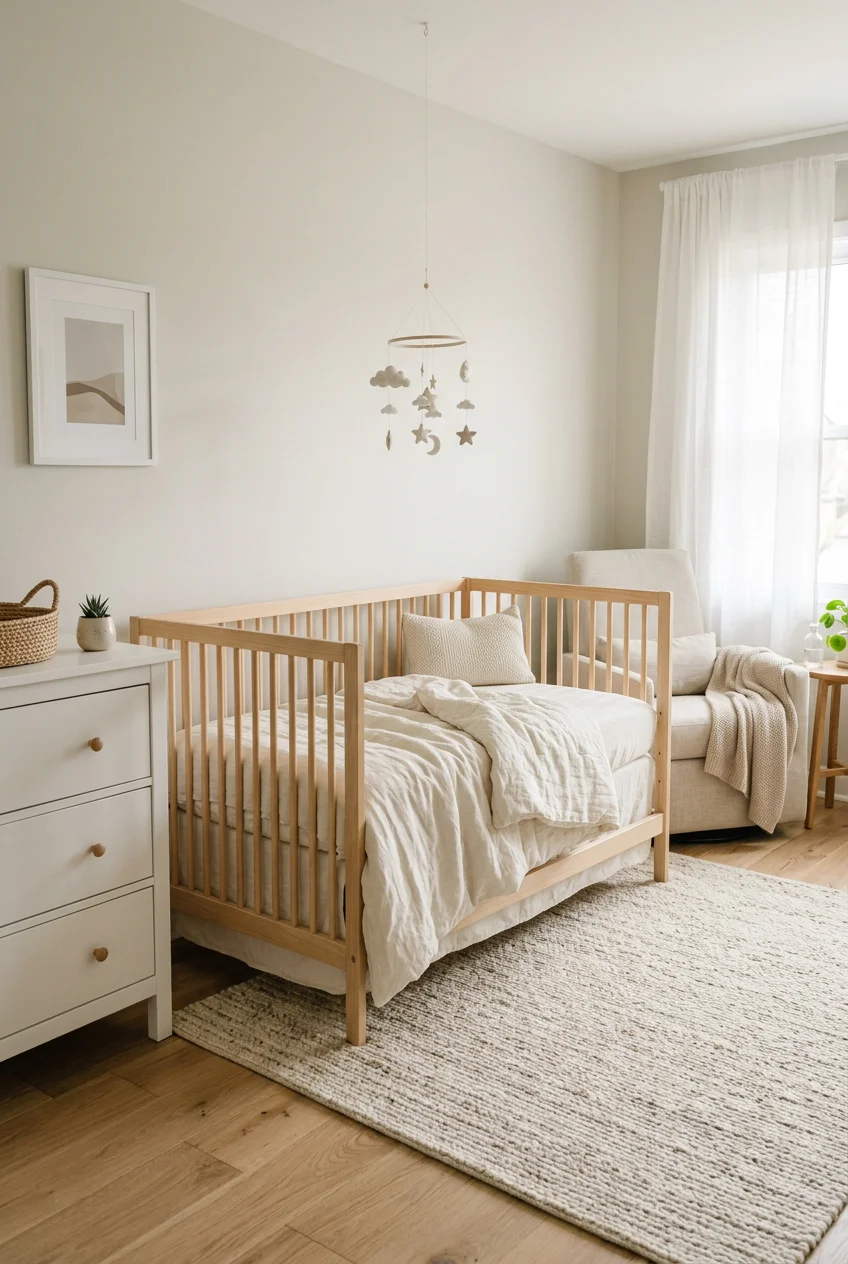
What’s Inside
- Prioritize Safe Sleep Because Bare is Best
- Anchor the Space with a Firm, Non-Toxic Mattress
- Stick to GOTS-Certified Organic Cotton Sheets
- Embrace Warm, Earthy Neutral Color Palettes
- Layer Natural Textures for Visual Depth
- Swap Blankets for Neutral Sleep Sacks
- Master the 3 AM Layered Mattress Protector Hack
- Add a Tailored Crib Skirt for Hidden Storage
- Wash Everything in Hypoallergenic, Fragrance-Free Detergent
- Use Cool Water and Line Dry When Possible
- Keep Three to Five Fitted Sheets in Rotation
- Mix in Bamboo or Linen Fiber Blends
- Utilize Under-Crib Bins for Extra Bedding
- Lean Into Japandi Minimalism for Calmer Sleep
- Reject “Wrinkle-Free” and “Stain-Resistant” Labels
- Introduce Muted Terracotta as a Grounding Neutral
- Use Dusty Blue or Sage Green as a Base
Most folks stuff a crib full of expensive, plush accessories and wonder why the nursery feels cluttered and unsafe. Designing a room for a newborn starts with one core truth: neutral crib bedding looks best when it stays incredibly simple. The 2026 trend leans into warm, earthy tones and natural materials, skipping those hospital whites or busy cartoon prints. Stripping back the excess forces you to focus on high-quality textures and functional design that actually helps your baby sleep. If you only try one idea from this list, make it #7. Here’s why: the layered mattress protector hack will save your sanity at 3 AM when a blowout ruins the primary sheet, letting you strip the bed in ten seconds flat. Trust me.
Skip this list if you’re looking for heavily themed, character-driven nurseries or bright primary colors. This guide focuses on muted, earthy palettes and minimalist, safety-first setups. It won’t work for parents who want traditional bumper pads or thick quilts inside the crib, as those contradict current pediatric safety guidelines.
1. Prioritize Safe Sleep Because Bare is Best

The most crucial tip for setting up a crib comes directly from the American Academy of Pediatrics: bare is best. For babies under twelve months, the crib should contain nothing except a firm mattress and a tightly fitted sheet. A common mistake is adding decorative elements like braided bumpers, heavy quilts, or plush toys that pose a severe safety hazard for suffocation or entrapment. Parents often see styled catalog photos and think a bare crib looks like a cage, but that empty space is exactly what keeps an infant safe. You’re building a secure sleep environment, not a display case for stuffed animals. Stick to the basics and let the texture of the sheet do the visual work. Best for: beginners setting up their first nursery. The catch: a completely bare crib looks less “Pinterest-perfect” to older relatives who expect to see traditional, heavy bedding sets.
2. Anchor the Space with a Firm, Non-Toxic Mattress

A firm, flat mattress serves as the foundation for safe sleep and proper bedding fit. Options like the Naturepedic Organic Classic Cotton Crib Mattress typically range from $279.00 to $459.00 and measure a standard 52″ x 28″. These dense mattresses maintain their shape and don’t indent under a baby’s weight, which reduces the risk of rebreathing. When a mattress sags, it pulls the fitted sheet loose, creating dangerous bunches of fabric near the baby’s face. Investing in a high-quality, non-toxic core ensures the surface remains perfectly flat and taut, letting your neutral sheets fit securely without slipping off the corners. The catch: these dense organic mattresses weigh significantly more than cheap polyurethane foam ones, making middle-of-the-night sheet changes a serious physical workout when you’re exhausted.
3. Stick to GOTS-Certified Organic Cotton Sheets

Choosing the right fabric matters as much as the color. GOTS-certified organic cotton fitted sheets offer maximum breathability and minimize exposure to harsh processing chemicals. Brands like Burt’s Bees Baby, Little Unicorn, and Pottery Barn Kids offer excellent neutral options that fit standard 52″ L x 28″ W crib mattresses. You’ll want to look for sheets with depths adjusting from 4″ to 9″ to ensure a tight wrap around the bottom of the mattress. These typically run between $15 and $60 per sheet depending on the brand and weave. Organic cotton softens beautifully over time and holds neutral dyes without fading unevenly. Best for: homes with kids or pets where bedding requires constant washing. The catch: organic cotton lacks synthetic stabilizers, meaning it wrinkles heavily straight out of the dryer if you don’t fold it immediately.

Babelio Memory Foam Crib Mattress Dual-Sided Baby Toddler
Babelio Memory Foam Crib Mattress Dual-Sided Baby Toddler Mattress Sta punches above its price — 598 buyers rated it 4.5 stars. The kind of pick people reorder.
4. Embrace Warm, Earthy Neutral Color Palettes

Move beyond stark, clinical whites and cold grays. The current trend for neutral crib bedding emphasizes warm, earthy tones that make a room feel grounded. Think soft sage green, warm cream (similar to Sherwin-Williams Creamy SW 7012), dusty blue (like Benjamin Moore Beach Glass 1564), blush taupe, and muted terracotta. These specific shades absorb light beautifully and create a calming atmosphere that doesn’t overstimulate a tired baby. Instead of relying on high-contrast black and white, these earthy tones provide a subtle wash of color that easily grows with the child into their toddler years. The catch: warm creams and taupes can look dingy, yellow, or muddy in north-facing rooms that only receive cool, indirect natural light.
5. Layer Natural Textures for Visual Depth

To prevent a neutral color scheme from feeling flat, you have to rely on texture. Layering different natural materials adds immediate visual interest without requiring bold patterns. A crinkly organic cotton muslin sheet, like the Little Unicorn Cotton Muslin Crib Sheet (usually priced around $20 to $32), pairs perfectly with a smooth wooden crib frame. Outside the crib, you can add a rough jute rug or a chunky knit throw draped over the glider. This contrast between smooth, crinkly, and rough materials makes the room feel intentional. Best for: small dark rooms that need visual interest without overwhelming patterns. The catch: loosely woven muslin fabric snags instantly if it catches on the exposed velcro of a swaddle or a stray fingernail. I learned that the hard way.
6. Swap Blankets for Neutral Sleep Sacks

Since loose blankets are strictly off-limits in the crib for the first year, wearable blankets or sleep sacks are the only safe way to keep an infant warm. Brands like Halo SleepSack and Kyte Baby offer excellent neutral color options in various TOG ratings for different room temperatures. These typically range from $20 to $50. A sleep sack essentially becomes part of the crib bedding aesthetic since the baby wears it while sleeping. Choosing a sleep sack in a muted mushroom or soft oat color complements your fitted sheets perfectly and maintains the cohesive neutral vibe of the room. The catch: the heavy metal zipper pulls on many sleep sacks clink loudly against wooden crib slats when a restless baby kicks their legs. You might also like: 20 Nursery Decor Ideas for Every Budget

Premium Hypoallergenic Baby Crib Mattress and Toddler
If you want something that just works, Premium Hypoallergenic Baby Crib Mattress and Toddler Mattress – 52″ x is a safe bet (19 reviews, 4.5 stars).
7. Master the 3 AM Layered Mattress Protector Hack

This specific setup prevents meltdowns during inevitable middle-of-the-night blowouts. Layer the crib exactly like this: start with a waterproof mattress protector, add a fitted sheet, then place another waterproof mattress protector on top, and finish with a second fitted sheet. When an accident happens at 3 AM, you just strip off the top sheet and the top protector in one motion. A clean, dry bed is instantly waiting underneath. You won’t have to fumble in the dark trying to stretch a tight sheet over a heavy mattress while holding a crying baby. The catch: four thick layers of bedding make the mattress incredibly tight and difficult to wedge back into the corners of a standard wooden crib frame. You might also like: 18 Vintage Baby Boy Nursery You Need to See
8. Add a Tailored Crib Skirt for Hidden Storage

While nothing decorative belongs inside the crib, a tailored crib skirt adds polish to the exterior while serving a practical purpose. A crisp linen or heavy cotton skirt in a complementary neutral tone (like the options from Pottery Barn Kids) hides the empty space beneath the mattress. This allows you to use the under-crib area for storing boxes of wipes, outgrown clothes, or extra diapers without ruining the minimalist aesthetic of the room. Ensure the skirt fits securely under the mattress and doesn’t droop. The catch: crib skirts drag near the floor and become an absolute magnet for pet hair, dust bunnies, and whatever the vacuum kicks up. You might also like: 15 Nursery Themes Girl You Need to See
9. Wash Everything in Hypoallergenic, Fragrance-Free Detergent

Newborn skin reacts to the harsh chemicals and artificial dyes found in standard laundry soaps. Wash all neutral crib bedding with a mild, fragrance-free, and hypoallergenic detergent. You can easily find solid options like Target’s Up&Up Free & Clear or Whole Foods 365 unscented liquid detergent. If you’re dealing with stubborn protein stains from milk or spit-up, treat the spot with a 4 oz spray bottle of enzyme cleaner rather than switching to a harsher detergent. A common mistake is washing baby sheets in the same heavily fragranced pods used for adult gym clothes, which often leads to mysterious contact rashes. The catch: unscented laundry lacks that powdery “new baby” smell many parents expect when folding fresh sheets.

JOYMISS Breathable Crib & Toddler Mattress: Soft Cribs
A dependable everyday pick — JOYMISS Breathable Crib & Toddler Mattress: Soft Cribs mattresses for pulls in 39 ratings at 4.5 stars. Not flashy, just solid.
10. Use Cool Water and Line Dry When Possible

To preserve the subtle dyes and structural integrity of organic cotton or linen sheets, wash them separately on a gentle cycle using cool or warm water. Hot water breaks down natural elastic edges faster and causes aggressive shrinking. Line drying is the ideal method because the sun acts as a mild, natural disinfectant and bleaching agent for minor stains. If you must use a machine, tumble dry on the lowest possible heat setting and remove the sheets while they’re still slightly damp to prevent deep creases from setting into the fabric. Best for: tight budgets where replacing worn-out sheets isn’t an option. The catch: line drying leaves natural fibers feeling quite stiff and scratchy until the baby’s body heat softens them up during the night.
11. Keep Three to Five Fitted Sheets in Rotation

Babies are incredibly prone to messes, from diaper leaks to severe spit-up. You need at least three to five fitted crib sheets on hand for a standard 52″ x 28″ mattress. This specific quantity ensures you always have a clean sheet available, even if you’re behind on laundry or dealing with a stomach bug that ruins two sheets in a single night. You can often find affordable multi-packs of plain, neutral cotton sheets at big box stores like Walmart or Costco to build your stash without overspending. The catch: keeping five bulky, elastic-banded fitted sheets folded neatly takes up an entire drawer in a small nursery dresser.
12. Mix in Bamboo or Linen Fiber Blends

Beyond standard 100% organic cotton, exploring other natural fiber blends adds incredible texture to a neutral nursery. Bamboo viscose crib sheets (like those from Aden + Anais or Little Unicorn) feel exceptionally silky and offer superior breathability for babies who run hot. Alternatively, linen sheets provide unmatched durability and excellent temperature regulation, giving the crib a relaxed, slightly rumpled aesthetic that fits perfectly with earthy room designs. These materials align with the shift toward sustainable, functional textiles. The catch: bamboo fabric requires an incredibly delicate wash cycle, or it pills into rough little bumps within the first month of use.

Graco Premium Crib & Toddler Mattress
If you want something that just works, Graco Premium Crib & Toddler Mattress – GREENGUARD Gold Certified is a safe bet (515 reviews, 4.5 stars).
13. Utilize Under-Crib Bins for Extra Bedding

If you’re skipping the crib skirt, you need a smart way to store those extra sheets and sleep sacks. Utilize the dead space under the crib with low-profile, neutral fabric bins from Ikea or Target. Instead of stacking the sheets flat, roll them tightly into cylinders. This rolling method saves significant vertical space and allows you to see exactly which color or fabric you’re grabbing without tearing apart a folded pile in the dark. Best for: renters dealing with tiny apartments and zero closet space. The catch: you’re forced to completely reorganize and find new storage for these bins the moment you have to lower the crib mattress to the bottom setting for a standing baby.
14. Lean Into Japandi Minimalism for Calmer Sleep

The Japandi aesthetic, which blends Japanese minimalism with Scandinavian functionality, heavily influences modern neutral crib bedding. This style prioritizes a calm, uncluttered environment using natural wood tones, muted palettes, and highly purposeful pieces. Sleep researchers note that a visually quiet room prevents an infant’s developing senses from becoming overstimulated before bedtime. By sticking to a simple oat-colored sheet and a bare wooden crib, you create a dedicated sleep zone that signals rest rather than playtime. The catch: this strict minimalist aesthetic shatters the second brightly colored, plastic musical toys inevitably enter the room after a baby shower.
15. Reject “Wrinkle-Free” and “Stain-Resistant” Labels

When shopping for neutral bedding, ignore any sheets marketed as “wrinkle-free” or “stain-resistant.” These convenient labels almost always indicate the fabric has been treated with formaldehyde resins or perfluorinated chemicals (PFAS). These synthetic chemical treatments are entirely unnecessary and best avoided for a newborn’s highly permeable, sensitive skin. Prioritize untreated, natural fabrics and accept that organic cotton will crease. A few wrinkles are a small price to pay for a significantly healthier and safer sleep environment. The catch: you’ll spend ten minutes wrestling with a handheld steamer if you want a perfectly smooth mattress surface for milestone photos.

Dual Sided Baby Crib Mattress
Dual Sided Baby Crib Mattress punches above its price — 27 buyers rated it 4.5 stars. The kind of pick people reorder.
16. Introduce Muted Terracotta as a Grounding Neutral

If creams and taupes feel too washed out, muted terracotta serves as a fantastic, grounding neutral. It brings warmth to a room without acting like a loud primary color. A dusty clay or baked earth fitted sheet pairs beautifully with natural rattan accents, light oak furniture, and simple white walls. It adds just enough pigment to keep the nursery from looking like a sterile hospital room while maintaining a calm, earthy vibe. You can easily find terracotta sheets at stores like Sprouts or online boutiques. The catch: finding an exact color match between a terracotta sheet and a terracotta sleep sack from two different brands is nearly impossible.
17. Use Dusty Blue or Sage Green as a Base

Don’t restrict your definition of neutral to just beige and gray. Soft, dusty blues and muted sage greens function perfectly as base neutrals in a modern nursery. These colors mimic natural outdoor elements, bringing a sense of the outdoors inside. A sage green sheet grounds the crib visually and hides minor milk stains significantly better than a stark white sheet ever will. These tones work for any gender and transition effortlessly into a toddler or big-kid room later on. The catch: these muted, natural-looking dyes fade noticeably faster than bright synthetic fabrics when exposed to direct, daily sunlight from a nearby window. No exaggeration.
How we chose these ideas: Selections prioritize strict AAP safety guidelines, renter-friendly storage solutions, and long-term durability. We focused on natural materials that withstand frequent hot-water washing and earthy color palettes that transition easily from infant nurseries to toddler rooms without requiring a complete design overhaul.
Creating a beautiful, functional nursery doesn’t require compromising on safety or spending a fortune on useless accessories. Stick to high-quality basics, master the layered sheet trick, and let natural textures do the heavy lifting. I highly recommend pinning this list to your nursery planning board so you have these exact measurements and safety rules handy when it’s time to buy your sheets.
Frequently Asked Questions
What are the safest neutral crib bedding ideas for a newborn?
The safest approach is a completely bare crib featuring only a firm mattress and a tightly fitted organic cotton sheet in an earthy tone. Avoid all loose blankets, pillows, and decorative bumpers to adhere to strict AAP safe sleep guidelines.
How many neutral crib sheets do I actually need?
You need three to five fitted sheets for a standard 52″ x 28″ mattress. This ensures you always have a clean sheet ready during late-night diaper leaks or stomach bugs without having to run the washing machine immediately.
What colors work best for a neutral nursery aesthetic?
Move away from stark whites and cool grays. The best neutral tones include warm cream, blush taupe, muted terracotta, dusty blue, and soft sage green. These earthy shades create a calming environment that won’t overstimulate an infant.
How do I make neutral crib bedding look interesting without patterns?
Focus entirely on texture layering. Mix a crinkly organic cotton muslin fitted sheet with a smooth wooden crib frame, and add visual depth to the room with a rough jute rug or a chunky knit sleep sack.
