What’s Inside
- Embrace Biophilic Design for a Calming Atmosphere
- Implement Commercial-Grade Diaper Disposal Systems
- Prioritize Soundproofing with Acoustic Panels and Flooring
- Create Dedicated, Clearly Defined Zones for Functionality
- Implement a Strict Hygiene Protocol with Dedicated Sanitization
- Encourage Engagement with Interactive Sensory Play Areas
- Adopt a Screen-Free Environment
- Optimize Storage with Portable and Labeled Solutions
- Prioritize Safety with Supervision Constraints
- Use Calming Color Palettes and Natural Light
- Install Child-Safe Electrical Outlets and Cordless Window Coverings
- Create a Faith-Based Story Corner
- Build a Secure Check-In Station with Dutch Doors
- Design a Nursing Mothers’ Privacy Nook
- Upgrade to Durable, Washable Wall Treatments
Walk into most church facilities, and you’re hit with primary colors, buzzing fluorescent lights, and a mountain of sticky plastic toys. Finding effective sunday school nursery room ideas means moving past the chaotic playroom aesthetic. You need a space that works for overwhelmed volunteers and overstimulated infants. I’ve seen too many nurseries treated like storage closets for donated junk rather than a purposeful, safe environment. Those mismatched bins aren’t fooling anyone. I’m always surprised by how often basic traffic flow is ignored, leading to bottlenecks at the door and tripping hazards near the cribs. If you only try one idea from this list, make it #4. Creating dedicated, clearly defined zones solves 90 percent of your traffic and safety issues before they start. Trust me.
Skip this list if you’re designing a small, in-home daycare for three or fewer children. These strategies focus on commercial-scale durability, high-turnover volunteer management, and strict church compliance standards that don’t apply to a residential spare bedroom. You can’t just throw a cheap rug down in a commercial space. I’d skip the residential hacks entirely and focus on durability. I learned that the hard way.
1. Embrace Biophilic Design for a Calming Atmosphere

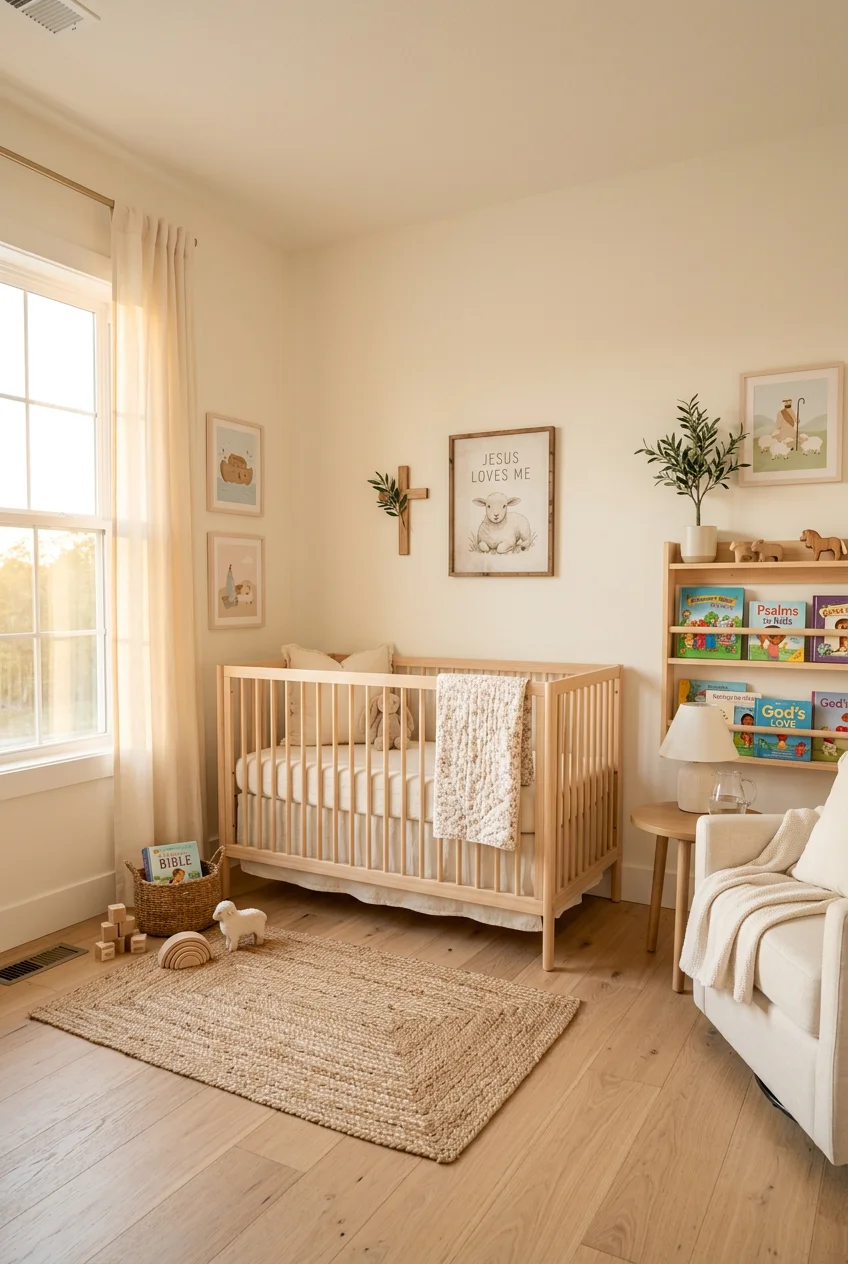
Most churches default to painting the nursery bright yellow or baby blue. That’s a fast track to overstimulated, crying infants. The 2026 trend leaning into biophilic design is a massive improvement for sunday school nursery room ideas. This means integrating natural elements to create a grounded, serene environment. Think solid wood furniture instead of primary-colored plastic, rattan bassinets, and thick jute rugs that offer a satisfying, earthy texture underfoot. Paint walls in earthy tones like sage green, terracotta, cocoa brown, or creamy alabaster. You can add non-toxic plants, such as spider plants or Boston ferns, placed safely on shelves at least six feet high to enhance air quality and provide a nature-inspired aesthetic. The visual calm of natural wood grain changes the mood of a frantic drop-off morning. Target often carries woven rattan storage baskets in their Pillowfort line that run in the budget to mid-range price tier, perfect for hiding unsightly plastic toys. The texture of natural wood and woven fibers naturally dampens harsh room acoustics, too.
The catch: Live plants require a strict watering schedule and someone assigned to care for them mid-week when the building is mostly empty and the HVAC is turned down.
2. Implement Commercial-Grade Diaper Disposal Systems

Residential diaper genies break down within a month when subjected to a 50-baby Sunday morning rush. You need commercial-grade diaper disposal systems that can take a beating. A standard choice is the Foundations Tall Diaper Pail. These are typically priced around the low hundreds for a two-pack and hold up to 60 newborn diapers at a time. They feature proprietary odor-blocking technology, which is non-negotiable in a small, enclosed room filled with infants and the lingering smell of baby wipes. Crucially, these pails are engineered to use standard 13-gallon trash bags. You can buy bulk boxes of standard bags at Costco or Sam’s Club, drastically reducing ongoing refill costs compared to residential systems requiring specialized, brand-specific plastic cartridges. Placing one directly next to every changing pad ensures volunteers aren’t walking across the room with a soiled diaper, dripping mess onto the carpet. A hands-free foot pedal is mandatory so the volunteer always has one hand securely on the infant.
Best for: High-attendance churches with multiple nursery sessions.
The catch: These commercial pails have a large physical footprint and require dedicated floor space that a cramped, retrofitted closet room might lack.
3. Prioritize Soundproofing with Acoustic Panels and Flooring

A room full of crying babies with hard floors and drywall is an acoustic nightmare. Sound bounces endlessly, creating a deafening echo. Prioritizing soundproofing is a structural necessity, not a luxury. Reduce noise and echo by installing Class A fire-rated fabric acoustic panels. NetWell Fabric Panels are a solid commercial option for this. You need to cover roughly 20 to 30 percent of your total wall and ceiling surface area to notice a mathematical drop in decibel levels. Supplement the wall panels with low-pile commercial carpet tiles. Brands like Greatmats Magnify Commercial Carpet Tiles or Reverb Commercial Carpet Tiles offer modular squares that provide comfort for crawling babies, high stain resistance, and massive sound absorption. If a child spills a 4 oz bottle of red juice or formula, you just pull up the single ruined 24-inch square tile, wash it in the sink, and replace it, rather than ripping up an entire room of broadloom carpet.
The catch: Commercial fire-rated acoustic panels carry a steep upfront cost and require professional installation to ensure they strictly meet local commercial building codes.

Beautiful Wooden Baby Closet Dividers Set of 7
Beautiful Wooden Baby Closet Dividers Set of 7 – Double-Sided Organize punches above its price — 11 buyers rated it 4.5 stars. The kind of pick people reorder.
4. Create Dedicated, Clearly Defined Zones for Functionality

Throwing cribs, toys, and changing tables into one open square creates traffic jams and major safety hazards. Optimizing the layout requires creating dedicated, clearly defined zones for specific functions. Include a quiet sleep zone with stationary cribs, ideally separated by a low 36-inch half-wall or a heavy sound-dampening divider to block visual distractions. Next, build a central play zone with soft flooring for crawlers. The feeding station needs comfortable seating and high chairs, completely separated from the sanitation areas to prevent cross-contamination. Finally, the diapering station must be ergonomically designed for adult caregivers. This means countertops set at 36 to 38 inches high, located directly next to a handwashing sink to maintain optimal hygiene. You can use heavy, anchored shelving units, like the IKEA Kallax series (usually under a hundred dollars per unit), to create visual boundaries between these zones without blocking the line of sight for supervision.
Best for: Large open-concept rooms that need structural definition.
The catch: Creating hard physical zones limits the flexibility of the room if you need to host a different, open-floor youth event mid-week. You might also like: 20 Brilliant Baby Nursery Themes Ideas You Can Try Today
5. Implement a Strict Hygiene Protocol with Dedicated Sanitization

Basic surface wipes simply aren’t enough when dealing with dozens of infants sharing the same plastic blocks. Implementing a strict hygiene protocol requires dedicated sanitization equipment built directly into the room. If plumbing allows, install a dedicated under-counter dishwasher or a deep, 24-inch stainless steel utility sink for efficient, high-heat toy sanitization. Establishing a strict cleaning schedule means toys go straight into a labeled “dirty bin” the exact moment a child puts them in their mouth. Ensure changing tables are disinfected with a hospital-grade spray after every single use, allowing the spray to sit for the required wet-contact time. Furthermore, volunteers must consistently wear disposable gloves when changing diapers to prevent germ transmission. You can source bulk boxes of nitrile gloves at Walmart or medical supply stores for budget-friendly prices. Having wall-mounted glove dispensers directly above the changing pad guarantees they are always within arm’s reach. You might also like: 16 Baby Nursery Ideas Neutral Worth Trying
The catch: Retrofitting a historic church nursery to include a dishwasher or a deep utility sink requires pulling permits and hiring a plumber, which significantly eats into a renovation budget. You might also like: 20 Baby Nursery Ideas For Boy Worth Trying
6. Encourage Engagement with Interactive Sensory Play Areas

Plastic light-up toys with dying batteries are annoying and offer very little developmental value. Encourage real engagement with interactive sensory play areas mounted directly to the walls. Develop a stimulating sensory zone featuring DIY texture boards. You can construct these using heavy-duty plywood securely anchored to the studs, attaching safe materials like ribbed corduroy, smooth felt, and corrugated plastic. For infants aged 8 to 12 months, a “squishy pea sensory bag” is highly effective. Simply seal 1/2 cup of frozen peas and a splash of water inside a heavy-duty freezer bag, then tape all four edges directly to the floor using wide gaffer tape. This offers safe tactile exploration without the choking hazard. Lakeshore Learning offers excellent, commercial-grade sensory wall panels in the mid-to-high price range that withstand heavy Sunday morning abuse and constant chemical wipe-downs. It took me years to figure out that kids love texture more than lights.
Best for: Active crawler zones and older infant rooms.
The catch: DIY sensory items like squishy bags must be remade weekly to prevent mold growth, adding to the prep time for your volunteer coordinators.

Criusia Over the Door Organizer
If you want something that just works, Criusia Over the Door Organizer is a safe bet (247 reviews, 4.5 stars).
7. Adopt a Screen-Free Environment

Mounting a flat-screen TV in the corner to play animated Bible stories might seem like an easy way to keep toddlers quiet, but it’s a developmental misstep. A major focus for 2026 nursery design is adopting a strictly screen-free environment. This approach emphasizes tactile exploration, imaginative play, and direct social interaction with volunteers. Pediatric experts note that eliminating digital distractions supports better sensory and emotional development, and prevents the overstimulation that leads to meltdowns at pickup time. Instead of screens, stock the room with open-ended manipulatives. Melissa & Doug wooden blocks or simple sorting toys (usually mid-range pricing) force children to engage their hands and their problem-solving skills. Removing screens also forces volunteers to actively sit on the floor and engage with the children, rather than acting as passive monitors in a mini movie theater.
The catch: Removing screens entirely means volunteers have to work much harder to redirect crying or anxious children during the first fifteen minutes of a chaotic drop-off.
8. Optimize Storage with Portable and Labeled Solutions

Churches notoriously lack storage, leading to nurseries that look like hoarder basements filled with broken donations. Maximize space and maintain order using wall-mounted shelves, stackable crates, and clearly labeled clear acrylic bins. If your church operates in a rented facility like a school or a movie theater, built-in cabinetry isn’t an option. Invest in heavy-duty portable storage solutions on industrial casters. Companies like Portable Church offer custom-built rolling cases that transform into shelving units. These allow for rapid setup, breakdown, and efficient space utilization. For permanent rooms, The Container Store offers clear, latching bins in various sizes. Labeling every single bin with both text and a picture ensures that a first-time volunteer knows exactly where the wooden trains or the 4 oz paper cups belong at the end of the service.
Best for: Multi-use or rented church spaces where everything must be hidden by Monday morning.
The catch: Industrial rolling cases and high-end matching acrylic bins are a massive upfront investment compared to buying mismatched plastic tubs at a dollar store.
9. Prioritize Safety with Supervision Constraints

A beautiful room means absolutely nothing if the baseline security protocols are weak. Prioritizing safety starts with the physical layout supporting your background check and supervision policies. Ensure a minimum of two unrelated adults are present in the nursery at all times. The room design must support this by eliminating blind spots. Avoid tall bookcases in the center of the room. Keep all room dividers under 36 inches tall so an adult standing anywhere can see the entire floor. Regularly inspect all furniture and toys for damage. Use a standard choke tube tester (available online for a few dollars) to check any questionable toys. Install heavy-duty, commercial-grade safety gates at the entrance. Amazon Basics offers hardware-mounted metal gates in the budget tier that are far superior to flimsy pressure-mounted wooden ones.
The catch: Hardware-mounted gates require drilling directly into door frames or drywall, which leaves permanent damage that isn’t ideal for leased spaces.

Criusia Drawer Organizer Clothes
Criusia Drawer Organizer Clothes has been one of the most consistently praised picks in this category. 11 reviewers averaged 4.5/5.
10. Use Calming Color Palettes and Natural Light

Bright red and yellow walls trigger a fight-or-flight response in tired toddlers. Use calming color palettes and natural light to dictate the mood of the room. Paint walls in soft, muted tones such as light pastel blue, sage green, soft gray, or warm beige. These colors are scientifically shown to evoke tranquility and are significantly less stimulating for infants trying to nap in an unfamiliar crib. Maximize whatever natural light you have by ditching heavy blackout drapes in the play areas. Instead, use sheer white curtains to diffuse harsh sunlight while supporting the babies’ natural circadian rhythms. Sherwin-Williams offers excellent scrubbable paints in their SuperPaint line (mid-range pricing) that hold up to constant wiping. For darker winter mornings, use warm, dimmable artificial lighting at around 2700K color temperature to create a cozy, residential ambiance rather than a sterile clinical feel.
Best for: Small dark rooms that lack large exterior windows.
The catch: Light, muted paint colors show scuffs, dirty fingerprints, and black rubber shoe marks much faster than darker shades, requiring frequent magic-eraser touch-ups.
11. Install Child-Safe Electrical Outlets and Cordless Window Coverings

Most people remember to plug those cheap plastic inserts into outlets, but they forget the rest of the room’s hardware. Install child-safe electrical outlets featuring built-in tamper-resistant receptacles. These feature internal spring-loaded shutters that require equal pressure on both sides to open, preventing a curious toddler from inserting a paperclip or a broken toy. It’s a permanent fix that doesn’t rely on volunteers remembering to replace a plastic cap. Equally critical are cordless window coverings. Corded blinds are a documented strangulation hazard. Replace any existing corded blinds with cordless cellular shades or motorized roller shades. You can source custom-cut cordless cellular shades at Home Depot or Lowe’s in the budget to mid-range tier. If replacing them isn’t in the budget, you must install heavy-duty cord cleats at least 5 feet off the ground and secure the cords tightly every single week.
The catch: Hiring a licensed electrician to swap out every single wall receptacle to tamper-resistant models is a tedious and moderately expensive maintenance task.
12. Create a Faith-Based Story Corner

When brainstorming sunday school nursery room ideas, don’t forget the quiet corners. A nursery shouldn’t just be a holding pen; it should gently introduce foundational concepts. Create a dedicated faith-based story corner in the quietest part of the room, far away from the noisy entrance. Design this cozy, inviting nook with plush, wipeable seating. Think vinyl bean bags or small faux-leather armchairs that can be easily sanitized with a bleach wipe. Stock a low, front-facing bookshelf with a curated collection of age-appropriate, thick board books. Front-facing shelves are critical because toddlers choose books by the cover art, not the narrow spine. Christianbook is a reliable online retailer for sourcing bulk quantities of durable, faith-based board books at lower price points. Add a soft, washable rug specifically for this corner to anchor the space and signal to the kids that this is a quiet sitting area, separate from the active block-building zone.
The catch: Front-facing bookshelves hold significantly fewer books than traditional deep shelving, meaning you have to rotate the inventory frequently to keep the selection interesting.

Baby Closet Divider, Baby Wardrobe Organizer
A dependable everyday pick — Baby Closet Divider pulls in 371 ratings at 4.5 stars. Not flashy, just solid.
13. Build a Secure Check-In Station with Dutch Doors

The drop-off process is usually the most stressful five minutes of a parent’s week. A chaotic door causes immediate anxiety for everyone involved. Build a secure, structured check-in station right at the entrance. The gold standard is installing a solid wood Dutch door. The bottom half stays closed and latched, keeping toddlers safely inside, while the top half remains open for parents to hand over diaper bags and communicate with volunteers. Equip the exterior wall with a dedicated label printing station. Brother makes reliable, high-speed thermal label printers (typically mid-range pricing) that integrate smoothly with most church management software. Printing a secure alphanumeric tag for the child’s back and a matching tag for the parent ensures a watertight checkout process. Keep a stack of clipboards with bright red allergy alert stickers right on the Dutch door ledge. No exaggeration, this saves lives.
The catch: A Dutch door creates a strict single-file bottleneck, which can cause lines of frustrated parents to back up into the hallway during peak service transition times.
14. Design a Nursing Mothers’ Privacy Nook

Many mothers of young infants skip church entirely because they dread nursing in a cold public restroom or a crowded hallway. If square footage allows, carve out a nursing mothers’ privacy nook directly adjacent to or inside the nursery. This doesn’t need to be a massive room. A 6-by-6 foot space enclosed by a heavy floor-to-ceiling curtain or a solid partition is usually enough. Furnish it with a comfortable, supportive glider chair. Target’s Delta Children line offers highly rated gliders in the mid-range price bracket that are easy to wipe clean. Add a small side table for water bottles, a dimmable warm-light lamp, and a white noise sound machine to mask the chaos of the main play area. Providing a dedicated, comfortable space tells young families that you actually understand their immediate physical needs.
Best for: Larger congregations with many young families and nursing mothers.
The catch: This dedicated nook takes up valuable floor space that could otherwise be used for active toddler play or fitting in additional cribs.
15. Upgrade to Durable, Washable Wall Treatments

Drywall painted with standard flat builder-grade paint will look completely destroyed within six months. Sticky fingers, thrown toys, and constant sanitizing wipe-downs will strip flat paint right off the paper backing. Upgrade to durable, washable wall treatments. At a minimum, use an eggshell or satin finish paint, which provides a slightly glossy, hard shell that resists moisture and heavy scrubbing. For a more permanent solution, install beadboard wainscoting on the bottom 36 to 48 inches of the walls. Lowe’s sells 4-by-8 foot beadboard paneling that is relatively inexpensive and easy for a volunteer maintenance team to install over a weekend. Cap it with a thick wooden chair rail, caulk all the seams, and paint it with a high-gloss exterior-grade trim paint. This creates an armor-like lower wall that can withstand rogue tricycle hubs and daily chemical sanitization without chipping.
The catch: The vertical grooves in beadboard paneling are notorious for collecting dust and dried juice spills, requiring detailed scrubbing with a stiff bristle brush.
How we chose these ideas: We prioritized commercial durability, strict safety compliance, and ease of maintenance for volunteer-run spaces. Criteria focused heavily on solutions that withstand high-traffic turnover while remaining visually calming, filtering out residential nursery trends that simply don’t survive in a high-volume church environment.
Designing a church nursery is an exercise in balancing strict safety codes with a welcoming, peaceful aesthetic. It’s a tough line to walk, but implementing even a few of these structural and organizational shifts makes a massive difference for your volunteers and the families they serve. Pin this list for your next committee meeting, and start with the high-impact zones first.

SNSLXH 5 Pack Stackable Closet Storage Basket
SNSLXH 5 Pack Stackable Closet Storage Basket has been one of the most consistently praised picks in this category. 41 reviewers averaged 4.5/5.
Frequently Asked Questions
How much space is needed for a church nursery?
Guidelines suggest 35 to 50 square feet per child for infant and toddler rooms. This allows enough space for cribs, safe floor play, and clear walkways. Cramped rooms increase noise levels and make emergency evacuations significantly more difficult for volunteers.
What is the best flooring for a Sunday school nursery?
Commercial-grade carpet tiles are the most practical choice. They provide a soft surface for crawling infants and absorb sound effectively. If a tile is stained or damaged, you can easily replace the single square rather than installing an entirely new floor.
How do you handle toy sanitization in a busy nursery?
Implement a strict ‘dirty bin’ system where mouthed toys are immediately removed from play. Ideally, install an under-counter dishwasher or a deep utility sink in the room to wash hard plastics with high heat and hospital-grade sanitizing solutions after every service.
What is the recommended adult-to-child ratio for church nurseries?
For infants under 12 months, the standard ratio is one adult for every three to four babies. For toddlers, it is typically one adult for every four to six children. Always require a minimum of two unrelated adults in the room for safety.
