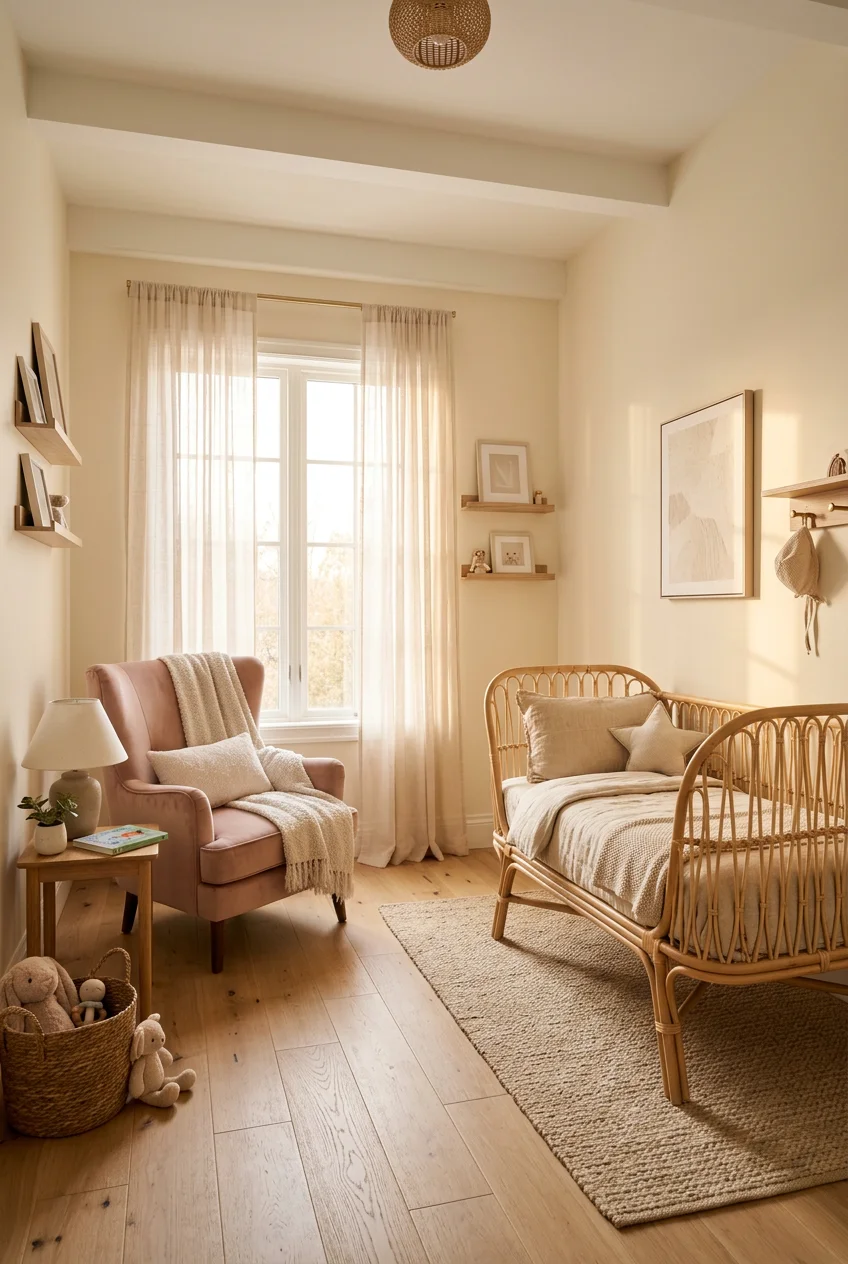
What’s Inside
- Ditch the Bubblegum for Muted Girl Nursery Ideas
- Prioritize Zero-VOC Paint for the Walls
- Choose a Glider with Motorized Recline
- Install a Layered Lighting System with Dimmers
- Maximize Space with Clear Acrylic Storage
- Anchor the Space with an Oversized Rug
- Hang Wall Art 6 to 10 Inches Above Furniture
- Block the Sun with Wrap-Around Blackout Curtains
- Add Texture with Peel-and-Stick Wallpaper
- Display Books on Clear Acrylic Ledges
- Tame the Dresser with Spring-Loaded Dividers
- Skip the Changing Table for a Wide Dresser
- Warm Up the Space with Woven Baskets
- Paint the Ceiling a Soft Accent Color
- Bring in Height with a Faux Olive Tree
Most folks start a nursery by painting the whole room bubblegum pink, adding matching curtains, and wondering why it feels like the inside of a stomach. When you’re after elegant girl nursery ideas, the trick is knowing when to stop. You want a room that feels serene at 3 AM, not a space that screams at you while you’re trying to settle a crying baby. The best designs rely on subtle textures, smart storage, and lighting that actually works for sleep deprivation. If you only try one idea from this list, make it #4 (layered lighting). Here’s why: you can have the most beautiful furniture in the world, but if you flip on a harsh overhead light during a midnight feed, nobody’s going back to sleep. Trust me on this.
Skip this list if you want a nursery plastered in licensed cartoon characters or neon colors. These concepts focus on muted tones, textural layering, and functional pieces that grow with the child, which won’t work if your goal is a temporary, hyper-themed baby cave.
1. Ditch the Bubblegum for Muted Girl Nursery Ideas

Move beyond bright pinks and embrace the sophisticated colors trending right now. Opt for calming shades like smoky sage, mushroom taupe, warm clay blush, or a dusty pink-neutral for a timeless feel. A solid rule is to choose one neutral base, like cream or oat, one main accent color, and then add a subtle hint of a third tone to keep the room feeling fresh. This 60-30-10 ratio keeps the room grounded. You’re creating a calm environment, not a circus tent. The catch: dark muted tones can make a north-facing room feel like a gloomy closet if you don’t balance them with plenty of warm artificial lighting.
2. Prioritize Zero-VOC Paint for the Walls

Keep the room free from harmful chemicals by using zero-VOC paint. Standard paints off-gas for months. They leave a sharp chemical smell that gives adults headaches, let alone a newborn. KILZ KOLOR IT paints are made for nurseries with zero VOC, zero total emissions, and no biocides. Other solid options include Benjamin Moore Eco Spec, known for its durability, or Clare Paint, which is GREENGUARD Gold certified and free from formaldehyde. You want a matte or eggshell finish to hide drywall imperfections. The catch: zero-VOC paints often need three coats for full coverage instead of two, meaning you’ll spend more time rolling walls than you planned. I learned that the hard way.
3. Choose a Glider with Motorized Recline

A common mistake is neglecting your own comfort. A high-quality glider is mandatory for late-night feedings, and a manual recliner that forces you to kick the footrest down will jolt a sleeping baby awake every time. Look for models with smooth, silent gliding and supportive lumbar cushioning. The Babyletto Kiwi Glider Recliner typically ranges from $500 to $800 and features a quiet electronic control panel with a built-in USB port. You’re going to spend hundreds of hours in this chair, so skip the stiff wooden rockers. The catch: motorized gliders are heavy, usually over 100 pounds, so you won’t be moving it around the room easily once it’s built.

Beautiful Wooden Baby Closet Dividers Set of 7
A dependable everyday pick — Beautiful Wooden Baby Closet Dividers Set of 7 – Double-Sided Organize pulls in 11 ratings at 4.5 stars. Not flashy, just solid.
4. Install a Layered Lighting System with Dimmers

Babies are sensitive to harsh light, which disrupts their sleep. Use a layered lighting scheme with ambient, task, and night lights. Install hardwired dimmers for the ceiling lights so you can adjust the brightness from full blast for playtime to a soft glow for bedtime. Ensure your overhead fixtures have frosted glass diffusers or fabric shades to prevent direct glare from hitting the crib. Pediatric sleep experts note that complete darkness is best once the baby’s asleep. Best for: sensitive sleepers. The catch: installing dimmers involves your home’s wiring, which often means hiring an electrician and adding a few hundred dollars to your budget.
5. Maximize Space with Clear Acrylic Storage

Insufficient storage quickly turns an elegant room into a mess. Maximize your closet space by using clear storage bins to see contents and reduce rummaging. The Container Store and Pottery Barn both offer thick, durable clear bins that fit perfectly on standard 12-inch closet shelves. Use these for things you need to grab one-handed, like extra wipes or burp cloths. Over-the-door organizers with clear pockets work for tiny items like socks or diaper creams that otherwise get lost in deep drawers. The catch: clear bins force you to keep things neatly folded. If you just shove items inside, the shelf looks like a messy college dorm room. You might also like: 16 Baby Room Wall Decor Worth Trying
6. Anchor the Space with an Oversized Rug

The right rug size dictates the room’s balance. Most people buy rugs that are too small, leaving the furniture floating awkwardly. For a medium nursery, around 100 square feet, a 160×230 cm rug works well to anchor the floor space. In larger nurseries, a 200×300 cm rug covers most of the floor. Ensure the rug extends under the front legs of the crib and dresser, leaving about one foot of bare floor between the rug edge and the baseboards. The catch: large, high-quality wool rugs shed fibers for the first six months, requiring constant vacuuming to keep the fuzz off your baby’s clothes. You might also like: 20 Nursery Decor Ideas for Every Budget

Baby Closet Divider, Baby Wardrobe Organizer
Baby Closet Divider punches above its price — 371 buyers rated it 4.5 stars. I would buy it again.
7. Hang Wall Art 6 to 10 Inches Above Furniture

Most people hang wall art too high and wonder why the room feels disconnected. When placing art above a crib or dresser, the bottom edge of the frame should sit exactly 6 to 10 inches above the furniture. This creates a cohesive unit rather than having art floating near the ceiling. Stick to lightweight acrylic frames instead of heavy glass when hanging anything over the crib, just in case of a bump. The catch: hanging frames 6 to 10 inches above the crib puts them in the grab-zone once your baby learns to stand, so you’ll have to move them higher in about ten months. You might also like: 18 Vintage Baby Boy Nursery You Need to See
8. Block the Sun with Wrap-Around Blackout Curtains

Standard curtains let light bleed through the sides, which ruins daytime naps. Fix this by installing a wrap-around curtain rod that curves to the wall. Pair this with true blackout panels. Brands like Target and West Elm sell heavy-duty panels, typically $30 to $120 each, with thick backing that stops UV rays. Mount the rod 4 to 6 inches above the window frame to make the ceilings look taller. Best for: rooms that get direct morning sunlight. The catch: true blackout panels are heavy and need sturdy drywall anchors. If you use the cheap plastic anchors included in the box, the rod will rip right out of the wall.
9. Add Texture with Peel-and-Stick Wallpaper

Wallpaper adds interest to plain walls, but traditional paste is a nightmare to remove. High-quality peel-and-stick wallpaper from brands like Spoonflower offers intricate patterns that look custom-painted. Apply it to one accent wall—usually behind the crib—to create a focal point without shrinking the room. You need a smoothing tool and a sharp utility knife to get crisp edges along the baseboards. Best for: renters who can’t make permanent changes. The catch: peel-and-stick vinyl won’t adhere to textured walls and will start peeling at the corners within a week if your drywall isn’t perfectly smooth.

Criusia Drawer Organizer Clothes
Criusia Drawer Organizer Clothes punches above its price — 11 buyers rated it 4.5 stars. I would buy it again.
10. Display Books on Clear Acrylic Ledges

Front-facing book storage encourages reading and acts as wall art. Instead of bulky wooden bookcases, mount 36-inch clear acrylic ledges to the wall. You can find these on Amazon or at IKEA for budget-friendly prices. Mount them staggered on a blank wall, keeping the lowest shelf reachable for a toddler. The clear material makes the colorful book covers pop, turning your library into a dynamic gallery that changes whenever you buy new books. The catch: acrylic scratches easily, so the ledges will show dull scuff marks over time if hardback books are constantly scraped against the plastic.
11. Tame the Dresser with Spring-Loaded Dividers

Baby clothes are tiny, and throwing them into a massive drawer results in a tangled mess. Use 4-inch deep spring-loaded bamboo dividers to create custom columns inside your drawers. Brands like M Design make adjustable dividers that lock firmly into place. Create separate columns for onesies, pants, and pajamas. This allows you to file clothes vertically so you can see every item without digging. The catch: spring-loaded dividers exert outward pressure, which can warp or bow the sides of cheap particle-board dressers if the tension is set too high.
12. Skip the Changing Table for a Wide Dresser

Dedicated changing tables are a waste of money because they become obsolete once your child’s potty trained. Instead, buy a wide, sturdy 8-drawer dresser like the IKEA Hemnes and secure a contoured changing pad to the top. This gives you a huge surface for wipes and diapers, plus years of storage once the diaper phase ends. Make sure the dresser is at least 34 inches tall so you aren’t bending over uncomfortably. Best for: tight budgets. The catch: you have to secure the changing pad using metal brackets and screws, meaning you’ll be drilling permanent holes into your dresser.

Criusia Over the Door Organizer
Honestly, Criusia Over the Door Organizer surprised me — sturdier than it looks in the photos, and over 247 buyers gave it 4.5 stars.
13. Warm Up the Space with Woven Baskets

A room full of painted drywall feels sterile. You need natural textures to warm up the space. Bring in large, braided cotton or water hyacinth baskets from stores like Crate & Kids to store blankets or toys. Place a large 18-inch basket next to the glider for easy access to swaddles at night. The woven texture breaks up flat surfaces and adds an earthy element to the design. The catch: natural water hyacinth and seagrass baskets have a distinct, musty smell right out of the box that takes a few weeks to fully dissipate. No exaggeration.
14. Paint the Ceiling a Soft Accent Color

Designers call the ceiling the fifth wall, and ignoring it is a missed opportunity. Since babies spend a lot of time on their backs, giving them something to look at makes sense. Instead of stark white, paint the ceiling a pale, muted shade of your accent color, like a 25% strength dusty pink or pale oat. This draws the eye upward and makes the room feel like a cozy envelope. Best for: rooms with high ceilings that feel a bit cold. The catch: painting a ceiling is exhausting and requires an empty room, as you’ll inevitably drop splatters of paint on whatever is below.
15. Bring in Height with a Faux Olive Tree

Nurseries often suffer from the “bottom-heavy” problem, where the furniture sits below waist height, leaving the upper half of the room feeling empty. Fix this by adding a tall faux olive tree or fiddle leaf fig in a corner. A 5-foot or 6-foot artificial plant draws the eye up and adds a crucial pop of greenery. Look for realistic options with natural wood trunks at stores like Target or West Elm. The catch: fake plants are massive dust magnets, requiring you to wipe down the leaves individually with a damp microfiber cloth every month to keep them looking fresh.
How we chose these ideas: The concepts on this list were selected based on renter-friendliness, cost, and long-term impact. Priority was given to functional upgrades that require minimal structural changes while maximizing daily convenience for tired parents.
Creating a beautiful space doesn’t require a massive budget, but it does require strategic choices. Focus on the lighting, the storage, and the textures first. Don’t forget to save or pin this list so you can reference these exact dimensions and paint finishes when you’re standing in the hardware store trying to make a final decision.

SNSLXH 5 Pack Stackable Closet Storage Basket
If you want something that just works, SNSLXH 5 Pack Stackable Closet Storage Basket is a safe bet (41 reviews, 4.5 stars).
Frequently Asked Questions
What are the best colors for a girl nursery?
Current trends favor muted, calming tones over bright pinks. Smoky sage, mushroom taupe, warm clay blush, and dusty pink-neutrals are excellent choices. Use a 60-30-10 ratio with a neutral base like cream or oat to keep the room feeling serene and timeless.
How high should I hang art above a crib?
The bottom edge of the picture frame should sit exactly 6 to 10 inches above the top rail of the crib. This creates a cohesive visual unit. Always use lightweight acrylic frames instead of heavy glass for safety.
What size rug is best for a standard nursery?
For a medium nursery around 100 square feet, a 160×230 cm (5.2×7.5 ft) rug works best. Ensure the rug extends under the front legs of the crib and dresser, leaving about a foot of bare floor around the edges.
Can I use a regular dresser as a changing table?
Yes, using a wide, sturdy 8-drawer dresser is a smarter long-term investment than a dedicated changing table. Just ensure the dresser is at least 34 inches tall and securely attach a contoured changing pad to the top using metal brackets.
