What’s Inside
- Adopt a Calming, Earthy Color Palette
- Prioritize Crib Safety with CPSC Standards
- Invest in a Convertible Crib for Longevity
- Embrace “Bare is Best” for Sleep Safety
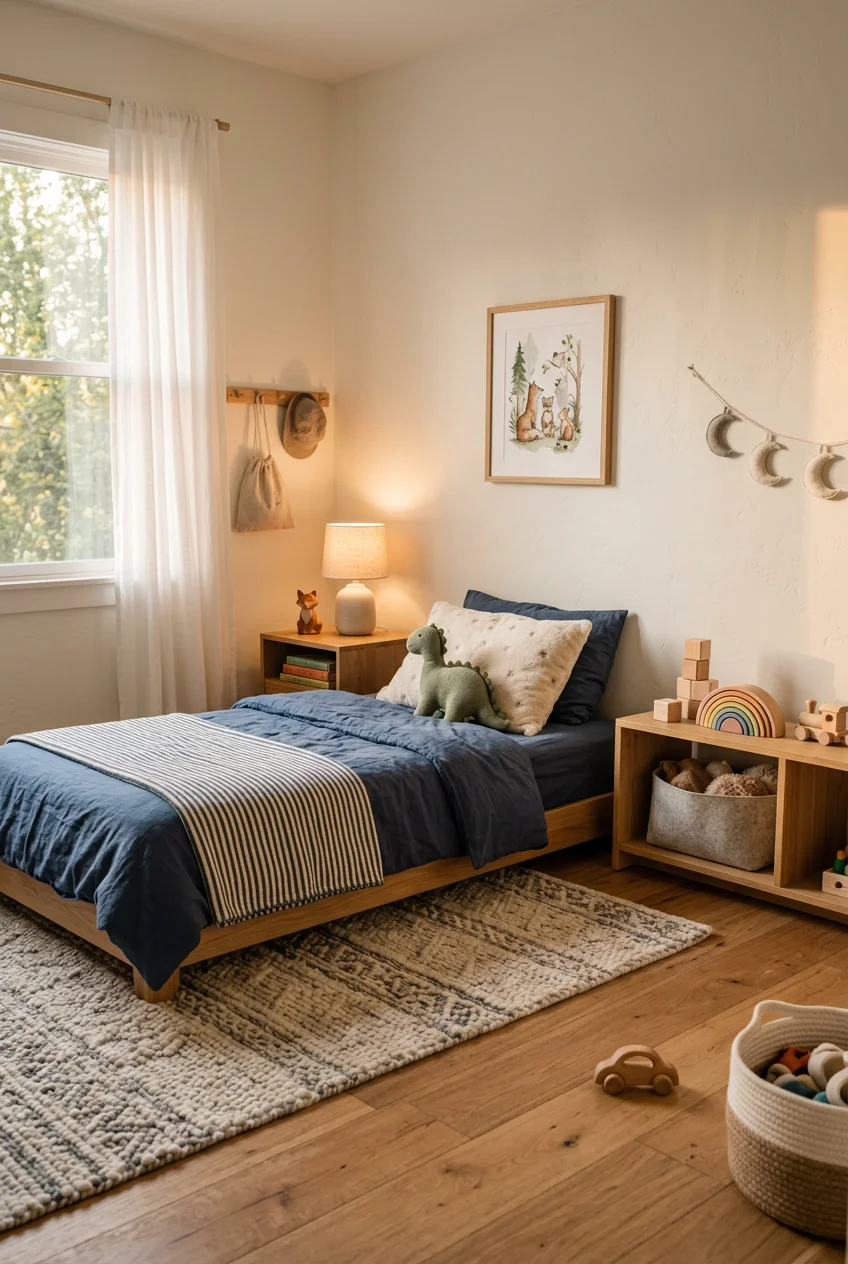
- Install a Low-Profile Montessori Floor Bed
- Hang Heavy-Duty Blackout Curtains
- Anchor the Room with a Washable Area Rug
- Mount Accessible Book Ledges
- Add Soft Ambient Night Lighting
- Utilize Closed Toy Storage Systems
- Create a Cozy Floor Seating Area
- Apply Peel-and-Stick Wallpaper Accents
- Install Floating Shelves for Decor
- Set Up a Dedicated Art Display Wire
- Use Soft Canvas Baskets for Stuffed Animals
- Choose Non-Toxic Wall Paint
- Decorate with Interactive Wall Decals
- Upgrade to Cordless Window Treatments
- Create a Cozy Reading Nook Canopy
- Choose Minimalist Toddler Boy Room Dressers
Most parents redo a toddler boy’s room by shoving a plastic racecar bed into the corner. You walk in, and it’s like a toy aisle exploded. That visual clutter makes it impossible for a kid to wind down. Harsh overhead lights just highlight every scattered block. Designing a functional space requires zones for sleep, play, and storage. If you only try one idea from this list, make it #3. Here’s why: convertible furniture saves you hundreds of dollars when they grow out of the toddler phase. It keeps the room looking cohesive. I learned that the hard way.
Skip this list if you want licensed character explosions or neon walls. These ideas focus on calming, grounded spaces that encourage rest. If you want a high-stimulation playroom that keeps them bouncing off the walls until 10 PM, these minimalist, earthy concepts aren’t for you.
1. Adopt a Calming, Earthy Color Palette

Moving away from bright primary colors is the smartest thing you can do. Warm, earthy tones like sage green, olive, terracotta, and muted blues are popular for a reason. They create a peaceful environment that tells the brain it’s time to sleep. Sherwin Williams has a color called Rosemary that looks great on wall paneling. You want colors that grow with the child so you don’t have to repaint every two years. A gallon of premium interior paint from Lowe’s usually runs $50 to $70. Most people paint the whole room dark and wonder why it feels like a cave. The catch: darker earthy tones absorb light. This only works if you have large windows facing south or west.
2. Prioritize Crib Safety with CPSC Standards

If you’re keeping the crib a bit longer, stick to the latest U.S. Consumer Product Safety Commission (CPSC) standards. That means no drop-side rails. You need strong wood slats spaced no more than 2 3/8 inches apart. The distance between the top of the side rails and the mattress in its lowest position must be at least 26 inches. Regularly check the anti-loosening hardware. You can feel the difference when you shake a properly assembled, compliant crib. It shouldn’t rattle or sway. The catch: older vintage cribs or hand-me-downs rarely meet these modern spacing requirements. You usually have to buy a new frame.
3. Invest in a Convertible Crib for Longevity

Best for: Tight budgets.
Opt for a GREENGUARD Gold certified convertible crib. The Babyletto Hudson 3-in-1 Convertible Crib is a solid choice. It typically runs $400 to $500. This frame transitions from an infant crib to a toddler bed and eventually a daybed. It extends the furniture’s life for years. You avoid the mistake of buying a novelty toddler bed that becomes useless in 18 months. The solid pine wood feels sturdy, and the non-toxic finish doesn’t have that harsh chemical smell. The catch: the toddler rail conversion kit is often sold separately. That adds an unexpected cost right when you need to make the switch.

Beautiful Wooden Baby Closet Dividers Set of 7
Beautiful Wooden Baby Closet Dividers Set of 7 – Double-Sided Organize has been one of the most consistently praised picks in this category. 11 reviewers averaged 4.5/5.
4. Embrace “Bare is Best” for Sleep Safety

Following CPSC guidelines, the crib or toddler bed should contain nothing but a fitted sheet. Avoid bumpers, large pillows, heavy quilts, or soft bedding to prevent suffocation risks. This expert-backed approach is crucial. A breathable mattress, like the Newton Baby option (mid-range to premium), works perfectly with just a lightweight muslin fitted sheet. The muslin gets softer with every wash. Most parents clutter the sleep space with stuffed animals, which just distracts the child. The catch: a bare mattress looks less styled for photos. It leaves the room feeling slightly unfinished to the adult eye.
5. Install a Low-Profile Montessori Floor Bed

Best for: Homes with kids or pets.
Moving a toddler to a floor bed encourages independence. The Sprout Kids floor bed frame sits directly on the ground, making it easy for little legs to crawl in and out. These frames usually fall in the budget to mid-range category. The raw birch wood brings a natural texture into the room. You don’t have to worry about them rolling off a high mattress. It removes the need for bulky plastic bed rails. The catch: sweeping or vacuuming under a floor bed is annoying. You have to lift the entire mattress and frame to reach the dust bunnies.
6. Hang Heavy-Duty Blackout Curtains

A dark room is non-negotiable for naps. Target sells Pillowfort blackout panels that actually block light, typically under $50 per panel. The fabric has a thick, heavy drape. Most people hang these too low, right on the window trim, which makes the ceilings look cramped. Hang the rod close to the ceiling to draw the eye up. The thick material also helps muffle street noise. The catch: these curtains are heavy, requiring heavy-duty drywall anchors. If you just use the cheap plastic anchors in the box, the rod will eventually rip out of the wall. Trust me.

5"x52"x27.5" Premium Toddler Mattress
5″x52″x27.5″ Premium Toddler Mattress has been one of the most consistently praised picks in this category. 122 reviewers averaged 4.5/5.
7. Anchor the Room with a Washable Area Rug

Toddler rooms get messy fast. A washable 5×7 rug from Ruggable (mid-range) is a practical solution. The low-pile texture is smooth enough for building blocks, unlike shag rugs where toy pieces disappear. The top layer peels off the velcro pad, letting you throw it in a standard washing machine. It smells fresh again in hours. A muted blue or olive pattern hides minor stains. The catch: the edges of washable rugs tend to curl up after a dozen trips through the dryer. It creates a minor tripping hazard. You might also like: 20 Stunning Layout Small Nursery Ideas That Are Totally Worth It
8. Mount Accessible Book Ledges

Best for: Renters.
Forward-facing book storage encourages reading because toddlers can actually see the covers. The IKEA FLISAT wall storage ledges are cheap and effective. The raw pine smells great and can be painted to match your trim. Mount them low, about 12 to 18 inches above the baseboard, so your kid can reach them without climbing. It turns a blank wall into a library. The catch: these ledges are narrow. They only hold about four or five standard picture books. You’ll still need a bin for the rest of your collection. You might also like: 15 Sage Green Nursery Ideas That Actually Work
9. Add Soft Ambient Night Lighting

Harsh overhead lighting signals the brain to wake up. A dedicated night light with a warm hue helps with bedtime. The Hatch Rest+ (usually under $100) provides a soft amber glow and doubles as a sound machine. The physical buttons are easy to tap in the dark when you’re carrying a sleepy kid. The white noise sounds like heavy rain, drowning out TV noise from the living room. The catch: the device relies on Wi-Fi for app controls. You can’t adjust the schedule from your phone if your internet goes down.

SNSLXH 5 Pack Stackable Closet Storage Basket
Honestly, SNSLXH 5 Pack Stackable Closet Storage Basket surprised me — sturdier than it looks in the photos, and over 41 buyers gave it 4.5 stars.
10. Utilize Closed Toy Storage Systems

Visual clutter causes anxiety for you and your toddler. The IKEA TROFAST system uses sliding plastic bins inside a wooden frame to hide the mess. You can sort blocks into one bin and cars into another. The matte finish of the wood frame blends well with earthy designs. Having a spot for everything makes the evening clean-up routine take five minutes instead of thirty. The catch: the plastic tracks that hold the bins can warp if you overload them with heavy wooden toys. This causes the bins to slip and fall out. You might also like: 20 Baby Nursery Ideas For Boy Worth Trying
11. Create a Cozy Floor Seating Area

Toddlers spend most of their time on the ground. An oversized floor cushion or pouf gives them a spot to read or play quietly. Crate & Kids offers durable canvas poufs that hold their shape well. The rough canvas stands up to roughhousing better than velvet or faux fur. It adds a nice architectural element to an empty corner. The catch: a large 24-inch pouf takes up a significant amount of floor space. It’s a poor choice for rooms under 100 square feet.
12. Apply Peel-and-Stick Wallpaper Accents

Best for: Renters.
An accent wall adds depth without the commitment of paint. Chasing Paper makes high-quality peel-and-stick prints (mid-range) with a smooth, matte vinyl finish. A subtle woodland or geometric pattern in sage green ties the room together. The adhesive backing allows you to reposition the panels if you mess up the alignment. It doesn’t leave a sticky residue behind when you take it down. The catch: this wallpaper won’t stick properly to heavily textured walls. You need smooth drywall for a clean application.

Modanais Baby Diaper Caddy Organizer Cart
If you want something that just works, Modanais Baby Diaper Caddy Organizer Cart – 3 Tier Rolling Storage Car is a safe bet (325 reviews, 4.5 stars).
13. Install Floating Shelves for Decor

Keep fragile items out of reach by mounting floating shelves high on the wall. You can buy custom-cut pine boards from Home Depot and use heavy-duty matte black brackets. This is the spot for piggy banks, photos, or delicate toys. The contrast of the natural wood against a painted wall adds warmth. The catch: installing these correctly requires finding the wall studs with a stud finder. If you just use drywall anchors, a heavy shelf will eventually pull away and sag.
14. Set Up a Dedicated Art Display Wire

Toddlers bring home a constant stream of daycare art. Instead of cluttering the fridge, install a display wire in their room. Pottery Barn Kids sells metal art cables with clips. The stainless steel wire looks clean and industrial. It gives the child a sense of pride to see their finger paintings displayed. Swapping out the art takes seconds. The catch: if you hang too many pieces at once, the wire sags in the middle. The wall quickly looks like a mess.
15. Use Soft Canvas Baskets for Stuffed Animals

Stuffed animals are bulky and hard to organize. Large canvas bins from Pehr ($40 to $60) are perfect for tossing plush toys into. The thick cotton canvas has a nice weight, and the stitched handles make it easy to drag across the carpet. They come in muted, earthy colors that match the room’s palette. The catch: because they don’t have a rigid internal frame, these baskets slouch and lose their shape when they’re empty.

Criusia Over the Door Organizer
Criusia Over the Door Organizer has been one of the most consistently praised picks in this category. 247 reviewers averaged 4.5/5.
16. Choose Non-Toxic Wall Paint

Indoor air quality matters. Brands like Clare Paint offer zero-VOC formulas that don’t off-gas harsh chemicals. When you open the can, you don’t get that headache-inducing smell. The paint rolls on smoothly and dries to a durable finish in a few hours. This means you can paint in the morning and the toddler can sleep there that night. The catch: boutique non-toxic paint brands have a limited, curated color palette. You can’t get the exact custom color-matching you’d find at a big box store.
17. Decorate with Interactive Wall Decals

Best for: Small dark rooms.
If wallpaper is too expensive, wall decals are a great alternative. Urban Walls makes matte-finish decals that look painted on. You can scatter small terracotta-colored stars or pine trees across a white wall to add interest without darkening the room. They take about twenty minutes to apply. The catch: toddlers have sharp little fingernails. If you place the decals too low, your kid will pick at the edges and peel them off during nap time. No exaggeration.
18. Upgrade to Cordless Window Treatments

Dangling blind cords are a strangulation hazard. Swap out old blinds for cordless cellular shades from a retailer like SelectBlinds. The honeycomb texture traps air, providing a bit of insulation against cold windows. You just push up on the bottom rail to open them. It looks much cleaner than tangled strings. The catch: the internal spring mechanism in cordless shades tends to get stiff over time. You’ll need to pull down with uneven force after a few years.
19. Create a Cozy Reading Nook Canopy

A hanging canopy creates a quiet zone. Target sells Pillowfort gauze canopies that hang from a single ceiling hook. The lightweight, crinkly fabric drapes nicely over a floor cushion. It gives a toddler a sense of privacy when they want to look at books alone. The fabric is breathable so it doesn’t get hot inside. The catch: the sheer fabric acts like a giant dust trap. You have to wash it frequently, or it will trigger dust allergies.
20. Choose Minimalist Toddler Boy Room Dressers

Best for: Tight budgets.
A simple, low-profile dresser works best. The Delta Children 6-drawer dresser (budget to mid-range) has a clean, boxy silhouette. The drawers are at the perfect height for a toddler to start picking out their own clothes. The smooth metal glides make opening them effortless. Always use the included anti-tip hardware to anchor it to the wall. The catch: assembly takes hours, and the drawer bottoms are made of thin composite board. They will bow if you stuff too many heavy sweaters inside.
How we chose these ideas: We filtered based on renter-friendliness, cost, installation effort, and visual impact. Safety certifications and long-term durability were prioritized over seasonal trends.
Transitioning your toddler boy’s room doesn’t mean surrendering to primary colors and plastic. By sticking to earthy tones, safe sleep standards, and convertible pieces, you create a calming environment that works for your family. I’d start with the blackout curtains and the floor bed if you want immediate improvements in their sleep. Pin this list so you have these measurements and brands handy when you’re ready to decorate.
Frequently Asked Questions
What colors are best for a toddler boy room?
Warm, earthy tones like sage green, olive, terracotta, and muted blues are ideal. These colors create a calming environment that promotes sleep and transitions easily as the child grows, unlike bright primary colors.
How do I make a toddler bed safe?
Follow CPSC standards by ensuring the mattress is firm and the sleep space is bare—no large pillows, bumpers, or heavy quilts. If using a crib, ensure slats are no more than 2 3/8 inches apart with no drop-sides.
What is a Montessori floor bed?
A Montessori floor bed is a low-profile mattress or frame placed directly on the floor. It allows toddlers to get in and out independently without the need for high bed rails, promoting autonomy.
How should I store toys in a toddler room?
Use closed storage systems like wooden frames with sliding plastic bins or soft canvas baskets. This hides visual clutter, making the room feel more peaceful and helping the child wind down for sleep.
