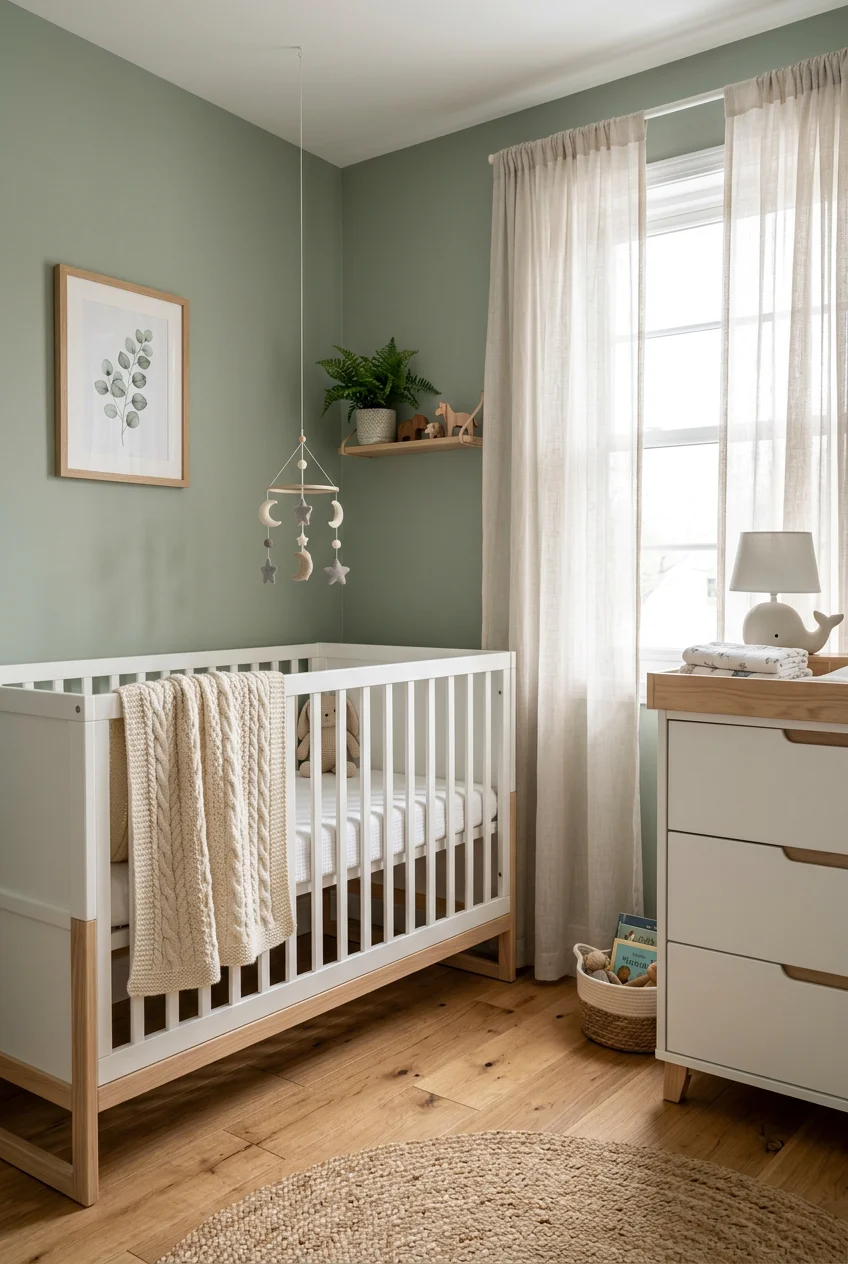
What’s Inside
- Prioritize a Certified Non-Toxic Crib Mattress
- Choose Solid Wood Cribs Without the Chemical Smell
- Paint with Zero-VOC Options for Your Green Gender Neutral Nursery Walls
- Invest in GOTS-Certified Organic Cotton Bedding
- Opt for Natural Low-Pile Rugs and Flooring
- Integrate Biophilic Design with Baby-Safe Plants
- Choose Multi-Functional Woven Storage Solutions
- Install a HEPA Air Purifier for Chemical Odors
- Avoid Hidden Toxins in Everyday Baby Products
- Implement a 70 Percent Toy Rotation System
- Prioritize Safety by Anchoring All Furniture
- Install Dimmer Switches Instead of Fussy Lamps
- Choose Grow-With-Me Furniture for Longevity
- Manage Cords and Outlets Diligently
- Embrace Colour Drenching in Your Green Gender Neutral Nursery
- Incorporate Repurposed Crates and Secondhand Finds
I spent three weeks crying on the floor of my first baby’s room because the fresh paint smelled like a chemical tire fire, and I was terrified to put a newborn in there. That was my harsh introduction to building a safe space. Designing a green gender neutral nursery isn’t just about picking out cute sage-colored blankets anymore. I learned the hard way that a truly green nursery requires reading actual manufacturing labels and questioning everything. Last Tuesday at Whole Foods, I watched a mom agonizing over organic baby food while her infant chewed on a stroller toy made of cheap PVC plastic. We all miss things. I certainly did. When I’m consulting with new parents now, I focus on the invisible details first. Let’s walk through exactly how to build a space that looks beautiful but keeps your baby safe from volatile organic compounds, synthetic dyes, and hidden hazards.
1. Prioritize a Certified Non-Toxic Crib Mattress

Your baby spends up to 16 hours a day on their mattress. Minimizing chemical exposure is vital. Most standard mattresses use polyurethane foam and chemical flame retardants that off-gas for years. I originally bought a standard foam mattress from Walmart for $45, and it smelled like a plastic shower curtain for two months before I finally threw it in the garage. I’m honestly surprised they’re allowed to sell them. Instead, you need a mattress certified by GOTS (Global Organic Textile Standard) and GREENGUARD Gold. I ended up buying the Avocado Eco Organic Crib Mattress for $299. It uses organic cotton, wool, and latex instead of synthetic foams. The wool acts as a natural fire barrier, so they don’t spray it with chemicals. Naturepedic also makes an Organic Breathable Ultra Innerspring Crib Mattress that’s excellent if you prefer coils over latex. The Avocado mattress is exactly 28 inches by 52 inches and fits perfectly snug in a standard crib. The dual-sided design gives you a firm side for infants and a slightly softer side for toddlers. You won’t have to buy a second mattress when they turn one, which saves money in the long run.
2. Choose Solid Wood Cribs Without the Chemical Smell

Most budget cribs are made from particleboard or MDF held together by glues that release formaldehyde into the air. I made this mistake with a cheap painted MDF crib that chipped within a week of my baby gnawing on the rail. If you want a safe environment, you need solid wood finished with water-based, non-toxic substances. The Babyletto Hudson 3-in-1 Crib is a highly reliable GREENGUARD Gold certified choice that costs around $399. It uses sustainable New Zealand pine wood and non-toxic paint. If you’re on a tighter budget, IKEA makes the Sniglar Crib for just $119. It’s made of completely unfinished solid beech wood. Because it has zero paint or synthetic finishes, there’s literally nothing to off-gas. I used the Sniglar at my mother’s house, and while the aesthetic is very plain, the peace of mind is worth it. Just remember that unfinished wood can stain easily if your baby spits up. You might want to seal it yourself with a food-grade mineral oil. Apply a 2-ounce coat with a clean rag and let it cure for 48 hours before bringing it inside.
3. Paint with Zero-VOC Options for Your Green Gender Neutral Nursery Walls

Traditional paints release volatile organic compounds (VOCs) long after drying. To ensure healthy indoor air quality, you need paints with zero VOCs and no harsh odors. I recommend ECOS Paints, specifically their Lullaby by ECOS collection, which costs about $75 per gallon. COAT Paints is another great option because they’re Certified Toy-Safe and have an A+ Indoor Air Quality rating. For a modern look, trending gender-neutral colors include warm stone, mushroom, and muted terracotta. Soft sage green is also incredibly popular right now. I painted my son’s room with a standard hardware store brand initially, and the fumes gave me a migraine for three straight days. Learned that the hard way. When I repainted my daughter’s room with ECOS, there was zero smell. I used exactly two gallons to cover a 10 by 12 foot room with two coats. The tradeoff is that these non-toxic paints take slightly longer to dry between coats. Give yourself a full 4 hours of drying time instead of the standard 2 hours, and keep the window open for air circulation.

Delta Children Nursery Storage 48 Piece Set
If you want something that just works, Delta Children Nursery Storage 48 Piece Set – Easy Storage/Organizatio is a safe bet (17 reviews, 4.5 stars).
4. Invest in GOTS-Certified Organic Cotton Bedding

Babies have incredibly thin, sensitive skin. When they sweat in their sleep, their pores absorb whatever is on their sheets. Conventional cotton is heavily treated with pesticides, and many standard crib sheets are finished with formaldehyde to make them wrinkle-resistant. You should only use bedding made from 100 percent GOTS-certified organic cotton, bamboo, or hemp. Burt’s Bees Baby makes fantastic GOTS-certified organic cotton fitted sheets for about $20 each. They measure 28 by 52 inches and have a thick elastic band that stays put under the mattress. I bought three of them in a soft heather grey. If you want something thicker, Coyuchi offers luxurious organic options, though they run closer to $40 per sheet. I once bought a cheap synthetic blend sheet from Target because the pattern was cute, but it started pilling after three washes and gave my baby a red rash on his cheeks. Stick to organic fibers. Wash them in a fragrance-free detergent using 1/4 cup of liquid soap, and skip the fabric softener entirely. Fabric softeners coat natural fibers in a waxy residue that ruins breathability.
5. Opt for Natural Low-Pile Rugs and Flooring

Wall-to-wall carpeting traps dust mites and chemicals. Hardwood, cork, or bamboo flooring are much better because they emit fewer chemicals and are easier to keep clean. If you need a rug to soften the floor, choose one made from organic natural fibers like 100 percent cotton, wool, or jute. You must ensure the rug isn’t treated with PFAS for stain resistance, or chemical flame retardants. These are forever chemicals linked to serious health issues. I bought a fluffy synthetic rug from Costco for $99 last year. It looked great, but it shed synthetic microplastics all over the floor, and I caught my crawler with a fistful of plastic fuzz in his mouth. I immediately threw it out and bought a flat-weave 5 by 8 foot cotton rug from Hook & Loom for $145. It contains no synthetic dyes or chemical treatments. The downside of untreated cotton is that it shows stains faster. You’ll need to spot clean spills immediately with 1 tablespoon of white vinegar mixed with 1 cup of warm water.
6. Integrate Biophilic Design with Baby-Safe Plants

Incorporating real plants into the room naturally purifies the air and adds a beautiful, calming texture. However, you have to be extremely careful about toxicity. Many popular houseplants, like Pothos and Snake Plants, are toxic if chewed on. I bought a beautiful Philodendron at Trader Joe’s for $12, only to realize later it was highly toxic to pets and babies. I ended up giving it to my neighbor. Instead, buy non-toxic plants like a Boston Fern, a Spider Plant, or a Peperomia. You must place them on high shelves or in secure, heavy planters completely out of a crawling baby’s reach. Even non-toxic leaves can be a choking hazard, and a baby pulling a heavy ceramic pot onto their head is a real danger. I hung a Spider Plant in a macrame holder from a ceiling hook installed straight into a joist. It adds a vibrant pop of green to the room and requires watering with exactly 1 cup of filtered water every Sunday. It thrives perfectly in the indirect sunlight of the nursery window. You might also like: 15 Beautiful Baby Room Organization Ideas You Haven’t Thought Of

Beautiful Wooden Baby Closet Dividers Set of 7
A dependable everyday pick — Beautiful Wooden Baby Closet Dividers Set of 7 – Double-Sided Organize pulls in 11 ratings at 4.5 stars. Not flashy, just solid.
7. Choose Multi-Functional Woven Storage Solutions

Nurseries clutter fast. Avoid overcrowding by selecting furniture that doubles as storage. Use a dresser as your changing table by attaching a removable wooden topper. For loose items like swaddles and toys, use woven baskets made from natural materials instead of plastic tubs. Our Green House sells beautiful 100 percent cotton rope baskets ranging from $30 to $48. They hold their shape well and contain zero synthetic dyes. I used to keep extra diapers in leftover plastic grocery bags from Kroger stuffed in a drawer. It looked terrible and made a loud crinkling noise that woke the baby up every time I grabbed a diaper at 2 AM. Switching to a soft cotton rope basket measuring 15 inches wide completely solved the noise issue. The natural texture of the rope also adds warmth to the room’s aesthetic. Just check the labels on any basket you buy. Many cheap baskets sold as cotton are actually blended with polyester to cut costs, which defeats the purpose of buying natural materials. You might also like: 20 Baby Girl Room Ideas for Every Budget
8. Install a HEPA Air Purifier for Chemical Odors

You can’t control dust circulating through your HVAC system. An air purifier is essential for filtering allergens, fine particles, and any lingering VOCs from new furniture. You need a model with a true HEPA filter that captures particles as small as 0.3 micrometers, plus an activated carbon filter for chemical odors. The Levoit Core 300S is a highly effective unit that costs about $150 and covers rooms up to 194 square feet. I run this exact model in my home. Blueair Pure 311i Max is another excellent option known for being incredibly quiet on its lowest setting. I run the Levoit on medium speed during the day and low speed at night. The low hum actually works perfectly as a white noise machine. One critical warning: ensure any ionizer function on your purifier is completely turned off. Ionizers can produce ozone, which irritates tiny lungs. The Levoit model I use is completely ozone-free, which is why I chose it over cheaper generic brands I saw online. You might also like: 16 Baby Nursery Themes That Actually Work
9. Avoid Hidden Toxins in Everyday Baby Products

A safe room goes beyond furniture and paint. You have to look at the everyday items sitting on the changing table. Many conventional baby lotions, wipes, and diaper creams contain parabens, synthetic fragrances, and phthalates. Phthalates are often found in soft plastics and vinyl. I used to buy standard baby wash until I read the ingredient list and realized it contained artificial fragrances that were drying out my daughter’s skin. I switched to Pipette Baby Wash and Shampoo, which costs $8 for an 11.8-ounce bottle at Sprouts. It uses squalane derived from sugarcane and has absolutely zero synthetic fragrance. You also need to check your changing pad. Most standard changing pads are covered in vinyl to make them waterproof. Vinyl off-gasses heavily. I replaced my vinyl pad with a Naturepedic Organic Cotton Contoured Changing Pad. It costs $99, but it uses a food-grade polyethylene waterproofing that is completely non-toxic. It wipes clean easily with a damp cloth, and I don’t worry about my baby inhaling vinyl fumes.

Criusia Drawer Organizer Clothes
Criusia Drawer Organizer Clothes punches above its price — 11 buyers rated it 4.5 stars. I would buy it again.
10. Implement a 70 Percent Toy Rotation System

You don’t need to display every stuffed animal you received. Having all toys accessible creates massive visual clutter and actually overwhelms the baby. Instead, use a toy rotation system. Store about 70 percent of the toys away in a closet or under the crib, and leave only 30 percent out on a low shelf. Rotate them every one to two weeks. I learned this after tripping over a pile of wooden blocks at midnight and bruising my knee. Once I boxed up most of the toys, the room stayed tidy, and my son actually played longer with the few items left out. When I bring a box of old toys back out two weeks later, he treats them like they are brand new. Use simple cardboard boxes or 100 percent cotton canvas bins measuring 11 by 11 inches to store the out-of-rotation items. This system forces you to be intentional about what you buy and keep, naturally reducing the amount of plastic junk that accumulates.
11. Prioritize Safety by Anchoring All Furniture

This is the step most parents skip because it requires finding a stud finder and a drill. Do not skip it. You must anchor all dressers, bookshelves, and other tall furniture to the wall using heavy-duty anti-tip kits. Once your baby starts pulling up and climbing around 9 months old, a heavy dresser can tip over in seconds if they pull out the bottom drawers and stand on them. I thought my solid oak dresser was too heavy to tip. Then I opened all three drawers at once while putting away laundry, and the whole unit tilted forward, nearly crushing my foot. It terrified me. I bought a pack of metal anti-tip brackets from the hardware store for $14 and secured every piece of furniture in the house that weekend. Do not use the cheap plastic zip-tie anchors that come free with some furniture. They become brittle over time and snap under pressure. Use metal L-brackets and secure them directly into a wall stud using 2-inch wood screws. I’d rather patch a drywall hole later than risk an accident.
12. Install Dimmer Switches Instead of Fussy Lamps

Table lamps and floor lamps in a nursery are a nuisance. They take up valuable surface space, the cords are a constant tripping hazard, and the bulbs can get dangerously hot if left on. Plus, a crawling baby will inevitably try to pull a floor lamp down. Instead of relying on lamps, install a dimmer switch on the main overhead light. A basic Lutron dimmer switch costs about $25 at the hardware store and takes 15 minutes to wire if you follow the instructions. This allows you to have bright light for cleaning up massive diaper blowouts, and a very dim, soft glow for 3 AM feedings. I fumbled with a cheap touch-lamp for months. Half the time it wouldn’t turn on, and the other half it was blindingly bright. Switching to a wall dimmer fixed my entire nighttime routine. Keep the light at about 10 percent brightness during night feeds to keep the baby in a sleepy state. Make sure you use LED bulbs that are explicitly labeled as dimmable. If they aren’t labeled dimmable, they’ll flicker and buzz loudly when you lower the power.
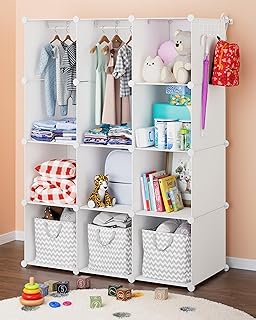
CUBEDIY Baby Closet Organizer for Nursery: Durable Baby
CUBEDIY Baby Closet Organizer for Nursery: Durable Baby Wardrobe for C punches above its price — 316 buyers rated it 4.5 stars. I would buy it again.
13. Choose Grow-With-Me Furniture for Longevity

Buying furniture that only lasts twelve months is a waste of money. To make your nursery sustainable, invest in pieces designed to adapt as your child grows. A convertible crib is essential. The Babyletto Hudson I mentioned earlier comes with a toddler bed conversion kit included in the $399 price. This means the crib transforms into a toddler bed, and later into a daybed. You skip buying a separate toddler bed entirely. For storage, do not buy a dedicated changing table. They’re useless once your child is potty trained. Buy a standard, high-quality 6-drawer dresser and attach a wooden changing tray to the top. I bought a solid wood dresser from a local furniture builder and added a $60 changing tray. Five years later, the tray is gone, and the dresser still looks perfect in my older child’s room. This approach aligns perfectly with sustainable living because you’re buying fewer, better things. Just ensure the dresser drawers have smooth metal glides with safety stops so they can’t be pulled completely out by a curious toddler.
14. Manage Cords and Outlets Diligently

Modern nurseries are full of electronics. Between the baby monitor, the white noise machine, the HEPA purifier, and the humidifier, you’ll have cords everywhere. These cords are severe strangulation hazards. You must manage them diligently. First, use sliding outlet covers instead of the cheap plastic plugs. The little plastic plugs are annoying to pull out when you actually need the outlet, and once removed, they become a choking hazard if you leave them on the floor. A sliding outlet plate costs $5 and automatically snaps shut when you unplug a device. Second, conceal all cords behind heavy furniture or use adhesive cord concealers along the baseboards. I once caught my ten-month-old chewing on the white noise machine cord that was dangling behind the crib. I immediately ordered a 120-inch plastic cord cover kit for $18 and hid every wire in the room. Finally, opt for completely cordless window blinds. Blinds with looping strings are incredibly dangerous. Cellular shades with a cordless push-up mechanism are inexpensive, block out the light effectively, and completely eliminate the risk of tangled strings.
15. Embrace Colour Drenching in Your Green Gender Neutral Nursery

You don’t have to paint the room stark white to make it look clean. A trending design approach right now is called colour drenching. This involves painting the walls, the baseboards, the window trim, and even the ceiling in the exact same muted, gender-neutral color. It creates a cohesive, enveloping atmosphere that makes the room feel surprisingly larger and much calmer. I tried this in a client’s nursery using a warm terracotta color, and the result was stunning. It erased the harsh visual lines of the white trim and made the ceiling feel higher. If terracotta is too bold, use a soft sage green or a warm stone color. ECOS Paints has a beautiful shade called Earthy Sage that works perfectly for this technique. The key is to use a flat or matte finish on the walls and ceiling, and an eggshell finish on the trim for durability, all mixed in the exact same color code. It takes a bit more tape and prep work, but the seamless look is incredibly soothing for both you and the baby during late-night rocking sessions.

Criusia Over the Door Organizer
Criusia Over the Door Organizer punches above its price — 231 buyers rated it 4.5 stars. I would buy it again.
16. Incorporate Repurposed Crates and Secondhand Finds

Buying secondhand is highly sustainable. Incorporating vintage or repurposed items gives the room character and keeps perfectly good materials out of the landfill. I use heavy wooden apple crates as wall shelving. I sanded them down with 120-grit sandpaper to remove splinters and secured them directly to the wall studs using heavy-duty screws. They cost me $10 each at a local flea market and hold all our board books perfectly. You can also find incredible solid wood rocking chairs or side tables on Facebook Marketplace. I bought a solid maple rocking chair for $40 that just needed a wipe down with a mild soap solution (1 teaspoon of castile soap in 2 cups of warm water). Avoid buying secondhand cribs, car seats, or mattresses due to safety recalls and hygiene issues, but hard furniture is fair game. Just inspect older painted furniture for peeling paint, as pieces made before 1978 might contain lead. A simple $15 lead testing swab kit from the hardware store will give you an instant answer.
Designing a safe space doesn’t mean sacrificing style, and it certainly doesn’t mean you have to be perfect. You’ll probably still end up with a plastic toy or two, and that’s fine. The goal is simply making better, informed choices where it counts the most—like the mattress they sleep on and the air they breathe. I hope these details help you avoid the headaches and literal paint fumes I dealt with. Pin this guide so you have the specific brand names and measurements handy when you’re standing confused in the store aisle!
Frequently Asked Questions
What makes a nursery truly green and non-toxic?
A green nursery prioritizes indoor air quality and safe materials. This means using zero-VOC paints, solid wood furniture instead of MDF, and avoiding products treated with chemical flame retardants or PFAS.
How do I choose safe paint for a baby’s room?
Look for paints explicitly labeled as zero-VOC and non-toxic. Brands like ECOS Paints and COAT Paints are excellent choices because they don’t off-gas harmful chemicals like traditional interior paints do.
Are standard crib mattresses safe for newborns?
Many standard mattresses use polyurethane foam and chemical flame retardants that release VOCs. It’s much safer to choose a mattress certified by GOTS and GREENGUARD Gold, made from organic cotton, wool, and latex.
What are the best gender-neutral colors for 2026?
Trending gender-neutral colors include warm, earthy tones like soft sage green, warm stone, mushroom, and muted terracotta. These colors create a calming environment and work beautifully with natural wood furniture.
